
Sectors of the Canadian Economy Defining Natural Resources


- Slides: 13
Sectors of the Canadian Economy
Defining Natural Resources • Natural resources are non-human-made components of the Earth which humans use EXAMPLES WE WILL BE LOOKING AT: q Fishing Industry (West and East coast) q Farming Industry q Forestry q Minerals (Metallic Minerals, Fossil Fuels, and Industrial Minerals) q Energy (Conventional, Alternative)
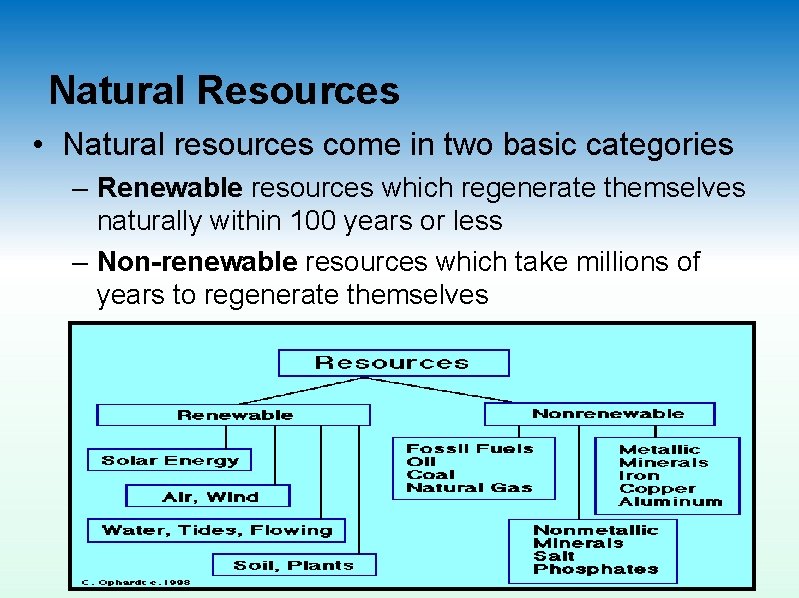
Natural Resources • Natural resources come in two basic categories – Renewable resources which regenerate themselves naturally within 100 years or less – Non-renewable resources which take millions of years to regenerate themselves
Types of Industry • Most Canadian workers are not lumberjacks, farmers, or miners; nor are they factory workers. • Instead, most Canadians have jobs in which they provide an enormous range of services. • But all parts of the economy are vital…
Types of Industry • All industries in Canada fall into 3 basic categories: Primary, Secondary & Tertiary PRIMARY INDUSTRIES • take raw materials from the environment • example: mining, fishing, forestry, agriculture • 5% of Canada’s workforce
Types of Industry Secondary Industries • involve the processing of primary industry products into finished goods • example: manufacturing, construction, utilities • 22 % of Canada’s workforce
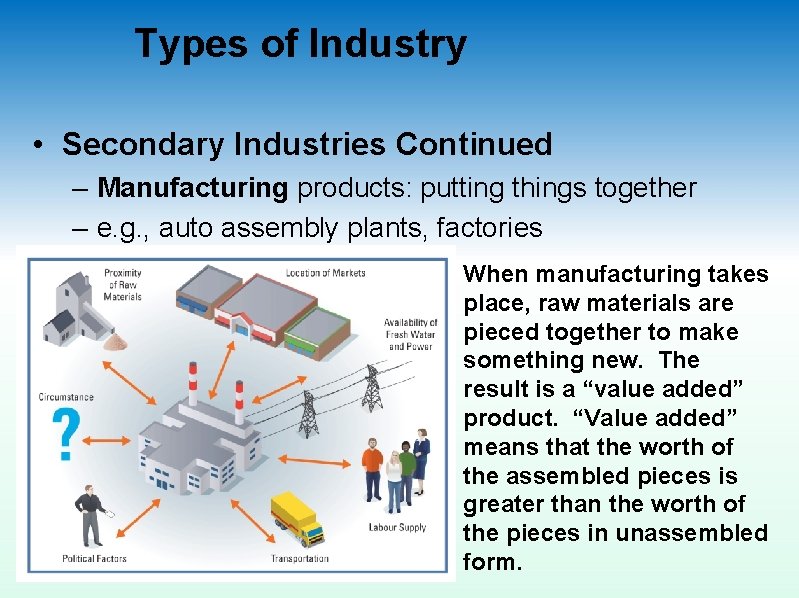
Types of Industry • Secondary Industries Continued – Manufacturing products: putting things together – e. g. , auto assembly plants, factories When manufacturing takes place, raw materials are pieced together to make something new. The result is a “value added” product. “Value added” means that the worth of the assembled pieces is greater than the worth of the pieces in unassembled form.
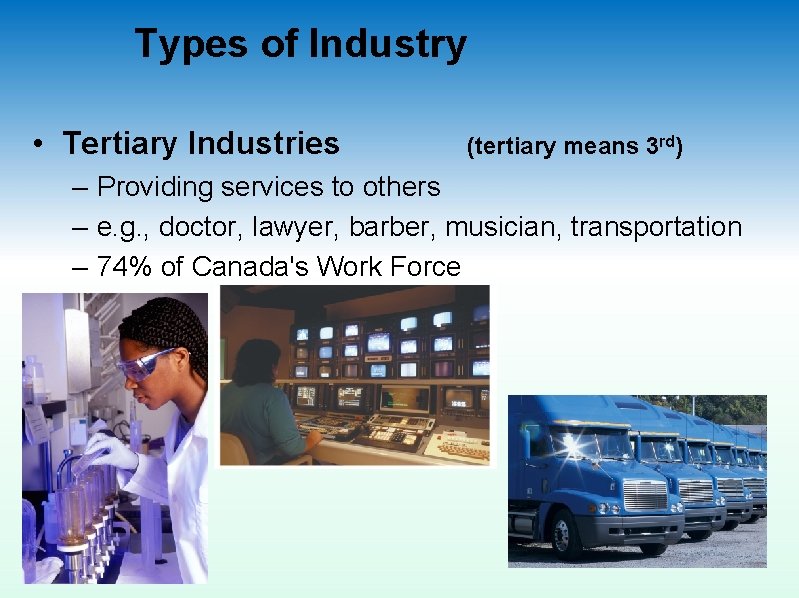
Types of Industry • Tertiary Industries (tertiary means 3 rd) – Providing services to others – e. g. , doctor, lawyer, barber, musician, transportation – 74% of Canada's Work Force
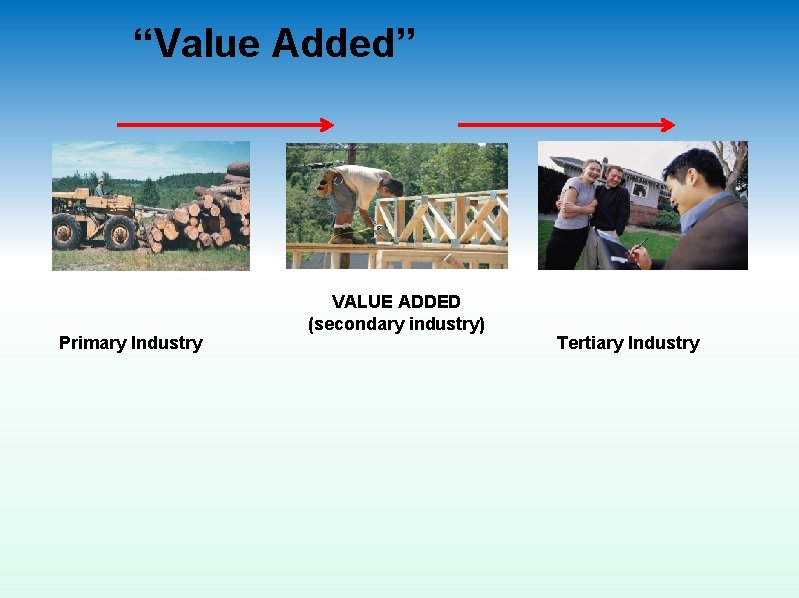
“Value Added” Primary Industry VALUE ADDED (secondary industry) Tertiary Industry
Types of Industry • Many geographers believe there is a FOURTH group of industries and jobs known as QUATERNARY INDUSTRIES • This involves the processing of ideas rather than products. – Examples Include: Computer programmers, accountants, and university professors **Quaternary Jobs often fall into two categories- EG: a teacher is part of the Tertiary sector (teaching) but also the Quaternary sector (research)
Types of Industry • Each of the different types of industries, no matter primary, secondary, or tertiary, are either basic industries or non-basic industries. • Basic Industries – Selling goods or services to people outside of the local community – Bringing new money into the local economy – e. g. , manufacturing something in your home town then selling it somewhere else
Types of Industry • Non-Basic Industries – Selling goods or services to people within the local community – Recycling existing money in the local economy – e. g. , getting your haircut at a local barber
HOMEWORK! Pg 276 -277 #1, 2, 3 a, b, 4, 7 (graph paper needed!!!)