
Sections 1 reflection refraction 2 interference 3 diffraction
- Slides: 65
Sections 1. 反射 (reflection)與折射 (refraction) 2. 干涉 (interference) 3. 繞射 (diffraction)
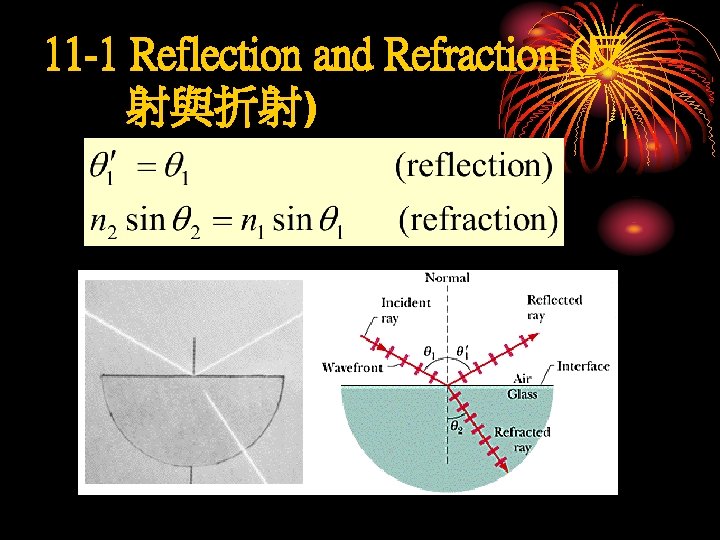
11 -1 Reflection and Refraction (反 射與折射)
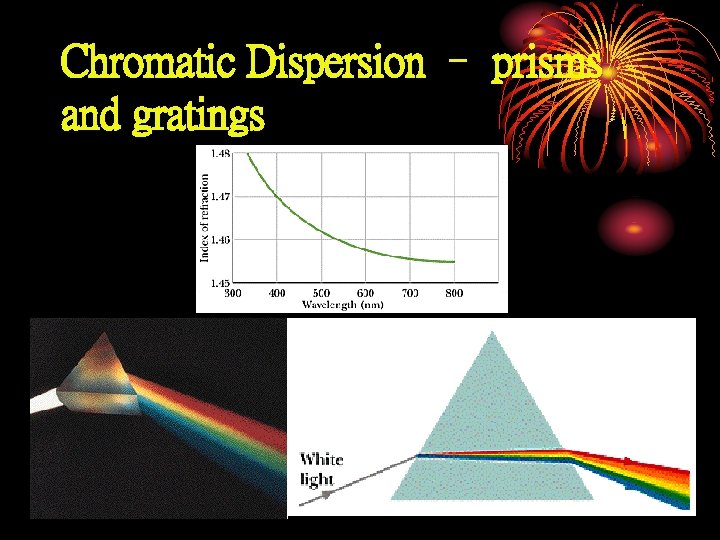
Chromatic Dispersion – prisms and gratings
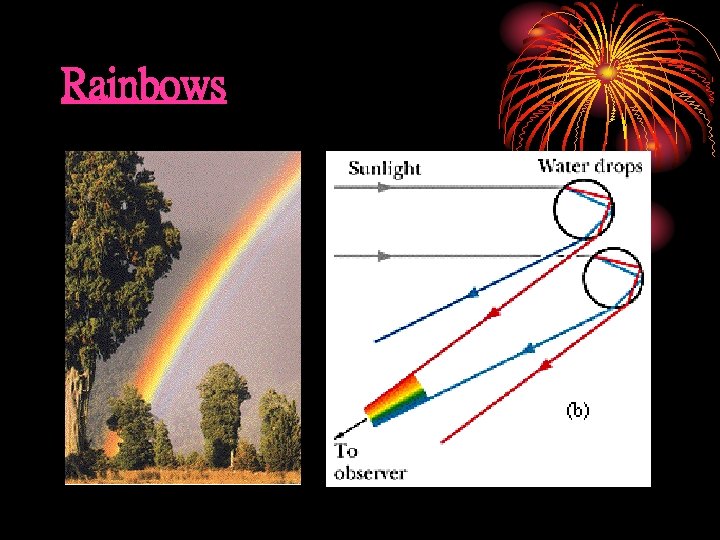
Rainbows
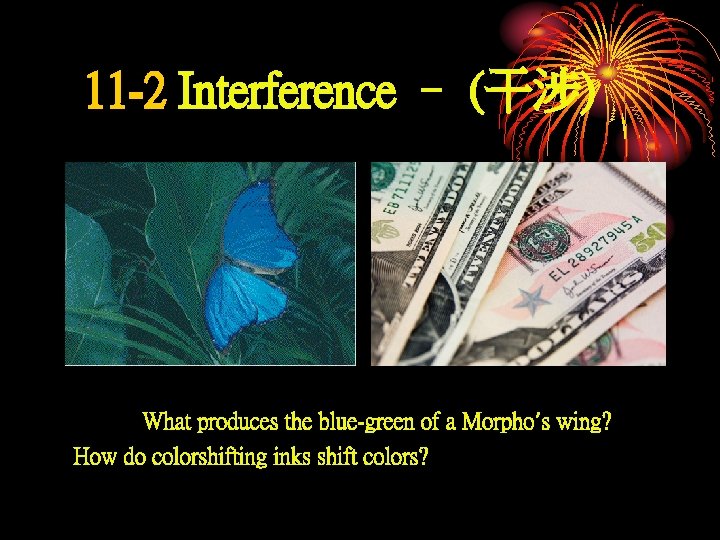
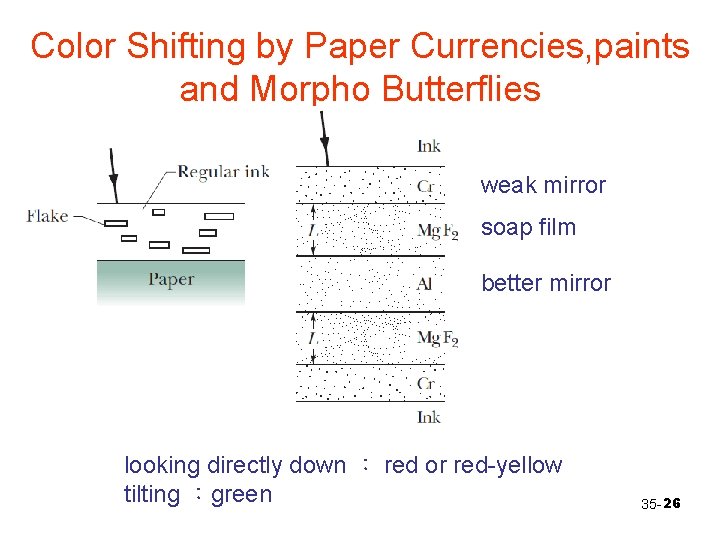
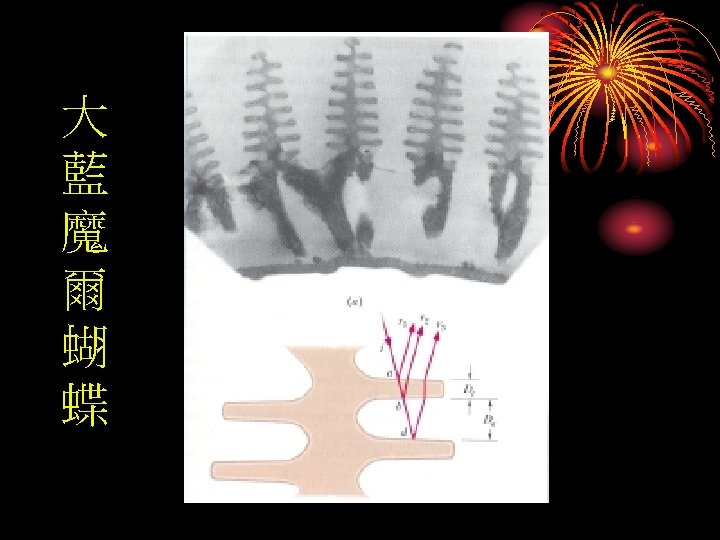
11 -2 Interference – (干涉) What produces the blue-green of a Morpho’s wing? How do colorshifting inks shift colors?
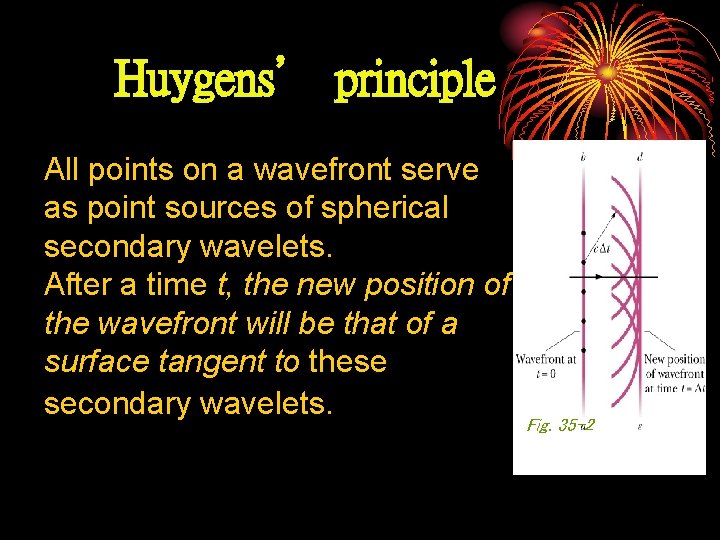
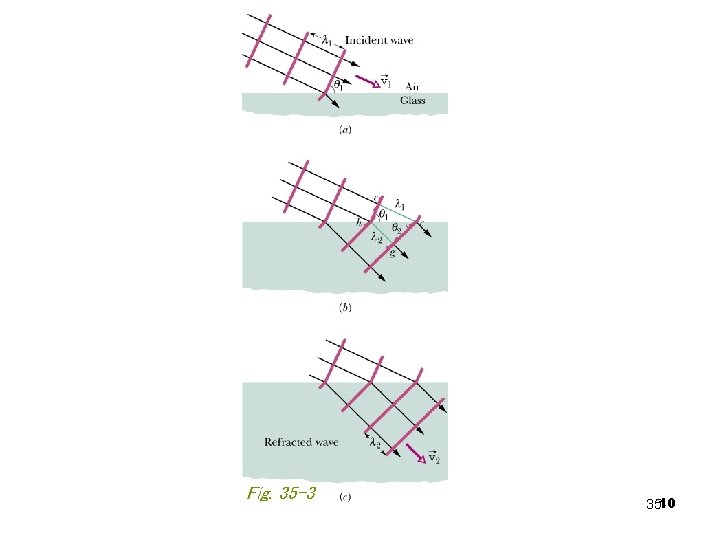
Huygens’ principle All points on a wavefront serve as point sources of spherical secondary wavelets. After a time t, the new position of the wavefront will be that of a surface tangent to these secondary wavelets. Fig. 35 -2
Law of Refraction from Huygens’ principle
Fig. 35 -3 10 35 -
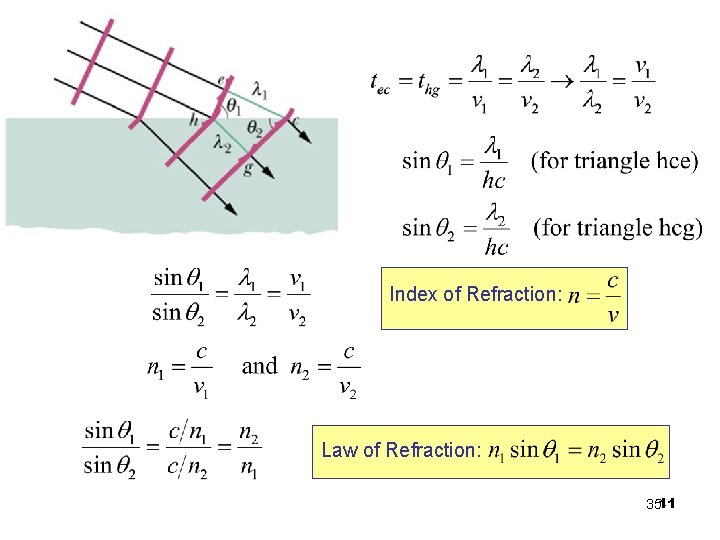
Index of Refraction: Law of Refraction: 11 35 -
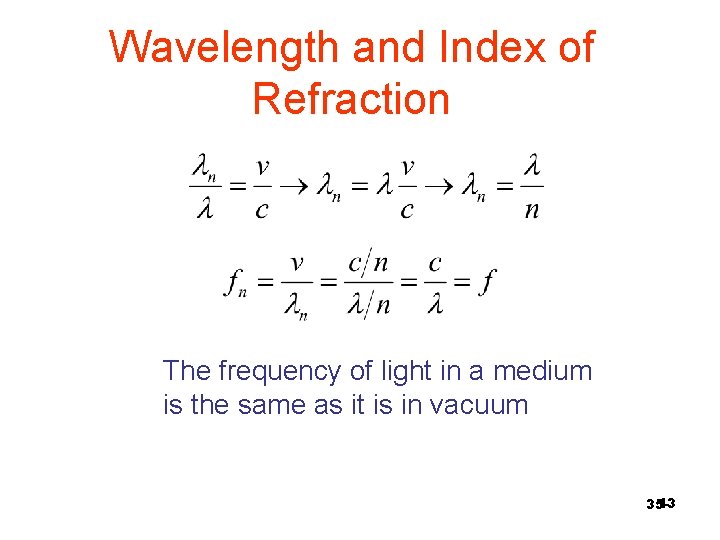
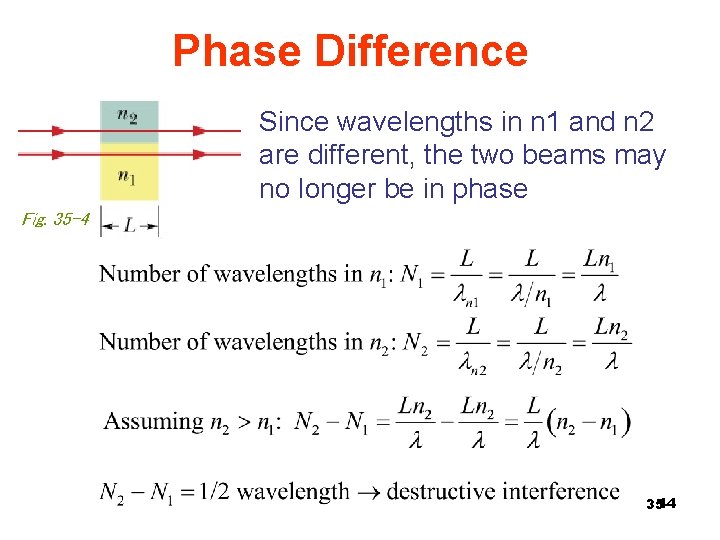
Phase Difference, Wavelength and Index of Refraction
Wavelength and Index of Refraction The frequency of light in a medium is the same as it is in vacuum 13 35 -
Phase Difference Since wavelengths in n 1 and n 2 are different, the two beams may no longer be in phase Fig. 35 -4 14 35 -
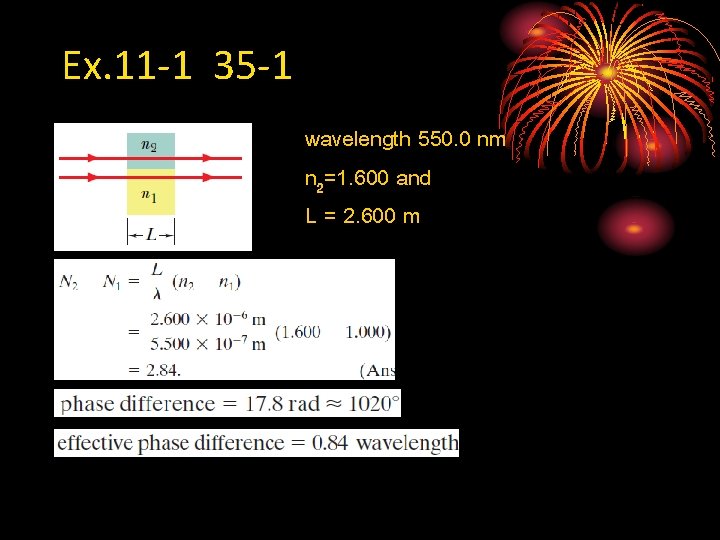
Ex. 11 -1 35 -1 wavelength 550. 0 nm n 2=1. 600 and L = 2. 600 m
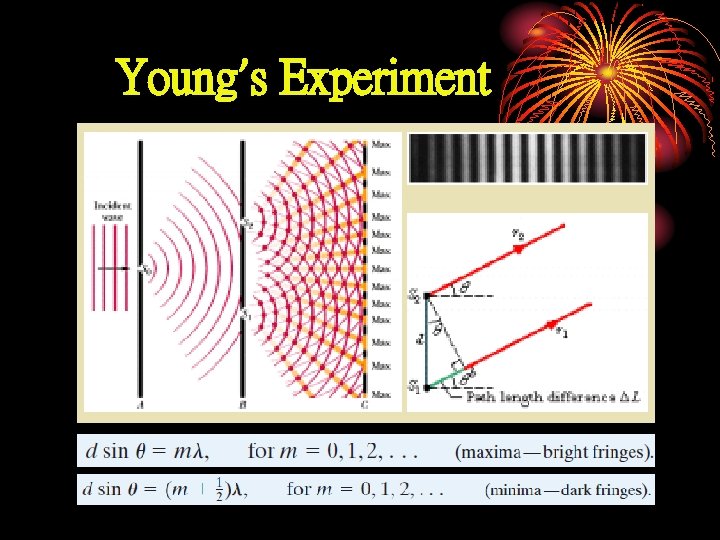
Young’s Experiment
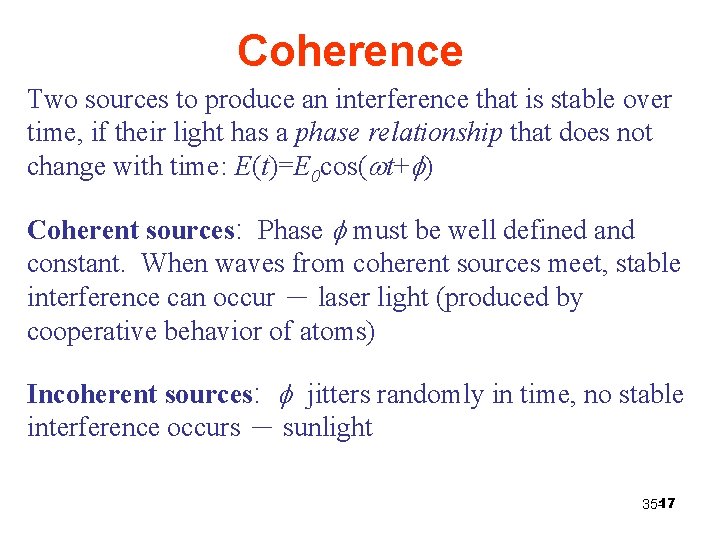
Coherence Two sources to produce an interference that is stable over time, if their light has a phase relationship that does not change with time: E(t)=E 0 cos(wt+f) Coherent sources: Phase f must be well defined and constant. When waves from coherent sources meet, stable interference can occur - laser light (produced by cooperative behavior of atoms) Incoherent sources: f jitters randomly in time, no stable interference occurs - sunlight 35 -17
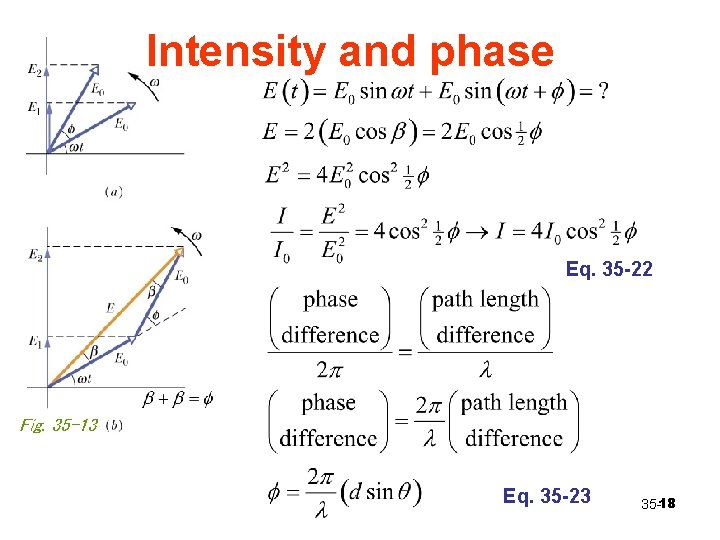
Intensity and phase Eq. 35 -22 Fig. 35 -13 Eq. 35 -23 35 -18
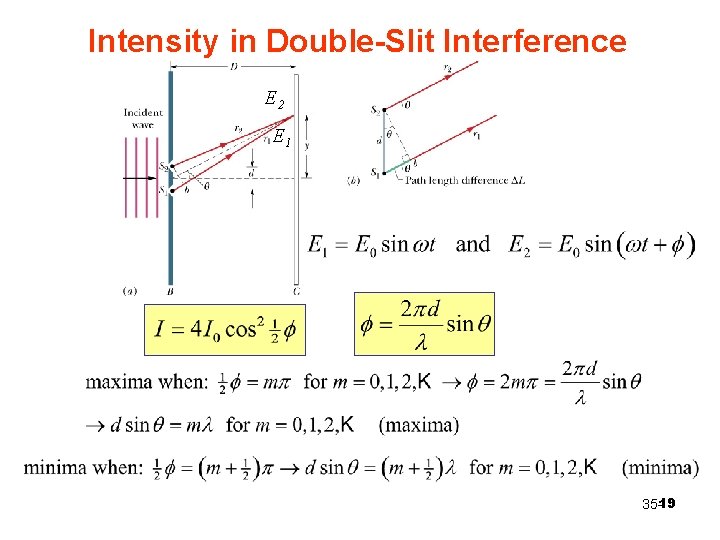
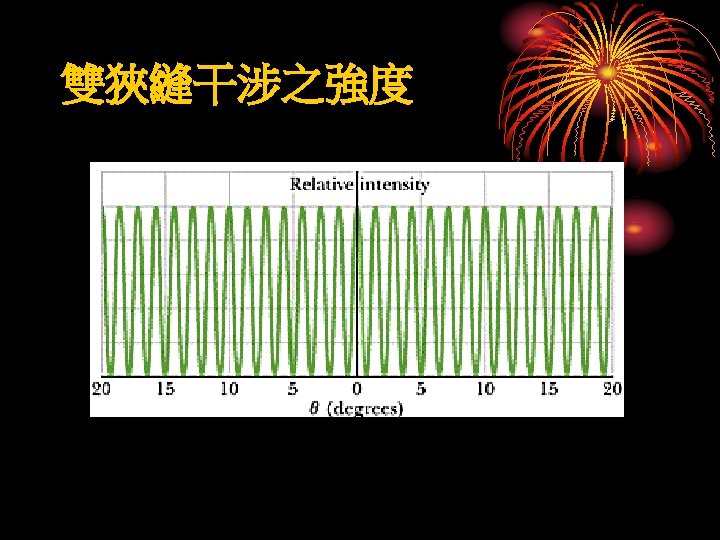
Intensity in Double-Slit Interference E 2 E 1 35 -19
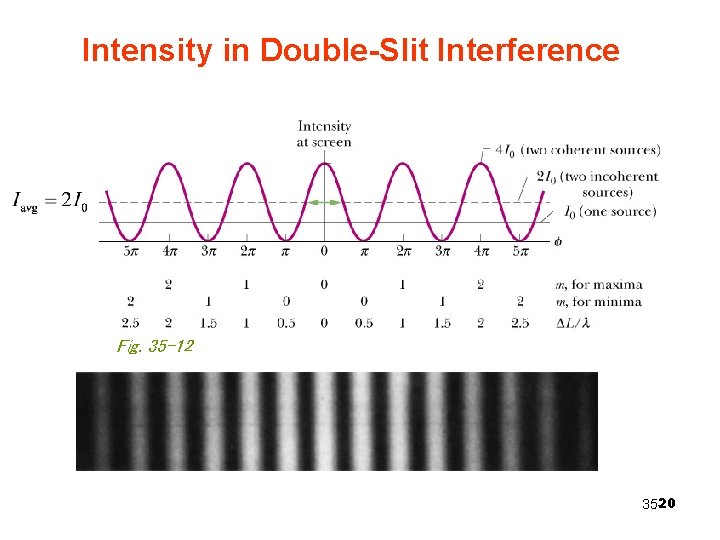
Intensity in Double-Slit Interference Fig. 35 -12 35 -20
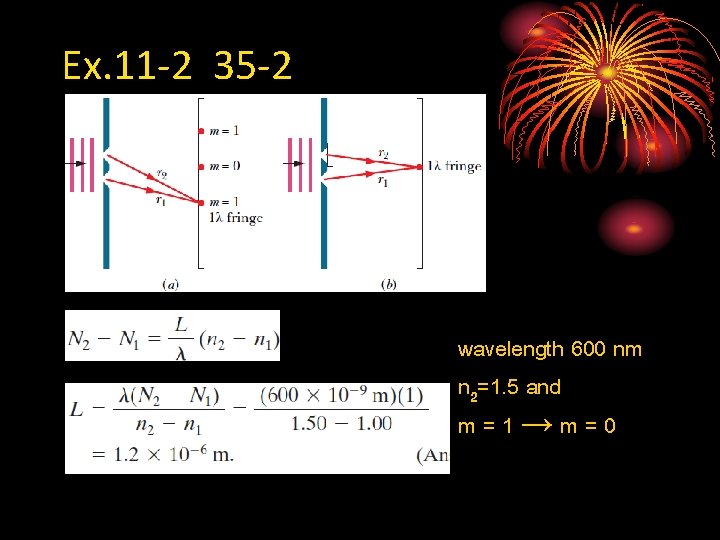
Ex. 11 -2 35 -2 wavelength 600 nm n 2=1. 5 and m=1→m=0
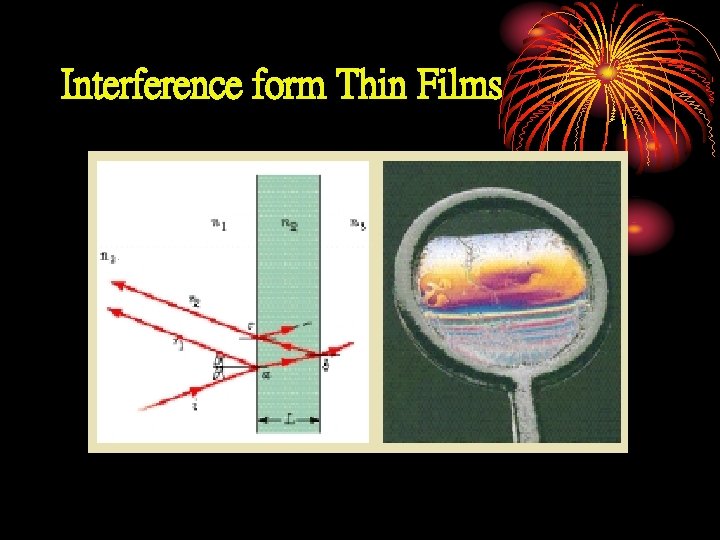
Interference form Thin Films
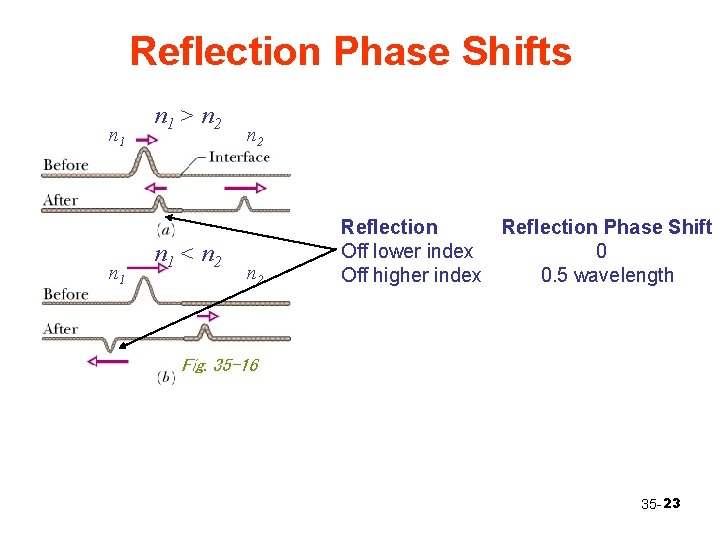
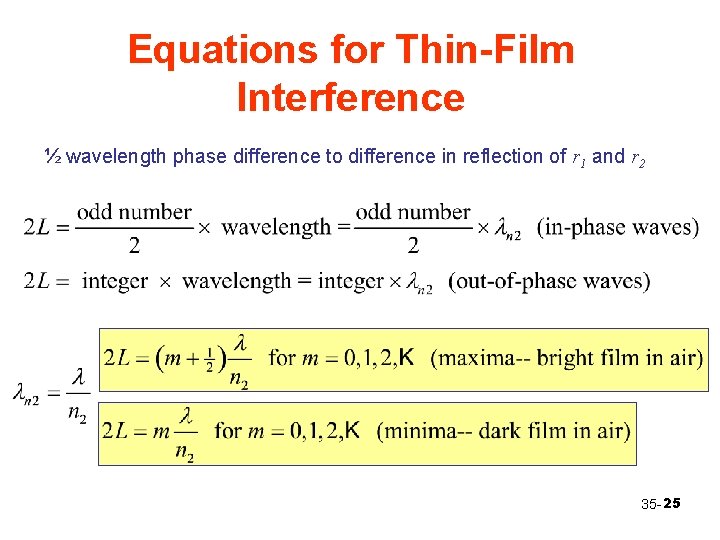
Reflection Phase Shifts n 1 n 1 > n 2 n 1 < n 2 n 2 Reflection Phase Shift Off lower index 0 Off higher index 0. 5 wavelength Fig. 35 -16 35 - 23
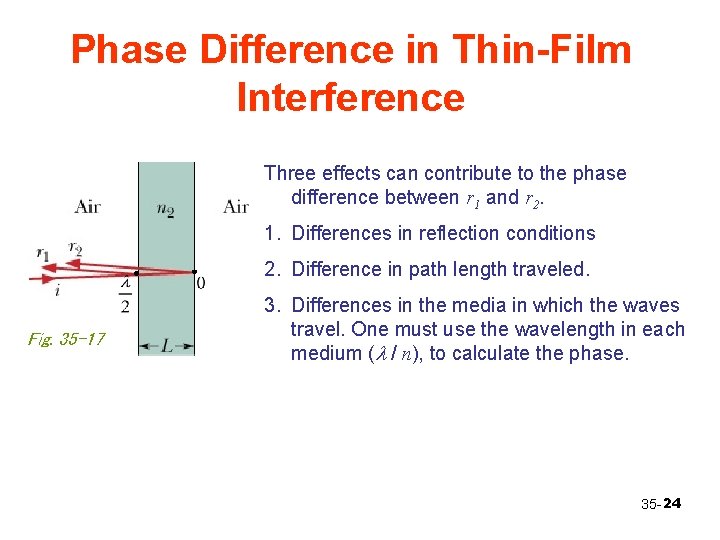
Phase Difference in Thin-Film Interference Three effects can contribute to the phase difference between r 1 and r 2. 1. Differences in reflection conditions 2. Difference in path length traveled. Fig. 35 -17 3. Differences in the media in which the waves travel. One must use the wavelength in each medium (l / n), to calculate the phase. 35 - 24
Equations for Thin-Film Interference ½ wavelength phase difference to difference in reflection of r 1 and r 2 35 - 25
Color Shifting by Paper Currencies, paints and Morpho Butterflies weak mirror soap film better mirror looking directly down : red or red-yellow tilting :green 35 - 26
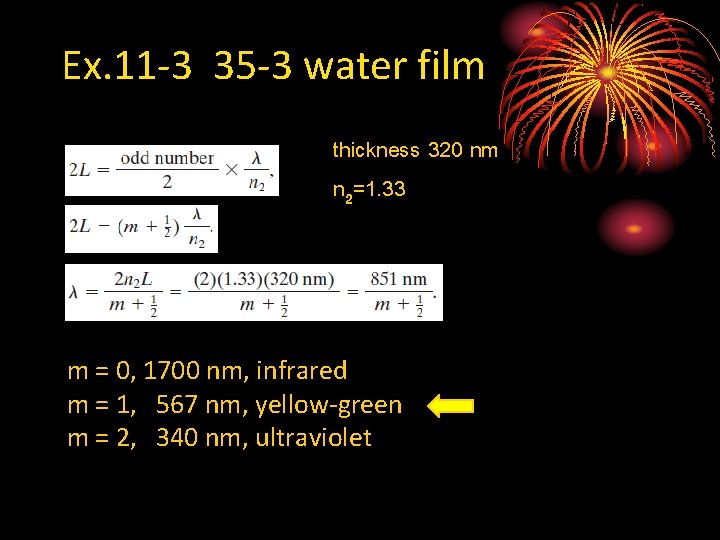
Ex. 11 -3 35 -3 water film thickness 320 nm n 2=1. 33 m = 0, 1700 nm, infrared m = 1, 567 nm, yellow-green m = 2, 340 nm, ultraviolet
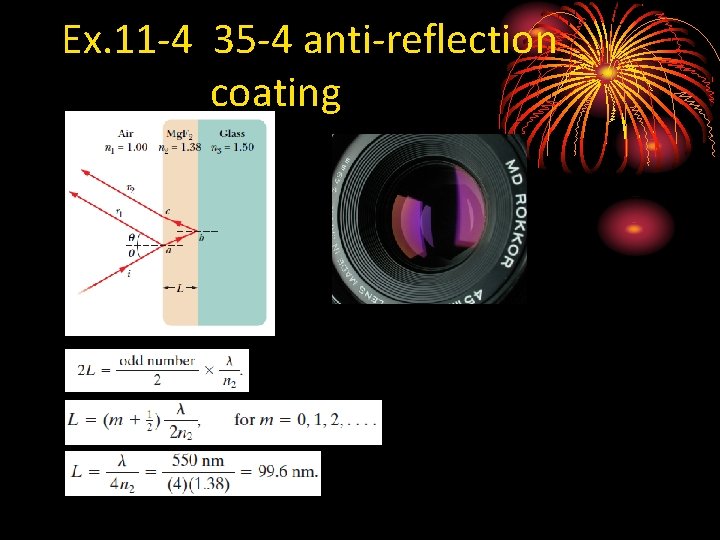
Ex. 11 -4 35 -4 anti-reflection coating
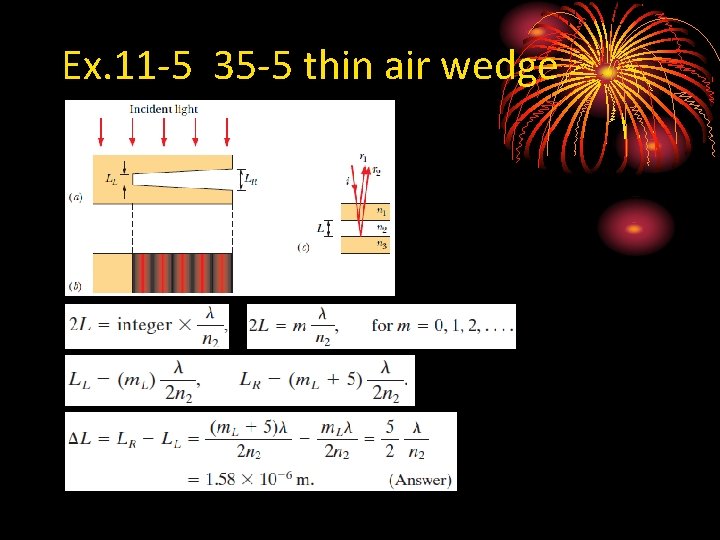
Ex. 11 -5 35 -5 thin air wedge
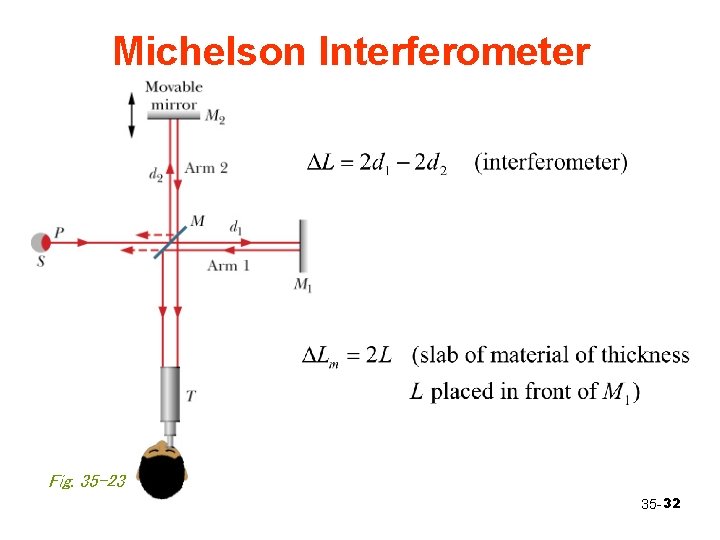
Michelson Interferometer Fig. 35 -23 35 - 32
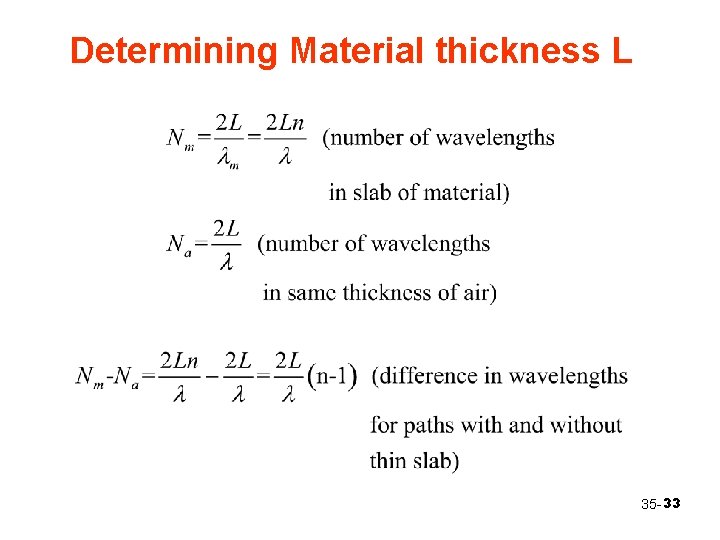
Determining Material thickness L 35 - 33
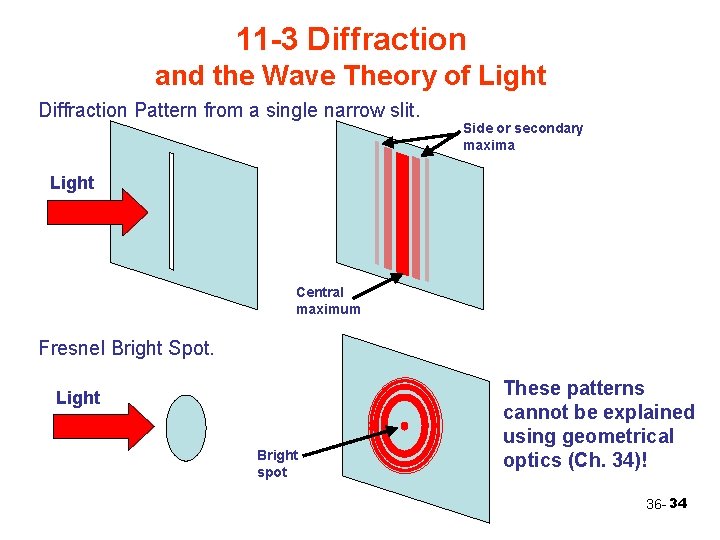
11 -3 Diffraction and the Wave Theory of Light Diffraction Pattern from a single narrow slit. Side or secondary maxima Light Central maximum Fresnel Bright Spot. Light Bright spot These patterns cannot be explained using geometrical optics (Ch. 34)! 36 - 34
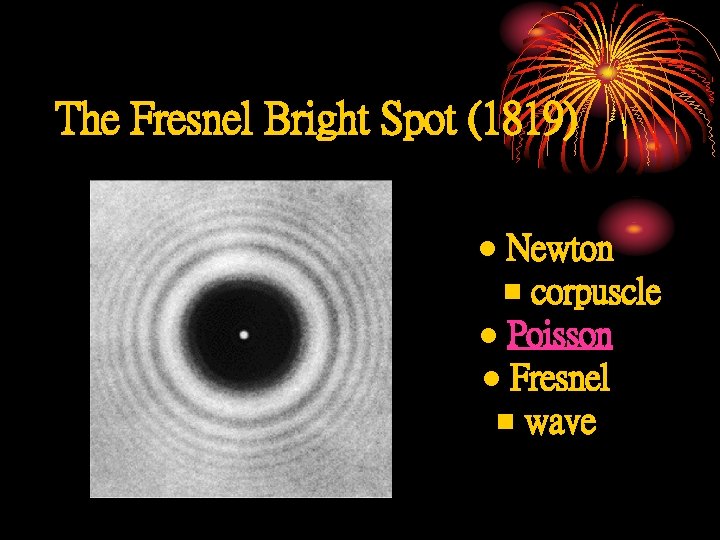
The Fresnel Bright Spot (1819) Newton n corpuscle l Poisson l Fresnel n wave l
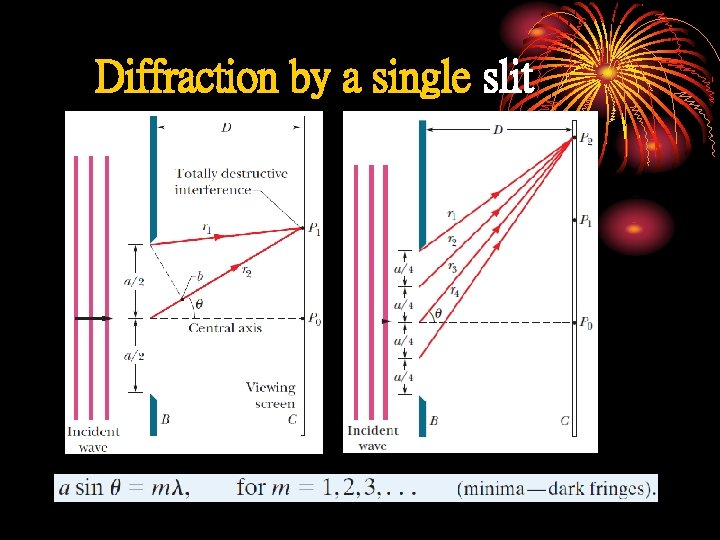
Diffraction by a single slit
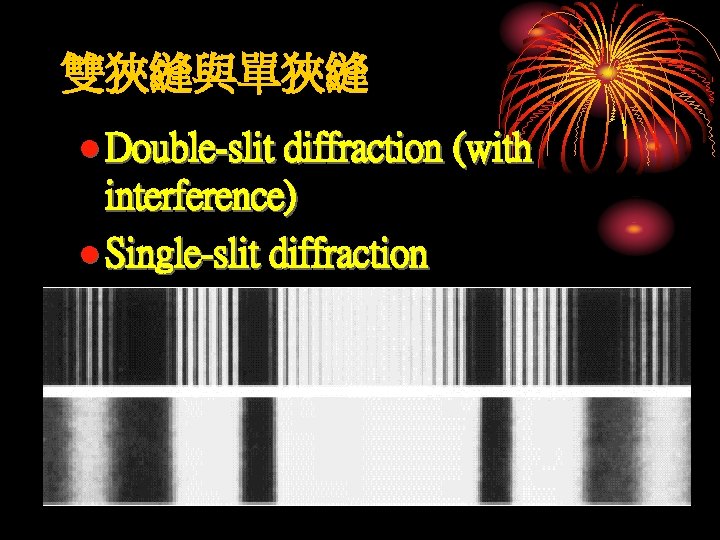
雙狹縫與單狹縫 l Double-slit diffraction (with interference) l Single-slit diffraction
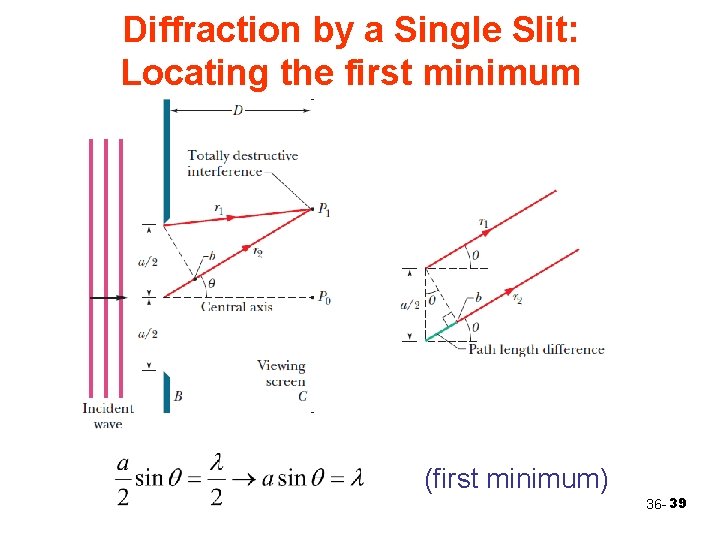
Diffraction by a Single Slit: Locating the first minimum (first minimum) 36 - 39
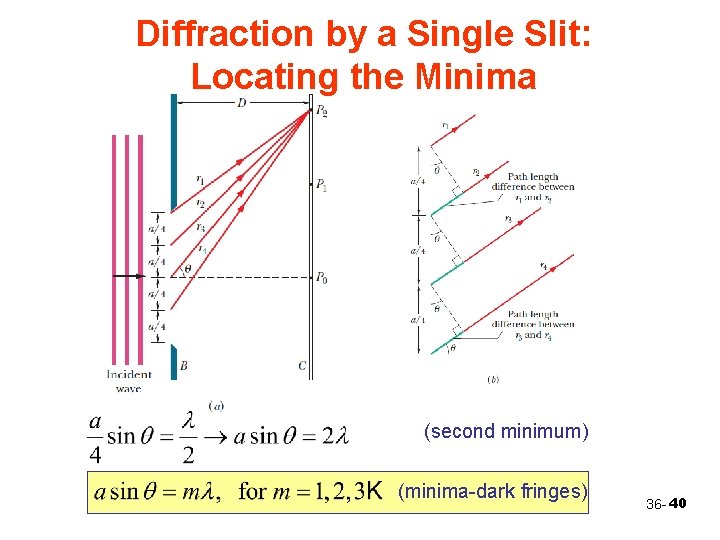
Diffraction by a Single Slit: Locating the Minima (second minimum) (minima-dark fringes) 36 - 40
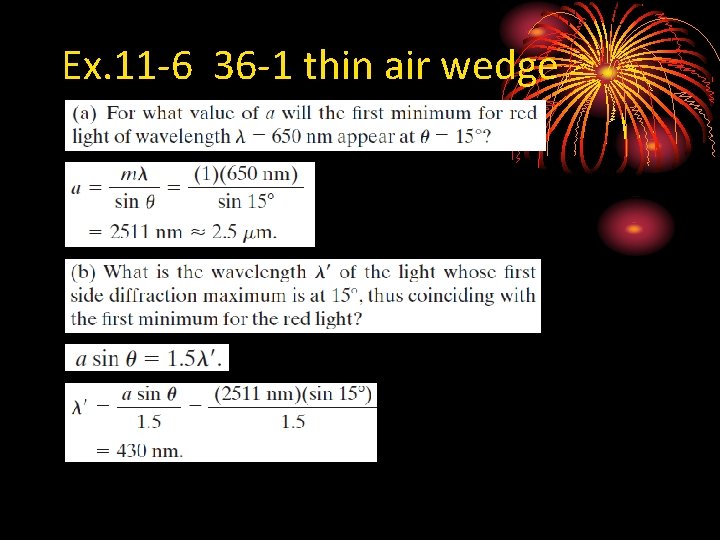
Ex. 11 -6 36 -1 thin air wedge
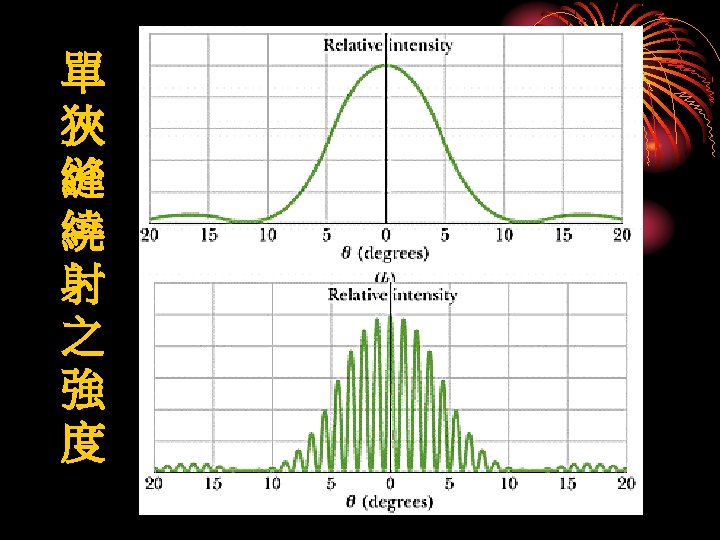
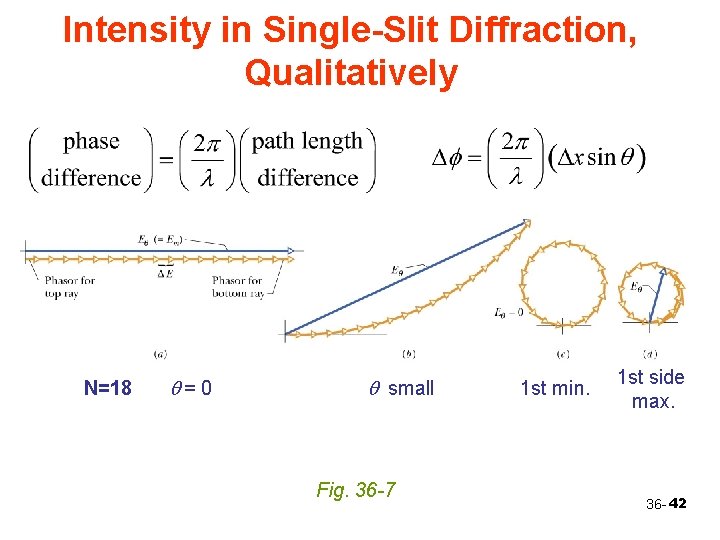
Intensity in Single-Slit Diffraction, Qualitatively N=18 q=0 q small Fig. 36 -7 1 st min. 1 st side max. 36 - 42
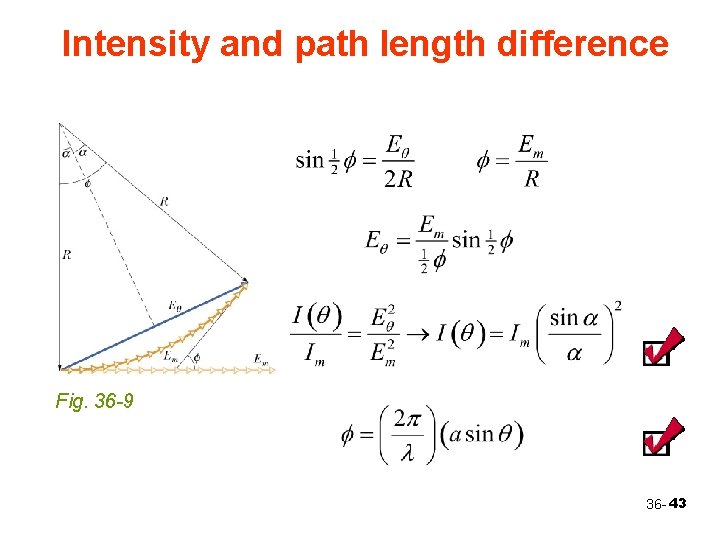
Intensity and path length difference Fig. 36 -9 36 - 43
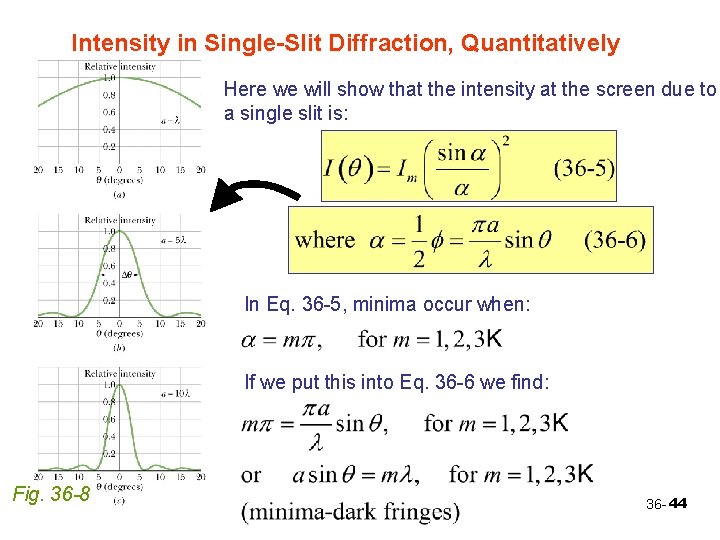
Intensity in Single-Slit Diffraction, Quantitatively Here we will show that the intensity at the screen due to a single slit is: In Eq. 36 -5, minima occur when: If we put this into Eq. 36 -6 we find: Fig. 36 -8 36 - 44
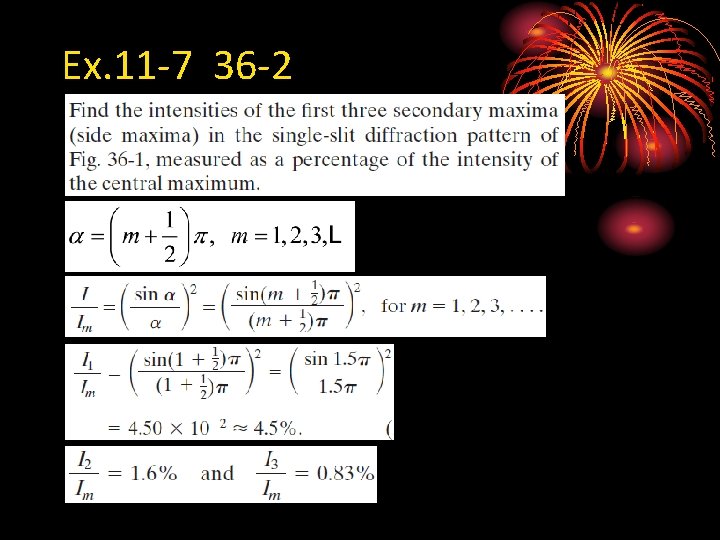
Ex. 11 -7 36 -2
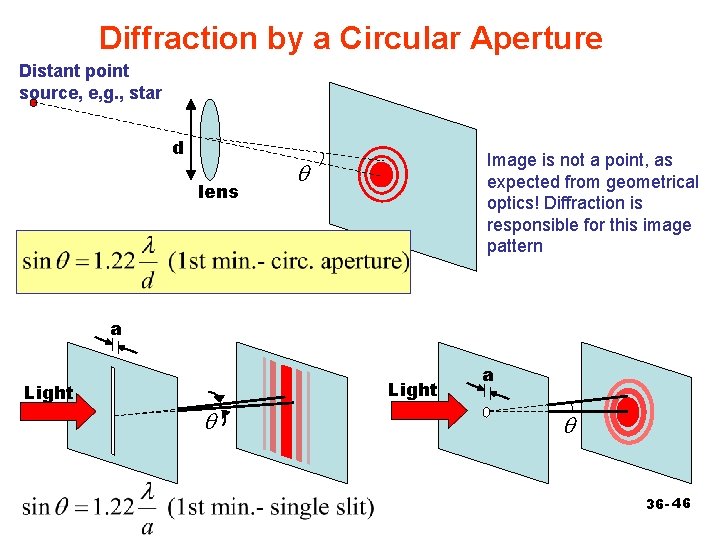
Diffraction by a Circular Aperture Distant point source, e, g. , star d lens Image is not a point, as expected from geometrical optics! Diffraction is responsible for this image pattern q a Light q a q 36 - 46
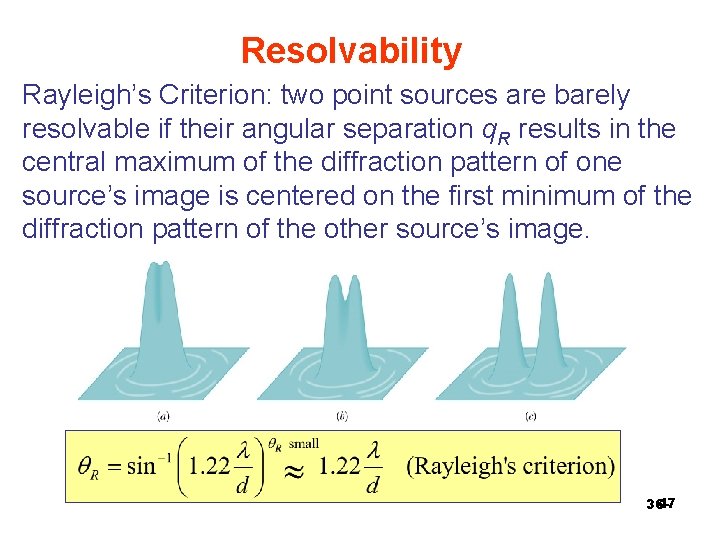
Resolvability Rayleigh’s Criterion: two point sources are barely resolvable if their angular separation q. R results in the central maximum of the diffraction pattern of one source’s image is centered on the first minimum of the diffraction pattern of the other source’s image. Fig. 3611 47 36 -
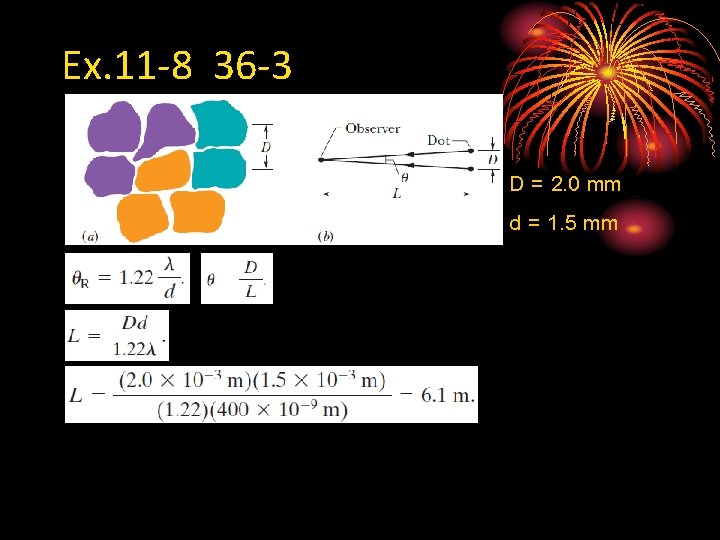
Ex. 11 -8 36 -3 D = 2. 0 mm d = 1. 5 mm
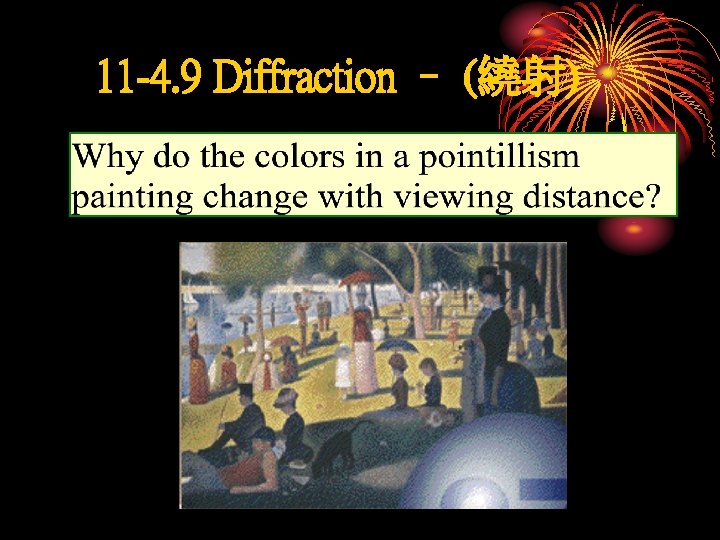
11 -4. 9 Diffraction – (繞射)
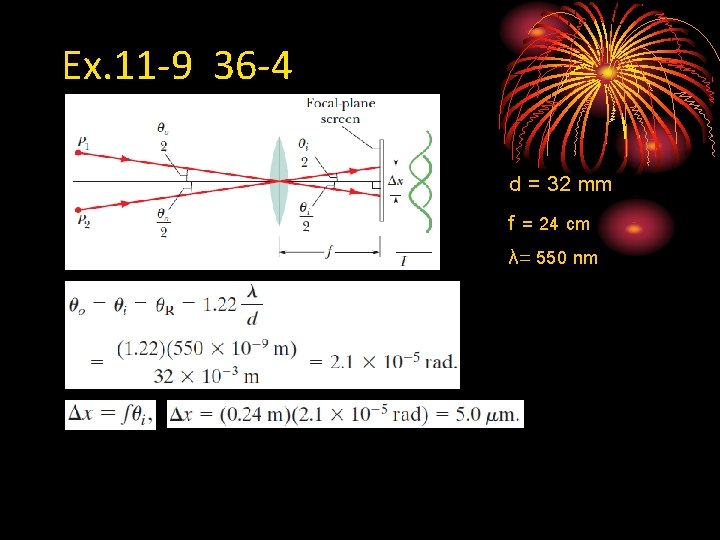
Ex. 11 -9 36 -4 d = 32 mm f = 24 cm λ= 550 nm
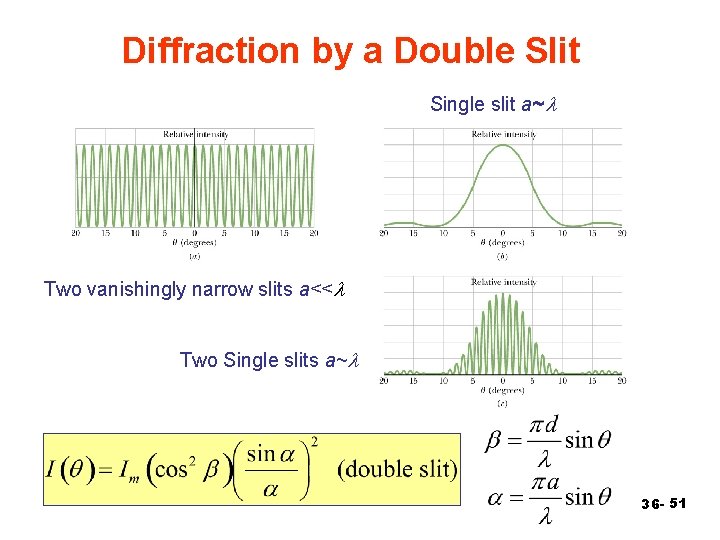
Diffraction by a Double Slit Single slit a~l Two vanishingly narrow slits a<<l Two Single slits a~l 36 - 51
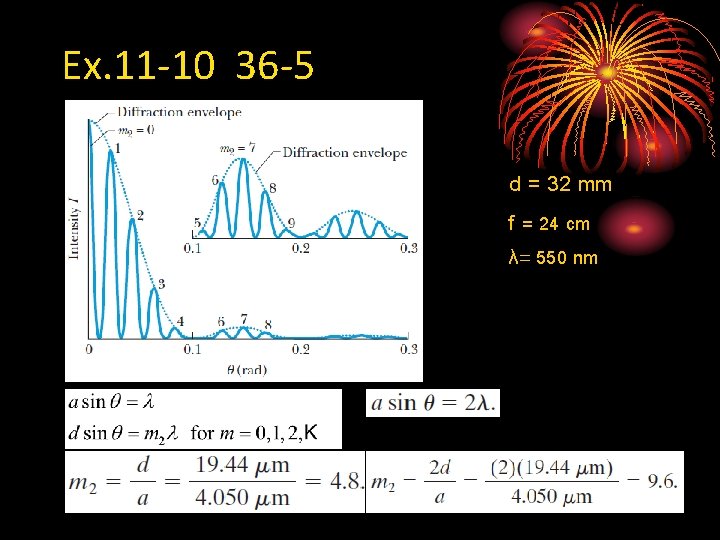
Ex. 11 -10 36 -5 d = 32 mm f = 24 cm λ= 550 nm
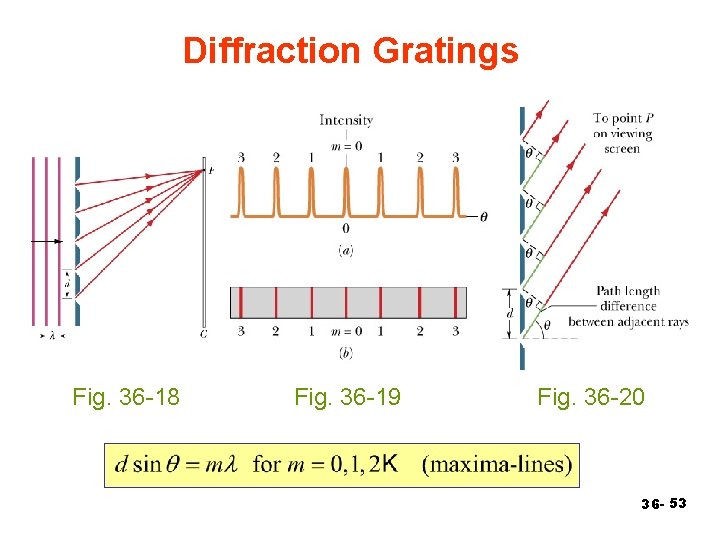
Diffraction Gratings Fig. 36 -18 Fig. 36 -19 Fig. 36 -20 36 - 53
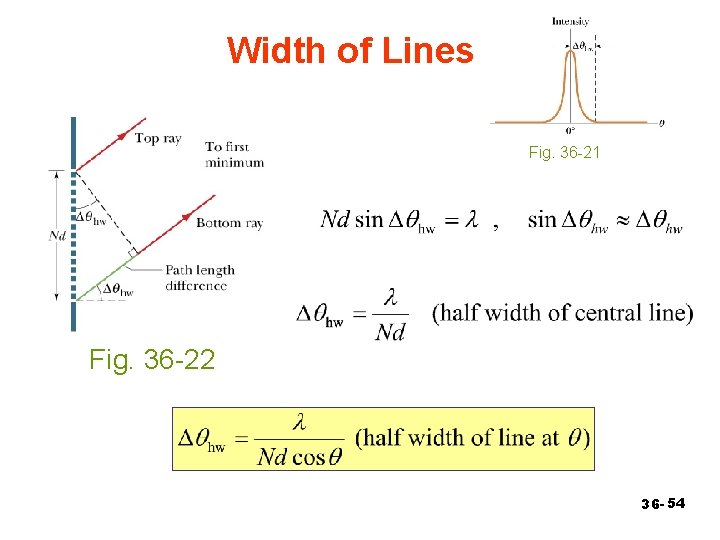
Width of Lines Fig. 36 -21 Fig. 36 -22 36 - 54
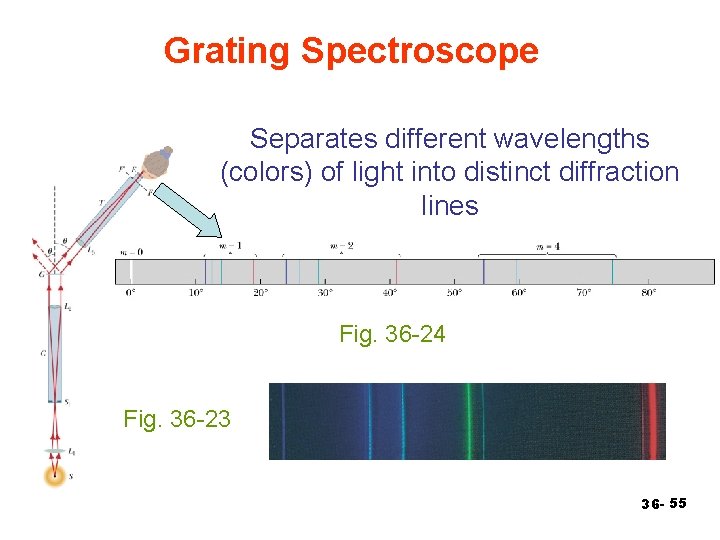
Grating Spectroscope Separates different wavelengths (colors) of light into distinct diffraction lines Fig. 36 -24 Fig. 36 -23 36 - 55
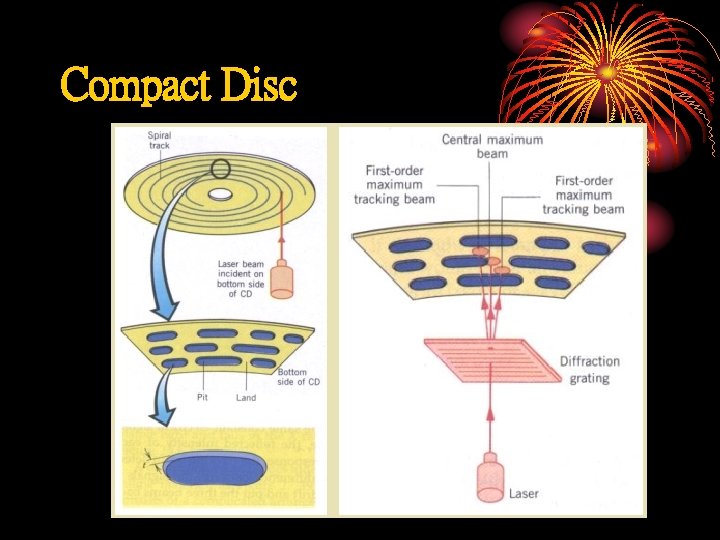
Compact Disc
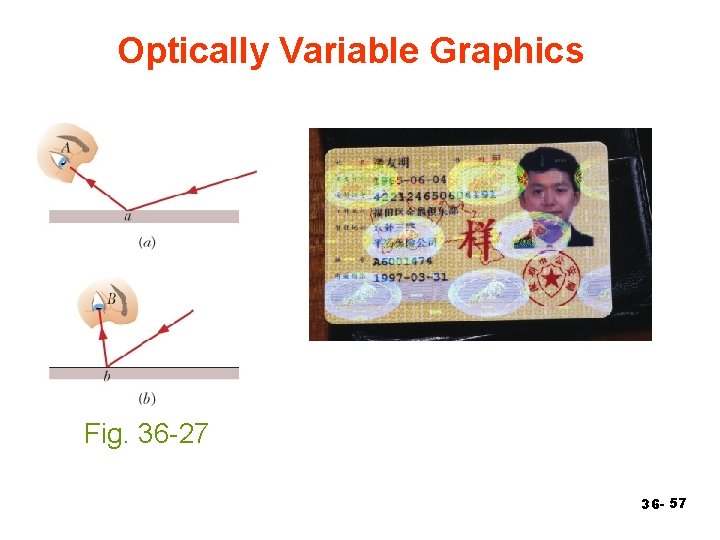
Optically Variable Graphics Fig. 36 -27 36 - 57
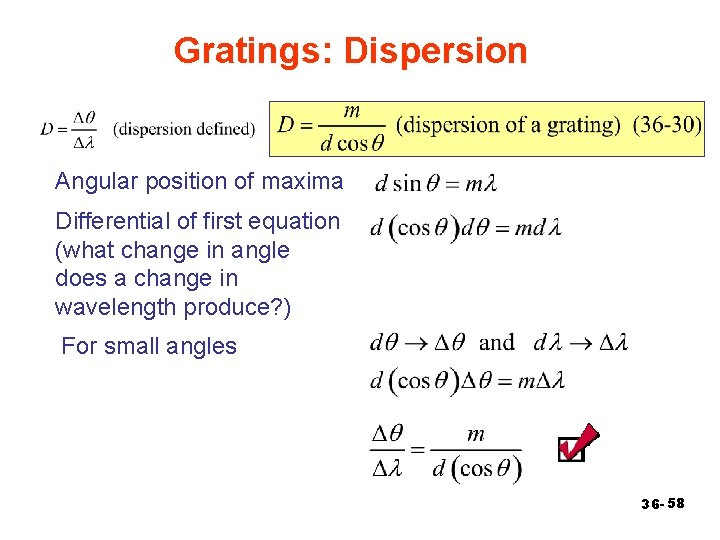
Gratings: Dispersion Angular position of maxima Differential of first equation (what change in angle does a change in wavelength produce? ) For small angles 36 - 58
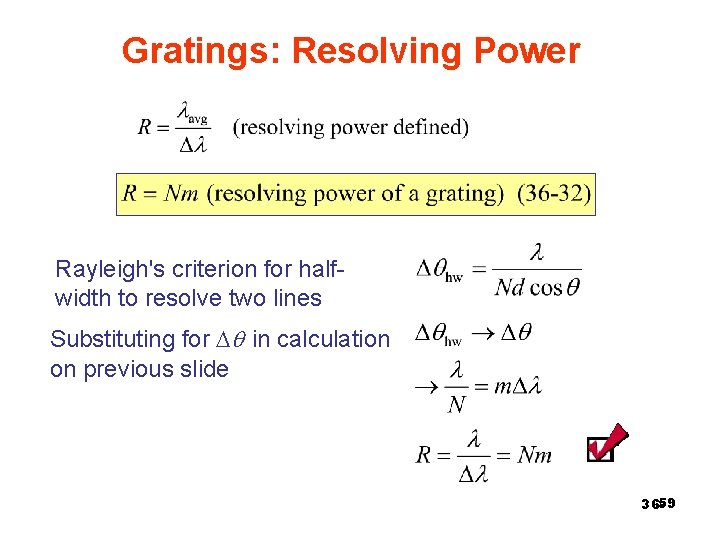
Gratings: Resolving Power Rayleigh's criterion for halfwidth to resolve two lines Substituting for Dq in calculation on previous slide 36 -59
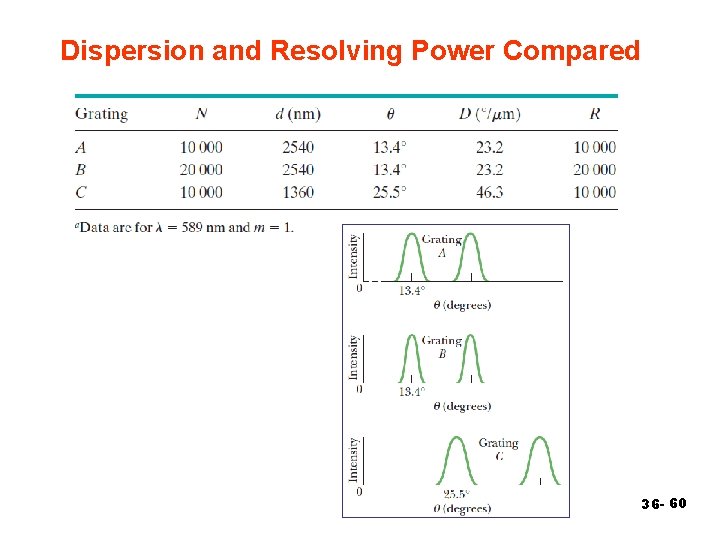
Dispersion and Resolving Power Compared 36 - 60
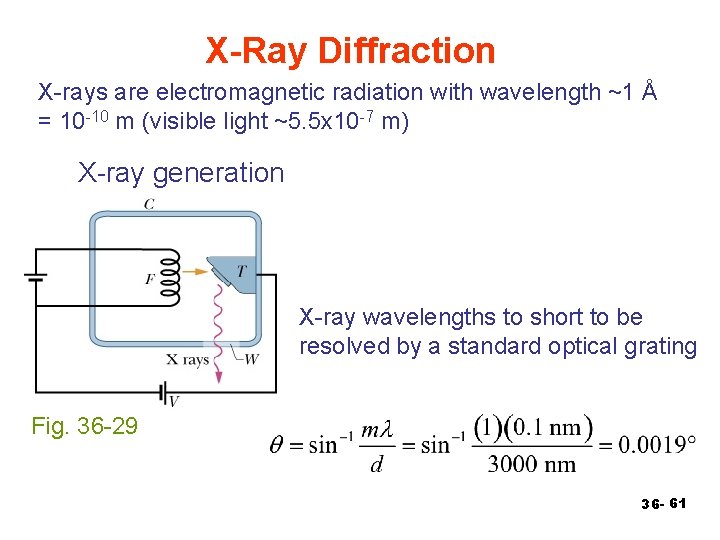
X-Ray Diffraction X-rays are electromagnetic radiation with wavelength ~1 Å = 10 -10 m (visible light ~5. 5 x 10 -7 m) X-ray generation X-ray wavelengths to short to be resolved by a standard optical grating Fig. 36 -29 36 - 61
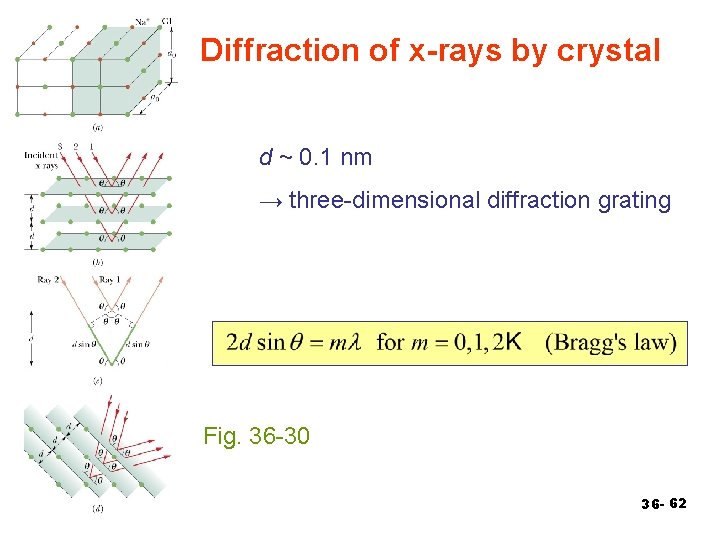
Diffraction of x-rays by crystal d ~ 0. 1 nm → three-dimensional diffraction grating Fig. 36 -30 36 - 62
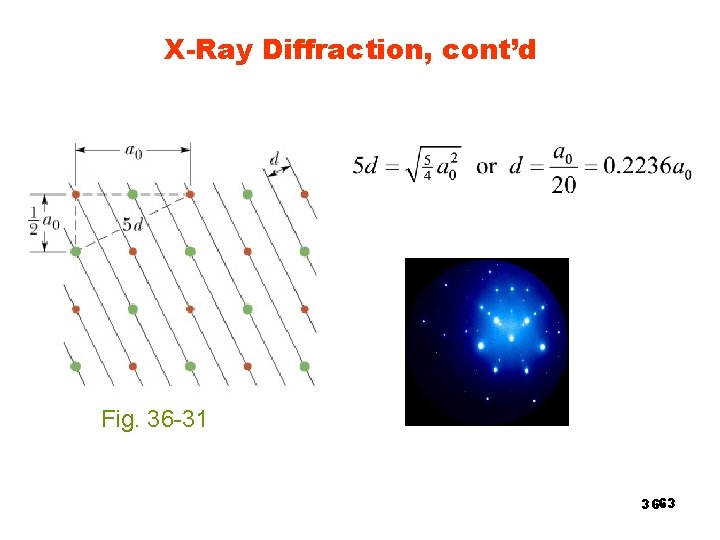
X-Ray Diffraction, cont’d Fig. 36 -31 36 -63
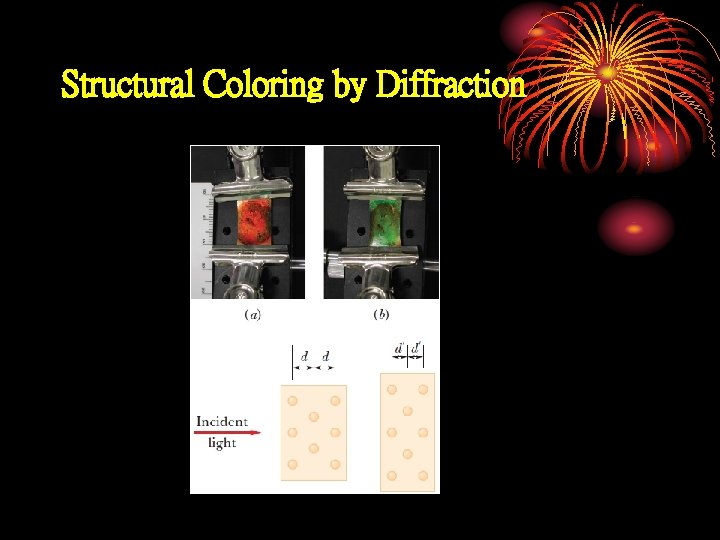
Structural Coloring by Diffraction