
SectionLesson Angles Acute Obtuse Right Angle Objectives By
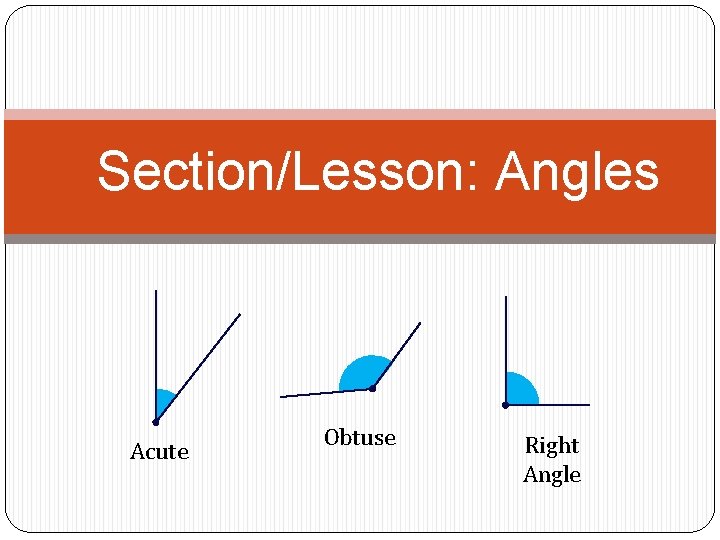
Section/Lesson: Angles Acute Obtuse Right Angle
Objectives By the end of this section/lesson, students should be able to: • Recognise, name and compare angles (e. g: acute and rightangle) • Measure angles with the help of a protractor.

Angle in Real Life Example 1:
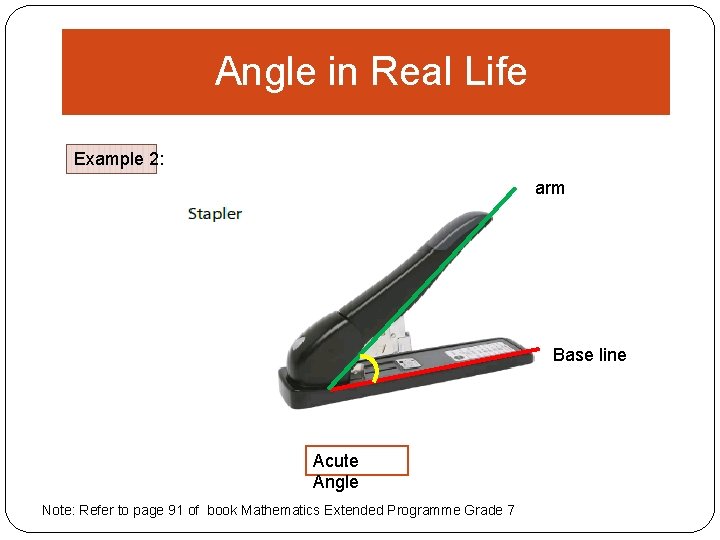
Angle in Real Life Example 2: arm Base line Acute Angle Note: Refer to page 91 of book Mathematics Extended Programme Grade 7
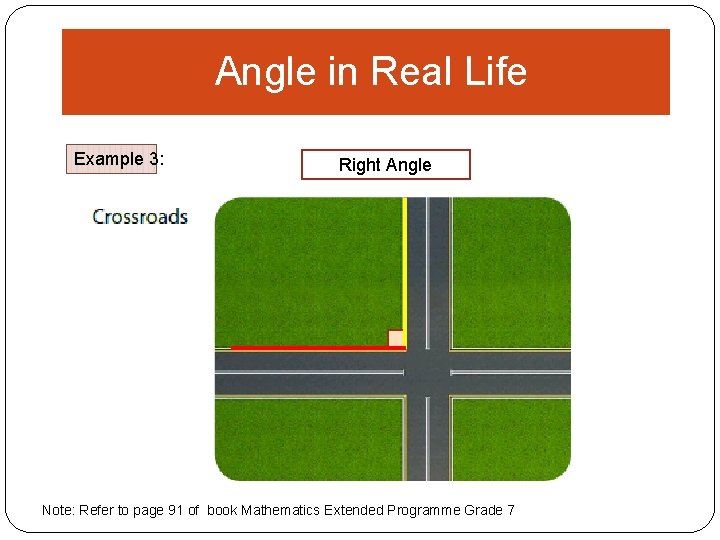
Angle in Real Life Example 3: Right Angle Note: Refer to page 91 of book Mathematics Extended Programme Grade 7
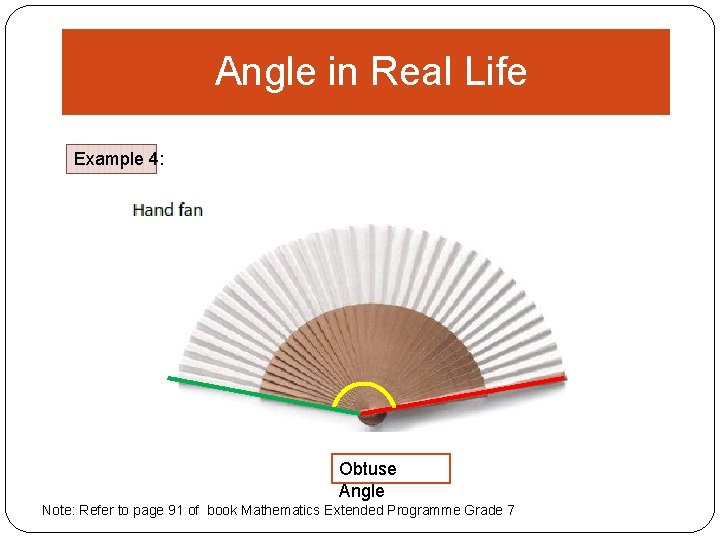
Angle in Real Life Example 4: Obtuse Angle Note: Refer to page 91 of book Mathematics Extended Programme Grade 7
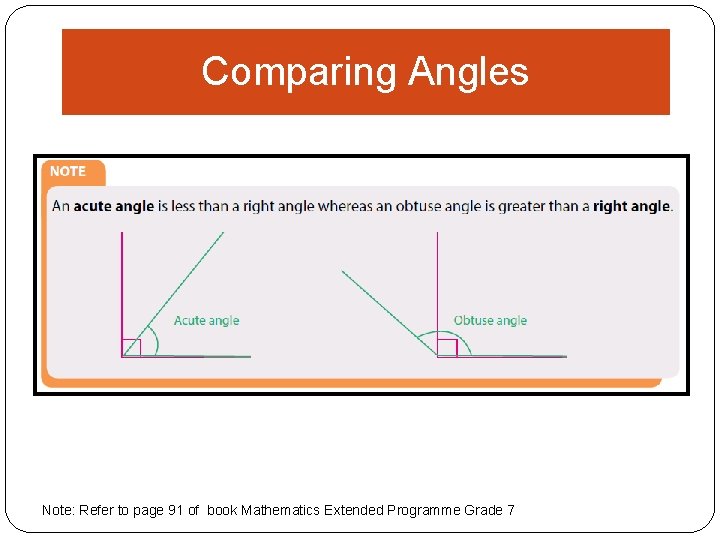
Comparing Angles Note: Refer to page 91 of book Mathematics Extended Programme Grade 7
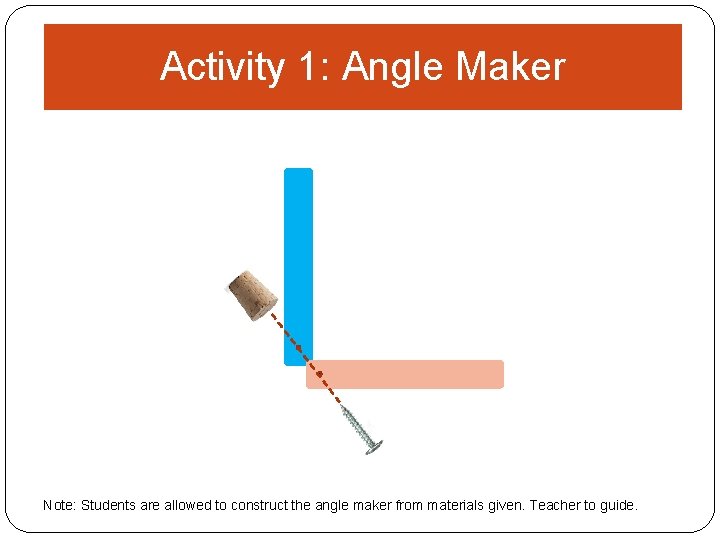
Activity 1: Angle Maker Note: Students are allowed to construct the angle maker from materials given. Teacher to guide.
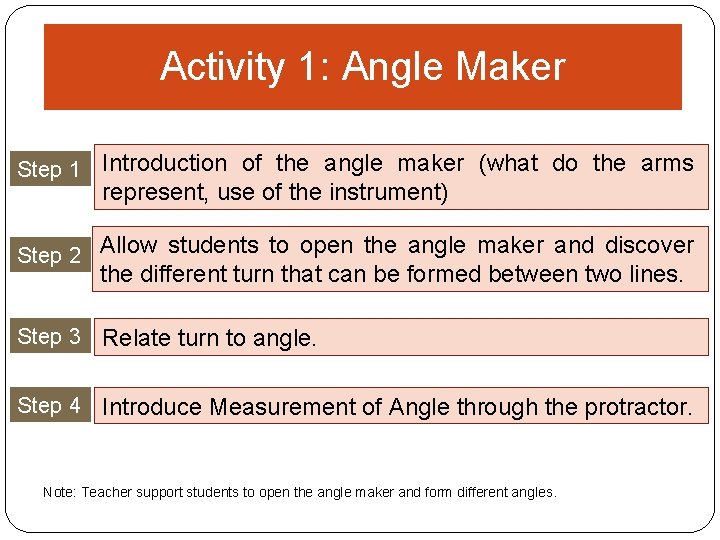
Activity 1: Angle Maker Step 1 Introduction of the angle maker (what do the arms represent, use of the instrument) Step 2 Allow students to open the angle maker and discover the different turn that can be formed between two lines. Step 3 Relate turn to angle. Step 4 Introduce Measurement of Angle through the protractor. Note: Teacher support students to open the angle maker and form different angles.
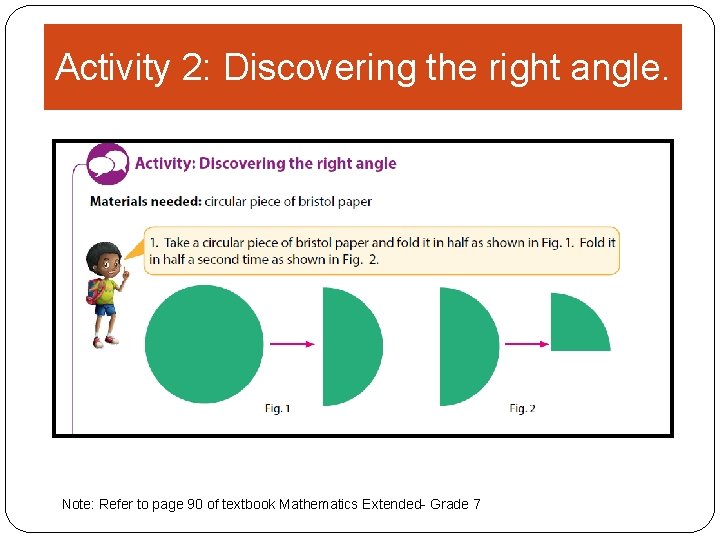
Activity 2: Discovering the right angle. Note: Refer to page 90 of textbook Mathematics Extended- Grade 7
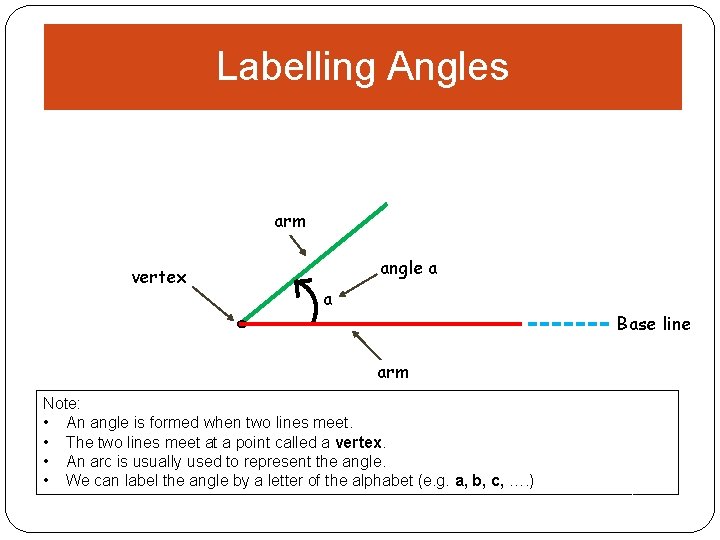
Labelling Angles arm vertex angle a a Base line arm Note: • An angle is formed when two lines meet. • The two lines meet at a point called a vertex. • An arc is usually used to represent the angle. • We can label the angle by a letter of the alphabet (e. g. a, b, c, …. )
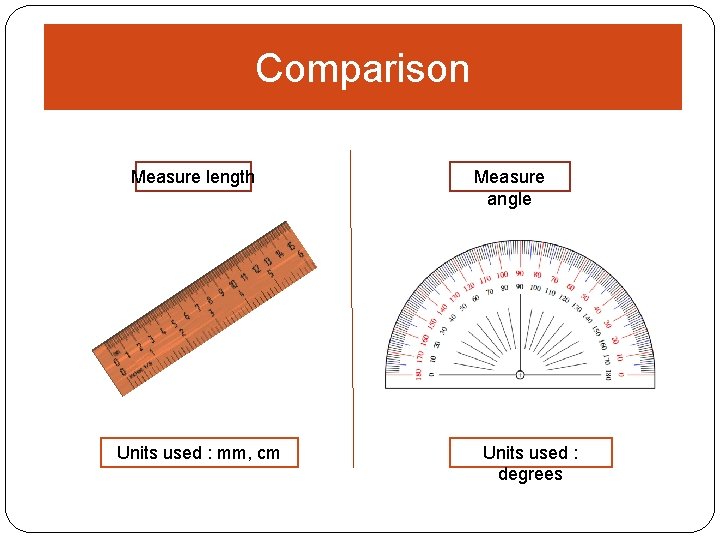
Comparison Measure length Ruler Units used : mm, cm Measure angle Protactor Units used : degrees
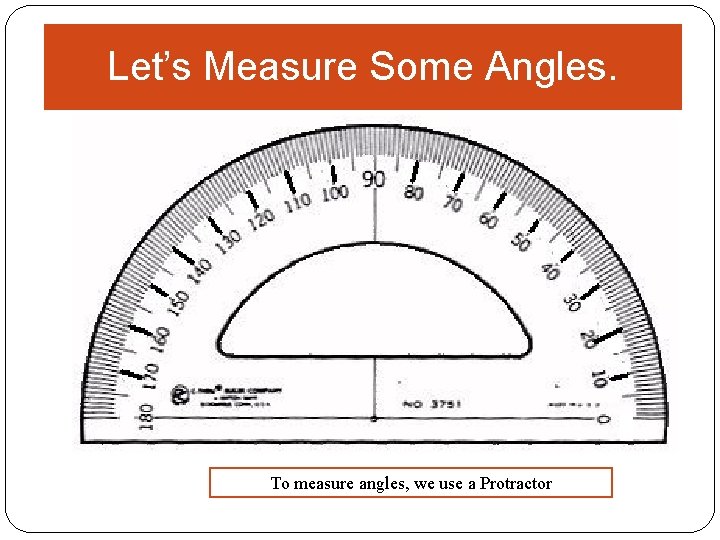
Let’s Measure Some Angles. To measure angles, we use a Protractor
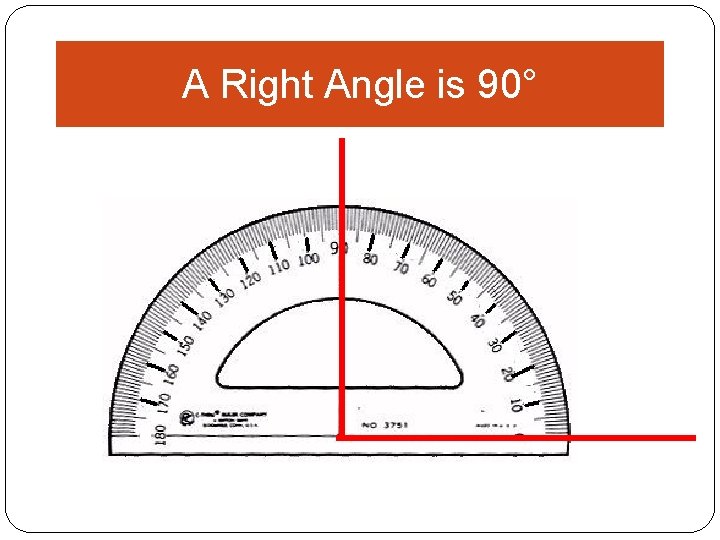
A Right Angle is 90°
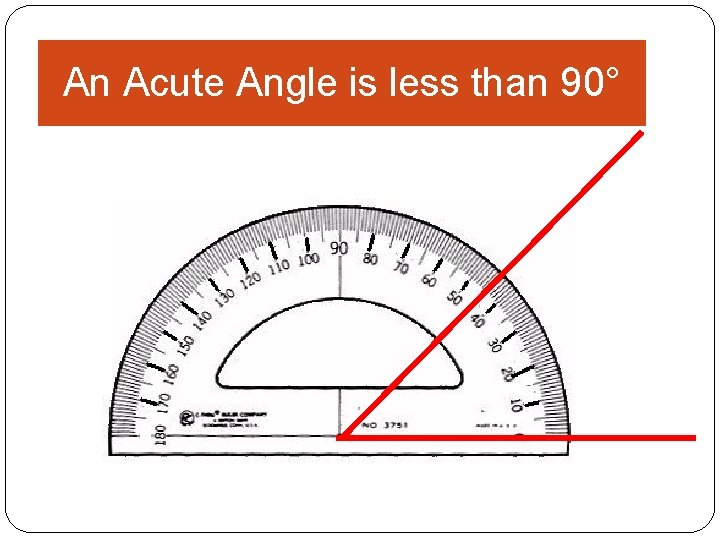
An Acute Angle is less than 90°
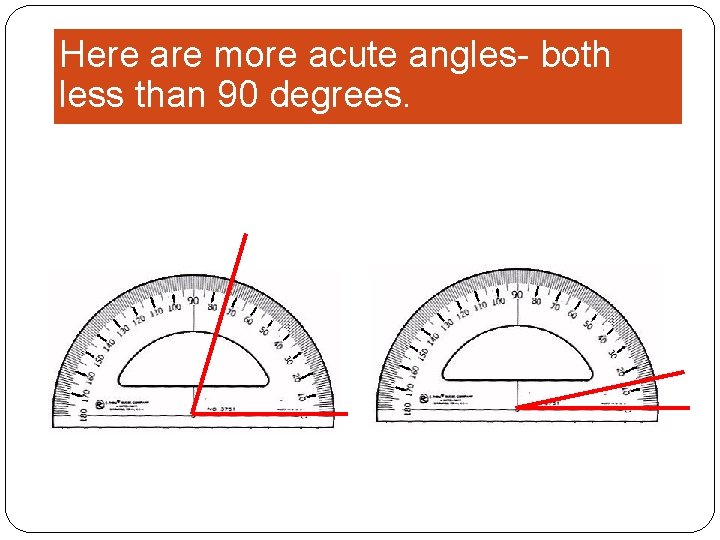
Here are more acute angles- both less than 90 degrees.
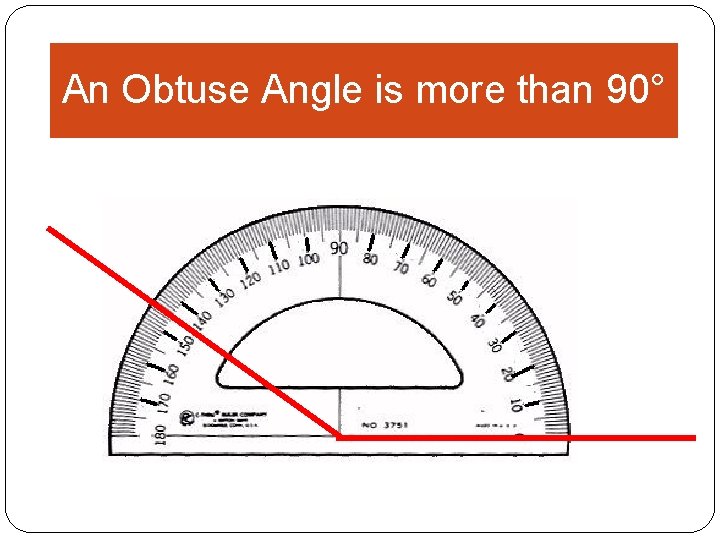
An Obtuse Angle is more than 90°
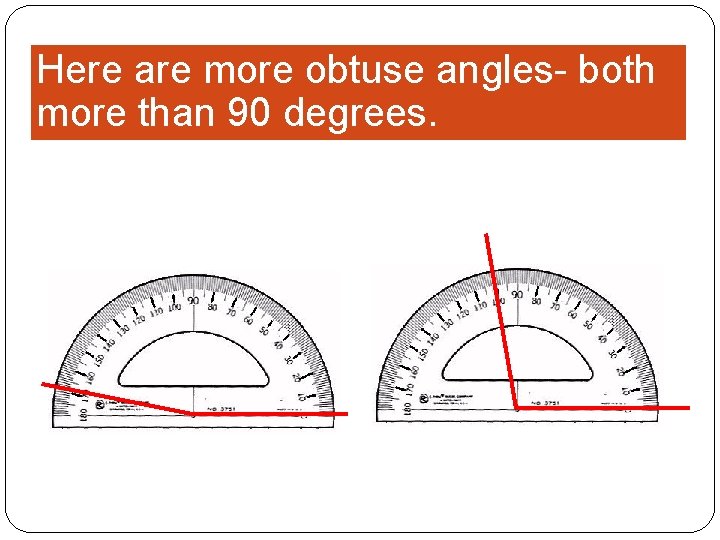
Here are more obtuse angles- both more than 90 degrees.
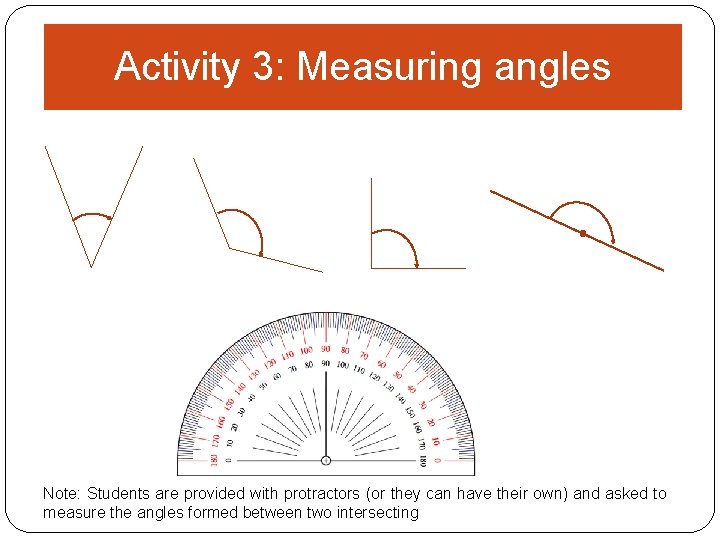
Activity 3: Measuring angles Note: Students are provided with protractors (or they can have their own) and asked to measure the angles formed between two intersecting
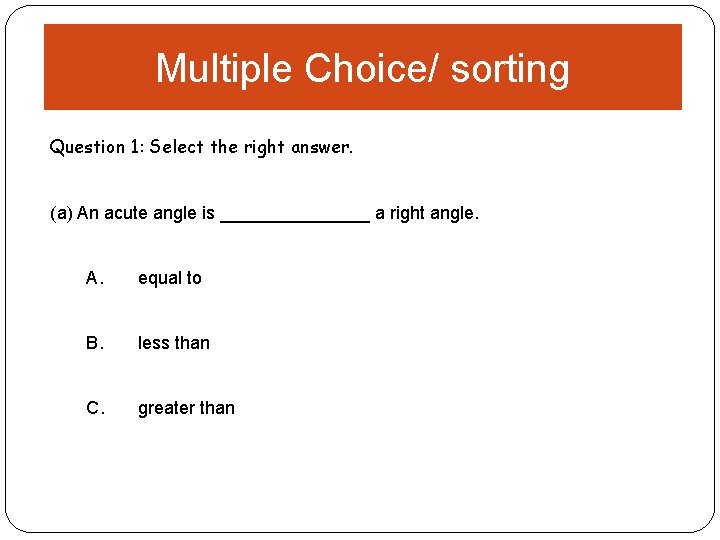
Multiple Choice/ sorting Question 1: Select the right answer. (a) An acute angle is ________ a right angle. A. equal to B. less than C. greater than
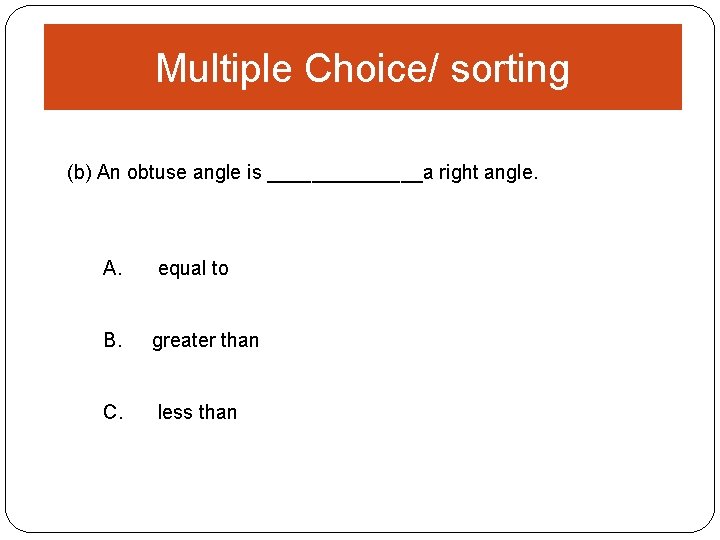
Multiple Choice/ sorting (b) An obtuse angle is _______a right angle. A. equal to B. greater than C. less than
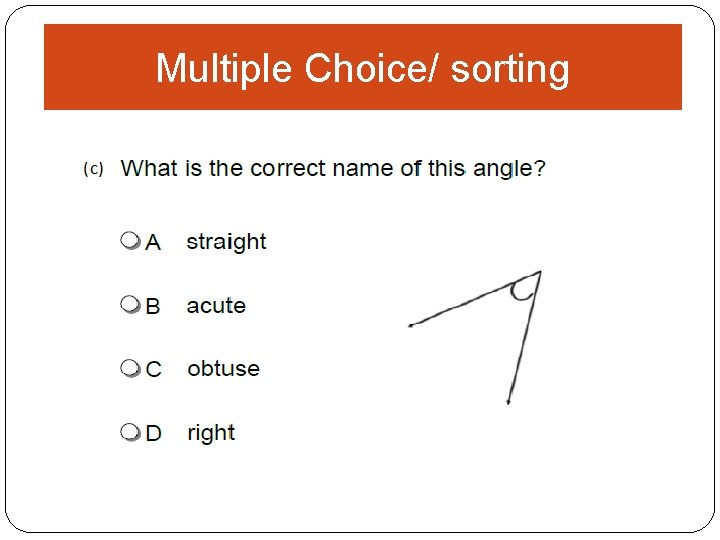
Multiple Choice/ sorting
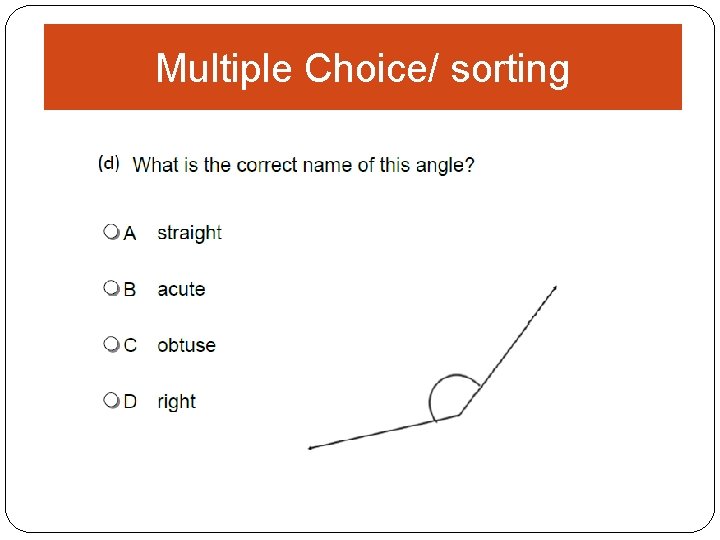
Multiple Choice/ sorting
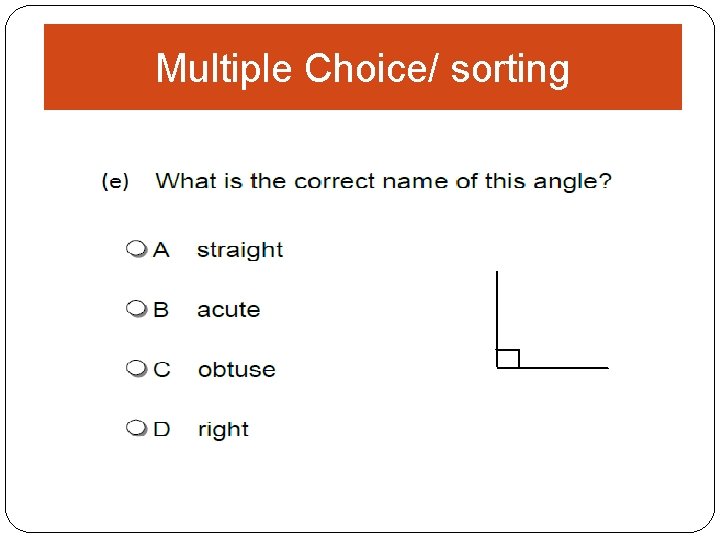
Multiple Choice/ sorting
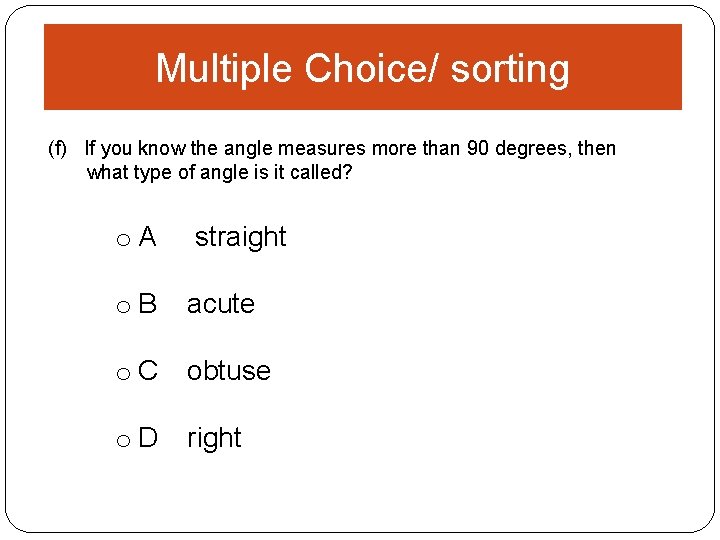
Multiple Choice/ sorting (f) If you know the angle measures more than 90 degrees, then what type of angle is it called? o. A straight o. B acute o. C obtuse o. D right
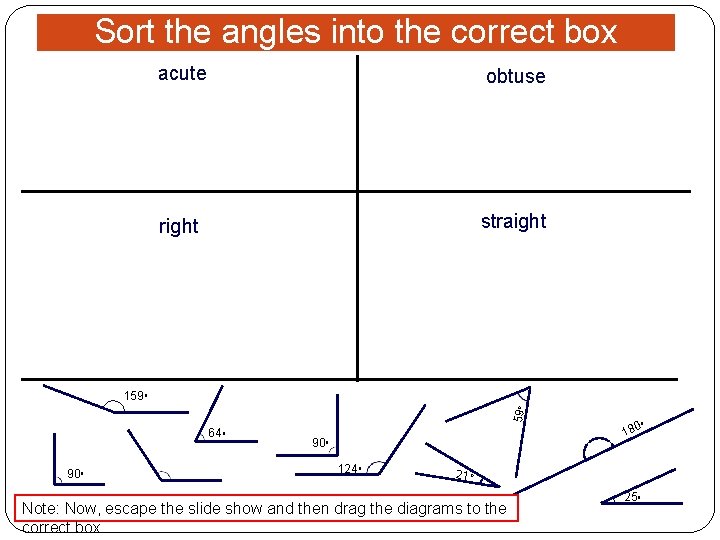
Sort the angles into the correct box acute obtuse right straight 59 o 159 o 64 o 90 o 124 o o 180 21 o Note: Now, escape the slide show and then drag the diagrams to the correct box. 25 o
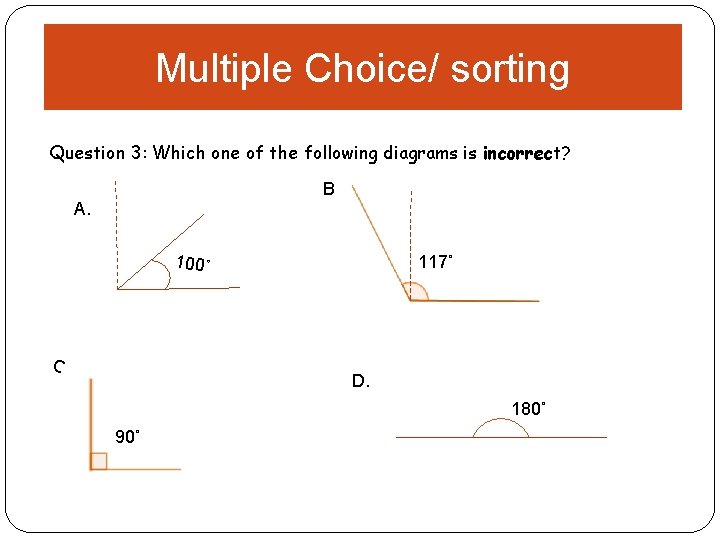
Multiple Choice/ sorting Question 3: Which one of the following diagrams is incorrect? B. A. 100˚ C. 117˚ D. 180˚ 90˚
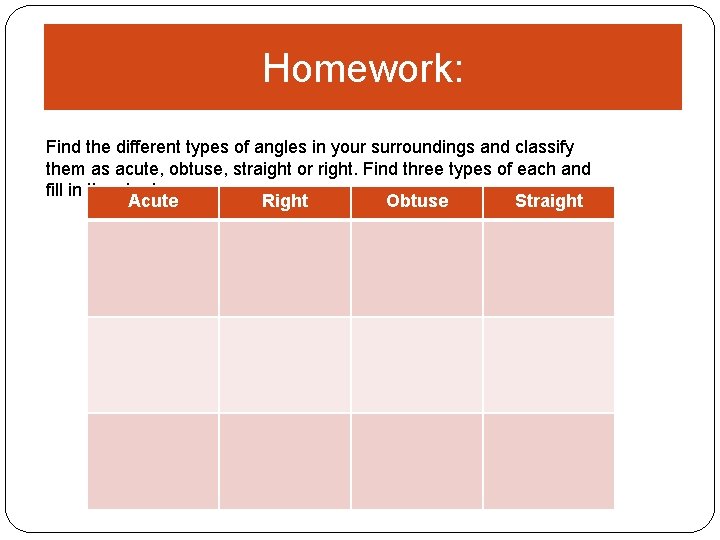
Homework: Find the different types of angles in your surroundings and classify them as acute, obtuse, straight or right. Find three types of each and fill in the chart. Acute Right Obtuse Straight
End of Lesson Thank you.
- Slides: 29