
SECTIONING OF A MACHINE COMPONENT BY ANY ONE
SECTIONING OF A MACHINE COMPONENT BY ANY ONE SECTION PLA NE , OUT OF THREE FOLLOWING MENTIONED SECTION PLANES
(1)BY A VERTICAL SECTION PLANE (PARALLEL TO PRINCIPLE V. P. ) Hence , (a) The real or true shape of the section is observed in its F. V. , known as SEC. F. V. - AB (b) Section plane will be seen as a cutting plane line (similar to center line , thick at ends) with corresponding horizontal vision direction arrows at the center of thick ends in its T. V. & S. V.
(2)BY A HORIZONTAL SECTION PLANE Hence, (a)The real or true shape of the section is observed in its T. V. , known as SEC. T. V. - AB (b) The cutting or section plane will be observed as a cutting plane line (similar to center line , thick at ends) with the corresponding vertically downward vision direction arrows at the center of the thick ends in its F. V. and in S. V.
(3) BY A SECTION PLANE , NORMAL TO BOTH H. P. AND V. P. (i. e. parallel to profile plane or side view plane) Hence, (a)The real or true shape of the section is observed in its S. V. , known as SEC. L. H. S. V – AB or SEC. R. H. S. V - AB (b) The cutting or section plane will be observed as a cutting plane line (similar to center line , thick at ends) with the corresponding vertically downward vision direction arrows at the center of the thick ends in its F. V. and in T. V.
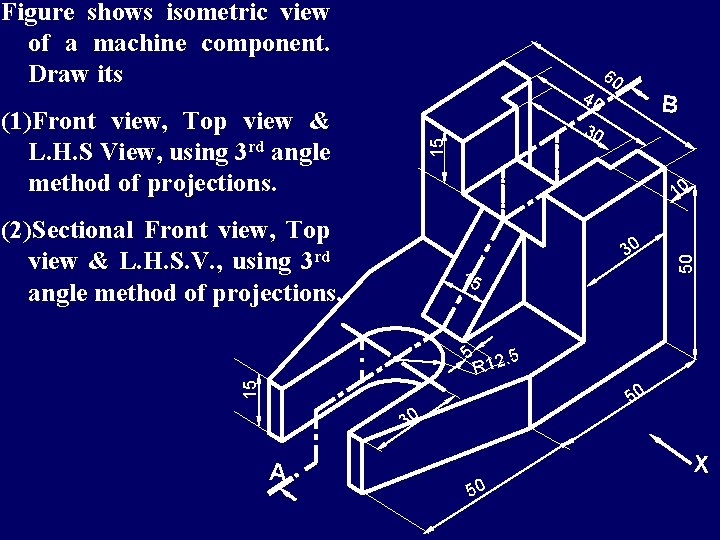
Figure shows isometric view of a machine component. Draw its 15 (1)Front view, Top view & L. H. S View, using 3 rd angle method of projections. 40 30 B 30 15 . 5 R 12 15 5 50 10 (2)Sectional Front view, Top view & L. H. S. V. , using 3 rd angle method of projections. 50 30 A 60 X 50
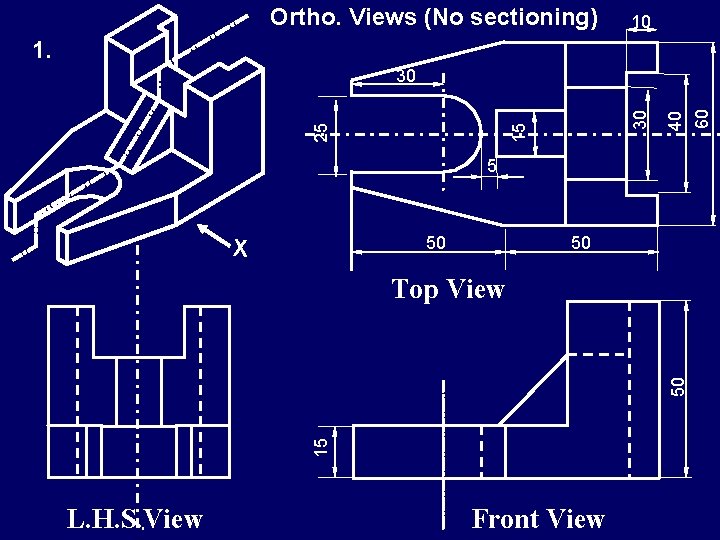
Ortho. Views (No sectioning) 10 1. 40 60 25 15 30 30 5 50 X 50 15 50 Top View L. H. S. View Front View
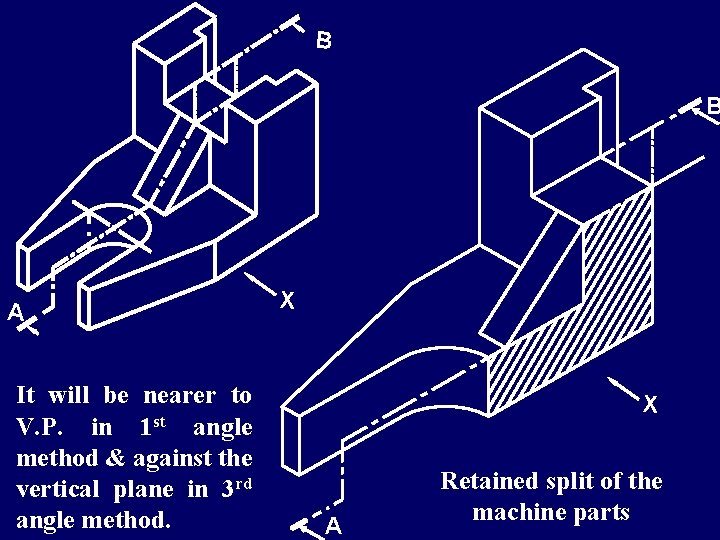
B B A It will be nearer to V. P. in 1 st angle method & against the vertical plane in 3 rd angle method. X X A Retained split of the machine parts
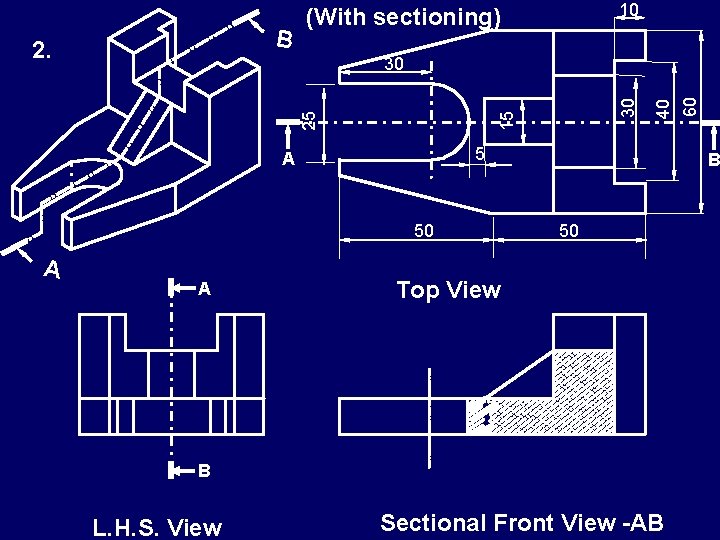
B 2. 40 60 15 25 5 50 A 30 30 A A 10 (With sectioning) B 50 Top View B L. H. S. View Sectional Front View -AB
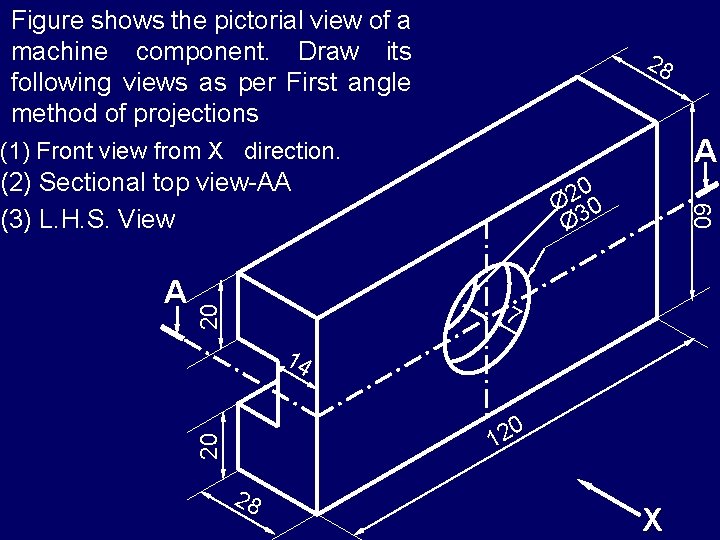
Figure shows the pictorial view of a machine component. Draw its following views as per First angle method of projections 28 A (1) Front view from X direction. (2) Sectional top view-AA (3) L. H. S. View 60 20 7 14 0 2 1 20 A 0 2 Ø 30 Ø 28 X
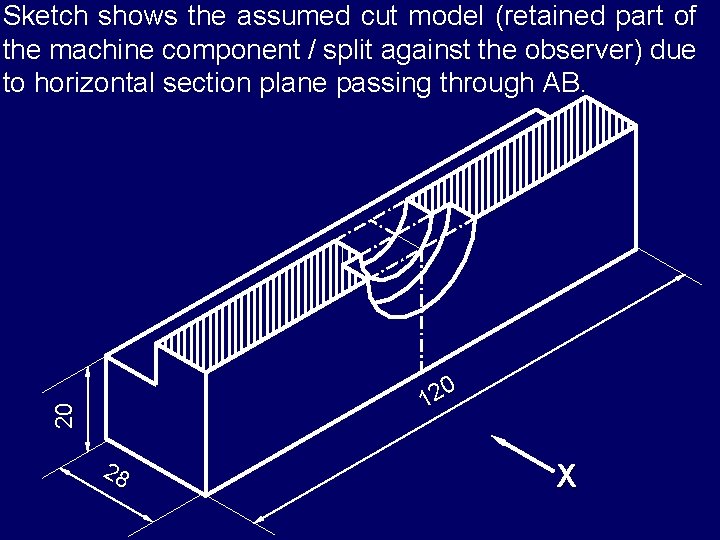
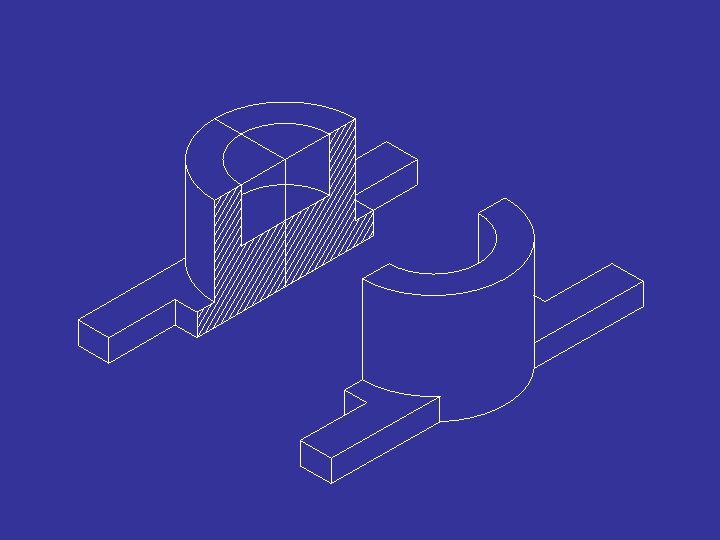
Sketch shows the assumed cut model (retained part of the machine component / split against the observer) due to horizontal section plane passing through AB. 20 0 2 1 28 X
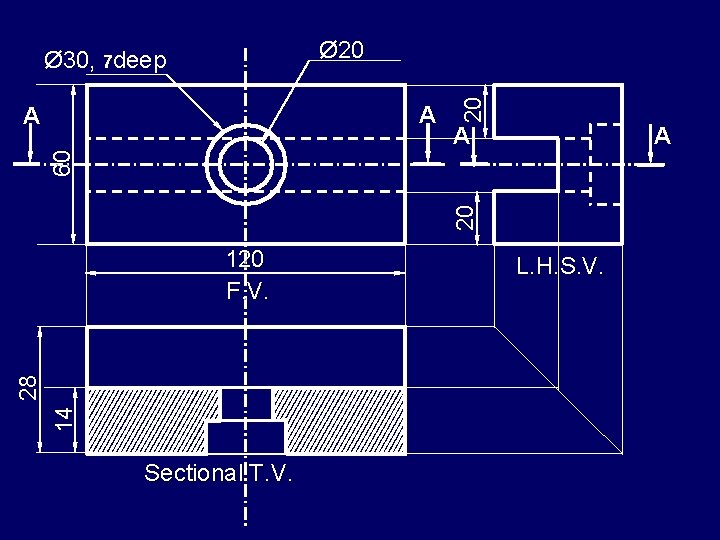
A A A 20 60 A 20 Ø 30, 7 deep 14 28 120 F. V. Sectional T. V. L. H. S. V.
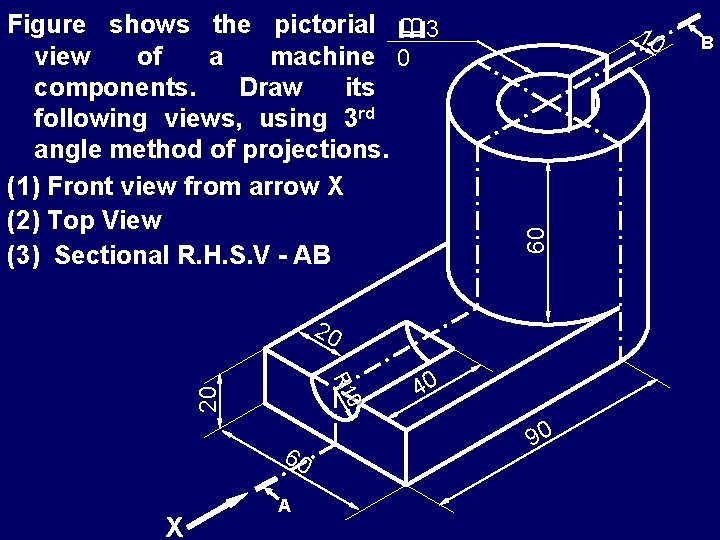
10 60 Figure shows the pictorial 3 view of a machine 0 components. Draw its following views, using 3 rd angle method of projections. (1) Front view from arrow X (2) Top View (3) Sectional R. H. S. V - AB 20 20 0 R 1 60 X A 40 90 B
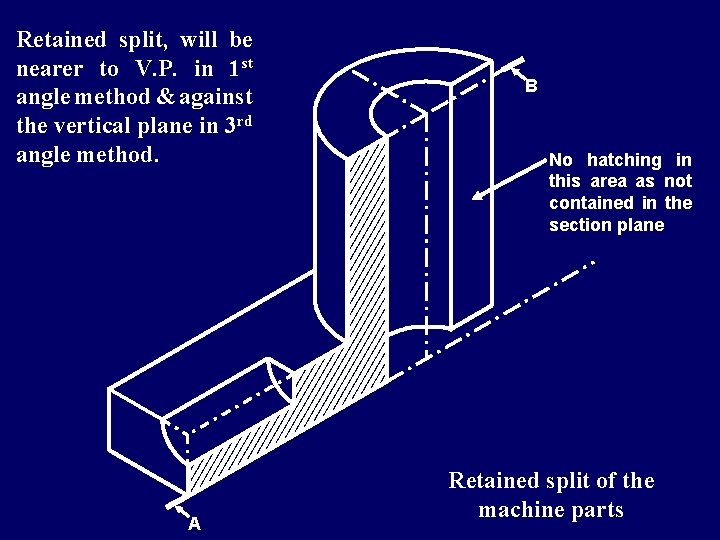
Retained split, will be nearer to V. P. in 1 st angle method & against the vertical plane in 3 rd angle method. A B No hatching in this area as not contained in the section plane Retained split of the machine parts
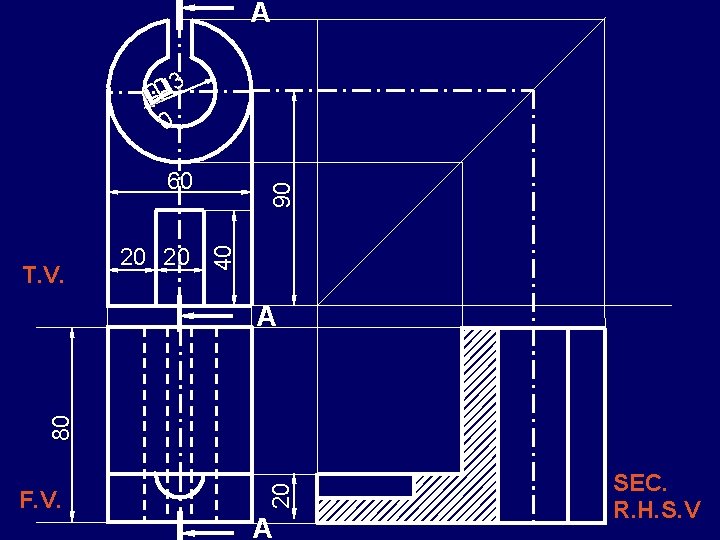
A 3 0 40 T. V. 20 20 90 60 F. V. 20 80 A A SEC. R. H. S. V

SPECIAL SECIONS HALF SECTION
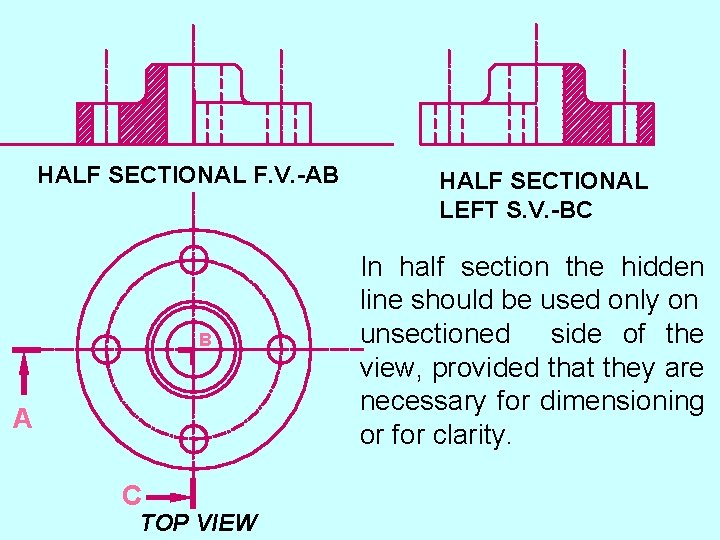
HALF SECTIONAL F. V. -AB B A C TOP VIEW HALF SECTIONAL LEFT S. V. -BC In half section the hidden line should be used only on unsectioned side of the view, provided that they are necessary for dimensioning or for clarity.
SPECIAL SECTIONS REMOVED & REVOLVED SECTIONS
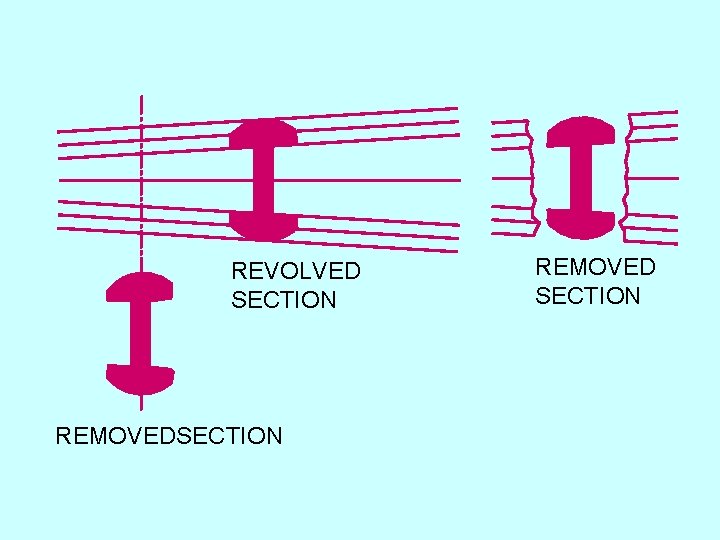
REVOLVED SECTION REMOVED SECTION

REVOLVED SECTION
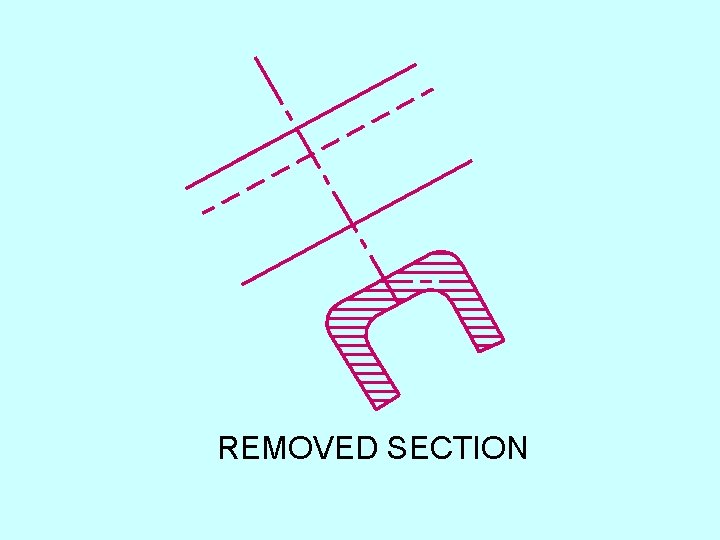
REMOVED SECTION
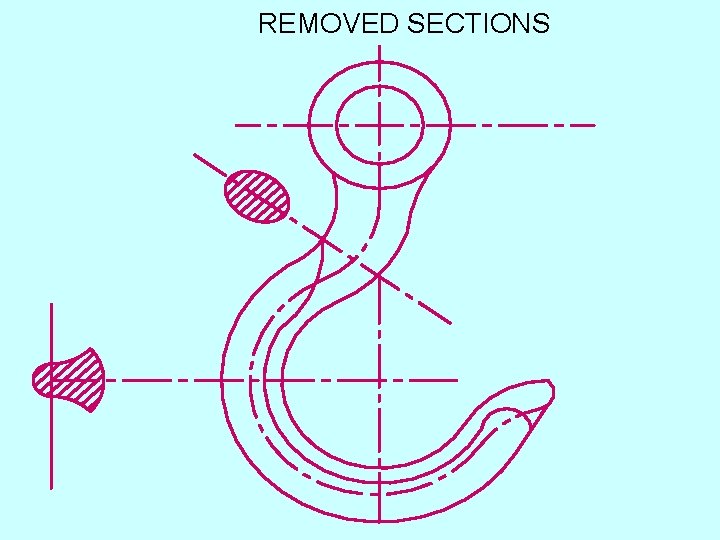
REMOVED SECTIONS
NOTE: - (As per Previous I S 696 – 1972 Page 38) When the cutting plane passes (contains) the center line of such elements as, Shafts, bolts, nuts, rods, rivets, keys, pins, pulley arms, spokes, webs(ribs), screws, ball or roller bearings or similar shapes - no section lining or sectioning is needed for the objects , i. e. the hatching should be eliminated. (See the next demonstrating following the above rule) exercises
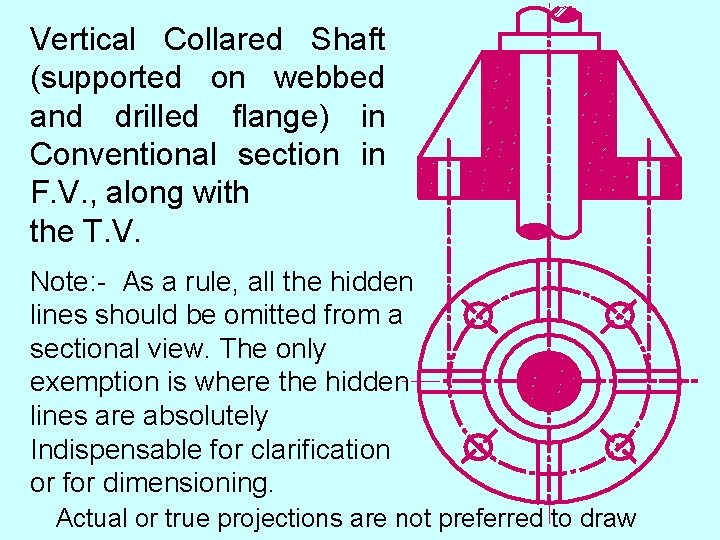
Vertical Collared Shaft (supported on webbed and drilled flange) in Conventional section in F. V. , along with the T. V. Note: - As a rule, all the hidden lines should be omitted from a sectional view. The only exemption is where the hidden lines are absolutely Indispensable for clarification or for dimensioning. Actual or true projections are not preferred to draw
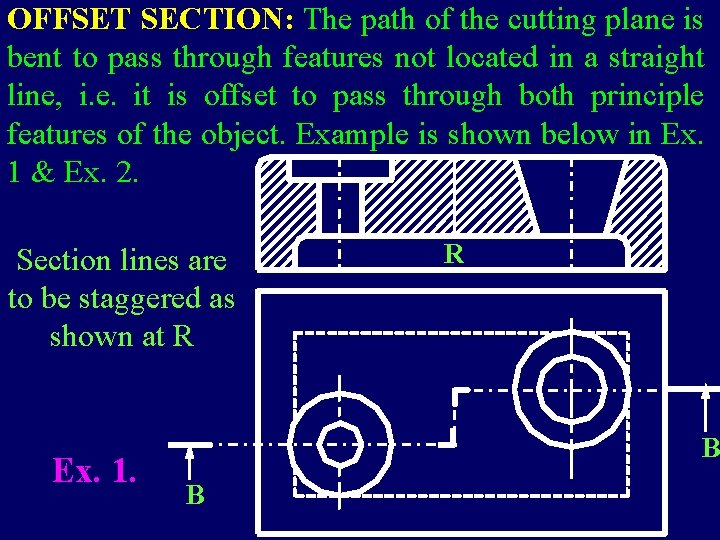
OFFSET SECTION: The path of the cutting plane is bent to pass through features not located in a straight line, i. e. it is offset to pass through both principle features of the object. Example is shown below in Ex. 1 & Ex. 2. Section lines are to be staggered as shown at R Ex. 1. R B B
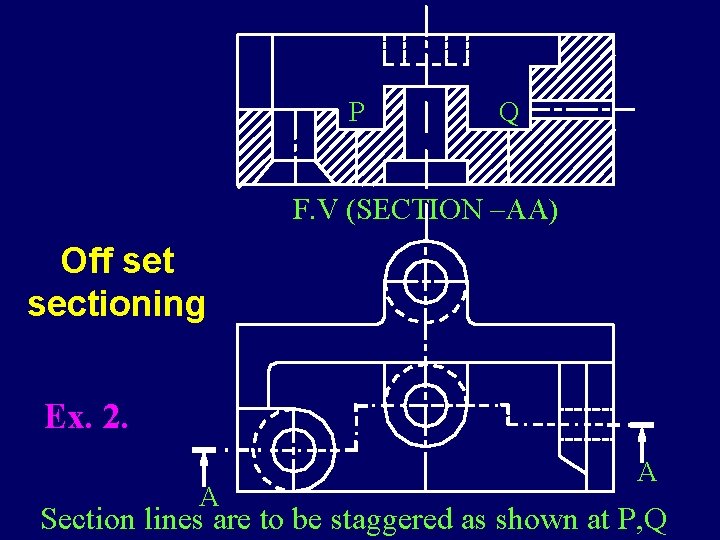
P Q F. V (SECTION –AA) Off set sectioning Ex. 2. A A Section lines are to be staggered as shown at P, Q
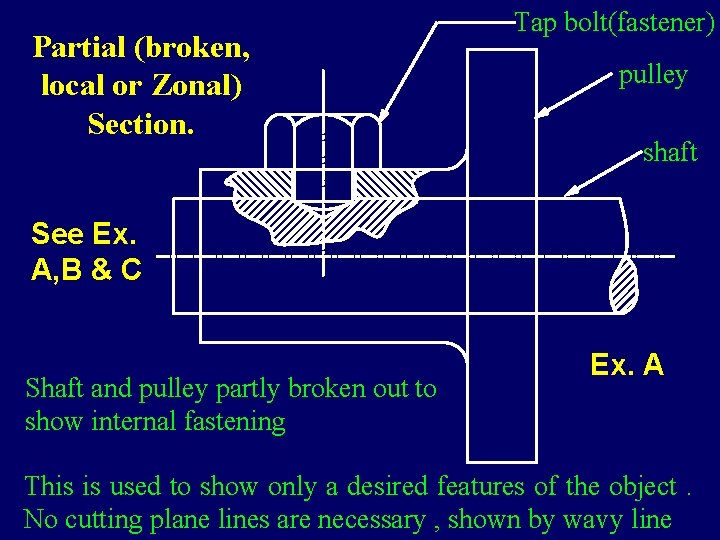
Partial (broken, local or Zonal) Section. Tap bolt(fastener) pulley shaft See Ex. A, B & C Shaft and pulley partly broken out to show internal fastening Ex. A This is used to show only a desired features of the object. No cutting plane lines are necessary , shown by wavy line
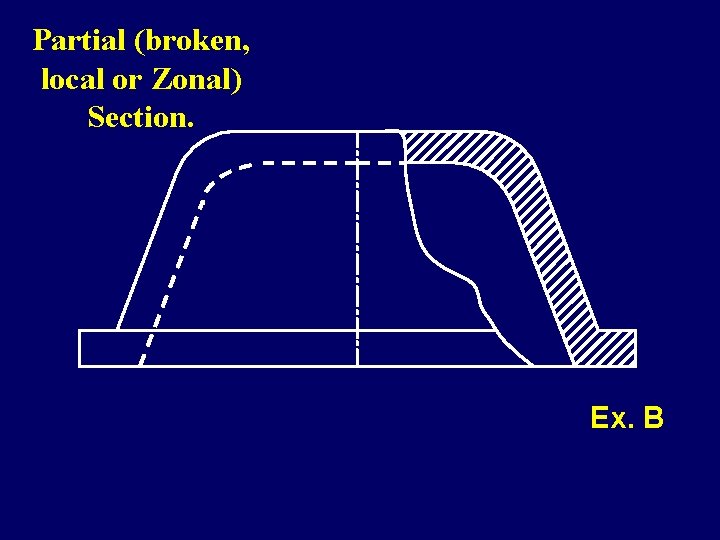
Partial (broken, local or Zonal) Section. Ex. B
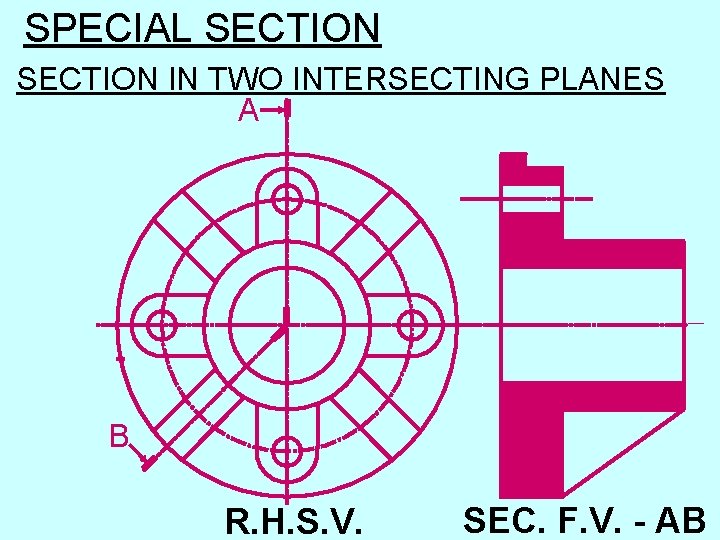
SPECIAL SECTION IN TWO INTERSECTING PLANES A B R. H. S. V. SEC. F. V. - AB
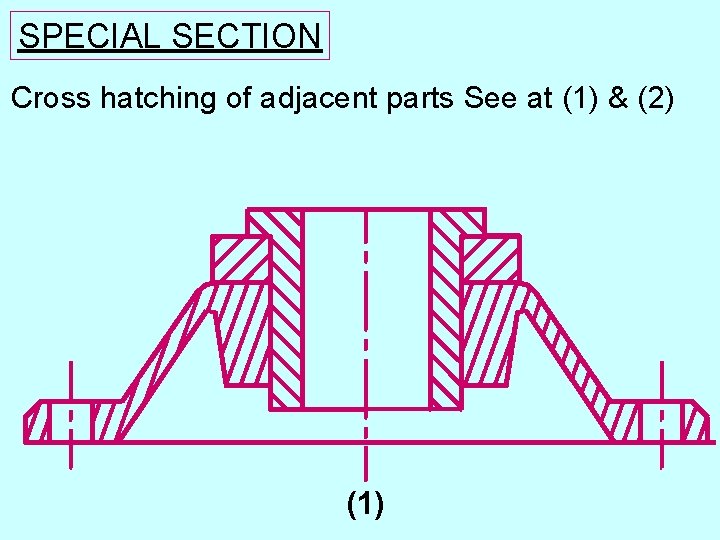
SPECIAL SECTION Cross hatching of adjacent parts See at (1) & (2) (1)
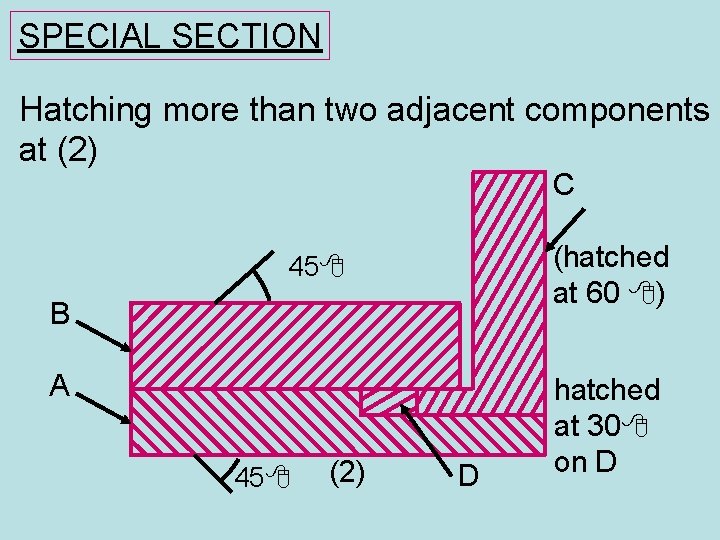
SPECIAL SECTION Hatching more than two adjacent components at (2) C (hatched at 60 ) 45 B A 45 (2) D hatched at 30 on D
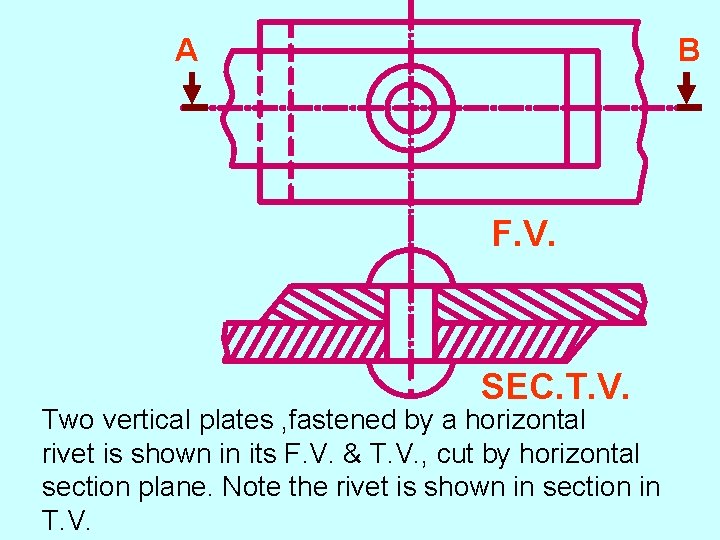
A B F. V. SEC. T. V. Two vertical plates , fastened by a horizontal rivet is shown in its F. V. & T. V. , cut by horizontal section plane. Note the rivet is shown in section in T. V.
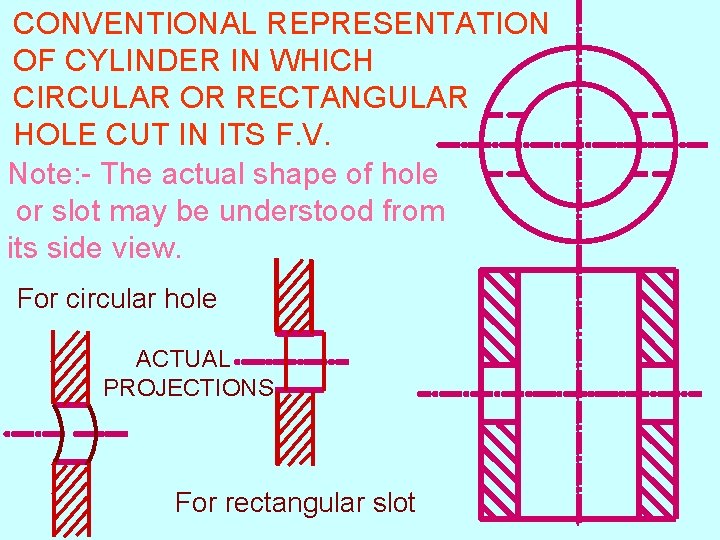
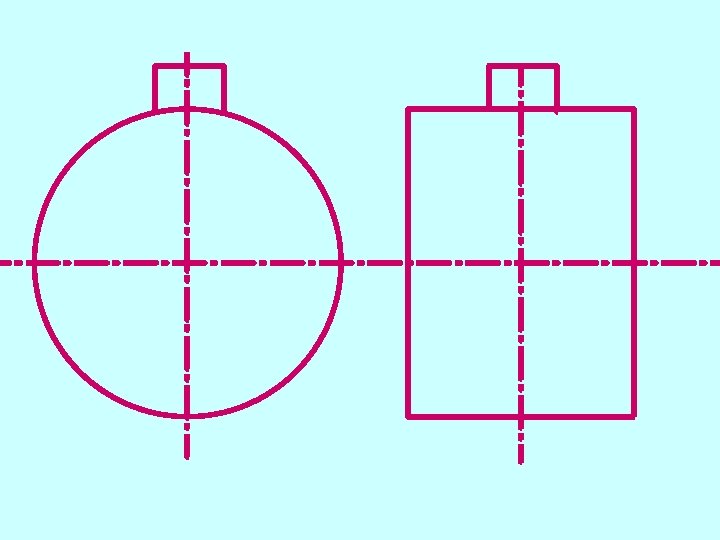
CONVENTIONAL REPRESENTATION OF CYLINDER IN WHICH CIRCULAR OR RECTANGULAR HOLE CUT IN ITS F. V. Note: - The actual shape of hole or slot may be understood from its side view. For circular hole ACTUAL PROJECTIONS For rectangular slot
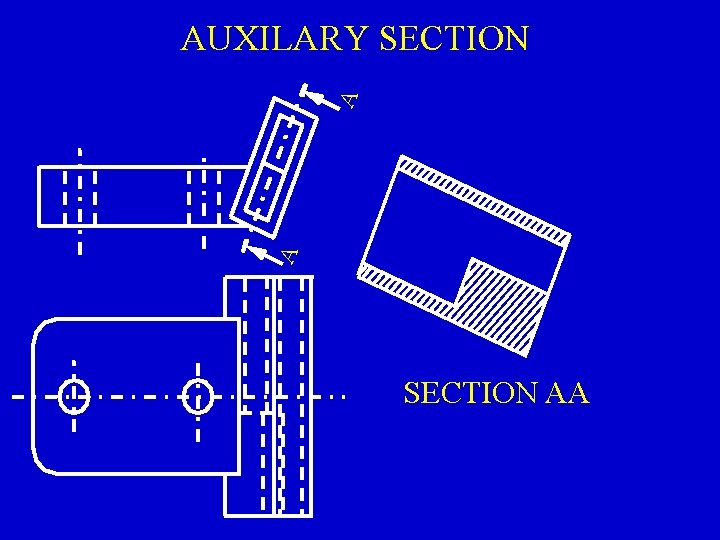
A A AUXILARY SECTION AA
AUXILIARY SECTION (as special section) It is the sectional view not in principal planes. it may be full, half , broken out , removed or revolved. The section should be shown in its normal auxilary position and clearly identified with a cutting plane with letters
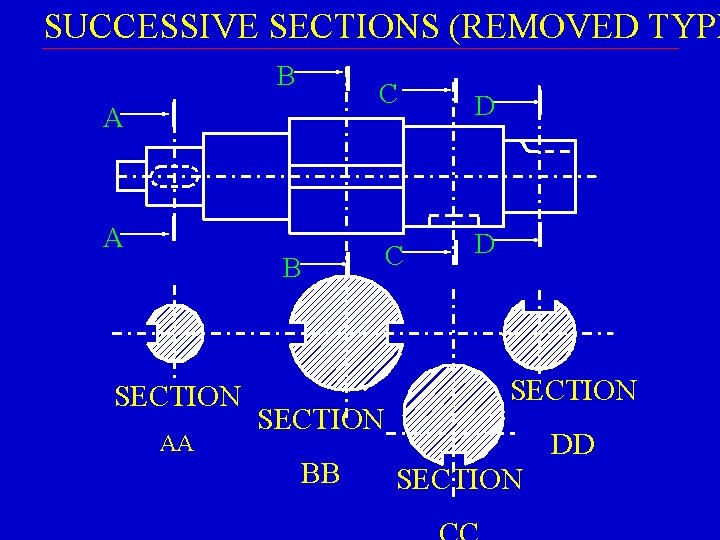
SUCCESSIVE SECTIONS (REMOVED TYPE B A A C D B SECTION AA SECTION BB SECTION DD SECTION
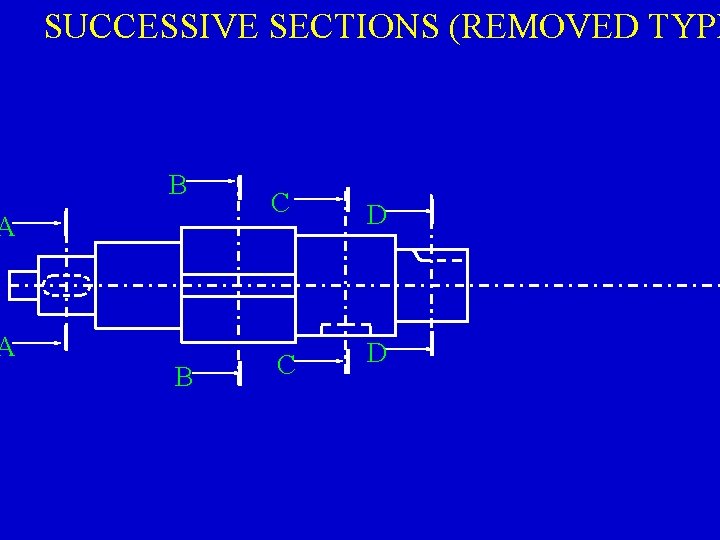
SUCCESSIVE SECTIONS (REMOVED TYPE B A A B C D
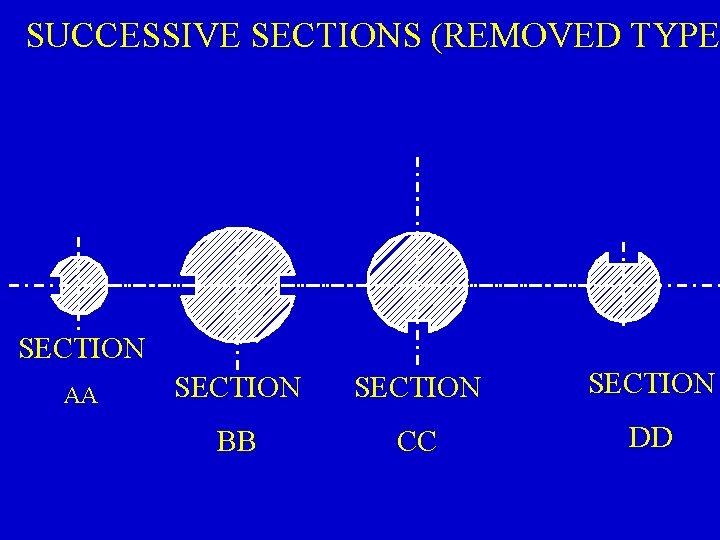
SUCCESSIVE SECTIONS (REMOVED TYPE) SECTION AA SECTION BB CC DD
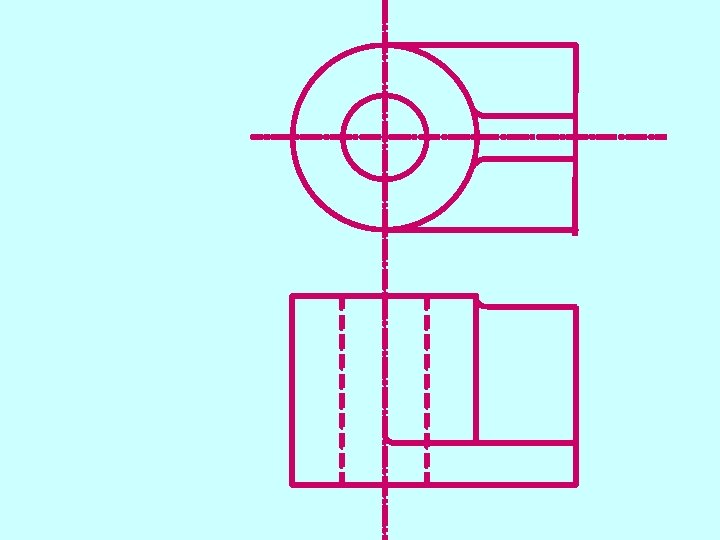
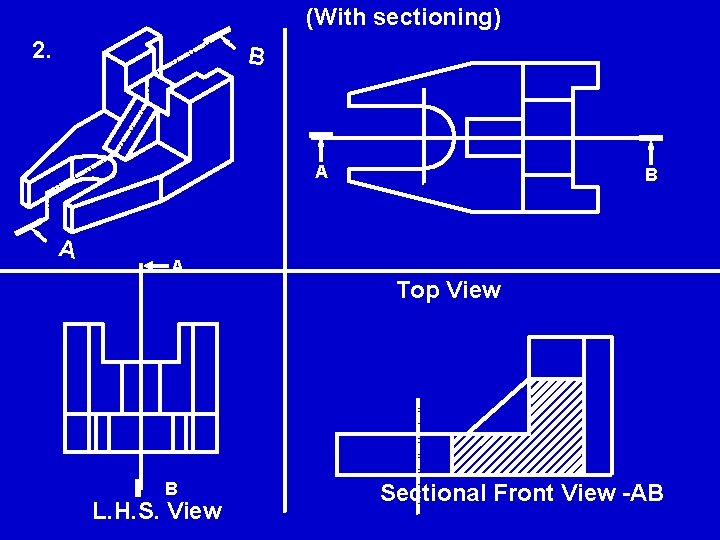
(With sectioning) 2. B A A A B L. H. S. View B Top View Sectional Front View -AB
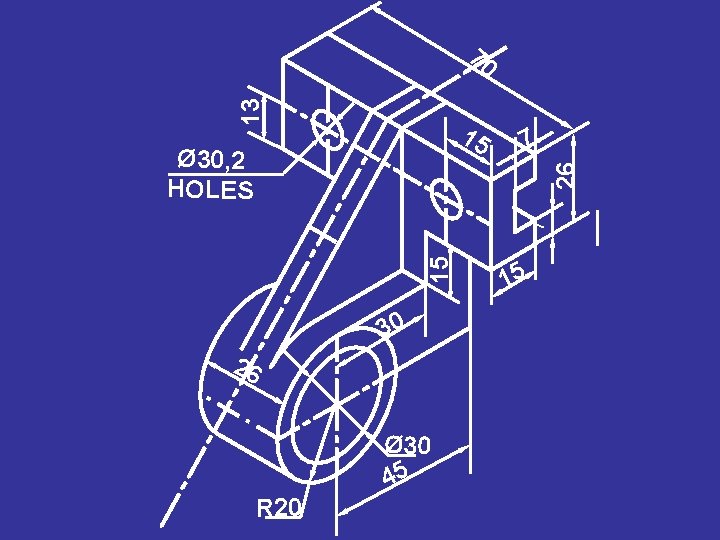
13 70 15 15 7 26 Ø 30, 2 HOLES 7 30 26 Ø 30 45 R 20 15
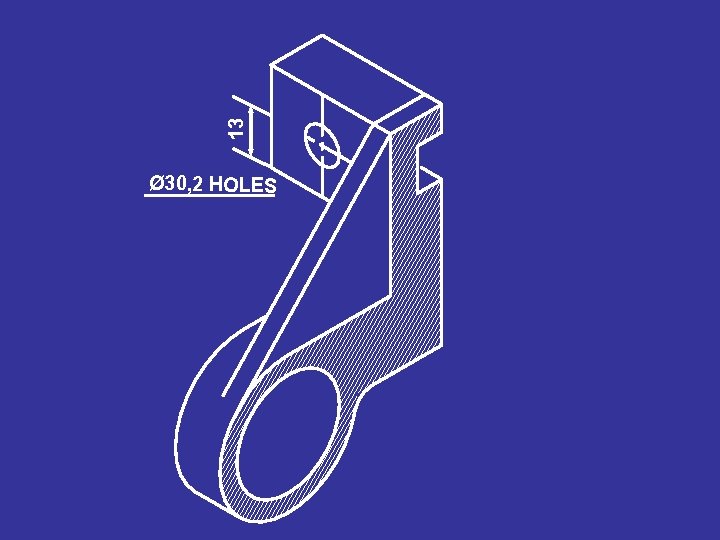
13 Ø 30, 2 HOLES
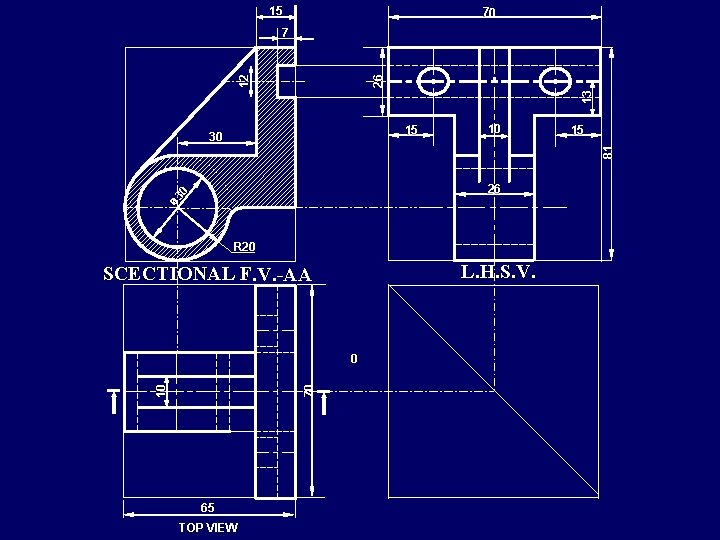
15 70 13 26 12 7 15 10 15 81 30 26 0 ø 3 R 20 L. H. S. V. SCECTIONAL F. V. -AA 10 70 0 65 TOP VIEW
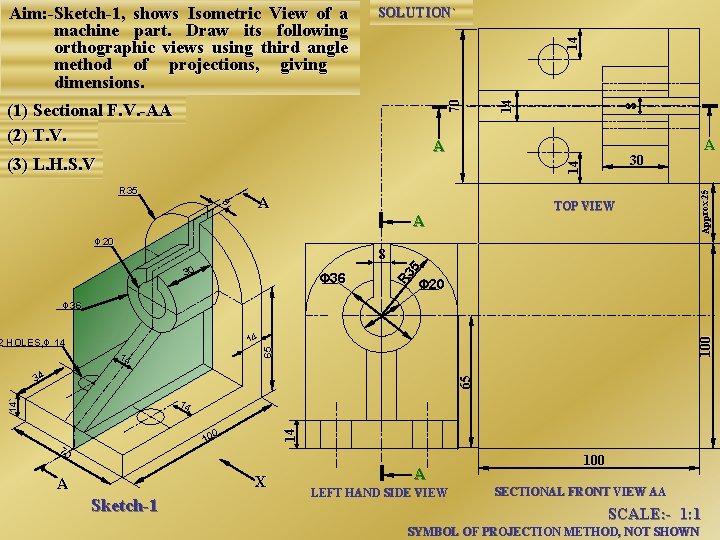
8 A 30 14 (3) L. H. S. V R 35 8 A TOP VIEW A Φ 20 A Approx. 25 (1) Sectional F. V. -AA (2) T. V. 14 14 SOLUTION` 70 Aim: -Sketch-1, shows Isometric View of a machine part. Draw its following orthographic views using third angle method of projections, giving dimensions. 30 Φ 36 R 3 5 8 Φ 20 Φ 36 65 100 14 2 HOLES, Φ 14 14 65 34 14 14` 14 0 10 70 X A Sketch-1 A LEFT HAND SIDE VIEW 100 SECTIONAL FRONT VIEW AA SCALE: - 1: 1 SYMBOL OF PROJECTION METHOD, NOT SHOWN
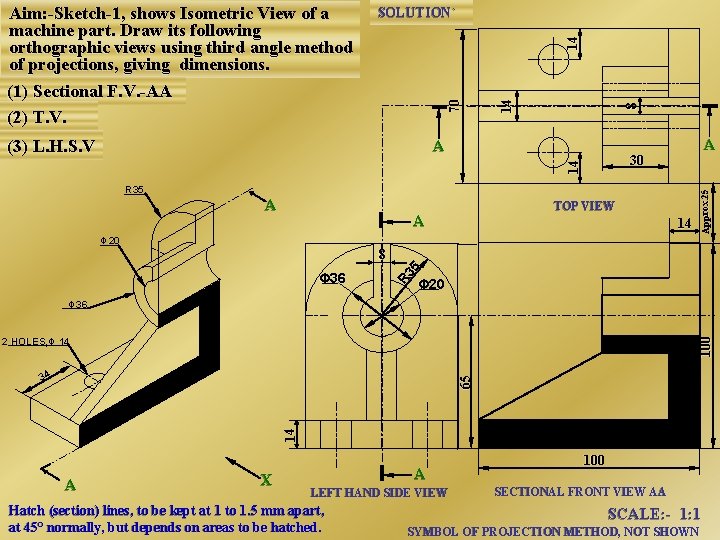
(3) L. H. S. V 8 14 14 SOLUTION` 70 Aim: -Sketch-1, shows Isometric View of a machine part. Draw its following orthographic views using third angle method of projections, giving dimensions. (1) Sectional F. V. -AA (2) T. V. A A 14 30 A Approx. 25 R 35 TOP VIEW A 14 Φ 20 Φ 36 R 3 5 8 Φ 20 100 Φ 36 2 HOLES, Φ 14 14 65 34 A X A LEFT HAND SIDE VIEW Hatch (section) lines, to be kept at 1 to 1. 5 mm apart, at 45° normally, but depends on areas to be hatched. 100 SECTIONAL FRONT VIEW AA SCALE: - 1: 1 SYMBOL OF PROJECTION METHOD, NOT SHOWN
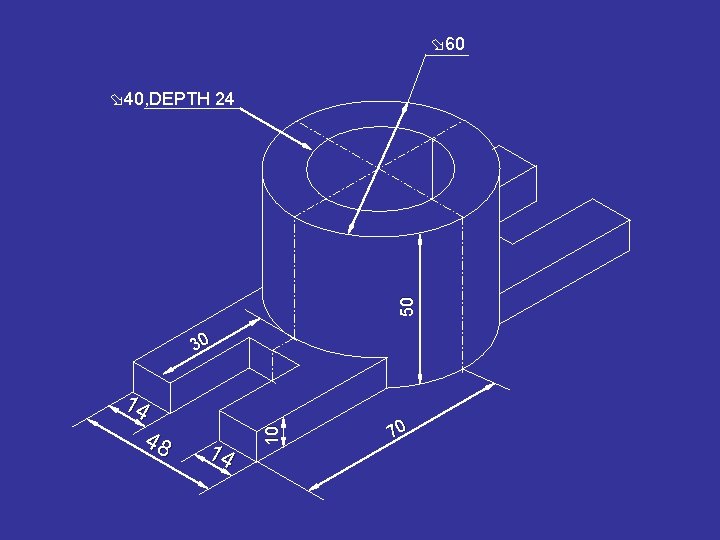
60 50 40, DEPTH 24 14 48 14 10 30 70
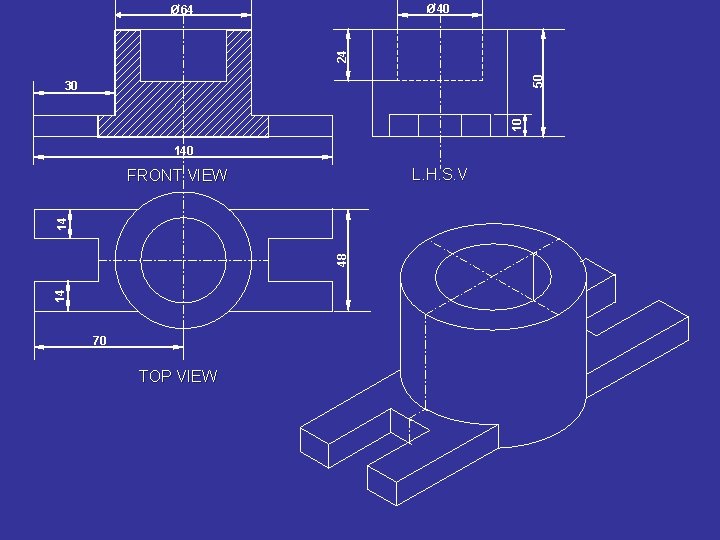
Ø 40 50 24 Ø 64 10 30 140 L. H. S. V 14 48 14 FRONT VIEW 70 TOP VIEW
- Slides: 48