
Sectionalism Two Nations The Case Against Slavery Largest
- Slides: 40
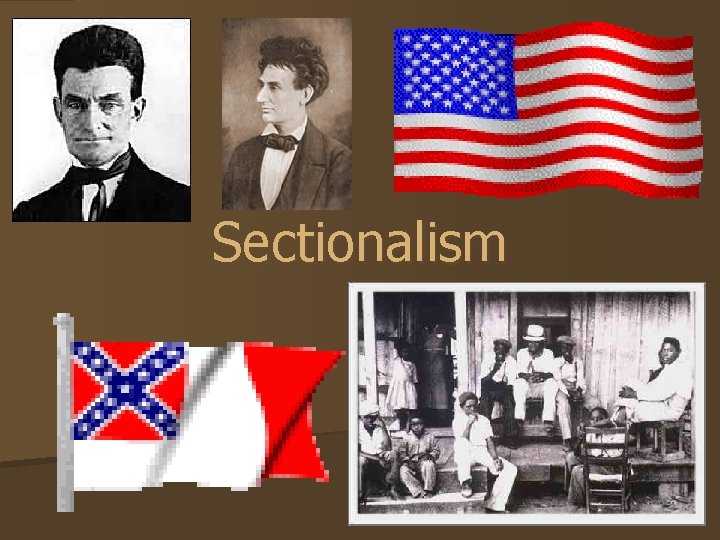
Sectionalism
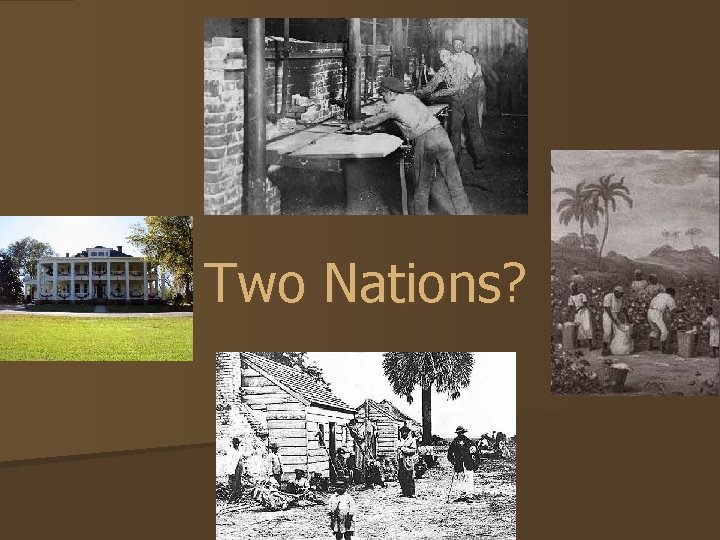
Two Nations?
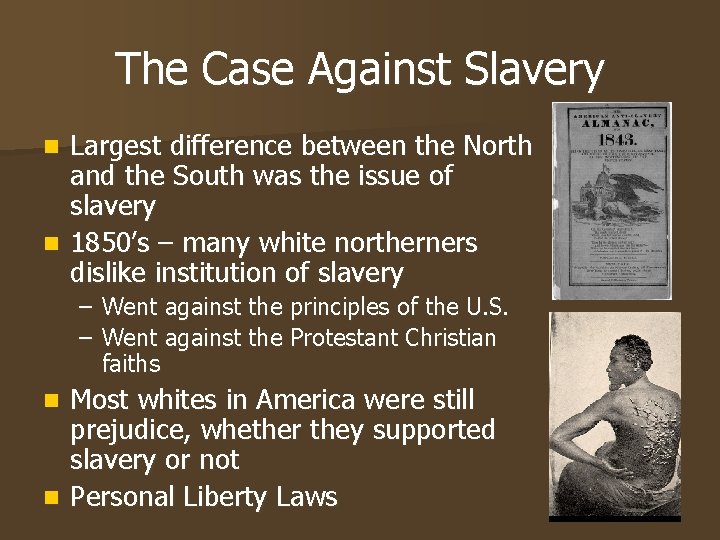
The Case Against Slavery Largest difference between the North and the South was the issue of slavery n 1850’s – many white northerners dislike institution of slavery n – Went against the principles of the U. S. – Went against the Protestant Christian faiths Most whites in America were still prejudice, whether they supported slavery or not n Personal Liberty Laws n
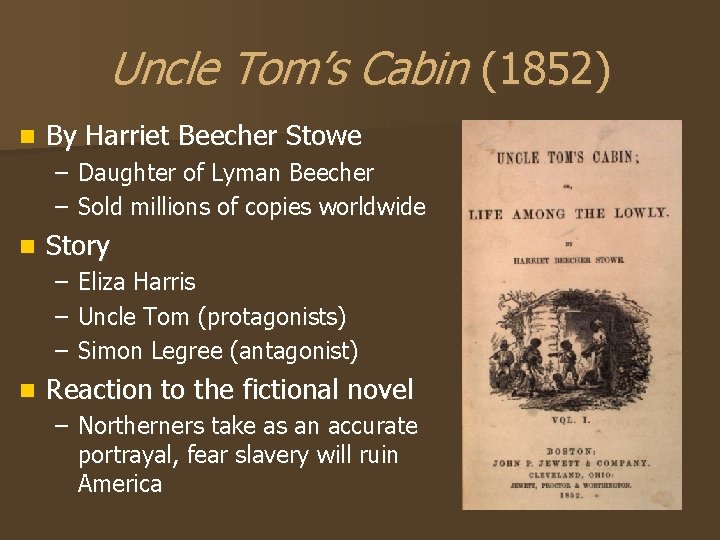
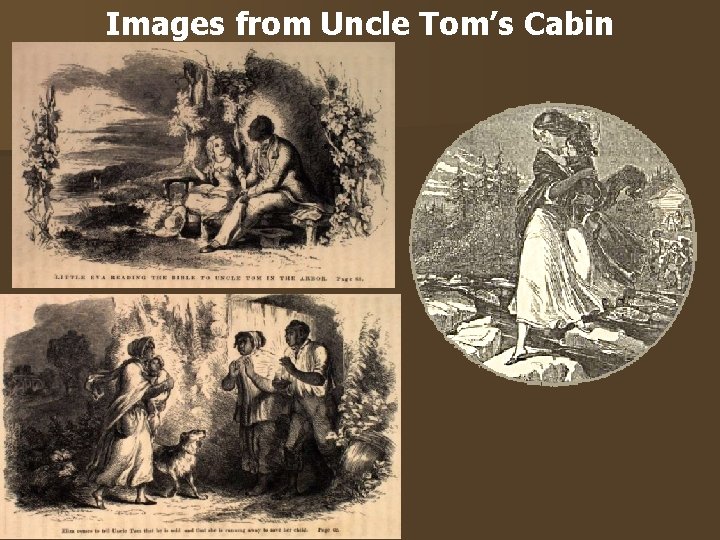
Uncle Tom’s Cabin (1852) n By Harriet Beecher Stowe – Daughter of Lyman Beecher – Sold millions of copies worldwide n Story – – – n Eliza Harris Uncle Tom (protagonists) Simon Legree (antagonist) Reaction to the fictional novel – Northerners take as an accurate portrayal, fear slavery will ruin America
Images from Uncle Tom’s Cabin
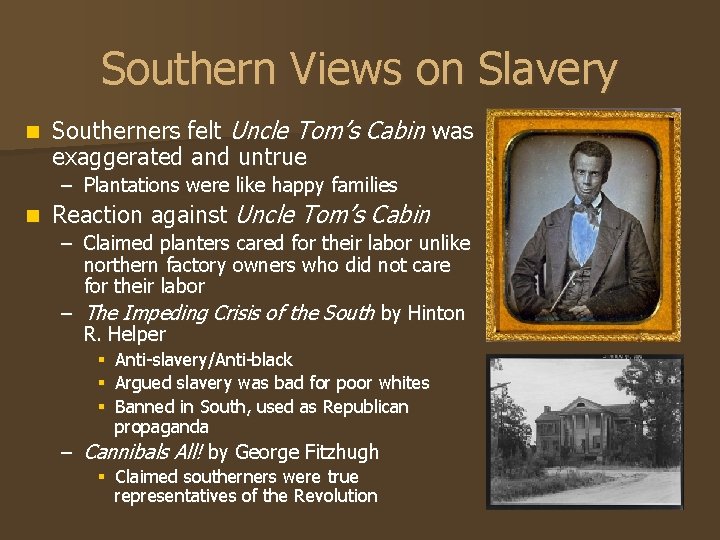
Southern Views on Slavery n Southerners felt Uncle Tom’s Cabin was exaggerated and untrue – Plantations were like happy families n Reaction against Uncle Tom’s Cabin – Claimed planters cared for their labor unlike northern factory owners who did not care for their labor – The Impeding Crisis of the South by Hinton R. Helper § Anti-slavery/Anti-black § Argued slavery was bad for poor whites § Banned in South, used as Republican propaganda – Cannibals All! by George Fitzhugh § Claimed southerners were true representatives of the Revolution
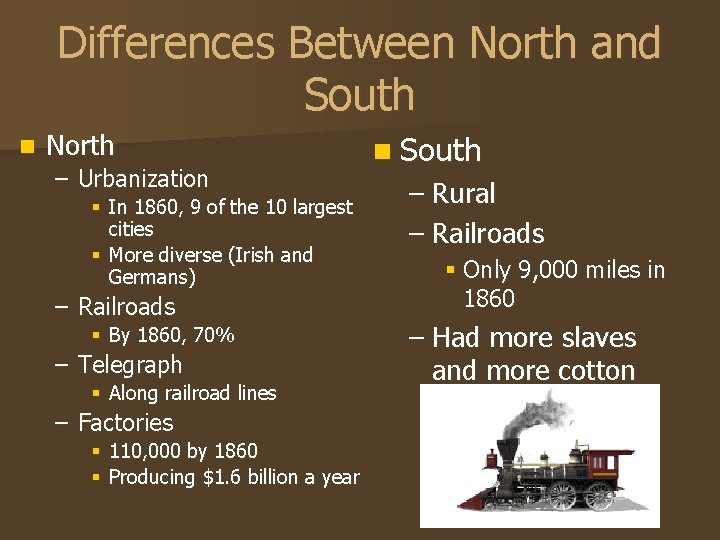
Differences Between North and South n North – Urbanization § In 1860, 9 of the 10 largest cities § More diverse (Irish and Germans) – Railroads § By 1860, 70% – Telegraph § Along railroad lines – Factories § 110, 000 by 1860 § Producing $1. 6 billion a year n South – Rural – Railroads § Only 9, 000 miles in 1860 – Had more slaves and more cotton
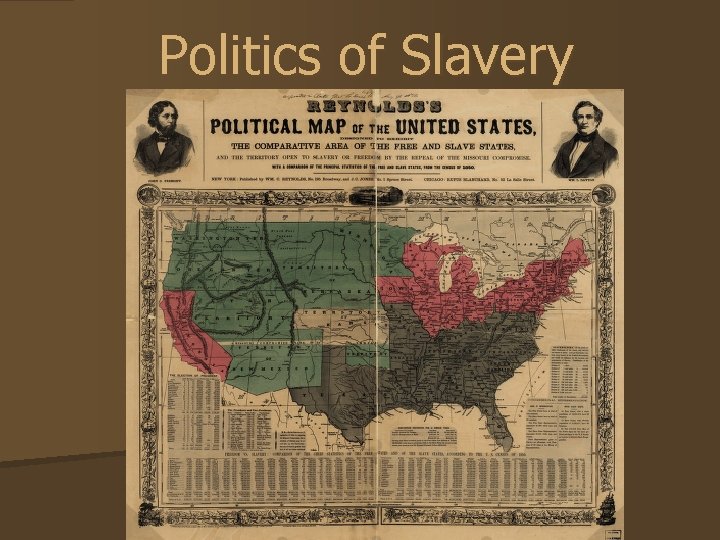
Politics of Slavery
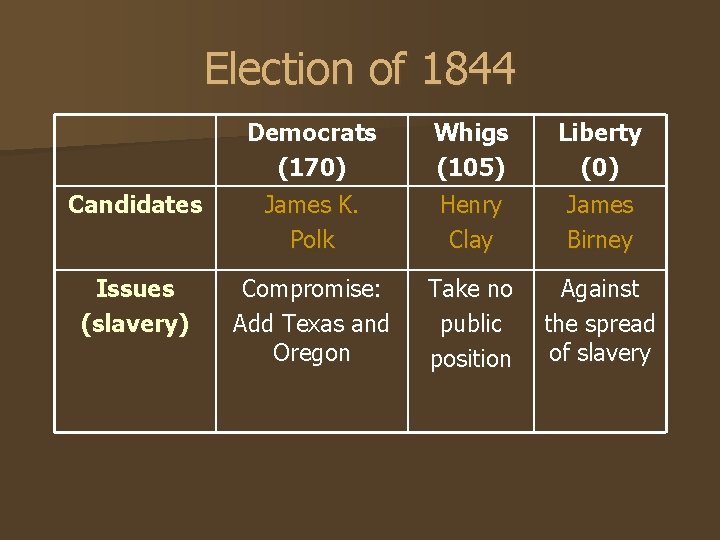
Election of 1844 Democrats (170) Whigs (105) Liberty (0) Candidates James K. Polk Henry Clay James Birney Issues (slavery) Compromise: Add Texas and Oregon Take no public position Against the spread of slavery
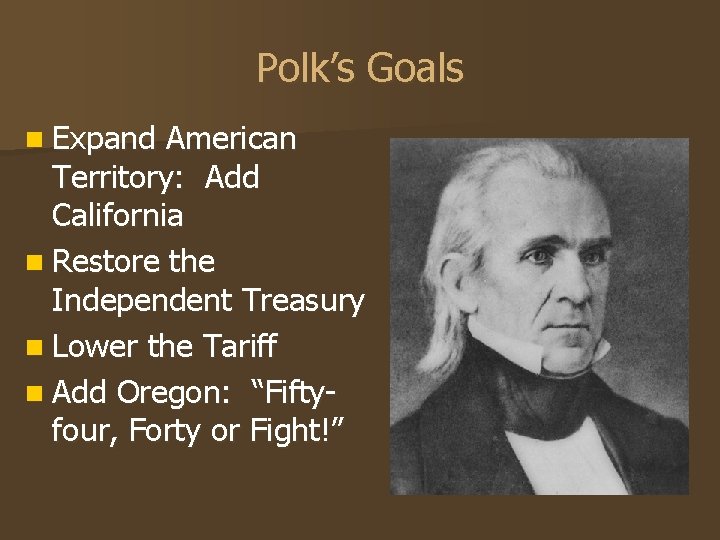
Polk’s Goals n Expand American Territory: Add California n Restore the Independent Treasury n Lower the Tariff n Add Oregon: “Fiftyfour, Forty or Fight!”
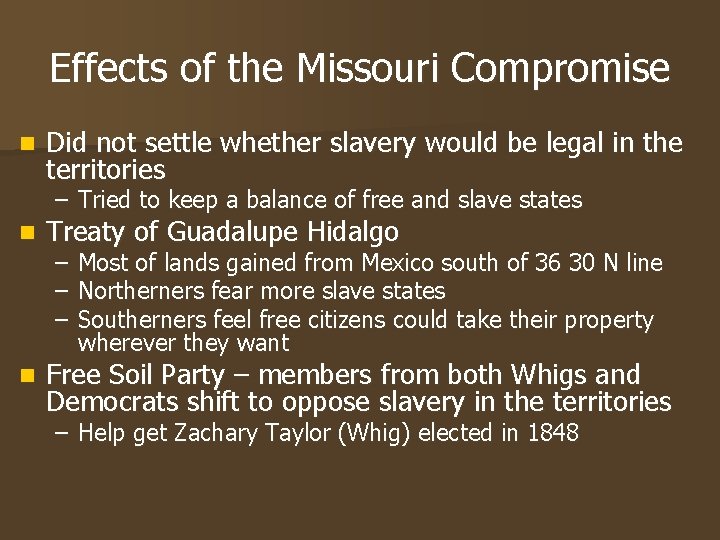
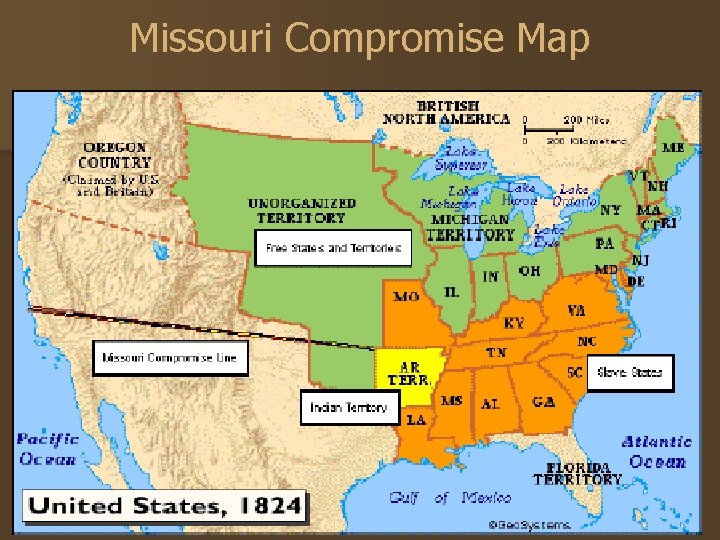
Effects of the Missouri Compromise n Did not settle whether slavery would be legal in the territories – Tried to keep a balance of free and slave states n Treaty of Guadalupe Hidalgo n Free Soil Party – members from both Whigs and Democrats shift to oppose slavery in the territories – – – Most of lands gained from Mexico south of 36 30 N line Northerners fear more slave states Southerners feel free citizens could take their property wherever they want – Help get Zachary Taylor (Whig) elected in 1848
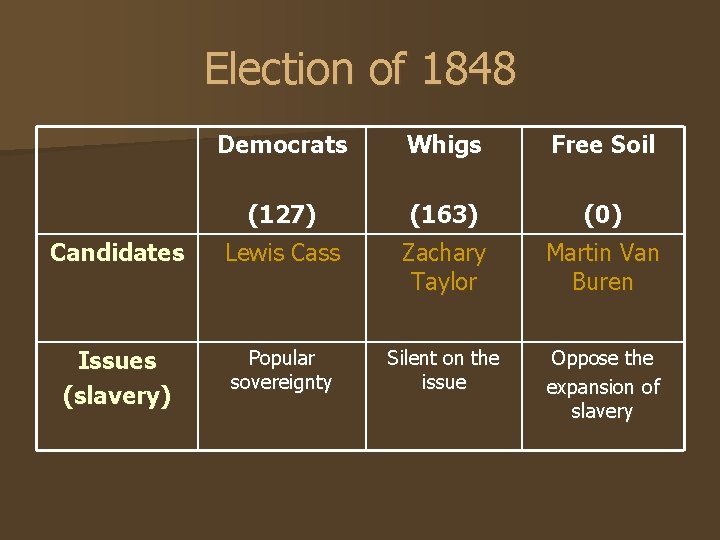
Election of 1848 Democrats Whigs Free Soil (127) (163) (0) Candidates Lewis Cass Zachary Taylor Martin Van Buren Issues (slavery) Popular sovereignty Silent on the issue Oppose the expansion of slavery
Missouri Compromise Map
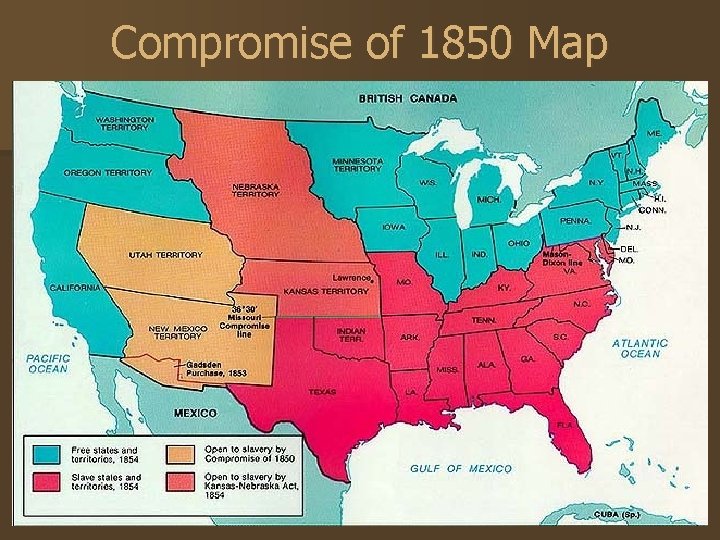
Compromise of 1850 Map
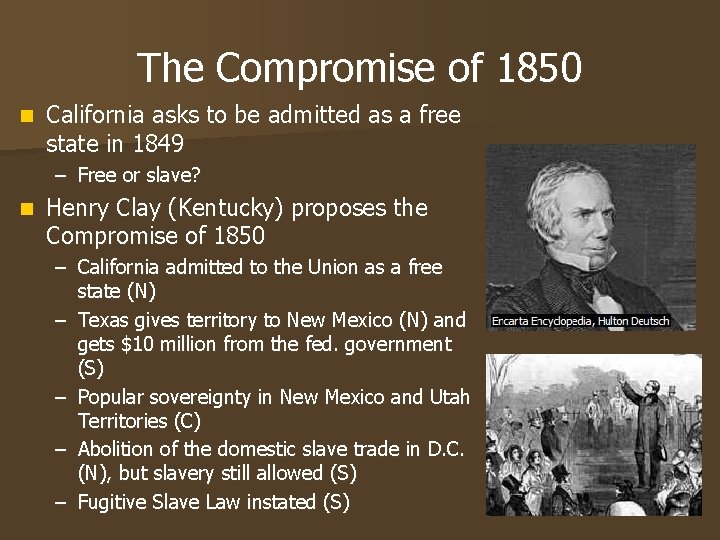
The Compromise of 1850 n California asks to be admitted as a free state in 1849 – Free or slave? n Henry Clay (Kentucky) proposes the Compromise of 1850 – California admitted to the Union as a free state (N) – Texas gives territory to New Mexico (N) and gets $10 million from the fed. government (S) – Popular sovereignty in New Mexico and Utah Territories (C) – Abolition of the domestic slave trade in D. C. (N), but slavery still allowed (S) – Fugitive Slave Law instated (S)
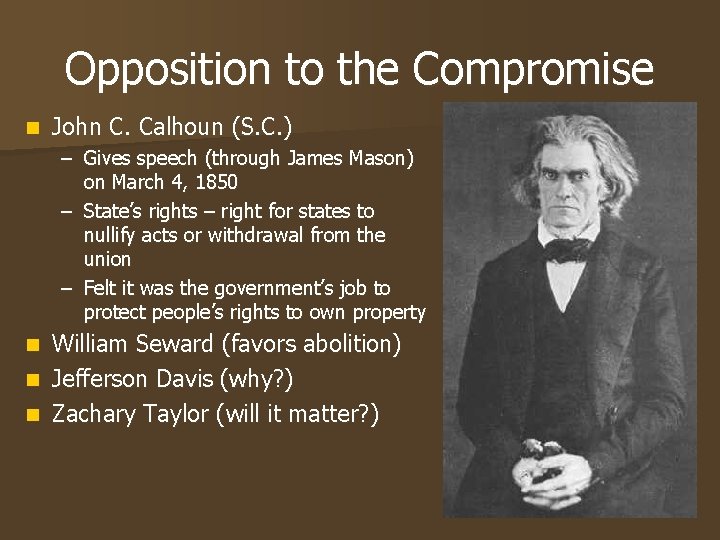
Opposition to the Compromise n John C. Calhoun (S. C. ) – Gives speech (through James Mason) on March 4, 1850 – State’s rights – right for states to nullify acts or withdrawal from the union – Felt it was the government’s job to protect people’s rights to own property William Seward (favors abolition) n Jefferson Davis (why? ) n Zachary Taylor (will it matter? ) n
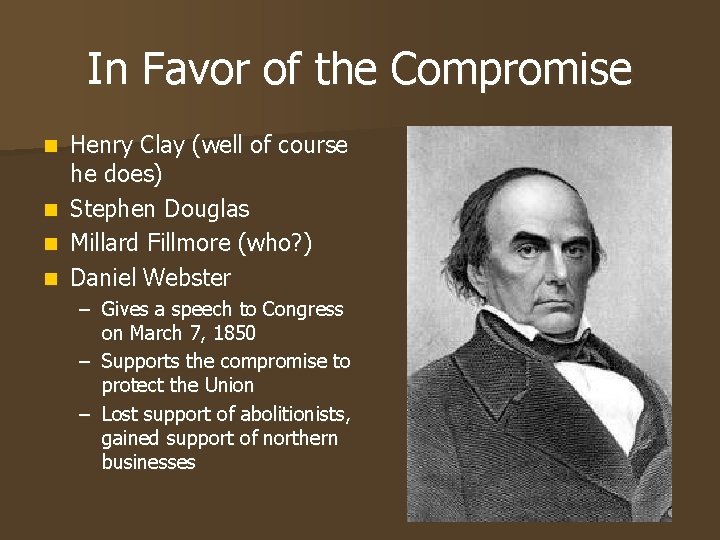
In Favor of the Compromise n n Henry Clay (well of course he does) Stephen Douglas Millard Fillmore (who? ) Daniel Webster – Gives a speech to Congress on March 7, 1850 – Supports the compromise to protect the Union – Lost support of abolitionists, gained support of northern businesses
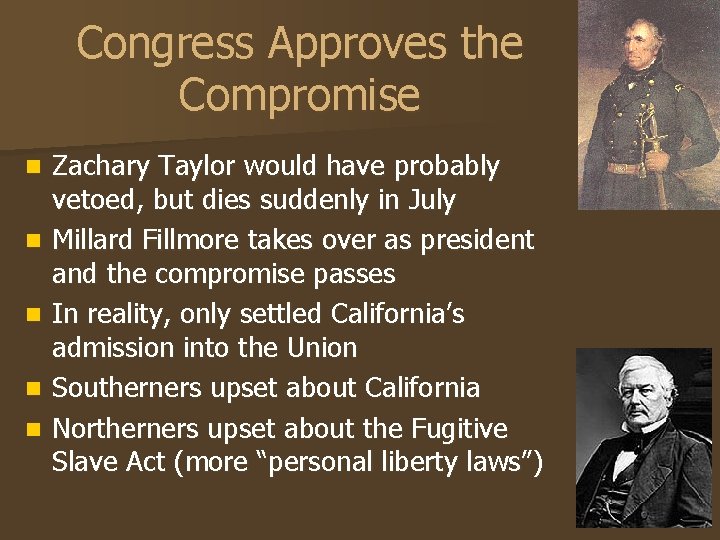
Congress Approves the Compromise n n n Zachary Taylor would have probably vetoed, but dies suddenly in July Millard Fillmore takes over as president and the compromise passes In reality, only settled California’s admission into the Union Southerners upset about California Northerners upset about the Fugitive Slave Act (more “personal liberty laws”)
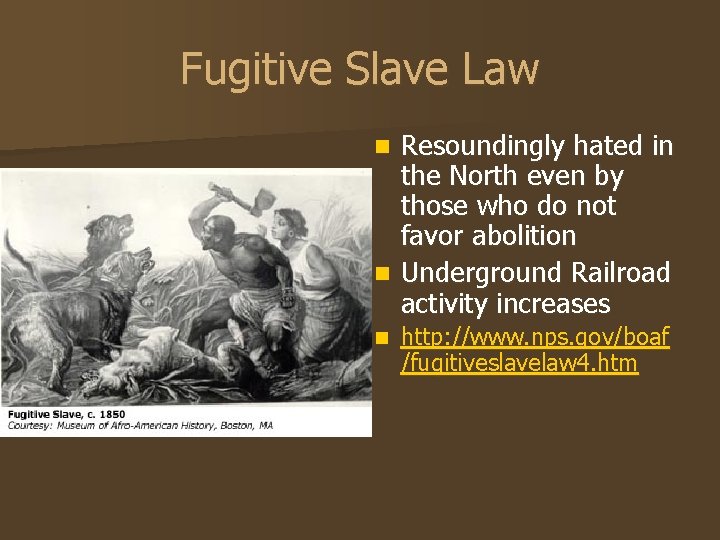
Fugitive Slave Law Resoundingly hated in the North even by those who do not favor abolition n Underground Railroad activity increases n n http: //www. nps. gov/boaf /fugitiveslavelaw 4. htm
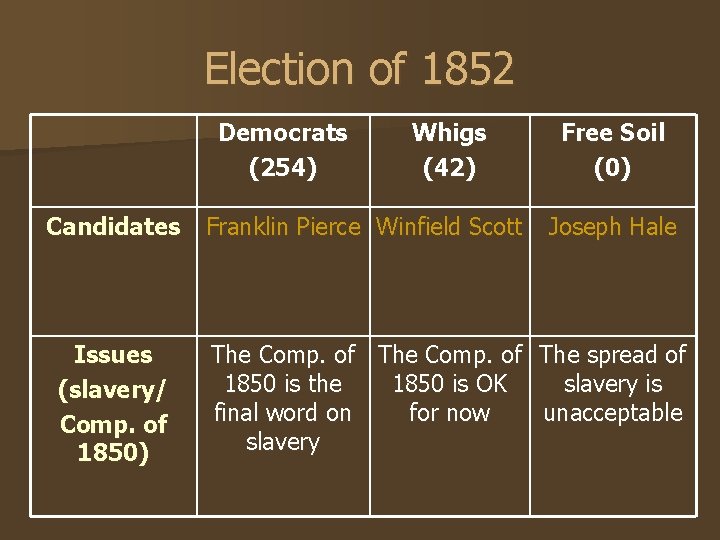
Election of 1852 Democrats (254) Candidates Issues (slavery/ Comp. of 1850) Whigs (42) Franklin Pierce Winfield Scott Free Soil (0) Joseph Hale The Comp. of The spread of 1850 is the 1850 is OK slavery is final word on for now unacceptable slavery
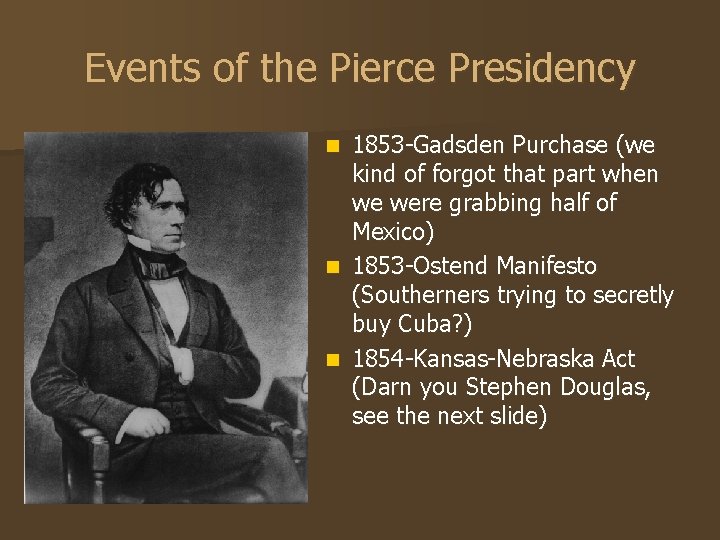
Events of the Pierce Presidency 1853 -Gadsden Purchase (we kind of forgot that part when we were grabbing half of Mexico) n 1853 -Ostend Manifesto (Southerners trying to secretly buy Cuba? ) n 1854 -Kansas-Nebraska Act (Darn you Stephen Douglas, see the next slide) n
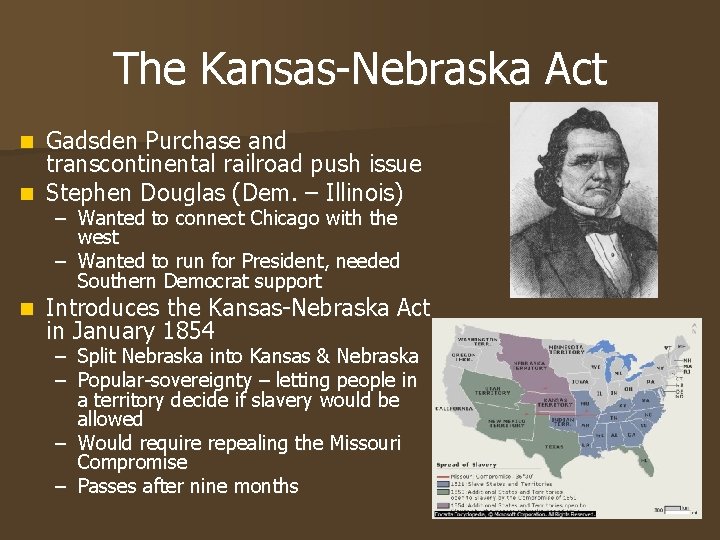
The Kansas-Nebraska Act Gadsden Purchase and transcontinental railroad push issue n Stephen Douglas (Dem. – Illinois) n – Wanted to connect Chicago with the west – Wanted to run for President, needed Southern Democrat support n Introduces the Kansas-Nebraska Act in January 1854 – – Split Nebraska into Kansas & Nebraska Popular-sovereignty – letting people in a territory decide if slavery would be allowed – Would require repealing the Missouri Compromise – Passes after nine months
The Creation of the Republican Party develops against slavery n Demanded the repeal of the Kansas-Nebraska Act and the Fugitive Slave Act n Gained support from anti-slavery Democrats, Whigs, and Free Soilers n Direct ancestor of the modern Republican Party
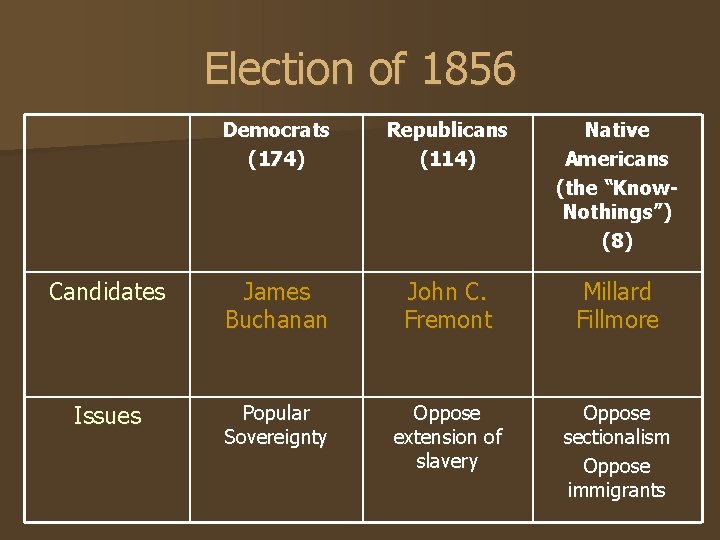
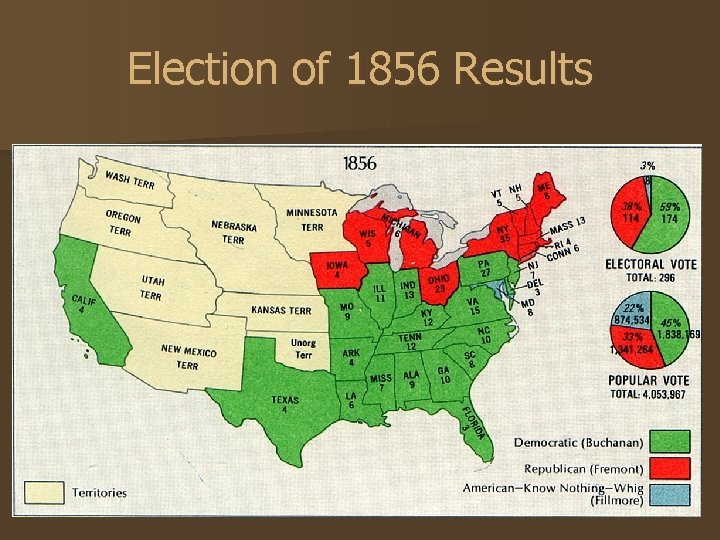
Election of 1856 Democrats (174) Republicans (114) Native Americans (the “Know. Nothings”) (8) Candidates James Buchanan John C. Fremont Millard Fillmore Issues Popular Sovereignty Oppose extension of slavery Oppose sectionalism Oppose immigrants
Election of 1856 Results
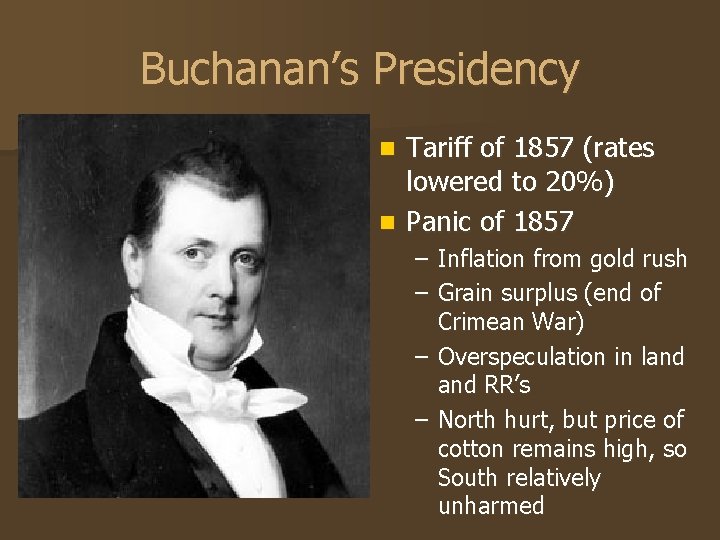
Buchanan’s Presidency Tariff of 1857 (rates lowered to 20%) n Panic of 1857 n – Inflation from gold rush – Grain surplus (end of Crimean War) – Overspeculation in land RR’s – North hurt, but price of cotton remains high, so South relatively unharmed
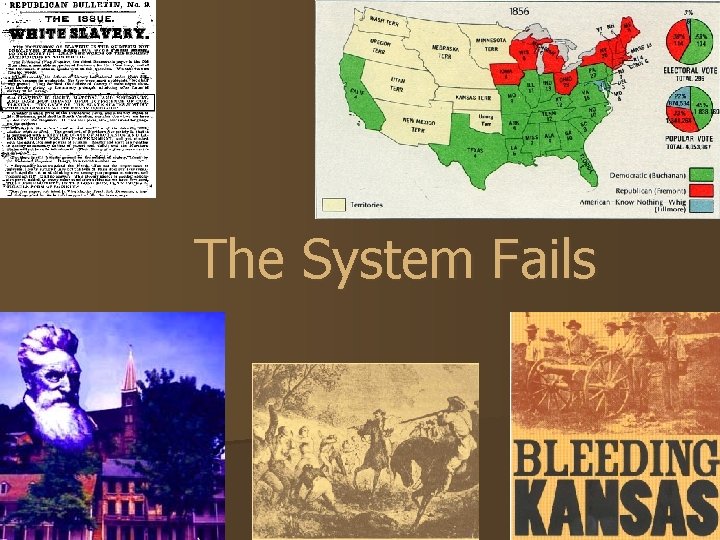
The System Fails
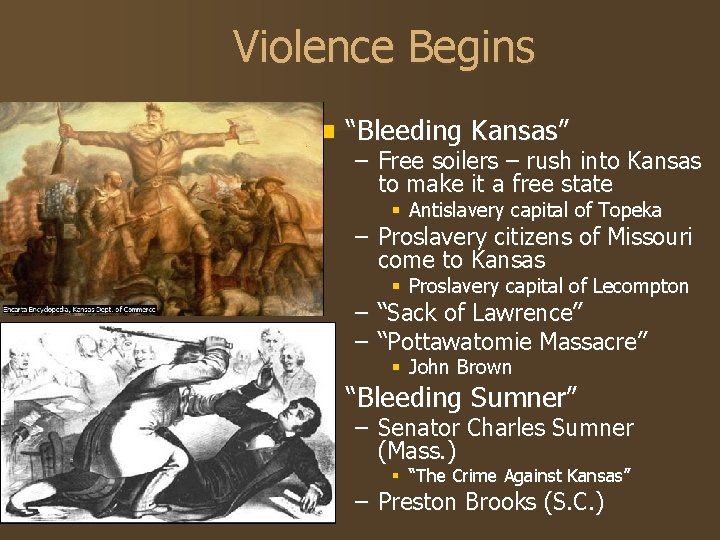
Violence Begins n “Bleeding Kansas” – Free soilers – rush into Kansas to make it a free state § Antislavery capital of Topeka – Proslavery citizens of Missouri come to Kansas § Proslavery capital of Lecompton – “Sack of Lawrence” – “Pottawatomie Massacre” § John Brown n “Bleeding Sumner” – Senator Charles Sumner (Mass. ) § “The Crime Against Kansas” – Preston Brooks (S. C. )
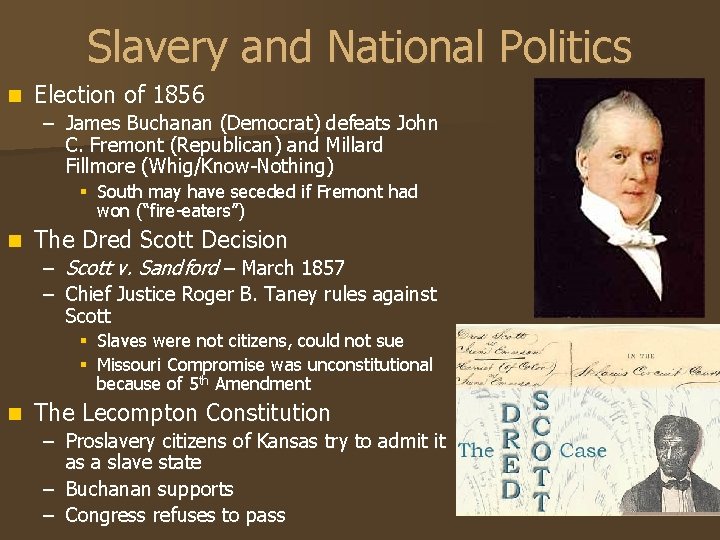
Slavery and National Politics n Election of 1856 – James Buchanan (Democrat) defeats John C. Fremont (Republican) and Millard Fillmore (Whig/Know-Nothing) § South may have seceded if Fremont had won (“fire-eaters”) n The Dred Scott Decision – Scott v. Sandford – March 1857 – Chief Justice Roger B. Taney rules against Scott § Slaves were not citizens, could not sue § Missouri Compromise was unconstitutional because of 5 th Amendment n The Lecompton Constitution – Proslavery citizens of Kansas try to admit it as a slave state – Buchanan supports – Congress refuses to pass
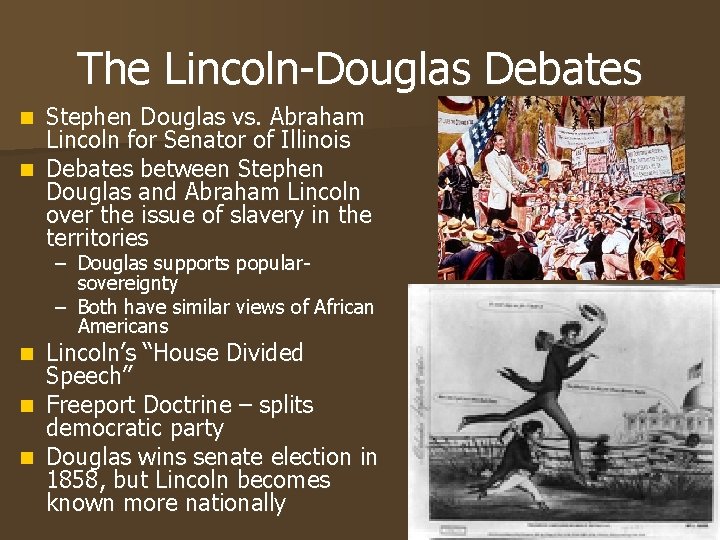
The Lincoln-Douglas Debates Stephen Douglas vs. Abraham Lincoln for Senator of Illinois n Debates between Stephen Douglas and Abraham Lincoln over the issue of slavery in the territories n – Douglas supports popularsovereignty – Both have similar views of African Americans Lincoln’s “House Divided Speech” n Freeport Doctrine – splits democratic party n Douglas wins senate election in 1858, but Lincoln becomes known more nationally n
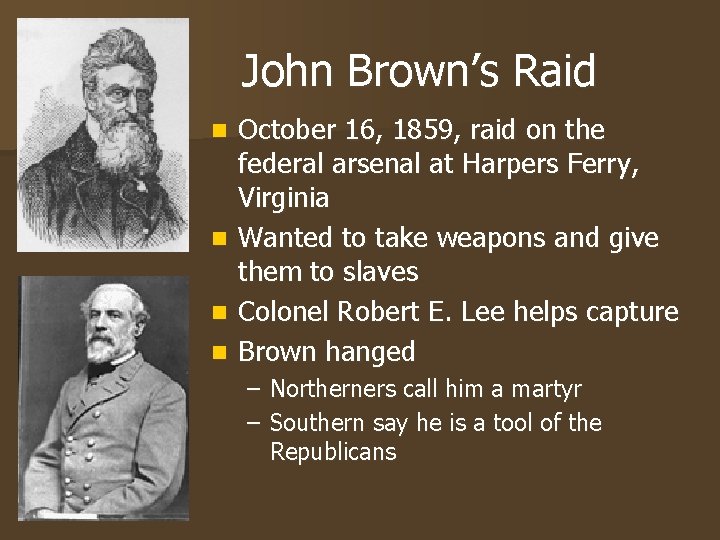
John Brown’s Raid October 16, 1859, raid on the federal arsenal at Harpers Ferry, Virginia n Wanted to take weapons and give them to slaves n Colonel Robert E. Lee helps capture n Brown hanged n – Northerners call him a martyr – Southern say he is a tool of the Republicans
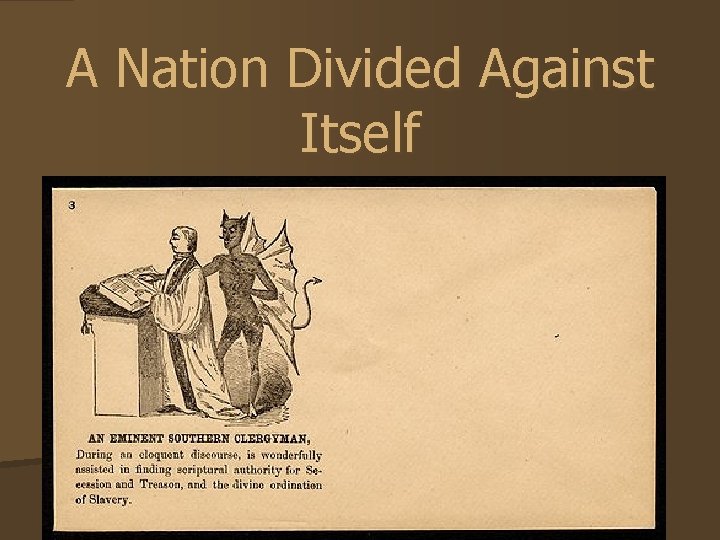
A Nation Divided Against Itself
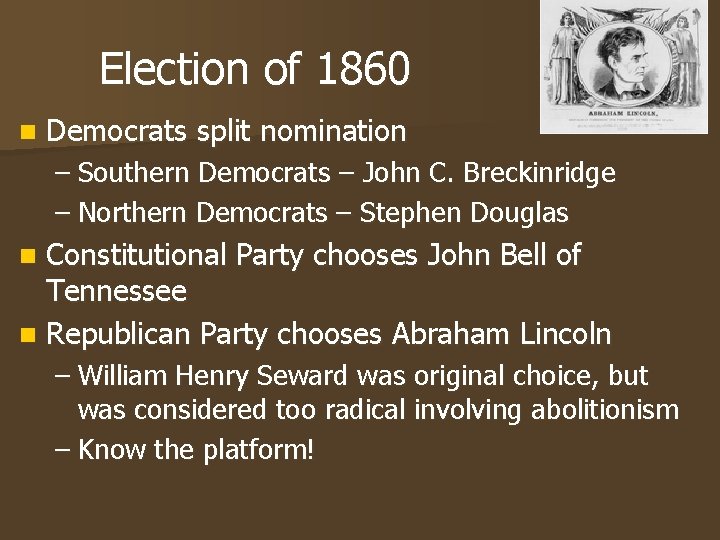
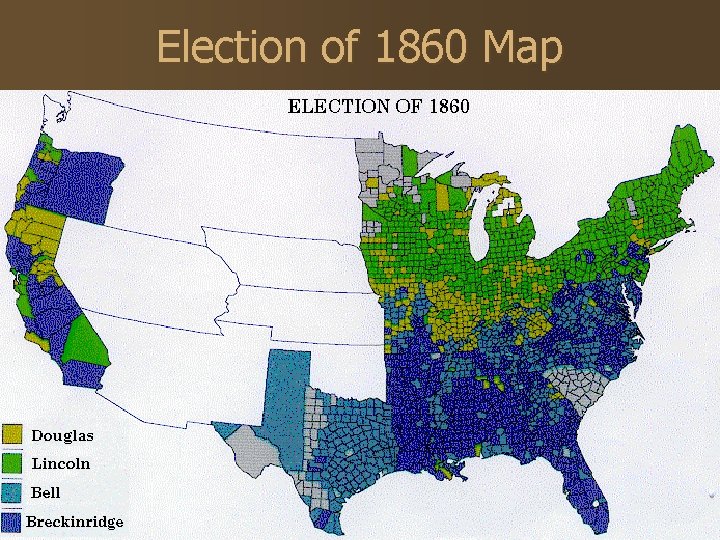
Election of 1860 n Democrats split nomination – Southern Democrats – John C. Breckinridge – Northern Democrats – Stephen Douglas Constitutional Party chooses John Bell of Tennessee n Republican Party chooses Abraham Lincoln n – William Henry Seward was original choice, but was considered too radical involving abolitionism – Know the platform!
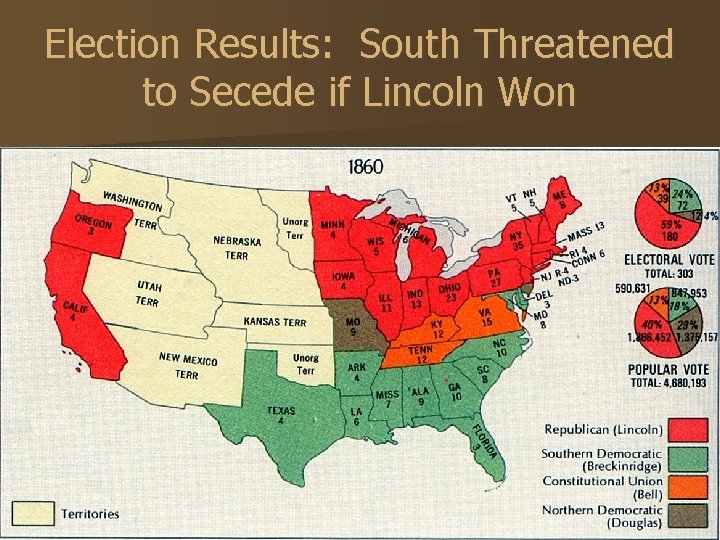
The Election n In the South – Race was between Bell and Breckinridge – Lincoln’s name not on most southern ballots n In the North – Race was between Douglas and Lincoln n Lincoln wins the election with 180 electoral votes, but with only 39% of the popular vote
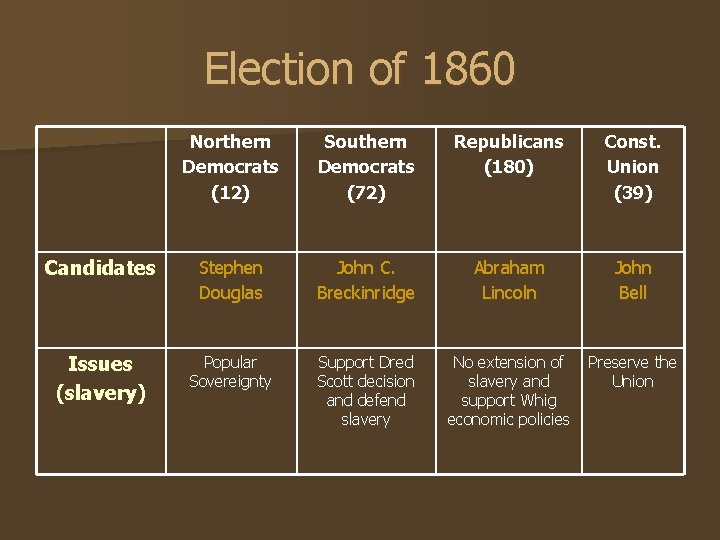
Election of 1860 Northern Democrats (12) Southern Democrats (72) Republicans (180) Const. Union (39) Candidates Stephen Douglas John C. Breckinridge Abraham Lincoln John Bell Issues (slavery) Popular Sovereignty Support Dred Scott decision and defend slavery No extension of slavery and support Whig economic policies Preserve the Union
Election Results: South Threatened to Secede if Lincoln Won
Election of 1860 Map
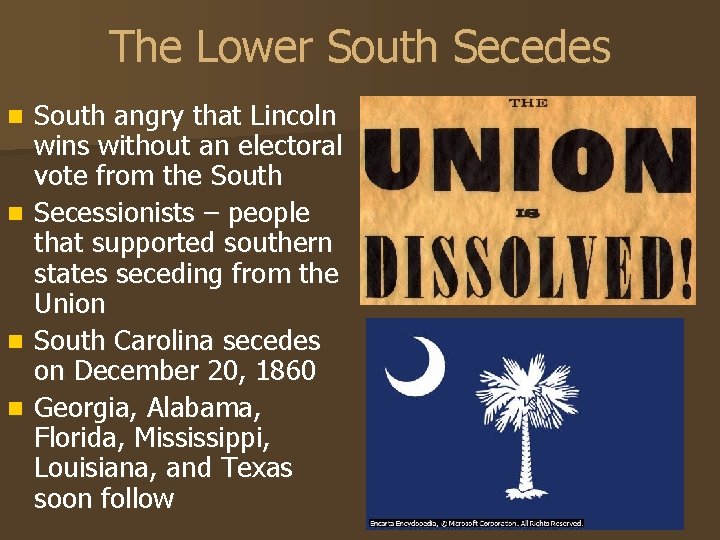
The Lower South Secedes South angry that Lincoln wins without an electoral vote from the South n Secessionists – people that supported southern states seceding from the Union n South Carolina secedes on December 20, 1860 n Georgia, Alabama, Florida, Mississippi, Louisiana, and Texas soon follow n
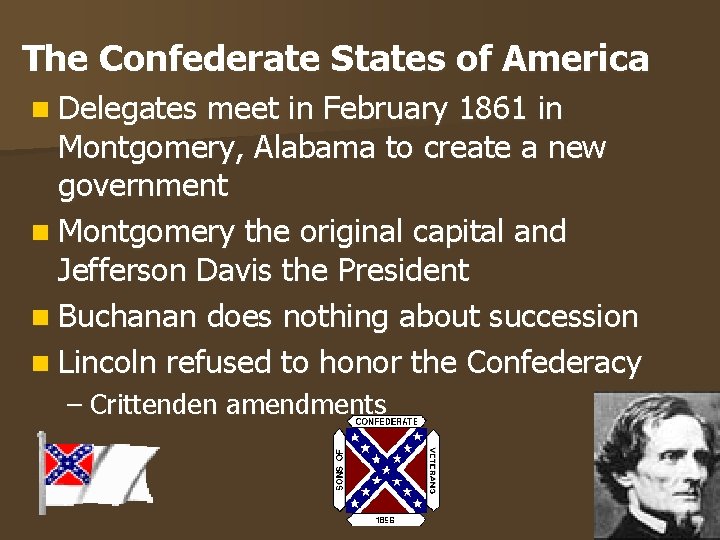
The Confederate States of America n Delegates meet in February 1861 in Montgomery, Alabama to create a new government n Montgomery the original capital and Jefferson Davis the President n Buchanan does nothing about succession n Lincoln refused to honor the Confederacy – Crittenden amendments
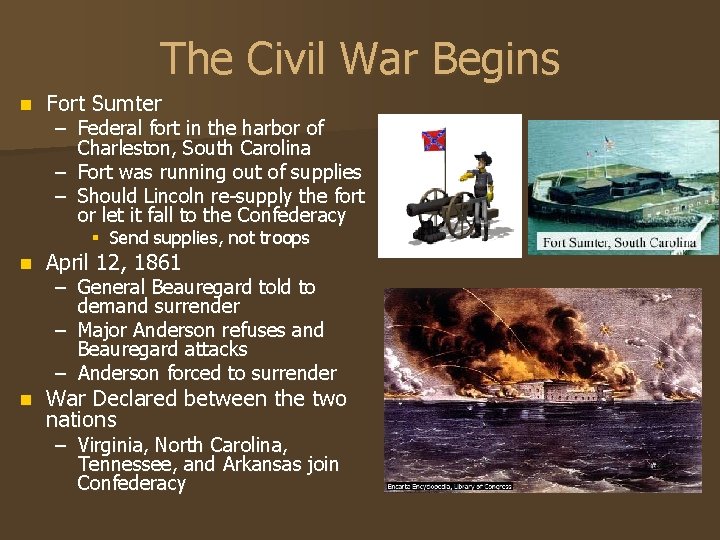
The Civil War Begins n Fort Sumter – Federal fort in the harbor of Charleston, South Carolina – Fort was running out of supplies – Should Lincoln re-supply the fort or let it fall to the Confederacy § Send supplies, not troops n April 12, 1861 n War Declared between the two nations – General Beauregard told to demand surrender – Major Anderson refuses and Beauregard attacks – Anderson forced to surrender – Virginia, North Carolina, Tennessee, and Arkansas join Confederacy