
Sectional Views Chapter 6 Understanding Sections Section views

- Slides: 41
Sectional Views Chapter 6
Understanding Sections • Section views have three main purposes: – Document the design and manufacture of single parts which are manufactured as one piece – Document how multiple parts are to be assembled or built – Aid in visualizing internal workings of a design
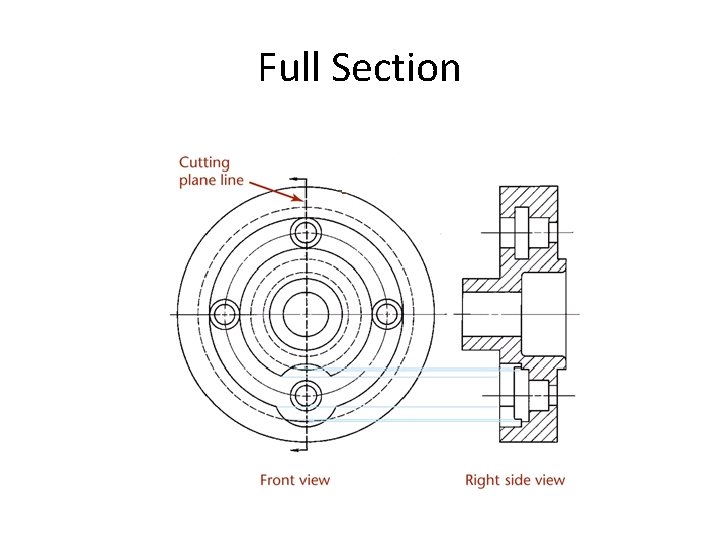
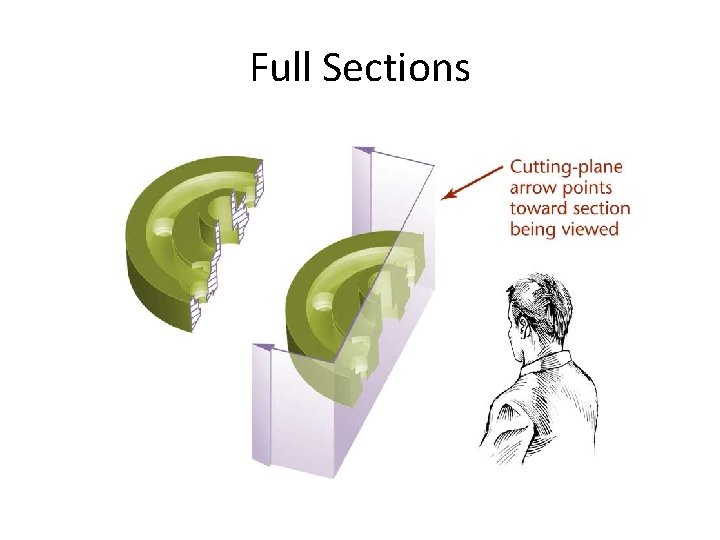
Full Sections • When a part is cut fully in half, the resulting view is called a full section • A line called the cutting-plane line shows where the object was cut and from which direction the section is viewed – The arrows point toward the section being viewed
Full Section
Full Sections
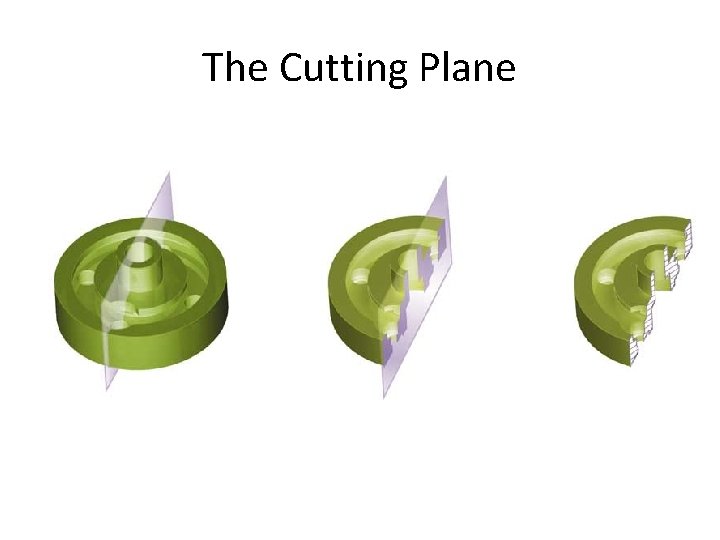
The Cutting Plane • The cutting plane is shown in a view adjacent to the sectional view • In the section view, the areas that would have been in actual contact with the cutting plane are show with section lining – Those areas are cross-hatched
Lines Behind the Cutting Plane • The visible edges of the object behind the cutting plane are generally shown because they are now visible but they are not crosshatched
The Cutting Plane
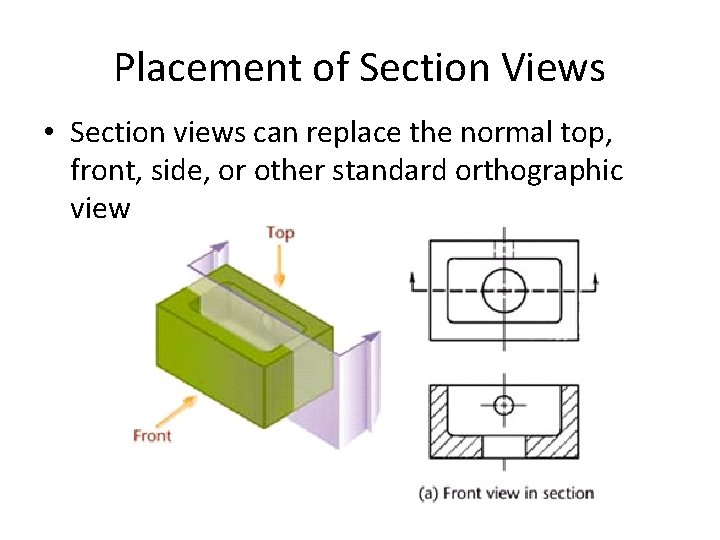
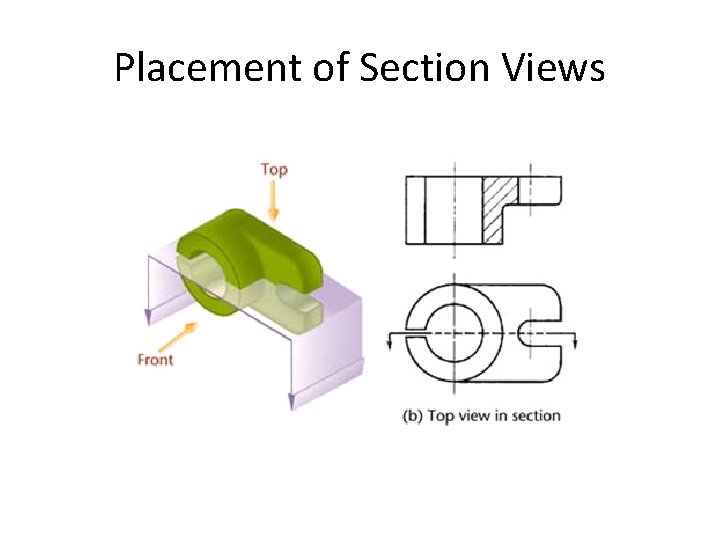
Placement of Section Views • Section views can replace the normal top, front, side, or other standard orthographic view
Placement of Section Views
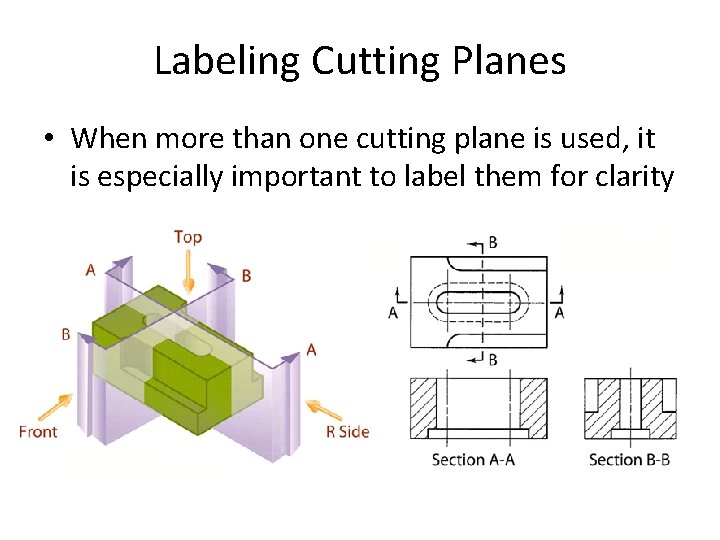
Labeling Cutting Planes • When more than one cutting plane is used, it is especially important to label them for clarity
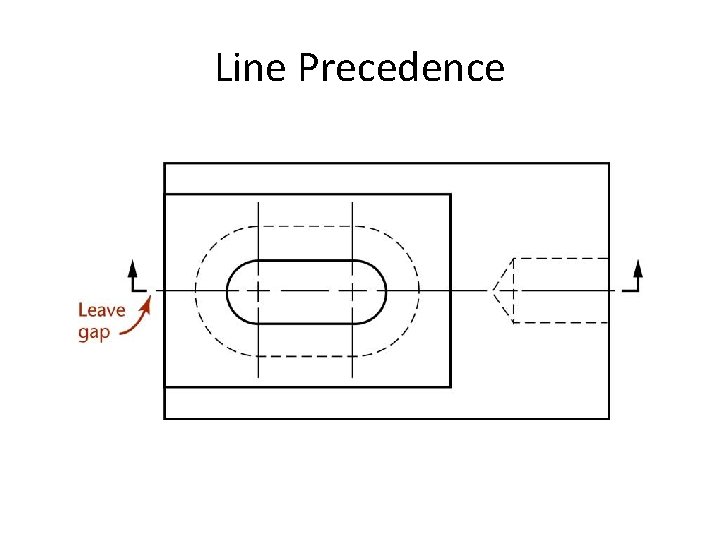
Line Precedence • When a cutting plane coincides with a center line, the cutting plane line takes precedence • When a cutting plane line would obscure important details, just the ends of the line outside the view and the arrows can be shown
Line Precedence
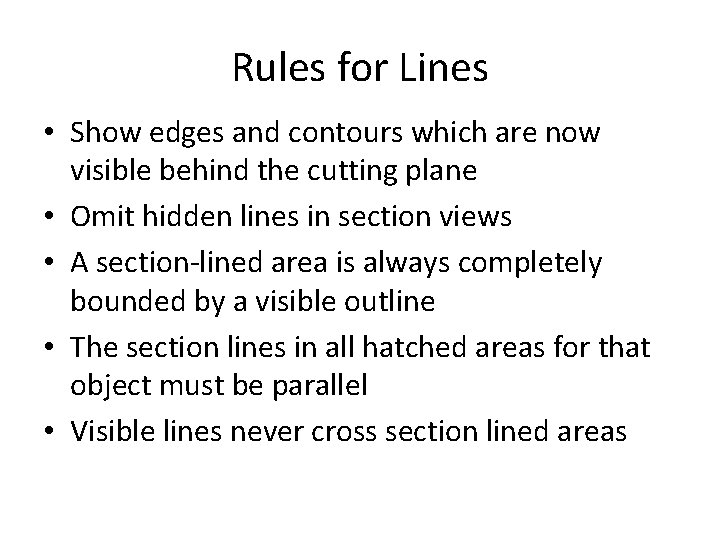
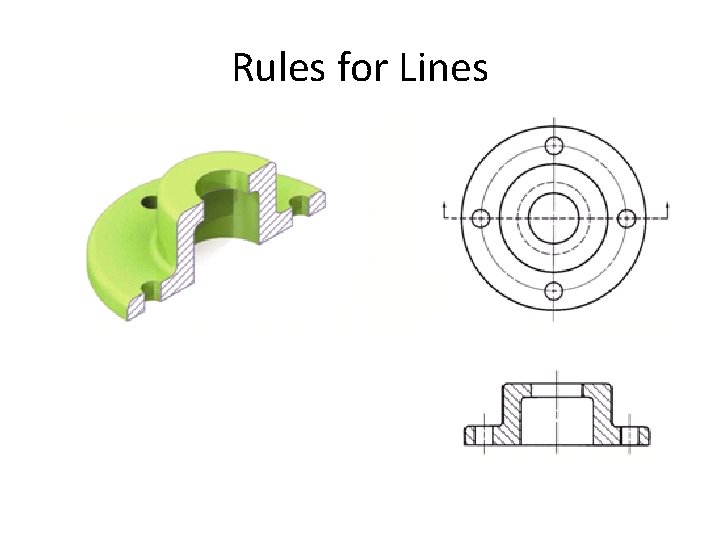
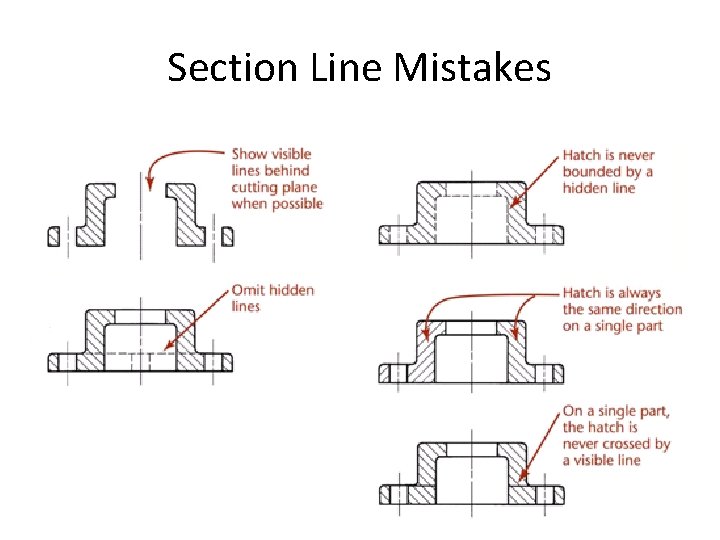
Rules for Lines • Show edges and contours which are now visible behind the cutting plane • Omit hidden lines in section views • A section-lined area is always completely bounded by a visible outline • The section lines in all hatched areas for that object must be parallel • Visible lines never cross section lined areas
Rules for Lines
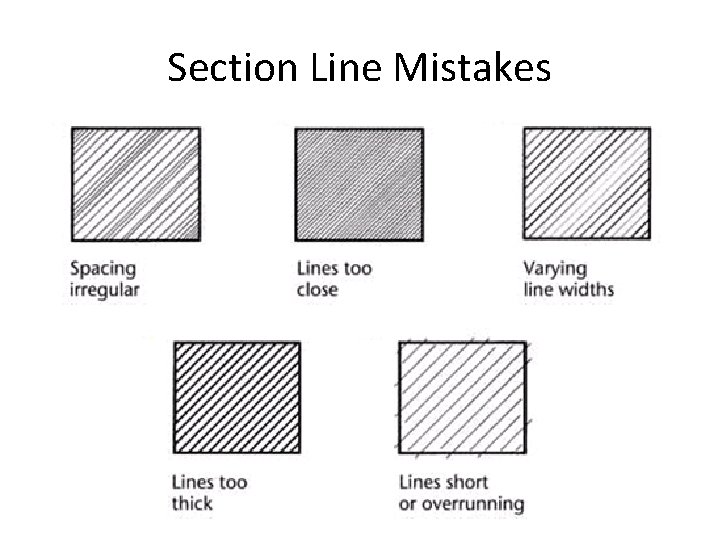
Section Line Mistakes
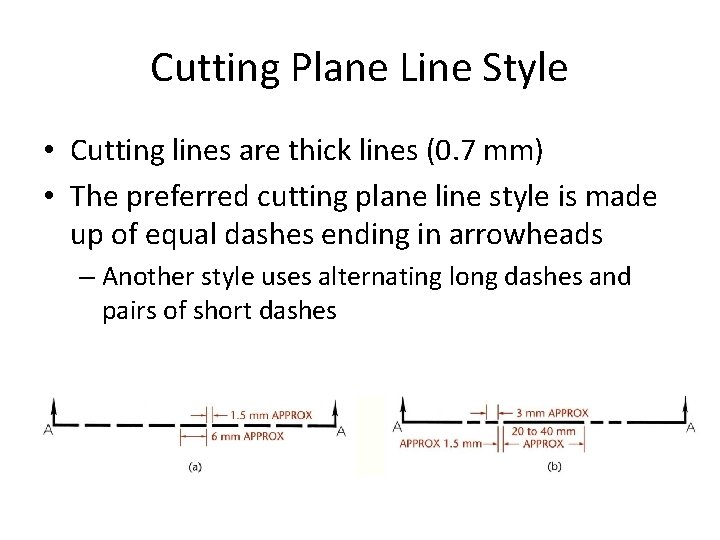
Cutting Plane Line Style • Cutting lines are thick lines (0. 7 mm) • The preferred cutting plane line style is made up of equal dashes ending in arrowheads – Another style uses alternating long dashes and pairs of short dashes
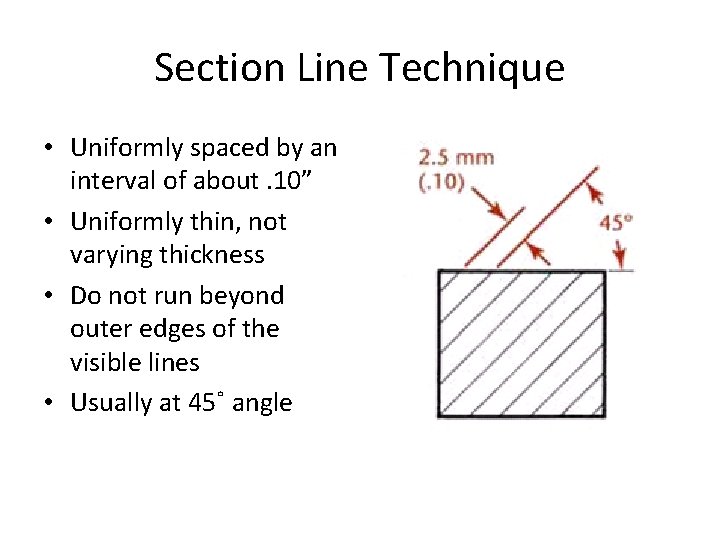
Section Line Technique • Uniformly spaced by an interval of about. 10” • Uniformly thin, not varying thickness • Do not run beyond outer edges of the visible lines • Usually at 45˚ angle
Section Line Mistakes
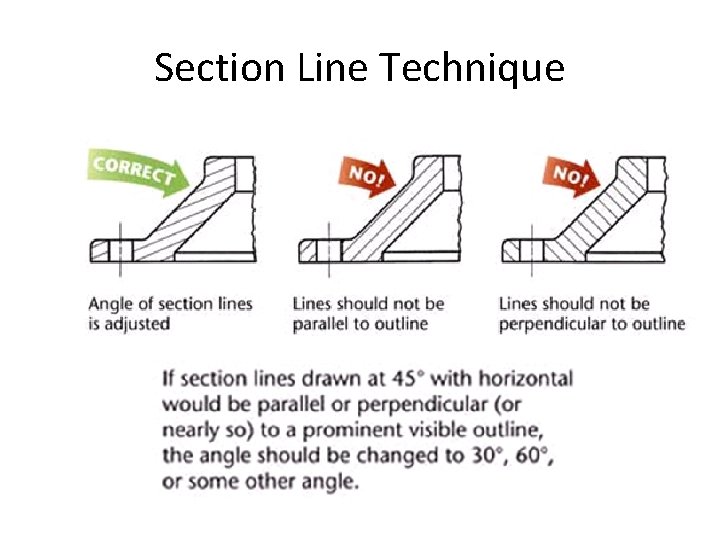
Section Line Technique
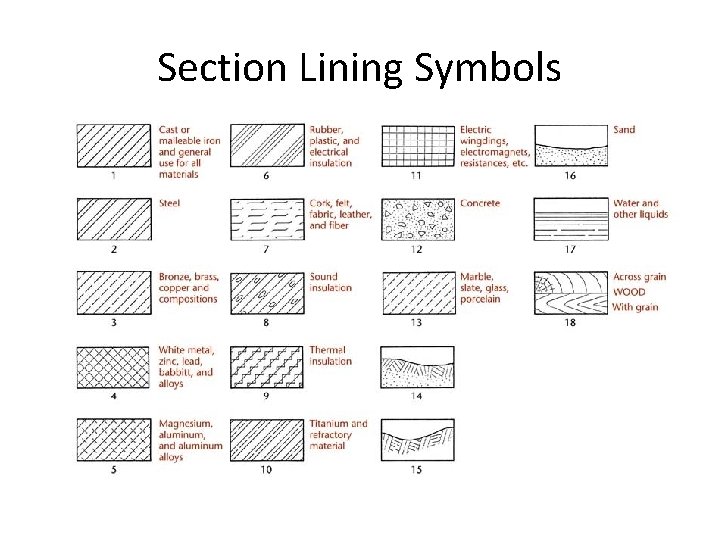
Section Lining Symbols • Section lining symbols may be used to indicate specific materials • Using different section lining patterns helps you distinguish different materials, especially on assembly drawings – It is acceptable to use the general-purpose symbol at different angles for different parts
Section Lining Symbols
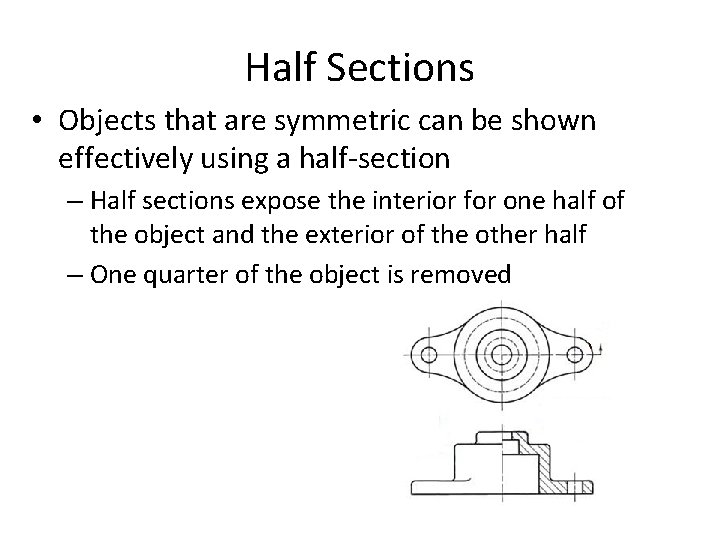
Half Sections • Objects that are symmetric can be shown effectively using a half-section – Half sections expose the interior for one half of the object and the exterior of the other half – One quarter of the object is removed
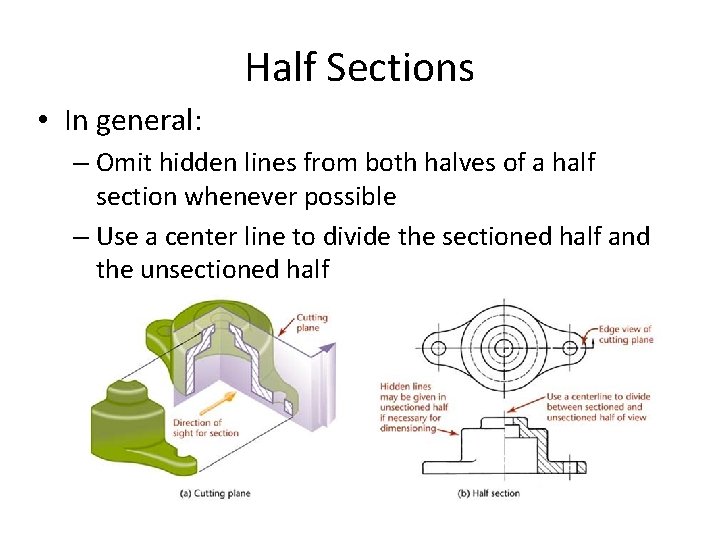
Half Sections • In general: – Omit hidden lines from both halves of a half section whenever possible – Use a center line to divide the sectioned half and the unsectioned half
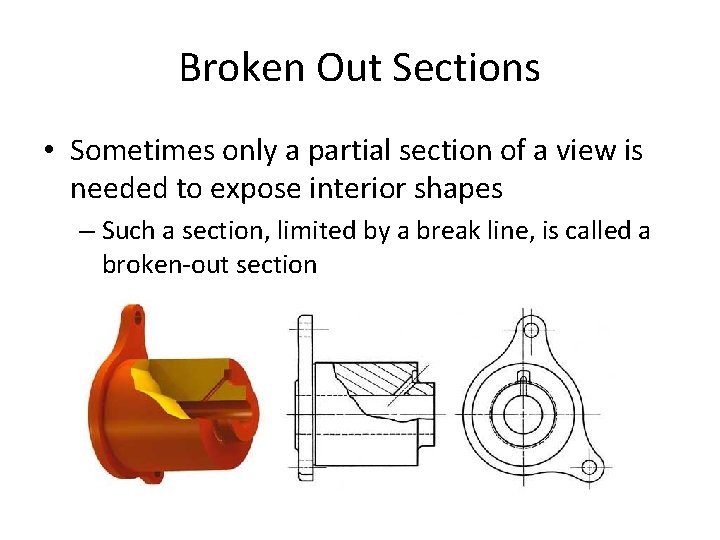
Broken Out Sections • Sometimes only a partial section of a view is needed to expose interior shapes – Such a section, limited by a break line, is called a broken-out section
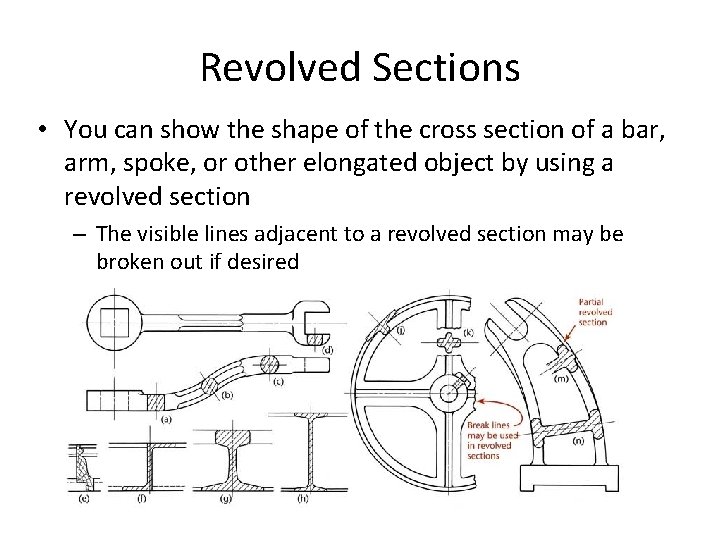
Revolved Sections • You can show the shape of the cross section of a bar, arm, spoke, or other elongated object by using a revolved section – The visible lines adjacent to a revolved section may be broken out if desired
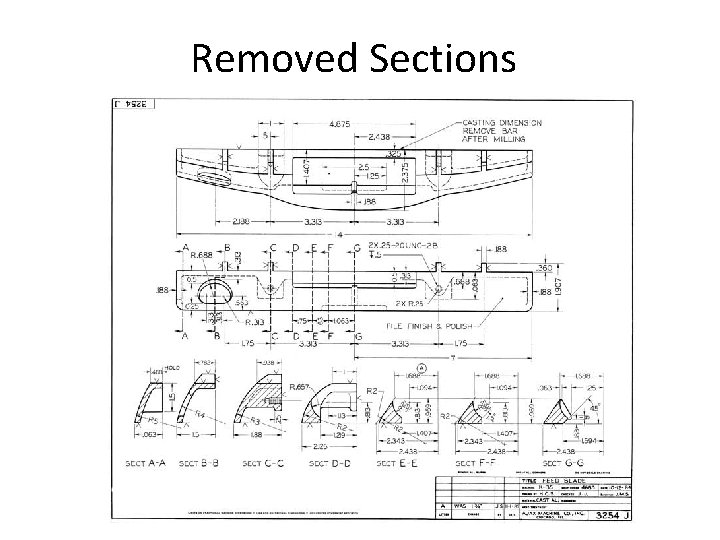
Removed Sections • A removed section is one that is not in direct projection from the view containing the cutting plane – Removed sections should be labeled and arranged in alphabetical order from left to right
Removed Sections
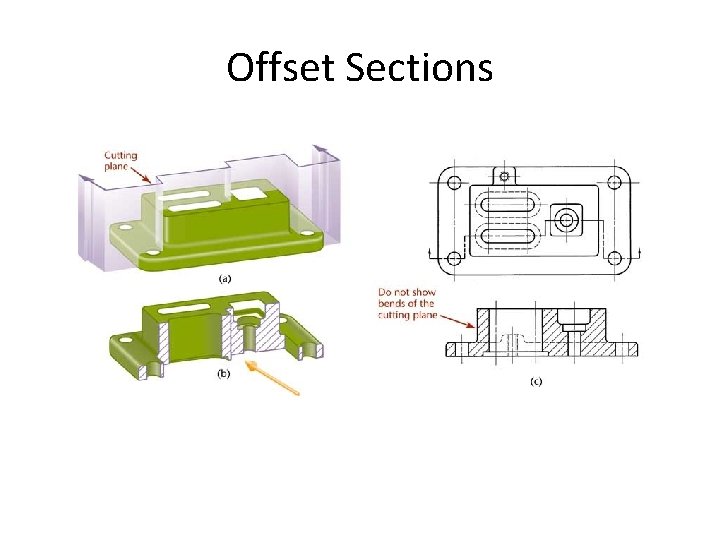
Offset Sections • In sectioning through complex objects, it is often desirable to show features that do not lie in a straight line by offsetting or bending the cutting plane – Offsets or bends in the cutting plane are all 90 – The bends in the cutting plane are never shown in the sectional view
Offset Sections
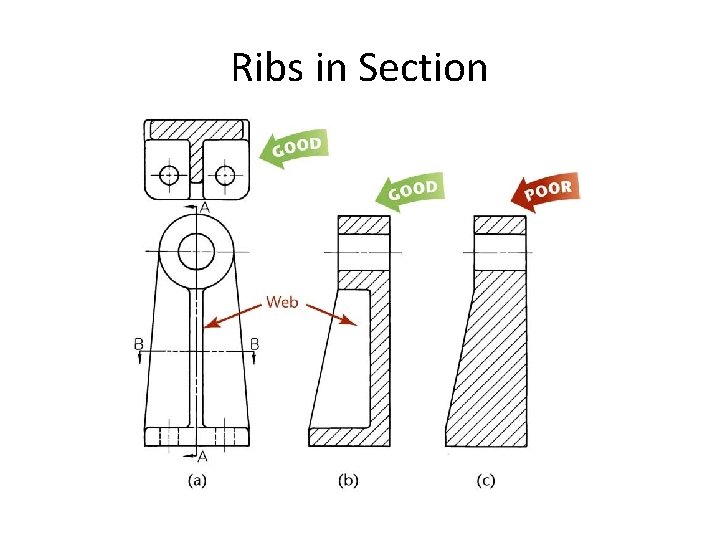
Ribs in Section • To avoid a false impression of thickness and solidity, ribs, webs, gear teeth, and other similar features are not hatched with section lining even though the cutting plane slices them
Ribs in Section
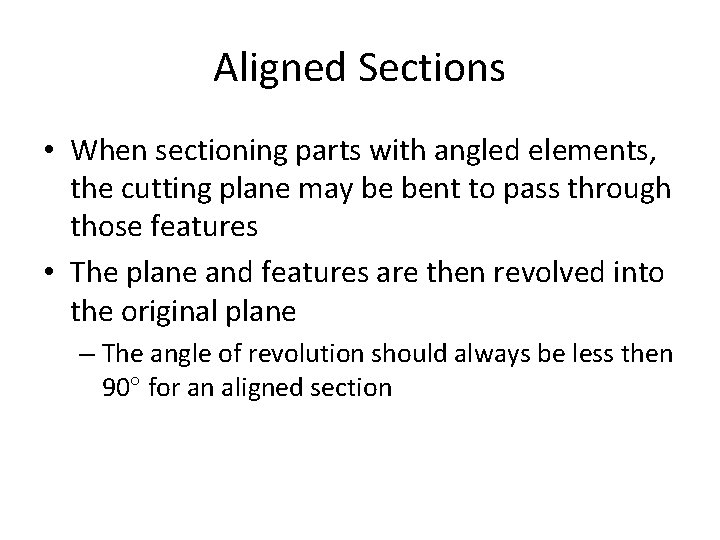
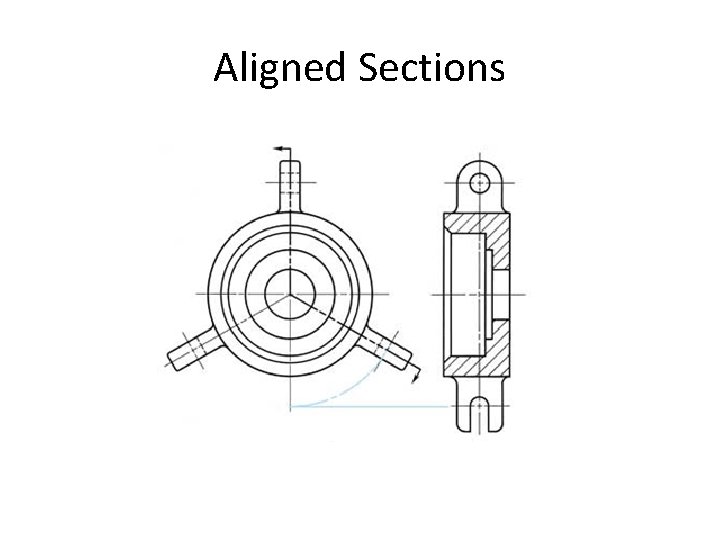
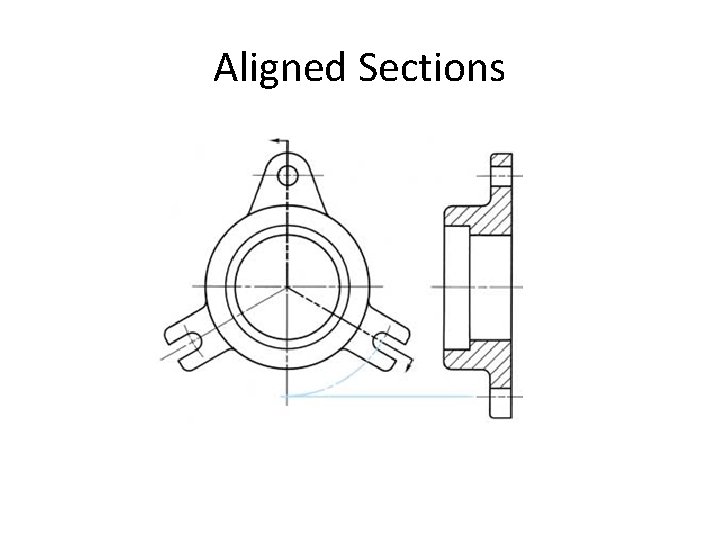
Aligned Sections • When sectioning parts with angled elements, the cutting plane may be bent to pass through those features • The plane and features are then revolved into the original plane – The angle of revolution should always be less then 90 for an aligned section
Aligned Sections
Aligned Sections
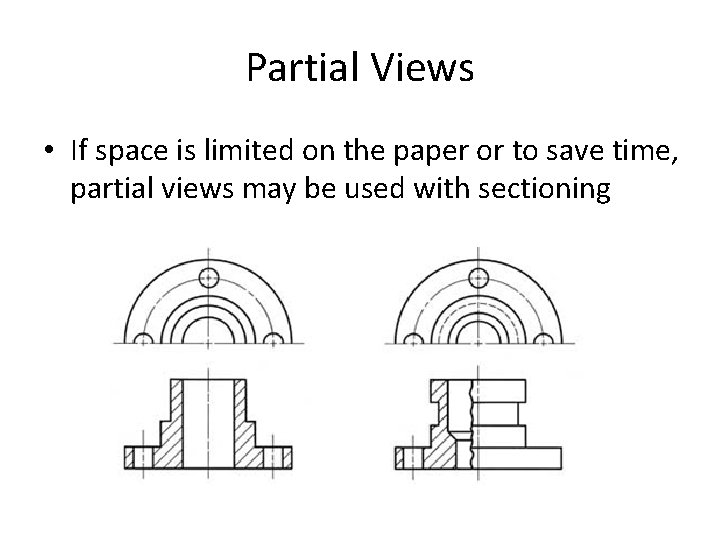
Partial Views • If space is limited on the paper or to save time, partial views may be used with sectioning
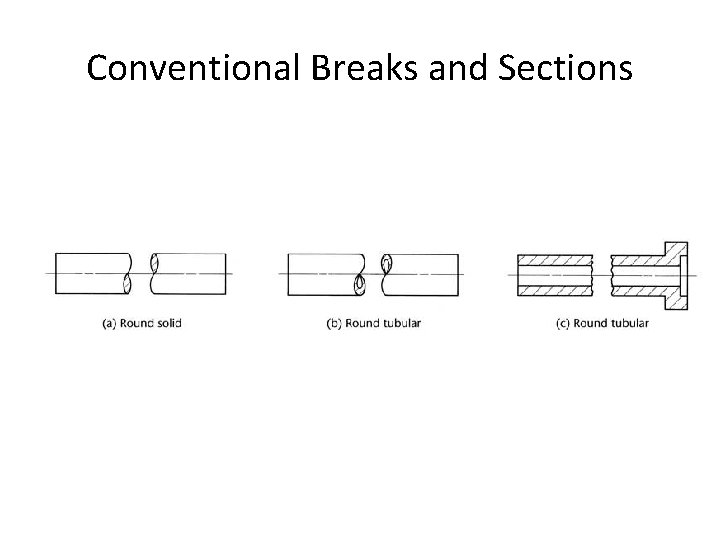
Conventional Breaks and Sections • Cross-hatching is often added when showing a conventional break • Conventional breaks are used to shorten the view of an object – The breaks used on cylindrical shafts or tubes are often referred to as “S-breaks”
Conventional Breaks and Sections
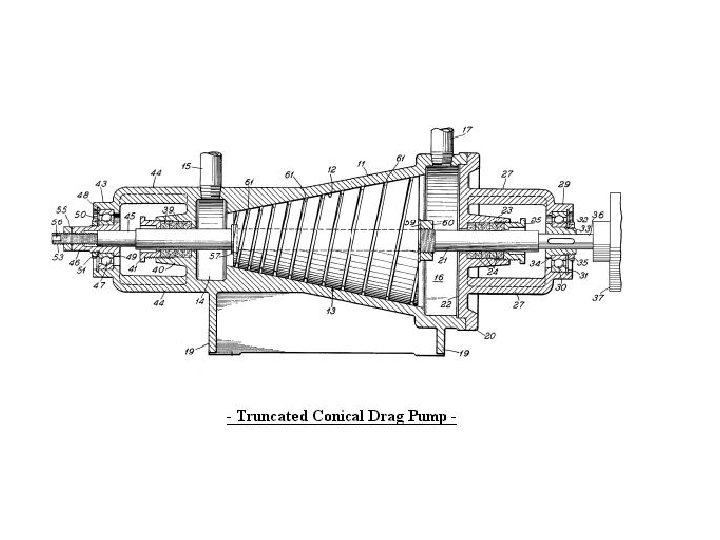
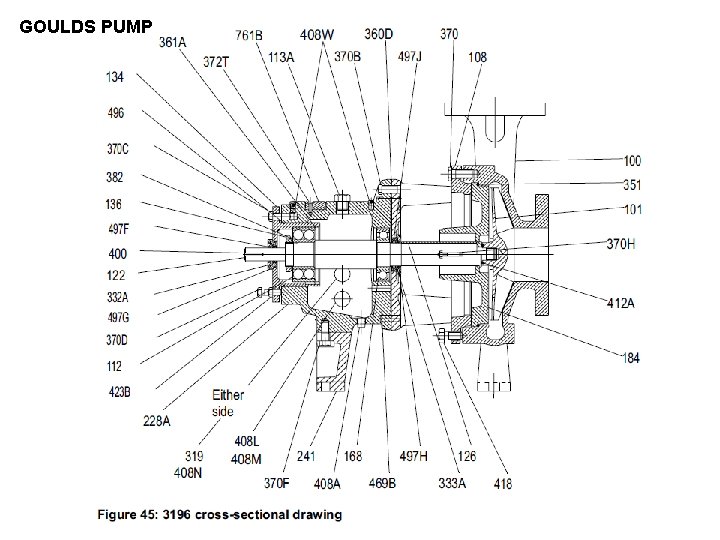
Assembly Sections • Section views are often used to create assembly drawings • Different parts use different hatch patterns • Solid features that do not have interior structure are not hatched
GOULDS PUMP