
Sectional Compromise 1848 1860 Constitutional Issues In 1860
- Slides: 21
Sectional Compromise 1848 -1860
Constitutional Issues In 1860 the nation will explode into war as a result of sectional conflict. Much of the sectional conflict is rooted in the Constitution itself Constitution fails to: Establish the legal status of slavery Establish a procedure for statehood (Northwest Ord. ) Balance representation in Congress North will always control at least House of Rep. Each weakness created severe problems for the Union and ultimately contribute to the Civil War
The Problem of New Territory Treaty of Guadalupe Hidalgo added a significant amount of territory to the United States below the 36 30 line established by the Missouri Compromise Northerners feared the effect this new territory would have on the sectional balance of the U. S. Wilmot Proviso Proposed by Northern Democrat David Wilmot Served to further divide the country Alienated Southern Democrats Allowed Whigs to retake Presidency in 1848 (Taylor) Dividing issue: Whether or not Congress had the power to regulate slavery Country is split on sectional lines
The Problem of New Territory Popular Sovereignty Took the issue of slavery out of the hands of Congress Proposed by Democratic candidate Lewis Cass Fails to prevent the split in the Democratic party Free-Soil Party
• Why would popular sovereignty be seen as a compromise position for the North and South?
California Gold Rush Gold is discovered in California in 1848 Creates a national frenzy # of settlers bound for CA up 6, 000% from previous year Abundance of settlers and lawless atmosphere created the immediate push for statehood Gold miners feared competition & rejected the notion of a slave state California also created a problem with the existing 36 30 line Created need for a new system for determining free vs. slave states
Compromise of 1850 Henry Clay authors a multipart compromise rolled into one enormous omnibus bill Bill fails as a package but is later passed in individual parts 7 Part Compromise: California enters union as a free state Remaining Mexican cession divided into two territories: Utah New Mexico Each decided by popular sovereignty Resolution of Texas-New Mexico border dispute Federal assumption of Texas debt Abolition of the slave trade in the District of Columbia A new, more strict Fugitive Slave Law Allowed Southerners to pursue slaves in the North
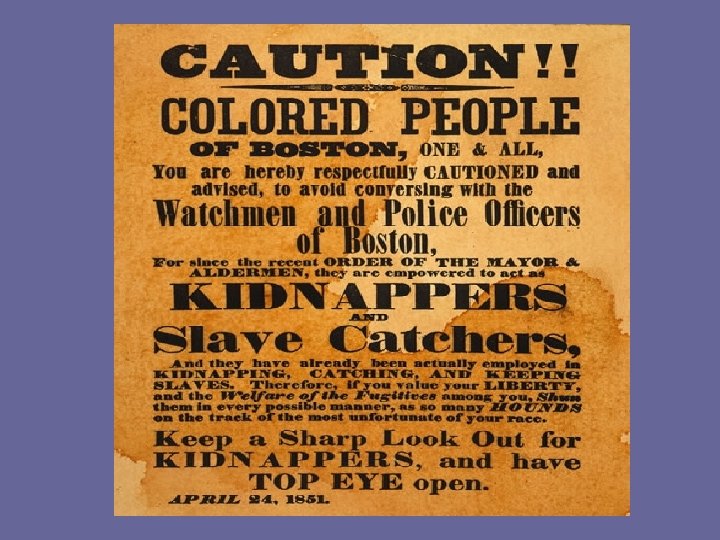
• How did the Fugitive Slave Act create stronger Northern resistance to slavery?
Growing Suspicion of the North Southerners saw the failure to enforce the Fugitive Slave Act as part of a growing Northern hostility towards slavery Weakens Whig party, leaving the Democrats the only true national party (1852, Pierce, Dem. elected) Abolitionist movement gained substantial momentum Stowe’s Uncle Tom’s Cabin Sold over 2 million copies (burned in the South) Radical abolitionists like Garrison frightened the South Primary Southern fear: Slave rebellion Santo Domingo Nat Turner (1831)
Kansas-Nebraska Act (1854) Most Americans naively assumed the Compromise of 1850 put an end to sectional problems Proposed by Stephen A. Douglas to grant territorial status to Nebraska territory Territory is split into two parts Allows Kansas and Nebraska to organize as territories and decide slavery using popular sovereignty Assumption: Kansas-slave, Nebraska-free Invalidated the Missouri Compromise (some saw as a broken promise) Creates national chaos Final straw for Whig party (Republican party born- uniting antislavery factions)
Kansas-Nebraska Act (1854) Act results in “Bleeding Kansas” Proslavery voters “fixed” the first territorial election in Kansas Open warfare between slave-state and slave-state factions “Sack of Lawrence” Pottawatomie Massacre (John Brown) Lecompton Constitution Drafted by pro-slavery factions Eventually voted down after much controversy Clearly displayed that fair elections were impossible as a result of the slavery issue
• What did “Bleeding Kansas” show about the practicality of popular sovereignty?
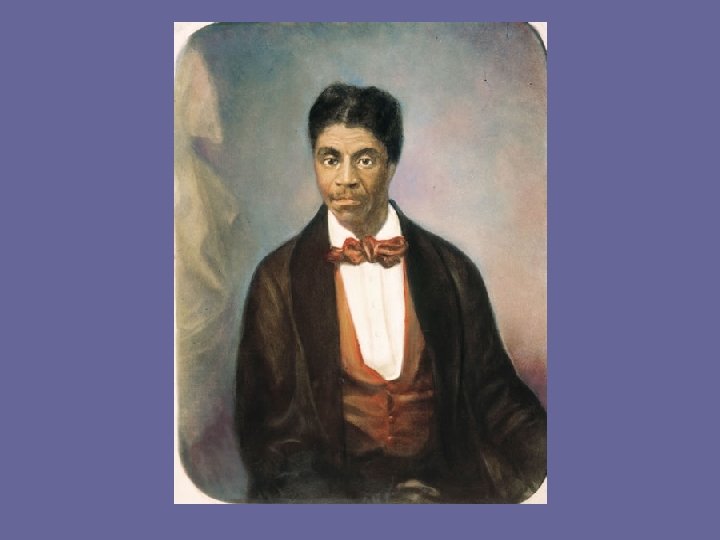
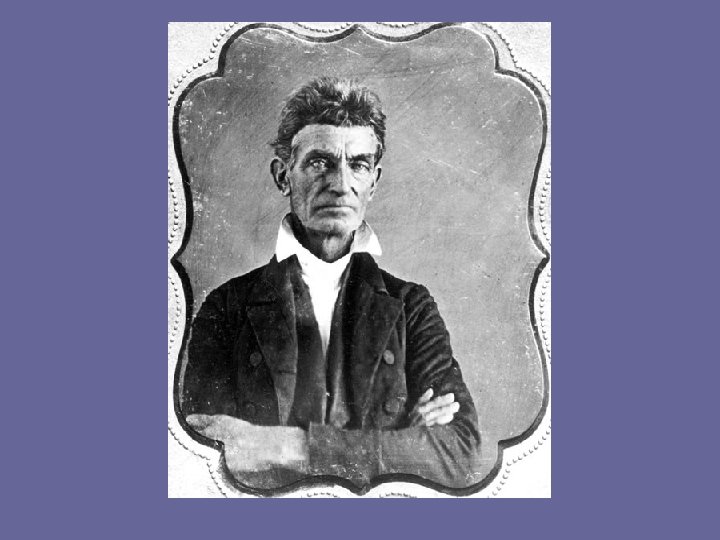
Last gasps of the Union Election of 1856 Buchanan (Dem. ) defeats Fremont (Rep. ) and Fillmore (Know Nothing) Moderate Buchanan will attempt to try and keep the union together despite disastrous circumstances Dred Scott Case (1857) Slaves had no legal rights Congress had no legal jurisdiction to prohibit slavery Showed that nonpartisan solutions to slavery were impossible Harper’s Ferry (1859) John Brown’s attempted slave uprising Confirmed Southern fears/Aroused Northern sympathy
• Why is it politically correct to label antislavery figures such as Brown “fanatics”?
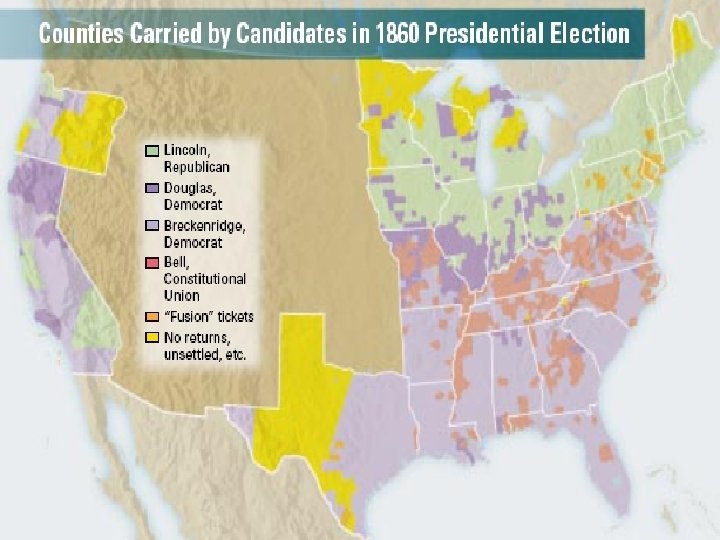
Election of 1860 By 1860 South is contemplating succession from the Union Escalating conflict with the North convinced the South that Union was unsalvageable Return to Calhoun’s philosophy of nullification Lincoln is elected Made famous by his debates with Douglas Confirmed fore to the expansion of slavery Fails to win any state outside the North Result is Southern secession (SC first) Crittenden Compromise Last attempt to restore union Plan collapses
• Big Picture: What factors had gradually pushed the nation apart over time? • Was the Civil War inevitable?