
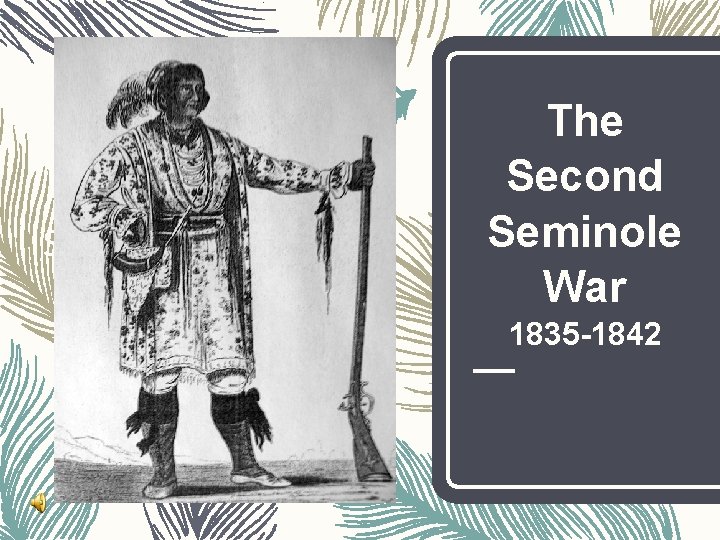
Section Three The Second Seminole War 1835 1842
- Slides: 41
Section Three The Second Seminole War 1835 -1842
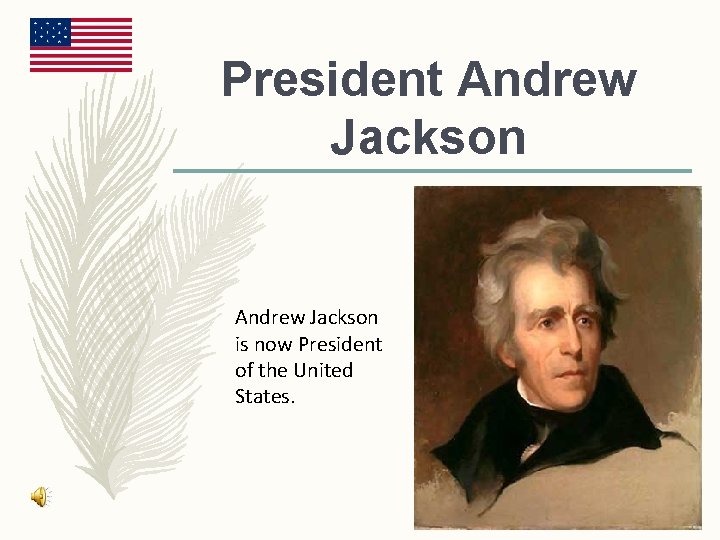
President Andrew Jackson is now President of the United States.
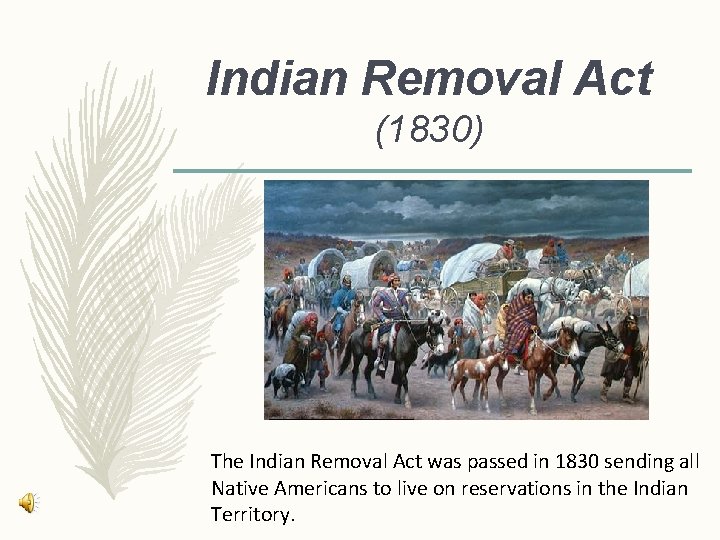
Indian Removal Act (1830) The Indian Removal Act was passed in 1830 sending all Native Americans to live on reservations in the Indian Territory.
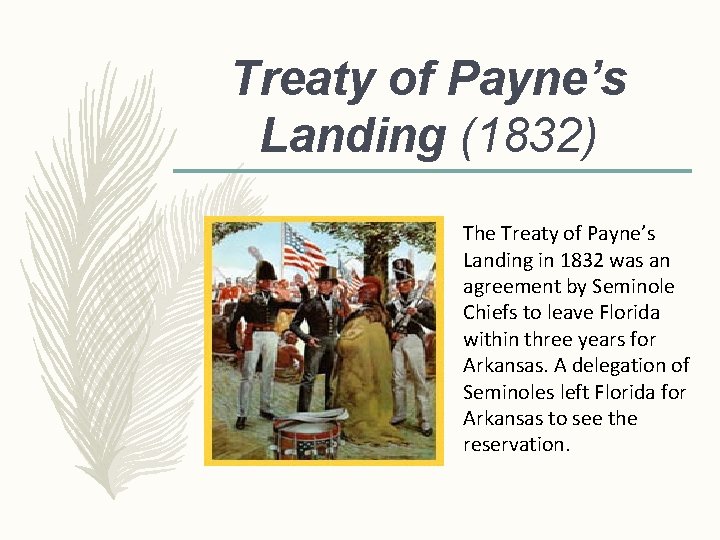
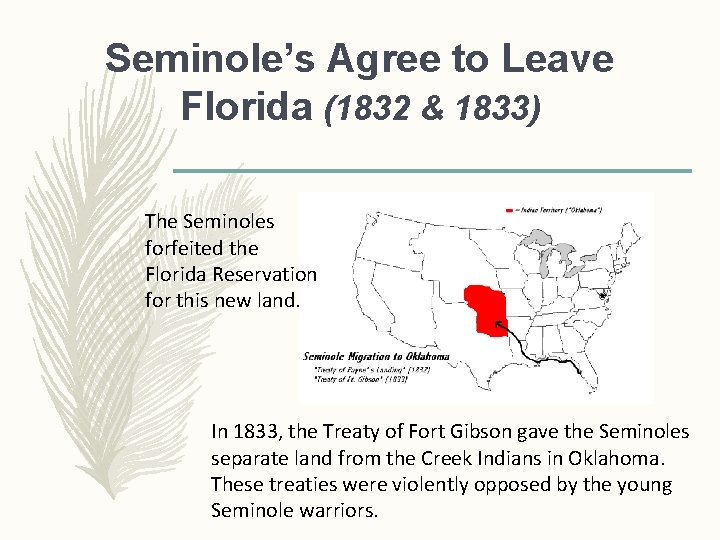
Treaty of Payne’s Landing (1832) The Treaty of Payne’s Landing in 1832 was an agreement by Seminole Chiefs to leave Florida within three years for Arkansas. A delegation of Seminoles left Florida for Arkansas to see the reservation.
Seminole’s Agree to Leave Florida (1832 & 1833) The Seminoles forfeited the Florida Reservation for this new land. In 1833, the Treaty of Fort Gibson gave the Seminoles separate land from the Creek Indians in Oklahoma. These treaties were violently opposed by the young Seminole warriors.
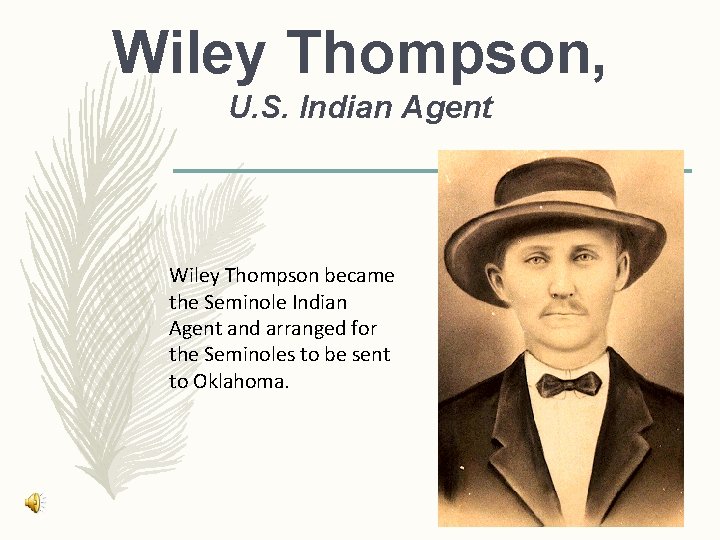
Wiley Thompson, U. S. Indian Agent Wiley Thompson became the Seminole Indian Agent and arranged for the Seminoles to be sent to Oklahoma.
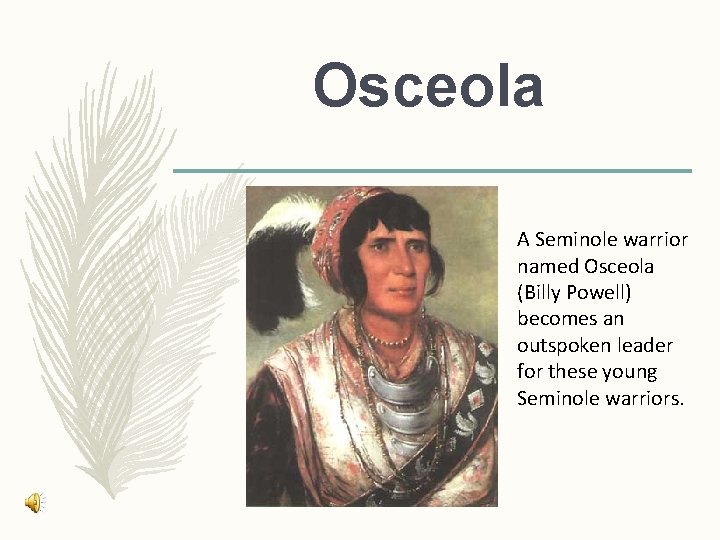
Osceola A Seminole warrior named Osceola (Billy Powell) becomes an outspoken leader for these young Seminole warriors.
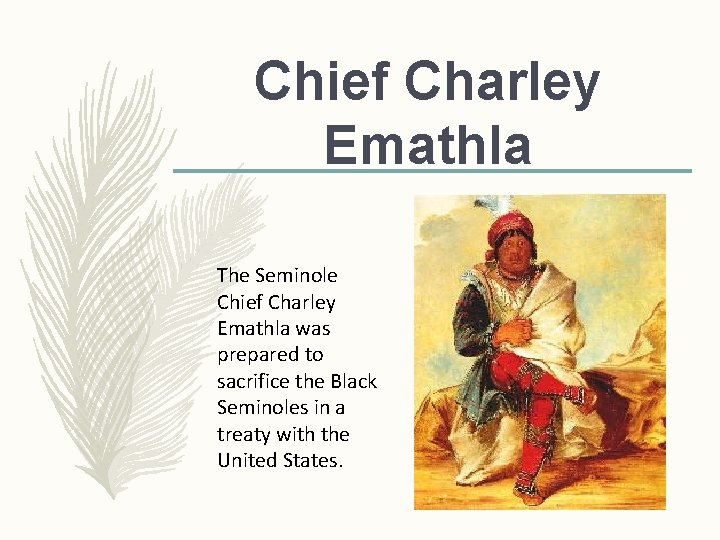
Chief Charley Emathla The Seminole Chief Charley Emathla was prepared to sacrifice the Black Seminoles in a treaty with the United States.
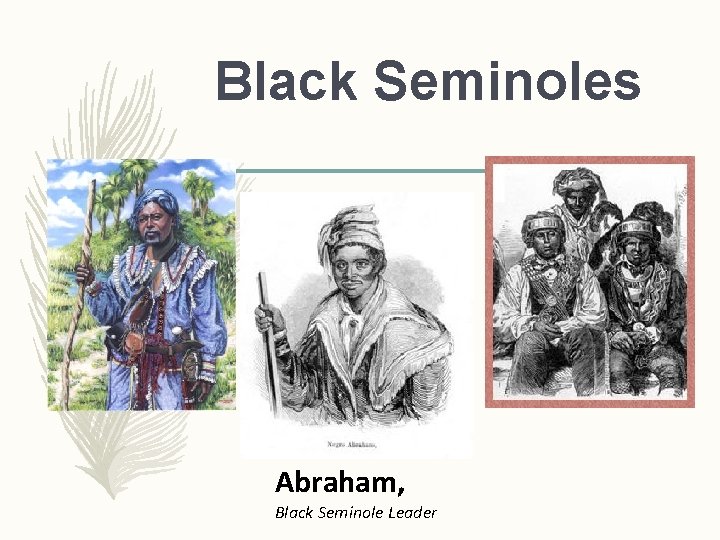
Black Seminoles Abraham, Black Seminole Leader
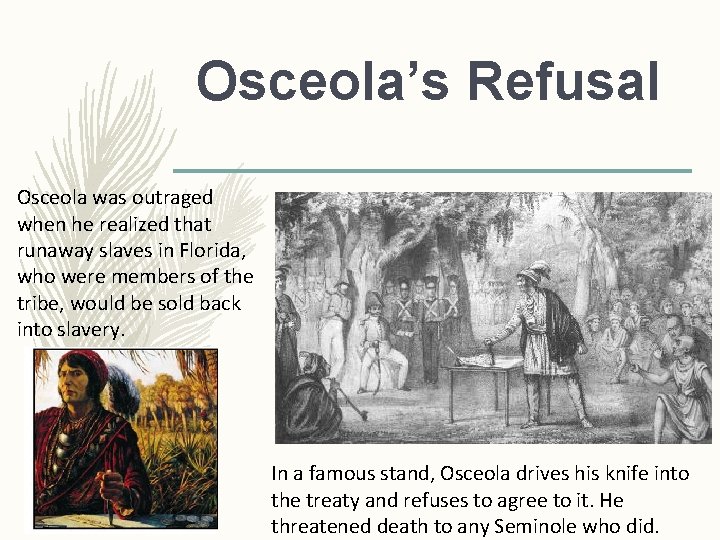
Osceola’s Refusal Osceola was outraged when he realized that runaway slaves in Florida, who were members of the tribe, would be sold back into slavery. In a famous stand, Osceola drives his knife into the treaty and refuses to agree to it. He threatened death to any Seminole who did.
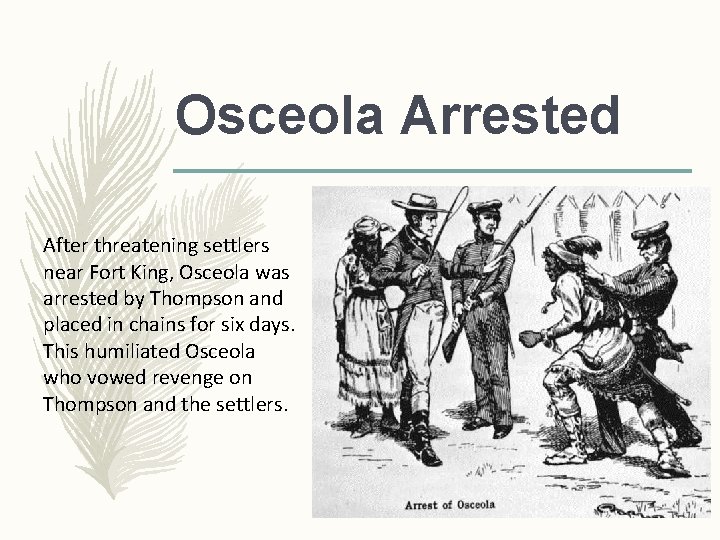
Osceola Arrested After threatening settlers near Fort King, Osceola was arrested by Thompson and placed in chains for six days. This humiliated Osceola who vowed revenge on Thompson and the settlers.
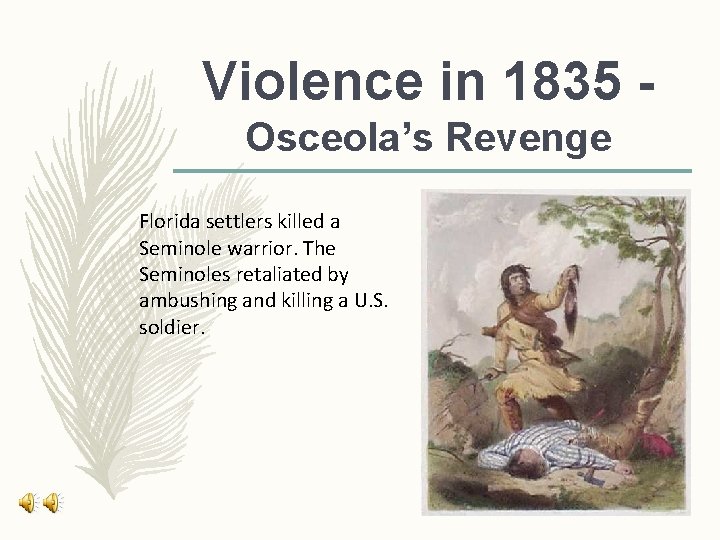
Violence in 1835 Osceola’s Revenge Florida settlers killed a Seminole warrior. The Seminoles retaliated by ambushing and killing a U. S. soldier.
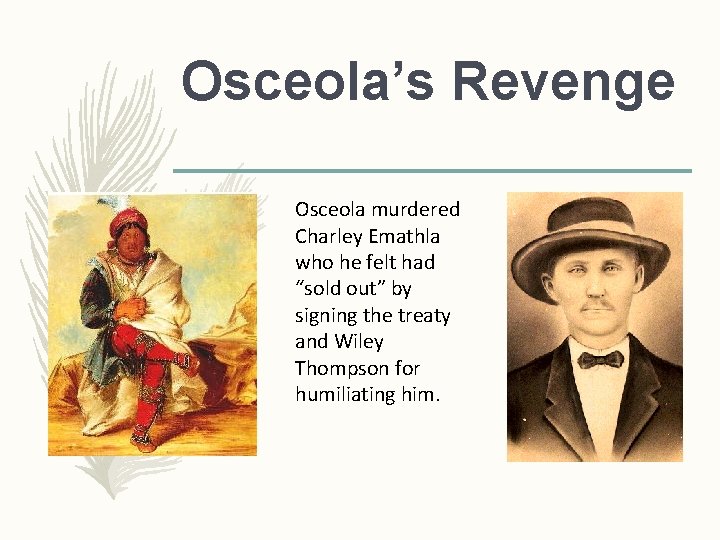
Osceola’s Revenge Osceola murdered Charley Emathla who he felt had “sold out” by signing the treaty and Wiley Thompson for humiliating him.
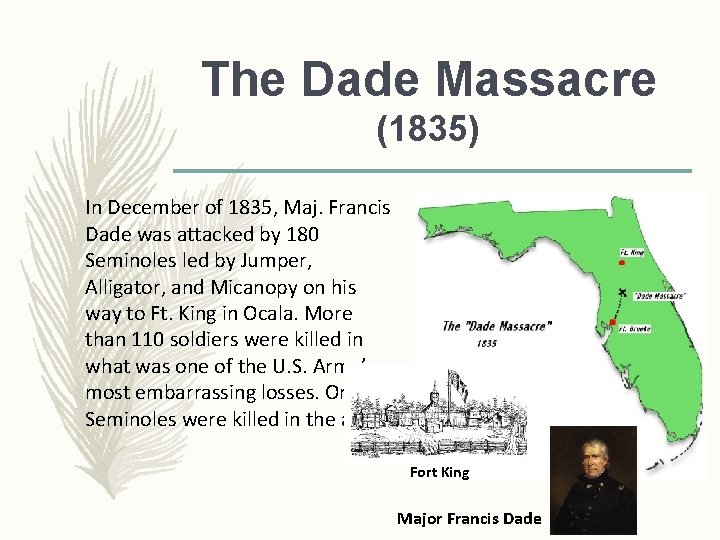
The Dade Massacre (1835) In December of 1835, Maj. Francis Dade was attacked by 180 Seminoles led by Jumper, Alligator, and Micanopy on his way to Ft. King in Ocala. More than 110 soldiers were killed in what was one of the U. S. Army’s most embarrassing losses. Only 3 Seminoles were killed in the attack. Fort King Major Francis Dade
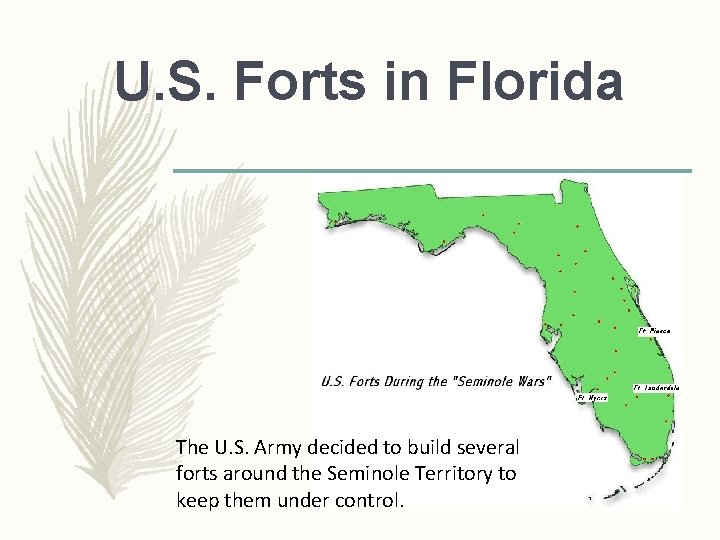
U. S. Forts in Florida The U. S. Army decided to build several forts around the Seminole Territory to keep them under control.
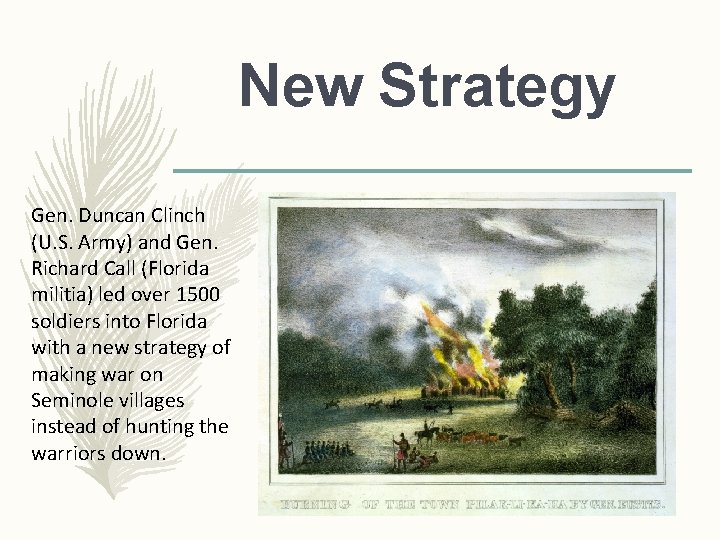
New Strategy Gen. Duncan Clinch (U. S. Army) and Gen. Richard Call (Florida militia) led over 1500 soldiers into Florida with a new strategy of making war on Seminole villages instead of hunting the warriors down.
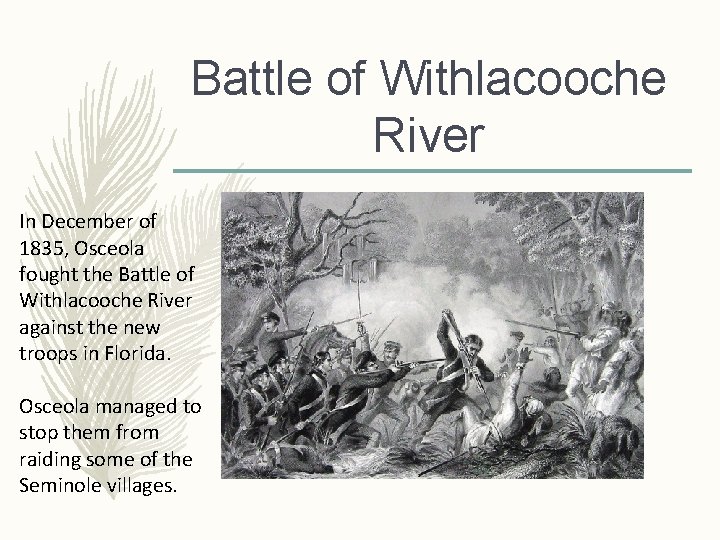
Battle of Withlacooche River In December of 1835, Osceola fought the Battle of Withlacooche River against the new troops in Florida. Osceola managed to stop them from raiding some of the Seminole villages.
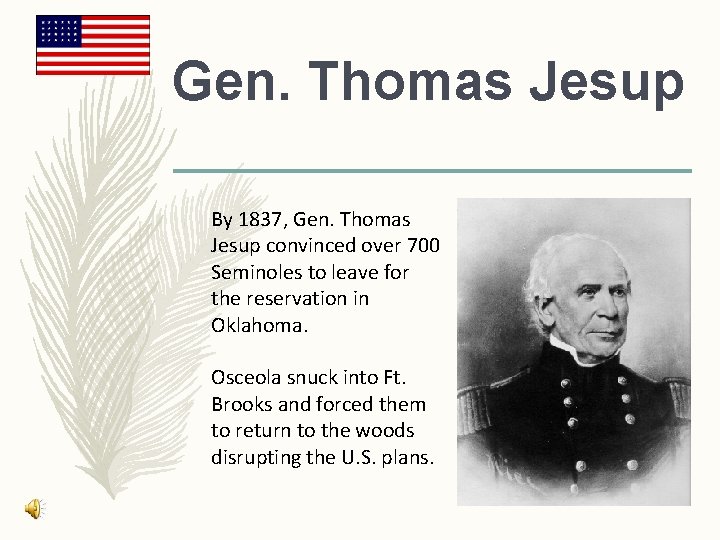
Gen. Thomas Jesup By 1837, Gen. Thomas Jesup convinced over 700 Seminoles to leave for the reservation in Oklahoma. Osceola snuck into Ft. Brooks and forced them to return to the woods disrupting the U. S. plans.
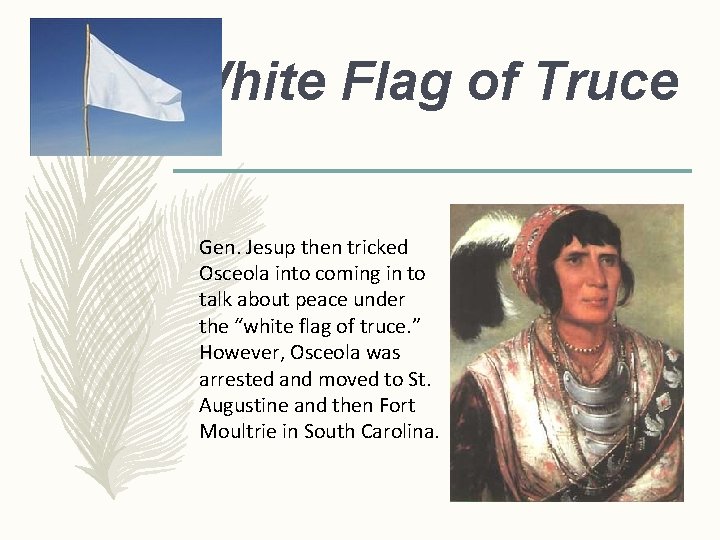
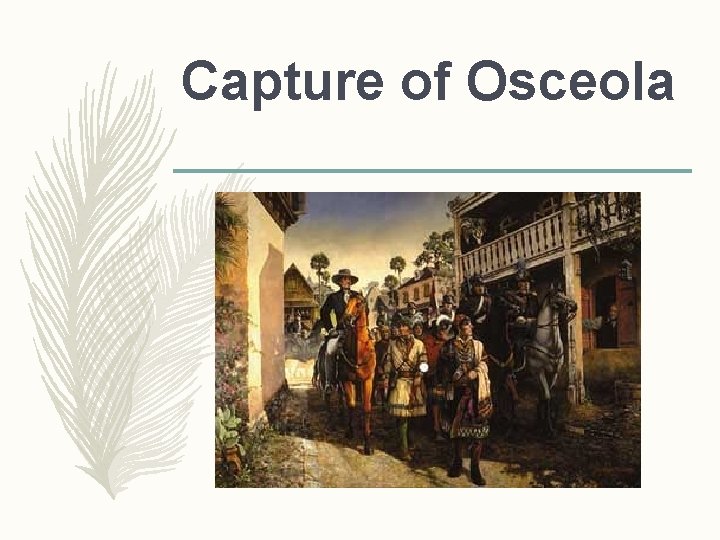
White Flag of Truce Gen. Jesup then tricked Osceola into coming in to talk about peace under the “white flag of truce. ” However, Osceola was arrested and moved to St. Augustine and then Fort Moultrie in South Carolina.
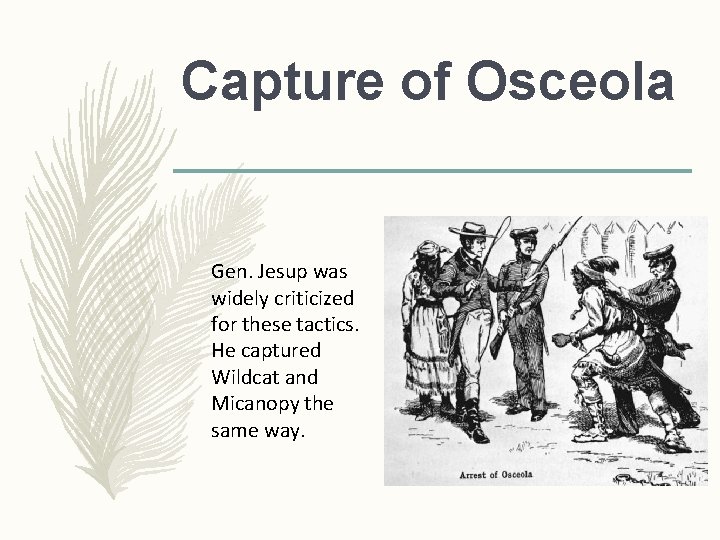
Capture of Osceola Gen. Jesup was widely criticized for these tactics. He captured Wildcat and Micanopy the same way.
Capture of Osceola
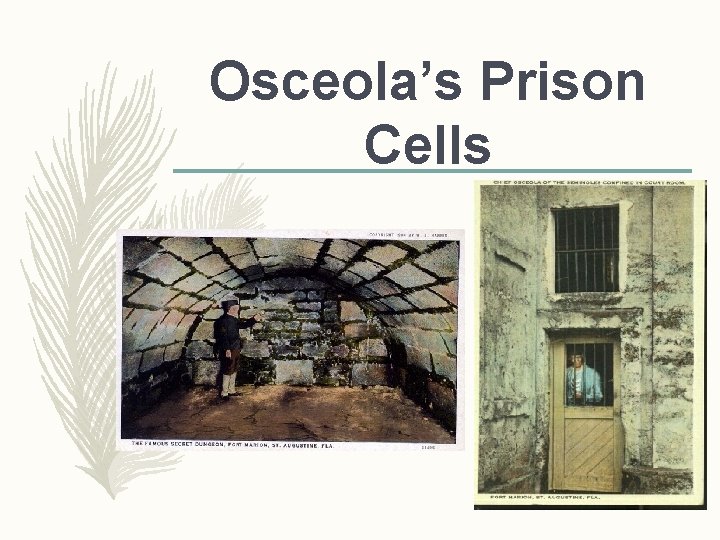
Osceola’s Prison Cells
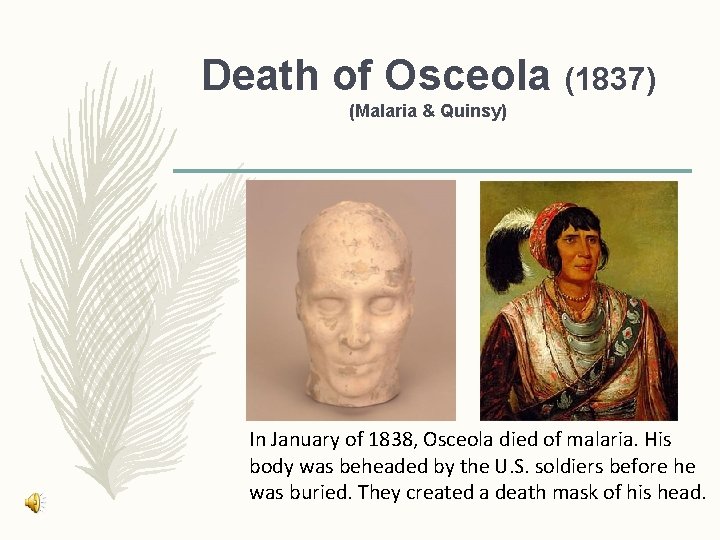
Death of Osceola (1837) (Malaria & Quinsy) In January of 1838, Osceola died of malaria. His body was beheaded by the U. S. soldiers before he was buried. They created a death mask of his head.
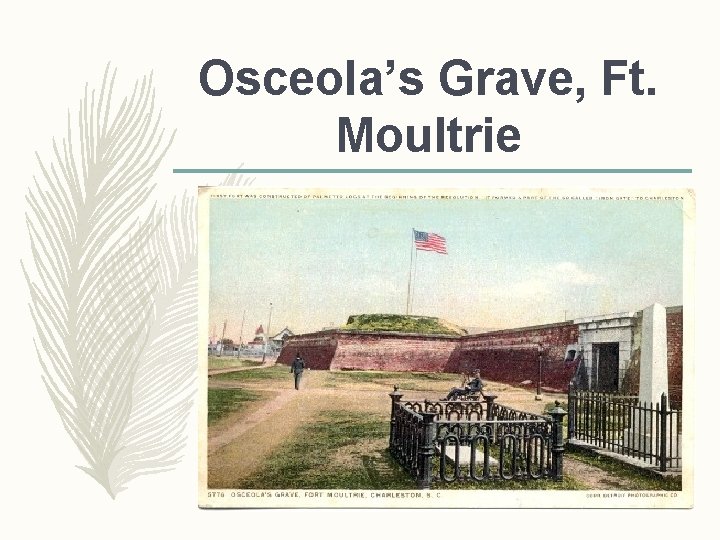
Osceola’s Grave, Ft. Moultrie
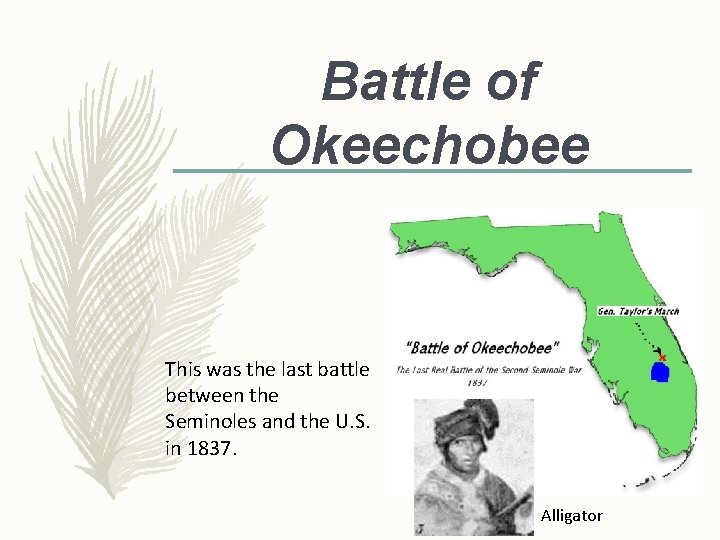
Battle of Okeechobee This was the last battle between the Seminoles and the U. S. in 1837. Alligator
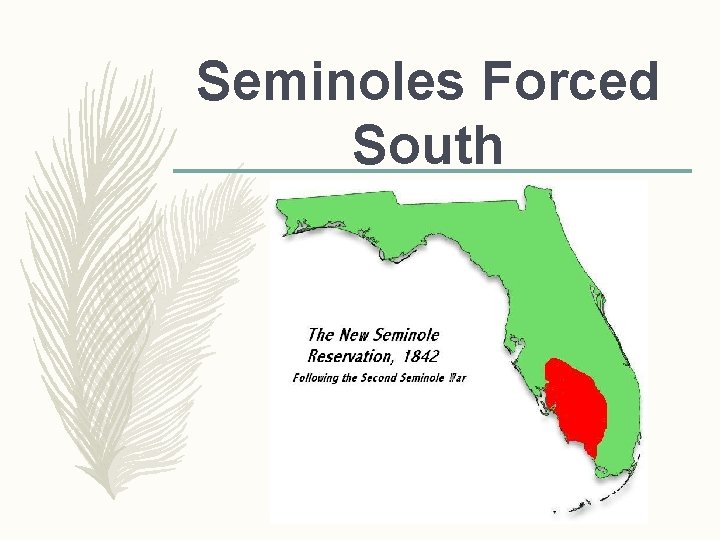
Seminoles Forced South
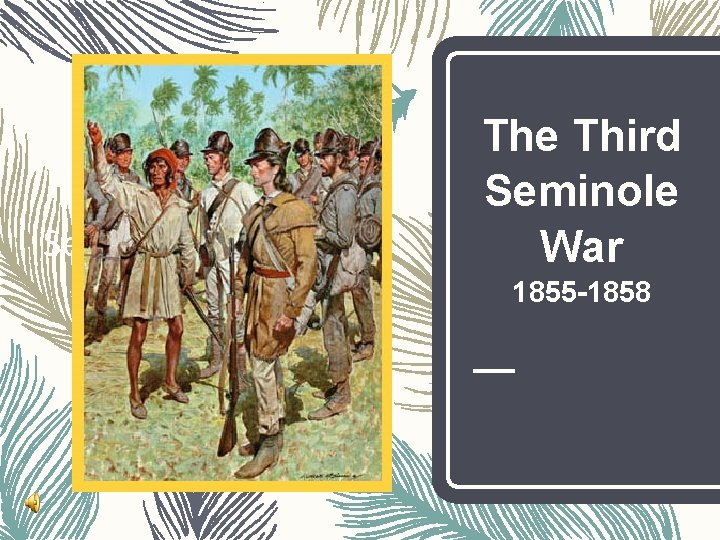
Section Four The Third Seminole War 1855 -1858
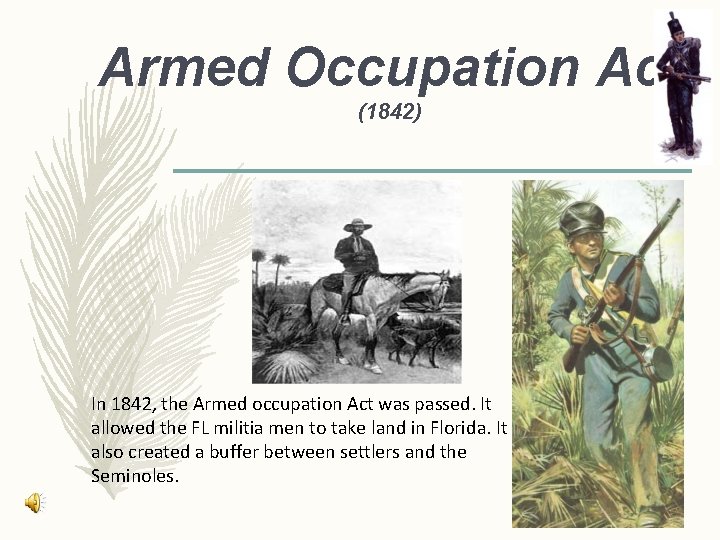
Armed Occupation Act (1842) In 1842, the Armed occupation Act was passed. It allowed the FL militia men to take land in Florida. It also created a buffer between settlers and the Seminoles.
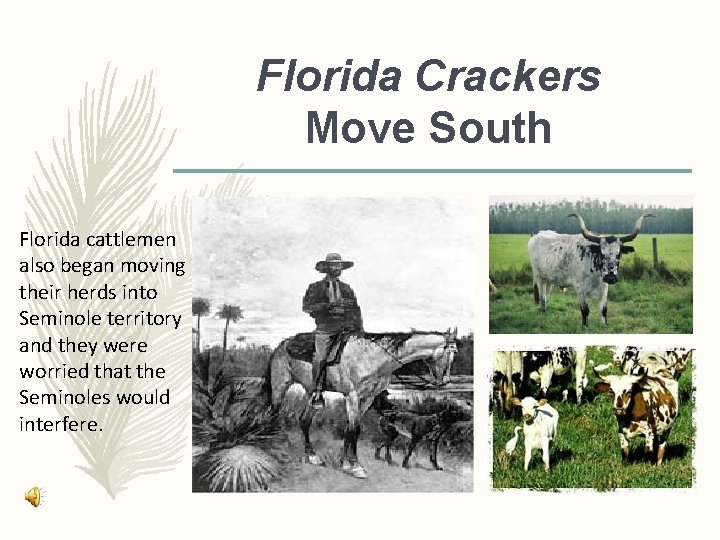
Florida Crackers Move South Florida cattlemen also began moving their herds into Seminole territory and they were worried that the Seminoles would interfere.
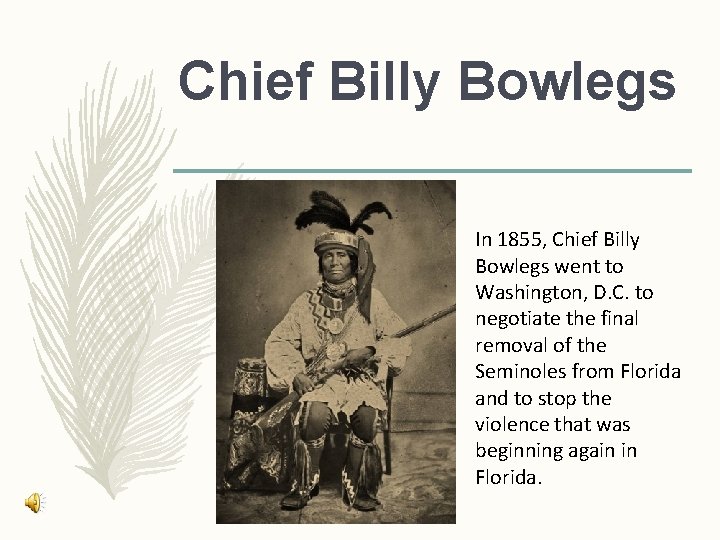
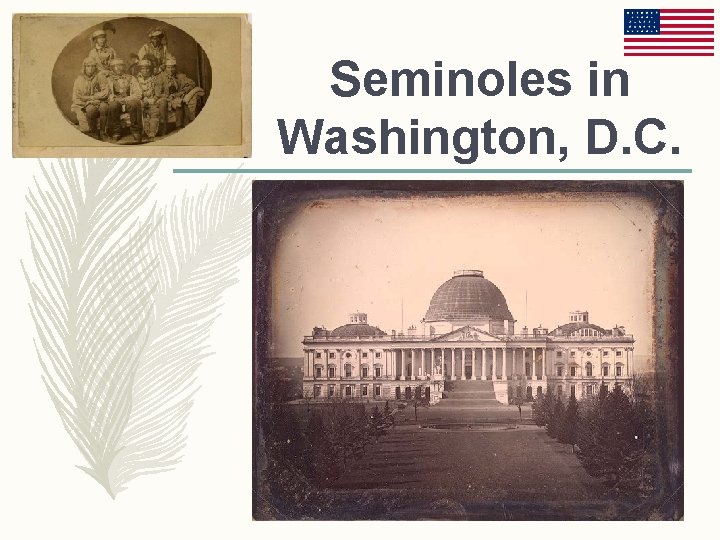
Chief Billy Bowlegs In 1855, Chief Billy Bowlegs went to Washington, D. C. to negotiate the final removal of the Seminoles from Florida and to stop the violence that was beginning again in Florida.
Seminoles in Washington, D. C.
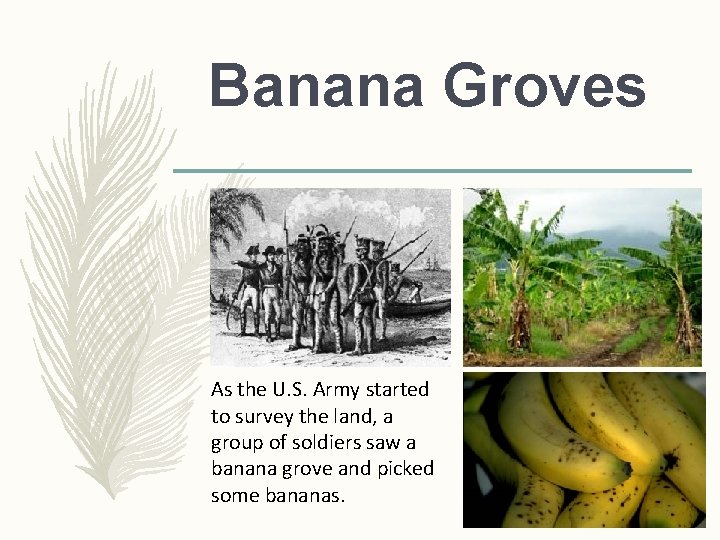
Banana Groves As the U. S. Army started to survey the land, a group of soldiers saw a banana grove and picked some bananas.
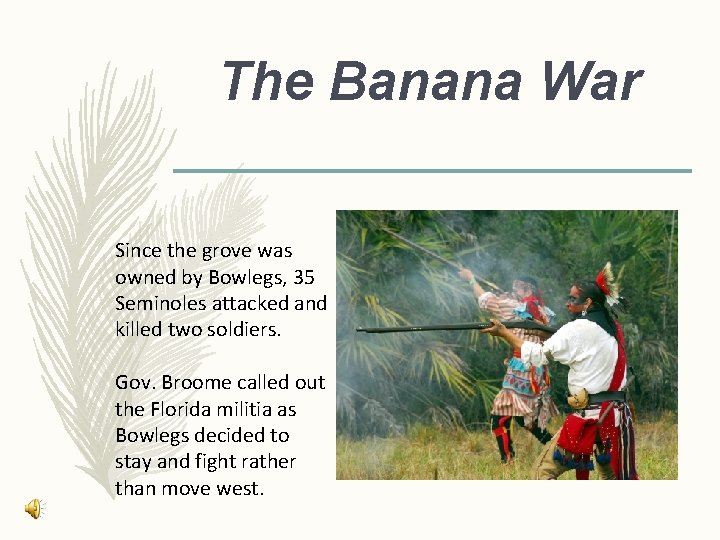
The Banana War Since the grove was owned by Bowlegs, 35 Seminoles attacked and killed two soldiers. Gov. Broome called out the Florida militia as Bowlegs decided to stay and fight rather than move west.
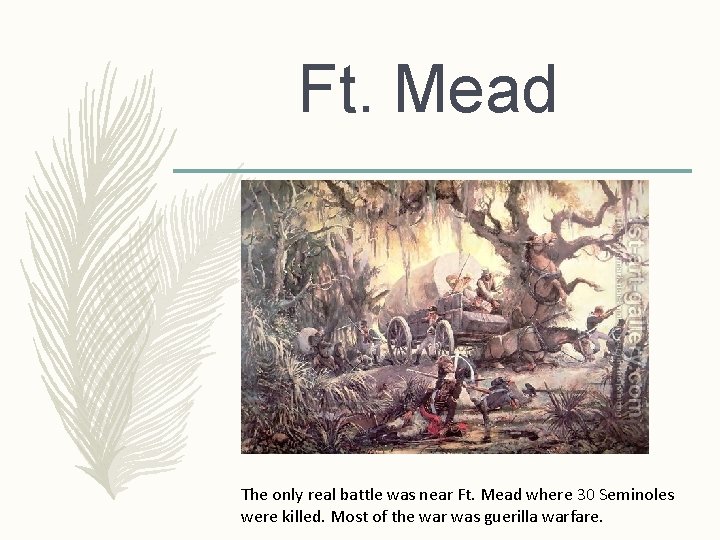
Ft. Mead The only real battle was near Ft. Mead where 30 Seminoles were killed. Most of the war was guerilla warfare.
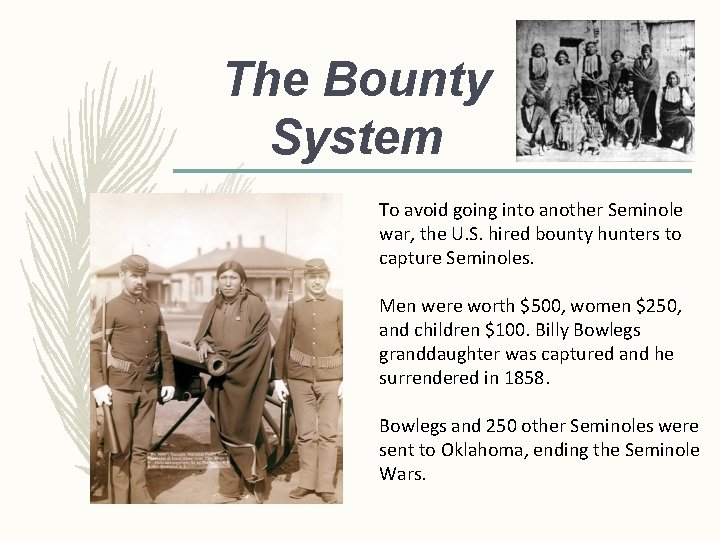
The Bounty System To avoid going into another Seminole war, the U. S. hired bounty hunters to capture Seminoles. Men were worth $500, women $250, and children $100. Billy Bowlegs granddaughter was captured and he surrendered in 1858. Bowlegs and 250 other Seminoles were sent to Oklahoma, ending the Seminole Wars.
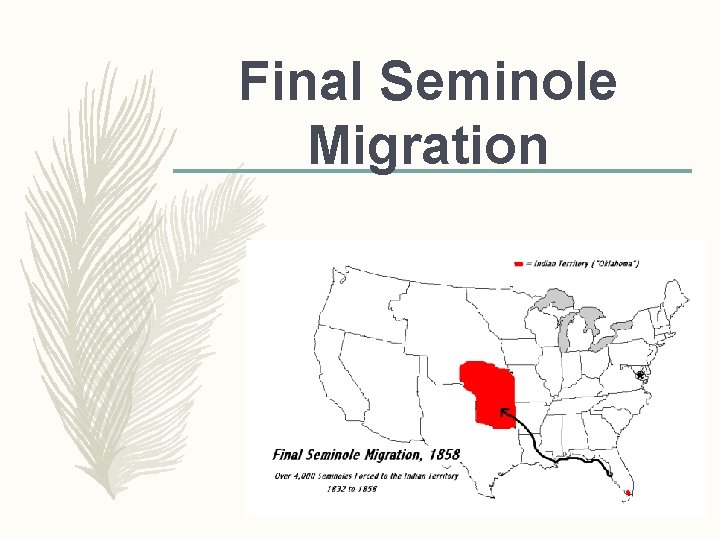
Final Seminole Migration
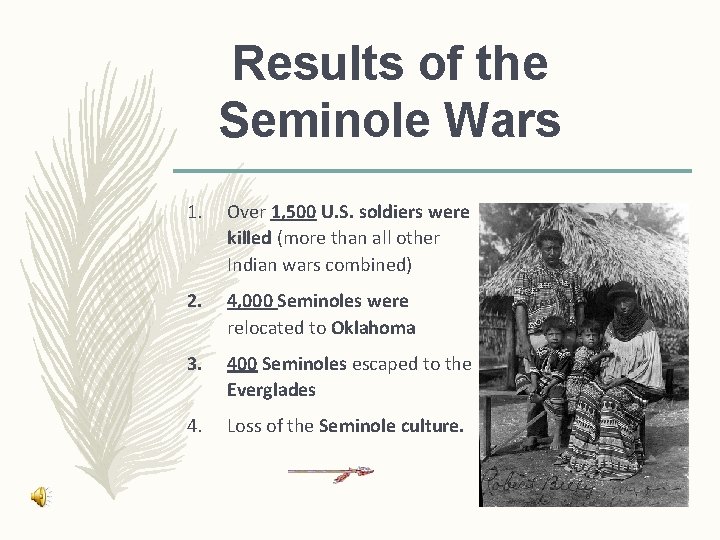
Results of the Seminole Wars 1. Over 1, 500 U. S. soldiers were killed (more than all other Indian wars combined) 2. 4, 000 Seminoles were relocated to Oklahoma 3. 400 Seminoles escaped to the Everglades 4. Loss of the Seminole culture.
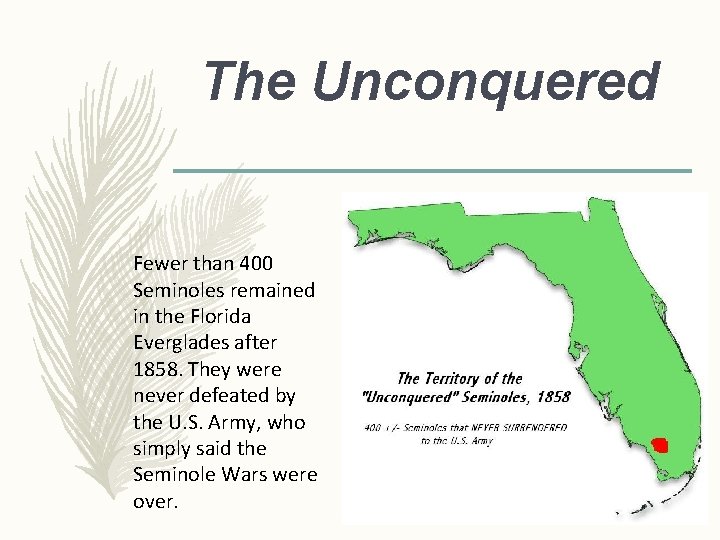
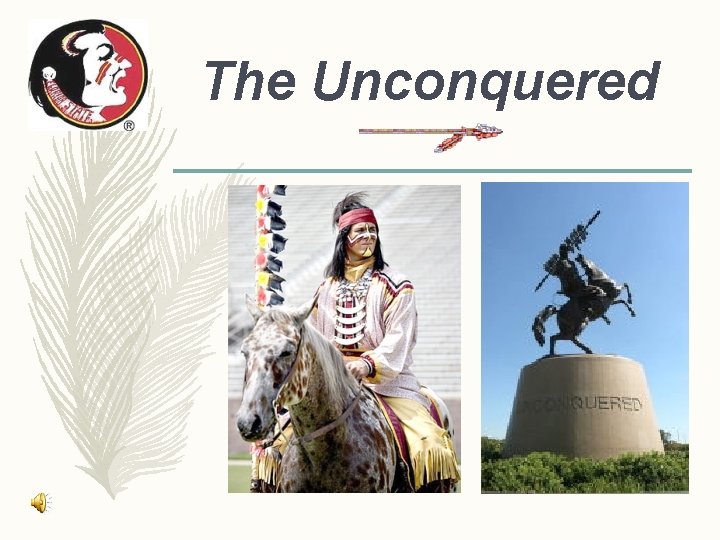
The Unconquered Fewer than 400 Seminoles remained in the Florida Everglades after 1858. They were never defeated by the U. S. Army, who simply said the Seminole Wars were over.
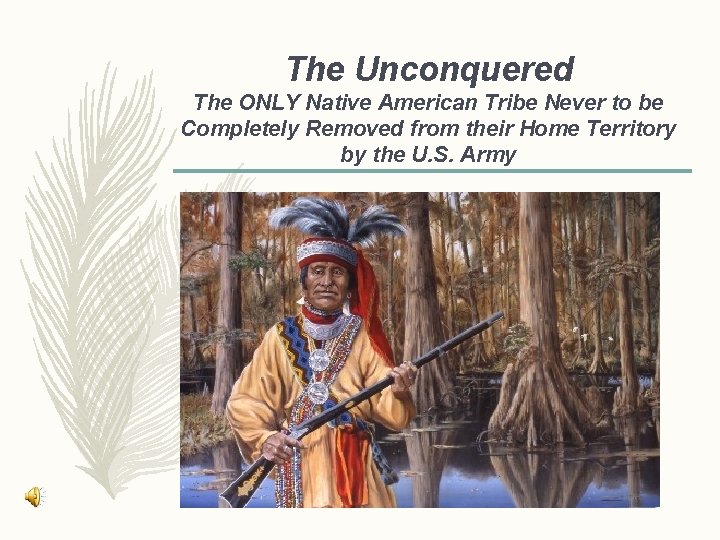
The Unconquered The ONLY Native American Tribe Never to be Completely Removed from their Home Territory by the U. S. Army
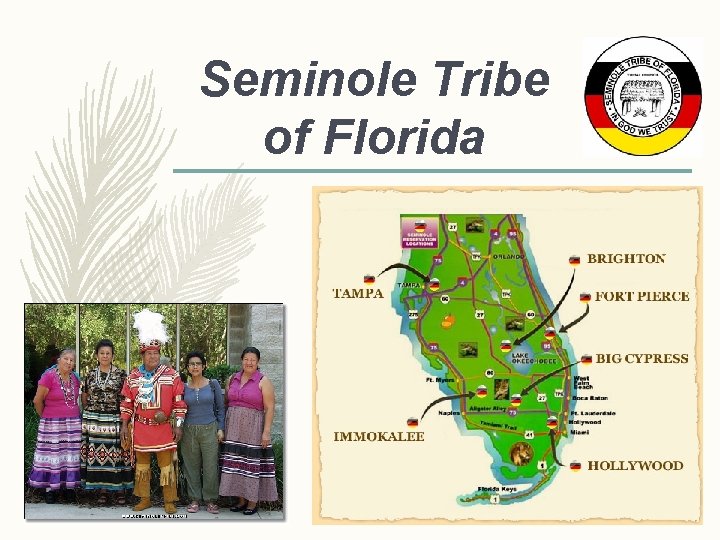
Seminole Tribe of Florida
The Unconquered