
SECTION ONE INTRO AND OVERVIEW Overview Expand Preparedness



- Slides: 22
SECTION ONE: INTRO AND OVERVIEW
Overview • Expand Preparedness Report down to county level – To increase emergency management capabilities across Indiana – Uses guidance already available from FEMA in order to ensure the process is consistent across the state.
Reason • Tool to examine preparedness across the state • Justify grant funding – Ensures limited resources are going to the most important areas – Show return on investment • Tracks capability changes • Data has uses in areas outside preparedness
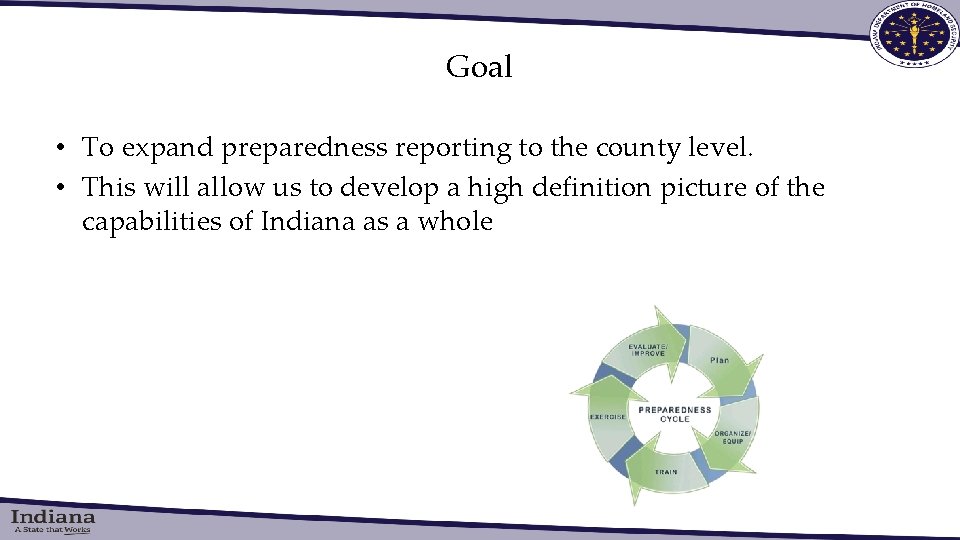
Goal • To expand preparedness reporting to the county level. • This will allow us to develop a high definition picture of the capabilities of Indiana as a whole
Benefits • Lets counties see themselves better – Identify capability gaps and allows targeted efforts to close those gaps • Gives counties information to justify grant requests • Track year to year progress – Show return on investment
Our Rationale • To allocate the state’s limited funds to accommodate the county’s needs, based on seven out of the 31 FEMA guidelines of HIRA and capability of the POETE of each county.
Section Two: How It Works (HIRA, RTIPP, Core Capability Assessment)
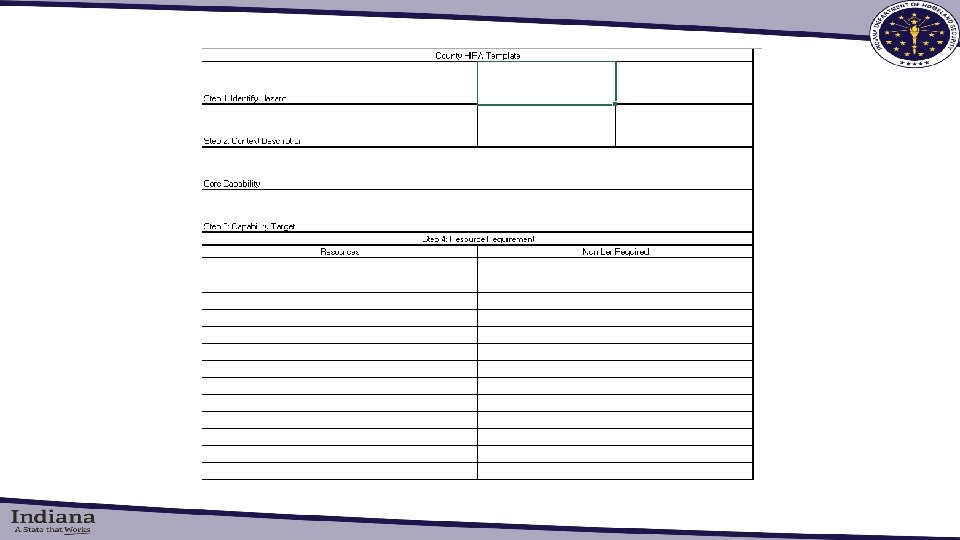
Hazard Identification and Risk Assessment (HIRA) • Identify hazards -Natural, technological or human-caused hazards that apply to your jurisdiction • Give hazards context descriptions -Outline conditions under which hazards might occur, include time and location -Effective context descriptions should provide a sense of scale for the impacts of a hazard • Establish Capability Targets -Describe impacts and desired outcomes -Geographic area, number of households, fatalities, injuries/illness, infrastructure disruption -Process -Largest impact, desired outcomes, develop Capability Target • Resource requirements -Apply capability targets to jurisdiction in order to identify recourse requirements -Typing, inventorying, organizing, and tracking -https: //rtlt. ptaccenter. org/Public/Combined
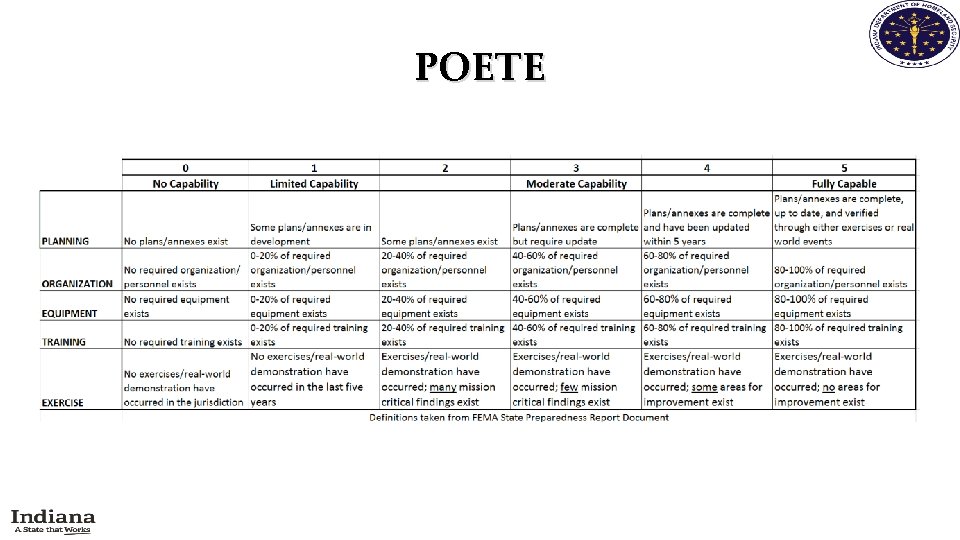
POETE
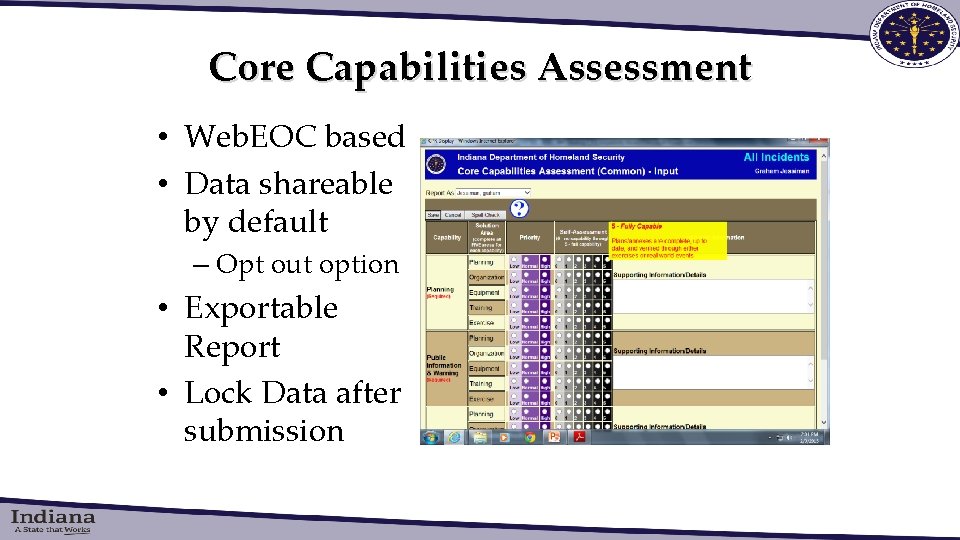
Core Capabilities Assessment • Web. EOC based • Data shareable by default – Opt out option • Exportable Report • Lock Data after submission
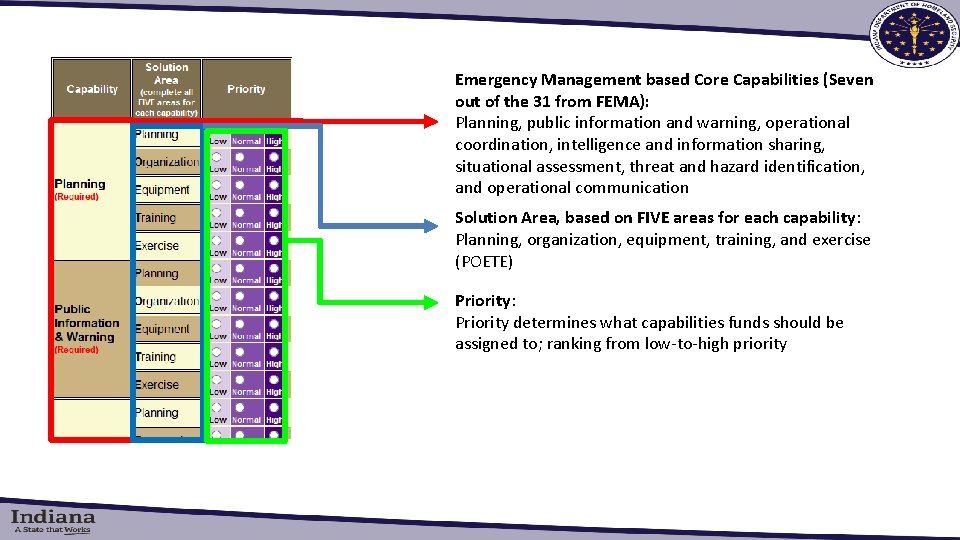
Emergency Management based Core Capabilities (Seven out of the 31 from FEMA): Planning, public information and warning, operational coordination, intelligence and information sharing, situational assessment, threat and hazard identification, and operational communication Solution Area, based on FIVE areas for each capability: Planning, organization, equipment, training, and exercise (POETE) Priority: Priority determines what capabilities funds should be assigned to; ranking from low-to-high priority
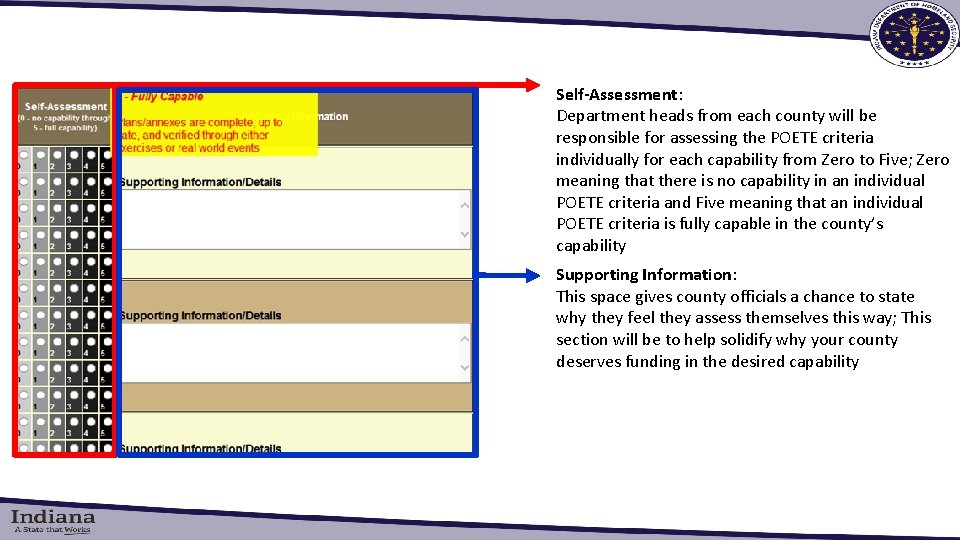
Self-Assessment: Department heads from each county will be responsible for assessing the POETE criteria individually for each capability from Zero to Five; Zero meaning that there is no capability in an individual POETE criteria and Five meaning that an individual POETE criteria is fully capable in the county’s capability Supporting Information: This space gives county officials a chance to state why they feel they assess themselves this way; This section will be to help solidify why your county deserves funding in the desired capability
Readiness: Training Identification Preparedness Planning (RTIPP) • 1. 5 day training course • Preliminary meeting 8 -10 weeks out -Several dates available • 4 hours to include planning and exercise • Jurisdiction specific information (HIRA, Emergency Operations Planning [EOP], etc. ) • Provides an opportunity to test current capabilities to better isolate areas for improvement and funding • Additional grant funds available for those who complete the course
How It All Works • HIRA and the Core Capability Assessment should take no more than a day’s time to complete • Several department heads should be present to complete these tasks; attendance should be recorded for verification • HIRA describes which hazards may impact their area and the Core Capability Assessment will provide an idea of their ability to prepare, mitigate and respond to hazards • Following HIRA and the Core Capability Assessment, it is strongly encouraged to register for an RTIPP exercise as soon as possible • RTIPP is recommended, but not required; Completing RTIPP will increase your chance for grant funding • RTIPP provides a plan to improve or sustain preparation, mitigation and response to capabilities listed in your assessment
Section Three: Benefits & Negatives of the Core Capability Assessment
Why Do I Need This? • Increase emergency management opportunities across Indiana • Shows the strengths & weaknesses of each county • Expands preparedness to county-level • Already approved by FEMA
Why Do I Need This? • With completing this assessment, the county will show justification for federal DHS grants • Public Officials of the county will run this program, IDHS will not micro manage • Tracks progress from year to year • Can be used outside for preparedness
Disadvantages of the Assessment • May have multiple needs; Funds may go to one of your needs and not others • Counties may feel they are over-assessing • May not know enough to determine the needs of the county
Disadvantages of the Assessment • • Counties may not see it as a necessity False reporting of needs May not have accurately reported the needs Another function for public officials
Jesse Minnick jminnick@dhs. in. gov INDIANA DEPARTMENT OF HOMELAND SECURITY 302 West Washington Street Room E 208 Indianapolis, IN 46204