
Section 9 1 Sampling Distributions AP Statistics www
Section 9. 1 Sampling Distributions AP Statistics www. toddfadoir. com/apstats AP Statistics, Section 9. 1. 1
Definitions n parameter: a number that describes the population ¨ a parameter is a fixed number ¨ in practice, we do not know its value because we cannot examine the entire population ¨ AP Statistics, Section 9. 1. 1 2
Definitions n statistic: a number that describes a sample ¨ the value of a statistic is known when we have taken a sample, but it can change from sample to sample ¨ we often use a statistic to estimate an unknown parameter ¨ AP Statistics, Section 9. 1. 1 3
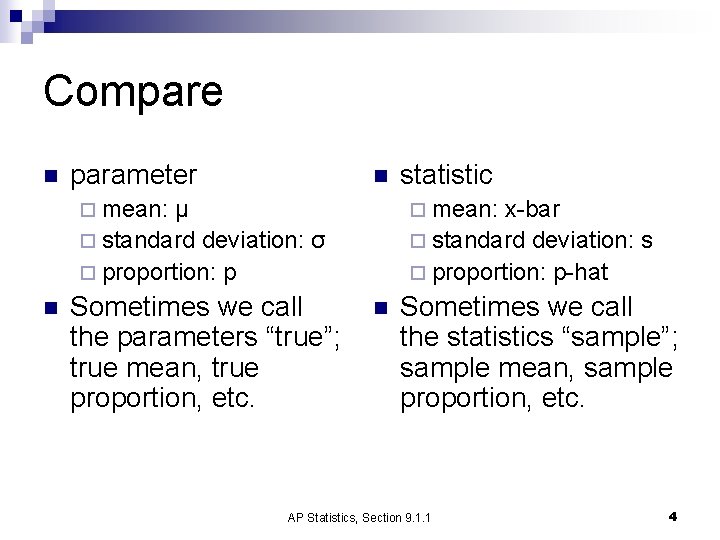
Compare n parameter n ¨ mean: μ ¨ standard deviation: σ ¨ proportion: p n Sometimes we call the parameters “true”; true mean, true proportion, etc. statistic ¨ mean: x-bar ¨ standard deviation: s ¨ proportion: p-hat n Sometimes we call the statistics “sample”; sample mean, sample proportion, etc. AP Statistics, Section 9. 1. 1 4
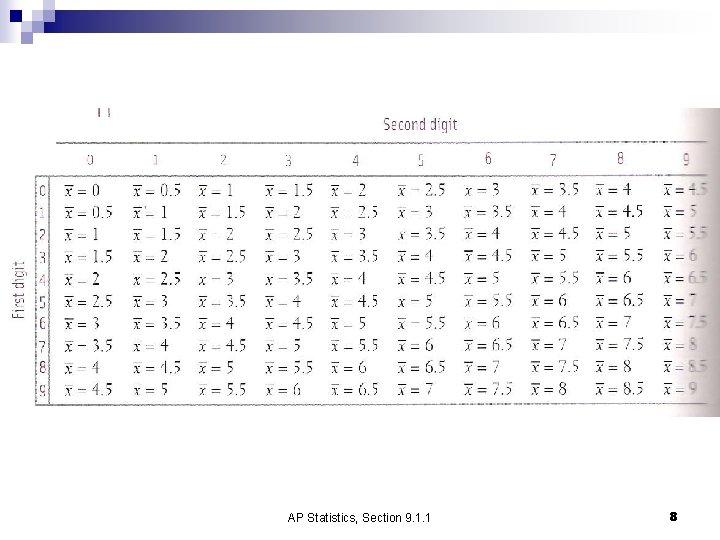
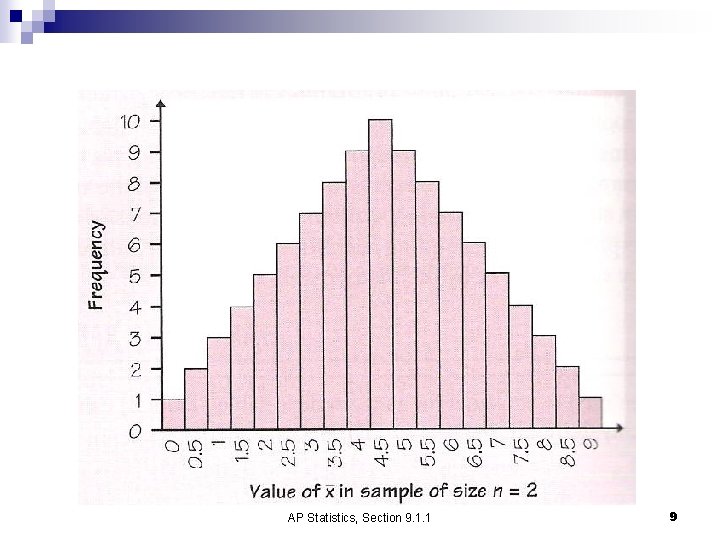
Sampling variability Given the same population, we may have multiple samples. n Should we expect that the statistics for each sample be the same? n While sample means or sample proportions are similar, they do vary. We call this sampling variability. n AP Statistics, Section 9. 1. 1 5
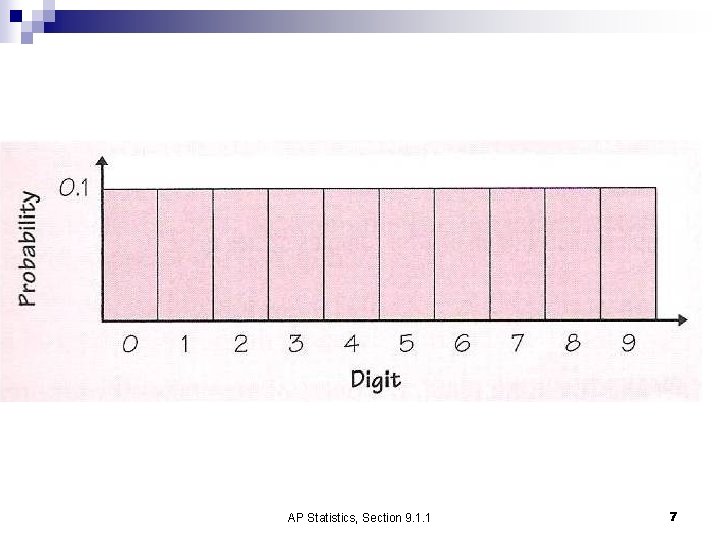
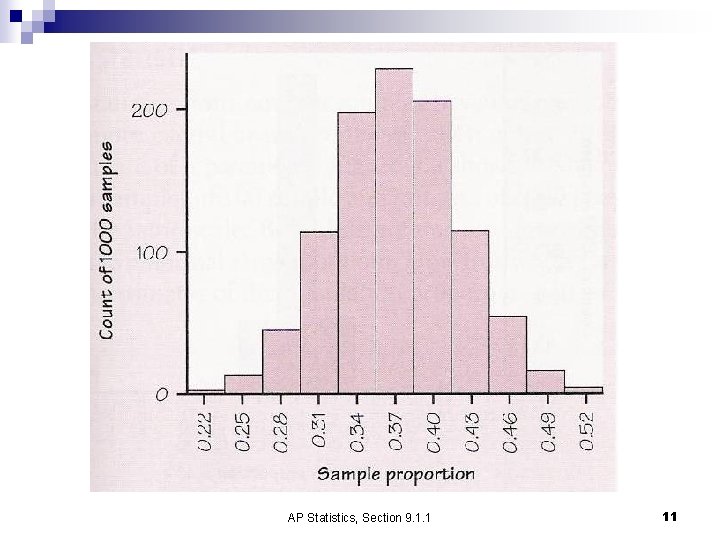
Sampling Distributions n The sampling distribution of a statistic is the distribution of values taken by the statistic in all possible samples of the same size from the same population. AP Statistics, Section 9. 1. 1 6
AP Statistics, Section 9. 1. 1 7
AP Statistics, Section 9. 1. 1 8
AP Statistics, Section 9. 1. 1 9
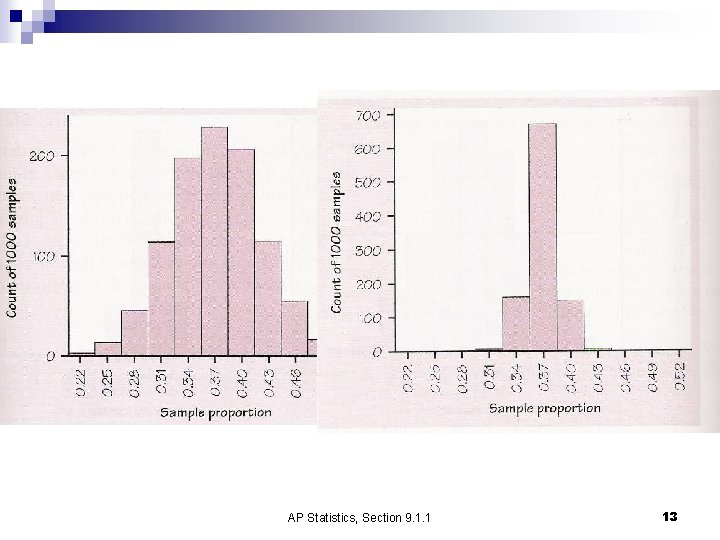
Example 9. 5 n n Television executives and companies who advertise on TV are interested in how many viewers watch particular television shows. According to 2001 Nielsen ratings, Survivor II was one of the most watched television shows in the US during every week that is aired. Suppose that true proportion of US adults who watched Survivor II is p=. 37. Suppose we did a survey with n=100. Suppose we did this survey 1000 times. AP Statistics, Section 9. 1. 1 10
AP Statistics, Section 9. 1. 1 11
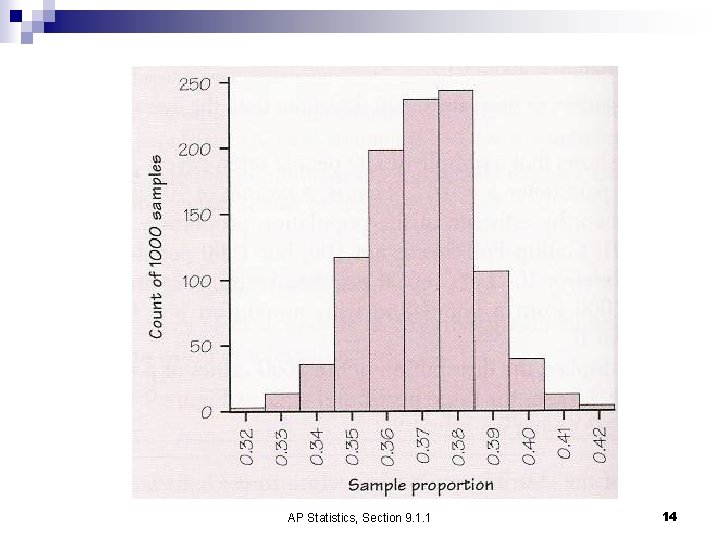
Example 9. 5 n n Television executives and companies who advertise on TV are interested in how many viewers watch particular television shows. According to 2001 Nielsen ratings, Survivor II was one of the most watched television shows in the US during every week that is aired. Suppose that true proportion of US adults who watched Survivor II is p=. 37. Suppose we did a survey with n=1000. Suppose we did this survey 1000 times. AP Statistics, Section 9. 1. 1 12
AP Statistics, Section 9. 1. 1 13
AP Statistics, Section 9. 1. 1 14
Variability of a Statistic n n The variability of a statistic is described by the spread of its sampling distribution. This spread is determined by the sampling design and the size of the sample. Larger samples give smaller spread. As long as the population is much larger than the sample (say, at least 10 times as large), the spread of the sampling distribution is approximately the same for any population size. AP Statistics, Section 9. 1. 1 15
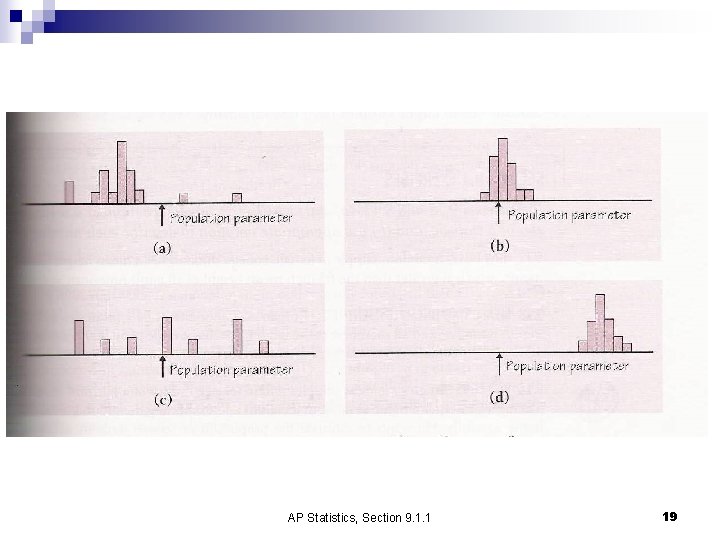
Unbiased Statistic n A statistic used to estimate a parameter is unbiased if the mean of its sampling distribution is equal to the true value of the parameter being estimated. AP Statistics, Section 9. 1. 1 16
AP Statistics, Section 9. 1. 1 17

AP Statistics, Section 9. 1. 1 18
AP Statistics, Section 9. 1. 1 19
Exercises n 9. 1 -9. 17, odd AP Statistics, Section 9. 1. 1 20
- Slides: 20