
Section 8 3 The Calvin Cycle Dark Reactions
- Slides: 15
Section 8. 3 The Calvin Cycle (Dark Reactions)
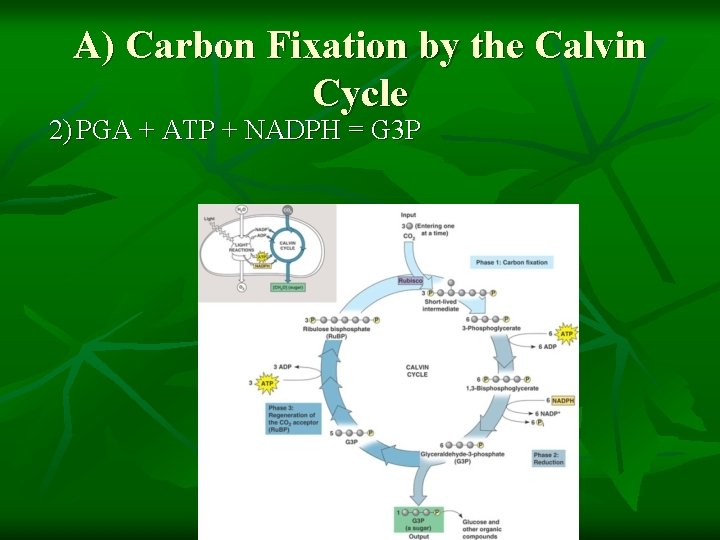
Calvin Cycle: second biochemical pathway of photosynthesis that uses ATP and NADPH to form organic compounds
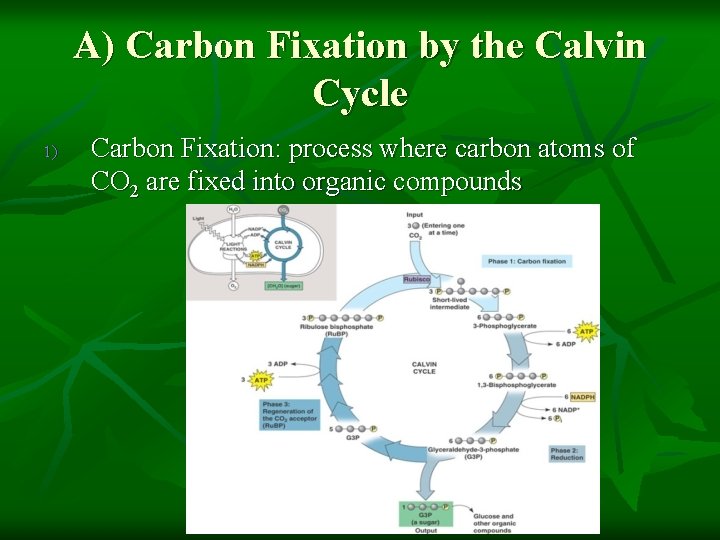
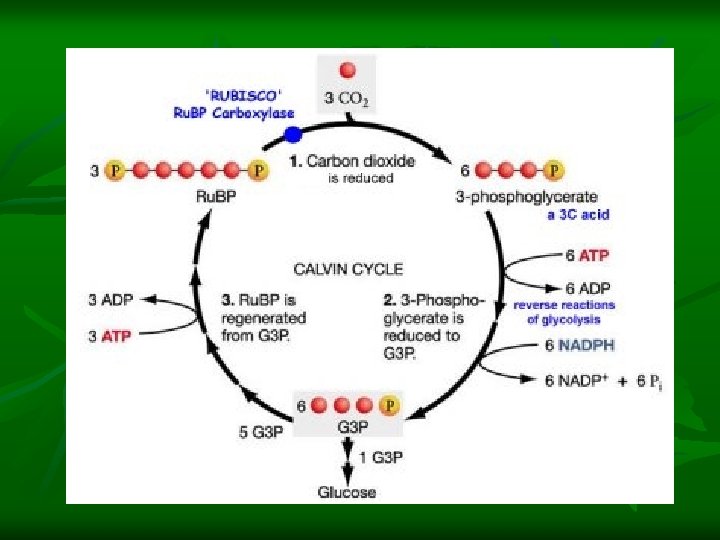
A) Carbon Fixation by the Calvin Cycle 1) Carbon Fixation: process where carbon atoms of CO 2 are fixed into organic compounds
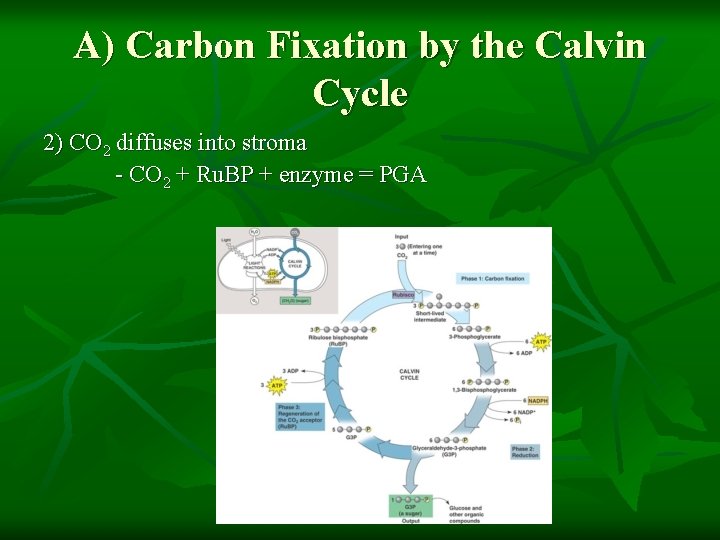
A) Carbon Fixation by the Calvin Cycle 2) CO 2 diffuses into stroma - CO 2 + Ru. BP + enzyme = PGA
A) Carbon Fixation by the Calvin Cycle 2) PGA + ATP + NADPH = G 3 P
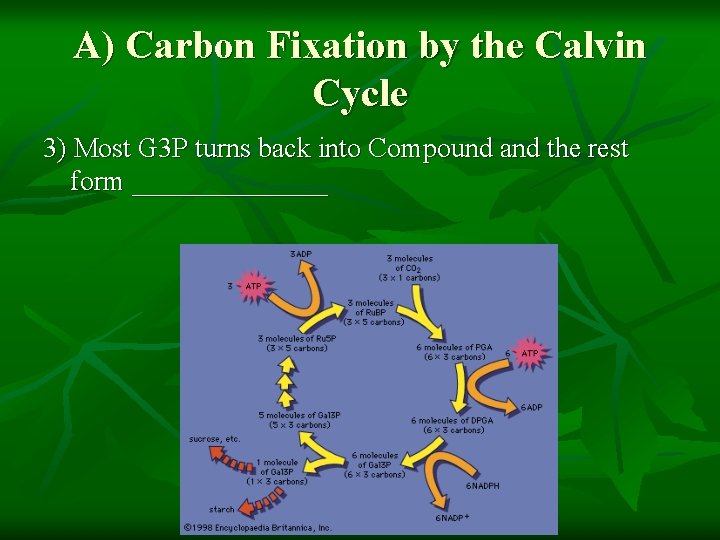
A) Carbon Fixation by the Calvin Cycle 3) Most G 3 P turns back into Compound and the rest form _______
B) The Balance Sheet for Photosynthesis 1) Each rotation of the Calvin Cycle 1) 2) _____________ ___ ATP and ____NADPH molecules are used up
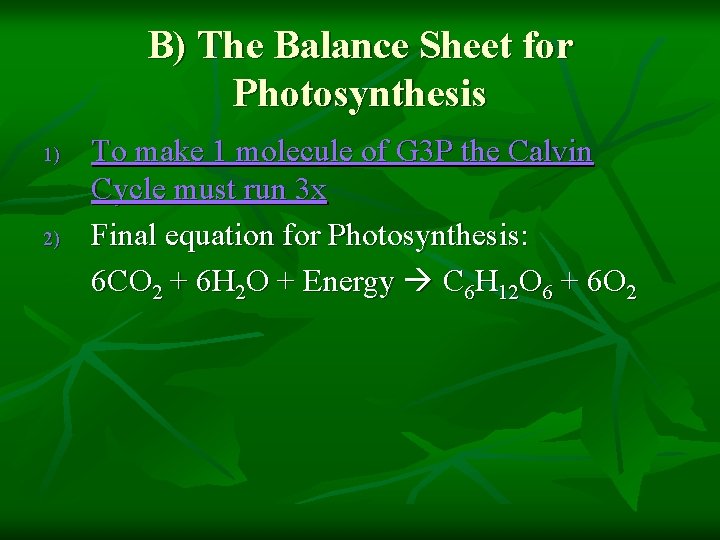
B) The Balance Sheet for Photosynthesis 1) 2) To make 1 molecule of G 3 P the Calvin Cycle must run 3 x Final equation for Photosynthesis: 6 CO 2 + 6 H 2 O + Energy C 6 H 12 O 6 + 6 O 2
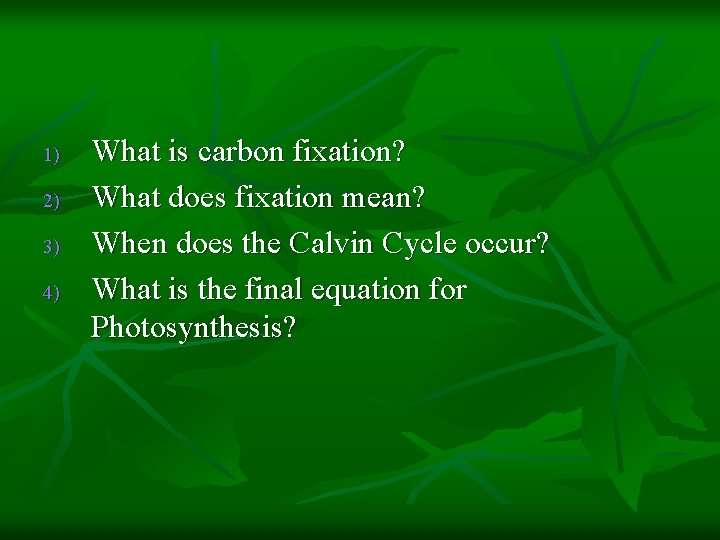
1) 2) 3) 4) What is carbon fixation? What does fixation mean? When does the Calvin Cycle occur? What is the final equation for Photosynthesis?
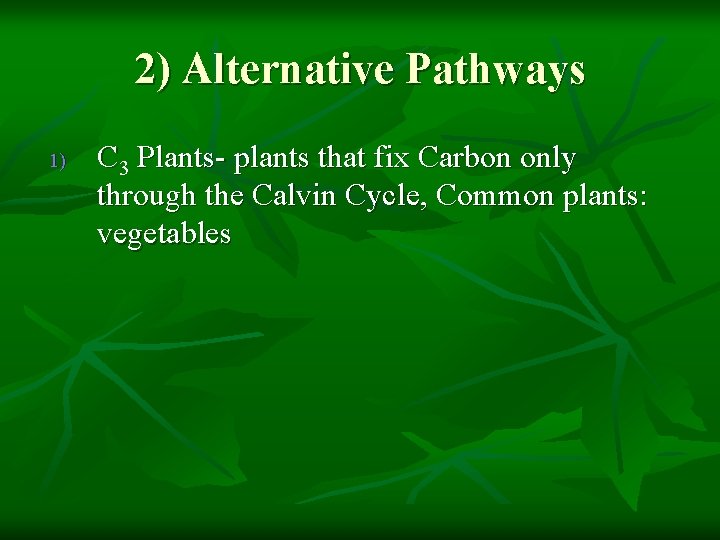
2) Alternative Pathways 1) C 3 Plants- plants that fix Carbon only through the Calvin Cycle, Common plants: vegetables
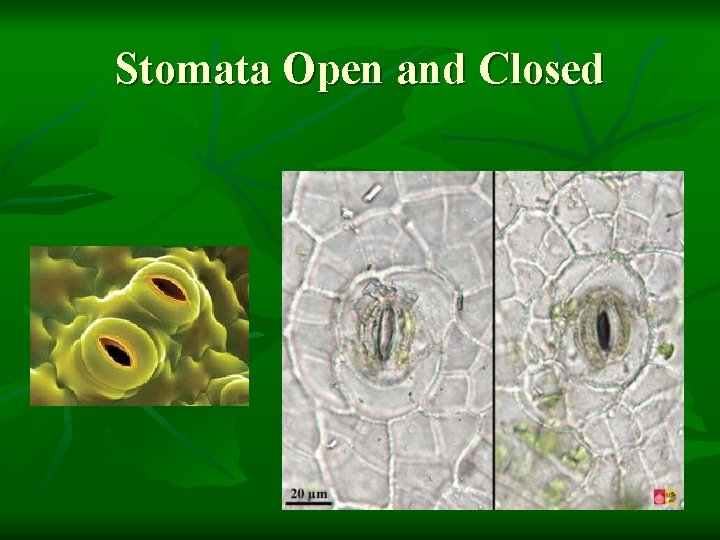
Stomata Open and Closed
A) The C 4 Pathway 1) C 4 Pathway- pathway to fix CO 2 into 4 Carbon Compounds 1) 2) 3) Stomata will stay partially closed during hot days Adapted to high temps and intense sun Ex: Corn, sugar cane
B) The CAM Pathway 1) 2) 3) Stomata is open at night and closed during the day CO 2 is taken in at night and during the day the carbon is fixed into the Calvin Cycle Ex: Cactus, pineapple
D) Rate of Photosynthesis 1) Factors that affect the rate of Photosynthesis a) b) c) Amount of Light Temperature Amount of CO 2