
Section 8 3 Names and Formulas for Ionic
- Slides: 9
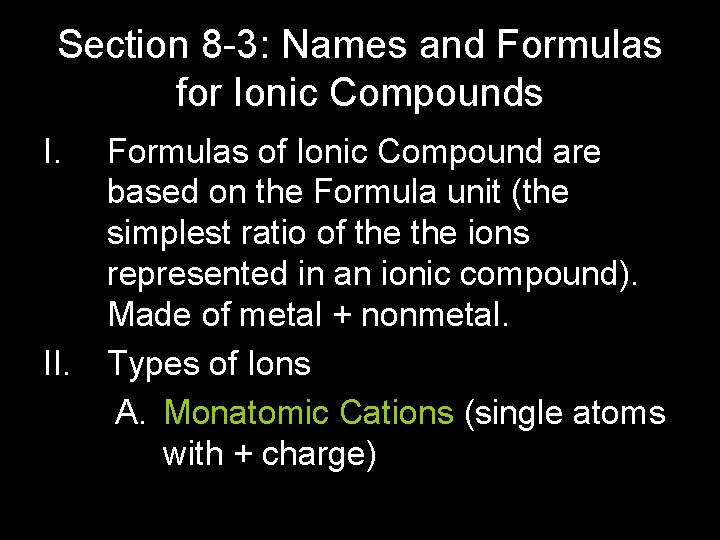
Section 8 -3: Names and Formulas for Ionic Compounds I. II. Formulas of Ionic Compound are based on the Formula unit (the simplest ratio of the ions represented in an ionic compound). Made of metal + nonmetal. Types of Ions A. Monatomic Cations (single atoms with + charge)
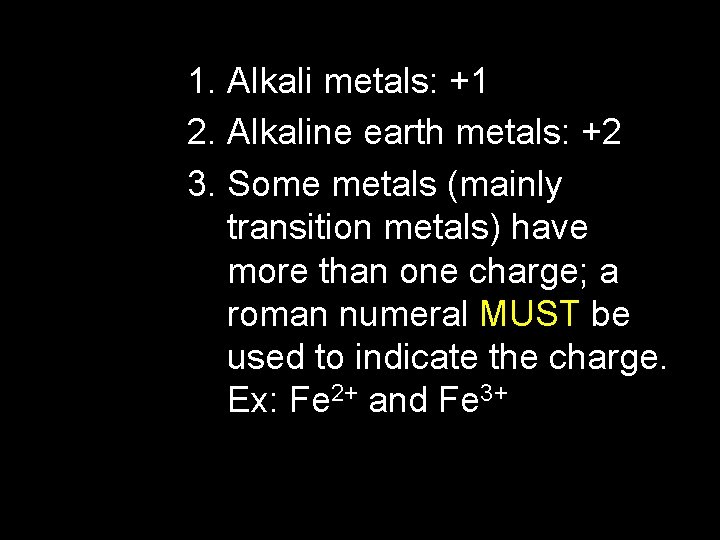
1. Alkali metals: +1 2. Alkaline earth metals: +2 3. Some metals (mainly transition metals) have more than one charge; a roman numeral MUST be used to indicate the charge. Ex: Fe 2+ and Fe 3+
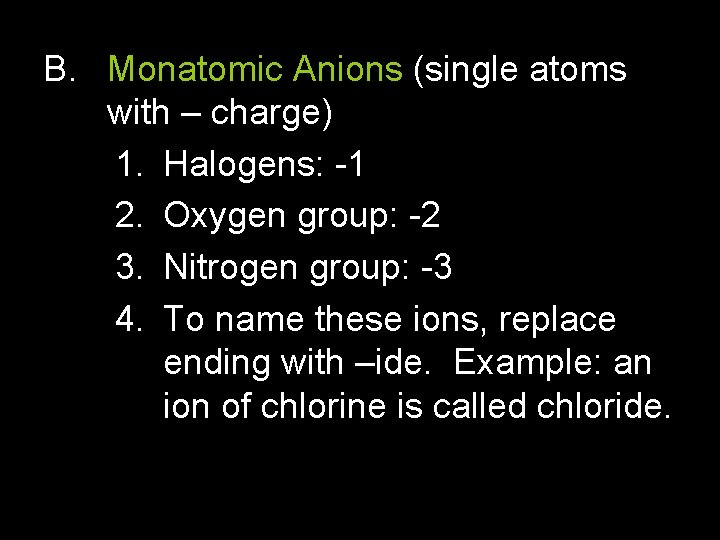
B. Monatomic Anions (single atoms with – charge) 1. Halogens: -1 2. Oxygen group: -2 3. Nitrogen group: -3 4. To name these ions, replace ending with –ide. Example: an ion of chlorine is called chloride.
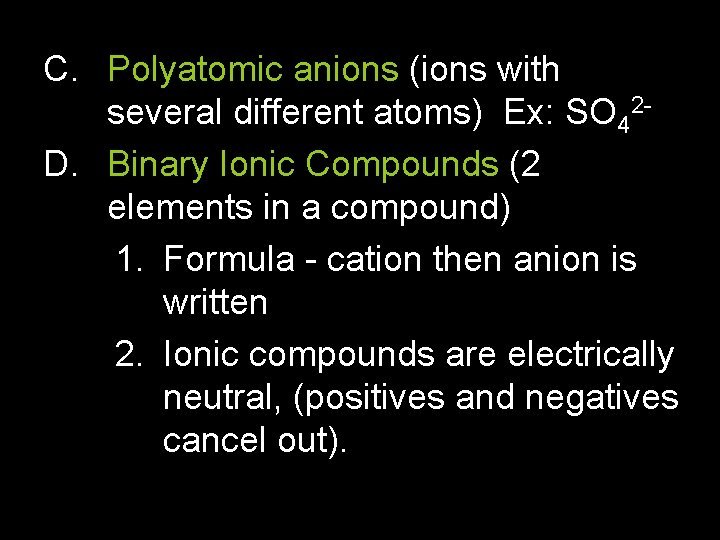
C. Polyatomic anions (ions with several different atoms) Ex: SO 42 D. Binary Ionic Compounds (2 elements in a compound) 1. Formula - cation then anion is written 2. Ionic compounds are electrically neutral, (positives and negatives cancel out).
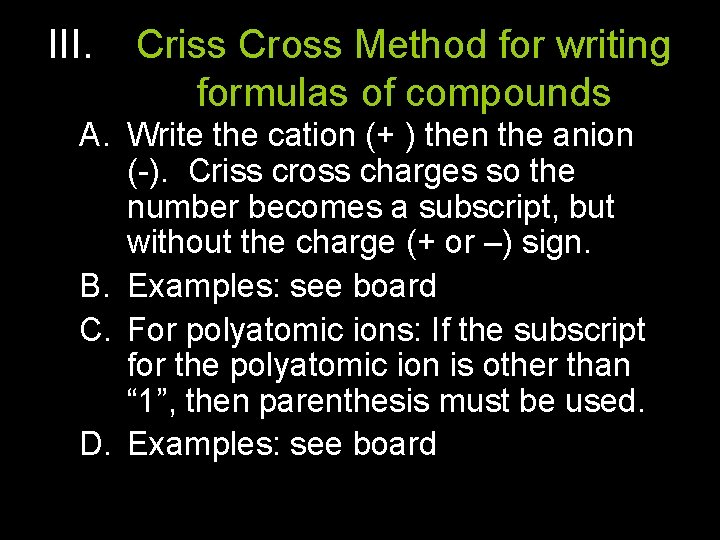
III. Criss Cross Method for writing formulas of compounds A. Write the cation (+ ) then the anion (-). Criss cross charges so the number becomes a subscript, but without the charge (+ or –) sign. B. Examples: see board C. For polyatomic ions: If the subscript for the polyatomic ion is other than “ 1”, then parenthesis must be used. D. Examples: see board
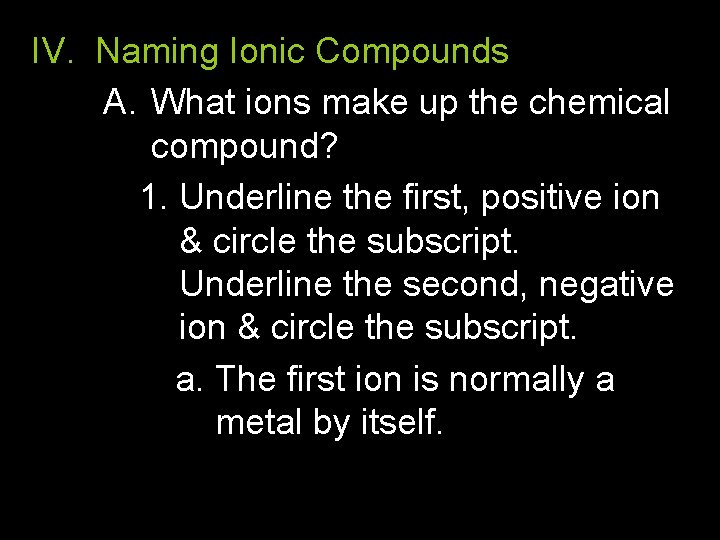
IV. Naming Ionic Compounds A. What ions make up the chemical compound? 1. Underline the first, positive ion & circle the subscript. Underline the second, negative ion & circle the subscript. a. The first ion is normally a metal by itself.
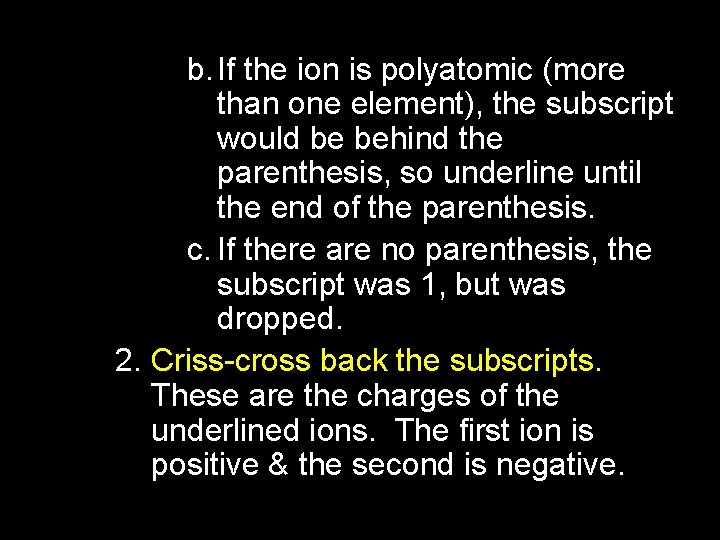
b. If the ion is polyatomic (more than one element), the subscript would be behind the parenthesis, so underline until the end of the parenthesis. c. If there are no parenthesis, the subscript was 1, but was dropped. 2. Criss-cross back the subscripts. These are the charges of the underlined ions. The first ion is positive & the second is negative.
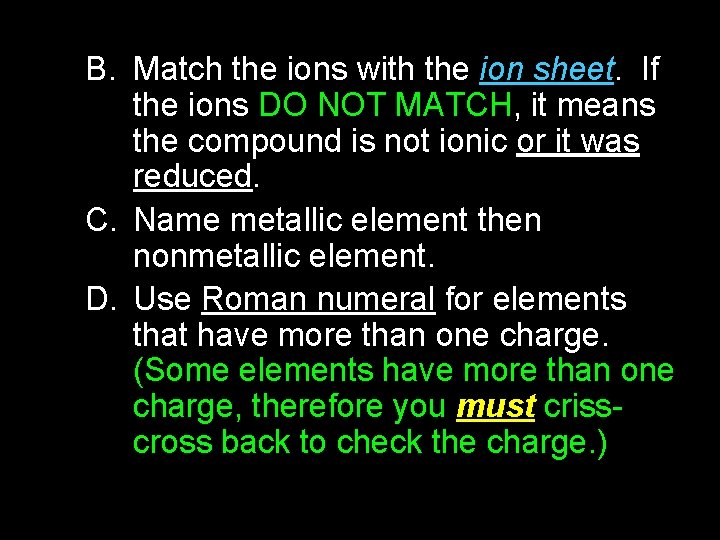
B. Match the ions with the ion sheet. If the ions DO NOT MATCH, it means the compound is not ionic or it was reduced. C. Name metallic element then nonmetallic element. D. Use Roman numeral for elements that have more than one charge. (Some elements have more than one charge, therefore you must crisscross back to check the charge. )
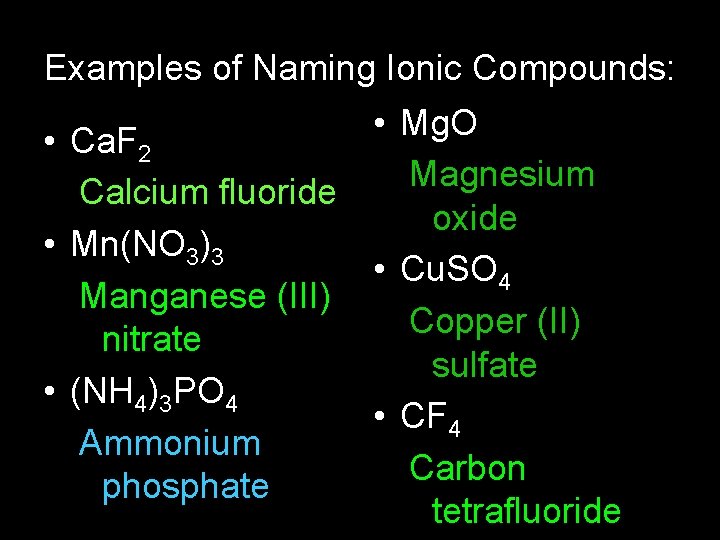
Examples of Naming Ionic Compounds: • Mg. O • Ca. F 2 Magnesium Calcium fluoride oxide • Mn(NO 3)3 • Cu. SO 4 Manganese (III) Copper (II) nitrate sulfate • (NH 4)3 PO 4 • CF 4 Ammonium Carbon phosphate tetrafluoride