
Section 8 2 Vitamins Minerals and Water Objectives
Section 8. 2 Vitamins, Minerals, and Water Objectives Identify the two main classes of vitamins. List seven minerals your body needs in significant amounts. Explain why water is so important to your body. Slide 1 of 27
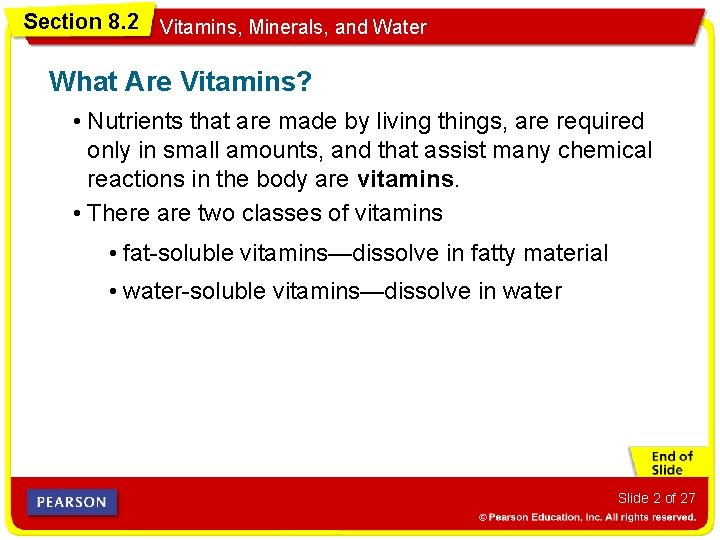
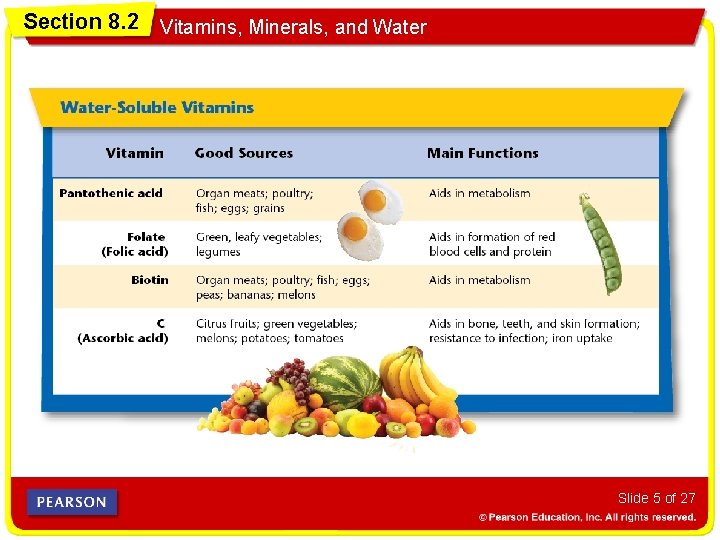
Section 8. 2 Vitamins, Minerals, and Water What Are Vitamins? • Nutrients that are made by living things, are required only in small amounts, and that assist many chemical reactions in the body are vitamins. • There are two classes of vitamins • fat-soluble vitamins—dissolve in fatty material • water-soluble vitamins—dissolve in water Slide 2 of 27
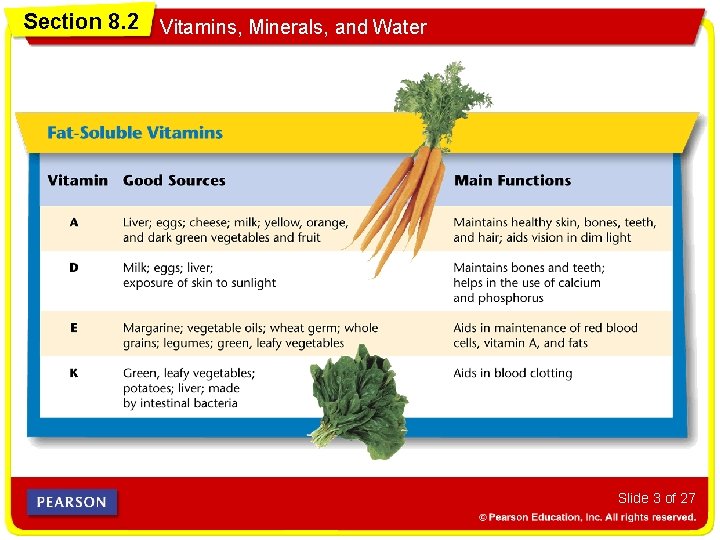
Section 8. 2 Vitamins, Minerals, and Water Slide 3 of 27
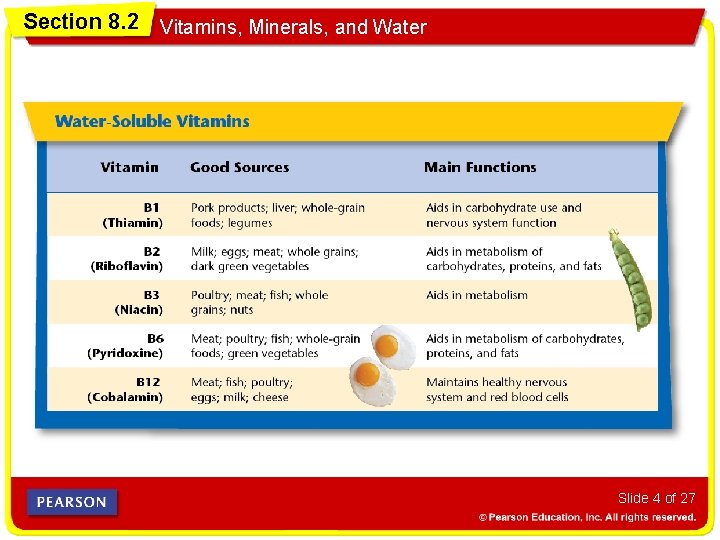
Section 8. 2 Vitamins, Minerals, and Water Slide 4 of 27
Section 8. 2 Vitamins, Minerals, and Water Slide 5 of 27
Section 8. 2 Vitamins, Minerals, and Water Antioxidants • Vitamins called antioxidants help protect healthy cells from the damage caused by the normal aging process as well as from certain types of cancer. • Vitamins C and E are two of the most powerful antioxidants. Slide 6 of 27
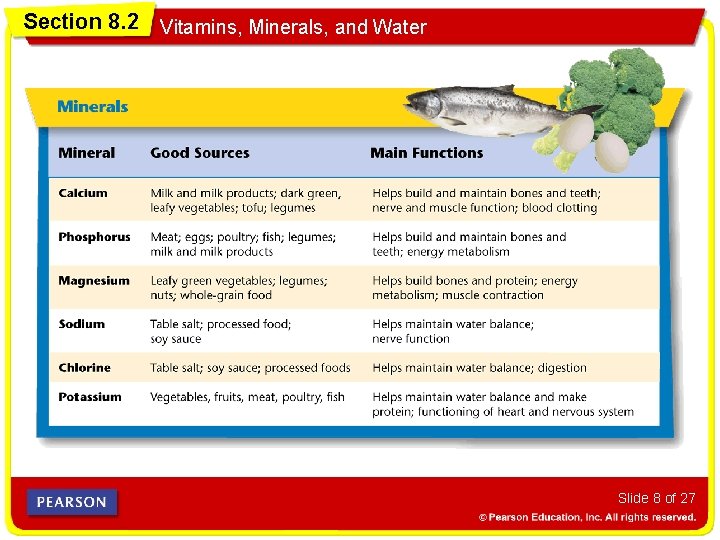
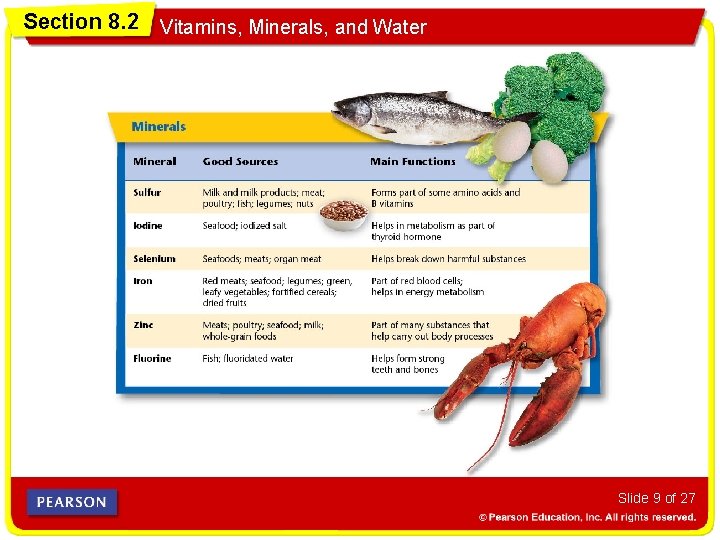
Section 8. 2 Vitamins, Minerals, and Water Minerals • Your body requires only small amounts of minerals, which are nutrients that occur naturally in rocks and soil. • You need seven minerals—calcium, sodium, potassium, magnesium, phosphorus, chlorine, and sulfur—in significant amounts. Slide 7 of 27
Section 8. 2 Vitamins, Minerals, and Water Slide 8 of 27
Section 8. 2 Vitamins, Minerals, and Water Slide 9 of 27
Section 8. 2 Vitamins, Minerals, and Water Vitamin and Mineral Supplements • Vitamin and mineral supplements, therefore, are not usually necessary if your diet is nutritious and wellbalanced. • An excess, or overdose, of vitamins or minerals may damage your health. • If you do take a vitamin or mineral supplement, a health care provider can advise you about how much is the right amount. Slide 10 of 27
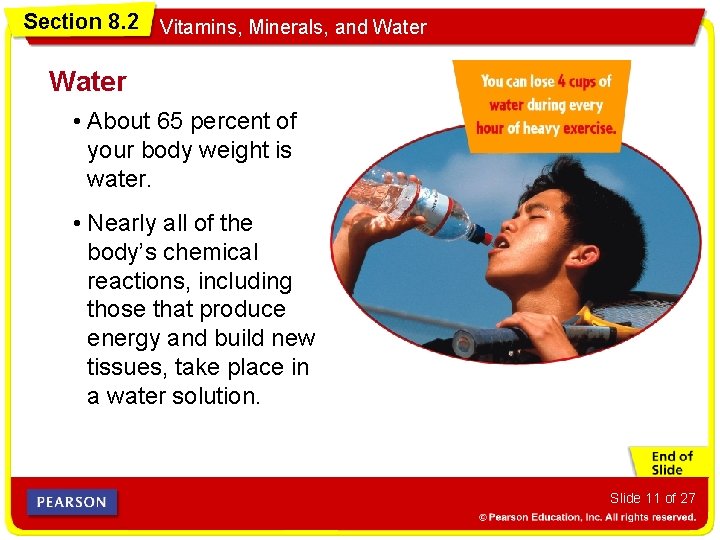
Section 8. 2 Vitamins, Minerals, and Water • About 65 percent of your body weight is water. • Nearly all of the body’s chemical reactions, including those that produce energy and build new tissues, take place in a water solution. Slide 11 of 27
Section 8. 2 Vitamins, Minerals, and Water and Homeostasis • Homeostasis is the process of maintaining a steady state inside your body. • When you become overheated, your body excretes perspiration, which cools your body. Thus, water regulates body temperature. • Water contains dissolved substances called electrolytes that regulate many processes in your cells. Slide 12 of 27
Section 8. 2 Vitamins, Minerals, and Water Preventing Dehydration • Dehydration is a serious reduction in the body’s water content. • Symptoms of dehydration can include weakness, rapid breathing, and a weak heartbeat. Slide 13 of 27
Section 8. 2 Vitamins, Minerals, and Water How Much Water? • Every day, you need at least ten 8 -ounce cups of water if you are a female 14 to 18 years old. • Males in the same age group need 14 cups of water per day. Slide 14 of 27
- Slides: 14