
Section 6 The Industrial Revolution and the Chartist
















- Slides: 42
Section 6: The Industrial Revolution and the Chartist Movement
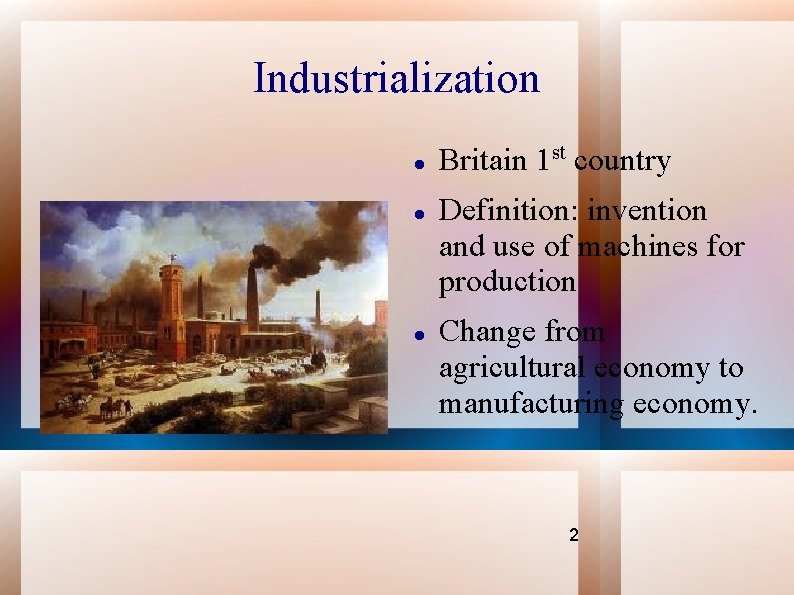
Industrialization Britain 1 st country Definition: invention and use of machines for production Change from agricultural economy to manufacturing economy. 2
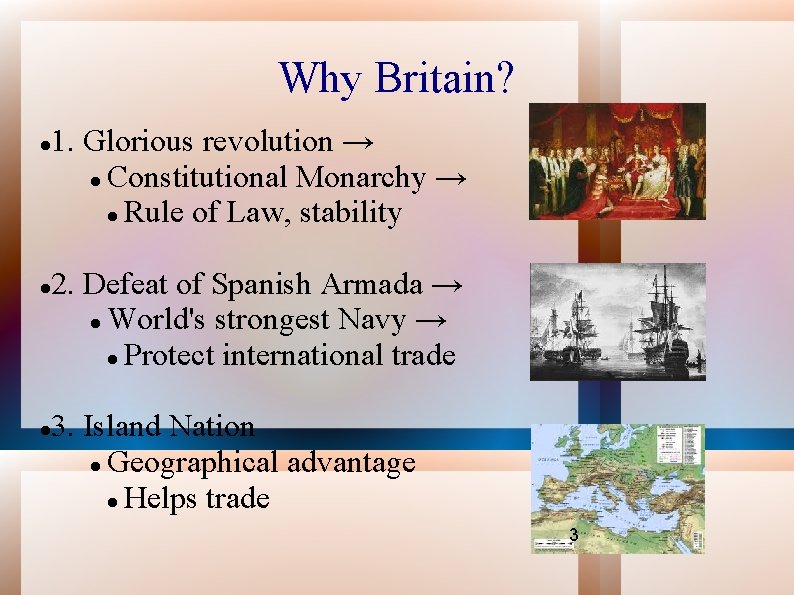
Why Britain? 1. Glorious revolution → Constitutional Monarchy → Rule of Law, stability 2. Defeat of Spanish Armada → World's strongest Navy → Protect international trade 3. Island Nation Geographical advantage Helps trade 3
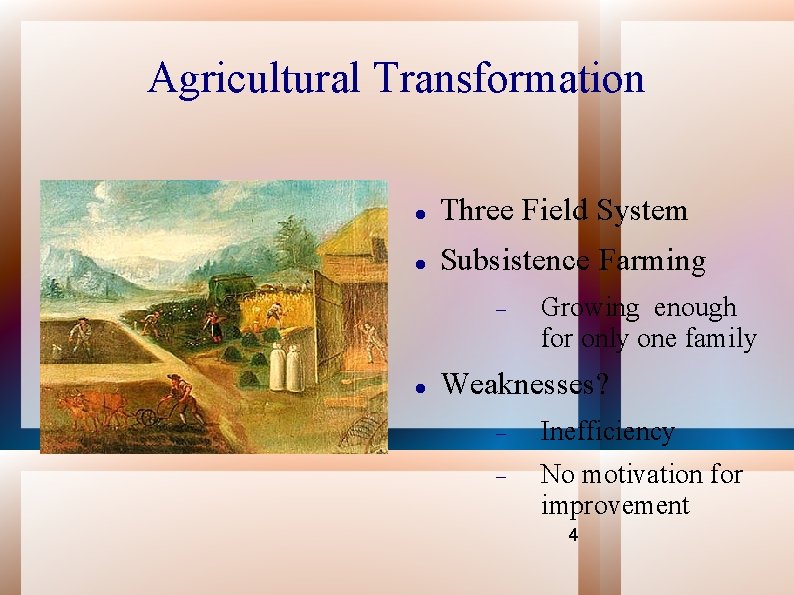
Agricultural Transformation Three Field System Subsistence Farming Growing enough for only one family Weaknesses? Inefficiency No motivation for improvement 4
5
Fallow field 休闲地 Replaced by nitrogen氮 crops. e. g. peas, beans, potatoes, turnips, and grasses 6
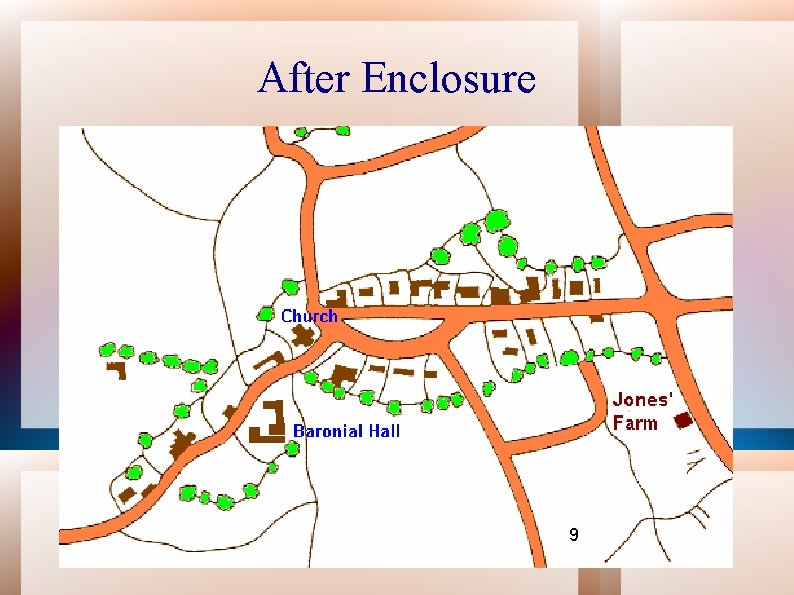
Enclosed封闭的 Fields 7
Before Enclosure 8
After Enclosure 9
Effects of Enclosure Positive Negative Efficiency More food created Why essential? Who needs food now? City peasants No more open fields for poor peasants to have animals graze 吃草on Many poor people who had been borrowing unused lands could easily be kicked off If no other skills? – 10 urban or int'l? Move
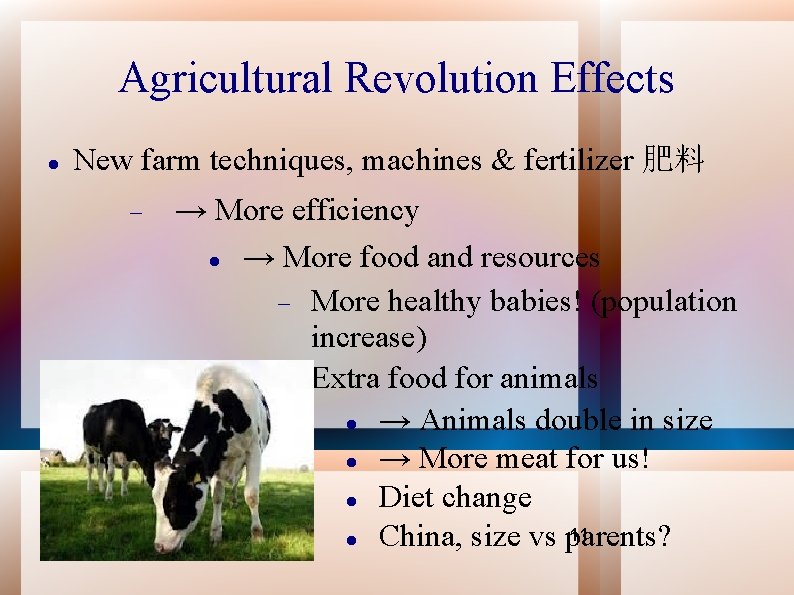
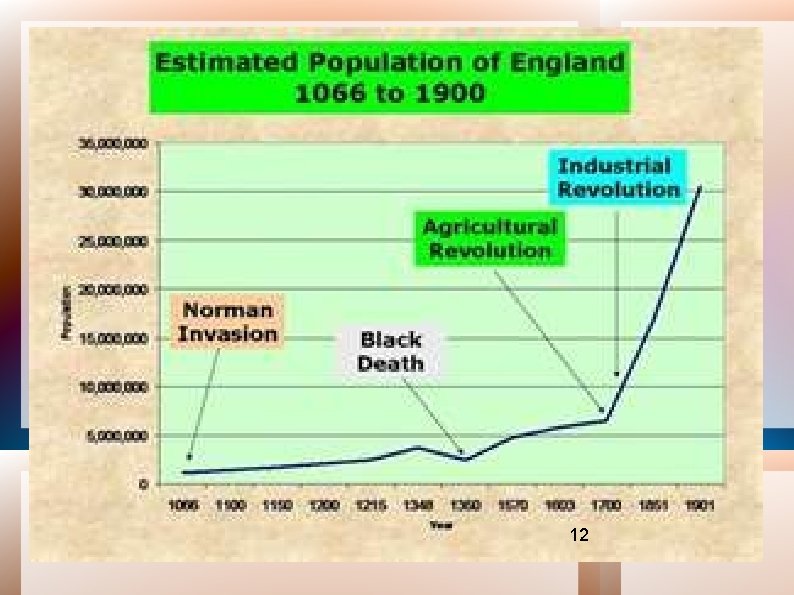
Agricultural Revolution Effects New farm techniques, machines & fertilizer 肥料 → More efficiency → More food and resources More healthy babies! (population increase) Extra food for animals → Animals double in size → More meat for us! Diet change 11 China, size vs parents?
12
Value Change Protestant work ethic Definition? Work hard—laziness is a sin. You get what you earn. Not a sin to work hard to make $ for your family Agree or disagree? Good if it makes people work harder, more products for society, but bad if it makes people selfish. Work hard, and help others Some took idea further (Social Darwinism) If you are poor, its your own fault Opinion? 13
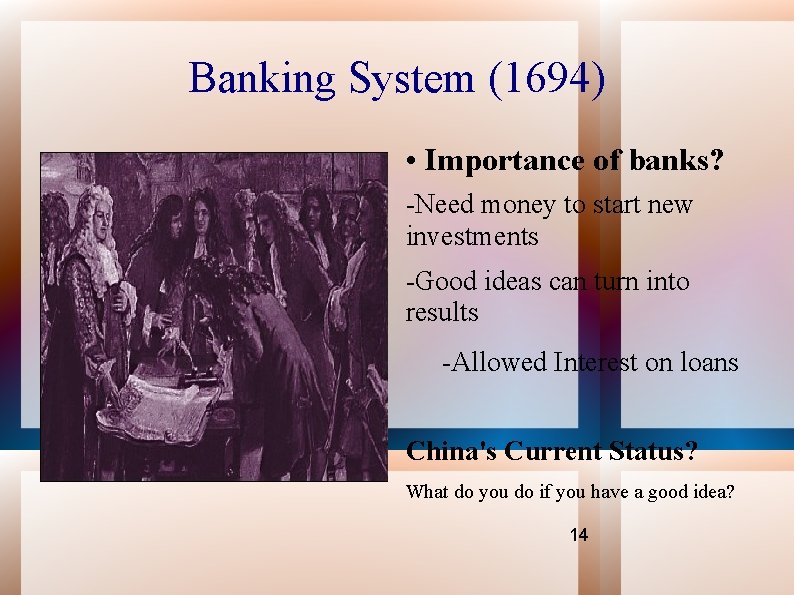
Banking System (1694) • Importance of banks? -Need money to start new investments -Good ideas can turn into results -Allowed Interest on loans China's Current Status? What do you do if you have a good idea? 14
Explain this quote: “Need is the mother of invention” 15
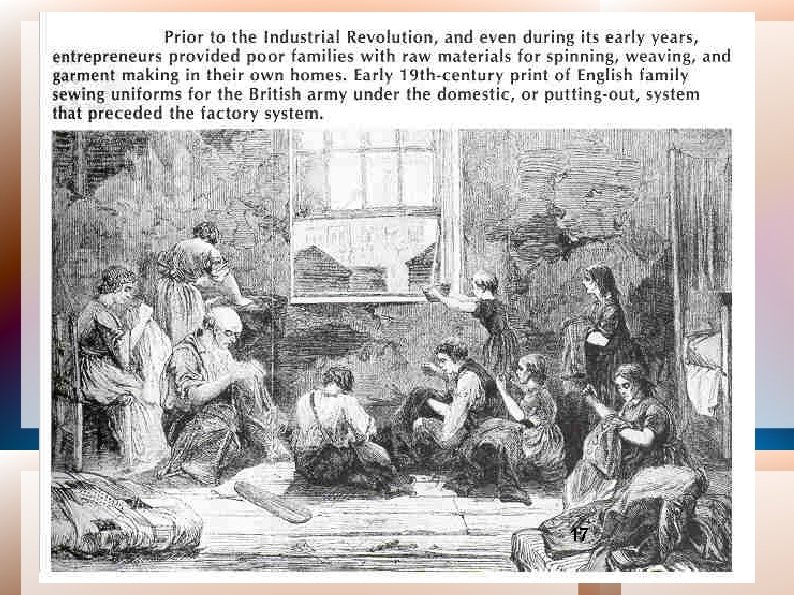
Cotton Imported from USA Turn into yarn or thread Sew into finished products 16
17
Spinning Jenny多轴纺织机 18
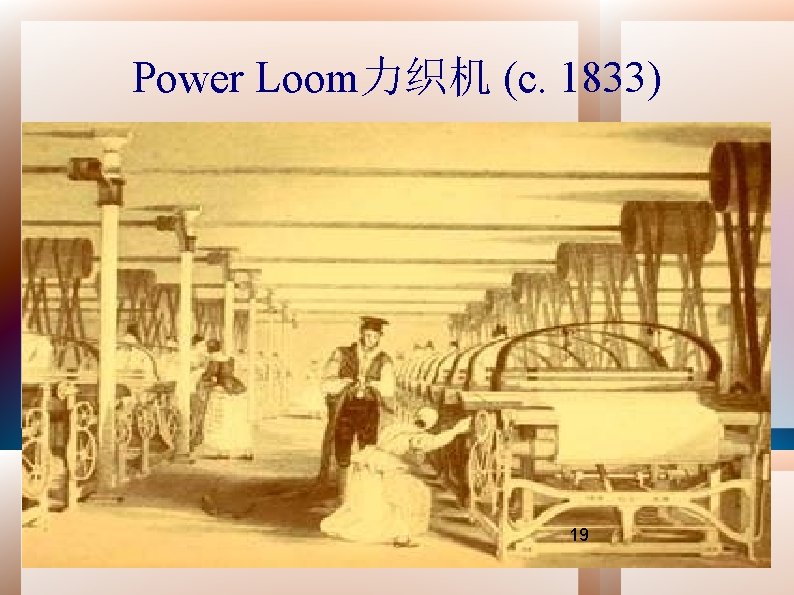
Power Loom力织机 (c. 1833) 19
Flying Shuttle 20
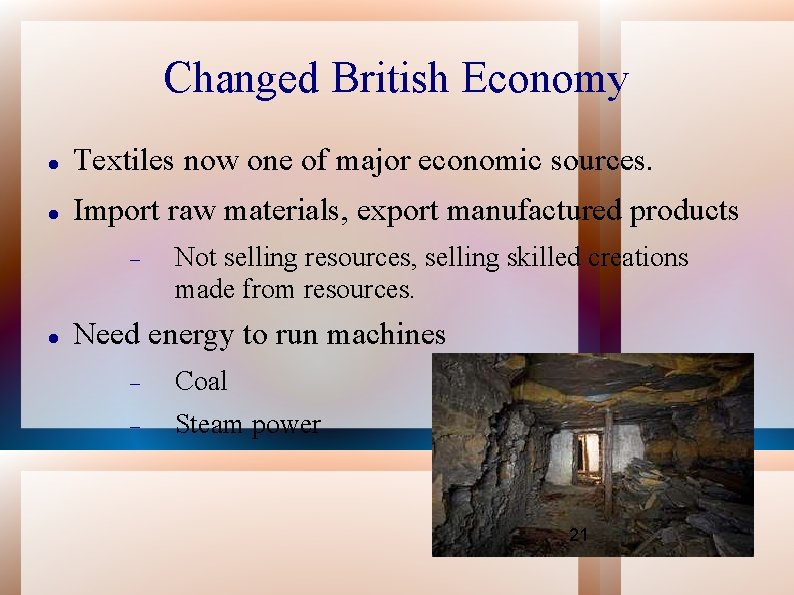
Changed British Economy Textiles now one of major economic sources. Import raw materials, export manufactured products Not selling resources, selling skilled creations made from resources. Need energy to run machines Coal Steam power 21
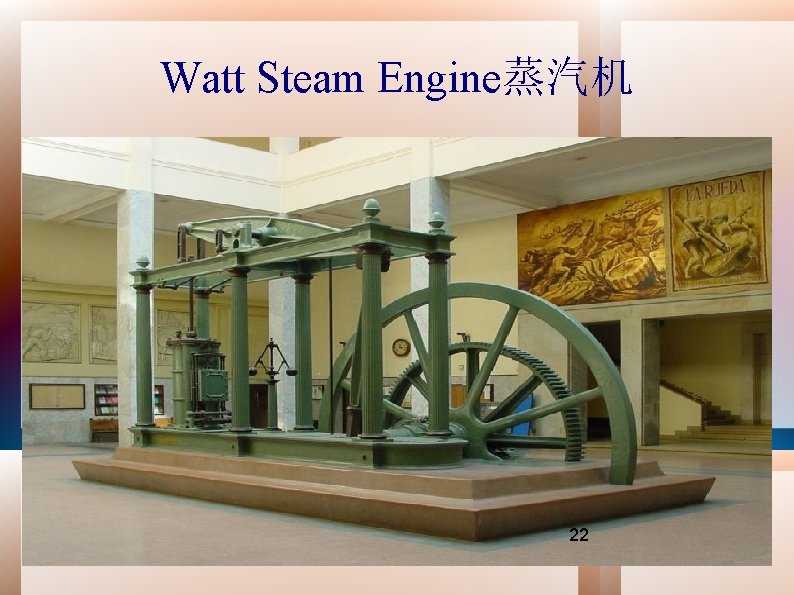
Watt Steam Engine蒸汽机 22
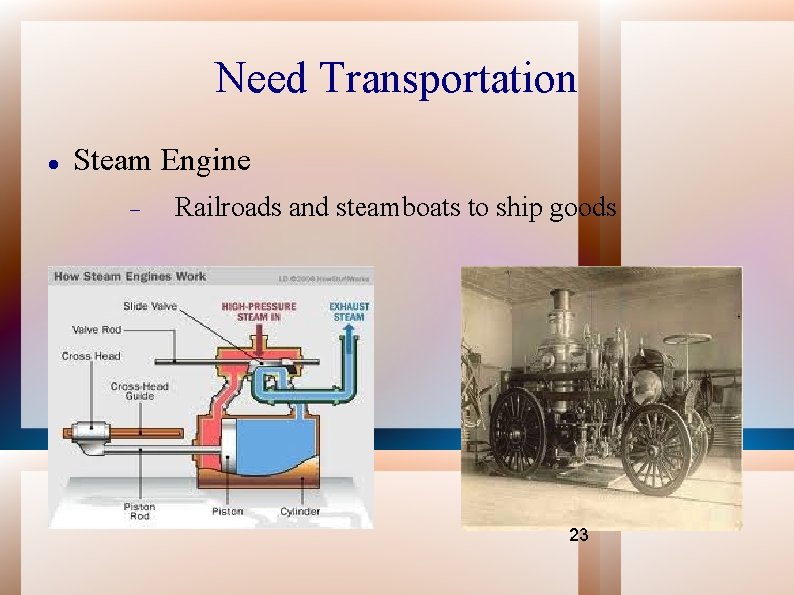
Need Transportation Steam Engine Railroads and steamboats to ship goods 23
Consequences of Industrial Revolution Britain is now world's super power. Classes changed Now wealthy businessmen, peasants and nobility Nobility power decreased, just social importance e. g. average celebrity vs really wealthy man Agriculture unimportant, no more tariffs关税 on imported goods 24
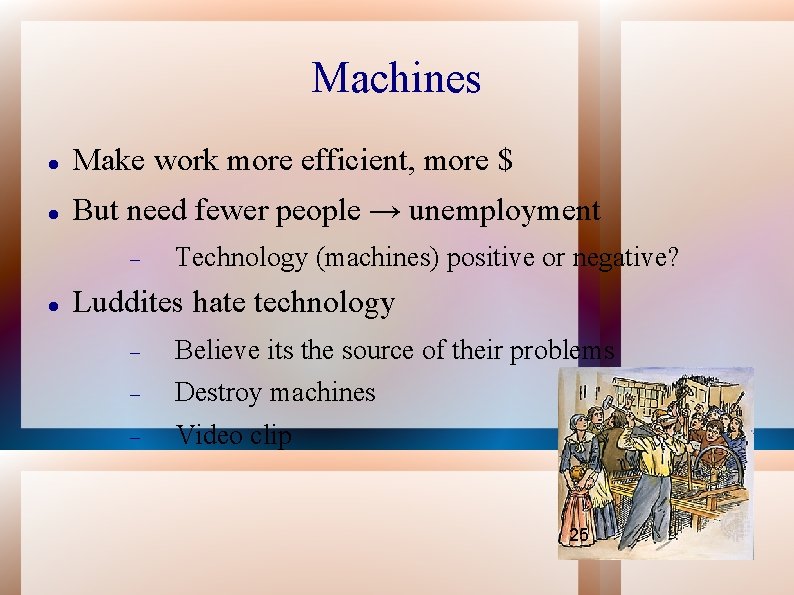
Machines Make work more efficient, more $ But need fewer people → unemployment Technology (machines) positive or negative? Luddites hate technology Believe its the source of their problems Destroy machines Video clip 25
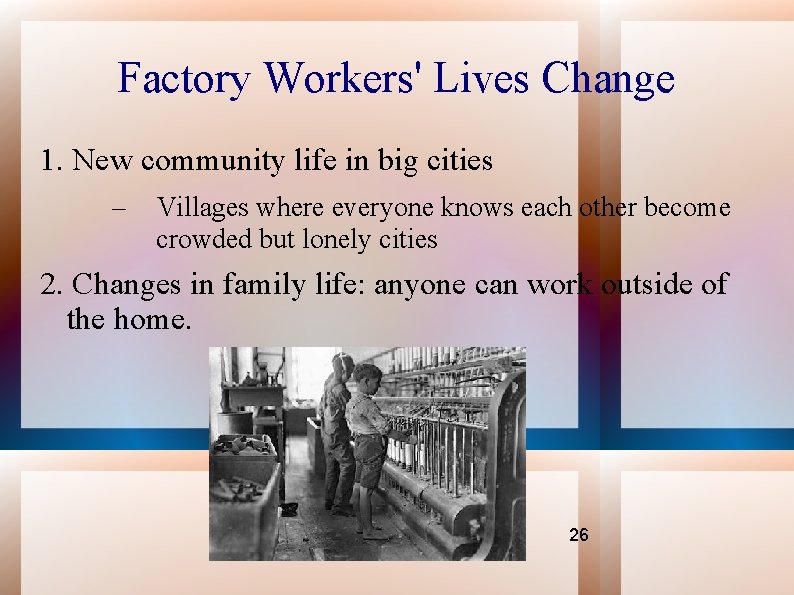
Factory Workers' Lives Change 1. New community life in big cities – Villages where everyone knows each other become crowded but lonely cities 2. Changes in family life: anyone can work outside of the home. 26
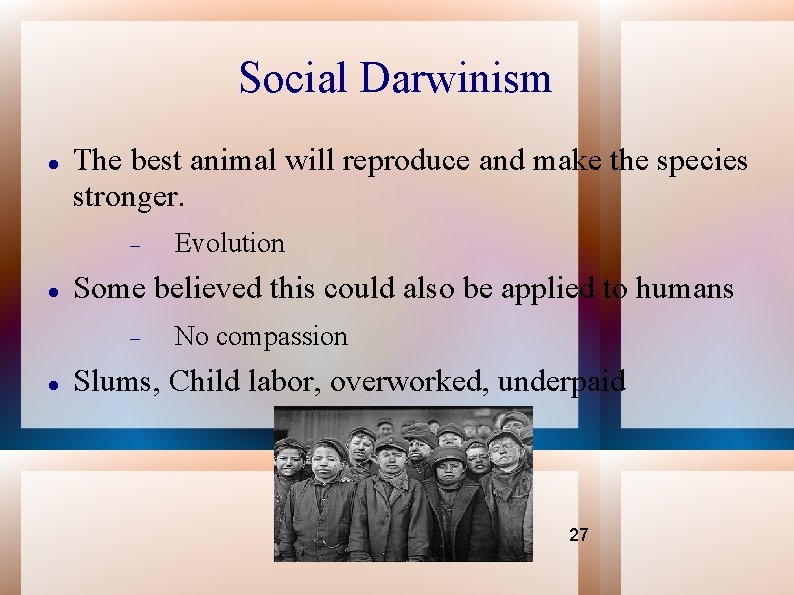
Social Darwinism The best animal will reproduce and make the species stronger. Some believed this could also be applied to humans Evolution No compassion Slums, Child labor, overworked, underpaid 27
Pollution 28
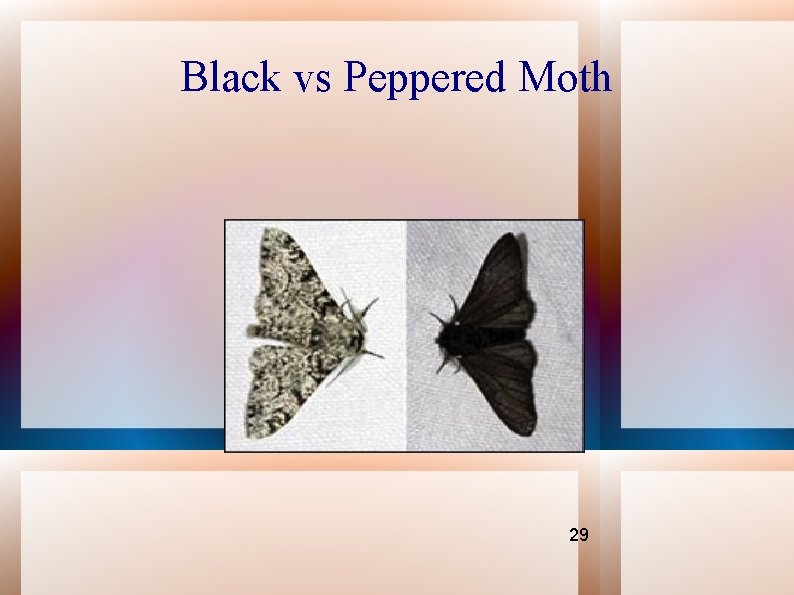
Black vs Peppered Moth 29
Population Increase 30
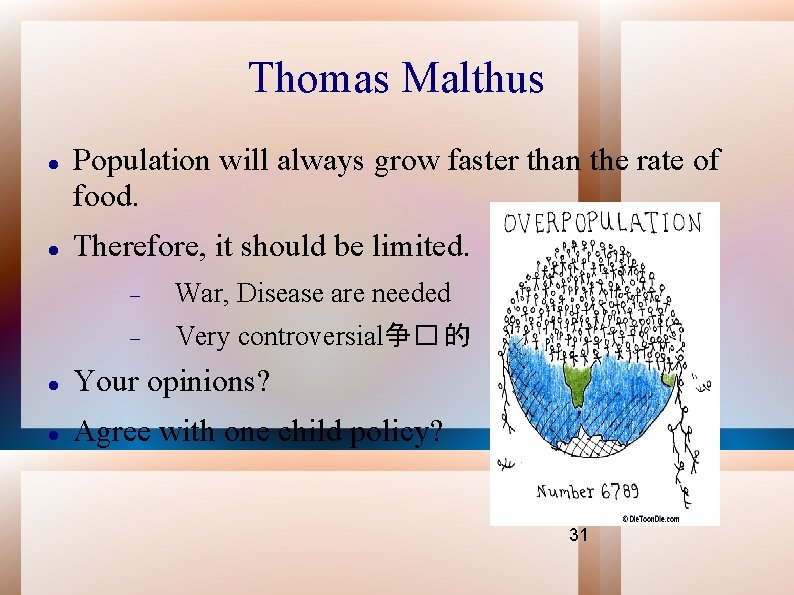
Thomas Malthus Population will always grow faster than the rate of food. Therefore, it should be limited. War, Disease are needed Very controversial争� 的 Your opinions? Agree with one child policy? 31
Review: Why England? 1. Stable government稳定的政府 2. Available capital可用资产 to invest投资(good banks) 3. Available labor有效的劳动力 (due to population increase from Agricultural Revolution) – China now? 4. Demand for cotton clothing棉制衣服的需求 5. New technology: steam engine, railroads 6. Coal and Iron was available 可使用的in England 7. Capitalist support from government 32
Summary of Positive Changes Enabled激活 Britain to become one of the wealthiest and most powerful nations in the world by 1850 More efficient有效率的 methods of production created more and better quality goods at cheaper prices. People’s lives improved, but unevenly不均衡的. Generated形成 new wealth for the urban middle class 城市中产阶级 The middle class led social and political reforms in the 1800 s to deal with negative消极的 consequences of the Industrial Revolution 33
Summary of Negative Changes Caused unhealthy living conditions; bad sanitation环境 卫生 caused the spread of water-borne水传播的 diseases like cholera霍乱 Created new forms of air and water pollution in rapidly growing cities Led to a highly stratified class society分等级的社会结 构. At the bottom was the exploited 开采working class, which worked long hours in dangerous conditions for low pay By 1850 Britain used its wealth to expand in search of new markets and raw materials原材料 (imperialism帝 34 国主义)
Questions about Industrial Revolution? 35
Reform Bill of 1832 To help some of the problems of the Ind. Revolution Gave vote to upper middle class 上层中产积 极 Based on taxes property owners pay Working class wants more, leads to Chartism人民宪章 运动 36
Chartist Movement (1836 -1848) Working class movement to fight for equal political and social rights. Trying to pass “The People's Charter” Through strikes and riots and spread of info West vs East way to solve “injustice” 37
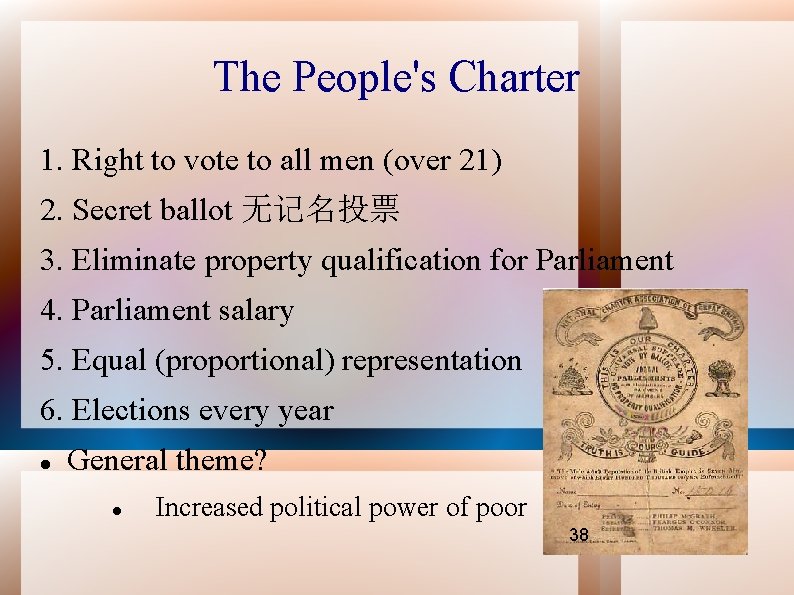
The People's Charter 1. Right to vote to all men (over 21) 2. Secret ballot 无记名投票 3. Eliminate property qualification for Parliament 4. Parliament salary 5. Equal (proportional) representation 6. Elections every year General theme? Increased political power of poor 38
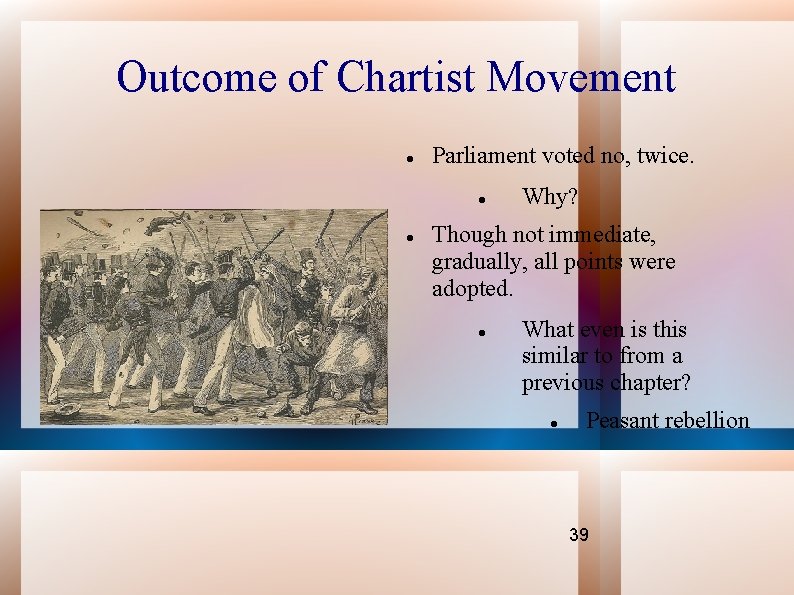
Outcome of Chartist Movement Parliament voted no, twice. Why? Though not immediate, gradually, all points were adopted. What even is this similar to from a previous chapter? Peasant rebellion 39
Queen Victoria Longest Monarch (64 yrs) Watched British Empire grow Chinese Opium War 1840 Darwin: Natural Selection 1859 Evolution 40 Act of 1871 Trade Union
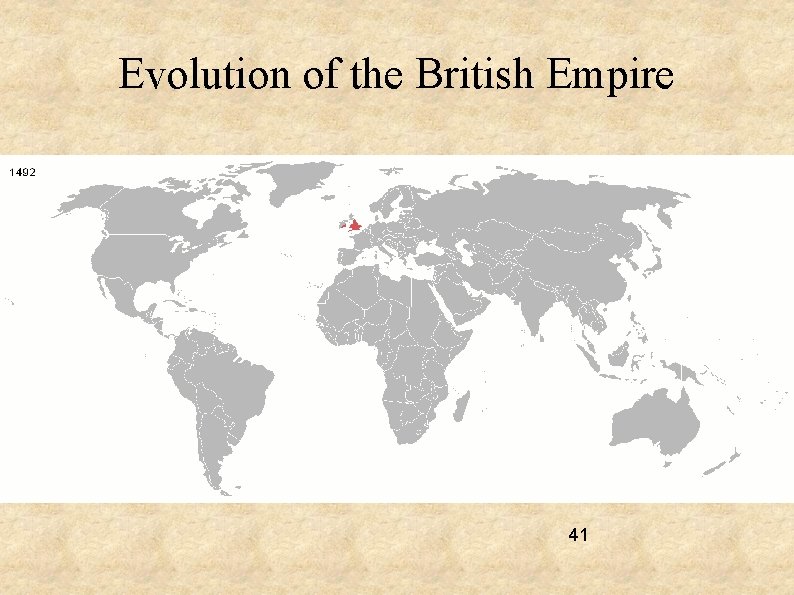
Evolution of the British Empire 41
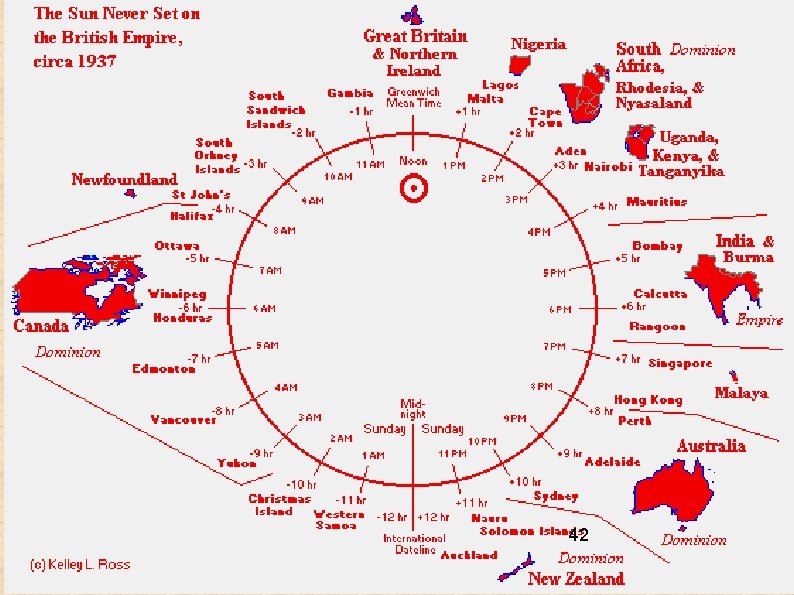
The Sun Never Sets on the British Empire 42