
SECTION 5 VARIATION National 4 5 Multicellular Organisms

- Slides: 14
SECTION 5 – VARIATION National 4 & 5 – Multicellular Organisms
So similar, yet so different � � Human beings all belong to the same species We belong to the same species because of how similar we are But, we are also different to each other in a number of ways All members of a certain species show both similarities and differences with each other
Learning Outcomes � � � By the end of this section I will be able to: - clearly define the term species - classify different types of variation within a species
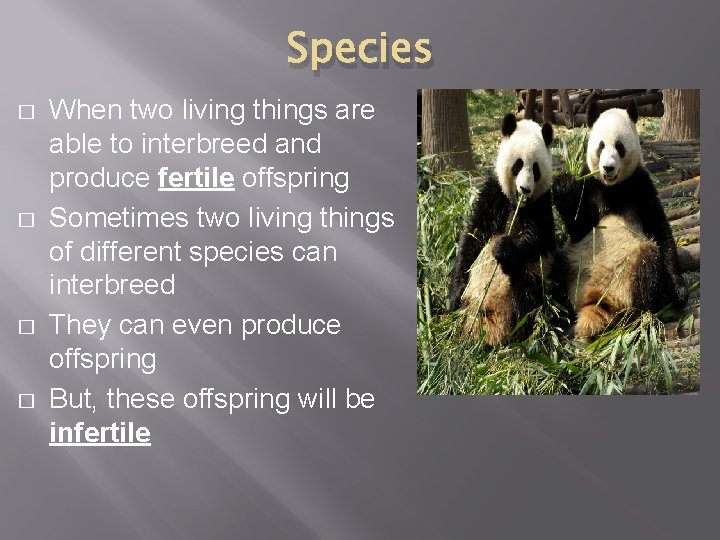
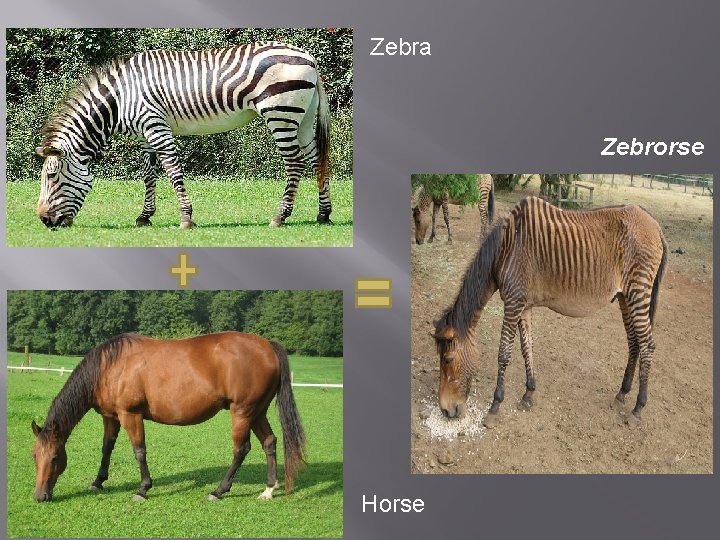
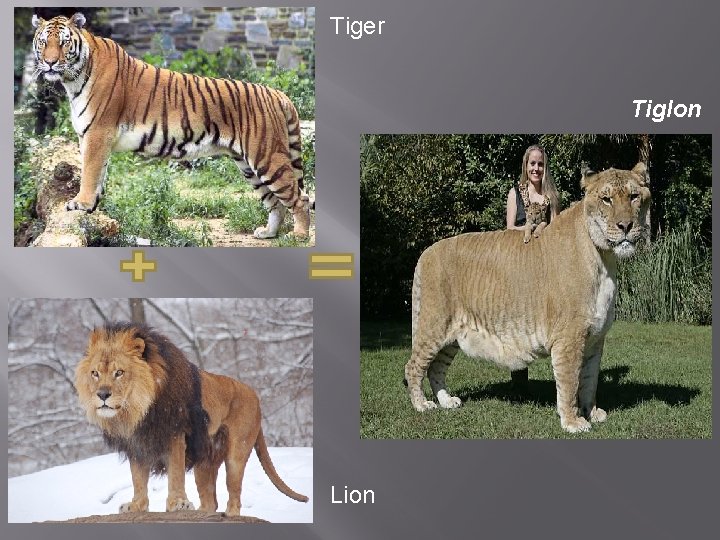
Species � � When two living things are able to interbreed and produce fertile offspring Sometimes two living things of different species can interbreed They can even produce offspring But, these offspring will be infertile
Zebra Zebrorse Horse
Tiger Tiglon Lion
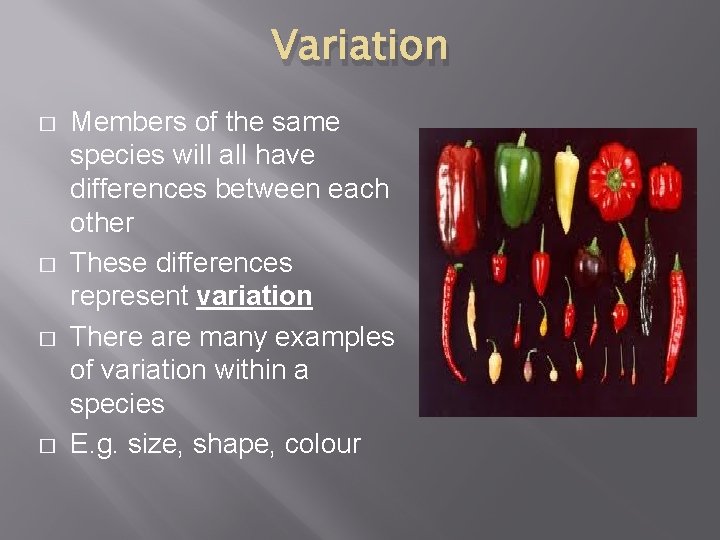
Variation � � Members of the same species will all have differences between each other These differences represent variation There are many examples of variation within a species E. g. size, shape, colour
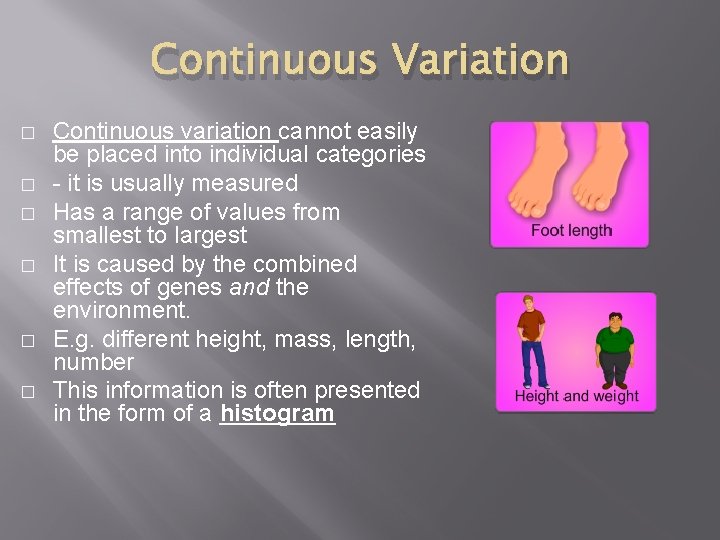
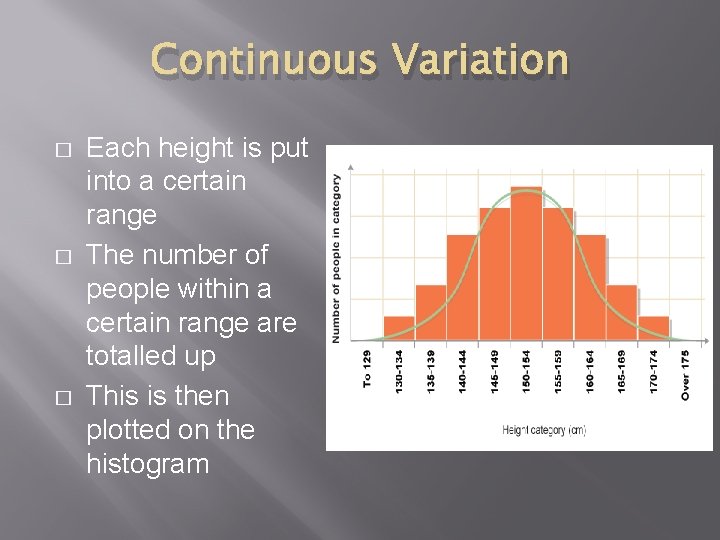
Continuous Variation � � � Continuous variation cannot easily be placed into individual categories - it is usually measured Has a range of values from smallest to largest It is caused by the combined effects of genes and the environment. E. g. different height, mass, length, number This information is often presented in the form of a histogram
Continuous Variation � � � Each height is put into a certain range The number of people within a certain range are totalled up This is then plotted on the histogram
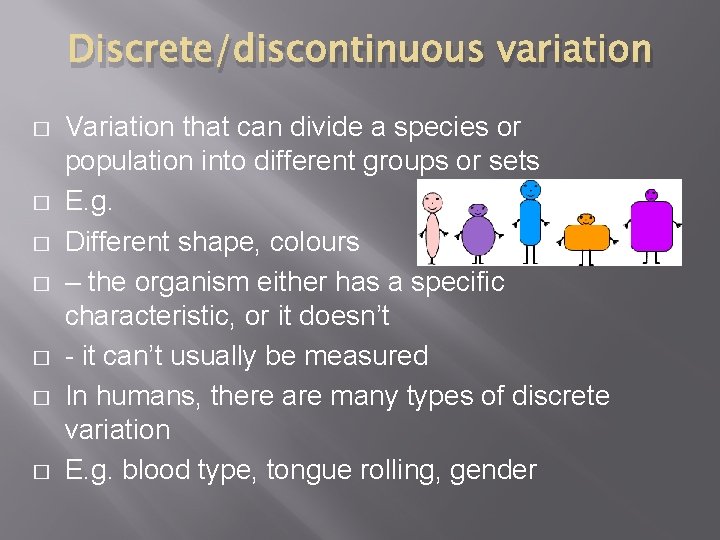
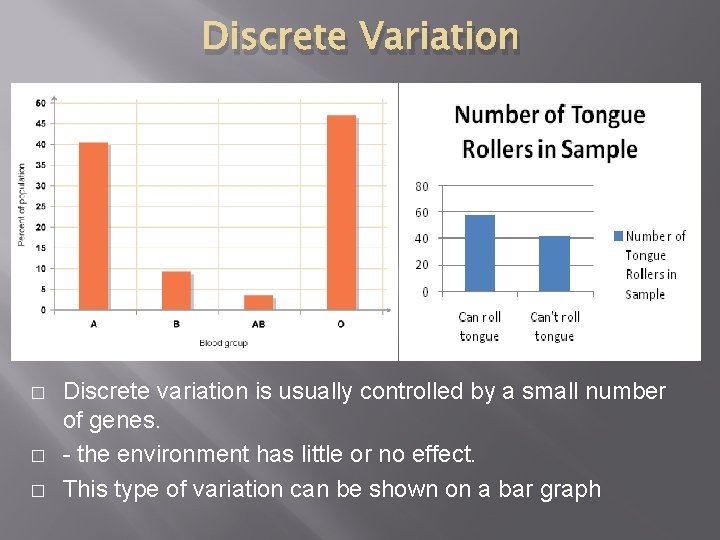
Discrete/discontinuous variation � � � � Variation that can divide a species or population into different groups or sets E. g. Different shape, colours – the organism either has a specific characteristic, or it doesn’t - it can’t usually be measured In humans, there are many types of discrete variation E. g. blood type, tongue rolling, gender
Discrete Variation � � � Discrete variation is usually controlled by a small number of genes. - the environment has little or no effect. This type of variation can be shown on a bar graph
Your task � � � 1) Do a survey for 1 example of continuous variation and 1 example of discrete variation across the class 2) Having put your set of results into a table, plot this information on an appropriate graph - NOTE it is up to you to decide what results you use
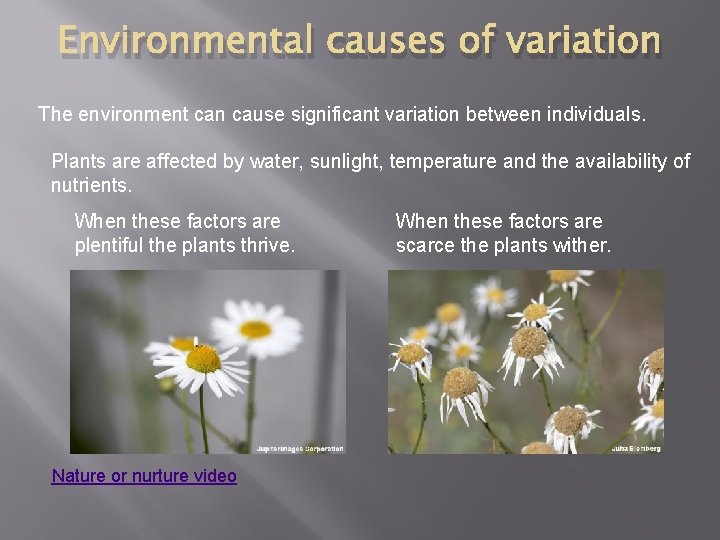
Environmental causes of variation The environment can cause significant variation between individuals. Plants are affected by water, sunlight, temperature and the availability of nutrients. When these factors are plentiful the plants thrive. Nature or nurture video When these factors are scarce the plants wither.
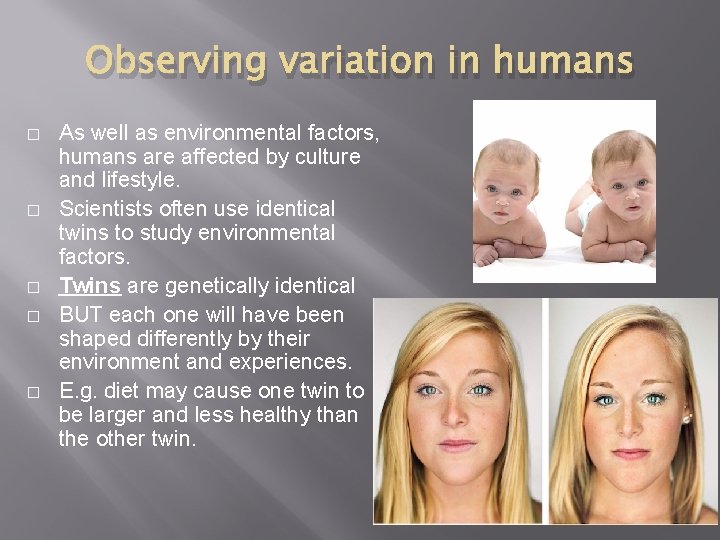
Observing variation in humans � � � As well as environmental factors, humans are affected by culture and lifestyle. Scientists often use identical twins to study environmental factors. Twins are genetically identical BUT each one will have been shaped differently by their environment and experiences. E. g. diet may cause one twin to be larger and less healthy than the other twin.