
Section 5 b Hormonal Control Communication Internal Communication
Section 5 b – Hormonal Control & Communication
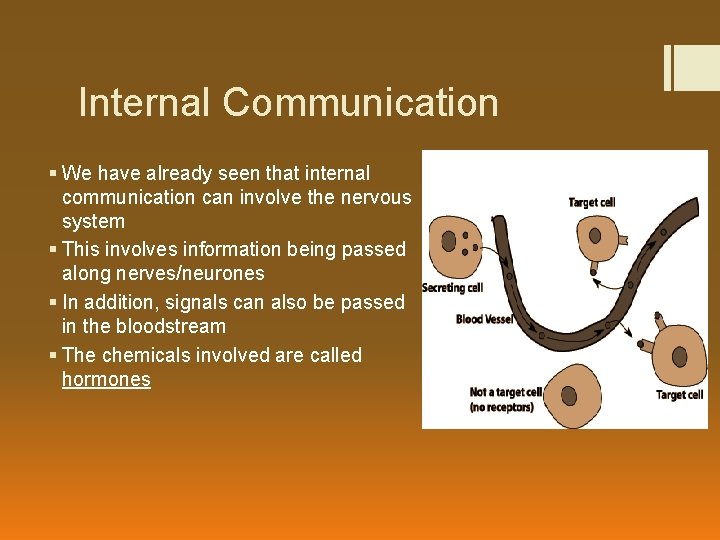
Internal Communication § We have already seen that internal communication can involve the nervous system § This involves information being passed along nerves/neurones § In addition, signals can also be passed in the bloodstream § The chemicals involved are called hormones

Learning Outcomes § Understand the role that hormones play in the human body § Investigate some examples of important human hormones § What the endocrine system consists of, and some of the important sites of hormone production and their targets
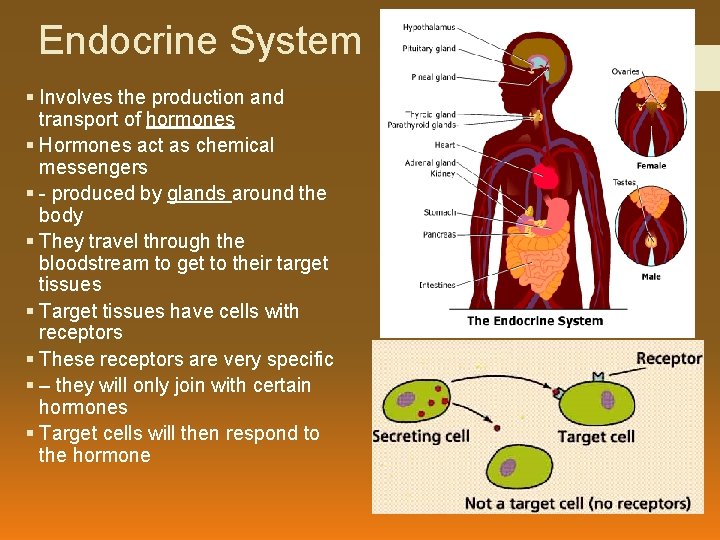
Endocrine System § Involves the production and transport of hormones § Hormones act as chemical messengers § - produced by glands around the body § They travel through the bloodstream to get to their target tissues § Target tissues have cells with receptors § These receptors are very specific § – they will only join with certain hormones § Target cells will then respond to the hormone
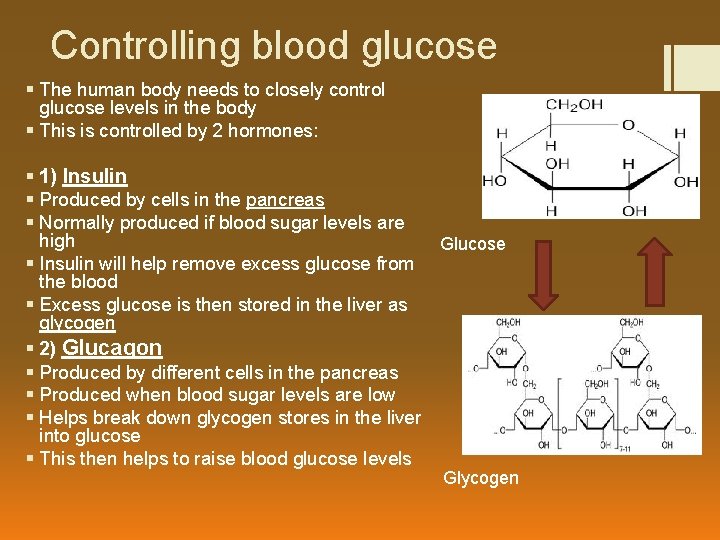
Controlling blood glucose § The human body needs to closely control glucose levels in the body § This is controlled by 2 hormones: § 1) Insulin § Produced by cells in the pancreas § Normally produced if blood sugar levels are high Glucose § Insulin will help remove excess glucose from the blood § Excess glucose is then stored in the liver as glycogen § 2) Glucagon § Produced by different cells in the pancreas § Produced when blood sugar levels are low § Helps break down glycogen stores in the liver into glucose § This then helps to raise blood glucose levels Glycogen
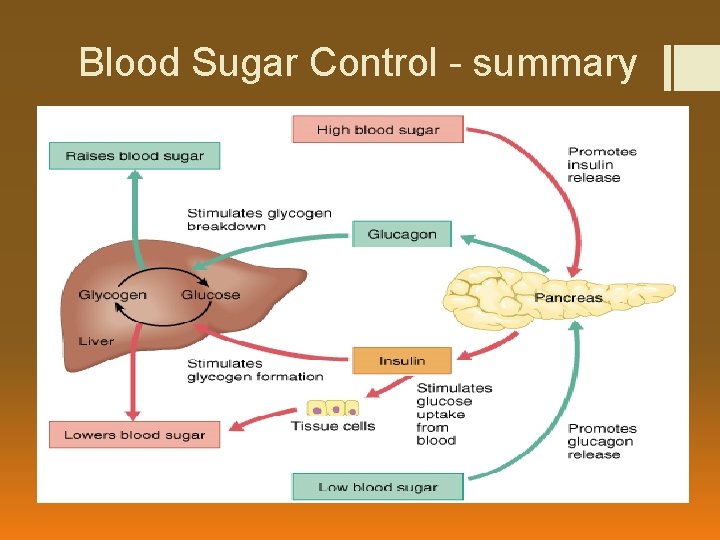
Blood Sugar Control - summary
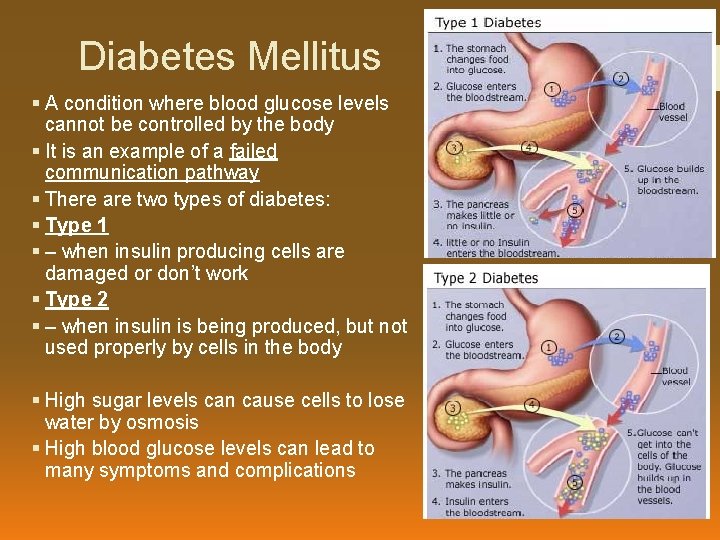
Diabetes Mellitus § A condition where blood glucose levels cannot be controlled by the body § It is an example of a failed communication pathway § There are two types of diabetes: § Type 1 § – when insulin producing cells are damaged or don’t work § Type 2 § – when insulin is being produced, but not used properly by cells in the body § High sugar levels can cause cells to lose water by osmosis § High blood glucose levels can lead to many symptoms and complications
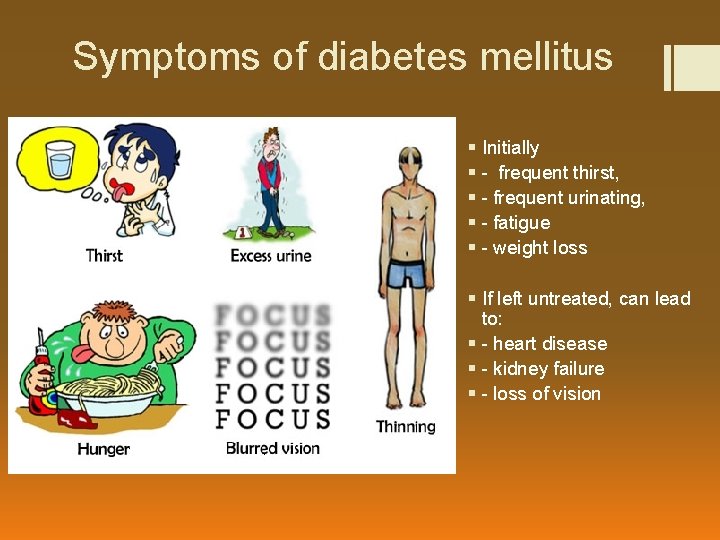
Symptoms of diabetes mellitus § Initially § - frequent thirst, § - frequent urinating, § - fatigue § - weight loss § If left untreated, can lead to: § - heart disease § - kidney failure § - loss of vision
Your task § You are required to do a piece of research on the condition diabetes mellitus. § Your research should cover the following areas: § - details of the two types of diabetes – causes/symptoms etc. § - explain the existing available treatments for diabetes § - outline some new treatments / on-going research into treating diabetes
- Slides: 9