
Section 5 5 Calorimetry Objectives o Examine calorimetry
Section 5. 5 Calorimetry
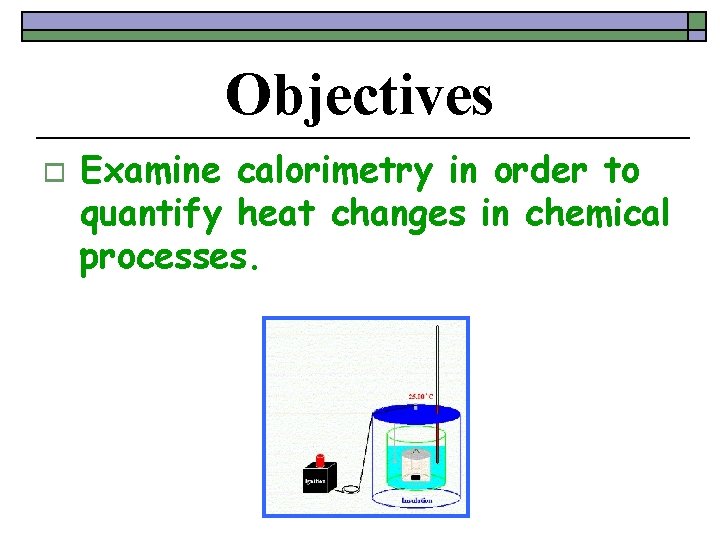
Objectives o Examine calorimetry in order to quantify heat changes in chemical processes.
Key Terms o o o Calorimetry Calorimeter Heat capacity o o o Molar heat capacity Specific heat Bomb calorimeter
Calorimetry o Experimental measurement of heat transferred between system and surroundings n Measurement of ΔH for a reaction at constant pressure
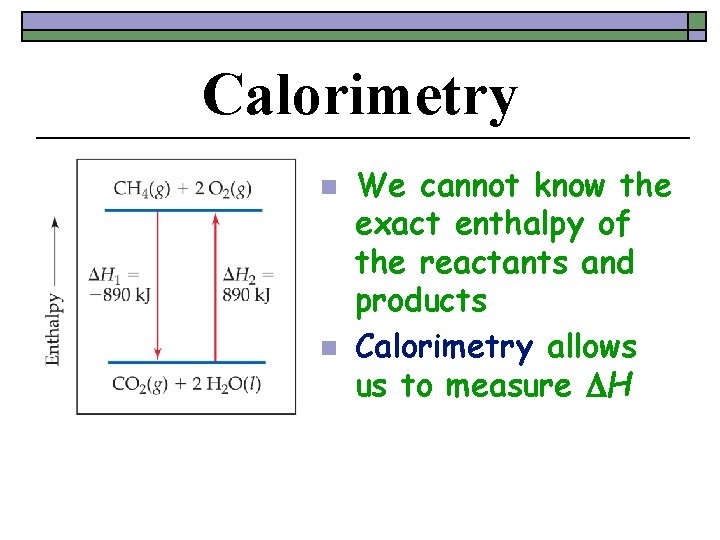
Calorimetry n n We cannot know the exact enthalpy of the reactants and products Calorimetry allows us to measure H
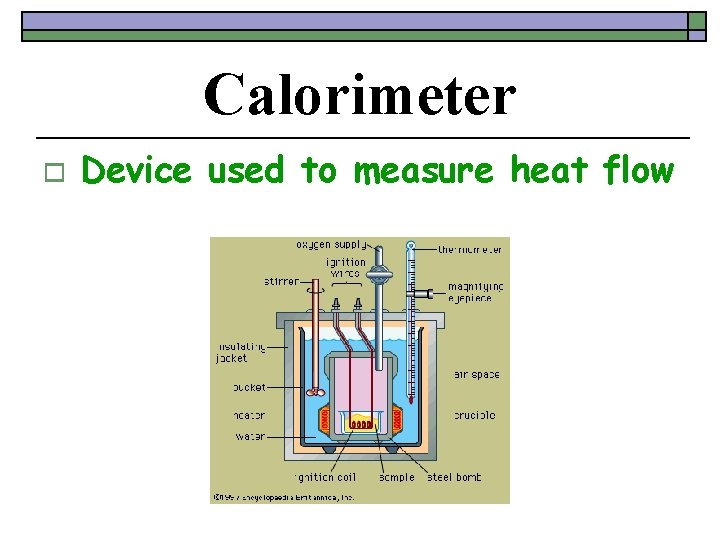
Calorimeter o Device used to measure heat flow
Heat Capacity o o More heat object gains, hotter it gets Magnitude of temperature change varies among substances Heat capacity: amount of energy required to raise the temperature of a substance by 1 K (1 C) Greater the heat capacity = greater heat required to increase temperature
Molar Heat Capacity o o Cmolar Heat capacity of one mole of a substance
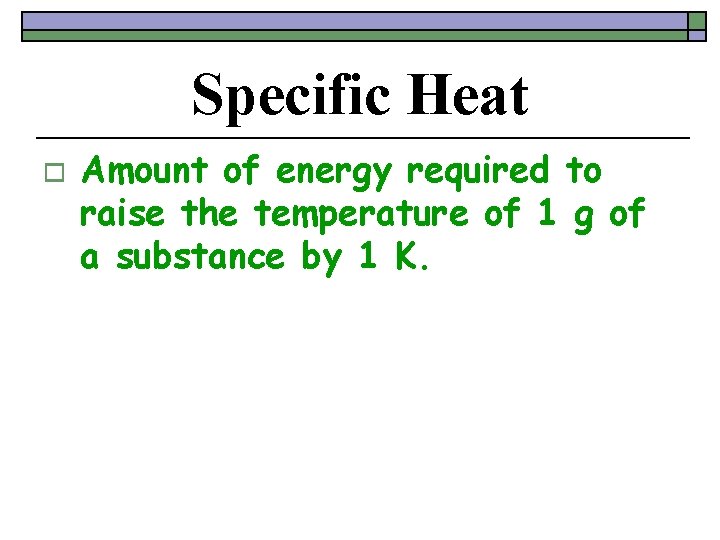
Specific Heat o Amount of energy required to raise the temperature of 1 g of a substance by 1 K.
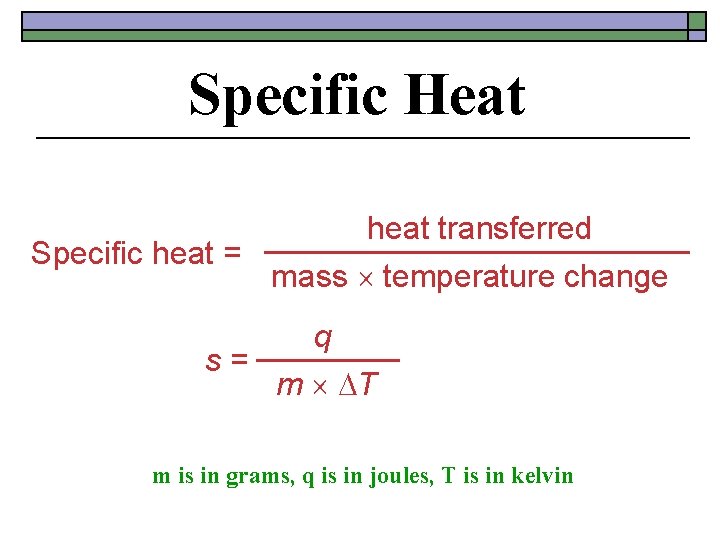
Specific Heat heat transferred Specific heat = mass temperature change q s= m T m is in grams, q is in joules, T is in kelvin
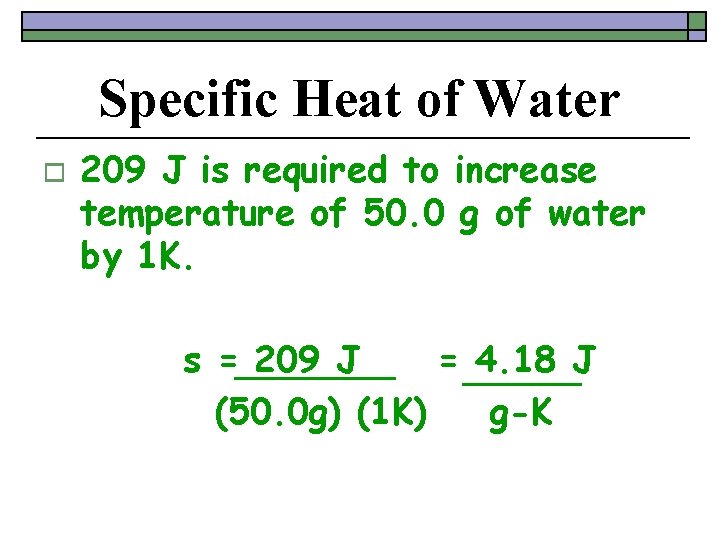
Specific Heat of Water o 209 J is required to increase temperature of 50. 0 g of water by 1 K. s = 209 J = 4. 18 J (50. 0 g) (1 K) g-K
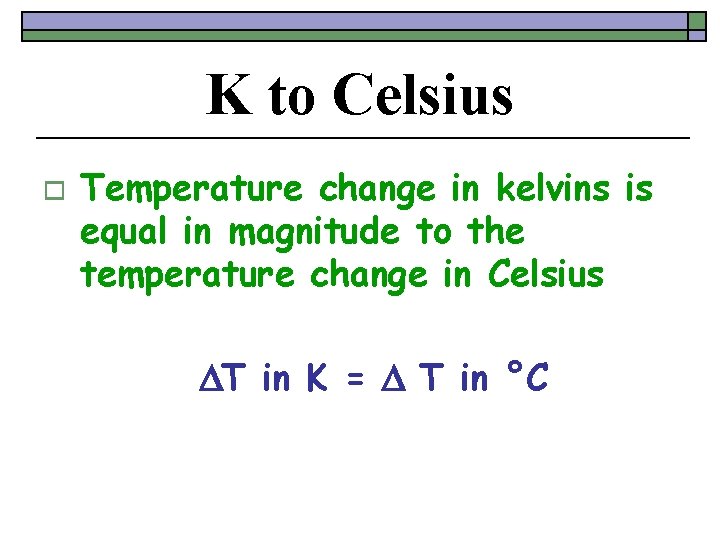
K to Celsius o Temperature change in kelvins is equal in magnitude to the temperature change in Celsius T in K = T in °C
Constant Pressure Calorimetry n n n Simple “coffee-cup” calorimeter Not sealed- constant pressure System= reactants and products Surroundings= water and calorimeter Indirectly measures heat change for the system by measuring heat change for the water in the calorimeter
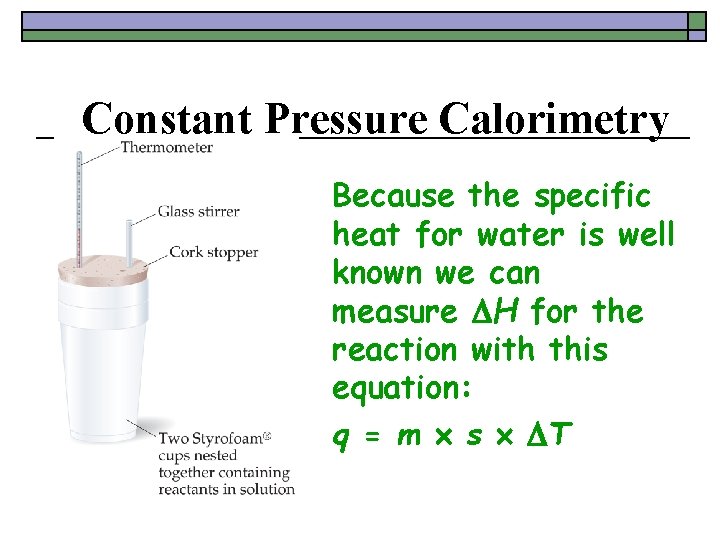
Constant Pressure Calorimetry Because the specific heat for water is well known we can measure H for the reaction with this equation: q = m s T
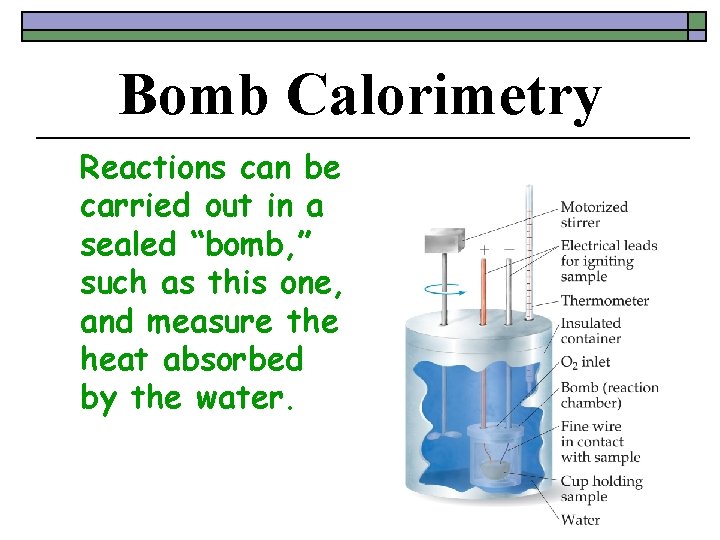
Bomb Calorimetry Reactions can be carried out in a sealed “bomb, ” such as this one, and measure the heat absorbed by the water.
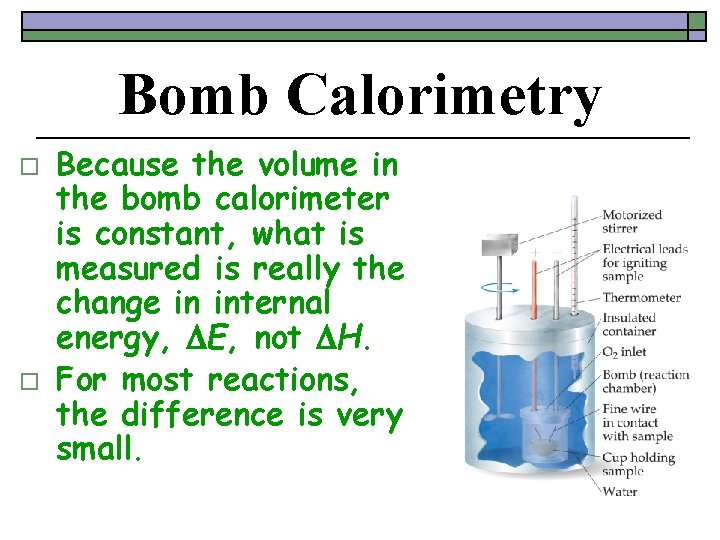
Bomb Calorimetry o o Because the volume in the bomb calorimeter is constant, what is measured is really the change in internal energy, E, not H. For most reactions, the difference is very small.

Bomb Calorimetry
- Slides: 17