
Section 5 1 Introduction to Normal Distributions Properties
Section 5. 1 Introduction to Normal Distributions
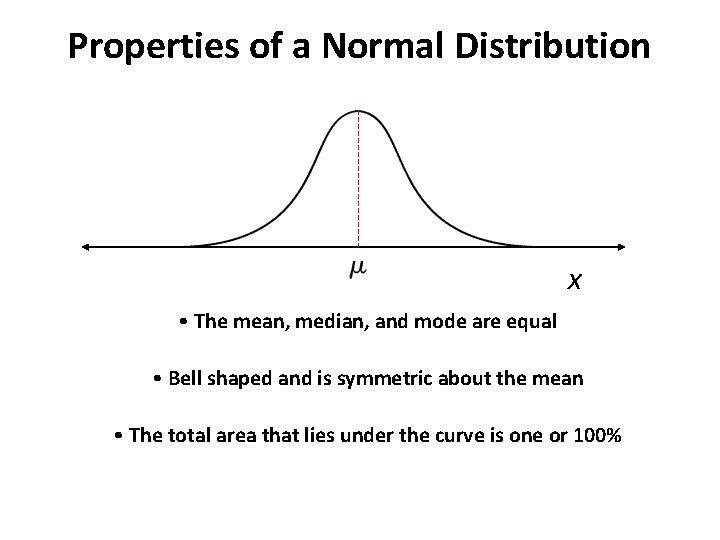
Properties of a Normal Distribution x • The mean, median, and mode are equal • Bell shaped and is symmetric about the mean • The total area that lies under the curve is one or 100%
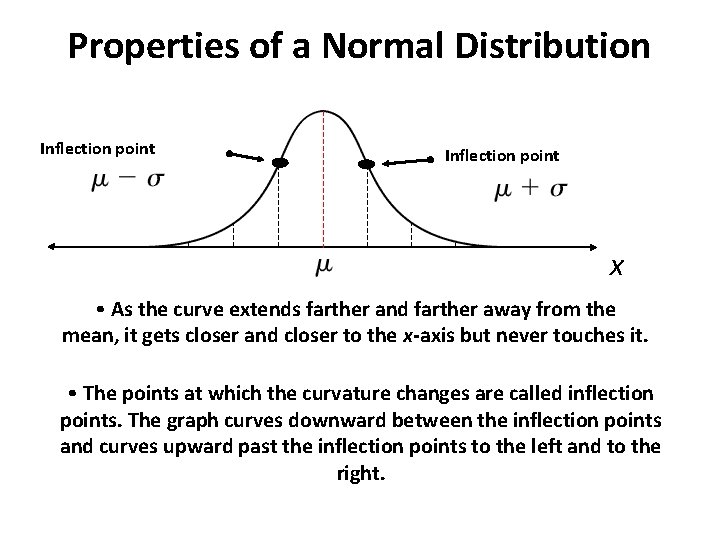
Properties of a Normal Distribution Inflection point x • As the curve extends farther and farther away from the mean, it gets closer and closer to the x-axis but never touches it. • The points at which the curvature changes are called inflection points. The graph curves downward between the inflection points and curves upward past the inflection points to the left and to the right.
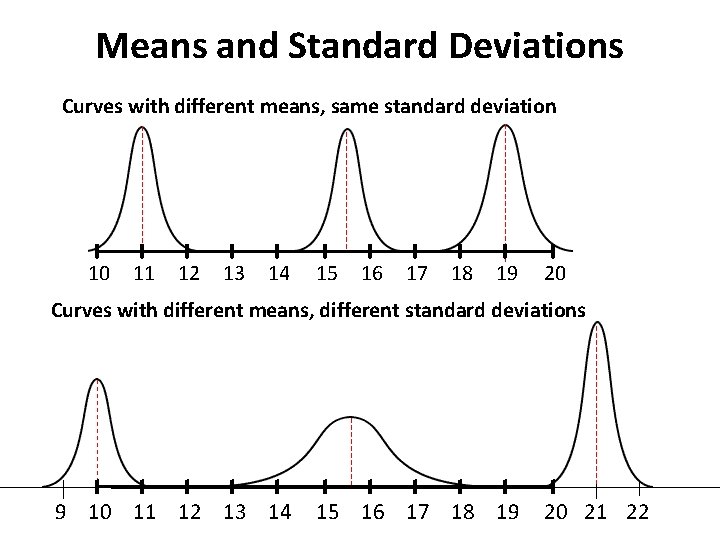
Means and Standard Deviations Curves with different means, same standard deviation 10 11 12 13 14 15 16 17 18 19 20 Curves with different means, different standard deviations 9 10 11 12 13 14 15 16 17 18 19 20 21 22
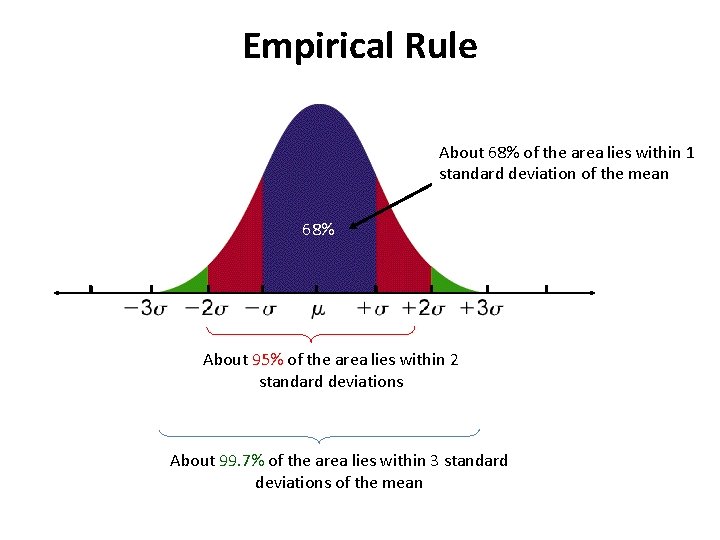
Empirical Rule About 68% of the area lies within 1 standard deviation of the mean 68% About 95% of the area lies within 2 standard deviations About 99. 7% of the area lies within 3 standard deviations of the mean
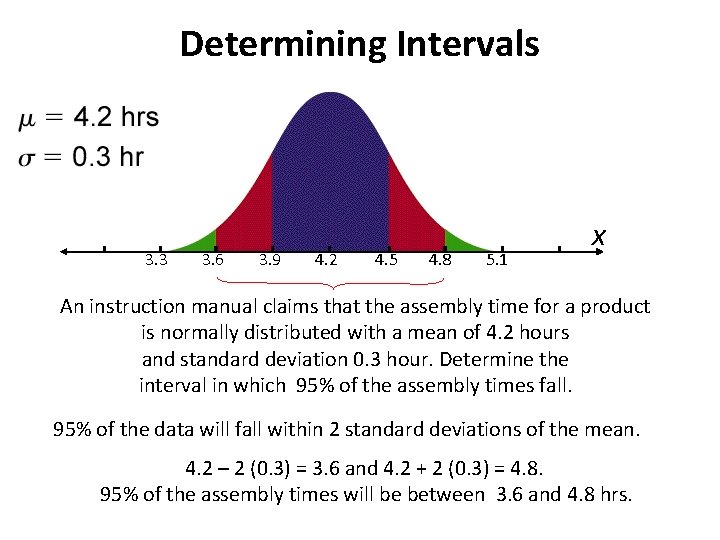
Determining Intervals 3. 3 3. 6 3. 9 4. 2 4. 5 4. 8 5. 1 x An instruction manual claims that the assembly time for a product is normally distributed with a mean of 4. 2 hours and standard deviation 0. 3 hour. Determine the interval in which 95% of the assembly times fall. 95% of the data will fall within 2 standard deviations of the mean. 4. 2 – 2 (0. 3) = 3. 6 and 4. 2 + 2 (0. 3) = 4. 8. 95% of the assembly times will be between 3. 6 and 4. 8 hrs.

Homework : 1 -20 all Pgs. 224 -225 Day 2: 21 -42 all Pgs. 225 -226 43 -61 odd. pgs. 226 -228
- Slides: 7