
Section 4 Formal Organizations CHAPTER 6 How can
- Slides: 12
Section 4: Formal Organizations CHAPTER 6
How can conflict be positive? Give an example. JOURNAL #26
Section 4: Formal Organizations CHAPTER 6
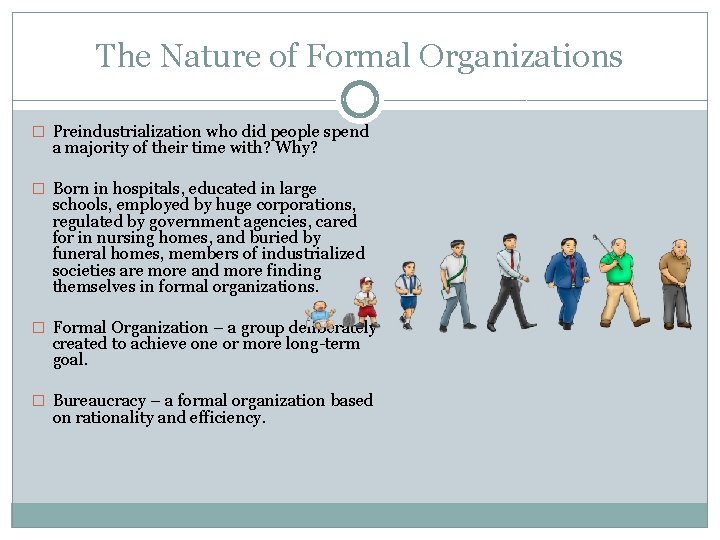
The Nature of Formal Organizations � Preindustrialization who did people spend a majority of their time with? Why? � Born in hospitals, educated in large schools, employed by huge corporations, regulated by government agencies, cared for in nursing homes, and buried by funeral homes, members of industrialized societies are more and more finding themselves in formal organizations. � Formal Organization – a group deliberately created to achieve one or more long-term goal. � Bureaucracy – a formal organization based on rationality and efficiency.
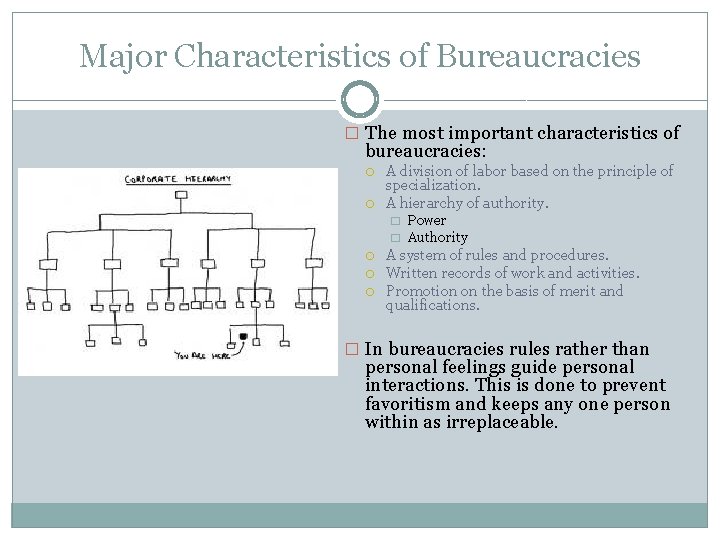
Major Characteristics of Bureaucracies � The most important characteristics of bureaucracies: A division of labor based on the principle of specialization. A hierarchy of authority. � � Power Authority A system of rules and procedures. Written records of work and activities. Promotion on the basis of merit and qualifications. � In bureaucracies rules rather than personal feelings guide personal interactions. This is done to prevent favoritism and keeps any one person within as irreplaceable.
Define formal organization!!! EXTRA CREDIT QUESTION!!!! FIRST PERSON TO RAISE THEIR HAND!!!!
Power and Authority Power – the ability to control the behavior of others. � Authority – the legitimate or socially approved use of power. People submit to authority because they think it is the right thing to do. �
Create Our Own Bureaucracy �You have inherited a large sum of money, and you want to start a new business. �We need to create an organizational bureaucracy chart and assign specific roles. �What is our business? �What specialists will we need to be successful? �Who has the most authority? �Is there a chain of authority? �Why are we choosing to run our business this way?
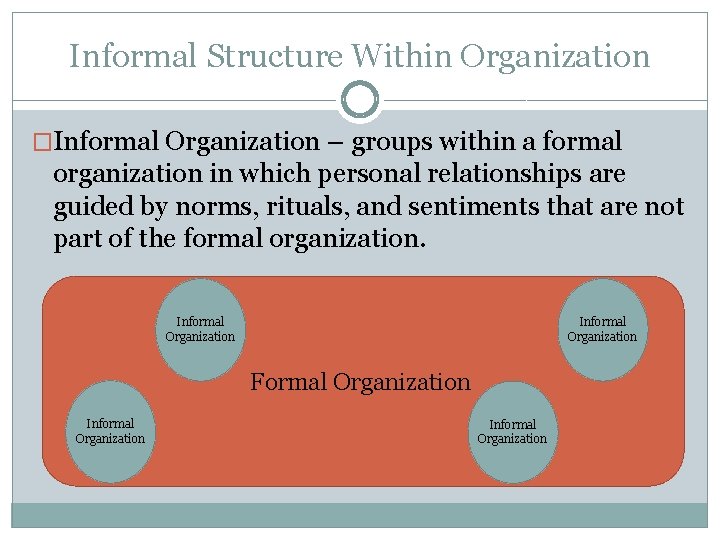
Informal Structure Within Organization �Informal Organization – groups within a formal organization in which personal relationships are guided by norms, rituals, and sentiments that are not part of the formal organization. Informal Organization Formal Organization Informal Organization
Give me an example of a bureaucracy!!! EXTRA CREDIT QUESTION!!!! FIRST PERSON TO RAISE THEIR HAND!!!!
Iron Law of Oligarchy �Iron Law of Oligarchy – theory that power increasingly becomes concentrated in the hands of a few members of any organization. �Create an Oligarchy Figure Step one: Create a fictitious organization. Ex: Mr. Patrick’s Ice Cream Parlor. Step two: Create on Oligarchy figure:
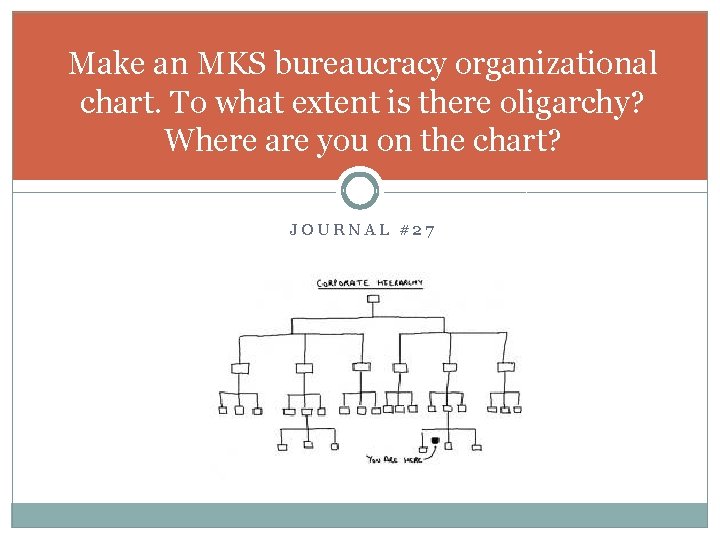
Make an MKS bureaucracy organizational chart. To what extent is there oligarchy? Where are you on the chart? JOURNAL #27