
Section 4 4 Oxidation Reduction Reactions Redox Reactions
- Slides: 15
Section 4. 4 Oxidation Reduction Reactions Redox Reactions Electron-Transfer Reactions
In this section: a. b. c. d. oxidation and reduction oxidation numbers recognizing redox reactions predicting redox reactions Not from this section: a. Organic reactions
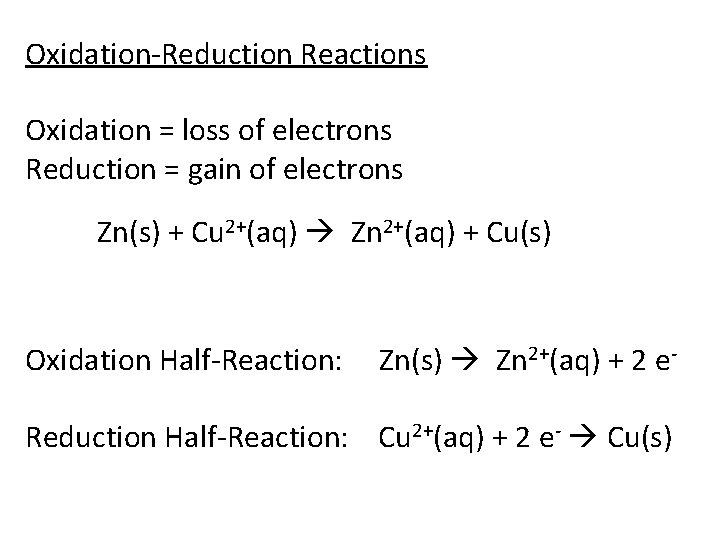
Oxidation-Reduction Reactions Oxidation = loss of electrons Reduction = gain of electrons Zn(s) + Cu 2+(aq) Zn 2+(aq) + Cu(s) Oxidation Half-Reaction: Zn(s) Zn 2+(aq) + 2 e- Reduction Half-Reaction: Cu 2+(aq) + 2 e- Cu(s)
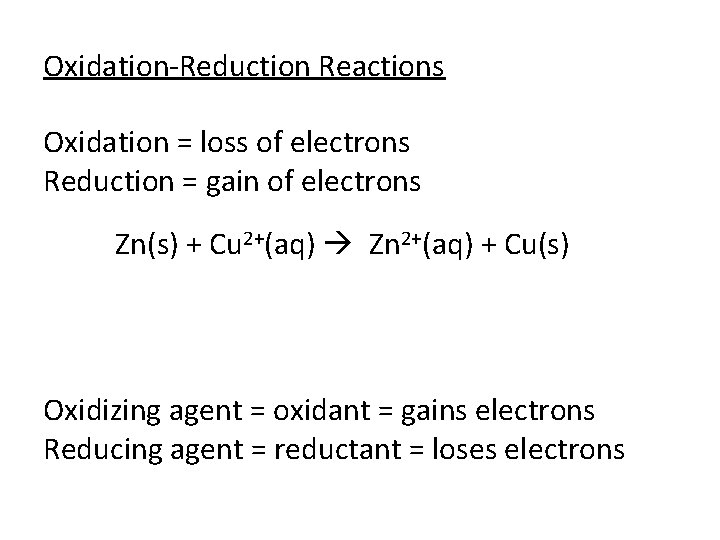
Oxidation-Reduction Reactions Oxidation = loss of electrons Reduction = gain of electrons Zn(s) + Cu 2+(aq) Zn 2+(aq) + Cu(s) Oxidizing agent = oxidant = gains electrons Reducing agent = reductant = loses electrons
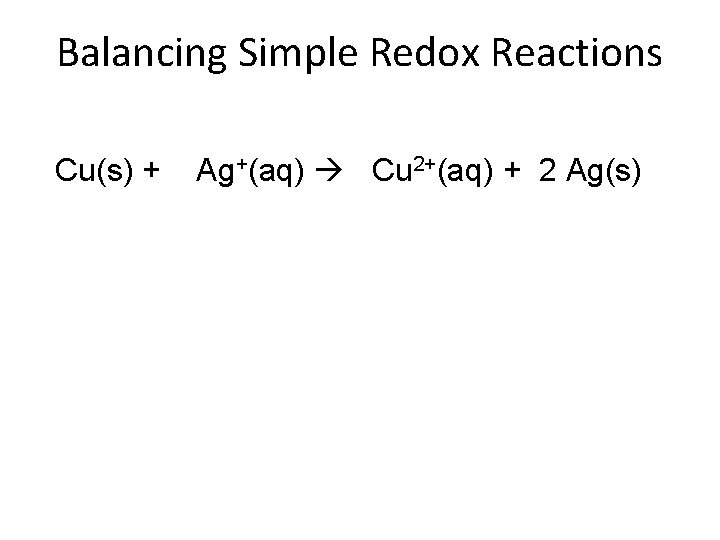
Balancing Simple Redox Reactions Cu(s) + Ag+(aq) Cu 2+(aq) + 2 Ag(s)
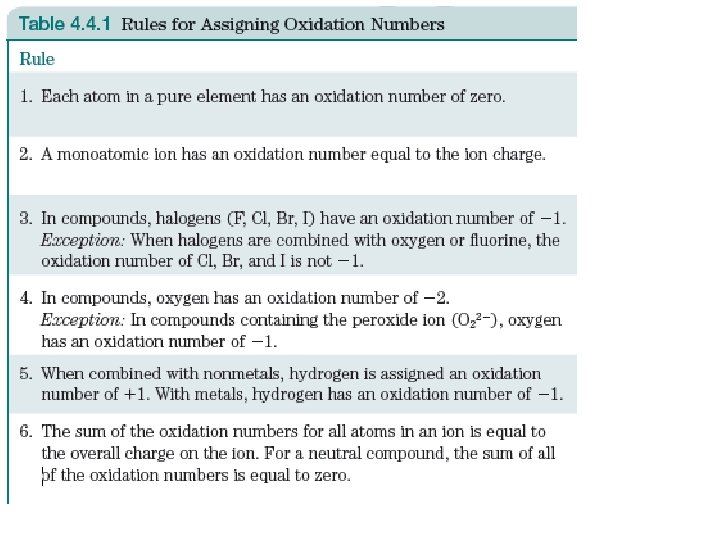
Oxidation Numbers Electron tracking method. Oxidation numbers do not imply charges.
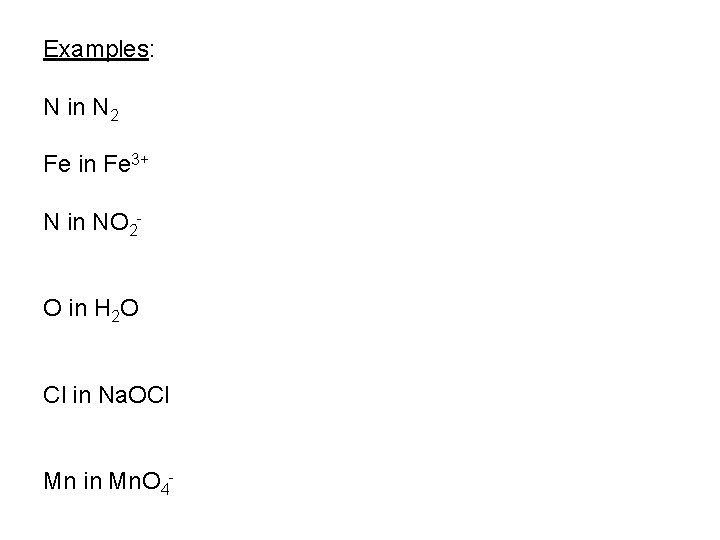
Examples: N in N 2 Fe in Fe 3+ N in NO 2 O in H 2 O Cl in Na. OCl Mn in Mn. O 4 -
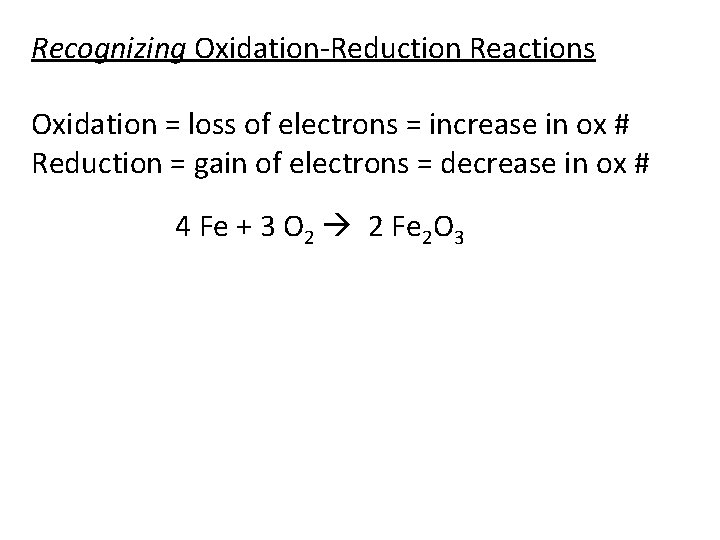
Recognizing Oxidation-Reduction Reactions Oxidation = loss of electrons = increase in ox # Reduction = gain of electrons = decrease in ox # 4 Fe + 3 O 2 2 Fe 2 O 3
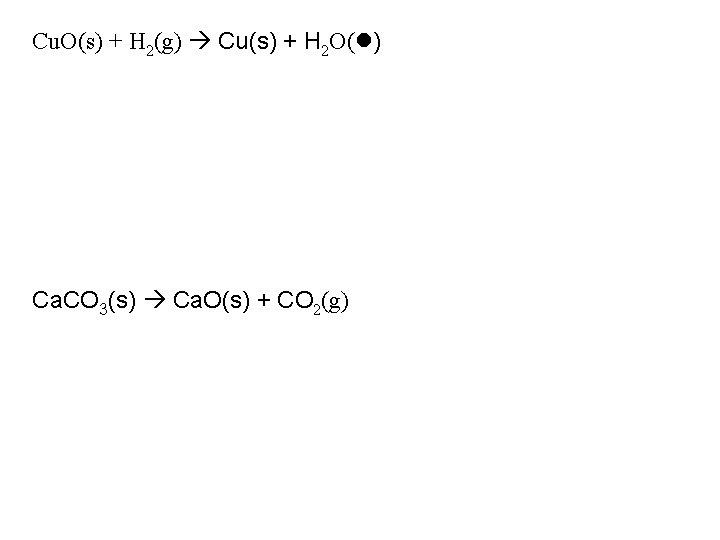
Cu. O(s) + H 2(g) Cu(s) + H 2 O( ) Ca. CO 3(s) Ca. O(s) + CO 2(g)
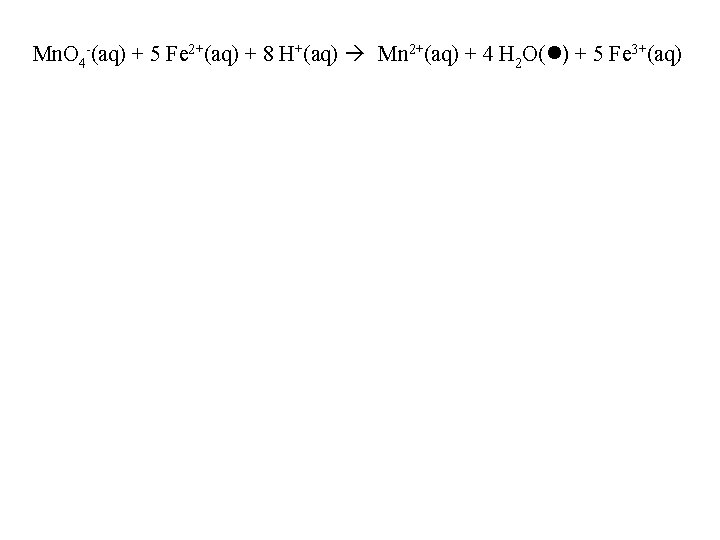
Mn. O 4 -(aq) + 5 Fe 2+(aq) + 8 H+(aq) Mn 2+(aq) + 4 H 2 O( ) + 5 Fe 3+(aq)
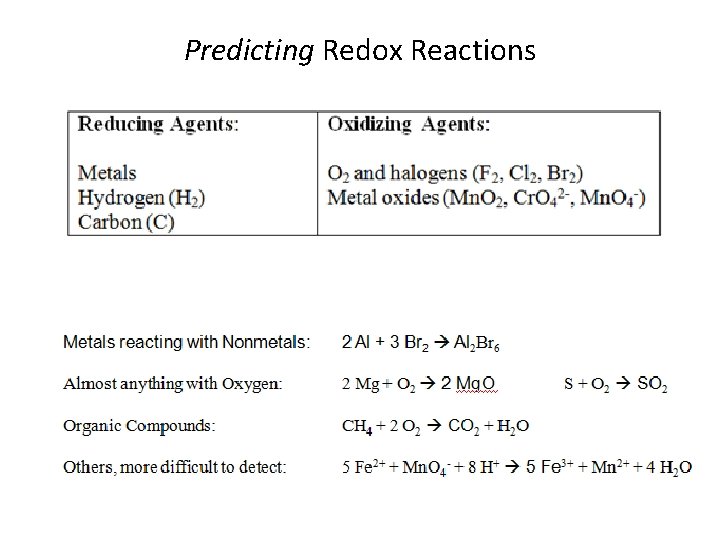
Predicting Redox Reactions
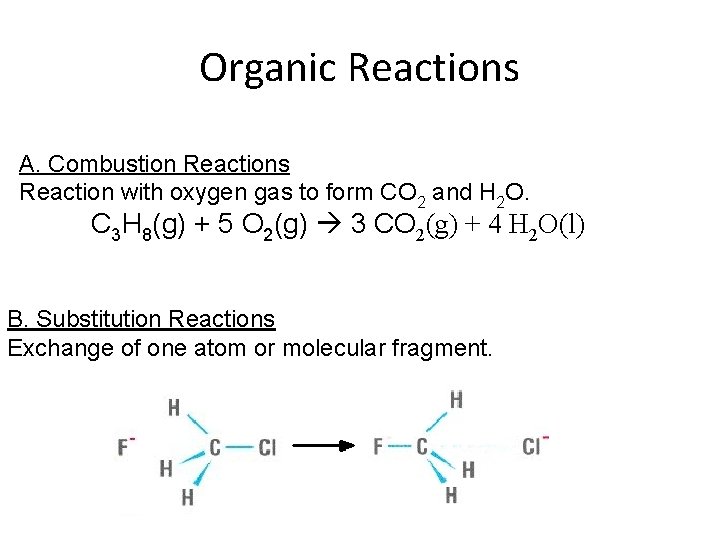
Organic Reactions A. Combustion Reactions Reaction with oxygen gas to form CO 2 and H 2 O. C 3 H 8(g) + 5 O 2(g) 3 CO 2(g) + 4 H 2 O(l) B. Substitution Reactions Exchange of one atom or molecular fragment.
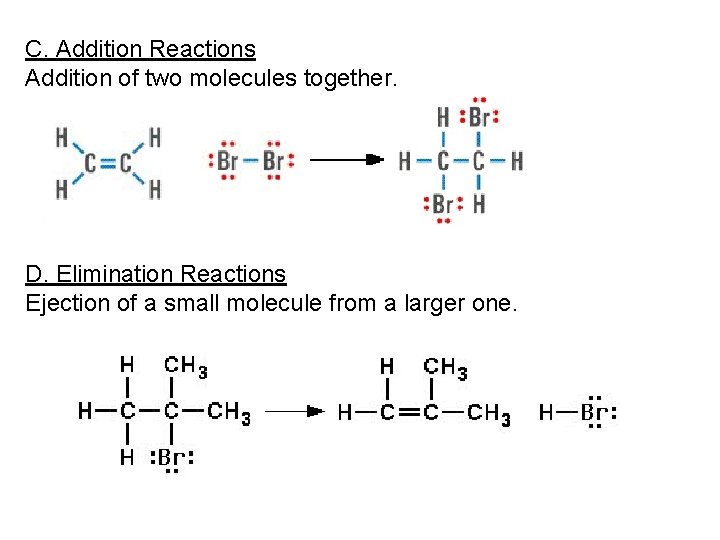
C. Addition Reactions Addition of two molecules together. D. Elimination Reactions Ejection of a small molecule from a larger one.
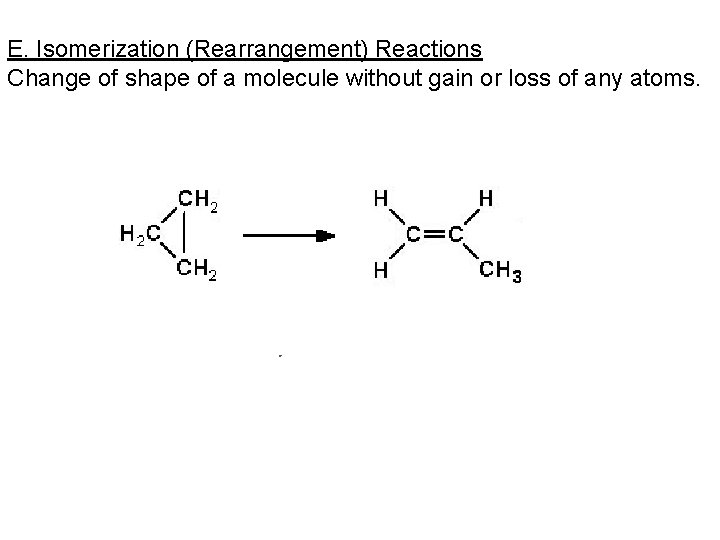
E. Isomerization (Rearrangement) Reactions Change of shape of a molecule without gain or loss of any atoms.