
Section 3 Launching the Business Managing Cash Flow
Section 3: Launching the Business Managing Cash Flow Copyright © 2016 Pearson Education, Inc. 12 -2
Learning Objectives v Explain the importance of cash management to a small company’s success. v Differentiate between cash and profits. v Understand the five steps in creating a cash budget. v Describe fundamental principles involved in managing the “big three” of cash management: accounts receivable, accounts payable, and inventory. v Explain the techniques for avoiding a cash crunch in a small company. Copyright © 2016 Pearson Education, Inc. 12 - 2
The Importance of Cash v “Everything is about cash – raising it, conserving it, collecting it. ” ~ Guy Kawasaki v Common cause of business failure: Cash crisis! v It is possible for a business to earn a profit and still go out of business by running out of cash. v. Valley of death Copyright © 2016 Pearson Education, Inc. 12 - 3
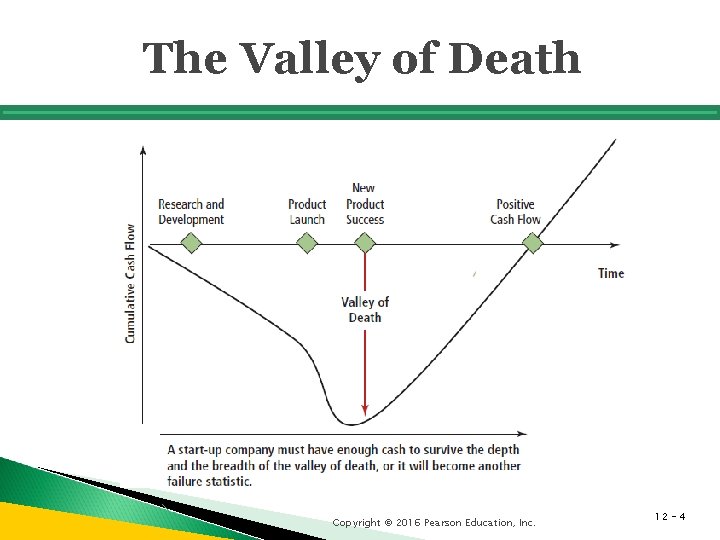
The Valley of Death Copyright © 2016 Pearson Education, Inc. 12 - 4
Cash Management v American Express OPEN Small Business Monitor study: v 52% of small business owners experience problems with cash flow. v. Their biggest cash flow concern is the ability to pay bills on time. Copyright © 2016 Pearson Education, Inc. 12 - 5
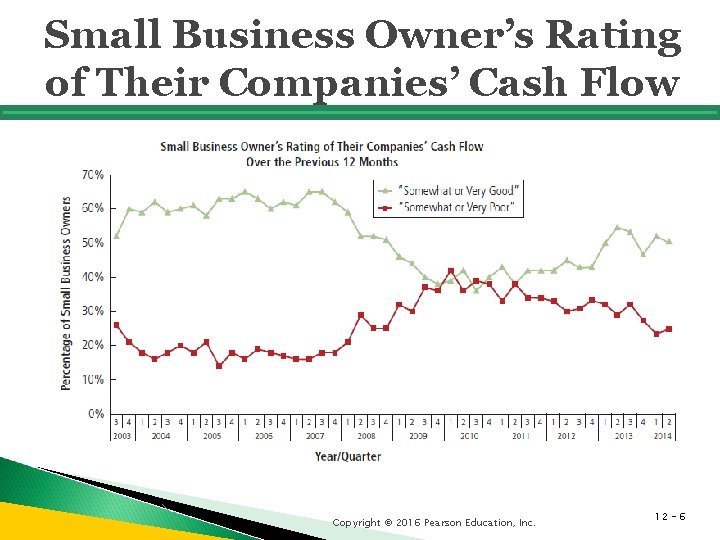
Small Business Owner’s Rating of Their Companies’ Cash Flow Copyright © 2016 Pearson Education, Inc. 12 - 6
Cash Management v. Cash management: v. The process of forecasting, collecting, disbursing, investing, and planning for the cash a company needs to operate smoothly. v. Young and growing companies are “cash sponges. ” v. Know your company’s cash flow cycle. Copyright © 2016 Pearson Education, Inc. 12 - 7
Cash and Profits v Cash ≠ profits. v Profit is the difference between a company’s total revenue and total expenses. v Cash is the money that is free and readily available to use. v Cash flow measures a company’s liquidity and its ability to pay it bills. Copyright © 2016 Pearson Education, Inc. 12 - 8
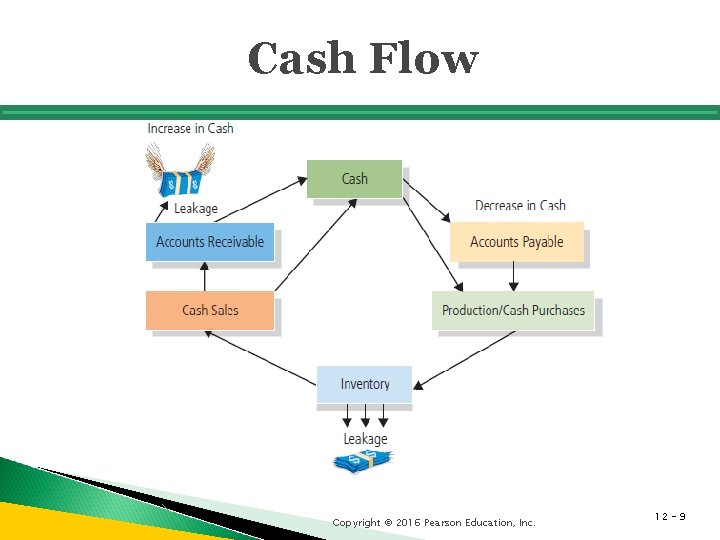
Cash Flow Copyright © 2016 Pearson Education, Inc. 12 - 9
The Cash Budget v. Cash budget: v. A “cash map” that shows the amount and the timing of a firm's cash receipts and cash disbursements over time. v. Predicts the amount of cash a company will need to operate smoothly. v. Helps to visualize a company’s cash receipts and cash disbursements and the resulting cash balance. Copyright © 2016 Pearson Education, Inc. 12 - 10
Preparing a Cash Budget v. Five steps: 1. Determining an adequate minimum balance. 2. Forecasting sales. 3. Forecasting cash receipts. 4. Forecasting cash disbursements. 5. Estimating the end-of-the-month cash balance. Copyright © 2016 Pearson Education, Inc. 12 - 11
Determine an Adequate Minimum Cash Balance v. Step 1: v The most reliable method of deciding the right minimum cash balance is based on past experience. Copyright © 2016 Pearson Education, Inc. 12 - 12
Forecast Sales v. Step 2: v. The heart of the cash budget. v. Sales are ultimately transformed into cash receipts and cash disbursements. v. Cash forecast is only as accurate as the sales forecast from which it is derived. Copyright © 2016 Pearson Education, Inc. 12 - 13
Forecast Sales (continued) v “Lumpy” or seasonal sales patterns are common. v 15% to 18% of wine and spirits shops’ annual sales occur between December 15 and 31. v 40% of toy sales take place in last 6 weeks of the year. v Prepare three sales forecasts: v Pessimistic v Optimistic v Most Likely Copyright © 2016 Pearson Education, Inc. 12 - 14
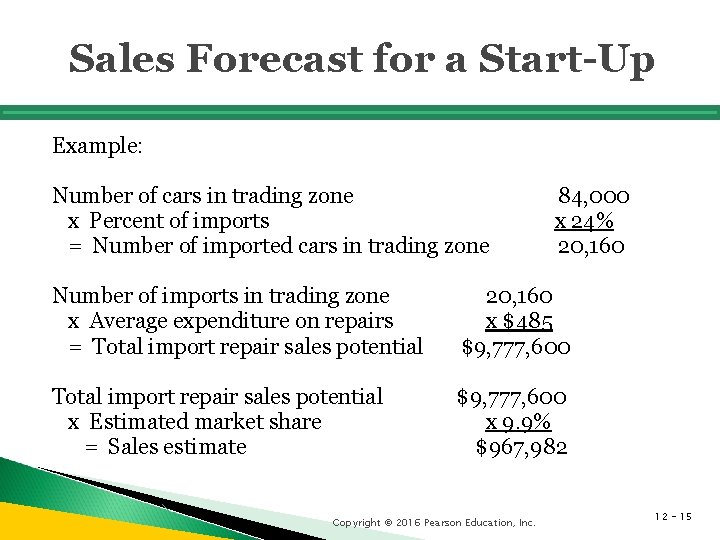
Sales Forecast for a Start-Up Example: Number of cars in trading zone x Percent of imports = Number of imported cars in trading zone 84, 000 x 24% 20, 160 Number of imports in trading zone x Average expenditure on repairs = Total import repair sales potential 20, 160 x $485 $9, 777, 600 Total import repair sales potential x Estimated market share = Sales estimate $9, 777, 600 x 9. 9% $967, 982 Copyright © 2016 Pearson Education, Inc. 12 - 15
Forecast Cash Receipts v. Step 3: v. Record all cash receipts when the cash is actually received (i. e. the cash method of accounting). v. Determine the collection pattern for credit sales; then add cash sales. v. Monitor closely: Slow and non-payers. Copyright © 2016 Pearson Education, Inc. 12 - 16
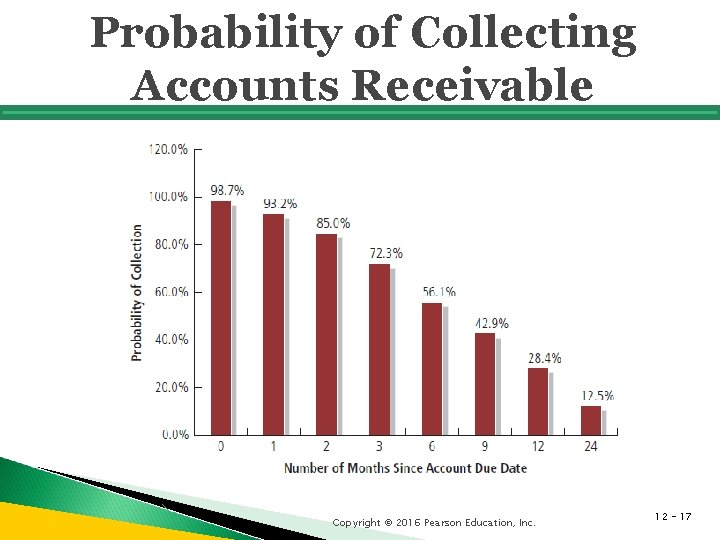
Probability of Collecting Accounts Receivable Copyright © 2016 Pearson Education, Inc. 12 - 17
Forecast Cash Disbursements v. Step 4: v Record disbursements when you expect to make them. v Start with those disbursements that are fixed amounts due on certain dates. v Review the business checkbook to ensure accurate estimates. v Add a cushion to the estimate to account for “Murphy’s Law. ” v Don’t know where to begin? Try making a daily list of the items that generate cash and those that consume it. Copyright © 2016 Pearson Education, Inc. 12 - 18
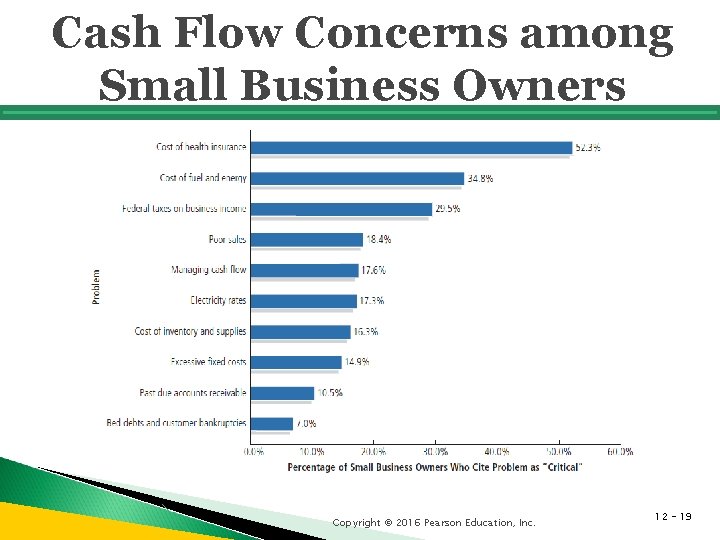
Cash Flow Concerns among Small Business Owners Copyright © 2016 Pearson Education, Inc. 12 - 19
Estimate End-of-Month Balance v. Step 5: v. Take Beginning Cash Balance. . . v. Add Cash Receipts. . . v. Subtract Cash Disbursements v. Result Is Cash Surplus or Cash Shortage (Repay or Borrow? ) Copyright © 2016 Pearson Education, Inc. 12 - 20
Benefits of Cash Management v Increase amount and speed of cash flowing into the company v Reduce the amount and speed of cash flowing out v Make the most efficient use of available cash v Take advantage of money-saving opportunities such as cash discounts Copyright © 2016 Pearson Education, Inc. 12 - 21
Benefits of Cash Management (continued) v Finance seasonal business needs v Develop a sound borrowing and repayment program v Impress lenders and investors v Provide funds for expansion v Plan for investing surplus cash Copyright © 2016 Pearson Education, Inc. 12 - 22
The “Big Three” of Cash Management v. Big Three: 1. Accounts receivable 2. Accounts payable 3. Inventory v. The Big 3 interact to create a company’s cash conversion cycle: v The length of time required to convert inventory and accounts payable into sales and accounts receivable and finally back into cash. Copyright © 2016 Pearson Education, Inc. 12 - 23
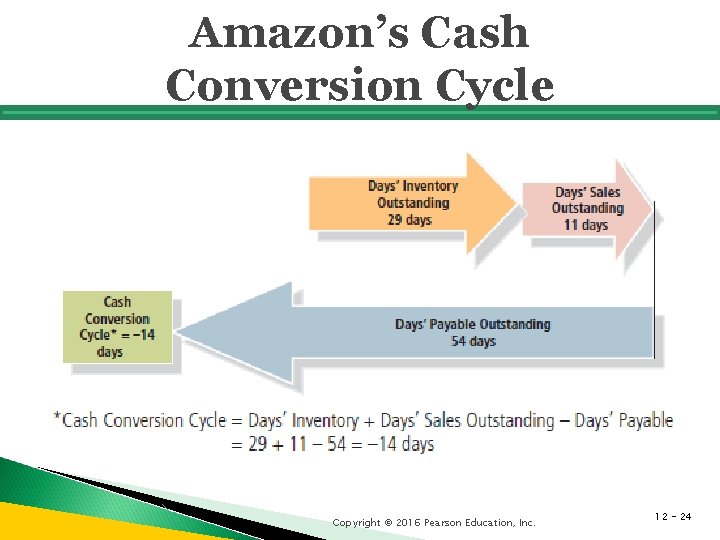
Amazon’s Cash Conversion Cycle Copyright © 2016 Pearson Education, Inc. 12 - 24
Accounts Receivable v About 90% of industrial and wholesales are on credit, and 40% of retail sales are on account. v Survey of small companies: 74% have accounts receivable outstanding for 60 or more days. v Remember: “A sale is not a sale until you collect the money. ” v Accounts receivable goal: Collect your company’s cash as fast as you can. Copyright © 2016 Pearson Education, Inc. 12 - 25
Establish a Credit and Collection Policy v. Screen credit customers carefully. v. Establish a firm credit-granting policy. v. Send invoices promptly. v. Cycle billing v. When an account becomes overdue, take action immediately. Copyright © 2016 Pearson Education, Inc. 12 - 26
Accelerating Accounts Receivable v Ensure that invoices are accurate and timely. v Include a description of the goods or services purchased. v Ensure that invoices match purchase orders or contracts. v Highlight the balance dues and due date. v Include contact information in case customers have questions. v Use a security agreement. Copyright © 2016 Pearson Education, Inc. 12 - 27
Accounts Payable v Stretch out payment times as long as possible without damaging your credit rating. v Verify all invoices before paying them. v Negotiate the best possible terms with your suppliers. v Be honest with creditors; avoid the “the check is in the mail” syndrome. v Schedule controllable cash disbursements to come due at different times. Copyright © 2016 Pearson Education, Inc. 12 - 28
Inventory v Monitor inventory closely; it can drain a company’s cash. v Avoid inventory “overbuying. ” v. It ties up valuable cash at a zero rate of return. v Arrange for inventory deliveries at the latest possible date. v Take advantage of discounts: v. Quantity discounts v. Cash discounts Copyright © 2016 Pearson Education, Inc. 12 - 29
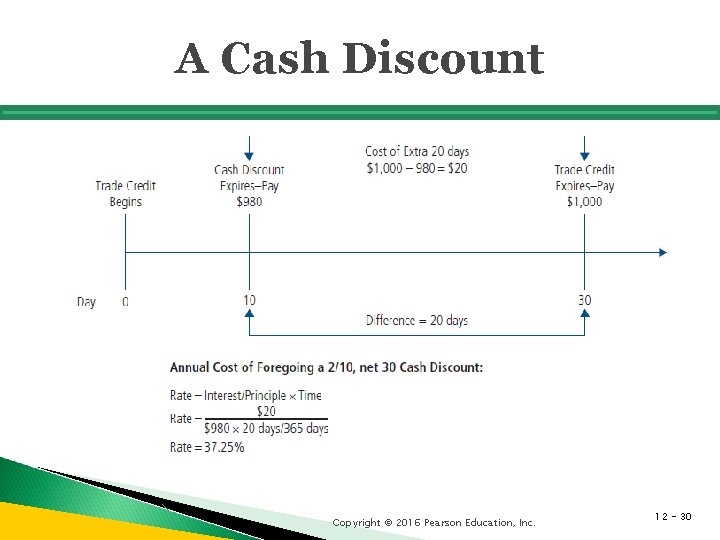
A Cash Discount Copyright © 2016 Pearson Education, Inc. 12 - 30
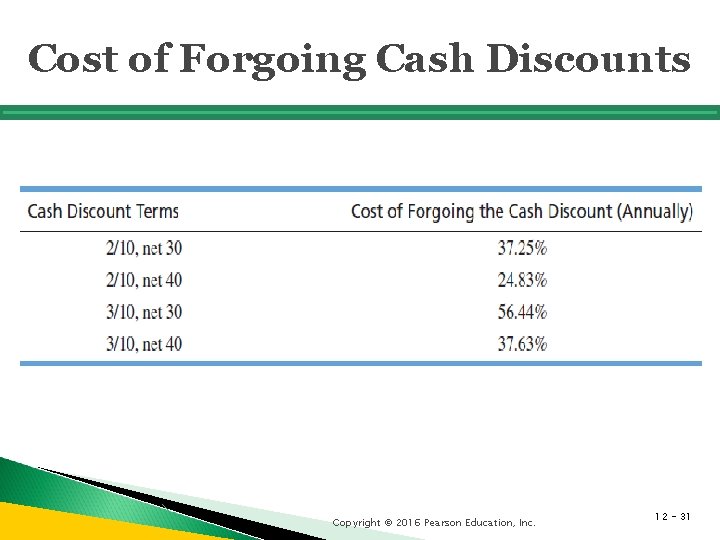
Cost of Forgoing Cash Discounts Copyright © 2016 Pearson Education, Inc. 12 - 31
Avoiding the Cash Crunch v. Barter v Consider bartering, exchanging goods and services for other goods and services, to conserve cash. v More than 500 barter exchanges operate across the United States. Copyright © 2016 Pearson Education, Inc. 12 - 32
Avoiding the Cash Crunch (continued) v. Trim overhead costs: v. Ask for discounts and “freebies” v. Conduct periodic expense audits v. Lease rather than buy v. Operating lease v. Capital lease v. Avoid nonessential cash outlays v. Buy used or reconditioned equipment v. Hire part-time employees and freelancers Copyright © 2016 Pearson Education, Inc. 12 - 33
Avoiding the Cash Crunch (continued) v Outsource v Use e-mail rather than mail v Use credit cards for small purchases v Negotiate fixed loan payments to coincide with your company’s cash flow v Establish an internal security and control system v Develop a system to battle check fraud v Change shipping terms Copyright © 2016 Pearson Education, Inc. 12 - 34
Avoiding the Cash Crunch (continued) v. Start selling gift cards v. Switch to zero-based budgeting v. Be on the lookout for employee theft v. Keep your business plan current v. Build a cash cushion v. Invest surplus cash v. Money market account v. Zero-balance account Copyright © 2016 Pearson Education, Inc. 12 - 35
Conclusion v“Cash is King” v. Cash and profits are not the same. v. Entrepreneurial success means operating a company “lean and mean. ” v. Trim wasteful expenditures. v. Invest surplus funds. v. Plan and manage cash flow. Copyright © 2016 Pearson Education, Inc. 12 - 36
- Slides: 36