
Section 3 Chemical Reactions and Energy Chemical ReactionsEnergy
- Slides: 13
Section 3 Chemical Reactions and Energy Chemical Reactions—Energy Exchanges • A dynamic explosion is an example of a rapid chemical reaction. • Most chemical reactions proceed more slowly, but all chemical reactions release or absorb energy.
Section 3 Chemical Reactions and Energy Chemical Reactions—Energy Exchanges • This energy can take many forms, such as heat, light, sound, or electricity. • Chemical bonds are the source of this energy.
Section 3 Chemical Reactions and Energy Chemical Reactions—Energy Exchanges • When most chemical reactions take place, some chemical bonds in the reactants are broken, which requires energy. • In order for products to be produced, new bonds must form. Bond formation releases energy.
Section 3 Chemical Reactions and Energy More Energy Out • Chemical reactions that release energy are called exergonic (ek sur GAH nihk) reactions. • In these reactions less energy is required to break the original bonds than is released when new bonds form.
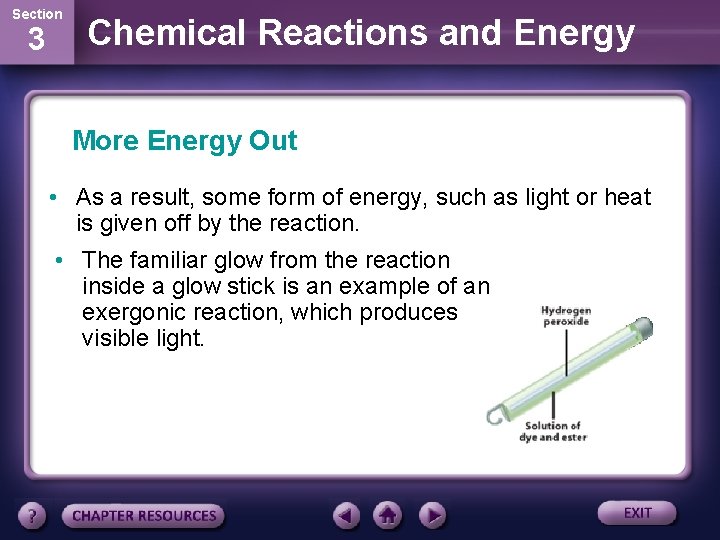
Section 3 Chemical Reactions and Energy More Energy Out • As a result, some form of energy, such as light or heat is given off by the reaction. • The familiar glow from the reaction inside a glow stick is an example of an exergonic reaction, which produces visible light.
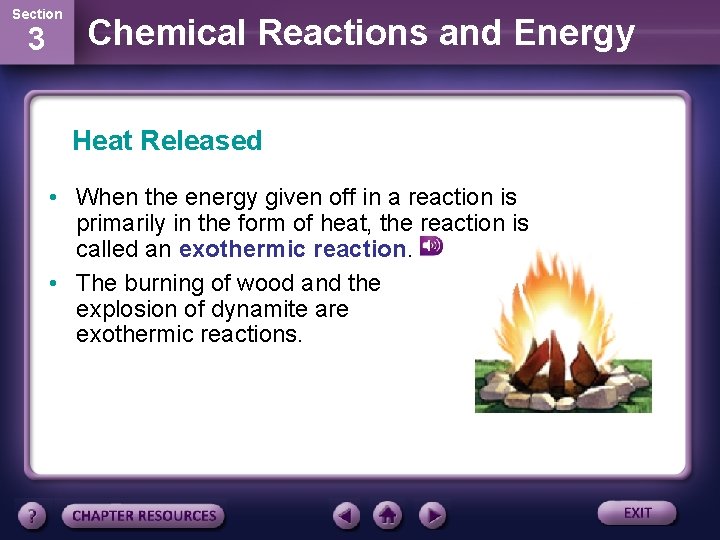
Section 3 Chemical Reactions and Energy Heat Released • When the energy given off in a reaction is primarily in the form of heat, the reaction is called an exothermic reaction. • The burning of wood and the explosion of dynamite are exothermic reactions.
Section 3 Chemical Reactions and Energy More Energy In • Sometimes a chemical reaction requires more energy to break bonds than is released when new ones are formed. • These reactions are called endergonic reactions. • The energy absorbed can be in the form of light, heat or electricity.
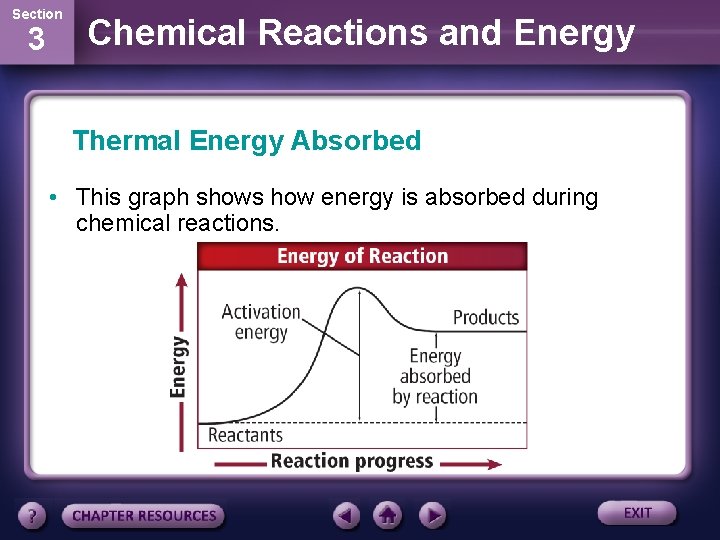
Section 3 Chemical Reactions and Energy Thermal Energy Absorbed • When the energy needed is in the form of heat, the reaction is called an endothermic reaction. • Some reactions are so endothermic that they can cause water to freeze. • Adding Epsom salt to water will cause the solution to become cold. The dissolving Epson salt absorbs thermal energy.
Section 3 Chemical Reactions and Energy Thermal Energy Absorbed • This graph shows how energy is absorbed during chemical reactions.
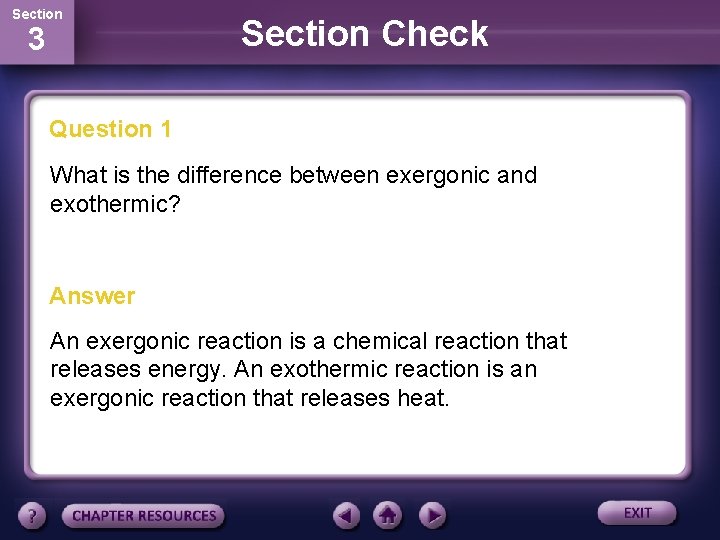
Section 3 Section Check Question 1 What is the difference between exergonic and exothermic? Answer An exergonic reaction is a chemical reaction that releases energy. An exothermic reaction is an exergonic reaction that releases heat.
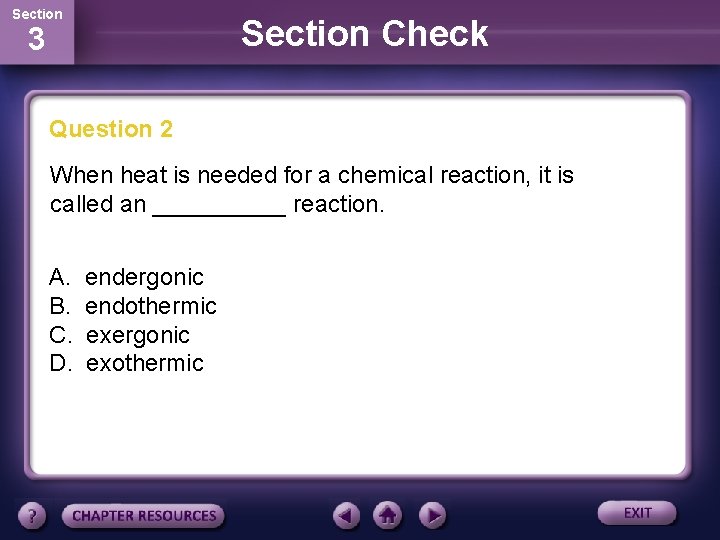
Section Check 3 Question 2 When heat is needed for a chemical reaction, it is called an _____ reaction. A. B. C. D. endergonic endothermic exergonic exothermic
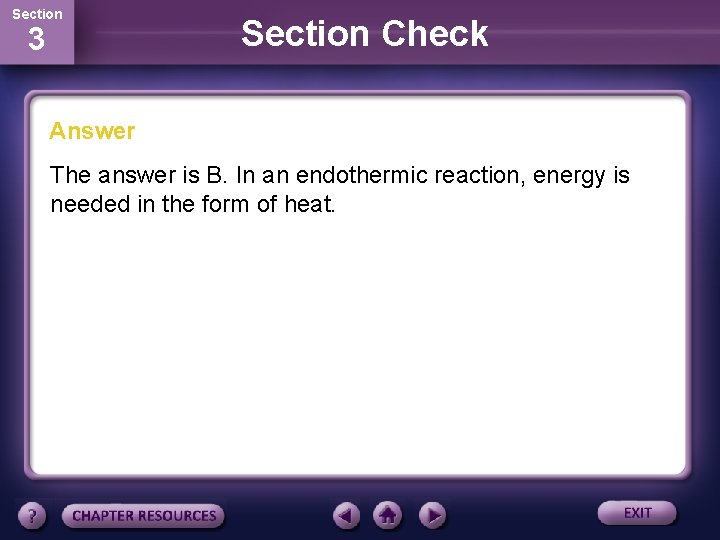
Section 3 Section Check Answer The answer is B. In an endothermic reaction, energy is needed in the form of heat.
Section 3 Section Check Question 3 When bonds are formed, energy is _____. Answer released