
Section 3 8 DERIVATIVES OF THE INVERSE TRIGONOMETRIC

- Slides: 16
Section 3. 8 DERIVATIVES OF THE INVERSE TRIGONOMETRIC FUNCTIONS
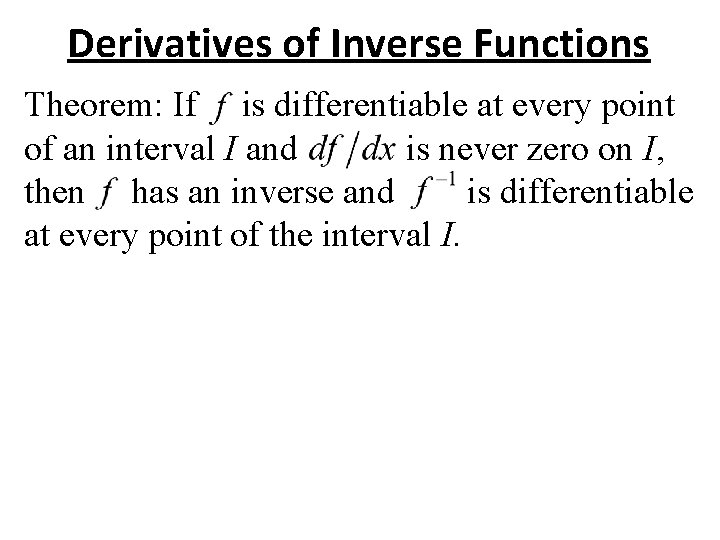
Derivatives of Inverse Functions Theorem: If is differentiable at every point of an interval I and is never zero on I, then has an inverse and is differentiable at every point of the interval I.
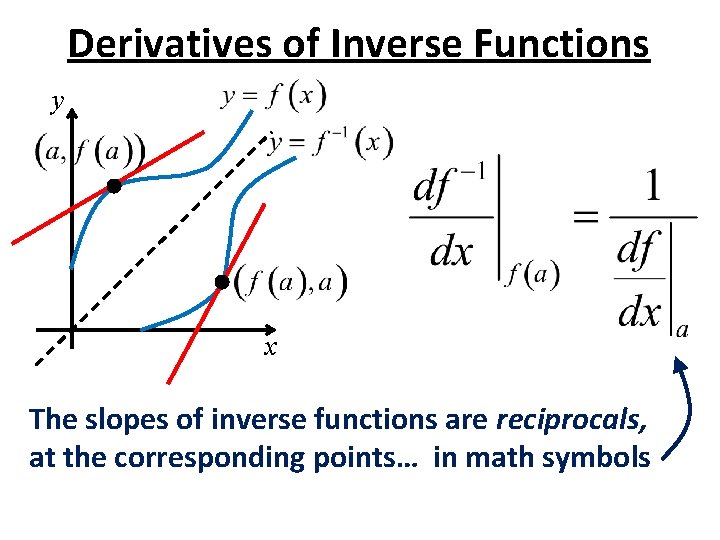
Derivatives of Inverse Functions y x The slopes of inverse functions are reciprocals, at the corresponding points… in math symbols
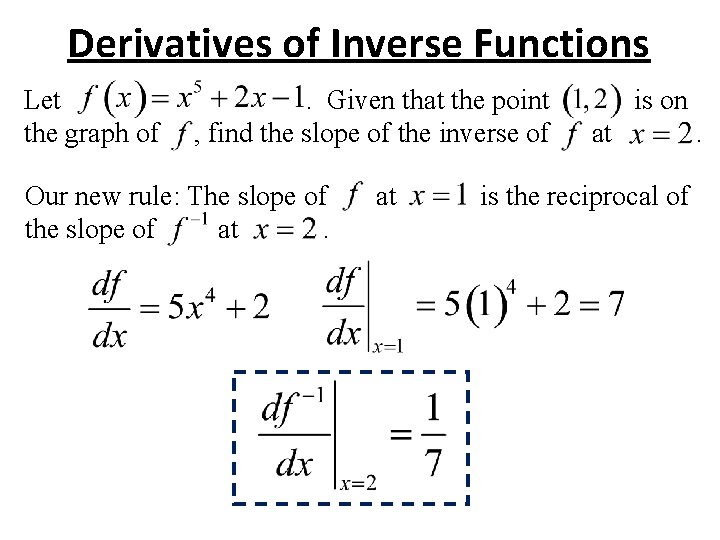
Derivatives of Inverse Functions Let the graph of . Given that the point , find the slope of the inverse of Our new rule: The slope of the slope of at. at is on at is the reciprocal of .
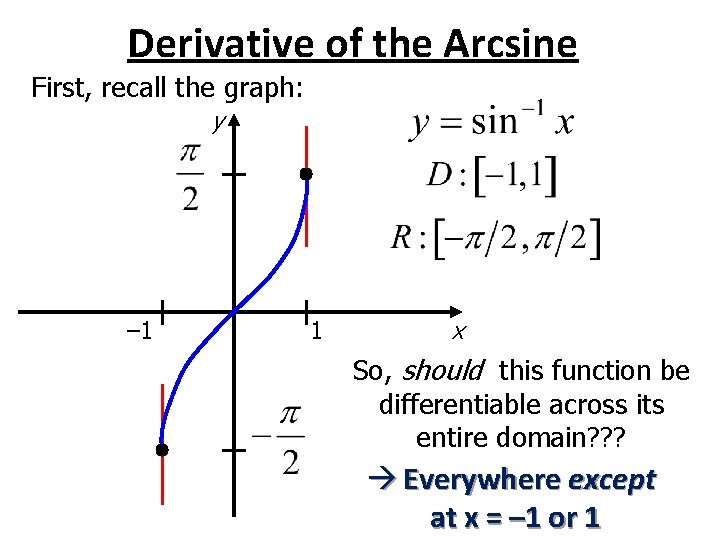
Derivative of the Arcsine First, recall the graph: y – 1 1 x So, should this function be differentiable across its entire domain? ? ? à Everywhere except at x = – 1 or 1
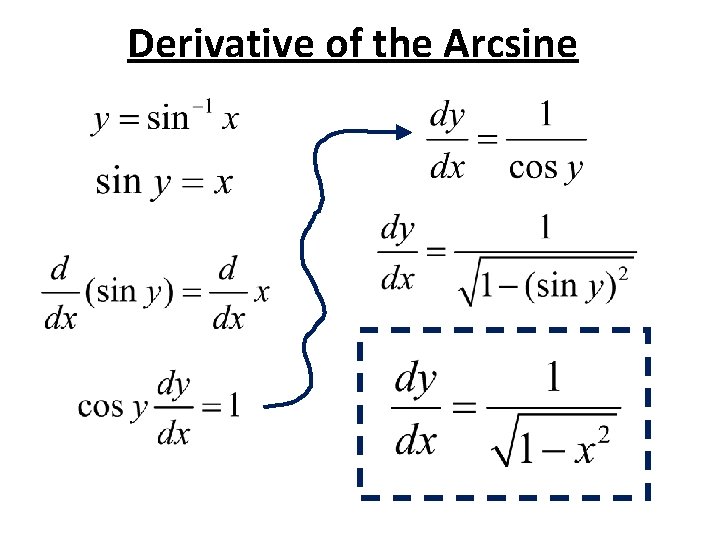
Derivative of the Arcsine
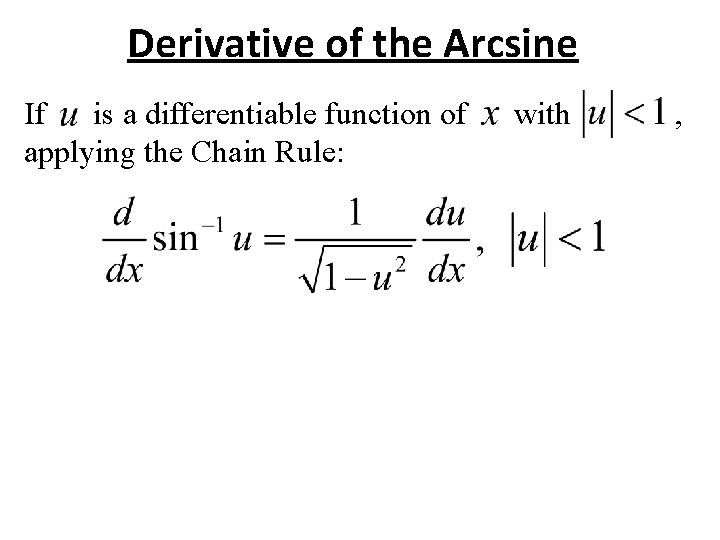
Derivative of the Arcsine If is a differentiable function of applying the Chain Rule: with ,
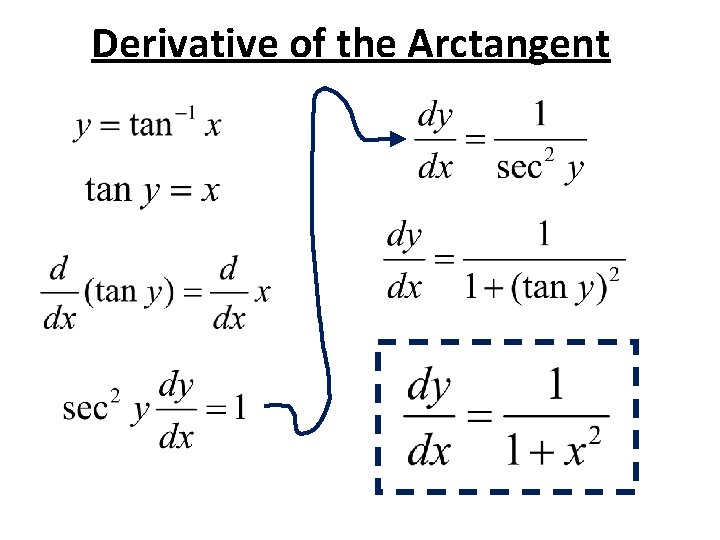
Derivative of the Arctangent
Derivative of the Arctangent If is a differentiable function of the Chain Rule form: , again using
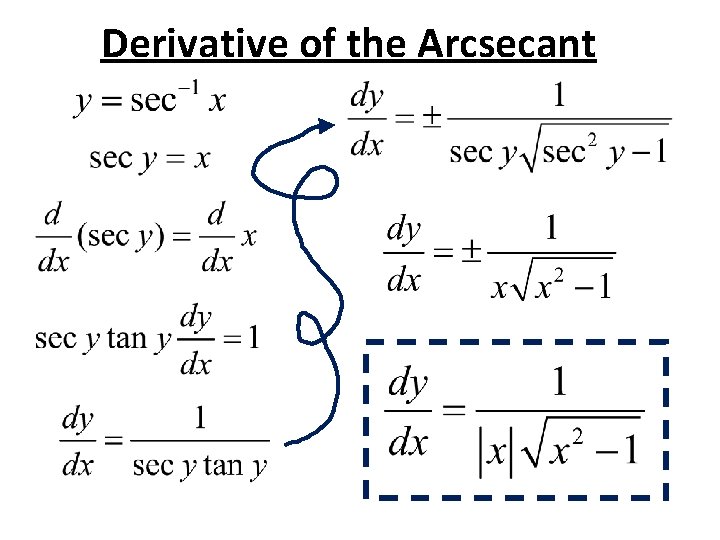
Derivative of the Arcsecant
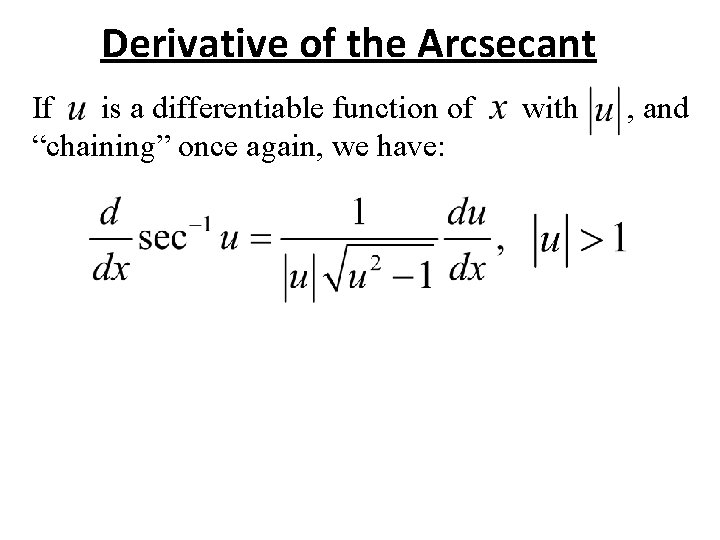
Derivative of the Arcsecant If is a differentiable function of “chaining” once again, we have: with , and
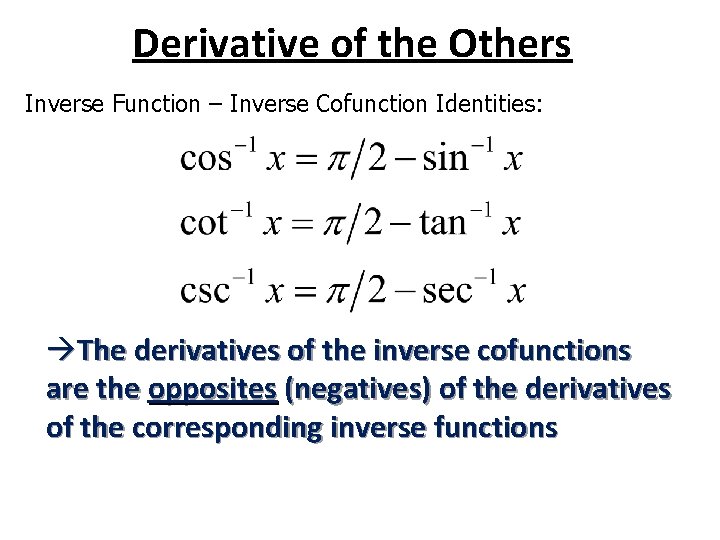
Derivative of the Others Inverse Function – Inverse Cofunction Identities: àThe derivatives of the inverse cofunctions are the opposites (negatives) of the derivatives of the corresponding inverse functions
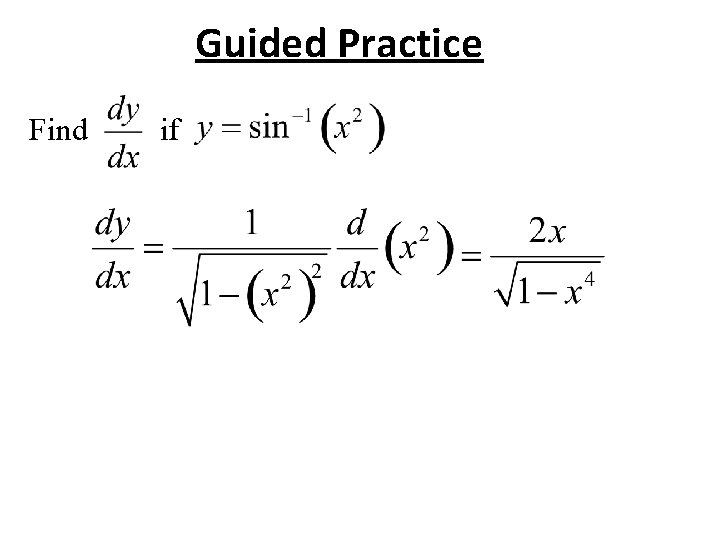
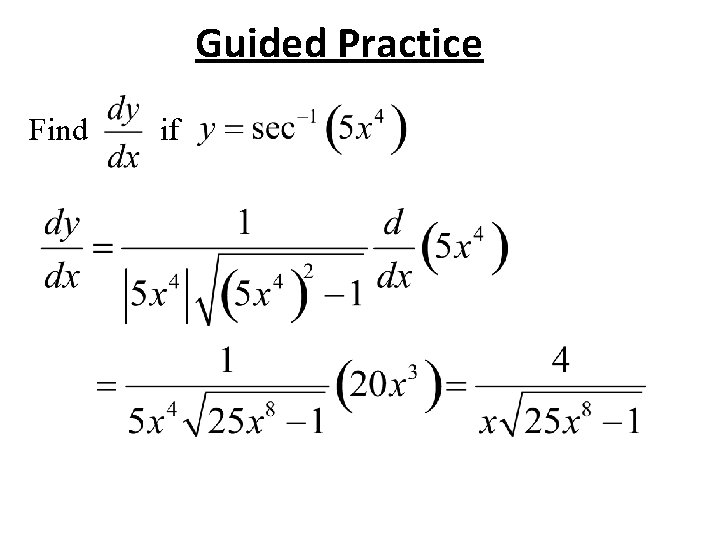
Guided Practice Find if
Guided Practice Find if
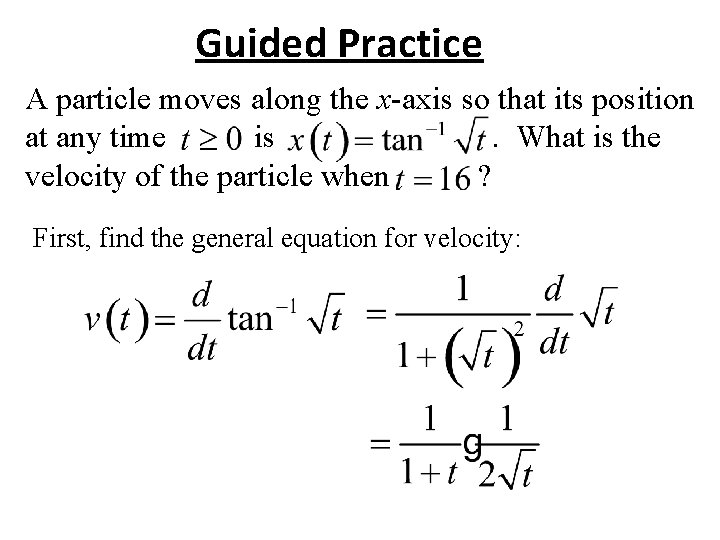
Guided Practice A particle moves along the x-axis so that its position at any time is. What is the velocity of the particle when ? First, find the general equation for velocity:
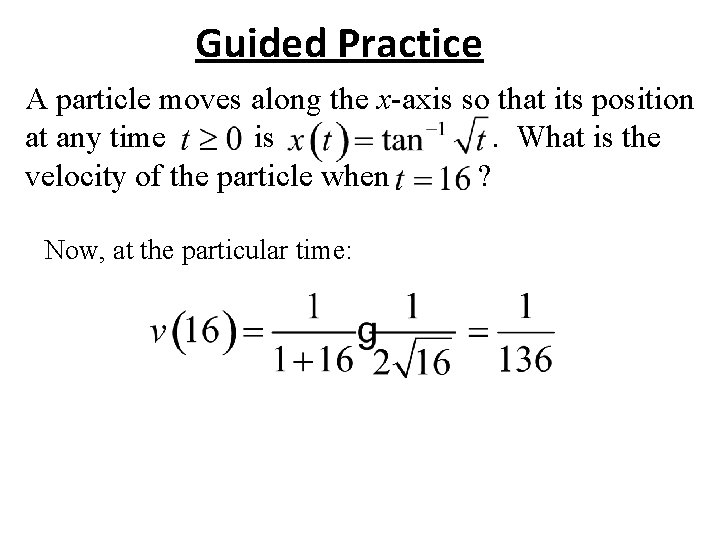
Guided Practice A particle moves along the x-axis so that its position at any time is. What is the velocity of the particle when ? Now, at the particular time: