
Section 3 3 Atomic Structure Objectives 1 To
Section 3. 3 Atomic Structure Objectives 1. To learn about the internal parts of an atom 2. To understand Rutherford’s experiment 3. To describe some important features of subatomic particles 4. To learn about the terms isotope, atomic number, and mass number 5. To understand the use of the symbol to describe a given atom
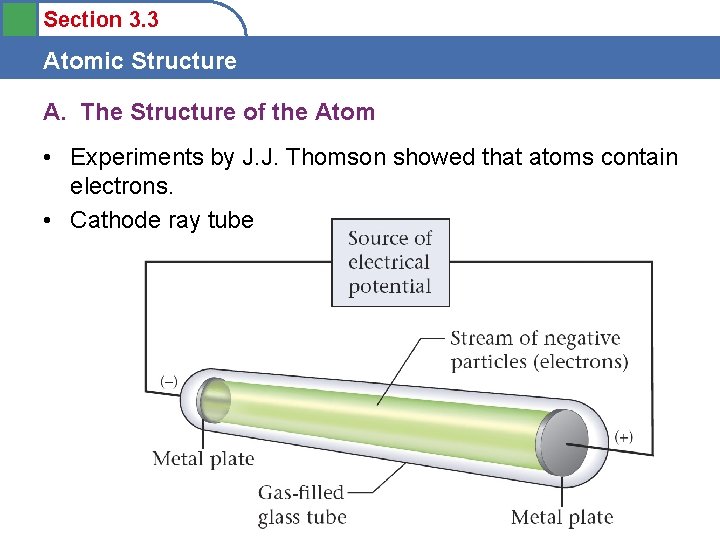
Section 3. 3 Atomic Structure A. The Structure of the Atom • Experiments by J. J. Thomson showed that atoms contain electrons. • Cathode ray tube

Section 3. 3 Atomic Structure A. The Structure of the Atom The Plum Pudding Model
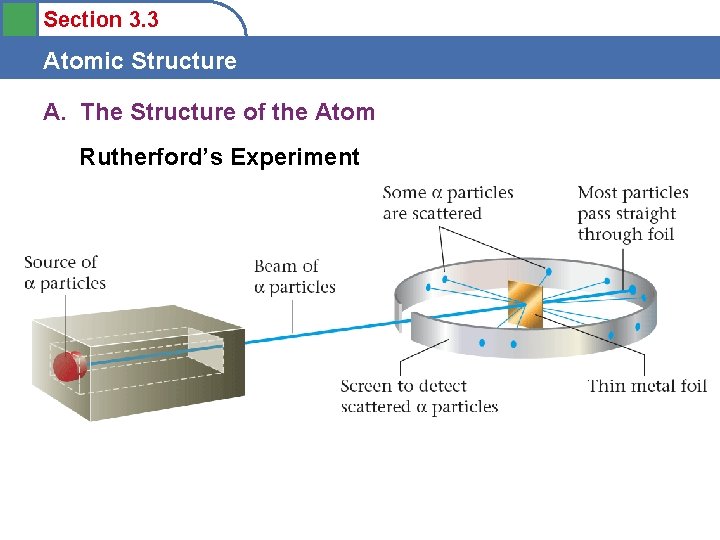
Section 3. 3 Atomic Structure A. The Structure of the Atom Rutherford’s Experiment
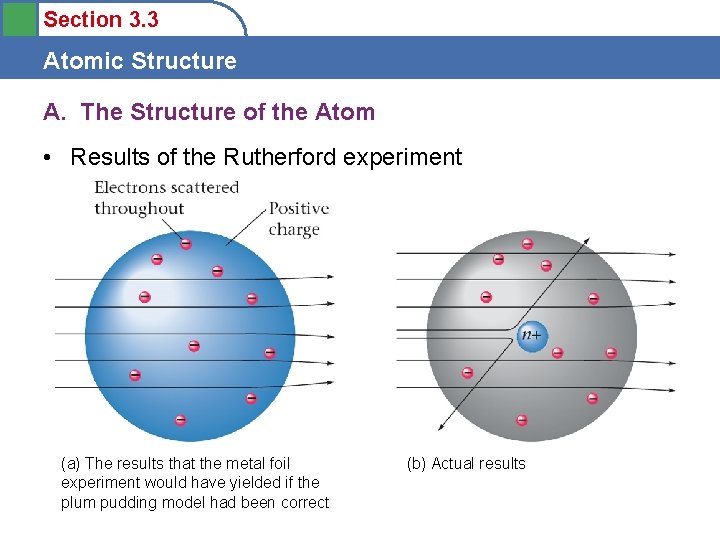
Section 3. 3 Atomic Structure A. The Structure of the Atom • Results of the Rutherford experiment (a) The results that the metal foil experiment would have yielded if the plum pudding model had been correct (b) Actual results
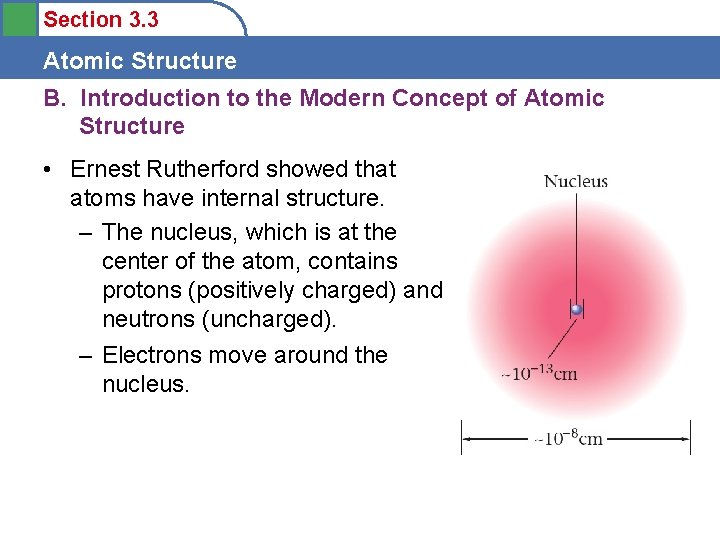
Section 3. 3 Atomic Structure B. Introduction to the Modern Concept of Atomic Structure • Ernest Rutherford showed that atoms have internal structure. – The nucleus, which is at the center of the atom, contains protons (positively charged) and neutrons (uncharged). – Electrons move around the nucleus.
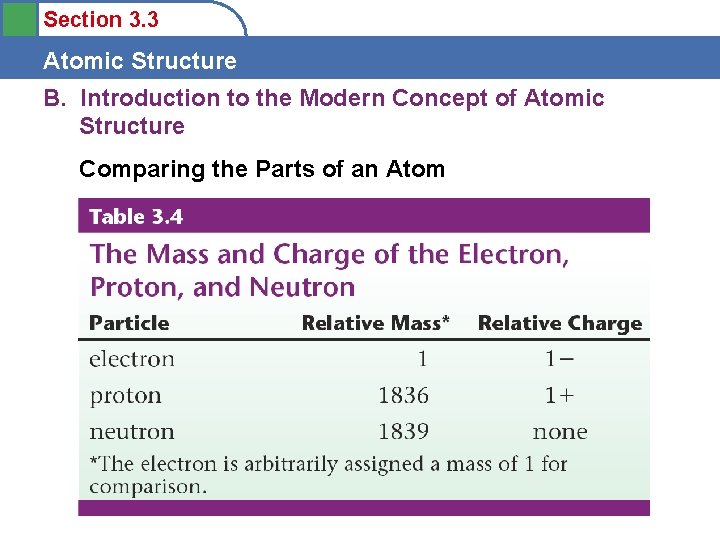
Section 3. 3 Atomic Structure B. Introduction to the Modern Concept of Atomic Structure Comparing the Parts of an Atom
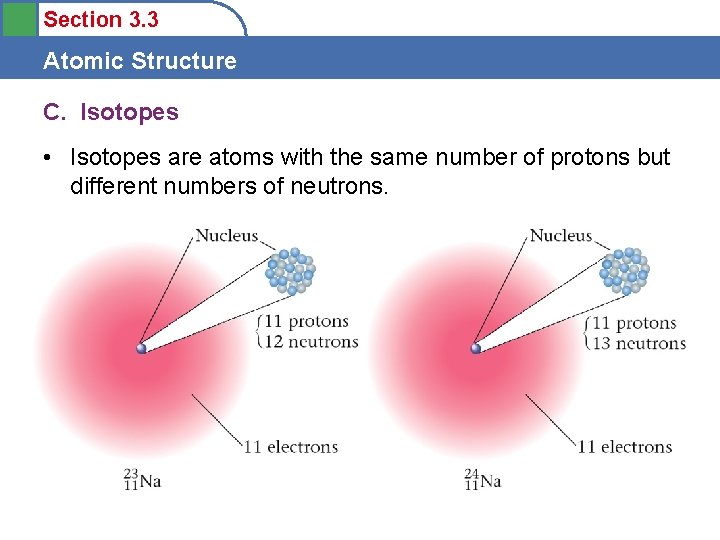
Section 3. 3 Atomic Structure C. Isotopes • Isotopes are atoms with the same number of protons but different numbers of neutrons.
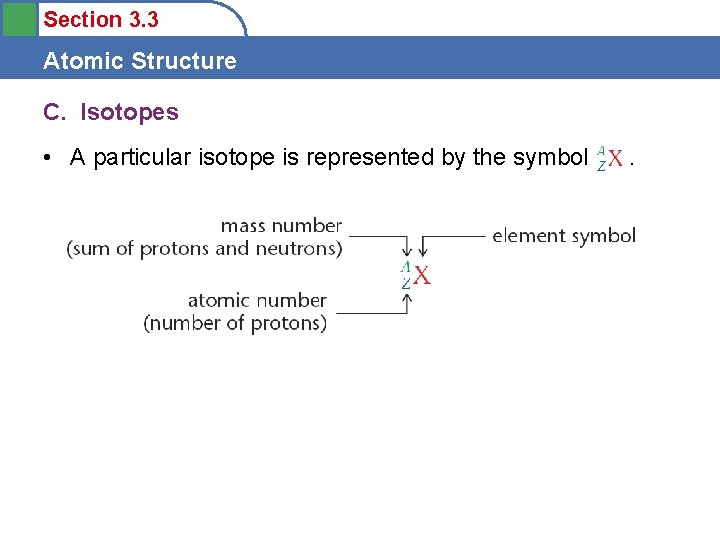
Section 3. 3 Atomic Structure C. Isotopes • A particular isotope is represented by the symbol .
- Slides: 9