
Section 21 2 Carbohydrates Nucleic Acids and Lipids
Section 21. 2 Carbohydrates, Nucleic Acids, and Lipids Objectives 1. To understand the fundamental properties of carbohydrates 2. To understand nucleic acid structures 3. To learn the four classes of lipids
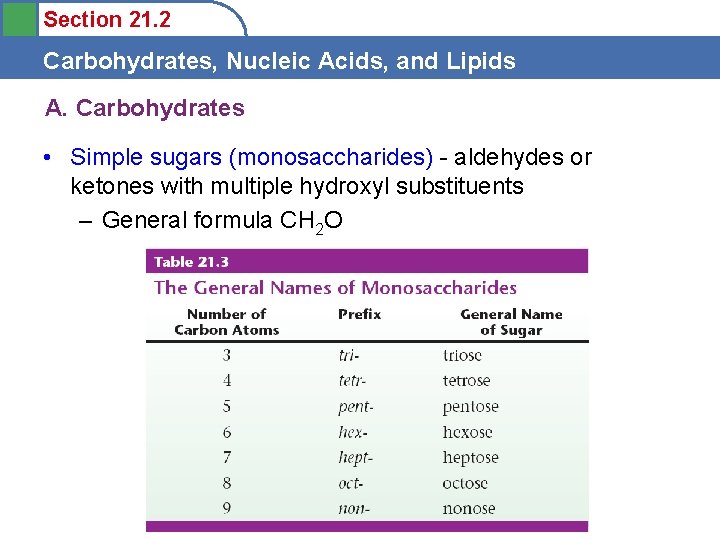
Section 21. 2 Carbohydrates, Nucleic Acids, and Lipids A. Carbohydrates • Simple sugars (monosaccharides) - aldehydes or ketones with multiple hydroxyl substituents – General formula CH 2 O
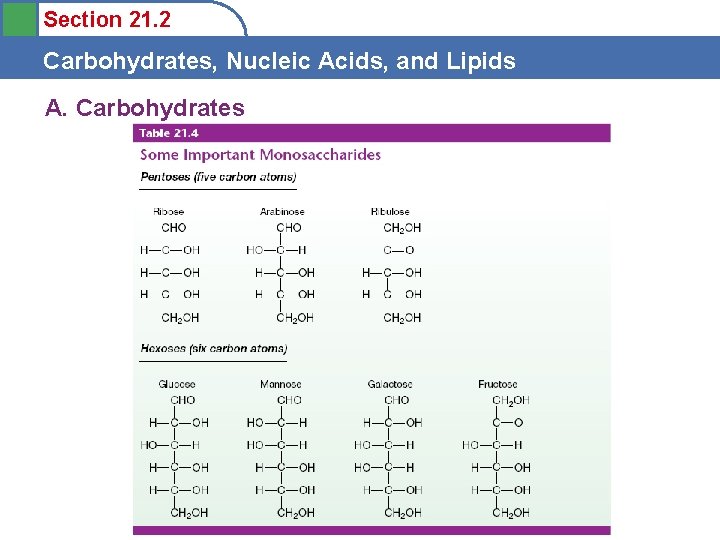
Section 21. 2 Carbohydrates, Nucleic Acids, and Lipids A. Carbohydrates
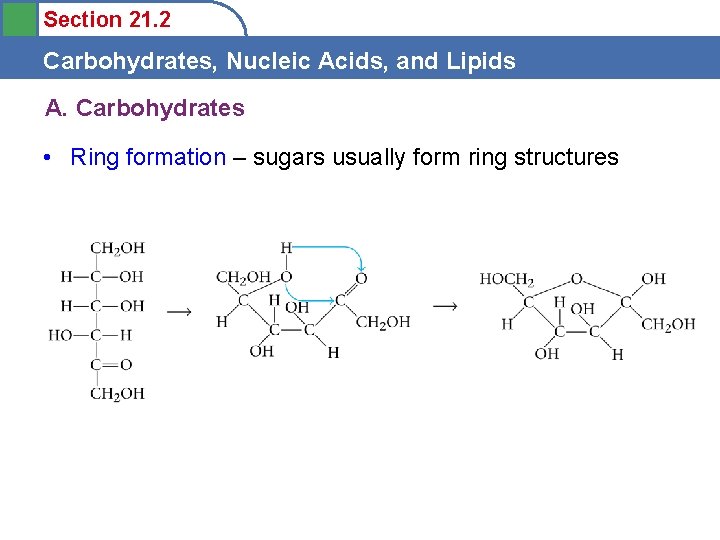
Section 21. 2 Carbohydrates, Nucleic Acids, and Lipids A. Carbohydrates • Ring formation – sugars usually form ring structures
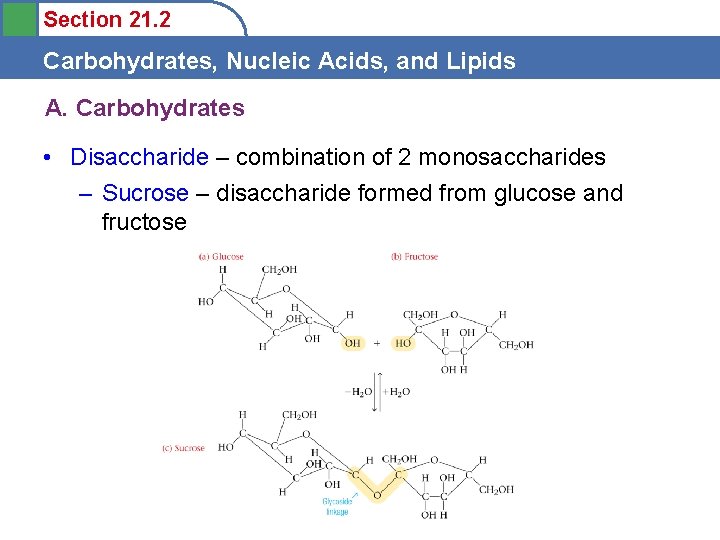
Section 21. 2 Carbohydrates, Nucleic Acids, and Lipids A. Carbohydrates • Disaccharide – combination of 2 monosaccharides – Sucrose – disaccharide formed from glucose and fructose

Section 21. 2 Carbohydrates, Nucleic Acids, and Lipids A. Carbohydrates • Polysaccharide – polymer of many monosaccharide units – Starch
Section 21. 2 Carbohydrates, Nucleic Acids, and Lipids B. Nucleic Acids • Deoxyribonucleic acid (DNA) – polymer that stores and transmits genetic information • Ribonucleic acid (RNA) – polymer that functions to transport genetic material
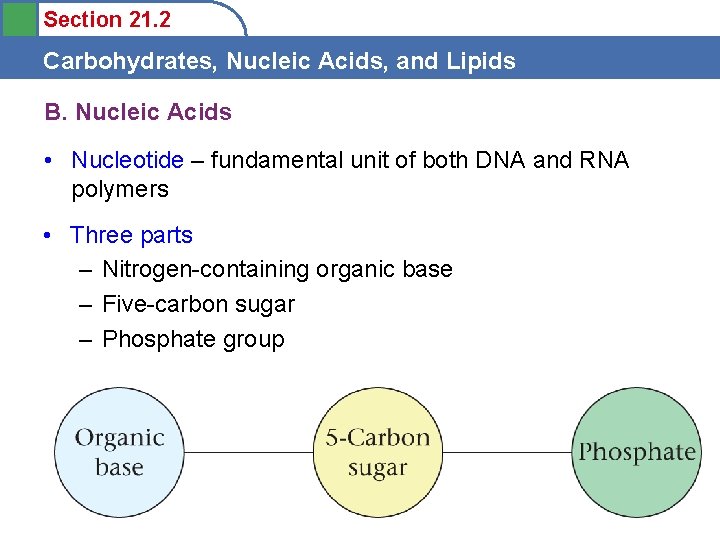
Section 21. 2 Carbohydrates, Nucleic Acids, and Lipids B. Nucleic Acids • Nucleotide – fundamental unit of both DNA and RNA polymers • Three parts – Nitrogen-containing organic base – Five-carbon sugar – Phosphate group
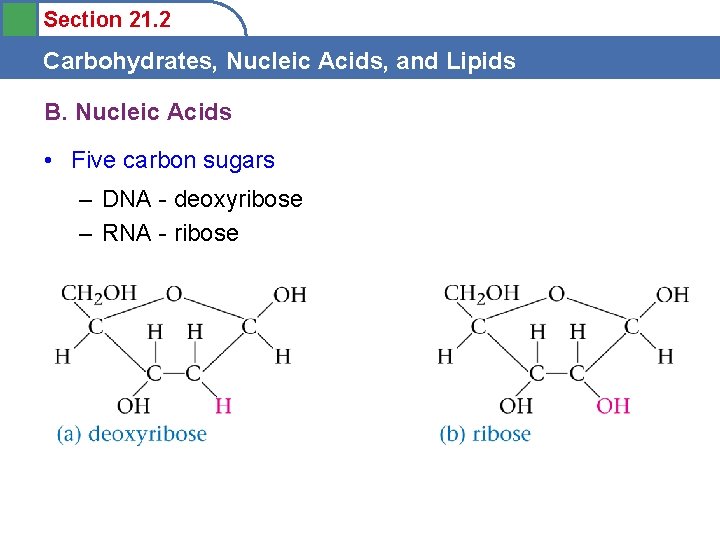
Section 21. 2 Carbohydrates, Nucleic Acids, and Lipids B. Nucleic Acids • Five carbon sugars – DNA - deoxyribose – RNA - ribose
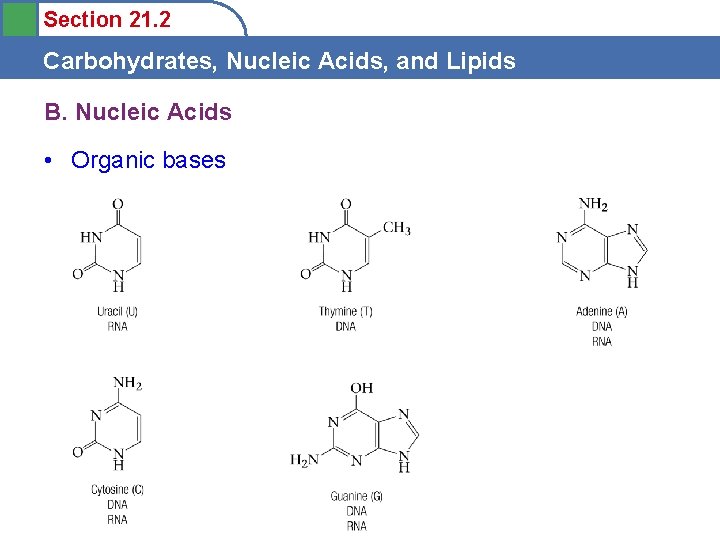
Section 21. 2 Carbohydrates, Nucleic Acids, and Lipids B. Nucleic Acids • Organic bases
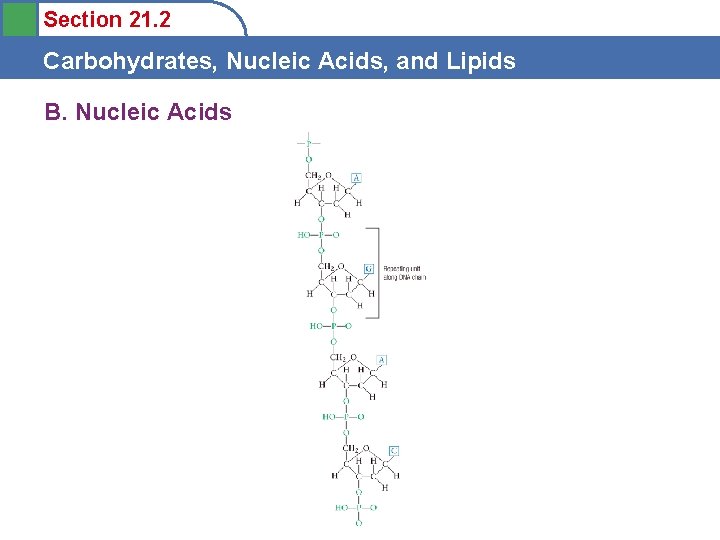
Section 21. 2 Carbohydrates, Nucleic Acids, and Lipids B. Nucleic Acids
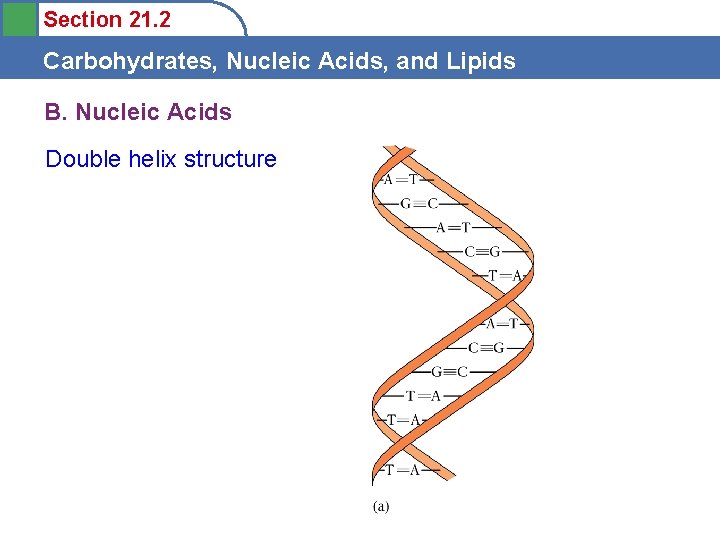
Section 21. 2 Carbohydrates, Nucleic Acids, and Lipids B. Nucleic Acids Double helix structure
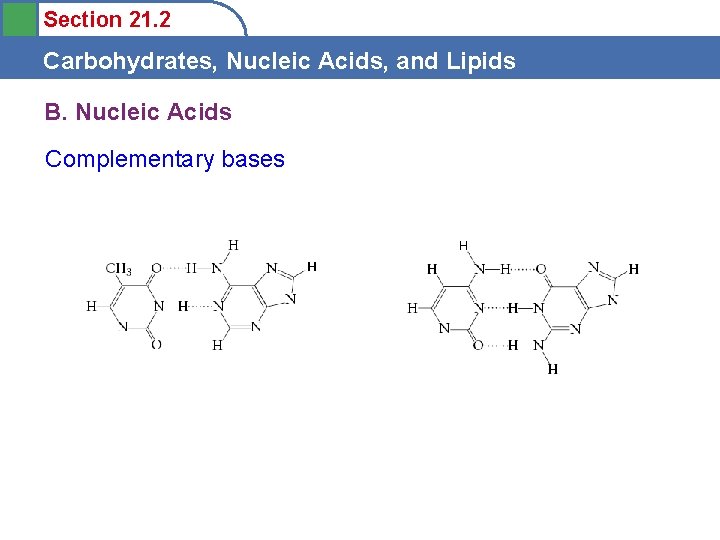
Section 21. 2 Carbohydrates, Nucleic Acids, and Lipids B. Nucleic Acids Complementary bases
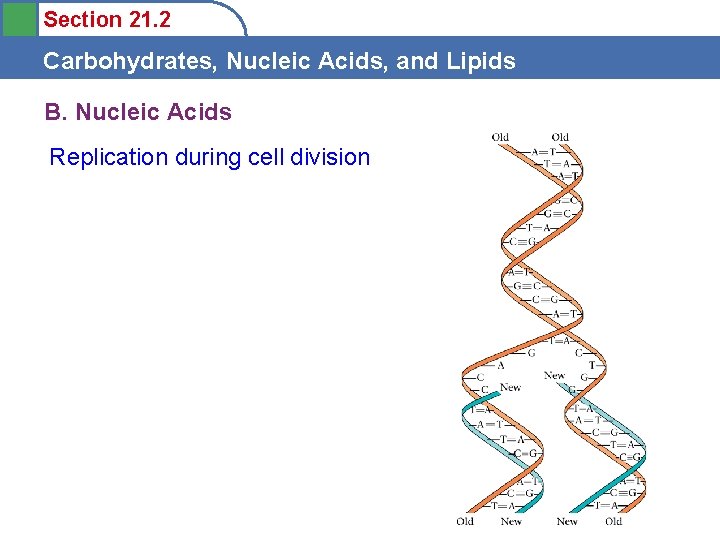
Section 21. 2 Carbohydrates, Nucleic Acids, and Lipids B. Nucleic Acids Replication during cell division
Section 21. 2 Carbohydrates, Nucleic Acids, and Lipids B. Nucleic Acids DNA and Protein Synthesis – Protein synthesis – major function of DNA • Gene – segment of DNA containing the code for a specific protein • RNA transmits genetic information to ribosomes.
Section 21. 2 Carbohydrates, Nucleic Acids, and Lipids B. Nucleic Acids DNA and Protein Synthesis • Ribosomes – cell component where protein synthesis occurs • Messenger RNA – constructed in the nucleus, migrates to the cytoplasm of the cell
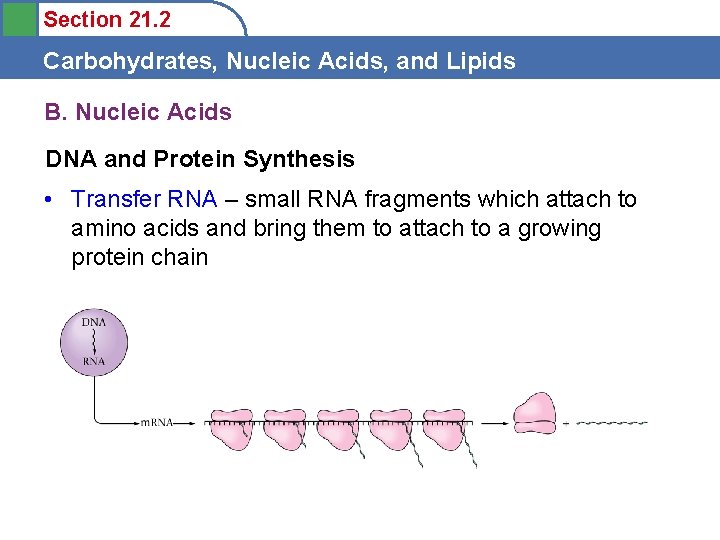
Section 21. 2 Carbohydrates, Nucleic Acids, and Lipids B. Nucleic Acids DNA and Protein Synthesis • Transfer RNA – small RNA fragments which attach to amino acids and bring them to attach to a growing protein chain
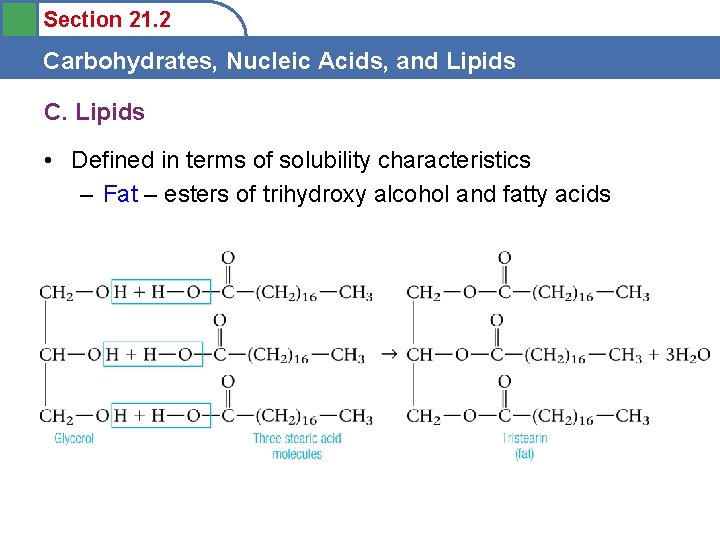
Section 21. 2 Carbohydrates, Nucleic Acids, and Lipids C. Lipids • Defined in terms of solubility characteristics – Fat – esters of trihydroxy alcohol and fatty acids
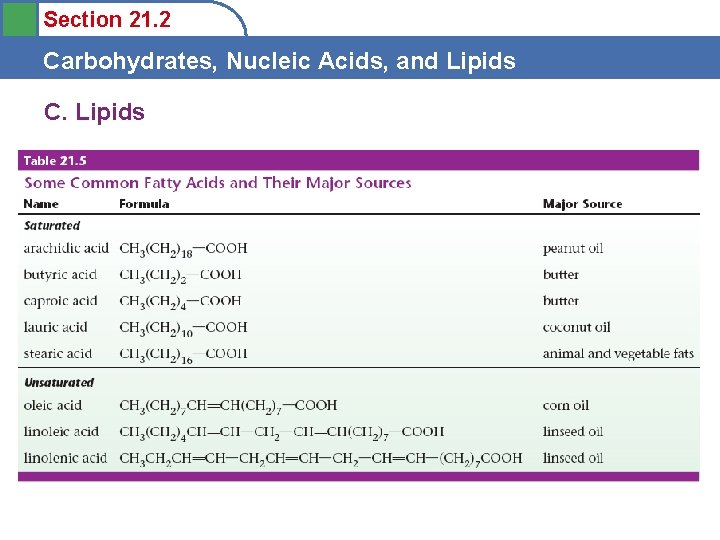
Section 21. 2 Carbohydrates, Nucleic Acids, and Lipids C. Lipids
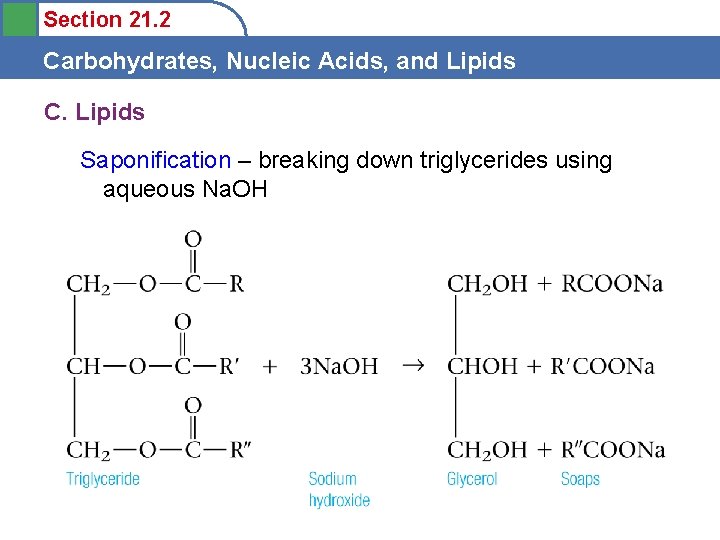
Section 21. 2 Carbohydrates, Nucleic Acids, and Lipids C. Lipids Saponification – breaking down triglycerides using aqueous Na. OH
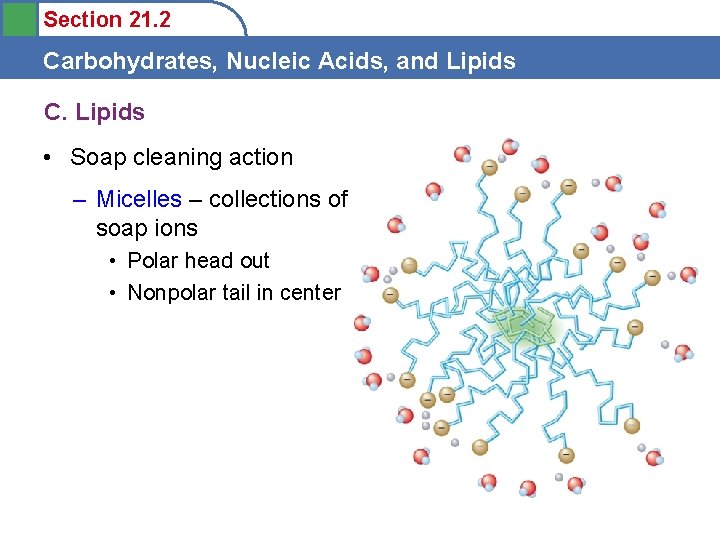
Section 21. 2 Carbohydrates, Nucleic Acids, and Lipids C. Lipids • Soap cleaning action – Micelles – collections of soap ions • Polar head out • Nonpolar tail in center
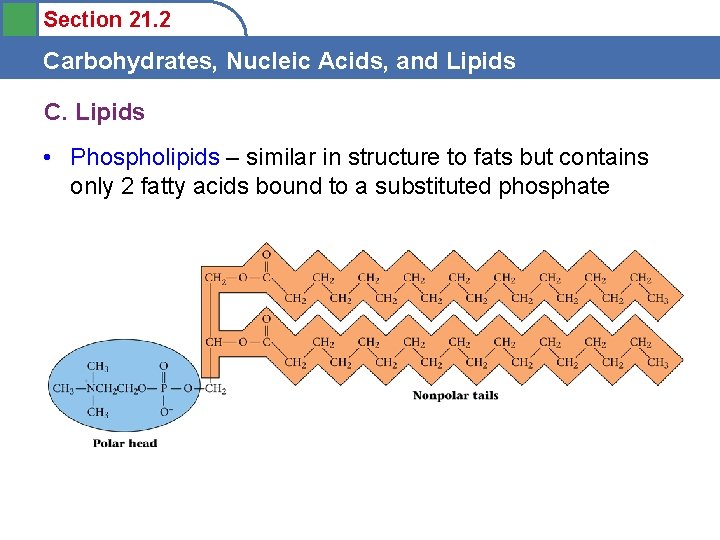
Section 21. 2 Carbohydrates, Nucleic Acids, and Lipids C. Lipids • Phospholipids – similar in structure to fats but contains only 2 fatty acids bound to a substituted phosphate
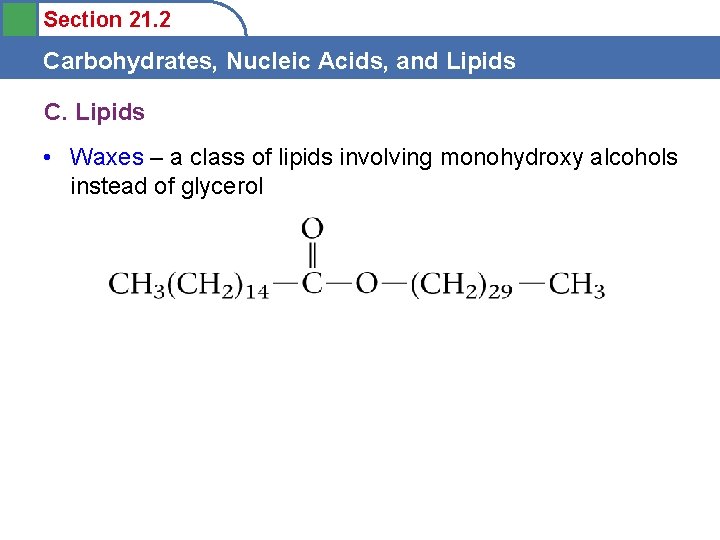
Section 21. 2 Carbohydrates, Nucleic Acids, and Lipids C. Lipids • Waxes – a class of lipids involving monohydroxy alcohols instead of glycerol
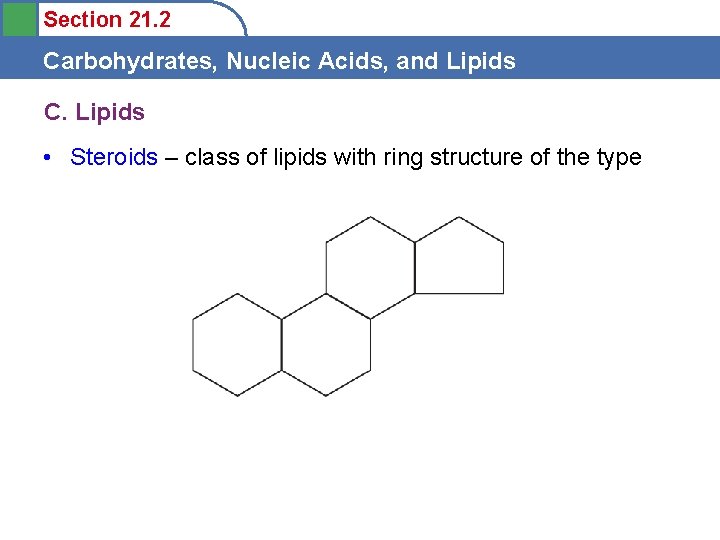
Section 21. 2 Carbohydrates, Nucleic Acids, and Lipids C. Lipids • Steroids – class of lipids with ring structure of the type
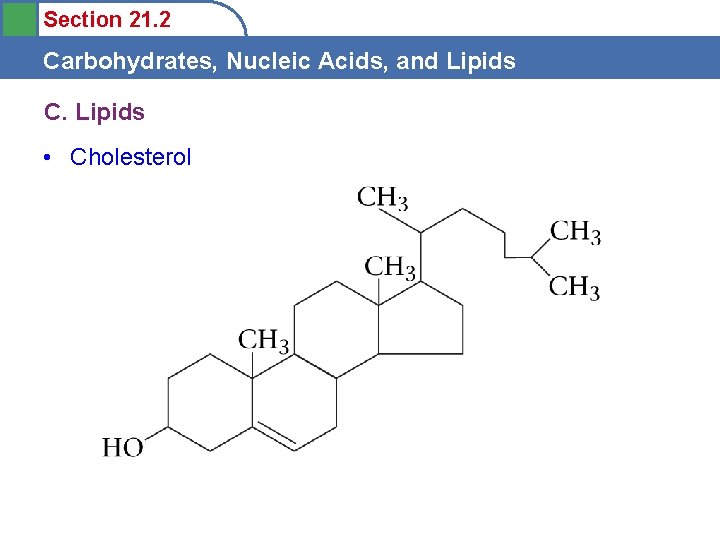
Section 21. 2 Carbohydrates, Nucleic Acids, and Lipids C. Lipids • Cholesterol
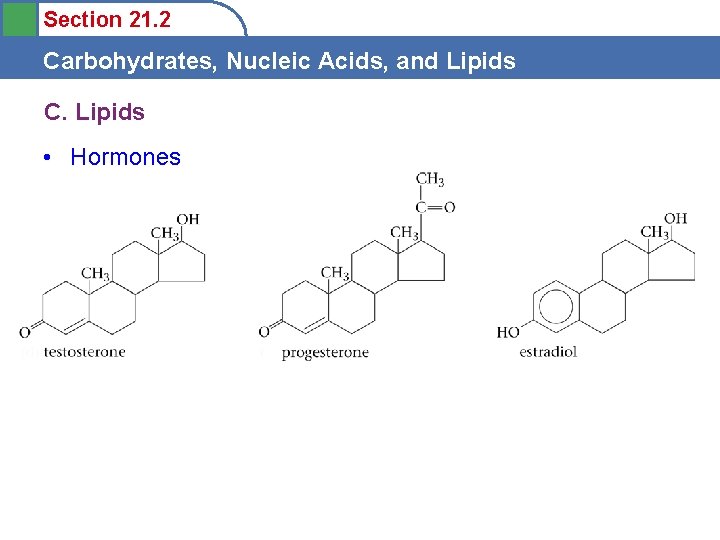
Section 21. 2 Carbohydrates, Nucleic Acids, and Lipids C. Lipids • Hormones
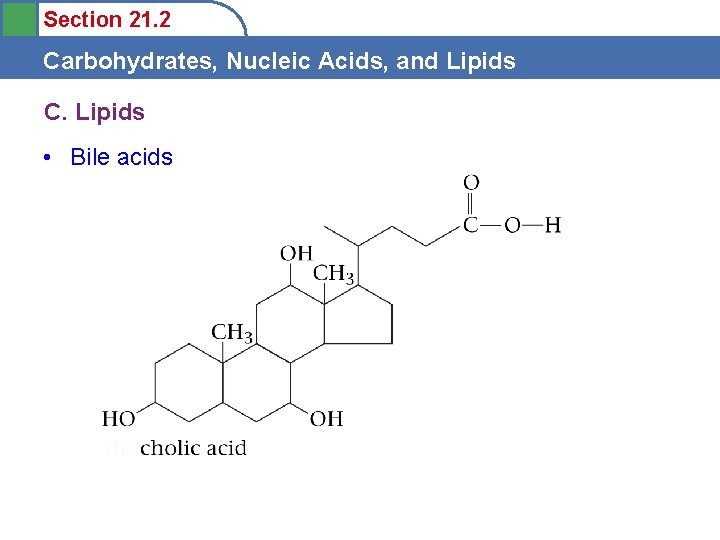
Section 21. 2 Carbohydrates, Nucleic Acids, and Lipids C. Lipids • Bile acids
- Slides: 27