
Section 21 1 Understanding Infectious Diseases Causes of
- Slides: 13
Section 21. 1 Understanding Infectious Diseases Causes of Infectious Diseases • Also known as communicable diseases, infectious diseases (in FEK shus) are caused by organisms or viruses that enter and multiply within the human body. • Microorganisms (my kroh AWR guh niz ums) are organisms that can be seen only through a microscope. • Microorganisms and viruses that cause disease are called pathogens (PATH uh junz). • Pathogens can cause an infectious disease when they enter your body and multiply. Slide 1 of 17
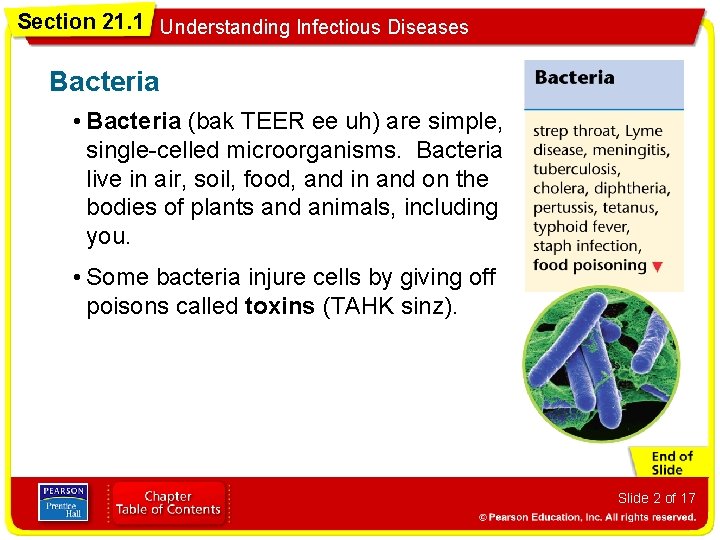
Section 21. 1 Understanding Infectious Diseases Bacteria • Bacteria (bak TEER ee uh) are simple, single-celled microorganisms. Bacteria live in air, soil, food, and in and on the bodies of plants and animals, including you. • Some bacteria injure cells by giving off poisons called toxins (TAHK sinz). Slide 2 of 17
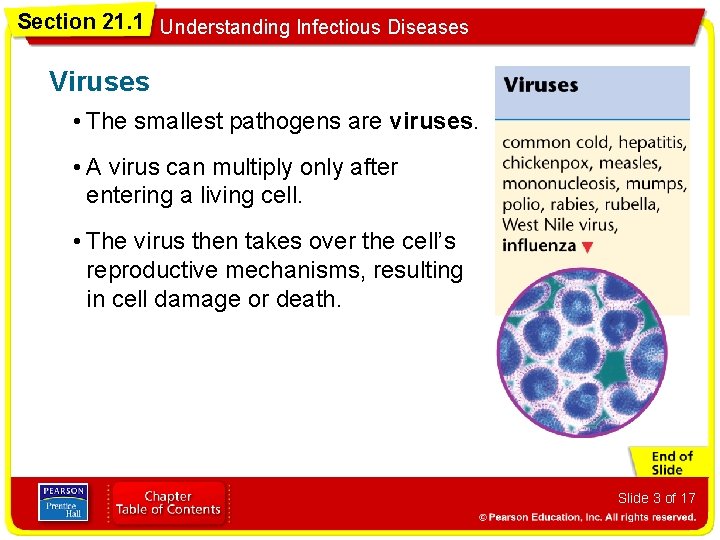
Section 21. 1 Understanding Infectious Diseases Viruses • The smallest pathogens are viruses. • A virus can multiply only after entering a living cell. • The virus then takes over the cell’s reproductive mechanisms, resulting in cell damage or death. Slide 3 of 17
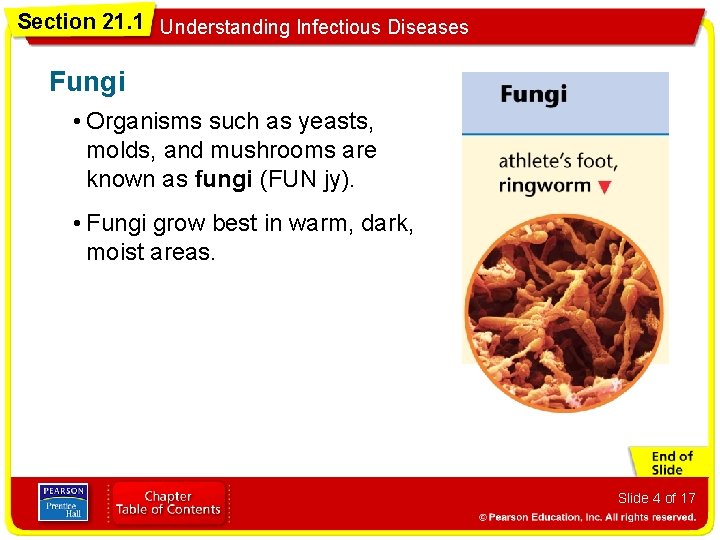
Section 21. 1 Understanding Infectious Diseases Fungi • Organisms such as yeasts, molds, and mushrooms are known as fungi (FUN jy). • Fungi grow best in warm, dark, moist areas. Slide 4 of 17
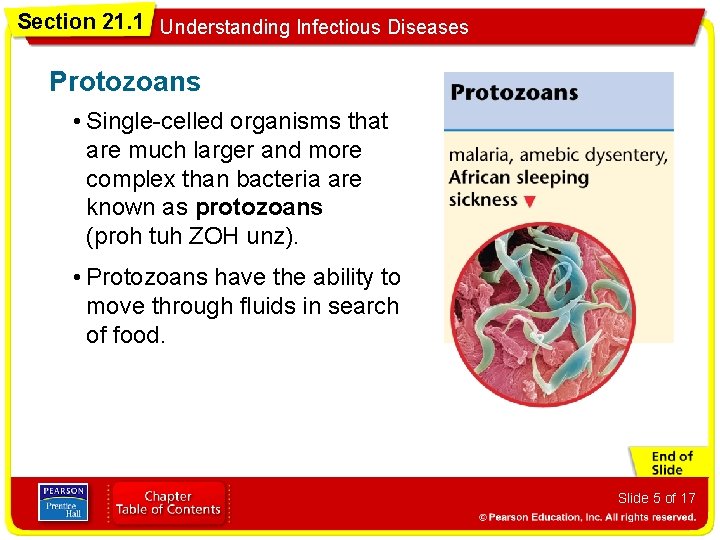
Section 21. 1 Understanding Infectious Diseases Protozoans • Single-celled organisms that are much larger and more complex than bacteria are known as protozoans (proh tuh ZOH unz). • Protozoans have the ability to move through fluids in search of food. Slide 5 of 17
Section 21. 1 Understanding Infectious Diseases Other Pathogens Some infectious diseases are caused by animals such as mites, lice, and certain worms. Slide 6 of 17
Section 21. 1 Understanding Infectious Diseases How Pathogens Are Spread • Pathogens can spread through contact with • an infected person • an infected animal • contaminated objects • contaminated food • contaminated soil • contaminated water • The pathogens can then enter the body through breaks in the skin or through the moist linings of the eyes, ears, nose, mouth, or other openings. Slide 7 of 17
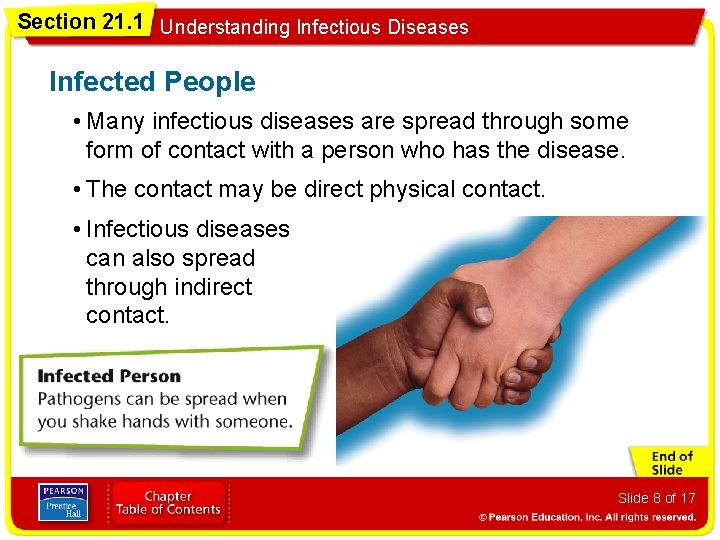
Section 21. 1 Understanding Infectious Diseases Infected People • Many infectious diseases are spread through some form of contact with a person who has the disease. • The contact may be direct physical contact. • Infectious diseases can also spread through indirect contact. Slide 8 of 17
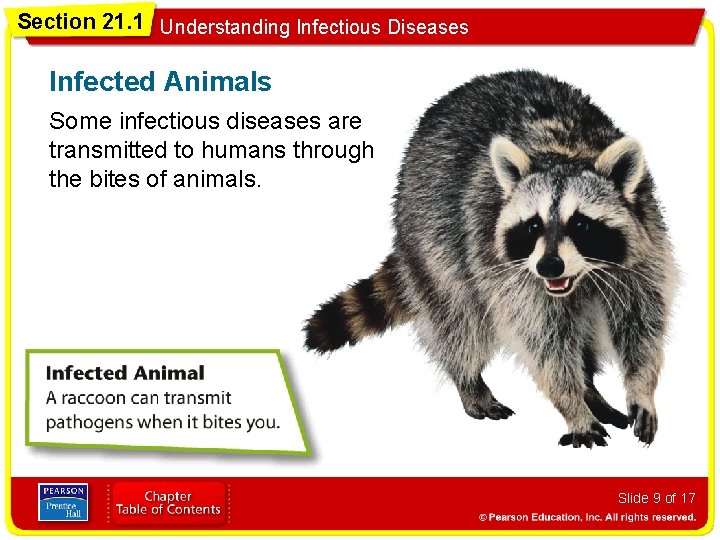
Section 21. 1 Understanding Infectious Diseases Infected Animals Some infectious diseases are transmitted to humans through the bites of animals. Slide 9 of 17
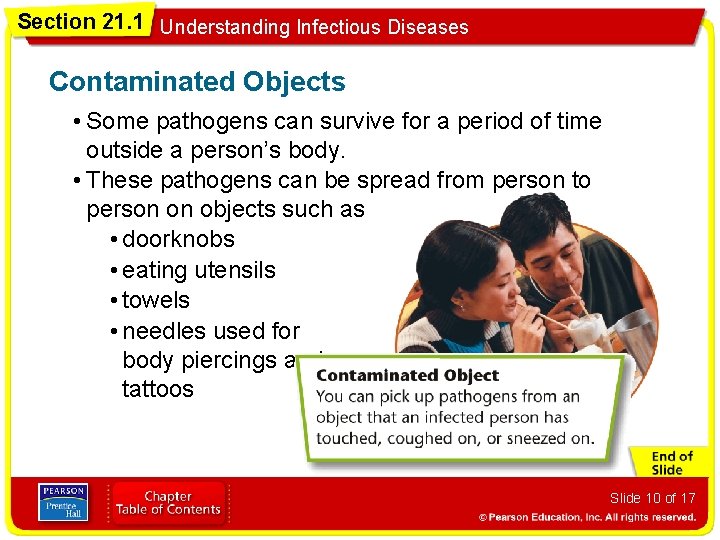
Section 21. 1 Understanding Infectious Diseases Contaminated Objects • Some pathogens can survive for a period of time outside a person’s body. • These pathogens can be spread from person to person on objects such as • doorknobs • eating utensils • towels • needles used for body piercings and tattoos Slide 10 of 17
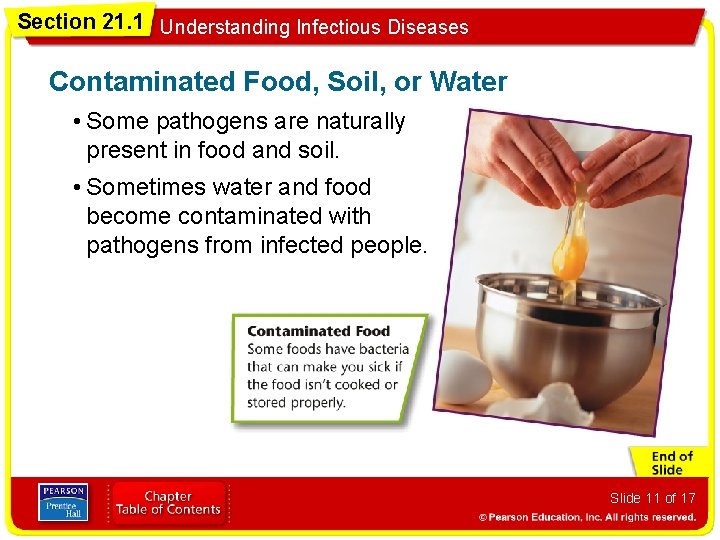
Section 21. 1 Understanding Infectious Diseases Contaminated Food, Soil, or Water • Some pathogens are naturally present in food and soil. • Sometimes water and food become contaminated with pathogens from infected people. Slide 11 of 17
Section 21. 1 Understanding Infectious Diseases Vocabulary infectious disease microorganism pathogen bacteria A disease caused by an organism or virus that enters and multiplies within the human body. An organism that is so small it can only be seen through a microscope. A microorganism or virus that causes disease. Simple, single-celled microorganisms. toxin A poison given off by some bacteria that can injure cells. virus The smallest type of pathogen. Slide 12 of 17
Section 21. 1 Understanding Infectious Diseases Vocabulary fungi protozoan Organisms such as yeasts, molds, and mushrooms that grow best in warm, dark, moist areas. A large and complex single-celled organism. Slide 13 of 17