
SECTION 2 WORK GCSE ECONOMICS UNIT 11 Understanding
- Slides: 11
SECTION 2 WORK GCSE ECONOMICS: UNIT 11 Understanding the Purpose & Nature of Work Part Two
SECTION 2 WORK Aims of today’s lesson … • Understand what is meant by specialisation and interdependence • Analyse the benefits and drawbacks of specialisation • Evaluate the impact of ICT on work
SECTION 2 WORK What is meant by Specialisation? • Also known as ‘division of labour’ • Workers are employed on a specific aspect of work e. g. installing the steering wheel in a car manufacturer • Workers then become interdependent (depending on each other to complete the production process)
SECTION 2 WORK The benefits of Specialisation • Workers become more skilled • More output produced as workers do their task quicker through practice • Goods are produced cheaper as more can be made in the same amount of time
SECTION 2 WORK The drawbacks of Specialisation • Workers become interdependent so if one is ill, they cannot complete • Jobs become boring if doing the same thing all the time • Morale/motivation falls so labour turnover and absenteeism increases • Workers are not as flexible to try new things
SECTION 2 WORK Over to you. . . • Open and compete the document called. . . “Specialisation”
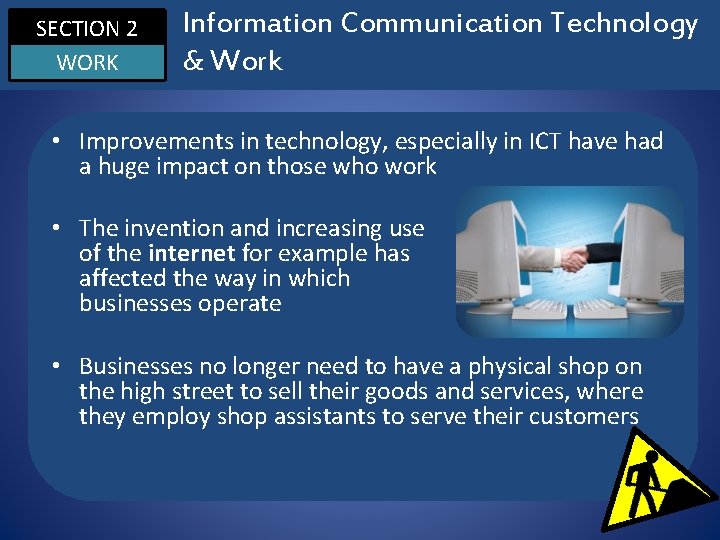
SECTION 2 WORK Information Communication Technology & Work • Improvements in technology, especially in ICT have had a huge impact on those who work • The invention and increasing use of the internet for example has affected the way in which businesses operate • Businesses no longer need to have a physical shop on the high street to sell their goods and services, where they employ shop assistants to serve their customers
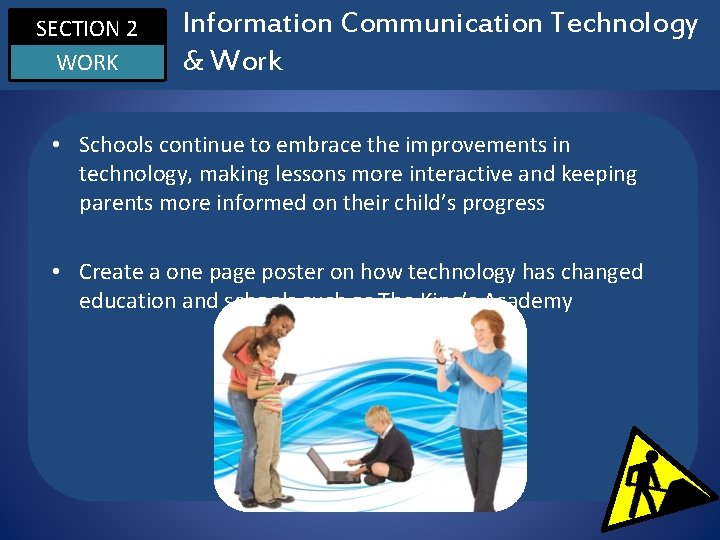
SECTION 2 WORK Information Communication Technology & Work • Schools continue to embrace the improvements in technology, making lessons more interactive and keeping parents more informed on their child’s progress • Create a one page poster on how technology has changed education and schools such as The King’s Academy
SECTION 2 WORK Changes in the way we work. . . • The way in which people work is changing • With improvements in technology, a 24 -hour business culture and global operations, employers require a more flexible workforce • Employees are also looking for employment and hours which suit their own personal lifestyle and outside responsibilities
SECTION 2 WORK Changes in the way we work. . . • In recent years Lloyds TSB has looked to create a more flexible workforce in order to give it a competitive edge in the market • Read the case study on Lloyds TSB and answer the questions in the document called ‘Changing work patterns’
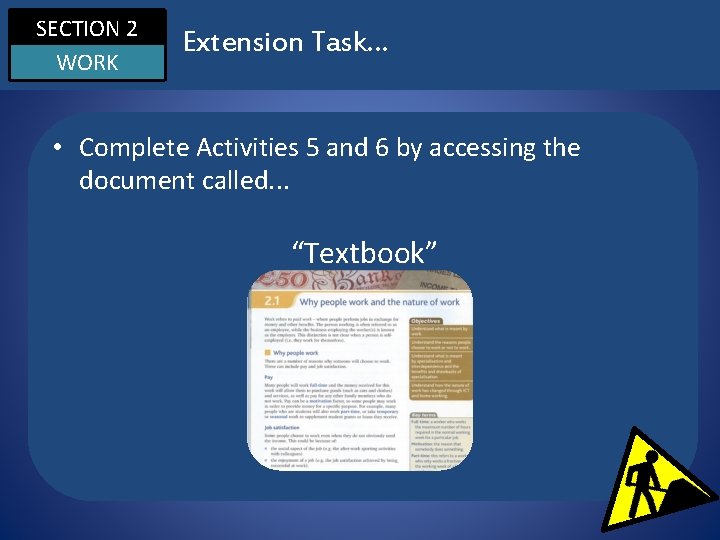
SECTION 2 WORK Extension Task. . . • Complete Activities 5 and 6 by accessing the document called. . . “Textbook”