
Section 2 Readiness for change Motivation Ability Perceived
Section 2
�Readiness for change �Motivation �Ability �Perceived efficacy �Situation self- factorsscheduling, peer influence)
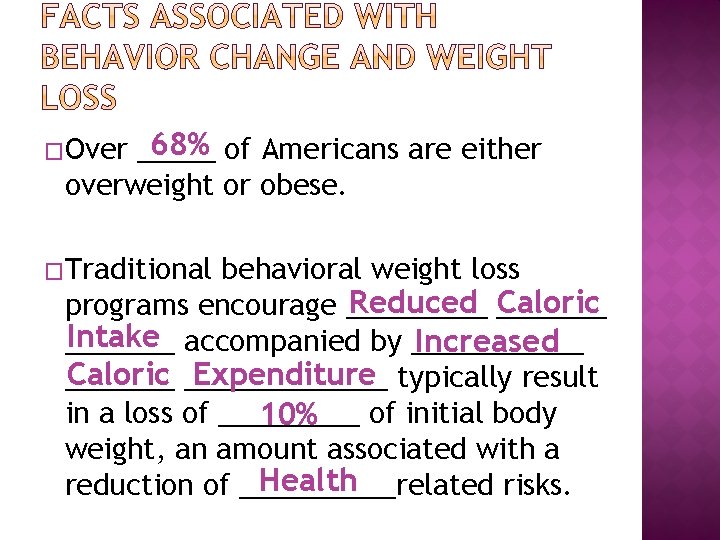
68% of Americans are either _____ overweight or obese. �Over �Traditional behavioral weight loss Reduced _______ Caloric programs encourage _____ Intake accompanied by _______ Increased Expenditure typically result Caloric _______ in a loss of _____ of initial body 10% weight, an amount associated with a Health reduction of _____related risks.
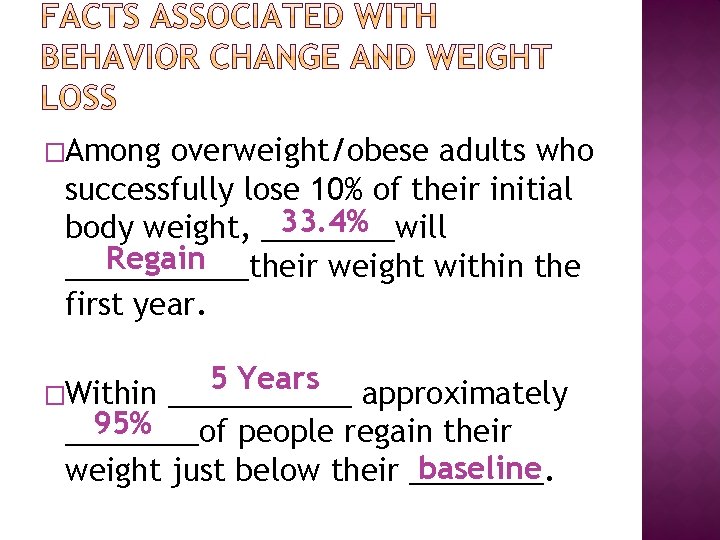
�Among overweight/obese adults who successfully lose 10% of their initial 33. 4% body weight, ____will Regain ______their weight within the first year. 5 Years approximately ______ 95% ____of people regain their baseline weight just below their ____. �Within
�Those who do not meet public health Physical recommendations for ______ Activity _______are twice as likely to Regain _______ weight as those who do not meet recommendations. �Most sedentary people who begin an exercise program are likely to stop within _______. 3 -6 months
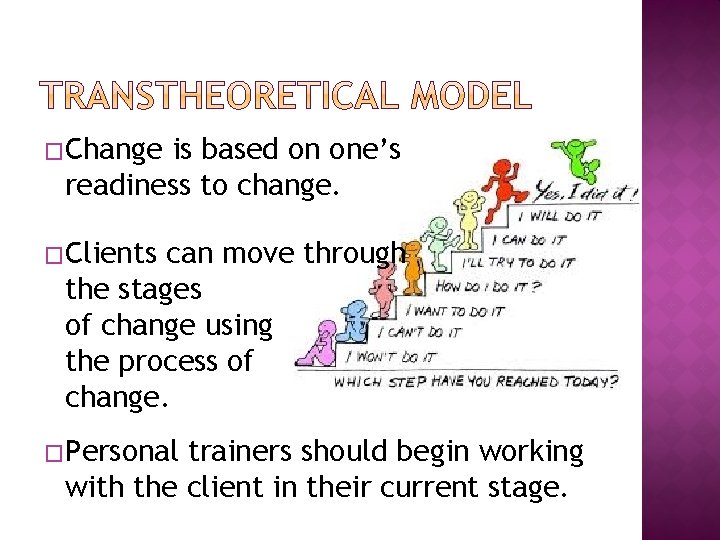
�Change is based on one’s readiness to change. �Clients can move through the stages of change using the process of change. �Personal trainers should begin working with the client in their current stage.

Pre-Contemplation
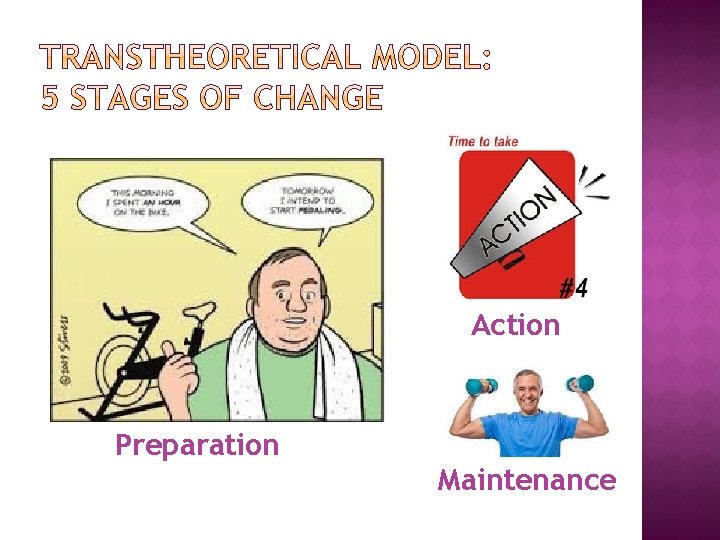
Action Preparation Maintenance
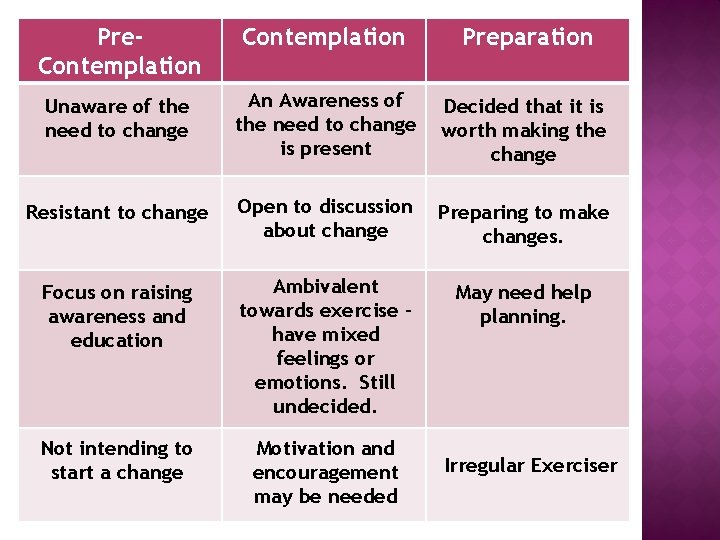
Pre. Contemplation Preparation Unaware of the need to change An Awareness of the need to change is present Decided that it is worth making the change Resistant to change Open to discussion about change Preparing to make changes. Focus on raising awareness and education Ambivalent towards exercise – have mixed feelings or emotions. Still undecided. May need help planning. Not intending to start a change Motivation and encouragement may be needed Irregular Exerciser
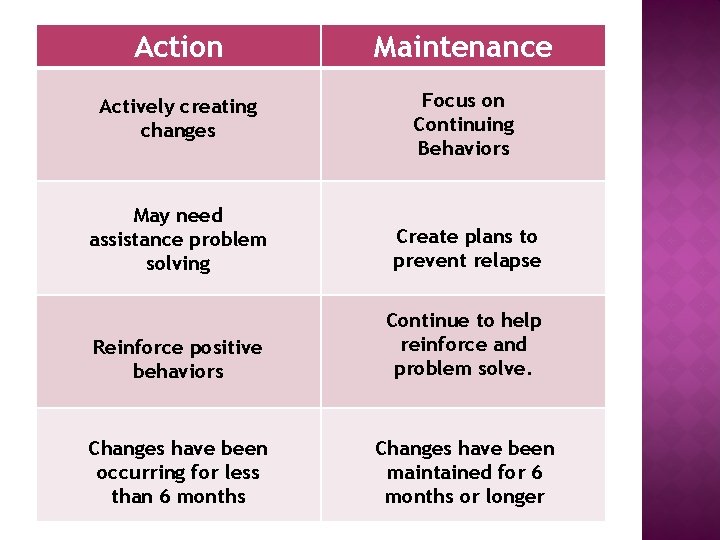
Action Maintenance Actively creating changes Focus on Continuing Behaviors May need assistance problem solving Create plans to prevent relapse Reinforce positive behaviors Continue to help reinforce and problem solve. Changes have been occurring for less than 6 months Changes have been maintained for 6 months or longer
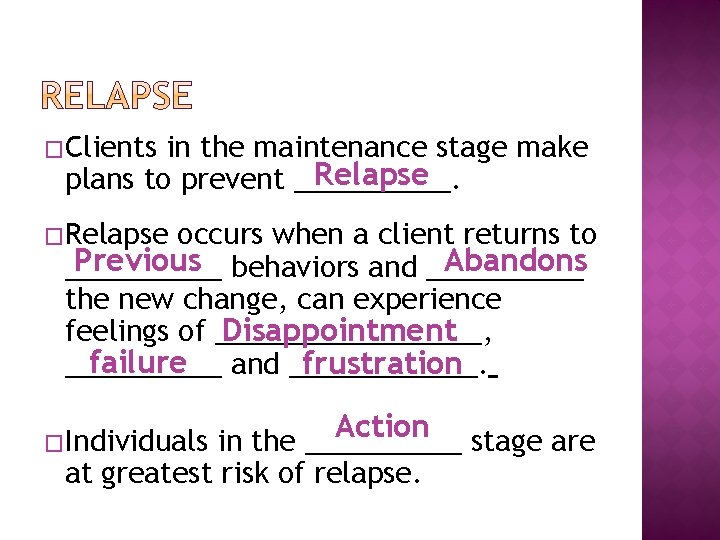
�Clients in the maintenance stage make Relapse plans to prevent _____. �Relapse occurs when a client returns to Abandons Previous behaviors and __________ the new change, can experience Disappointment feelings of _________, failure and ______ frustration Action stage are in the _____ at greatest risk of relapse. �Individuals
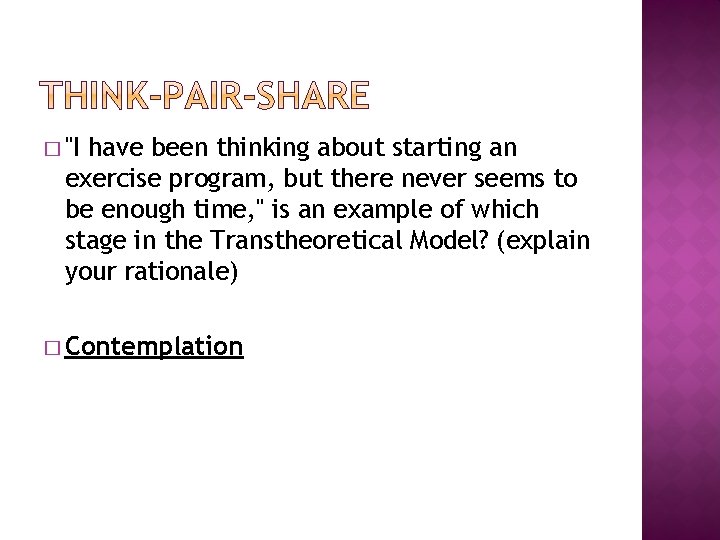
� "I have been thinking about starting an exercise program, but there never seems to be enough time, " is an example of which stage in the Transtheoretical Model? (explain your rationale) � Contemplation
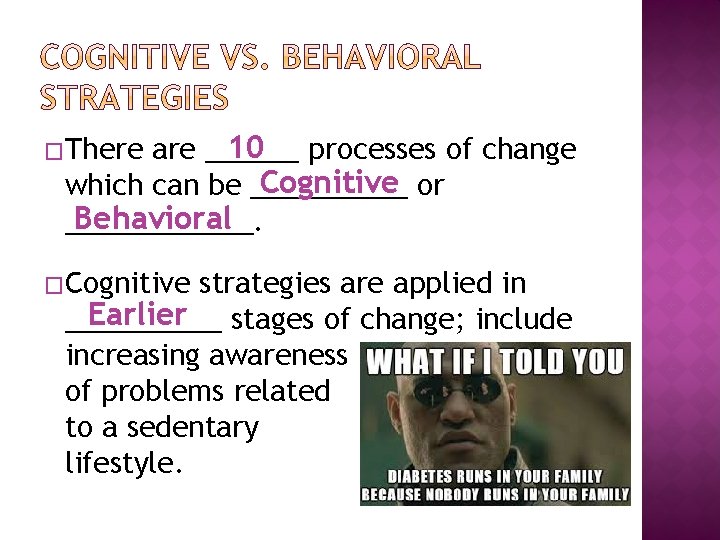
10 processes of change are ______ Cognitive or which can be _____ Behavioral ______. �There �Cognitive strategies are applied in Earlier stages of change; include _____ increasing awareness of problems related to a sedentary lifestyle.
�Behavioral strategies are applied in Later stages of change; include _____ removing cues for sedentary behavior
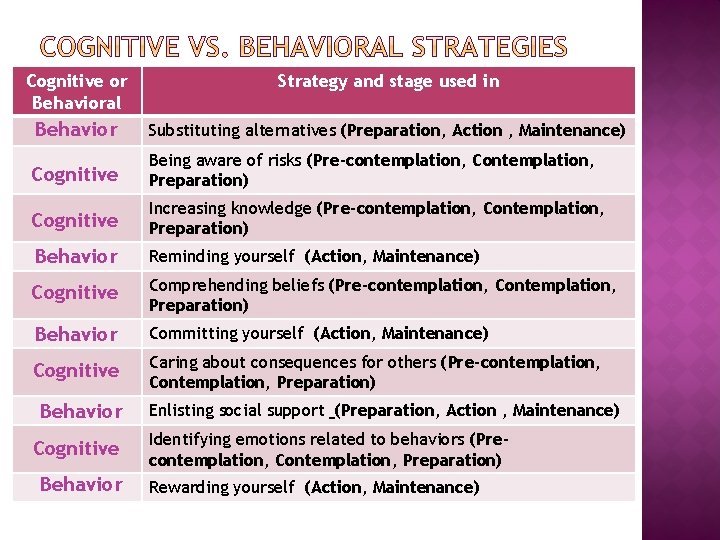
Cognitive or Behavioral Strategy and stage used in Behavior Substituting alternatives (Preparation, Action , Maintenance) Cognitive Being aware of risks (Pre-contemplation, Contemplation, Preparation) Cognitive Increasing knowledge (Pre-contemplation, Contemplation, Preparation) Behavior Reminding yourself (Action, Maintenance) Cognitive Comprehending beliefs (Pre-contemplation, Contemplation, Preparation) Behavior Committing yourself (Action, Maintenance) Cognitive Caring about consequences for others (Pre-contemplation, Contemplation, Preparation) Behavior Cognitive Behavior Enlisting social support (Preparation, Action , Maintenance) Identifying emotions related to behaviors (Precontemplation, Contemplation, Preparation) Rewarding yourself (Action, Maintenance)
Efficacy Self �____-______ (the client’s belief in their ability to succeed) is an important component of behavior change success. �Clients with higher self-efficacy have a Confidence and belief great level of ______ Change in ______ and are more likely to successful engage in ______ behaviors ______.
�When discussing strategies for changing physical activity habits with clients, it is usually best to assist clients to formulate their own behavior change strategies based on what has worked for them before.
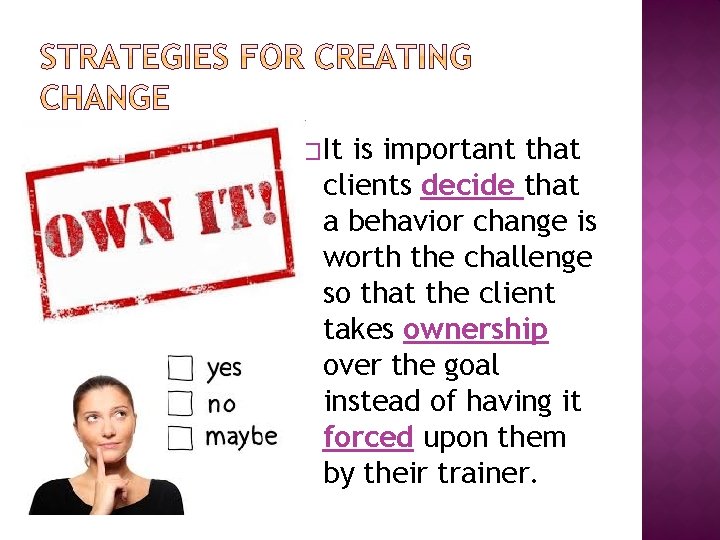
�It is important that clients decide that a behavior change is worth the challenge so that the client takes ownership over the goal instead of having it forced upon them by their trainer.
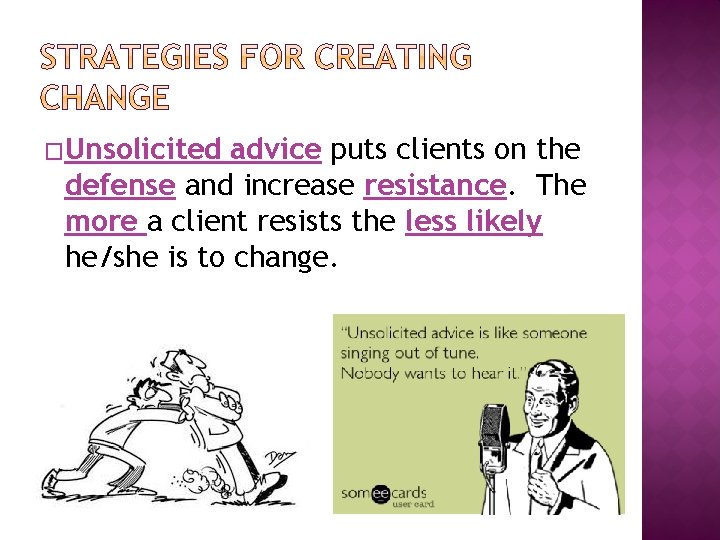
�Unsolicited advice puts clients on the defense and increase resistance. The more a client resists the less likely he/she is to change.
Listen: Simply repeat what you heard the person say. Avoid getting ahead of the priorities and needs expressed by the participant.
Make it hypothetical: If you encounter resistance make the topic less threatening by turning it into a hypothetical situation. “Suppose you were to do this…. . ”
Acknowledge the resistance: This may give the participant the chance to clarify his/her desires.
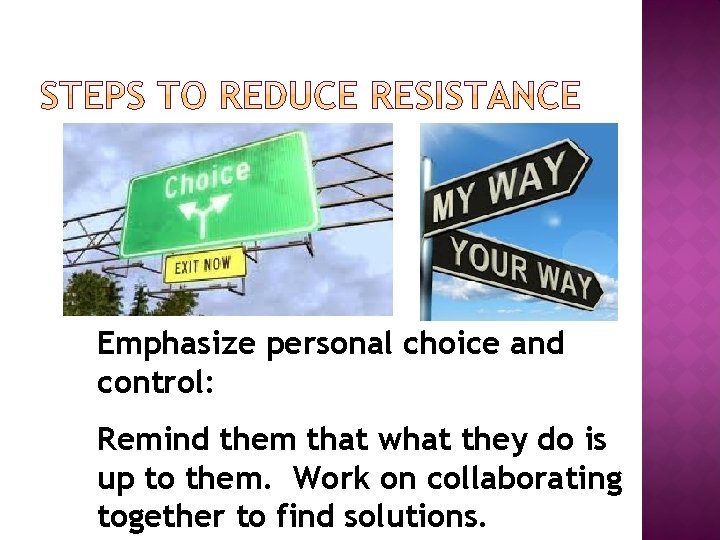
Emphasize personal choice and control: Remind them that what they do is up to them. Work on collaborating together to find solutions.
Emphasize success: Assist clients in seeing the positives in what they are doing. It will help them increase their confidence and understand that they can be successful.
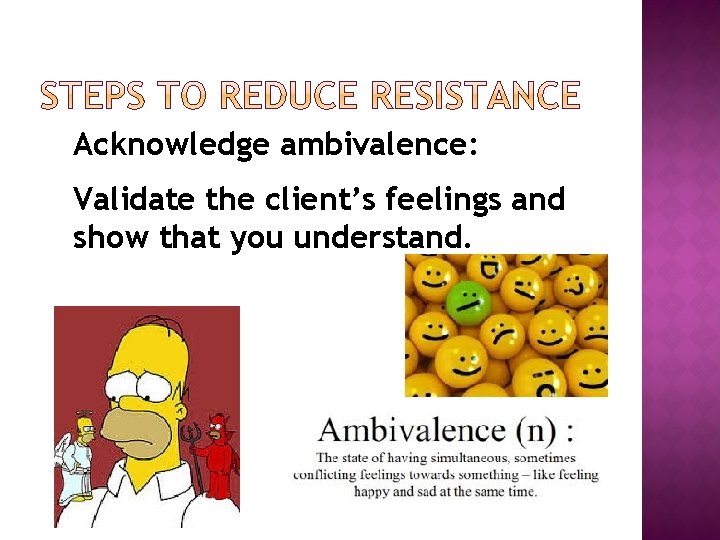
Acknowledge ambivalence: Validate the client’s feelings and show that you understand.
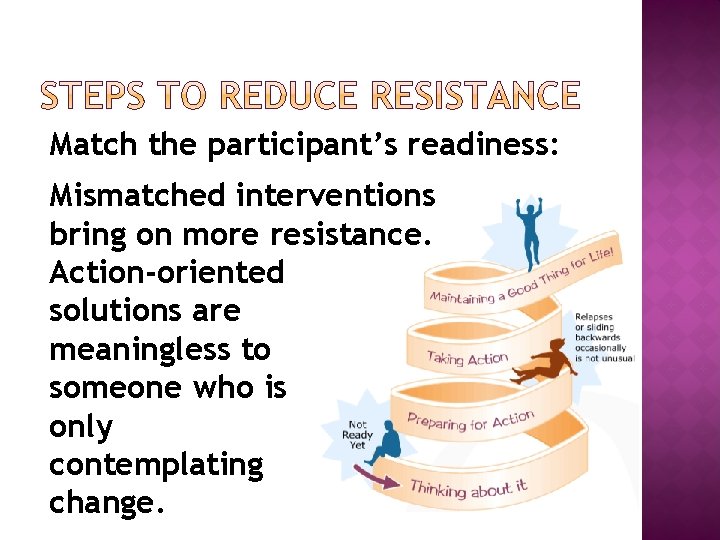
Match the participant’s readiness: Mismatched interventions bring on more resistance. Action-oriented solutions are meaningless to someone who is only contemplating change.
- Slides: 26