
Section 2 Physical Properties Key Concepts What are
- Slides: 15
Section 2 Physical Properties • Key Concepts • What are some examples of physical properties? • How can knowing the physical properties of matter be useful? • What processes are used to separate mixtures? • When does a physical change occur?
Examples of Physical Properties • A physical property is any characteristic of a material that can be observed or measured without changing the composition of the substances in the material. • Viscosity, conductivity, malleability, hardness, melting point, boiling point, and density are examples of physical properties.
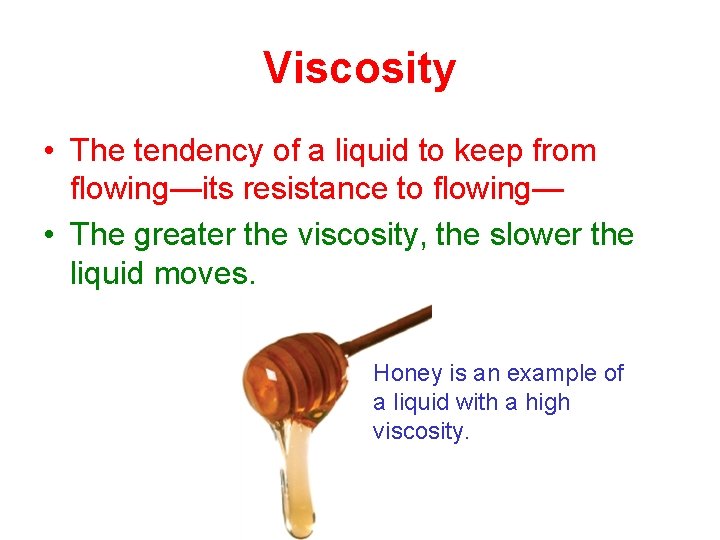
Viscosity • The tendency of a liquid to keep from flowing—its resistance to flowing— • The greater the viscosity, the slower the liquid moves. Honey is an example of a liquid with a high viscosity.
Conductivity • Which spoon should you choose for stirring a pot of soup heating on the stove —a metal spoon or a wooden spoon? • A material’s ability to allow heat to flow • Materials that have a high conductivity, such as metals, are called conductors.
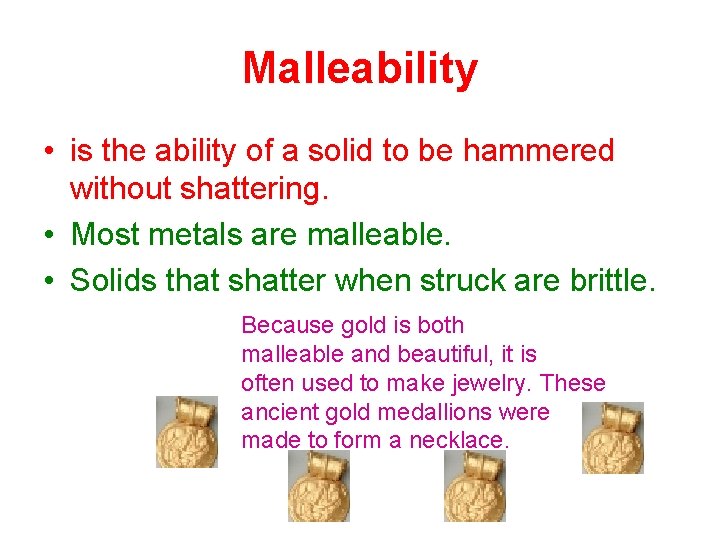
Malleability • is the ability of a solid to be hammered without shattering. • Most metals are malleable. • Solids that shatter when struck are brittle. Because gold is both malleable and beautiful, it is often used to make jewelry. These ancient gold medallions were made to form a necklace.
• Why would a cook use a wooden spoon to stir hot soup?
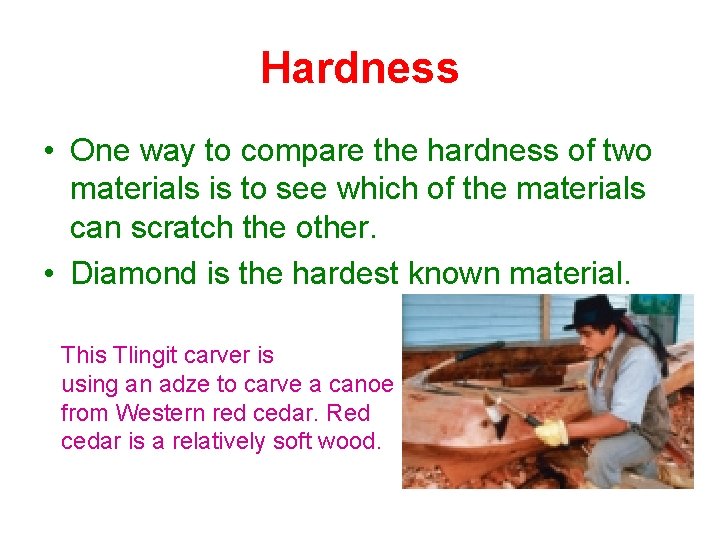
Hardness • One way to compare the hardness of two materials is to see which of the materials can scratch the other. • Diamond is the hardest known material. This Tlingit carver is using an adze to carve a canoe from Western red cedar. Red cedar is a relatively soft wood.
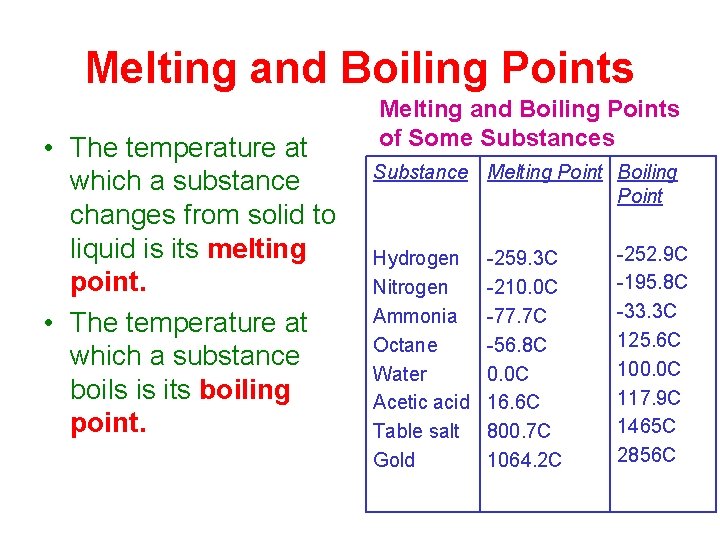
Melting and Boiling Points • The temperature at which a substance changes from solid to liquid is its melting point. • The temperature at which a substance boils is its boiling point. Melting and Boiling Points of Some Substances Substance Melting Point Boiling Point Hydrogen Nitrogen Ammonia Octane Water Acetic acid Table salt Gold -259. 3 C -210. 0 C -77. 7 C -56. 8 C 0. 0 C 16. 6 C 800. 7 C 1064. 2 C -252. 9 C -195. 8 C -33. 3 C 125. 6 C 100. 0 C 117. 9 C 1465 C 2856 C
Using Physical Properties • Physical properties are used to identify a material, to choose a material for a specific purpose, or to separate the substances in a mixture.
Using Properties to Separate Mixtures • Filtration and distillation are two common separation methods.
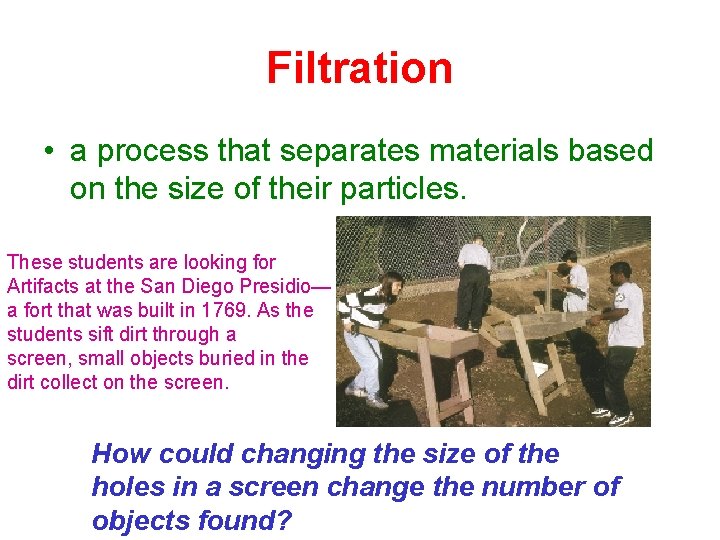
Filtration • a process that separates materials based on the size of their particles. These students are looking for Artifacts at the San Diego Presidio— a fort that was built in 1769. As the students sift dirt through a screen, small objects buried in the dirt collect on the screen. How could changing the size of the holes in a screen change the number of objects found?
Distillation • a process that separates the substances in a solution based on their boiling points.
• How can loose tea leaves be removed from a pot of brewed tea?
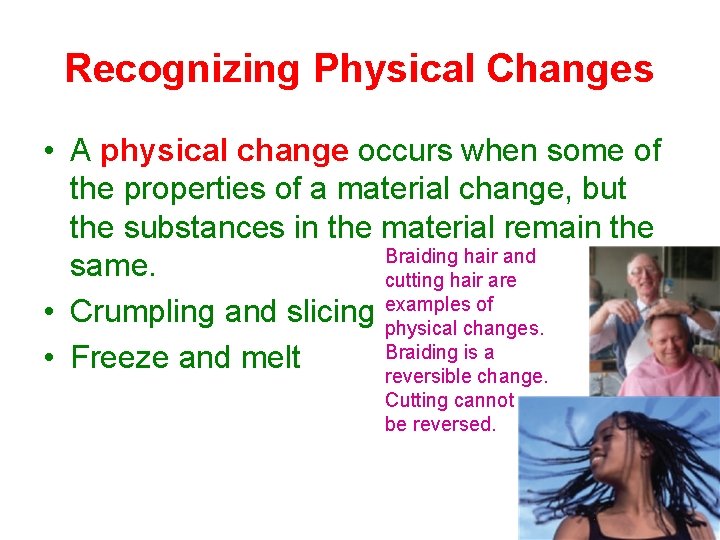
Recognizing Physical Changes • A physical change occurs when some of the properties of a material change, but the substances in the material remain the Braiding hair and same. cutting hair are of • Crumpling and slicing examples physical changes. Braiding is a • Freeze and melt reversible change. Cutting cannot be reversed.
Reviewing Concepts • 1. List seven examples of physical properties. • 2. Name two processes that are used to separate mixtures. • 3. When you describe a liquid as thick, are you saying that it has a high or a low viscosity? • 4. Explain why sharpening a pencil is an example of a physical change. • 5. What allows a mixture to be separated by distillation?