
Section 2 Geographic Regions of Georgia Appalachian Plateau
- Slides: 12
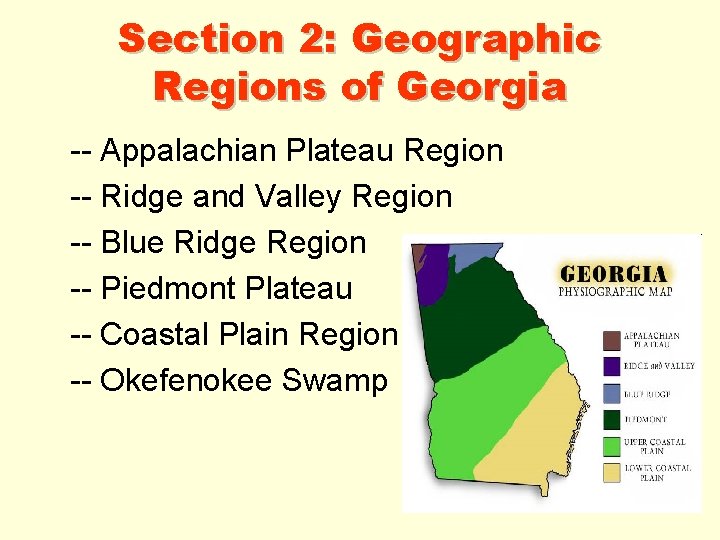
Section 2: Geographic Regions of Georgia -- Appalachian Plateau Region -- Ridge and Valley Region -- Blue Ridge Region -- Piedmont Plateau -- Coastal Plain Region -- Okefenokee Swamp
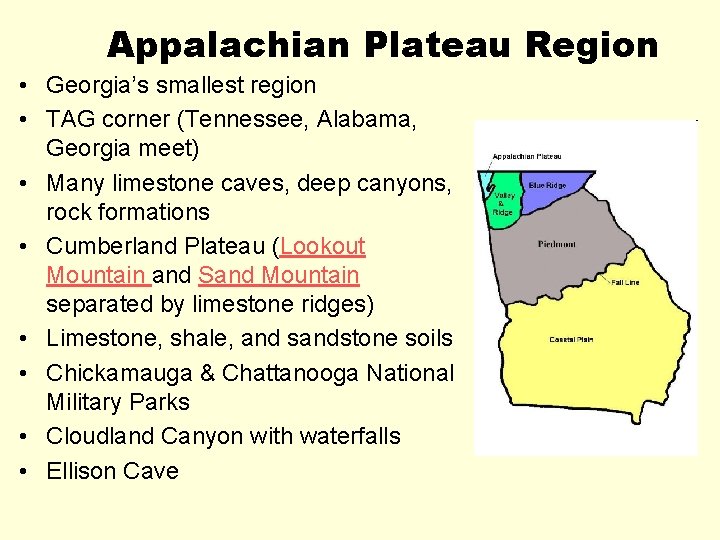
Appalachian Plateau Region • Georgia’s smallest region • TAG corner (Tennessee, Alabama, Georgia meet) • Many limestone caves, deep canyons, rock formations • Cumberland Plateau (Lookout Mountain and Sand Mountain separated by limestone ridges) • Limestone, shale, and sandstone soils • Chickamauga & Chattanooga National Military Parks • Cloudland Canyon with waterfalls • Ellison Cave
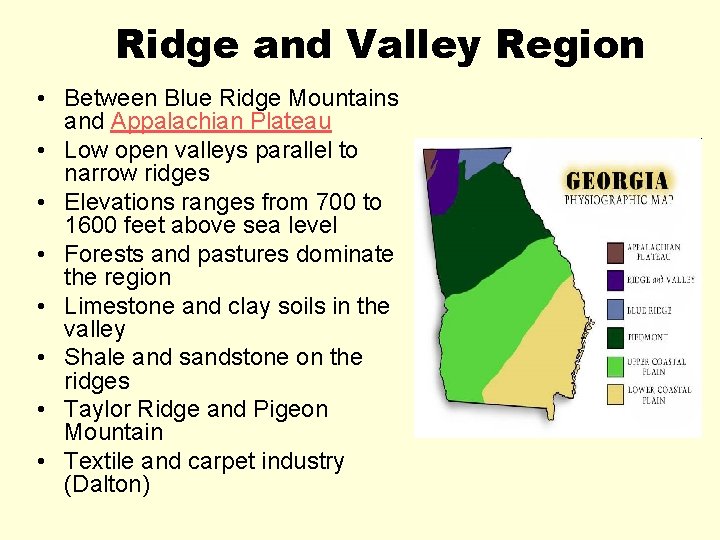
Ridge and Valley Region • Between Blue Ridge Mountains and Appalachian Plateau • Low open valleys parallel to narrow ridges • Elevations ranges from 700 to 1600 feet above sea level • Forests and pastures dominate the region • Limestone and clay soils in the valley • Shale and sandstone on the ridges • Taylor Ridge and Pigeon Mountain • Textile and carpet industry (Dalton)
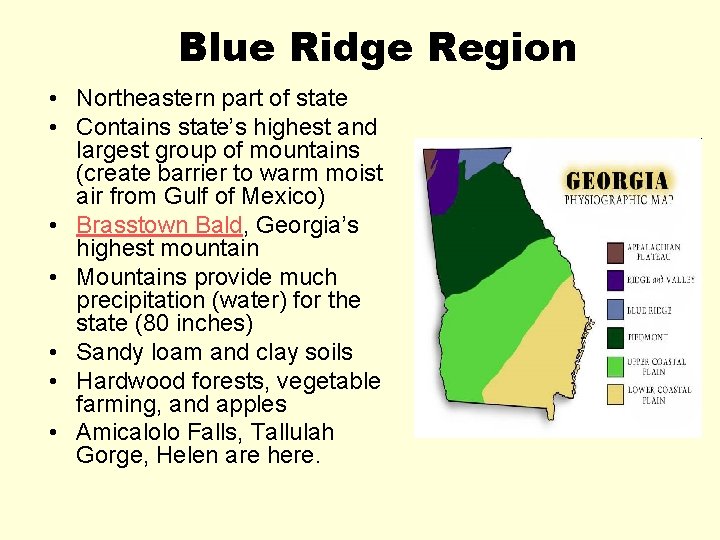
Blue Ridge Region • Northeastern part of state • Contains state’s highest and largest group of mountains (create barrier to warm moist air from Gulf of Mexico) • Brasstown Bald, Georgia’s highest mountain • Mountains provide much precipitation (water) for the state (80 inches) • Sandy loam and clay soils • Hardwood forests, vegetable farming, and apples • Amicalolo Falls, Tallulah Gorge, Helen are here.
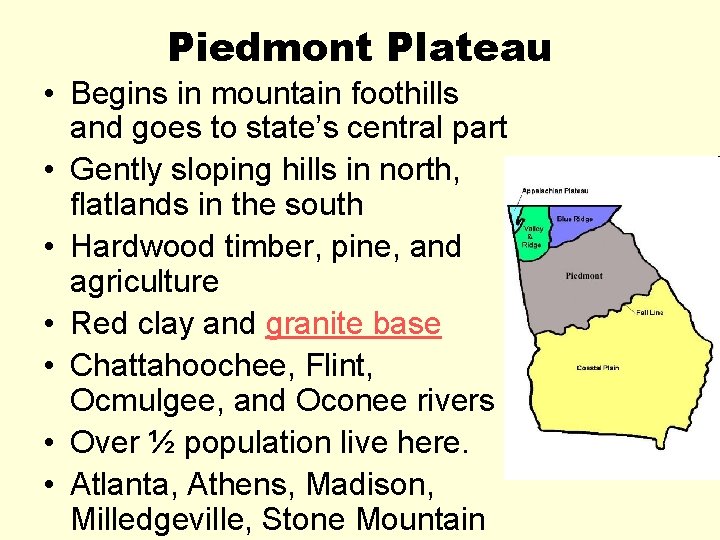
Piedmont Plateau • Begins in mountain foothills and goes to state’s central part • Gently sloping hills in north, flatlands in the south • Hardwood timber, pine, and agriculture • Red clay and granite base • Chattahoochee, Flint, Ocmulgee, and Oconee rivers • Over ½ population live here. • Atlanta, Athens, Madison, Milledgeville, Stone Mountain
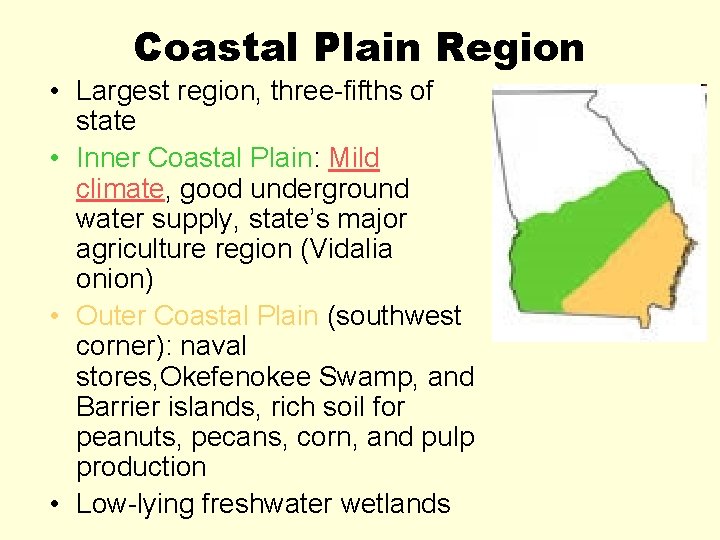
Coastal Plain Region • Largest region, three-fifths of state • Inner Coastal Plain: Mild climate, good underground water supply, state’s major agriculture region (Vidalia onion) • Outer Coastal Plain (southwest corner): naval stores, Okefenokee Swamp, and Barrier islands, rich soil for peanuts, pecans, corn, and pulp production • Low-lying freshwater wetlands
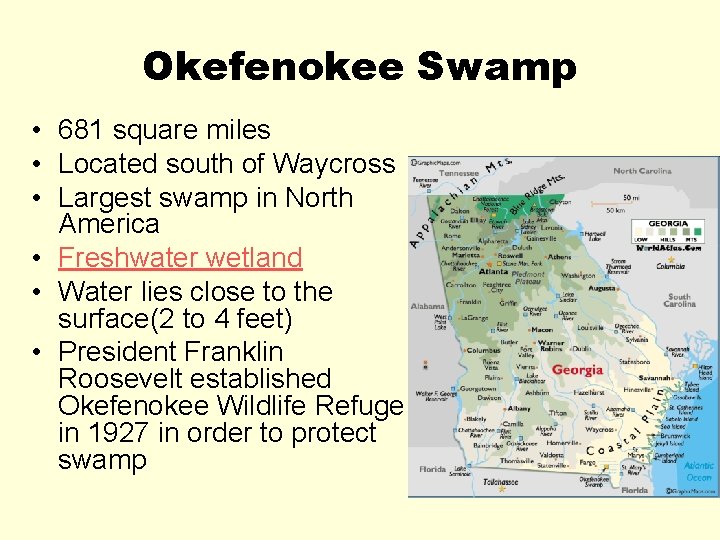
Okefenokee Swamp • 681 square miles • Located south of Waycross • Largest swamp in North America • Freshwater wetland • Water lies close to the surface(2 to 4 feet) • President Franklin Roosevelt established Okefenokee Wildlife Refuge in 1927 in order to protect swamp
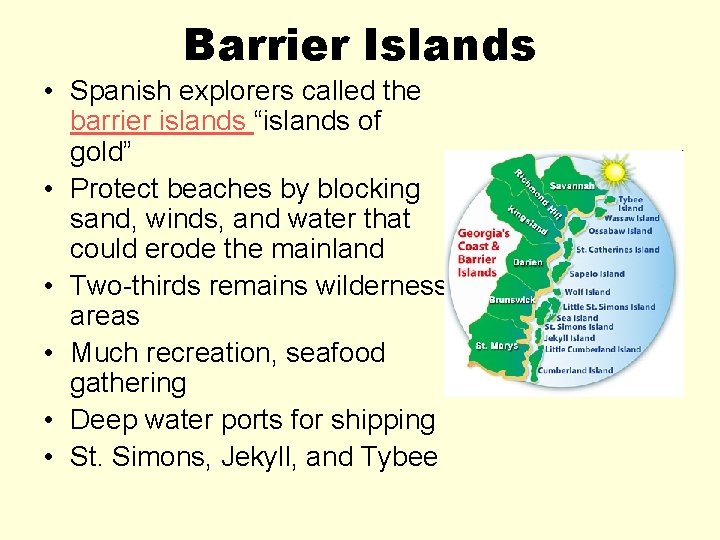
Barrier Islands • Spanish explorers called the barrier islands “islands of gold” • Protect beaches by blocking sand, winds, and water that could erode the mainland • Two-thirds remains wilderness areas • Much recreation, seafood gathering • Deep water ports for shipping • St. Simons, Jekyll, and Tybee
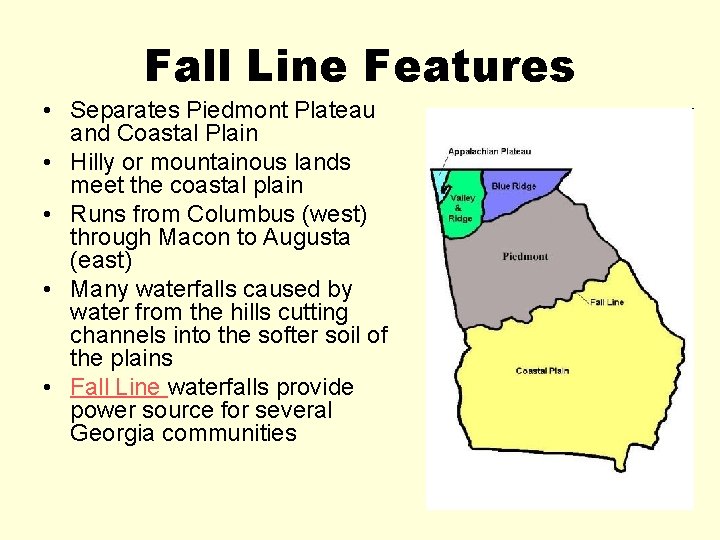
Fall Line Features • Separates Piedmont Plateau and Coastal Plain • Hilly or mountainous lands meet the coastal plain • Runs from Columbus (west) through Macon to Augusta (east) • Many waterfalls caused by water from the hills cutting channels into the softer soil of the plains • Fall Line waterfalls provide power source for several Georgia communities
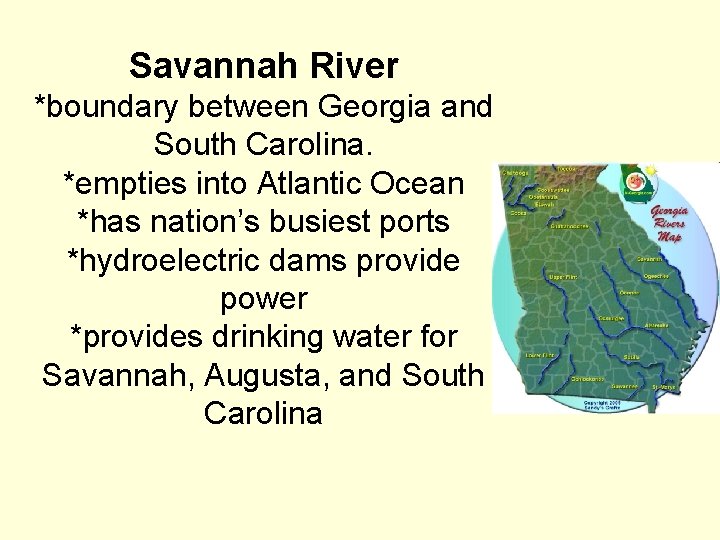
Savannah River *boundary between Georgia and South Carolina. *empties into Atlantic Ocean *has nation’s busiest ports *hydroelectric dams provide power *provides drinking water for Savannah, Augusta, and South Carolina
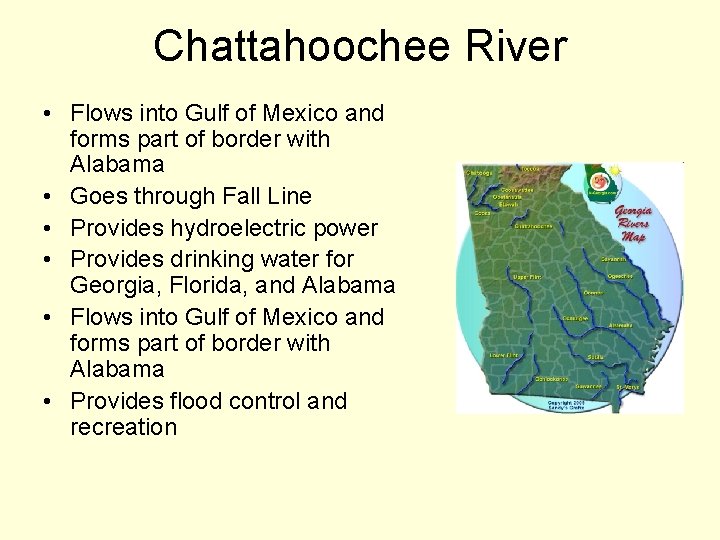
Chattahoochee River • Flows into Gulf of Mexico and forms part of border with Alabama • Goes through Fall Line • Provides hydroelectric power • Provides drinking water for Georgia, Florida, and Alabama • Flows into Gulf of Mexico and forms part of border with Alabama • Provides flood control and recreation
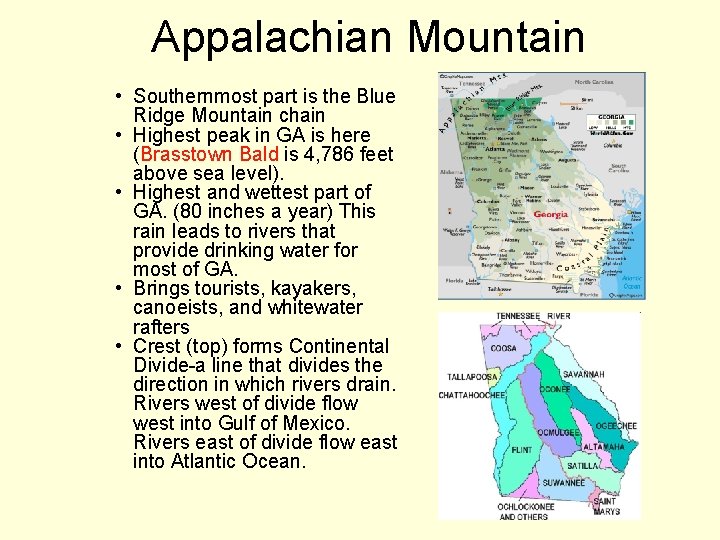
Appalachian Mountain • Southernmost part is the Blue Ridge Mountain chain • Highest peak in GA is here (Brasstown Bald is 4, 786 feet above sea level). • Highest and wettest part of GA. (80 inches a year) This rain leads to rivers that provide drinking water for most of GA. • Brings tourists, kayakers, canoeists, and whitewater rafters • Crest (top) forms Continental Divide-a line that divides the direction in which rivers drain. Rivers west of divide flow west into Gulf of Mexico. Rivers east of divide flow east into Atlantic Ocean.