
Section 2 Biomes CHAPTER 3 TYPES OF BIOMES
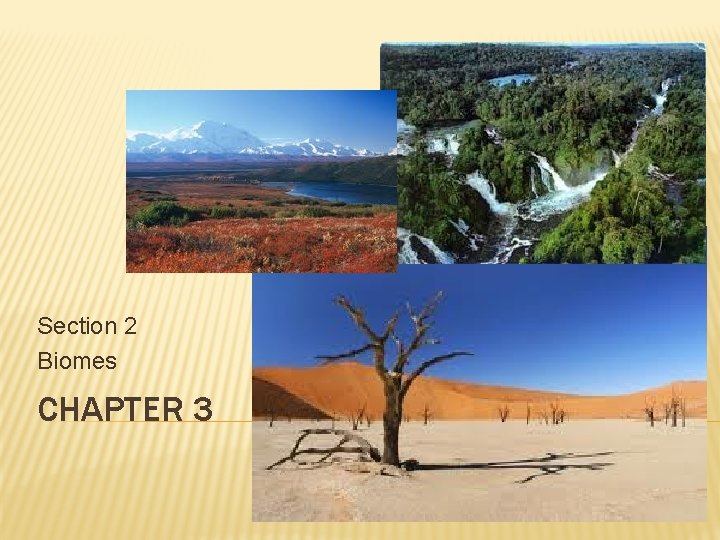
Section 2 Biomes CHAPTER 3
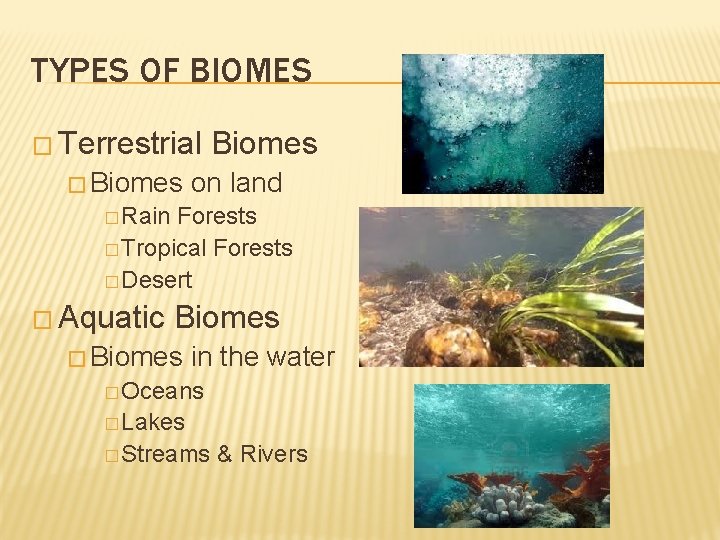
TYPES OF BIOMES � Terrestrial � Biomes on land � Rain Forests � Tropical Forests � Desert � Aquatic Biomes � Biomes in the water � Oceans � Lakes � Streams & Rivers
TERRESTRIAL BIOMES � Ecosystems on land are grouped into biomes that are usually based on the plant communities within them. � Why Plants? � The type of plants in a biome is determined by abiotic factors. � However, the animals in an biome are determined by what types and how many plants are available.
EFFECTS OF LATITUDE AND CLIMATE � Weather is the condition of the atmosphere at a specific place and time � The climate are described by an areas average temperature and precipitation � One of the keys to understanding communities is to be aware of latitude and climatic conditions.
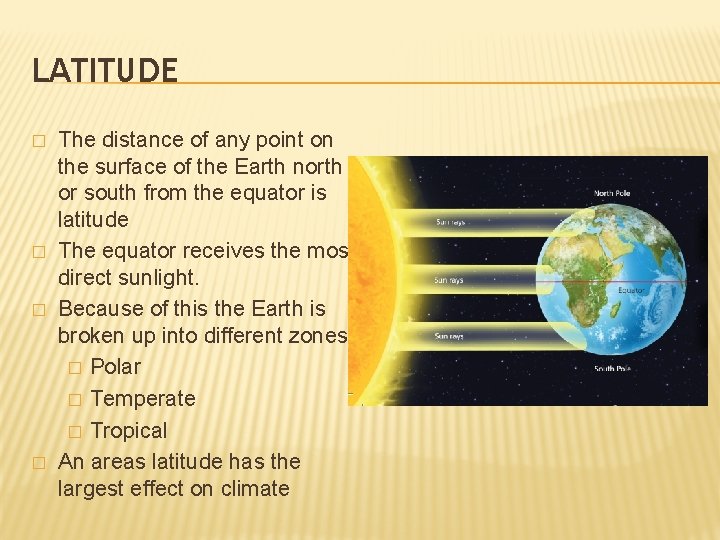
LATITUDE � � The distance of any point on the surface of the Earth north or south from the equator is latitude The equator receives the most direct sunlight. Because of this the Earth is broken up into different zones: � Polar � Temperate � Tropical An areas latitude has the largest effect on climate
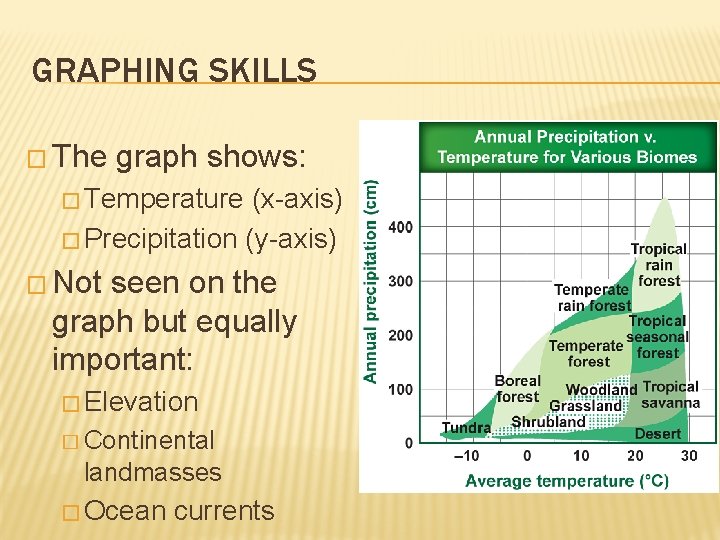
GRAPHING SKILLS � The graph shows: � Temperature (x-axis) � Precipitation (y-axis) � Not seen on the graph but equally important: � Elevation � Continental landmasses � Ocean currents
REVIEW �A biome is a large group of ecosystems that share the same climate and have similar types of communities. � Biomes are classified by their � Plants � Temperature � Precipitation
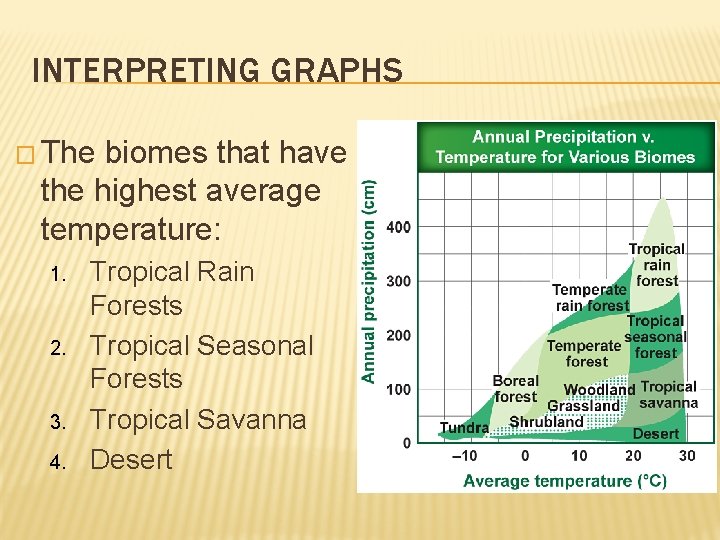
INTERPRETING GRAPHS � The biomes that have the highest average temperature: 1. 2. 3. 4. Tropical Rain Forests Tropical Seasonal Forests Tropical Savanna Desert
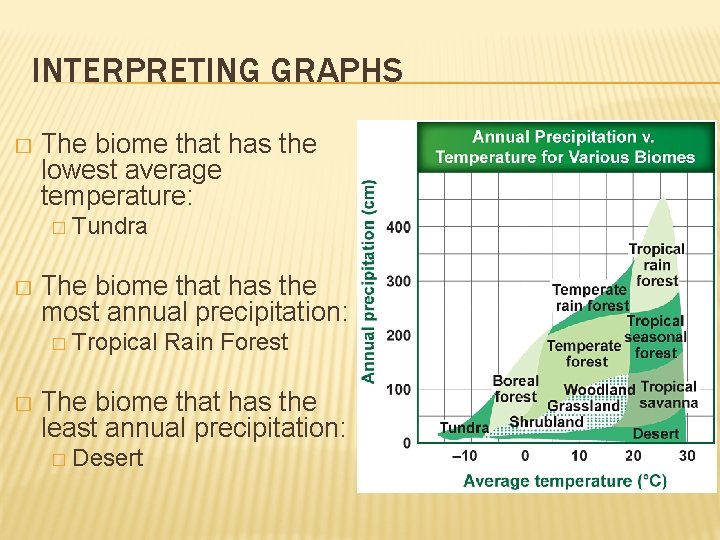
INTERPRETING GRAPHS � The biome that has the lowest average temperature: � � The biome that has the most annual precipitation: � � Tundra Tropical Rain Forest The biome that has the least annual precipitation: � Desert
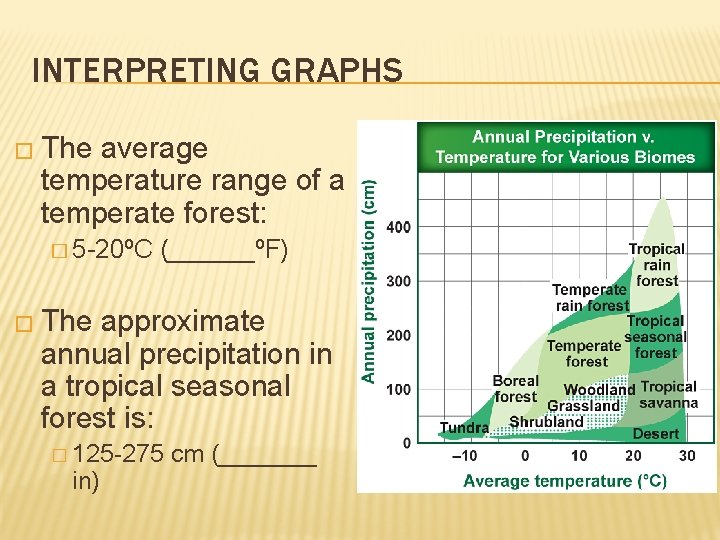
INTERPRETING GRAPHS � The average temperature range of a temperate forest: � 5 -20ºC (______ºF) � The approximate annual precipitation in a tropical seasonal forest is: � 125 -275 in) cm (_______
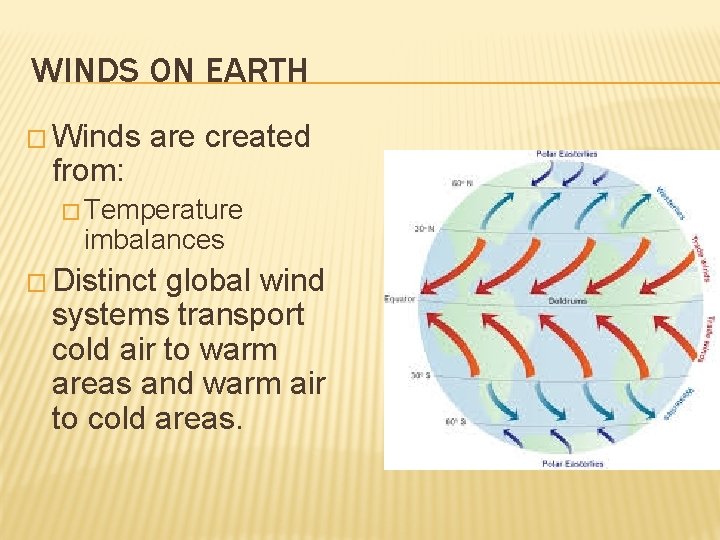
WINDS ON EARTH � Winds from: are created � Temperature imbalances � Distinct global wind systems transport cold air to warm areas and warm air to cold areas.
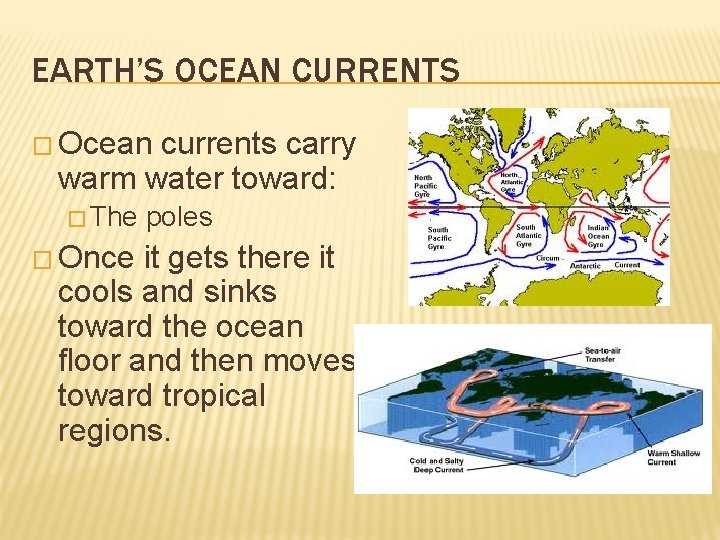
EARTH’S OCEAN CURRENTS � Ocean currents carry warm water toward: � The � Once poles it gets there it cools and sinks toward the ocean floor and then moves toward tropical regions.
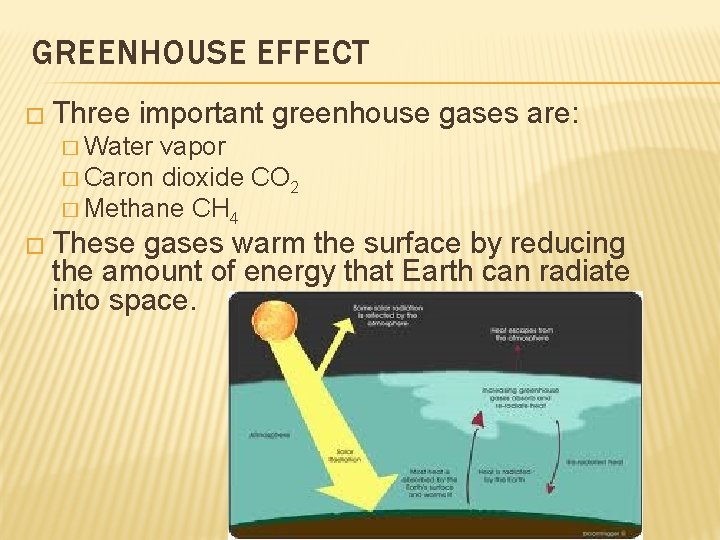
GREENHOUSE EFFECT � Three important greenhouse gases are: � Water vapor � Caron dioxide CO 2 � Methane CH 4 � These gases warm the surface by reducing the amount of energy that Earth can radiate into space.
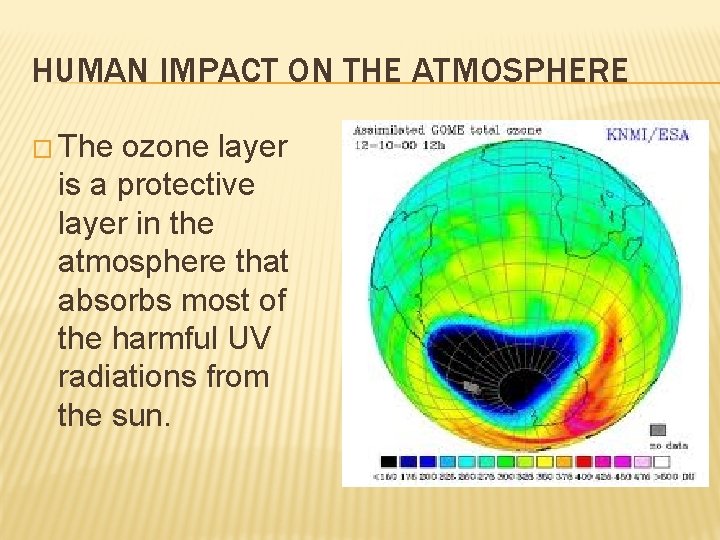
HUMAN IMPACT ON THE ATMOSPHERE � The ozone layer is a protective layer in the atmosphere that absorbs most of the harmful UV radiations from the sun.
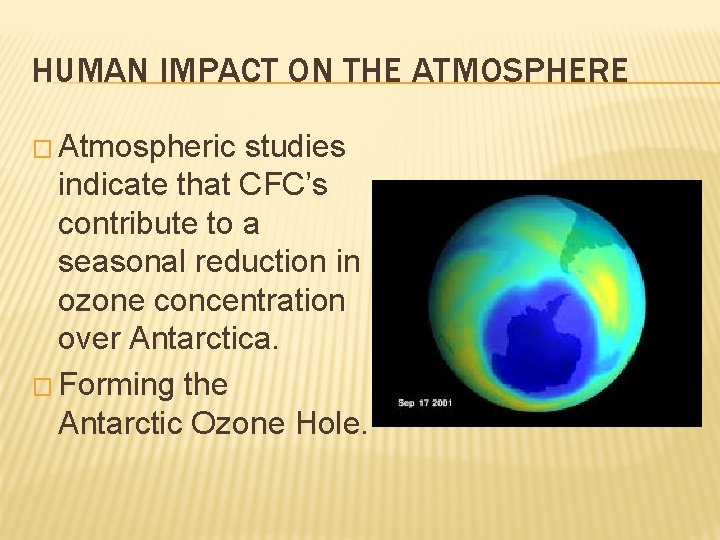
HUMAN IMPACT ON THE ATMOSPHERE � Atmospheric studies indicate that CFC’s contribute to a seasonal reduction in ozone concentration over Antarctica. � Forming the Antarctic Ozone Hole.
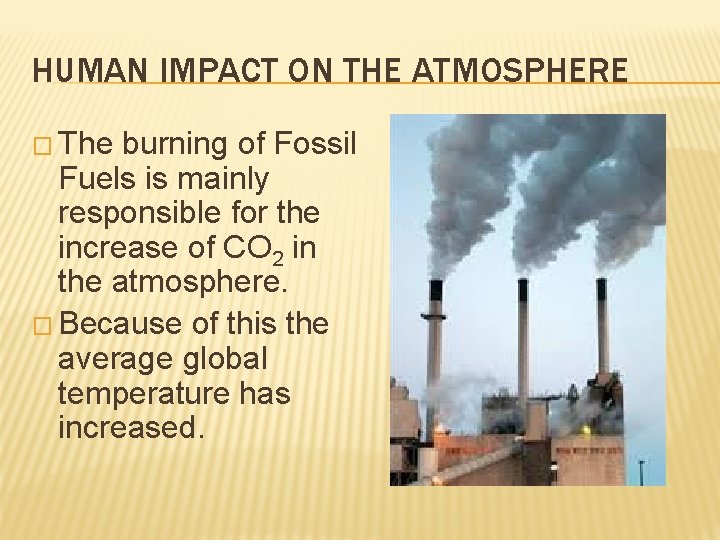
HUMAN IMPACT ON THE ATMOSPHERE � The burning of Fossil Fuels is mainly responsible for the increase of CO 2 in the atmosphere. � Because of this the average global temperature has increased.
- Slides: 16