
Section 2 5 Creating and Solving Compound Inequalities

- Slides: 21
Section 2. 5 Creating and Solving Compound Inequalities 1
Objective By following instructions students will be able to: § Solve a compound inequality and graph the solution set. 2
3 Def: compound statement is formed by combining two or more simple statements. A compound statement can be true or false. AND= both statements are true. OR= when either one statement is true or both.
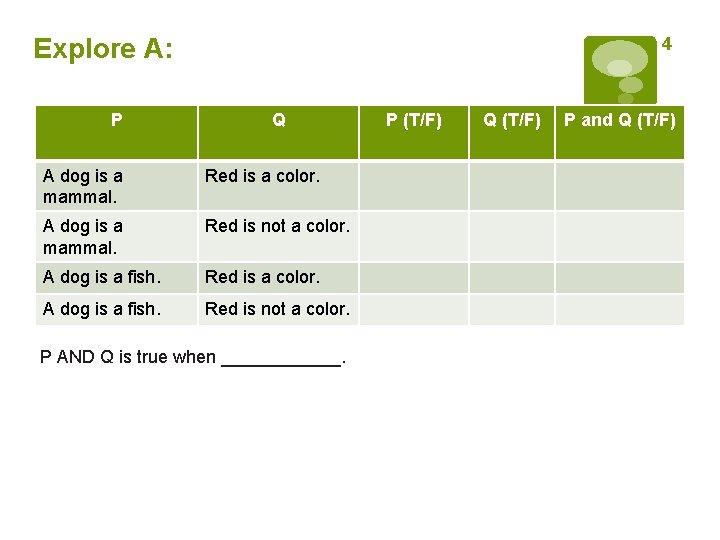
Explore A: P 4 Q A dog is a mammal. Red is a color. A dog is a mammal. Red is not a color. A dog is a fish. Red is not a color. P AND Q is true when ______. P (T/F) Q (T/F) P and Q (T/F)
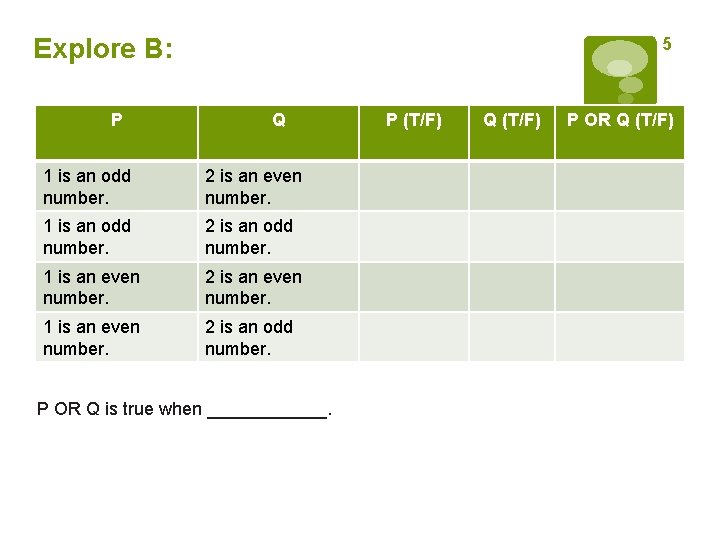
Explore B: P 5 Q 1 is an odd number. 2 is an even number. 1 is an odd number. 2 is an odd number. 1 is an even number. 2 is an even number. 1 is an even number. 2 is an odd number. P OR Q is true when ______. P (T/F) Q (T/F) P OR Q (T/F)
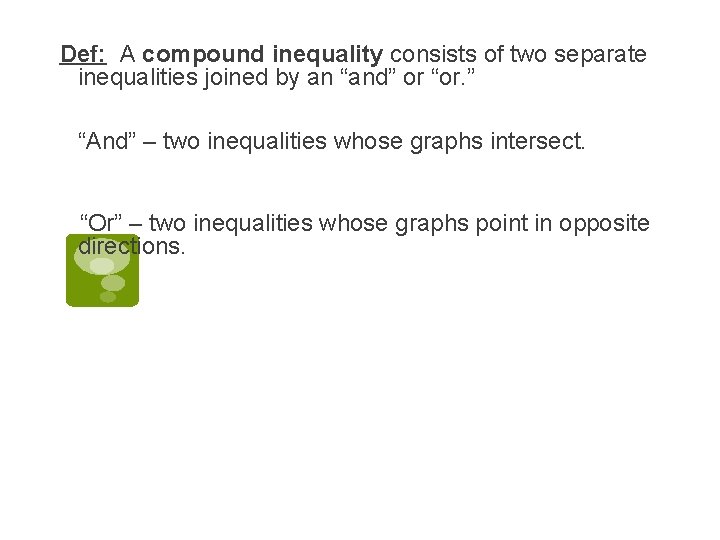
Def: A compound inequality consists of two separate inequalities joined by an “and” or “or. ” “And” – two inequalities whose graphs intersect. “Or” – two inequalities whose graphs point in opposite directions. 6
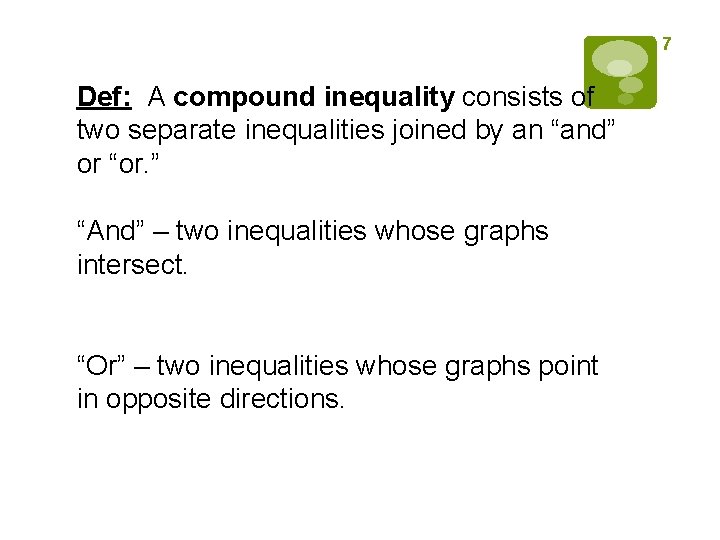
7 Def: A compound inequality consists of two separate inequalities joined by an “and” or “or. ” “And” – two inequalities whose graphs intersect. “Or” – two inequalities whose graphs point in opposite directions.
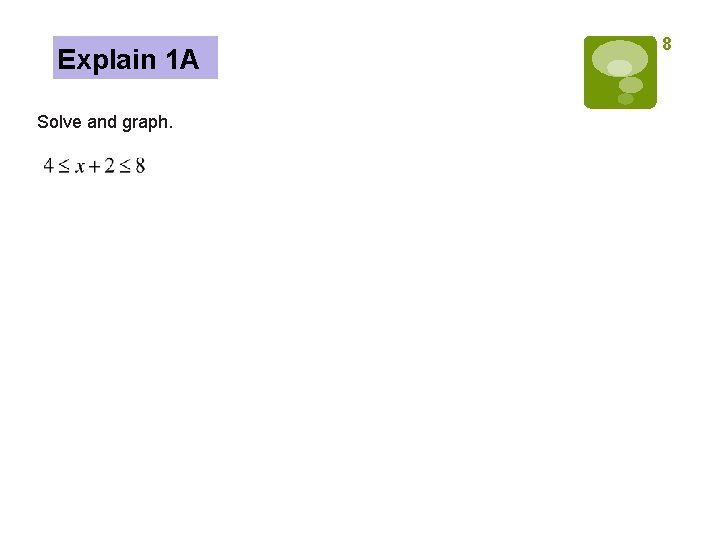
Explain 1 A Solve and graph. 8
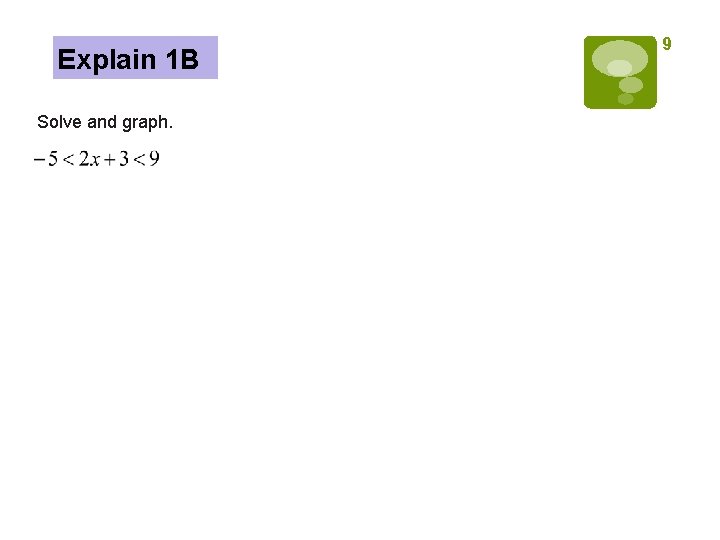
Explain 1 B Solve and graph. 9
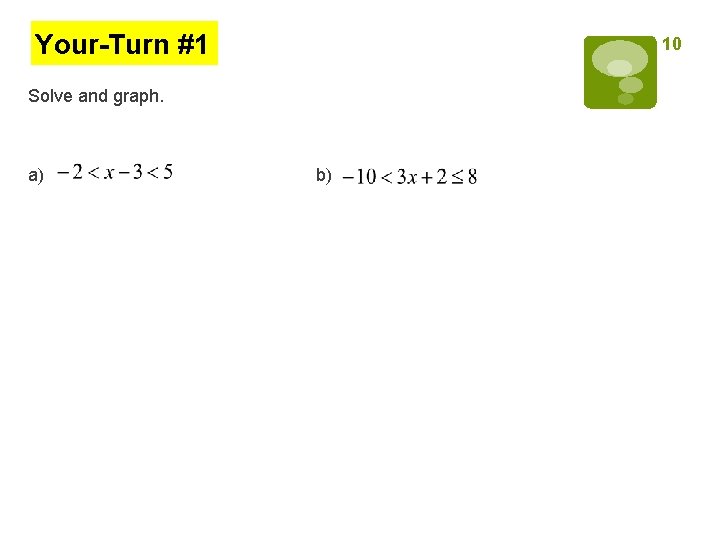
Your-Turn #1 10 Solve and graph. a) b)
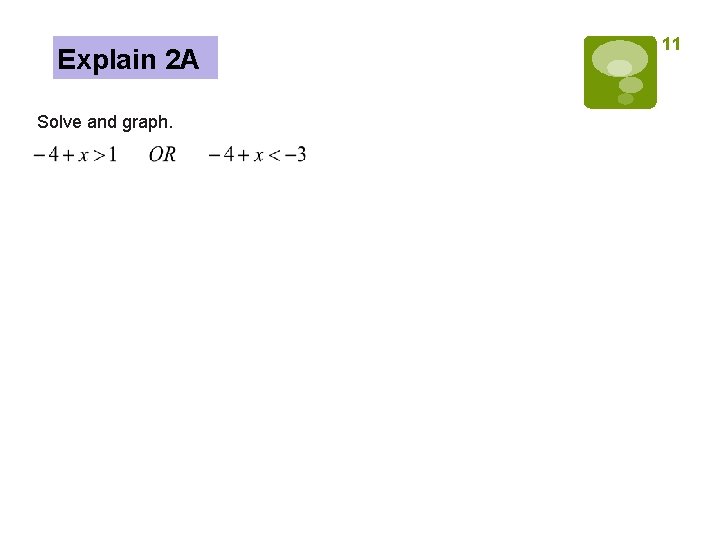
Explain 2 A Solve and graph. 11
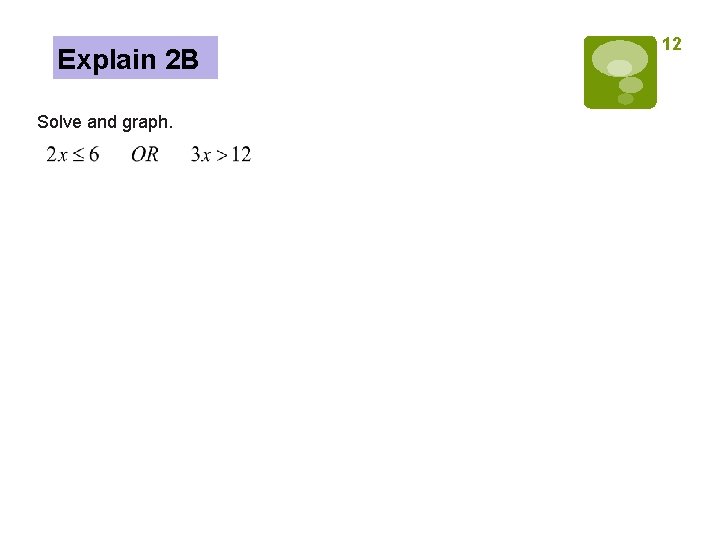
Explain 2 B Solve and graph. 12
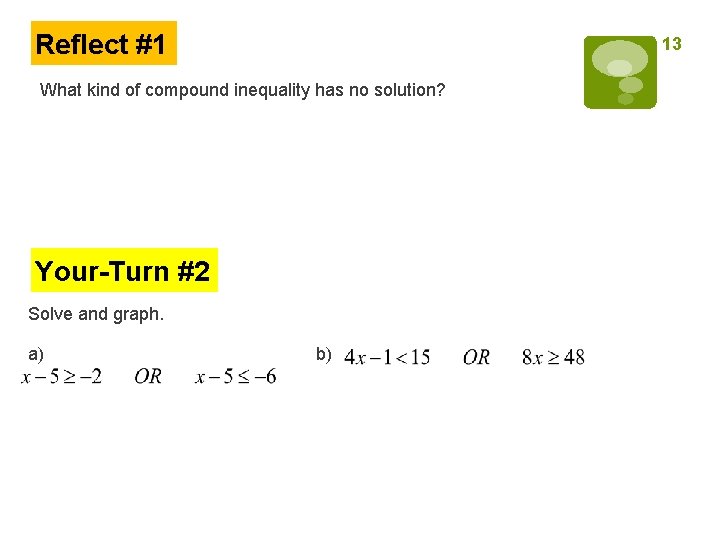
Reflect #1 13 What kind of compound inequality has no solution? Your-Turn #2 Solve and graph. a) b)
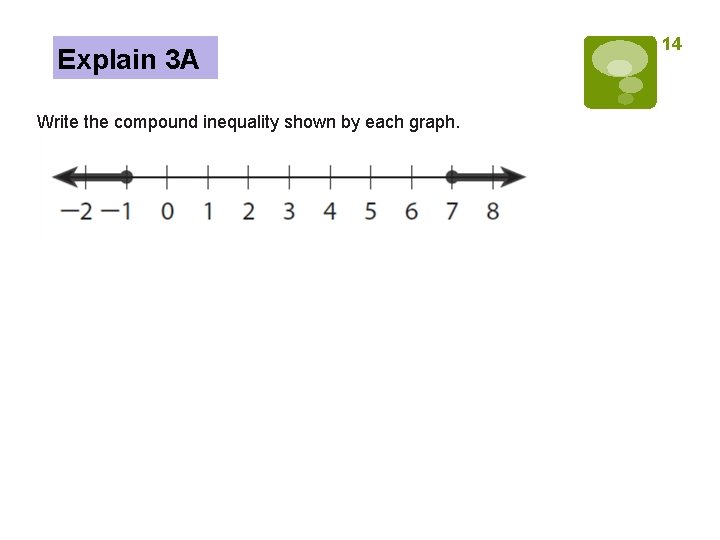
Explain 3 A Write the compound inequality shown by each graph. 14
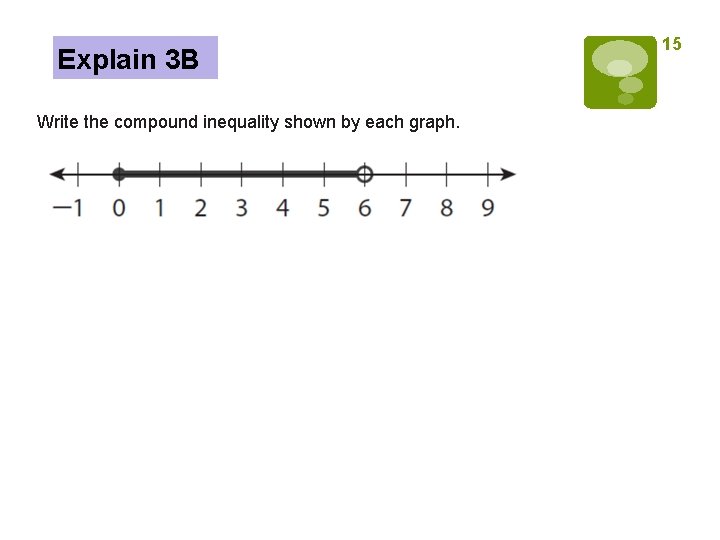
Explain 3 B Write the compound inequality shown by each graph. 15
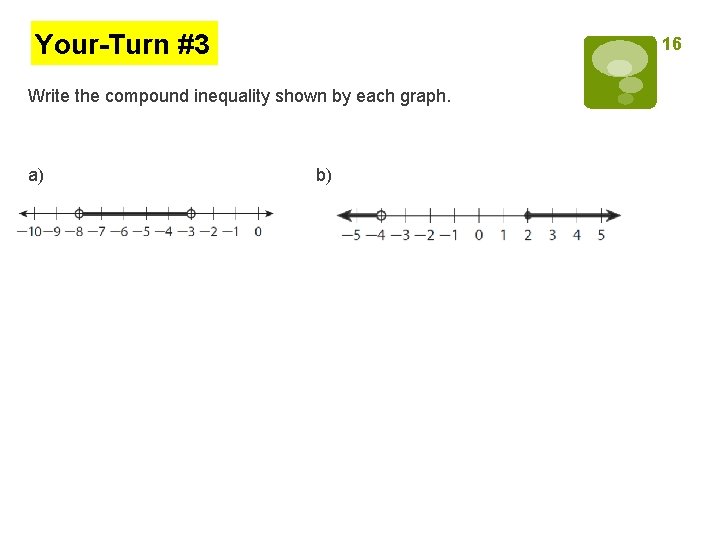
Your-Turn #3 16 Write the compound inequality shown by each graph. a) b)
Explain 4 A Write a compound inequality to represent the indicated quality-control level, and graph the solutions. The recommended p. H level for swimming pool water is between 7. 2 and 7. 6, inclusive. Let p be the p. H level of swimming pool water. 17
Explain 4 B Write a compound inequality to represent the indicated quality-control level, and graph the solutions. The recommended free chlorine level for swimming pool water is between 2. 0 and 3. 0 parts per million, inclusive. Let c be the free chlorine level in the pool. 18
Your-Turn #4 Write a compound inequality to represent the indicated quality-control level, and graph the solutions. The recommended alkalinity level for swimming pool water is between 80 and 120 parts per million, inclusive. 19
Revisit Objective Did we… § Solve a compound inequality and graph the solution 20 set?
Homework § HW: 21 § Page 73 #s 1 -23, 26