
SECTION 2 1 DECISION SUPPORT SYSTEMS The Mc


- Slides: 51
SECTION 2. 1 DECISION SUPPORT SYSTEMS © The Mc. Graw-Hill Companies, All Rights Reserved
2 MAKING ORGANIZATIONAL BUSINESS DECISIONS § Managerial decision-making challenges • Analyze large amounts of information • Apply sophisticated analysis techniques • Make decisions quickly
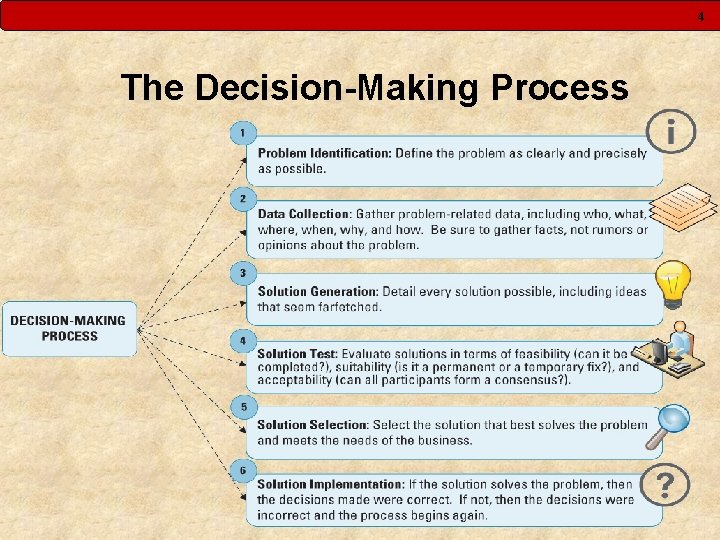
3 The Decision-Making Process § The six-step decision-making process 1. Problem identification 2. Data collection 3. Solution generation 4. Solution test 5. Solution selection 6. Solution implementation
4 The Decision-Making Process
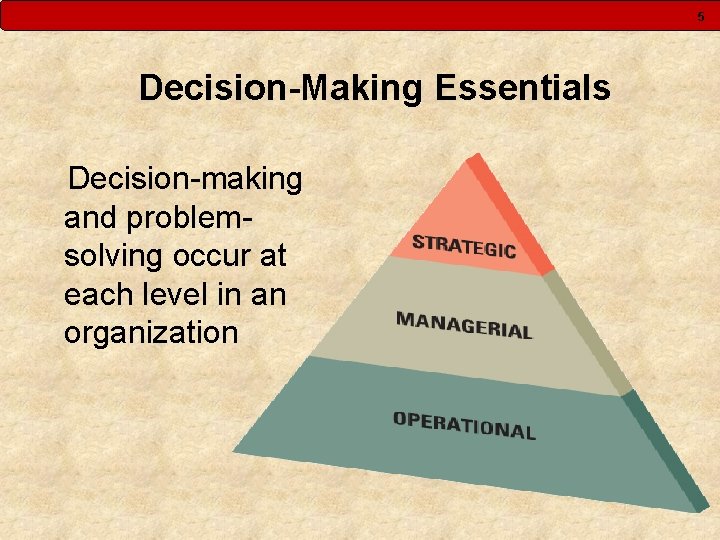
5 Decision-Making Essentials Decision-making and problemsolving occur at each level in an organization
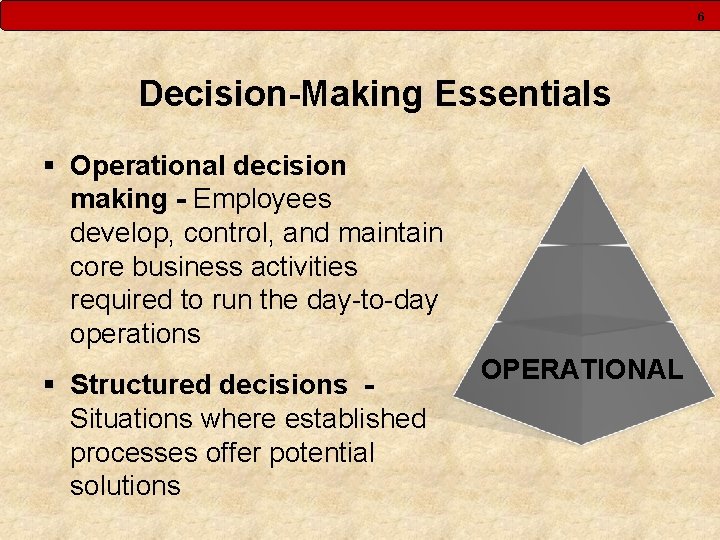
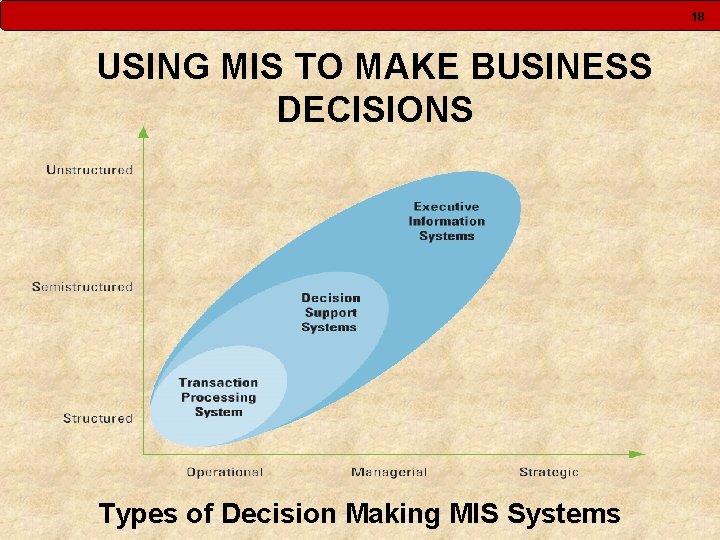
6 Decision-Making Essentials § Operational decision making - Employees develop, control, and maintain core business activities required to run the day-to-day operations § Structured decisions Situations where established processes offer potential solutions OPERATIONAL
7 Decision-Making Essentials § Managerial decision making – Employees evaluate company operations to identify, adapt to, and leverage change § Semistructured decisions – Occur in situations in which a few established processes help to evaluate potential solutions, but not enough to lead to a definite recommended decision MANAGERIAL
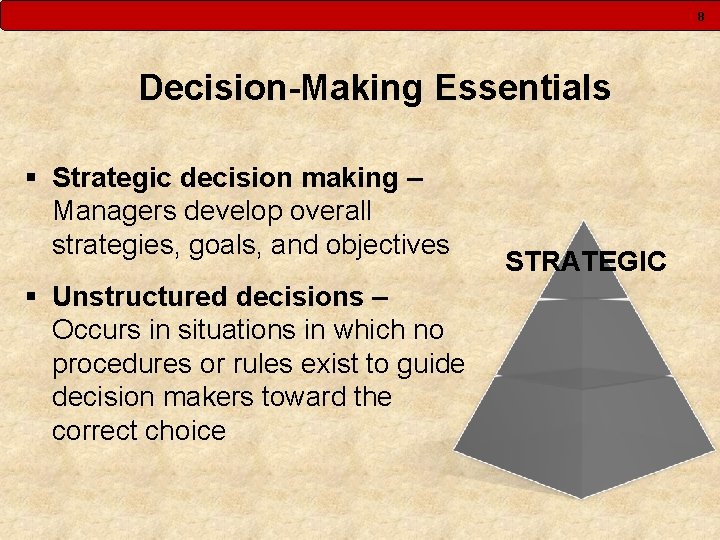
8 Decision-Making Essentials § Strategic decision making – Managers develop overall strategies, goals, and objectives § Unstructured decisions – Occurs in situations in which no procedures or rules exist to guide decision makers toward the correct choice STRATEGIC
9 MEASURING ORGANIZATIONAL BUSINESS DECISIONS § Project – A temporary activity a company undertakes to create a unique product, service, or result § Metrics – Measurements that evaluate results to determine whether a project is meeting its goals
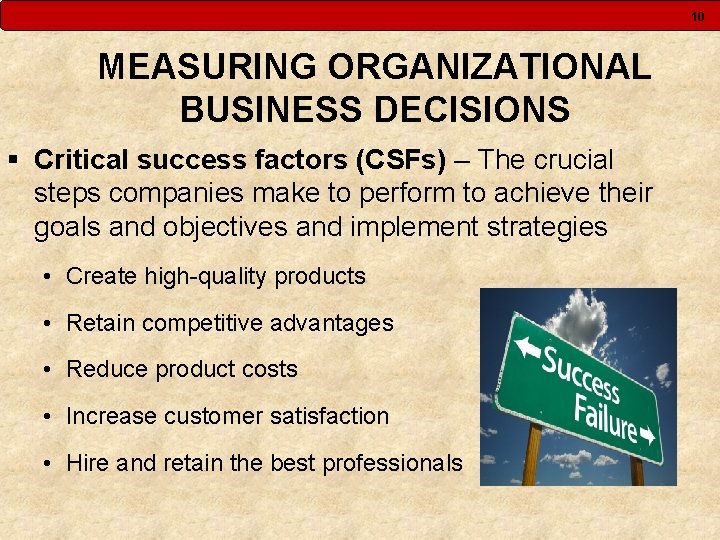
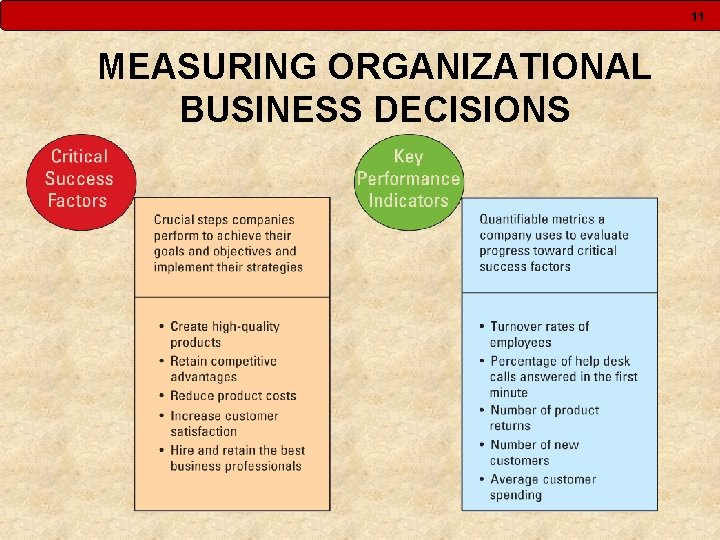
10 MEASURING ORGANIZATIONAL BUSINESS DECISIONS § Critical success factors (CSFs) – The crucial steps companies make to perform to achieve their goals and objectives and implement strategies • Create high-quality products • Retain competitive advantages • Reduce product costs • Increase customer satisfaction • Hire and retain the best professionals
11 MEASURING ORGANIZATIONAL BUSINESS DECISIONS
12 MEASURING ORGANIZATIONAL BUSINESS DECISIONS § Key performance indicators (KPIs) – The quantifiable metrics a company uses to evaluate progress toward critical success factors • Turnover rates of employees • Number of product returns • Number of new customers • Average customer spending
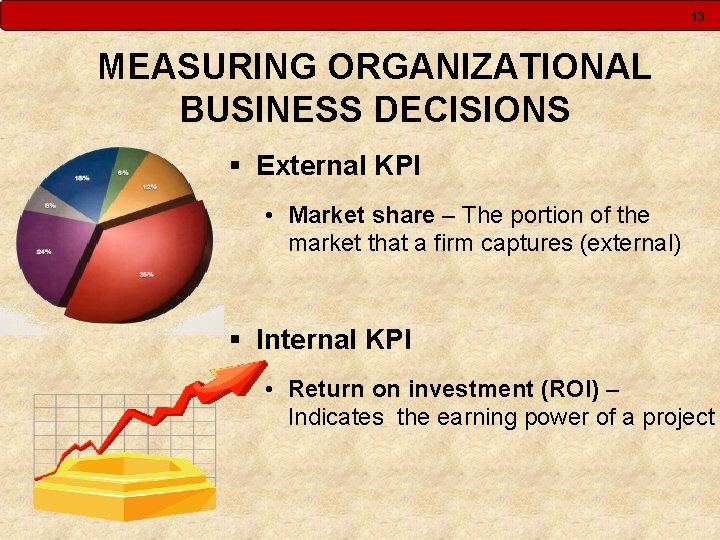
13 MEASURING ORGANIZATIONAL BUSINESS DECISIONS § External KPI • Market share – The portion of the market that a firm captures (external) § Internal KPI • Return on investment (ROI) – Indicates the earning power of a project
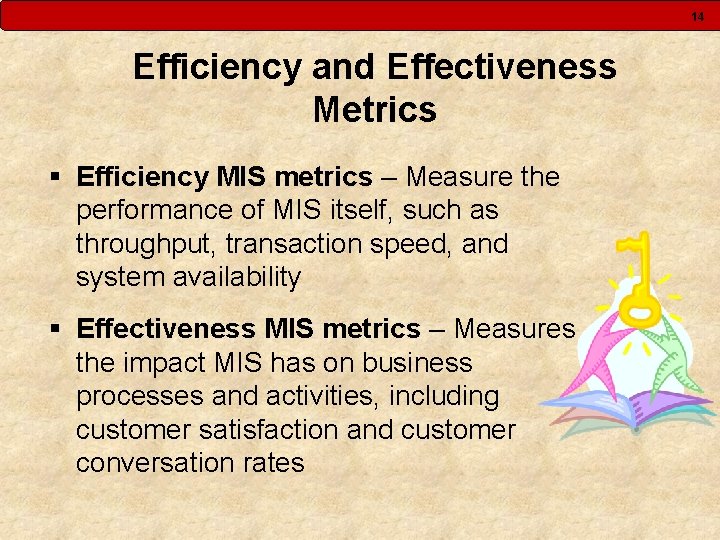
14 Efficiency and Effectiveness Metrics § Efficiency MIS metrics – Measure the performance of MIS itself, such as throughput, transaction speed, and system availability § Effectiveness MIS metrics – Measures the impact MIS has on business processes and activities, including customer satisfaction and customer conversation rates
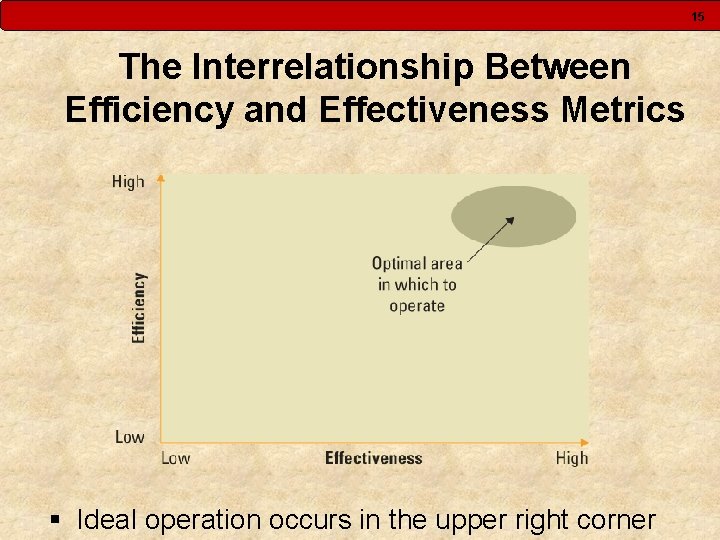
15 The Interrelationship Between Efficiency and Effectiveness Metrics § Ideal operation occurs in the upper right corner
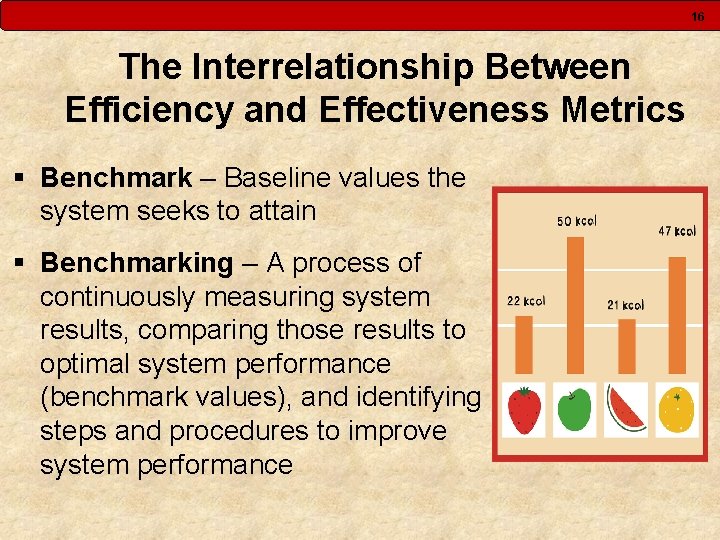
16 The Interrelationship Between Efficiency and Effectiveness Metrics § Benchmark – Baseline values the system seeks to attain § Benchmarking – A process of continuously measuring system results, comparing those results to optimal system performance (benchmark values), and identifying steps and procedures to improve system performance
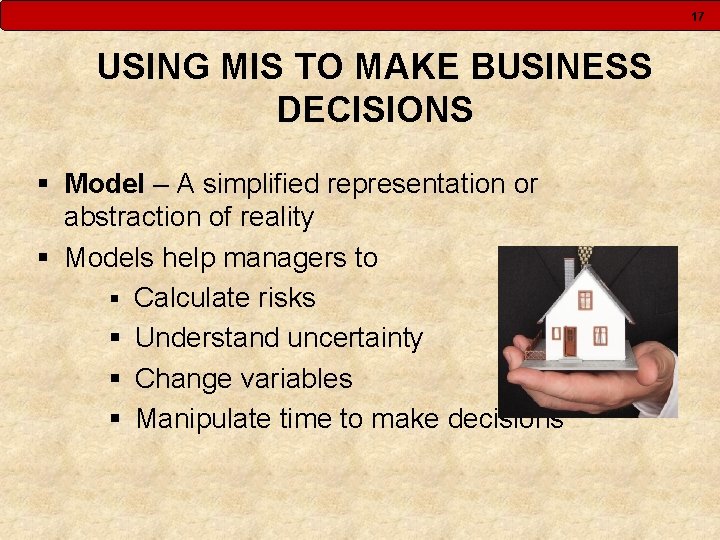
17 USING MIS TO MAKE BUSINESS DECISIONS § Model – A simplified representation or abstraction of reality § Models help managers to § Calculate risks § Understand uncertainty § Change variables § Manipulate time to make decisions
18 USING MIS TO MAKE BUSINESS DECISIONS Types of Decision Making MIS Systems
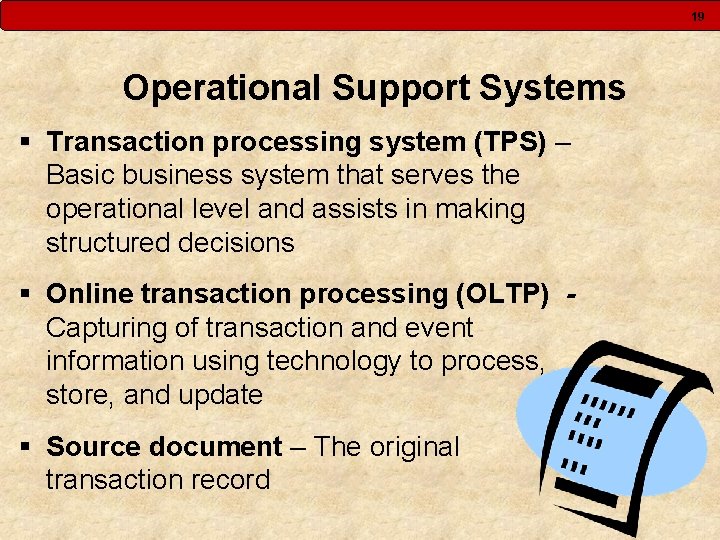
19 Operational Support Systems § Transaction processing system (TPS) – Basic business system that serves the operational level and assists in making structured decisions § Online transaction processing (OLTP) Capturing of transaction and event information using technology to process, store, and update § Source document – The original transaction record
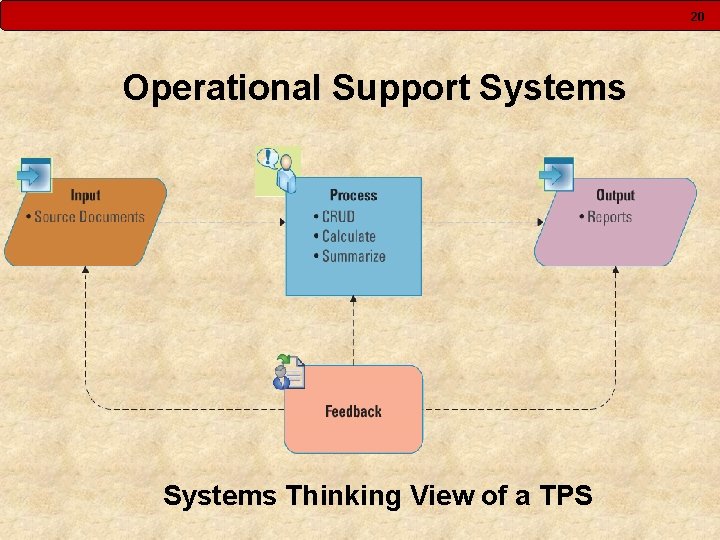
20 Operational Support Systems Thinking View of a TPS
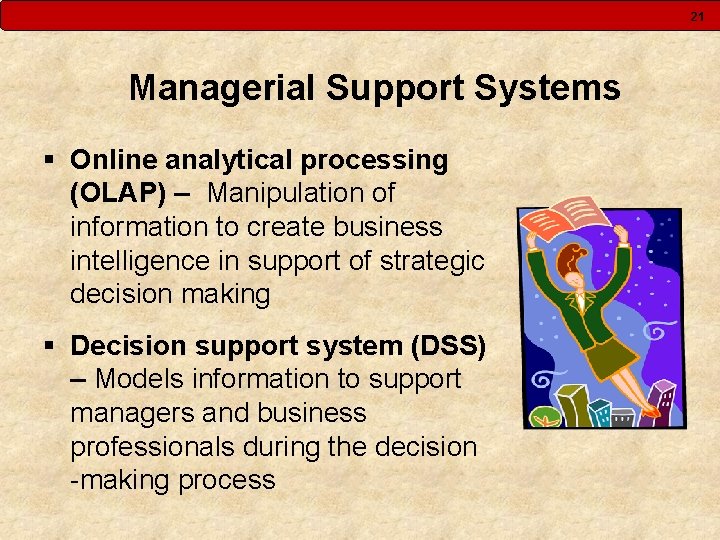
21 Managerial Support Systems § Online analytical processing (OLAP) – Manipulation of information to create business intelligence in support of strategic decision making § Decision support system (DSS) – Models information to support managers and business professionals during the decision -making process
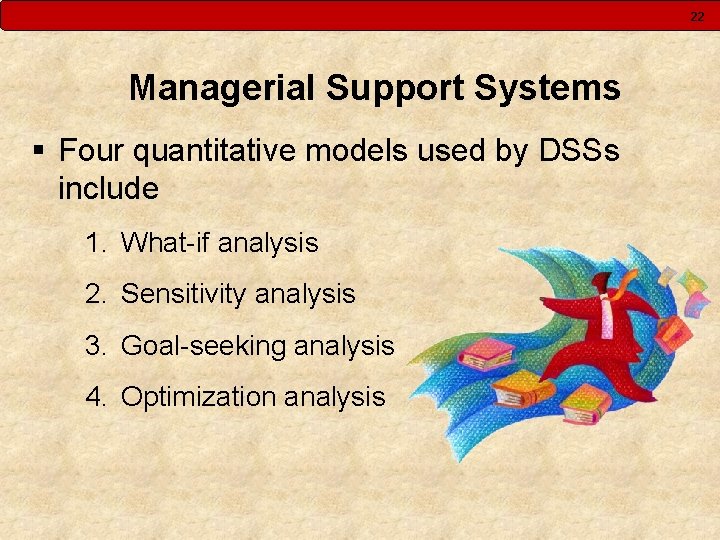
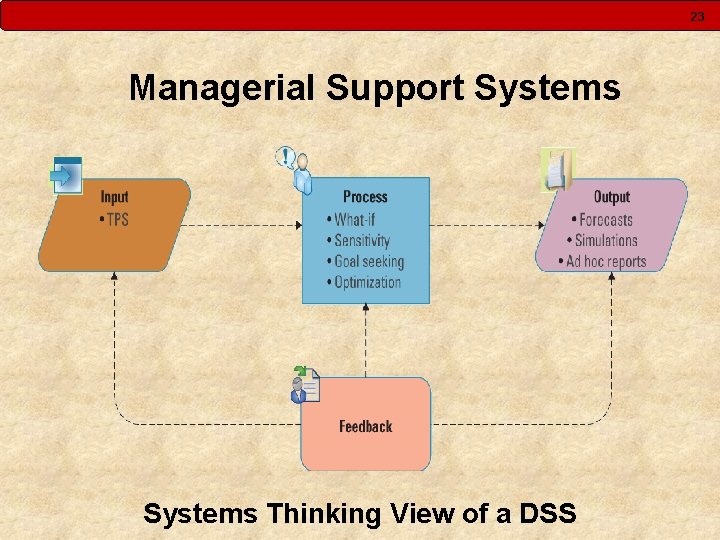
22 Managerial Support Systems § Four quantitative models used by DSSs include 1. What-if analysis 2. Sensitivity analysis 3. Goal-seeking analysis 4. Optimization analysis
23 Managerial Support Systems Thinking View of a DSS
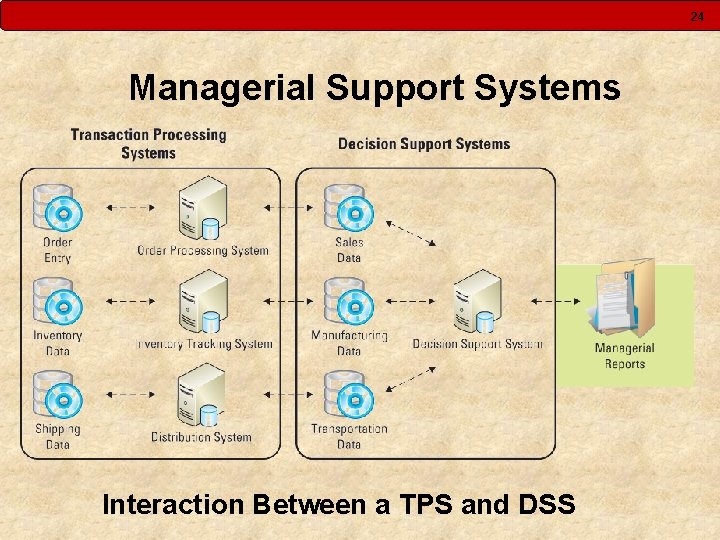
24 Managerial Support Systems Interaction Between a TPS and DSS
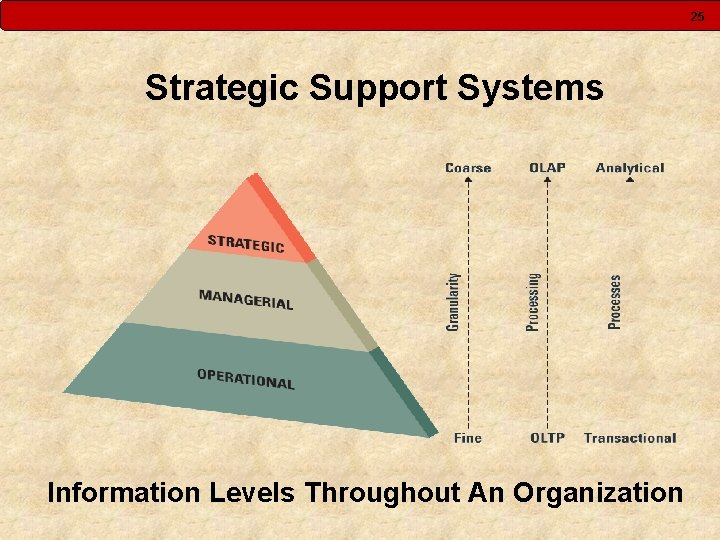
25 Strategic Support Systems Information Levels Throughout An Organization
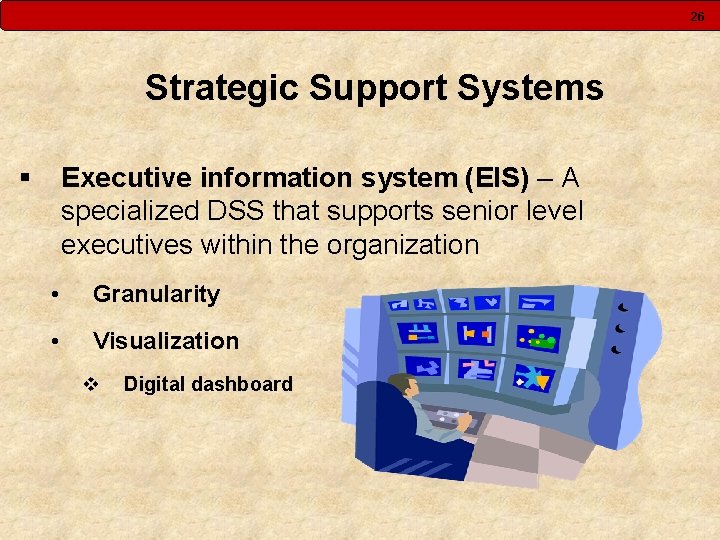
26 Strategic Support Systems § Executive information system (EIS) – A specialized DSS that supports senior level executives within the organization • Granularity • Visualization v Digital dashboard
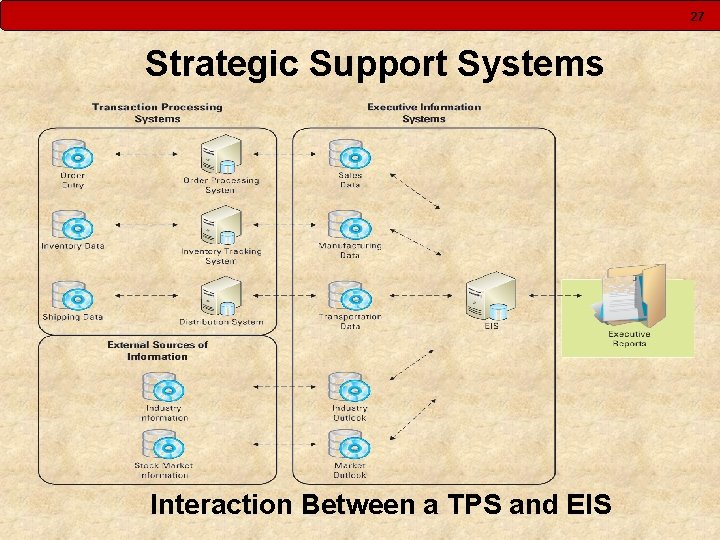
27 Strategic Support Systems Interaction Between a TPS and EIS
28 Strategic Support Systems § Most EISs offering the following capabilities • Consolidation • Drill-down • Slice-and-dice
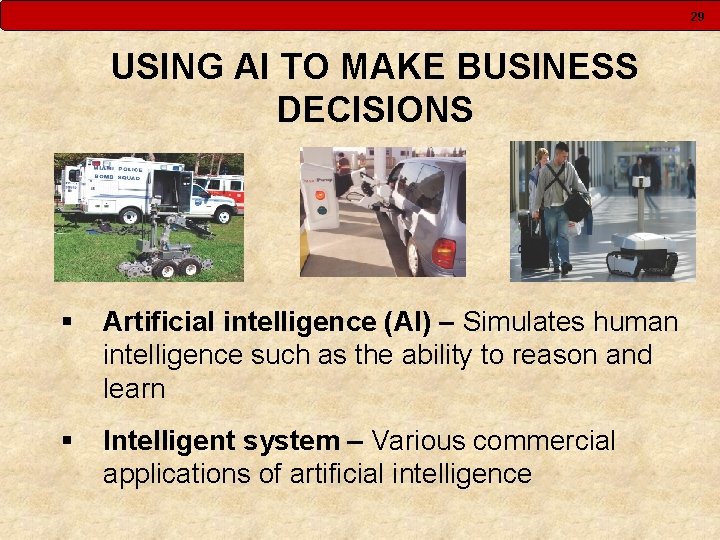
29 USING AI TO MAKE BUSINESS DECISIONS § Artificial intelligence (AI) – Simulates human intelligence such as the ability to reason and learn § Intelligent system – Various commercial applications of artificial intelligence
30 USING AI TO MAKE BUSINESS DECISIONS § Five most common categories of AI 1. Expert system – Computerized advisory programs that imitate the reasoning processes of experts in solving difficult problems 2. Neural Network – Attempts to emulate the way the human brain works – Fuzzy logic – A mathematical method of handling imprecise or subjective information
31 USING AI TO MAKE BUSINESS DECISIONS 3. Genetic algorithm – An artificial intelligent system that mimics the evolutionary, survival-of-the-fittest process to generate increasingly better solutions to a problem 4. Intelligent agent – Special-purpose knowledge-based information system that accomplishes specific tasks on behalf of its users
32 USING AI TO MAKE BUSINESS DECISIONS v Shopping bot – Software that will search several retailer websites and provide a comparison of each retailer’s offerings including price and availability 5. Virtual reality - A computer-simulated environment that can be a simulation of the real world or an imaginary world
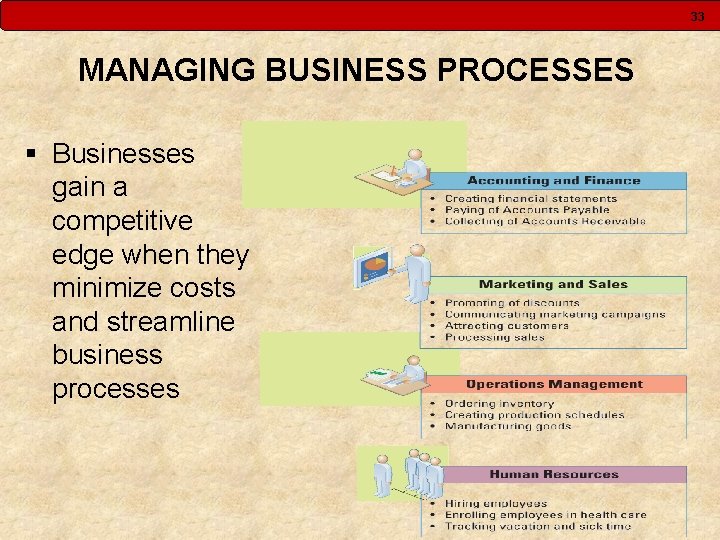
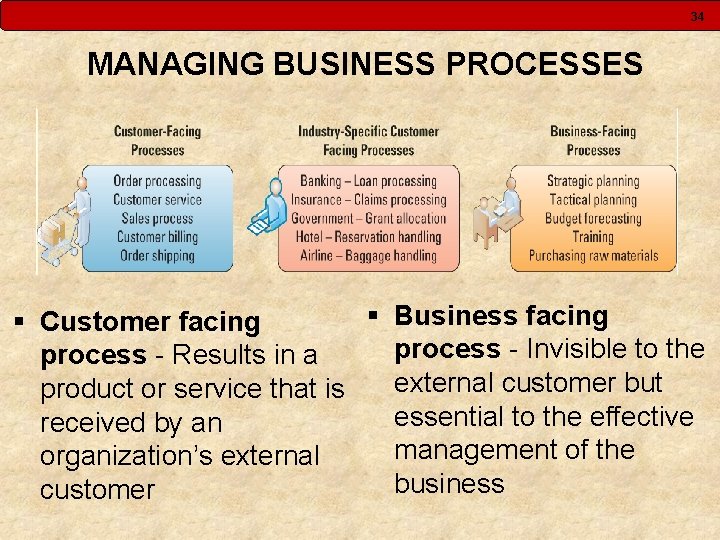
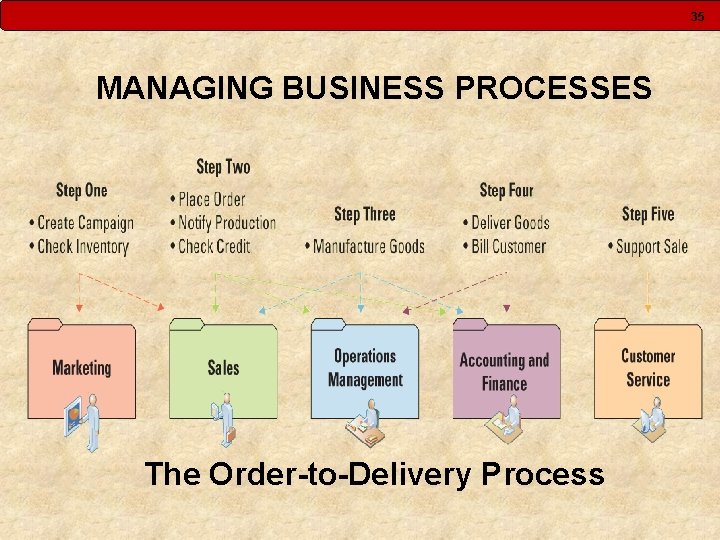
33 MANAGING BUSINESS PROCESSES § Businesses gain a competitive edge when they minimize costs and streamline business processes
34 MANAGING BUSINESS PROCESSES § Business facing § Customer facing process - Invisible to the process - Results in a external customer but product or service that is essential to the effective received by an management of the organization’s external business customer
35 MANAGING BUSINESS PROCESSES The Order-to-Delivery Process
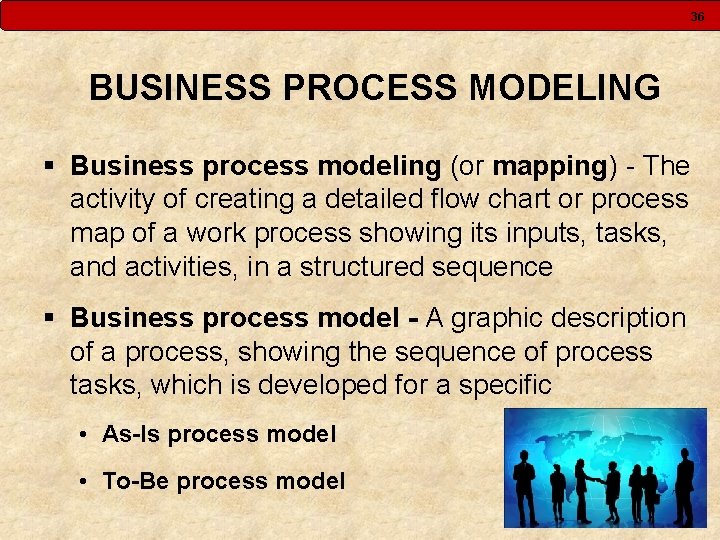
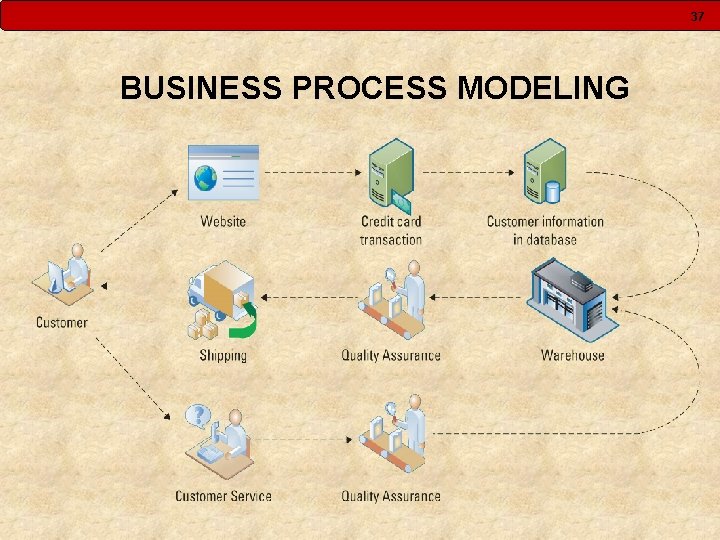
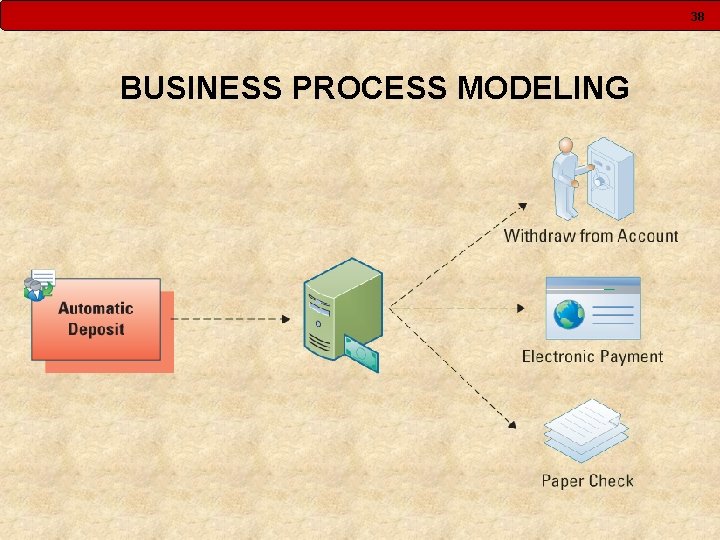
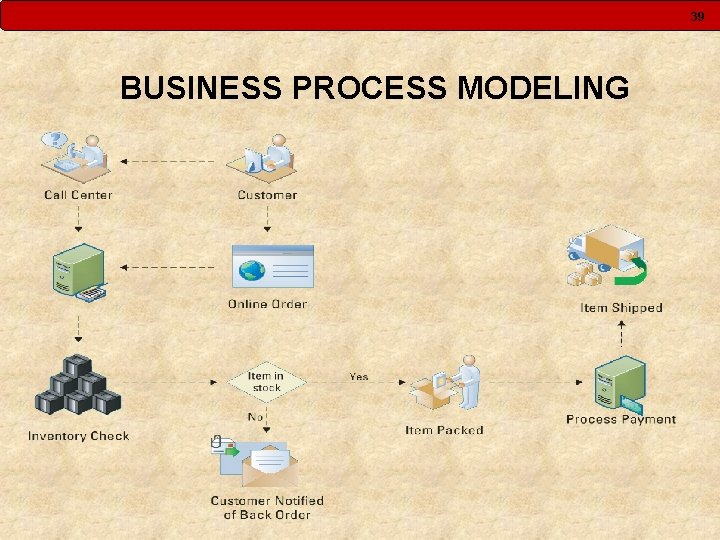
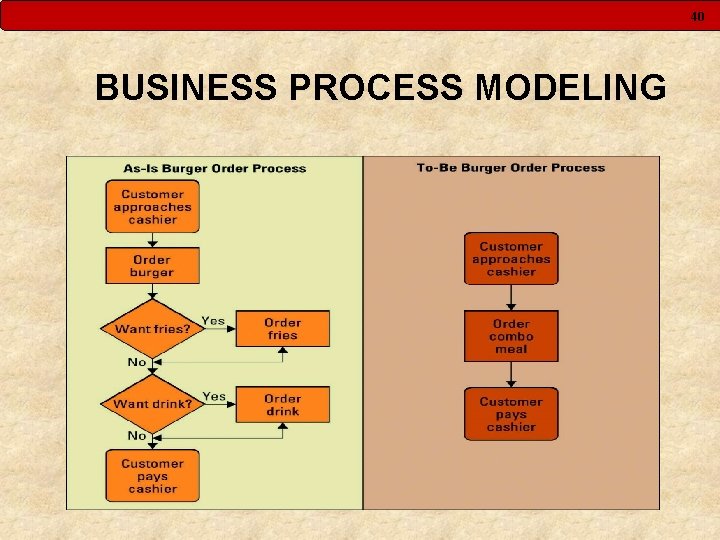
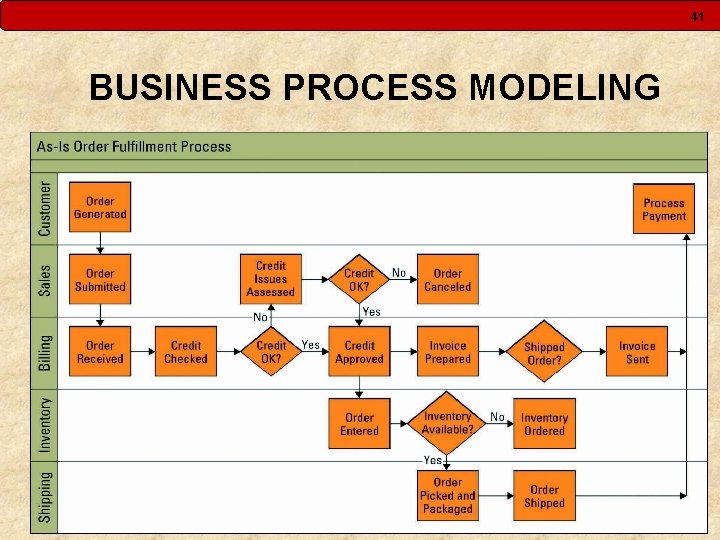
36 BUSINESS PROCESS MODELING § Business process modeling (or mapping) - The activity of creating a detailed flow chart or process map of a work process showing its inputs, tasks, and activities, in a structured sequence § Business process model - A graphic description of a process, showing the sequence of process tasks, which is developed for a specific • As-Is process model • To-Be process model
37 BUSINESS PROCESS MODELING
38 BUSINESS PROCESS MODELING
39 BUSINESS PROCESS MODELING
40 BUSINESS PROCESS MODELING
41 BUSINESS PROCESS MODELING
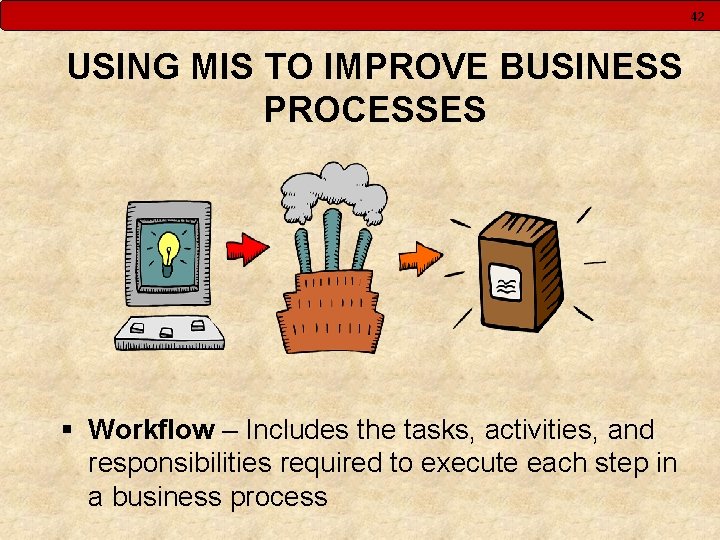
42 USING MIS TO IMPROVE BUSINESS PROCESSES § Workflow – Includes the tasks, activities, and responsibilities required to execute each step in a business process
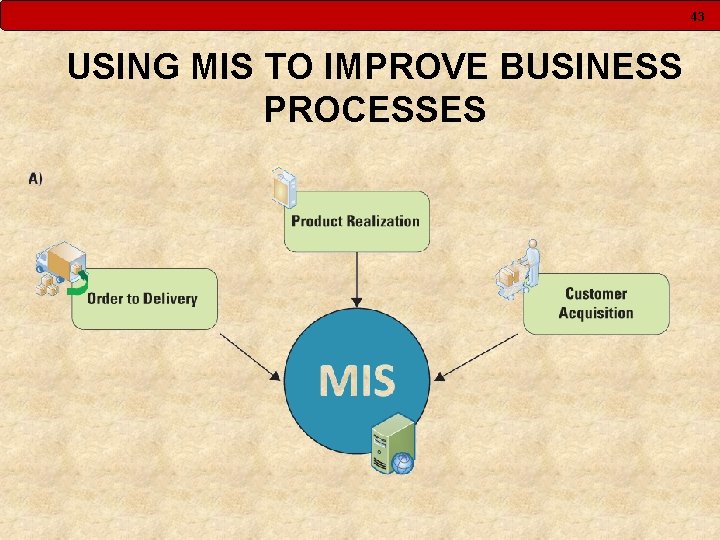
43 USING MIS TO IMPROVE BUSINESS PROCESSES
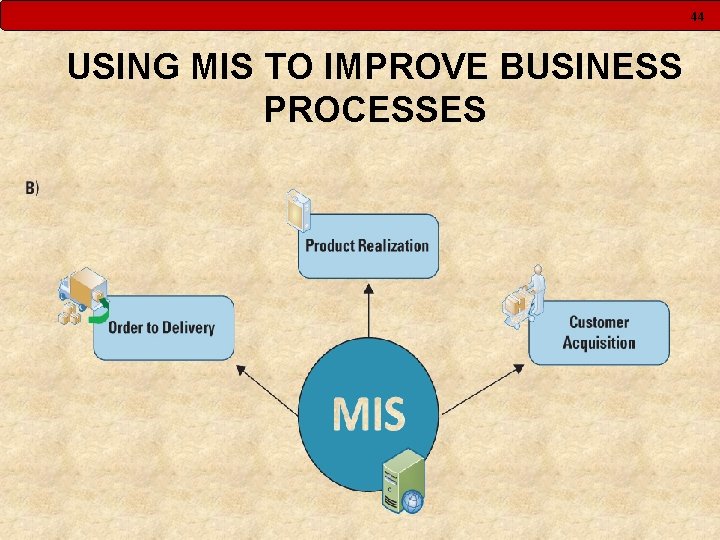
44 USING MIS TO IMPROVE BUSINESS PROCESSES
45 USING MIS TO IMPROVE BUSINESS PROCESSES § Types of change an organization can achieve, along with the magnitudes of change and the potential business benefit
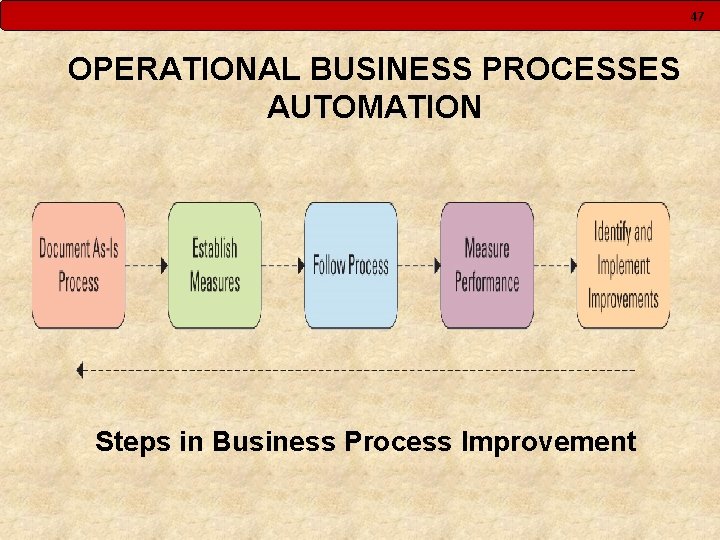
46 OPERATIONAL BUSINESS PROCESSES AUTOMATION § Customers are demanding better products and services § Business process improvement – Attempts to understand measure the current process and make performance improvements accordingly § Automation – The process of computerizing manual tasks
47 OPERATIONAL BUSINESS PROCESSES AUTOMATION Steps in Business Process Improvement
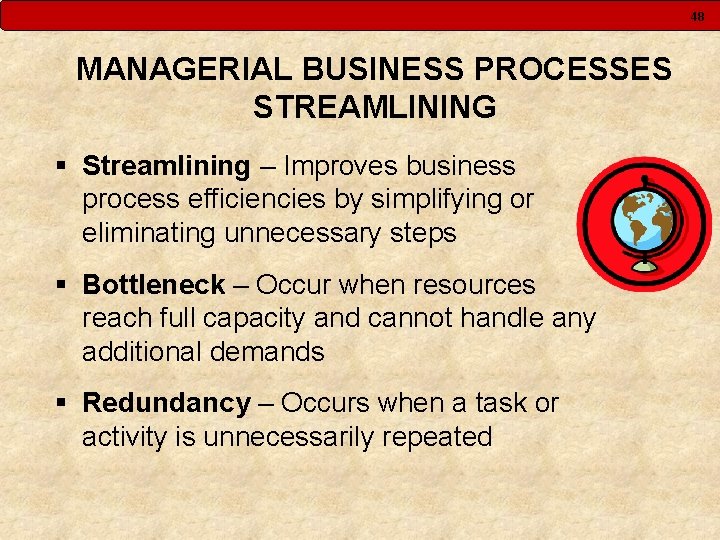
48 MANAGERIAL BUSINESS PROCESSES STREAMLINING § Streamlining – Improves business process efficiencies by simplifying or eliminating unnecessary steps § Bottleneck – Occur when resources reach full capacity and cannot handle any additional demands § Redundancy – Occurs when a task or activity is unnecessarily repeated
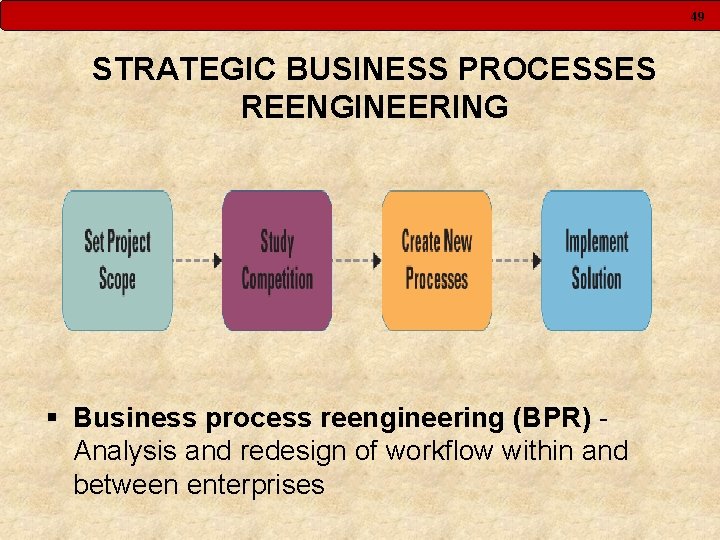
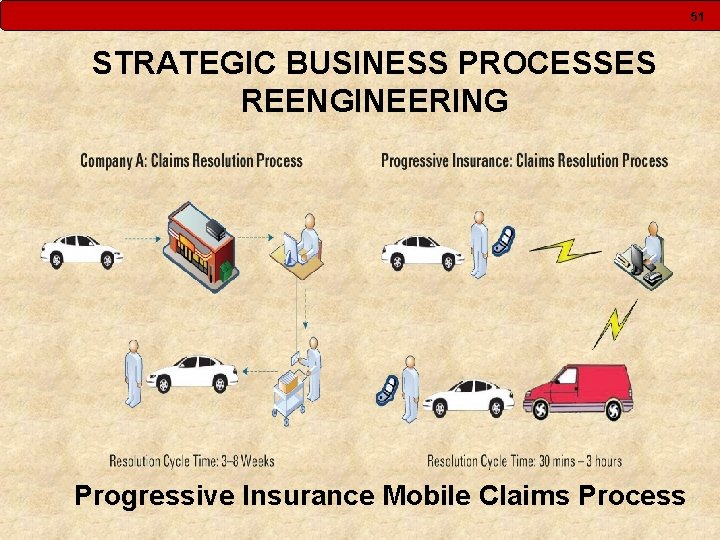
49 STRATEGIC BUSINESS PROCESSES REENGINEERING § Business process reengineering (BPR) Analysis and redesign of workflow within and between enterprises
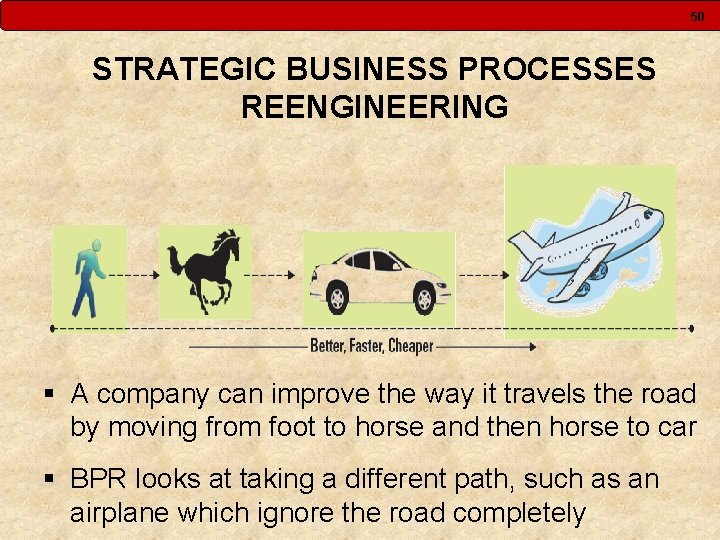
50 STRATEGIC BUSINESS PROCESSES REENGINEERING § A company can improve the way it travels the road by moving from foot to horse and then horse to car § BPR looks at taking a different path, such as an airplane which ignore the road completely
51 STRATEGIC BUSINESS PROCESSES REENGINEERING Progressive Insurance Mobile Claims Process