
Section 18 4 EMBRYONIC DEVELOPMENT OF MULTICELLULAR ORGANISMS

Section 18. 4 EMBRYONIC DEVELOPMENT OF MULTICELLULAR ORGANISMS
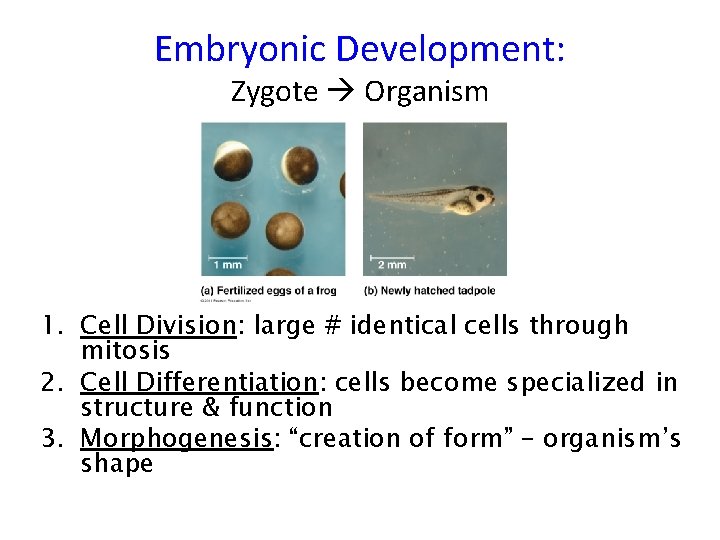
Embryonic Development: Zygote Organism 1. Cell Division: large # identical cells through mitosis 2. Cell Differentiation: cells become specialized in structure & function 3. Morphogenesis: “creation of form” – organism’s shape
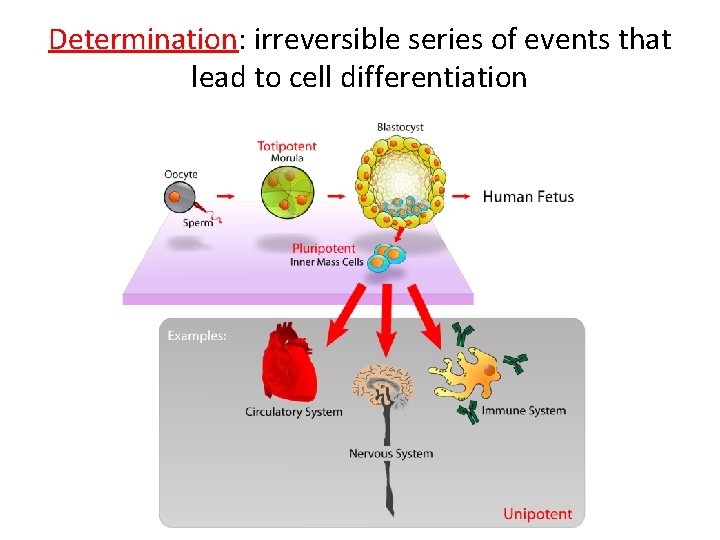
Determination: irreversible series of events that lead to cell differentiation
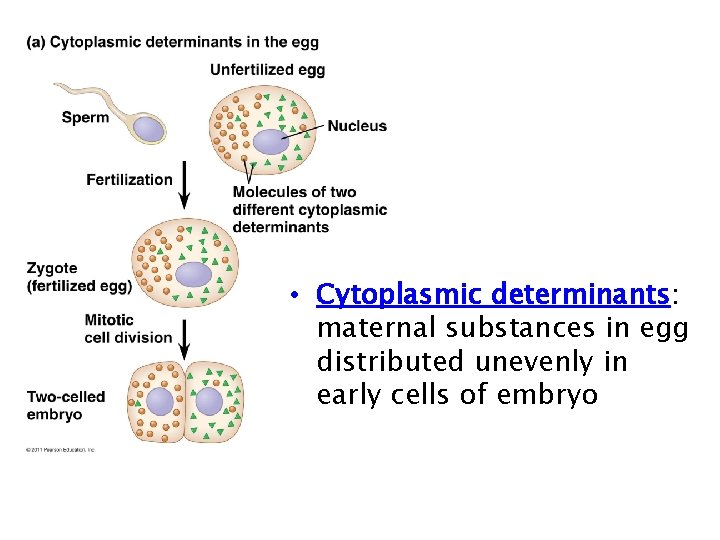
• Cytoplasmic determinants: maternal substances in egg distributed unevenly in early cells of embryo

• Induction: cells triggered to differentiate • Cell-Cell Signals: molecules produced by one cell influences neighboring cells – Eg. Growth factors

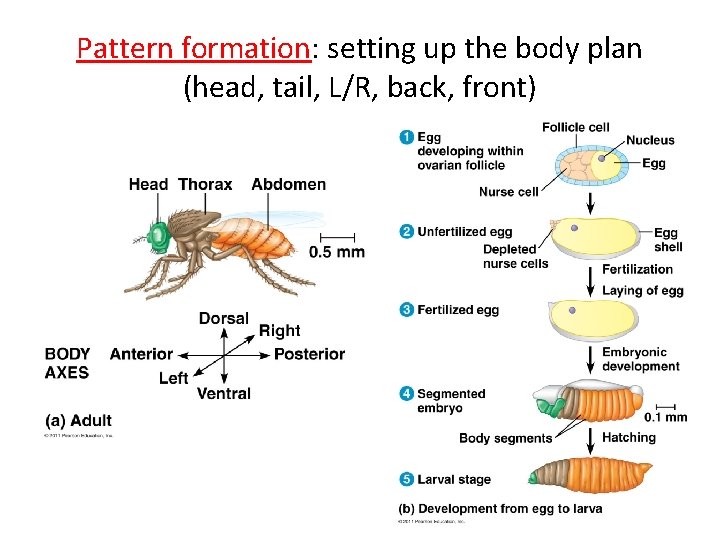
Pattern formation: setting up the body plan (head, tail, L/R, back, front)
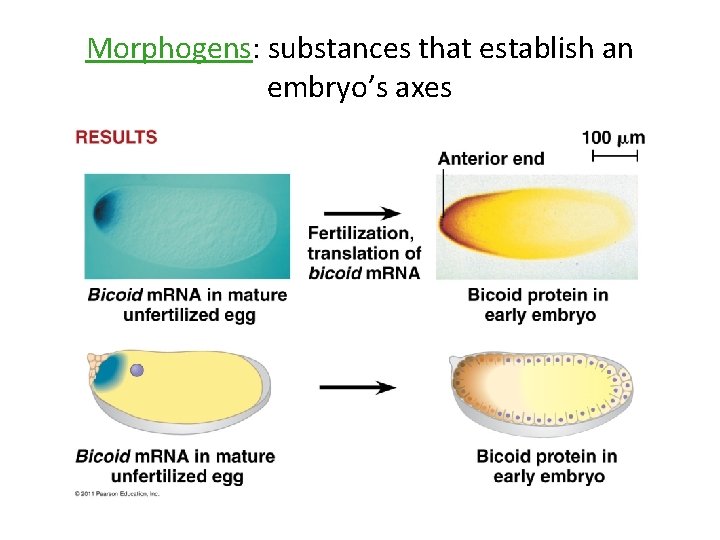
Morphogens: substances that establish an embryo’s axes
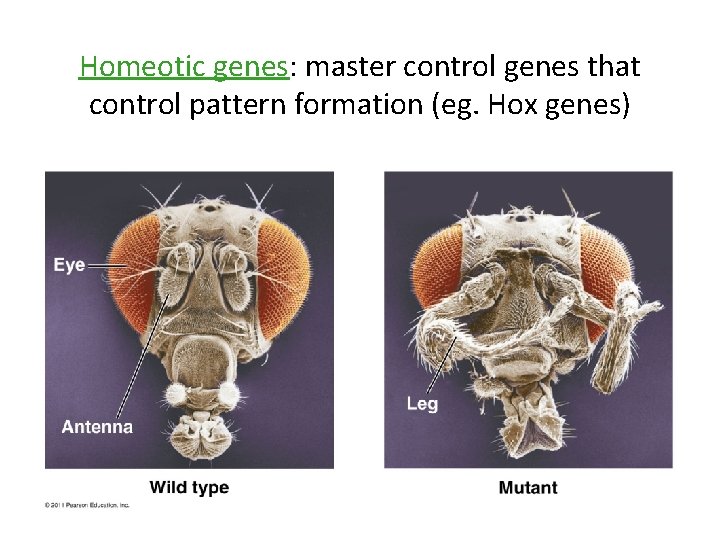
Homeotic genes: master control genes that control pattern formation (eg. Hox genes)

HHMI Short Film EVOLVING SWITCHES, EVOLVING BODIES
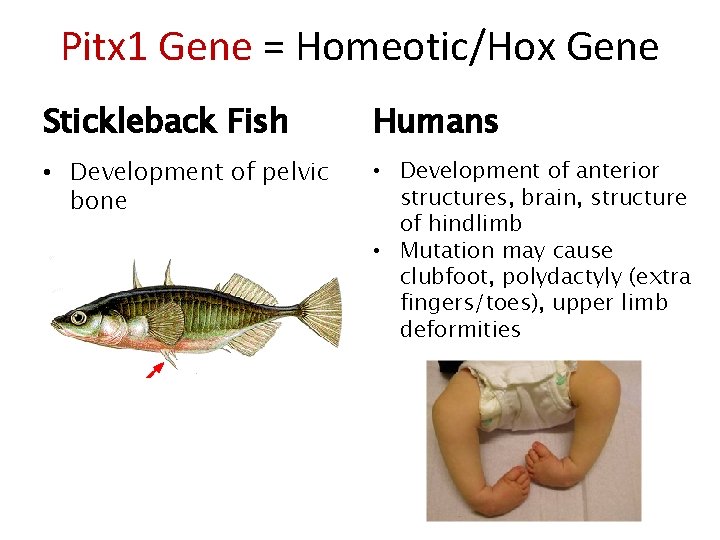
Pitx 1 Gene = Homeotic/Hox Gene Stickleback Fish Humans • Development of pelvic bone • Development of anterior structures, brain, structure of hindlimb • Mutation may cause clubfoot, polydactyly (extra fingers/toes), upper limb deformities
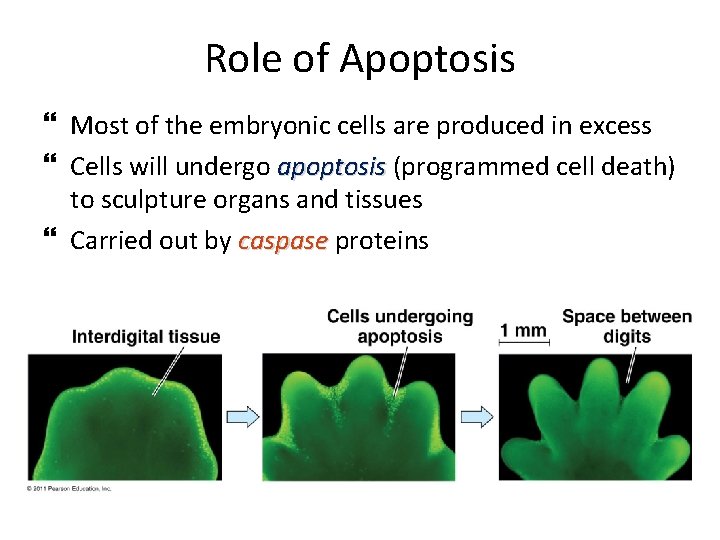
Role of Apoptosis Most of the embryonic cells are produced in excess Cells will undergo apoptosis (programmed cell death) to sculpture organs and tissues Carried out by caspase proteins
Section 18. 5 CANCER RESULTS FROM GENETIC CHANGES THAT AFFECT CELL CYCLE CONTROL
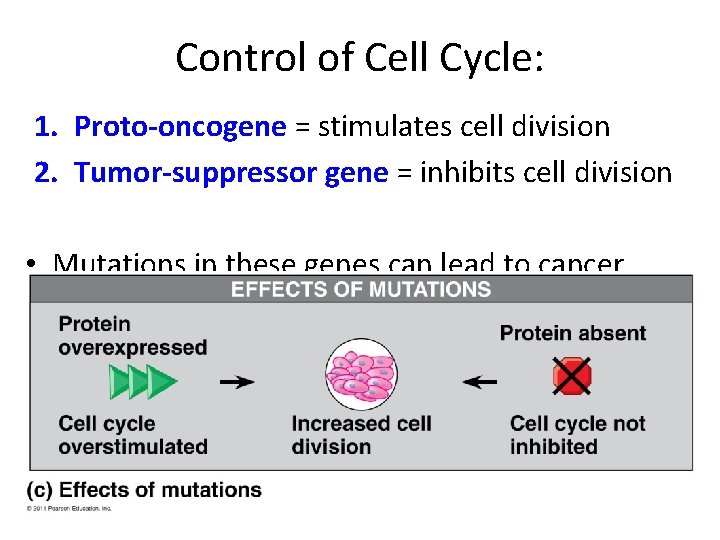
Control of Cell Cycle: 1. Proto-oncogene = stimulates cell division 2. Tumor-suppressor gene = inhibits cell division • Mutations in these genes can lead to cancer
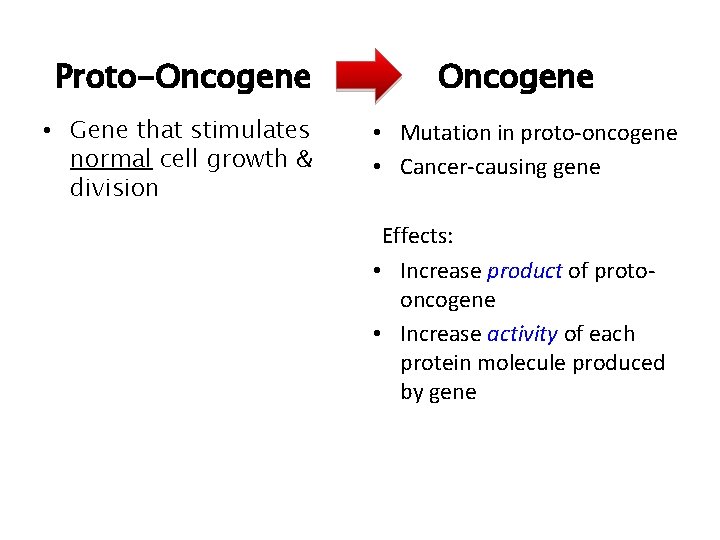
Proto-Oncogene • Gene that stimulates normal cell growth & division Oncogene • Mutation in proto-oncogene • Cancer-causing gene Effects: • Increase product of protooncogene • Increase activity of each protein molecule produced by gene
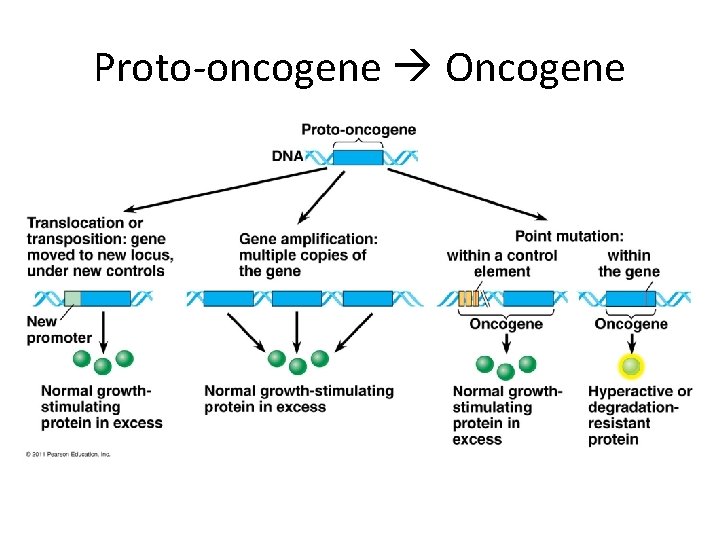
Proto-oncogene Oncogene
Genes involved in cancer: • Ras gene: stimulates cell cycle (protooncogene) – Mutations of ras occurs in 30% of cancers • p 53 gene: tumor-suppresor gene – Functions: halt cell cycle for DNA repair, turn on DNA repair, activate apoptosis (cell death) – Mutations of p 53 in 50+% of cancers
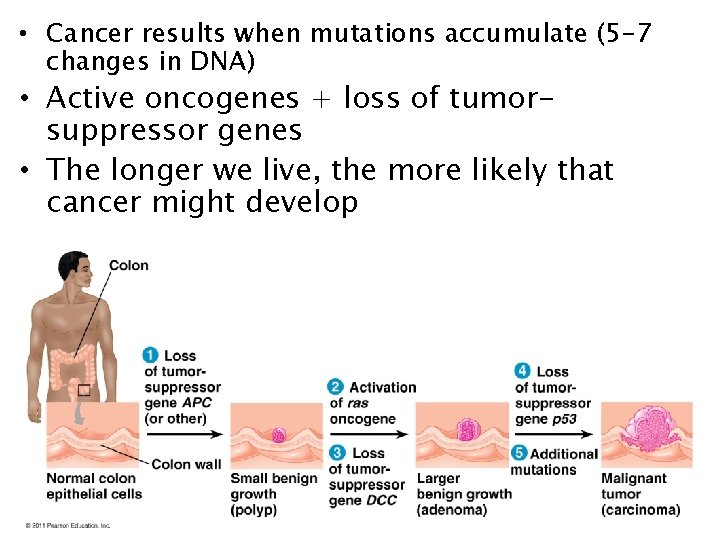
• Cancer results when mutations accumulate (5 -7 changes in DNA) • Active oncogenes + loss of tumorsuppressor genes • The longer we live, the more likely that cancer might develop
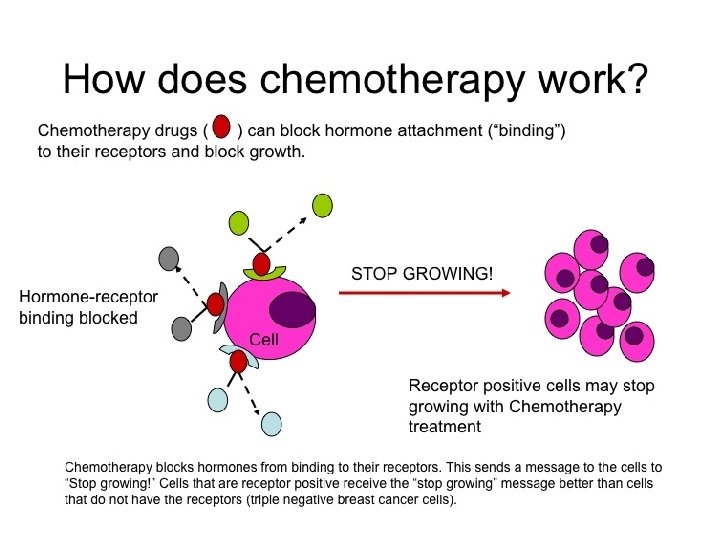
Summary • Embryonic development occurs when gene regulation proceeds correctly • Cancer occurs when gene regulation goes awry
- Slides: 22