
Section 13 2 and 13 3 Control of
- Slides: 30
Section 13. 2 and 13. 3 Control of Solubility Bill Vining SUNY Oneonta
Control of Solubility In these sections… Molecular structure (inherent) control: a. Entropy and thermodynamic control b. Gas mixtures c. Mixtures of neutral molecules in liquids d. Mixtures of ionic compounds in water External (conditions) control: a. pressure b. temperature
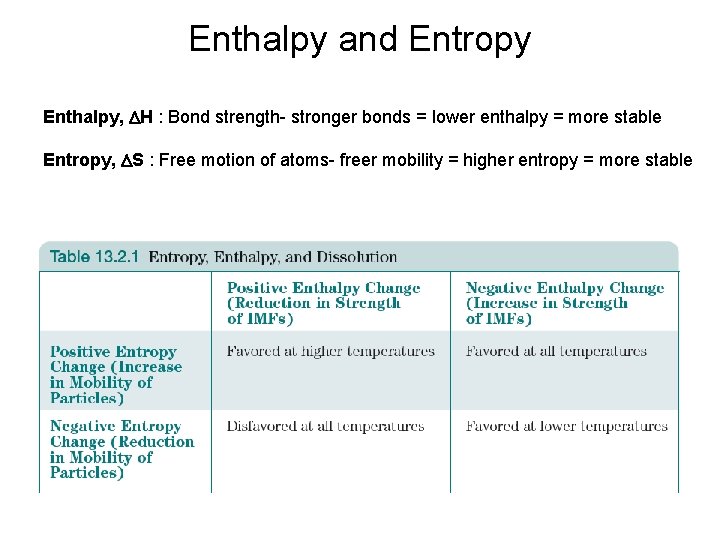
Enthalpy and Entropy Enthalpy, H : Bond strength- stronger bonds = lower enthalpy = more stable Entropy, S : Free motion of atoms- freer mobility = higher entropy = more stable
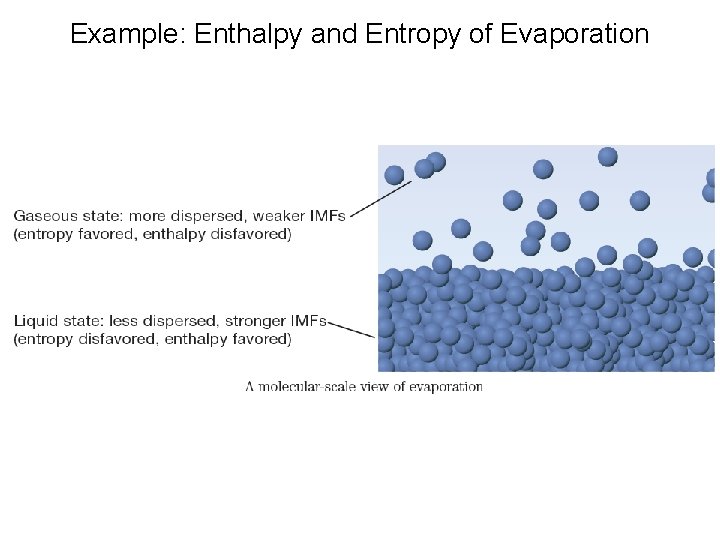
Example: Enthalpy and Entropy of Evaporation
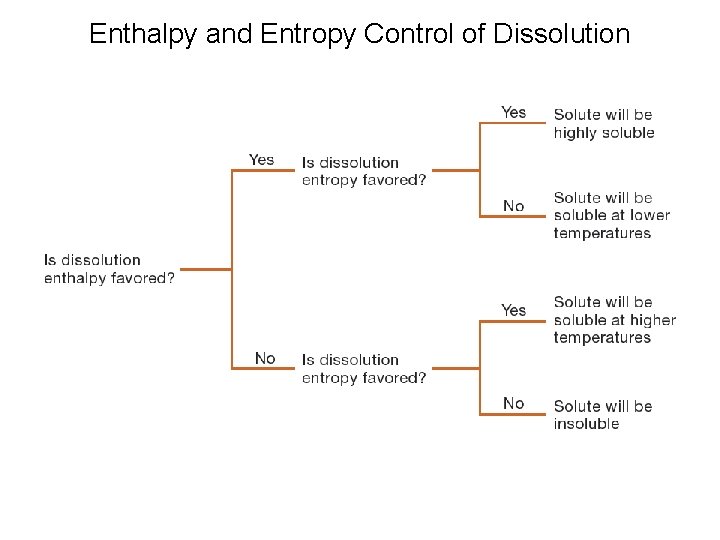
Enthalpy and Entropy Control of Dissolution
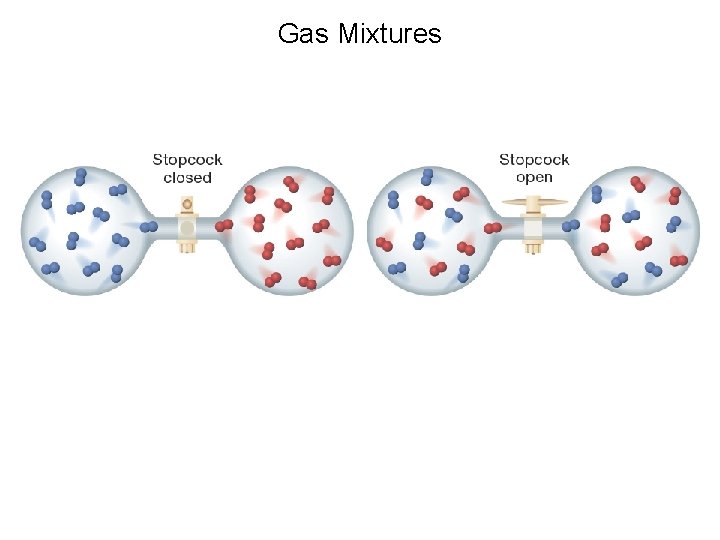
Gas Mixtures
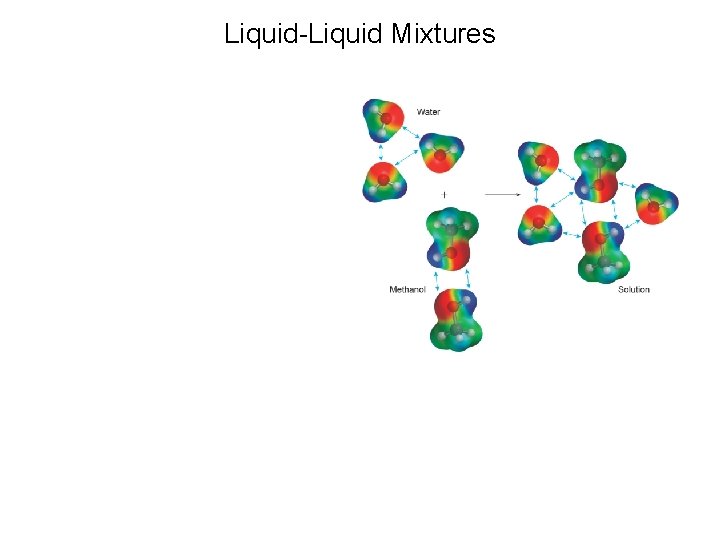
Liquid-Liquid Mixtures
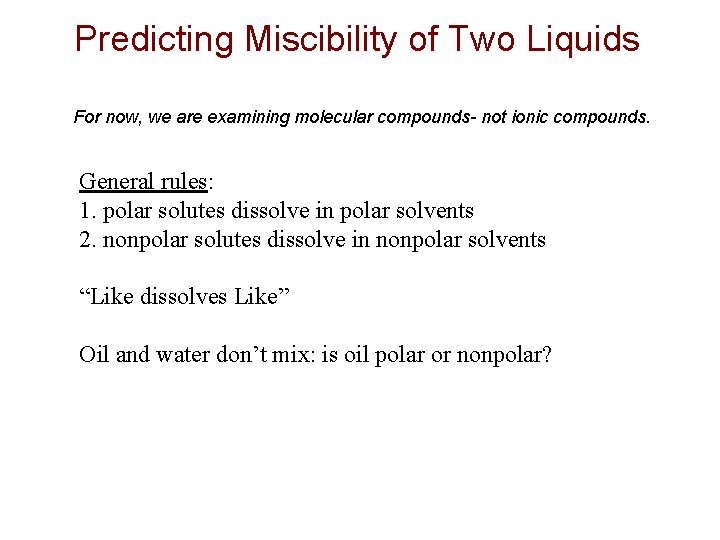
Predicting Miscibility of Two Liquids For now, we are examining molecular compounds- not ionic compounds. General rules: 1. polar solutes dissolve in polar solvents 2. nonpolar solutes dissolve in nonpolar solvents “Like dissolves Like” Oil and water don’t mix: is oil polar or nonpolar?
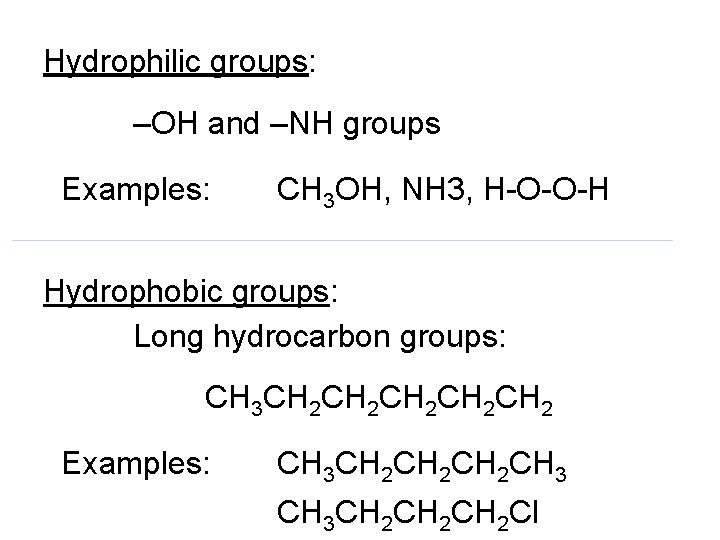
Hydrophilic groups: –OH and –NH groups Examples: CH 3 OH, NH 3, H-O-O-H Hydrophobic groups: Long hydrocarbon groups: CH 3 CH 2 CH 2 CH 2 Examples: CH 3 CH 2 CH 2 CH 3 CH 2 CH 2 Cl
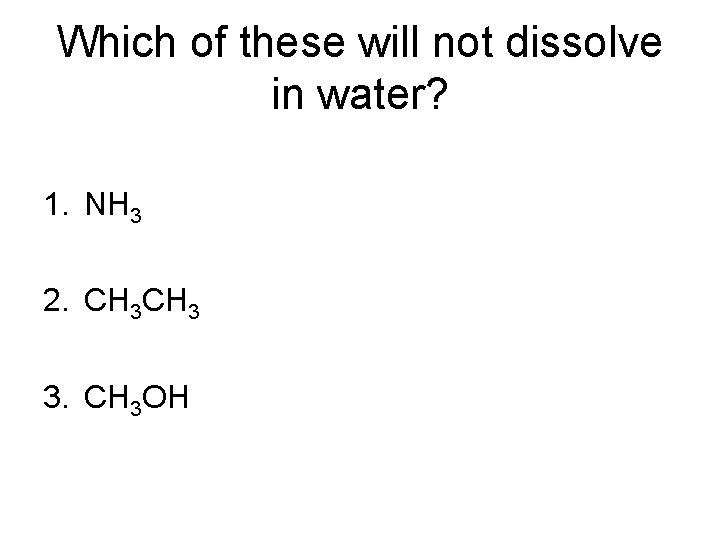
Which of these will not dissolve in water? 1. NH 3 2. CH 3 3. CH 3 OH
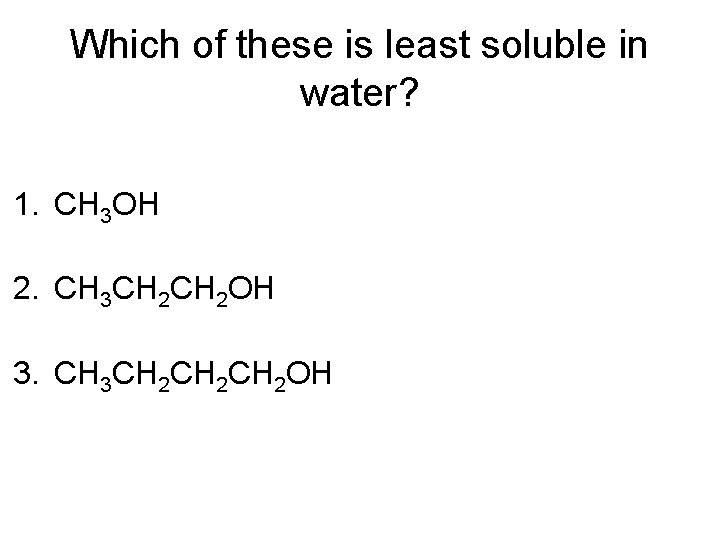
Which of these is least soluble in water? 1. CH 3 OH 2. CH 3 CH 2 OH 3. CH 3 CH 2 CH 2 OH
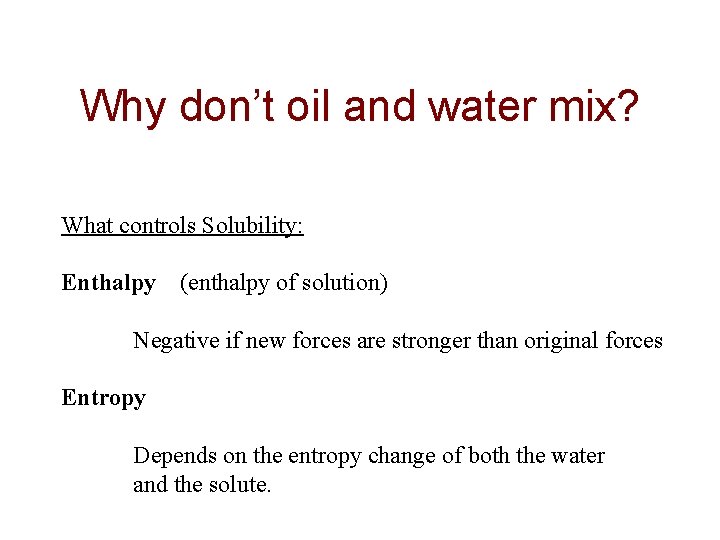
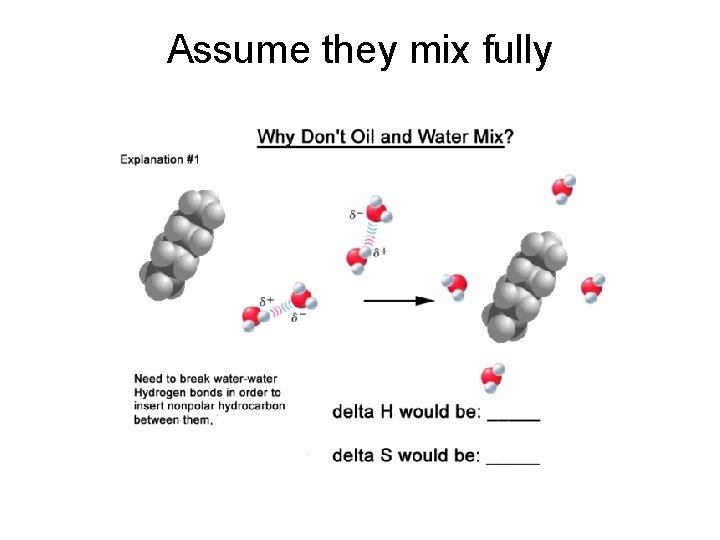
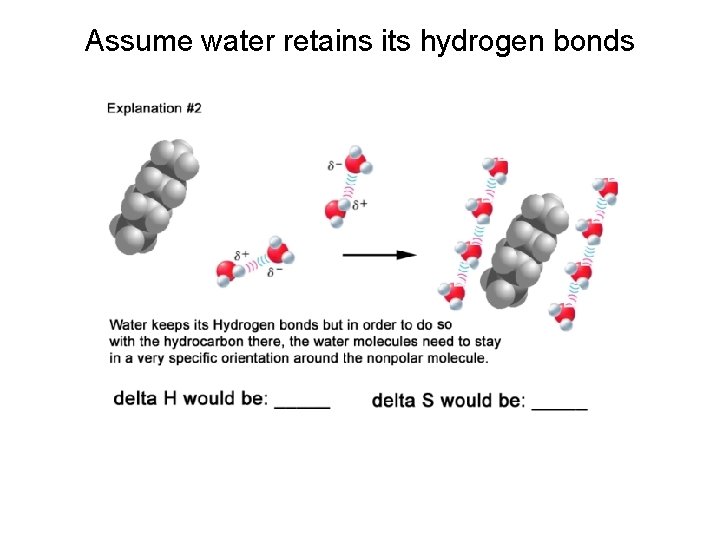
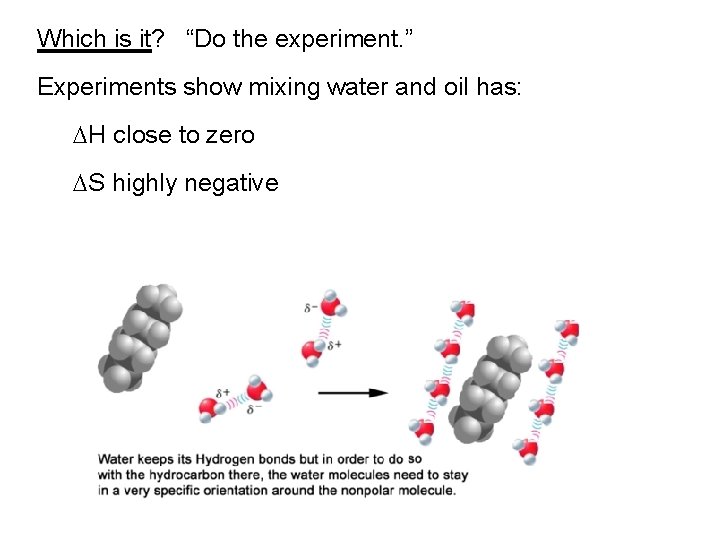
Why don’t oil and water mix? What controls Solubility: Enthalpy (enthalpy of solution) Negative if new forces are stronger than original forces Entropy Depends on the entropy change of both the water and the solute.
Assume they mix fully
Assume water retains its hydrogen bonds
Which is it? “Do the experiment. ” Experiments show mixing water and oil has: H close to zero S highly negative
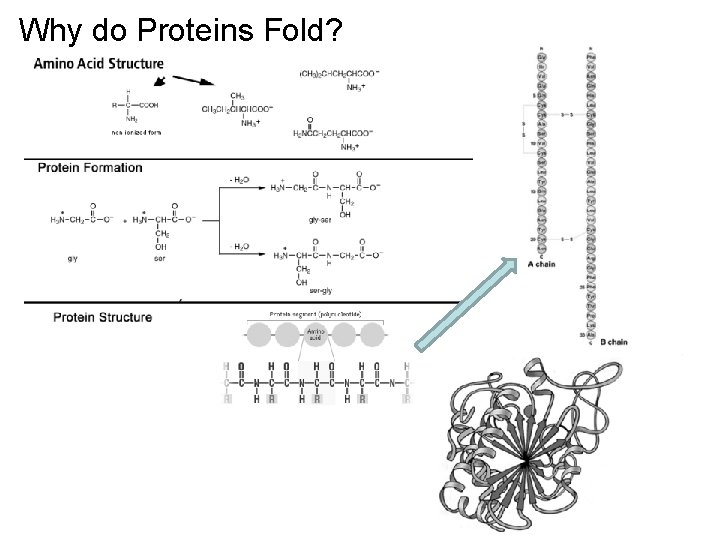
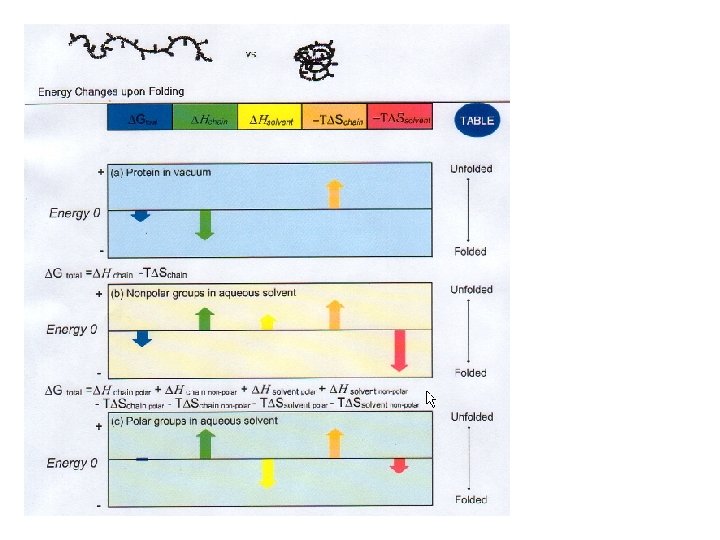
Why do Proteins Fold?
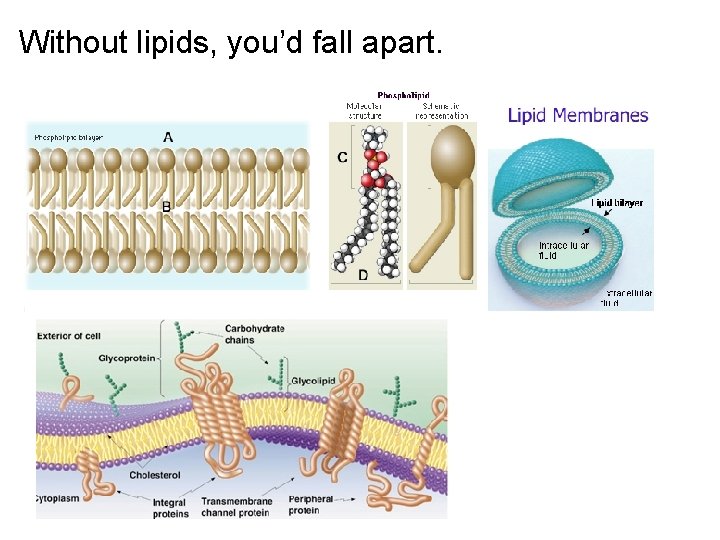
Without lipids, you’d fall apart.
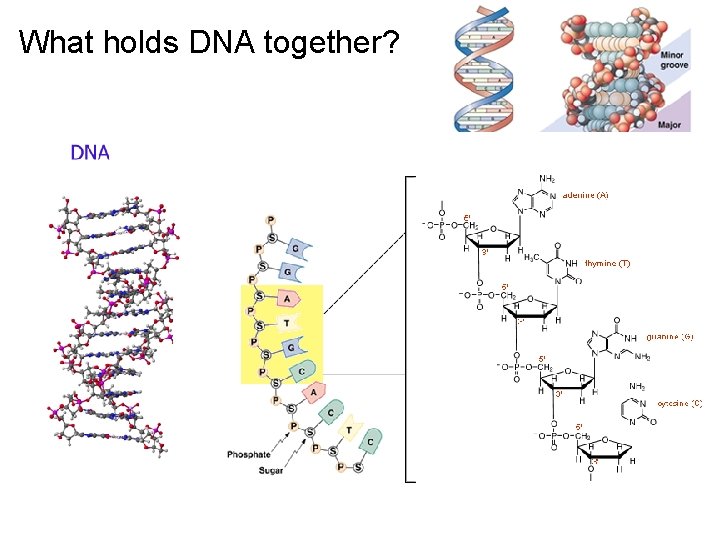
What holds DNA together?
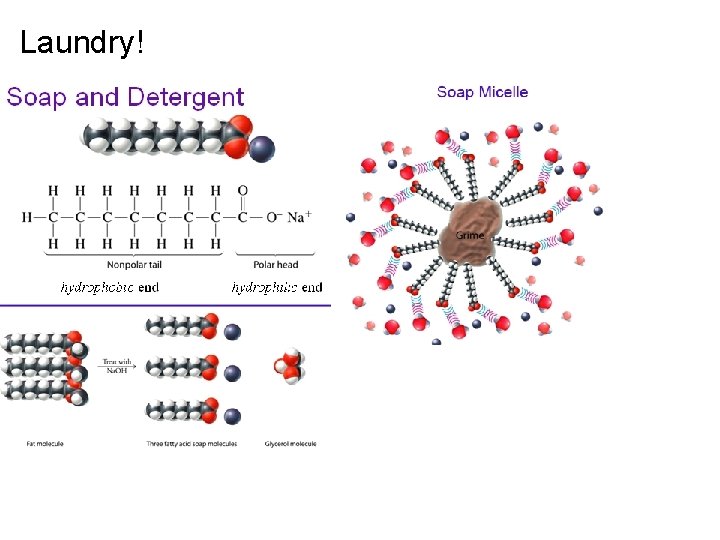
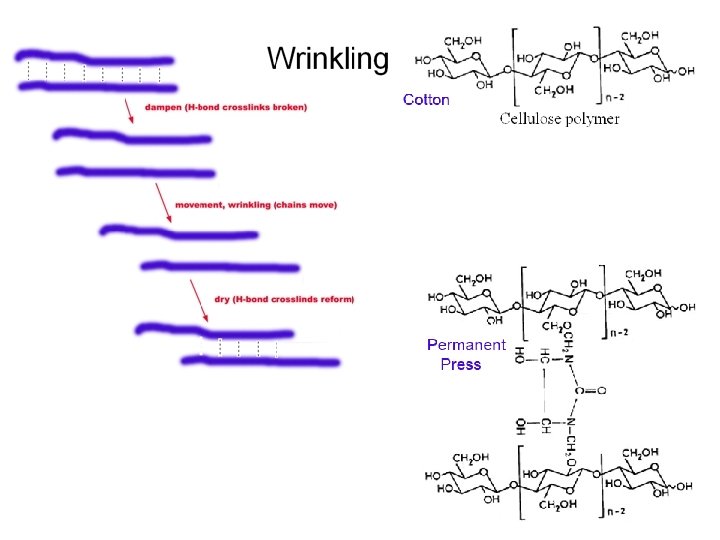
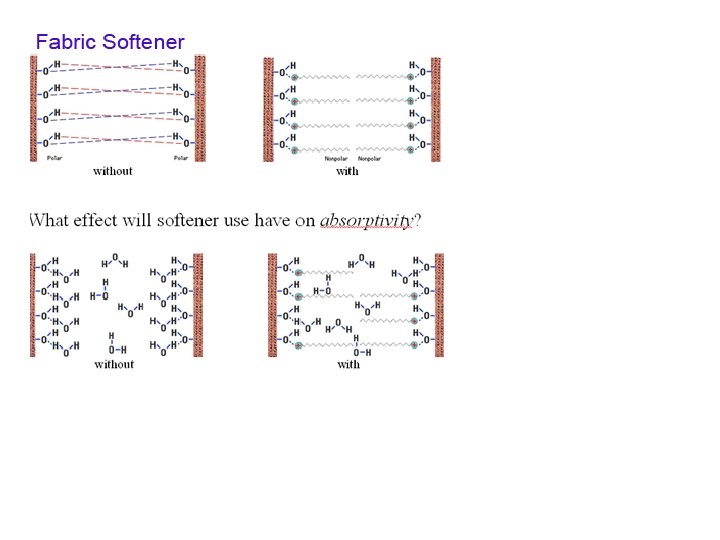
Laundry!
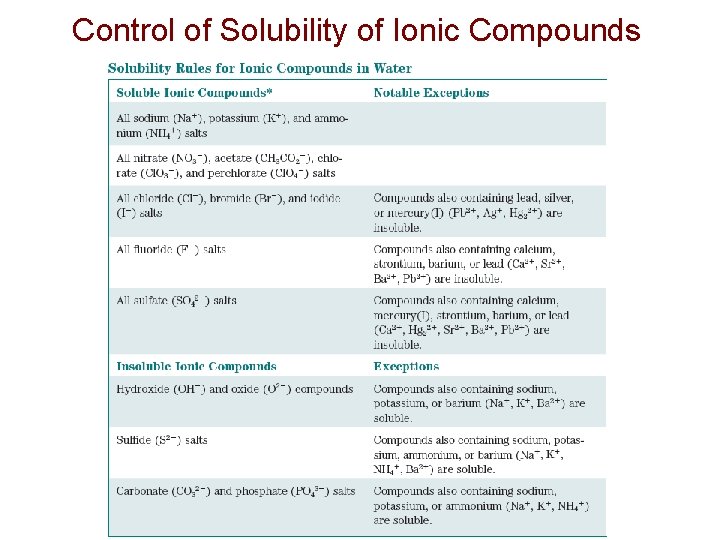
Control of Solubility of Ionic Compounds
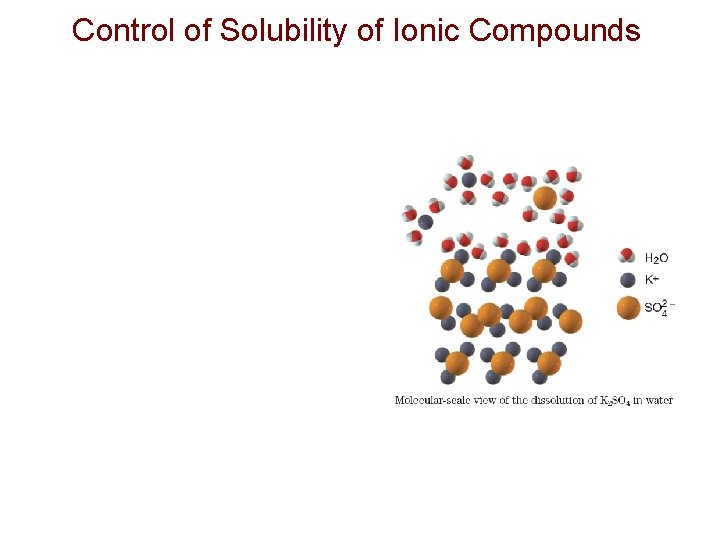
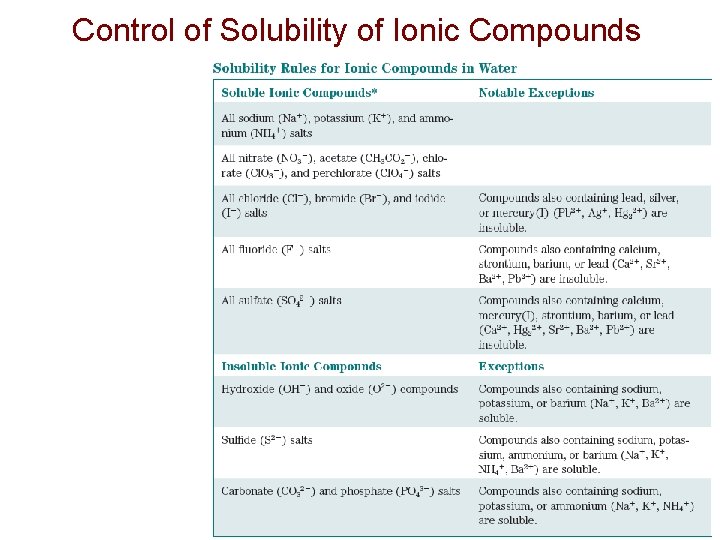
Control of Solubility of Ionic Compounds
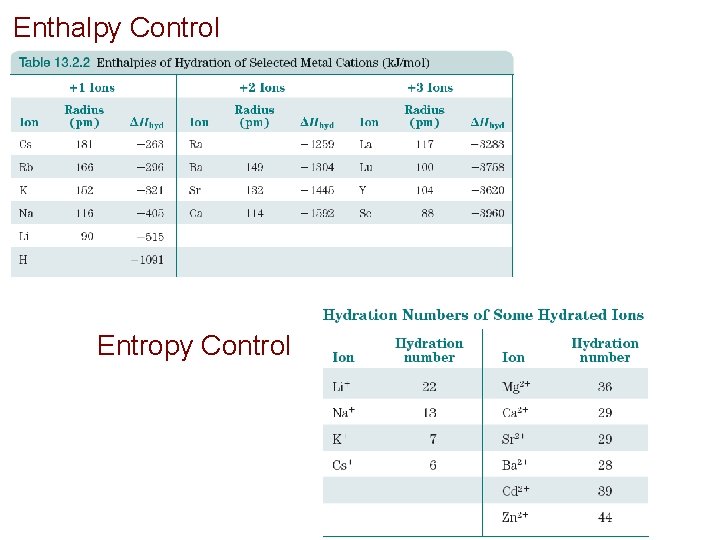
Enthalpy Control Entropy Control
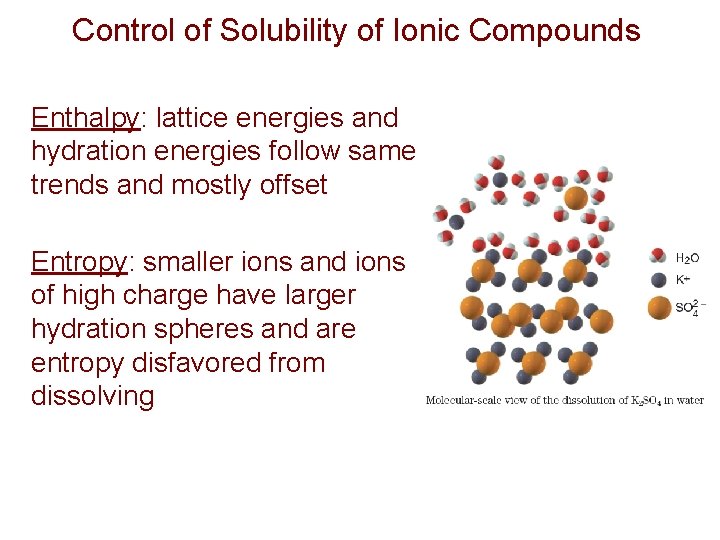
Control of Solubility of Ionic Compounds Enthalpy: lattice energies and hydration energies follow same trends and mostly offset Entropy: smaller ions and ions of high charge have larger hydration spheres and are entropy disfavored from dissolving
Control of Solubility of Ionic Compounds
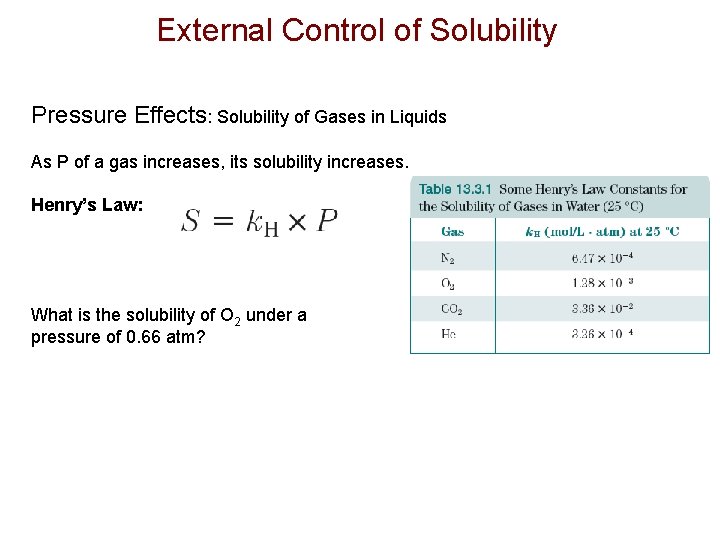
External Control of Solubility Pressure Effects: Solubility of Gases in Liquids As P of a gas increases, its solubility increases. Henry’s Law: What is the solubility of O 2 under a pressure of 0. 66 atm?
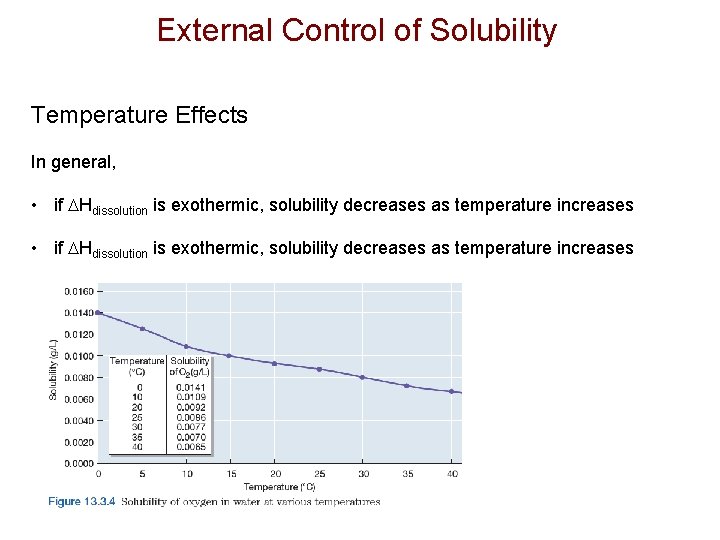
External Control of Solubility Temperature Effects In general, • if Hdissolution is exothermic, solubility decreases as temperature increases
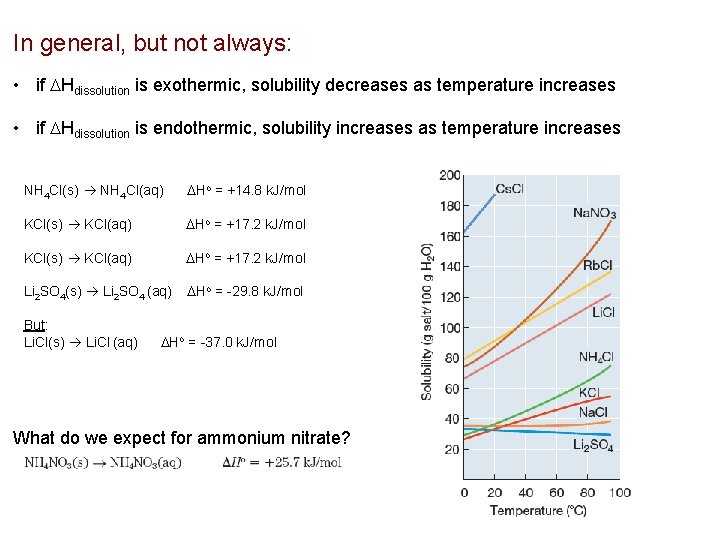
In general, but not always: • if Hdissolution is exothermic, solubility decreases as temperature increases • if Hdissolution is endothermic, solubility increases as temperature increases NH 4 Cl(s) NH 4 Cl(aq) Ho = +14. 8 k. J/mol KCl(s) KCl(aq) Ho = +17. 2 k. J/mol Li 2 SO 4(s) Li 2 SO 4 (aq) Ho = -29. 8 k. J/mol But: Li. Cl(s) Li. Cl (aq) Ho = -37. 0 k. J/mol What do we expect for ammonium nitrate?