
Section 12 7 Notes Graphing Trigonometric Functions Parent
- Slides: 15
Section 12. 7 Notes: Graphing Trigonometric Functions
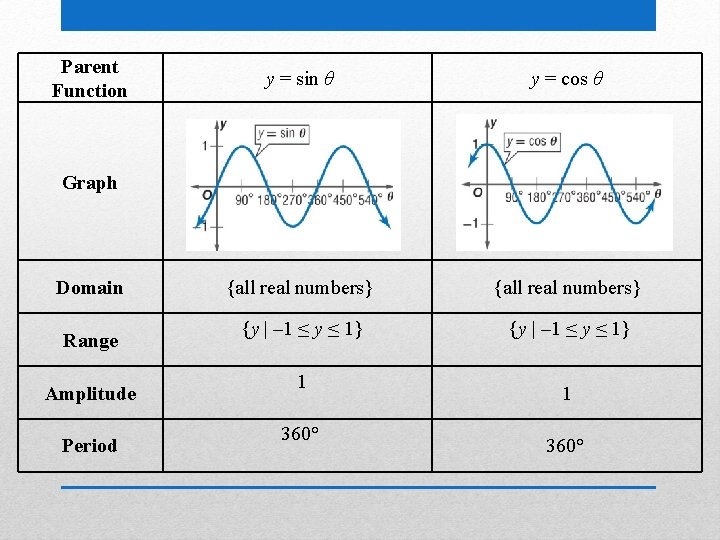
Parent Function y = sin θ y = cos θ {all real numbers} {y | – 1 ≤ y ≤ 1} Graph Domain Range Amplitude Period 1 360°
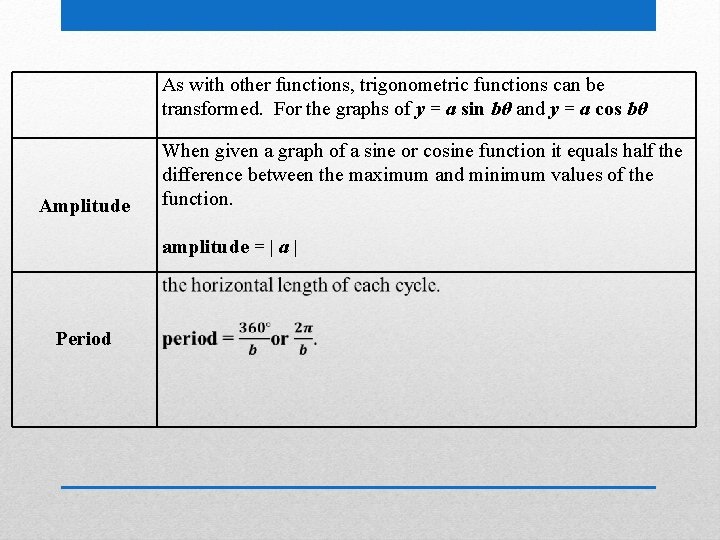
As with other functions, trigonometric functions can be transformed. For the graphs of y = a sin bθ and y = a cos bθ Amplitude When given a graph of a sine or cosine function it equals half the difference between the maximum and minimum values of the function. amplitude = | a | Period
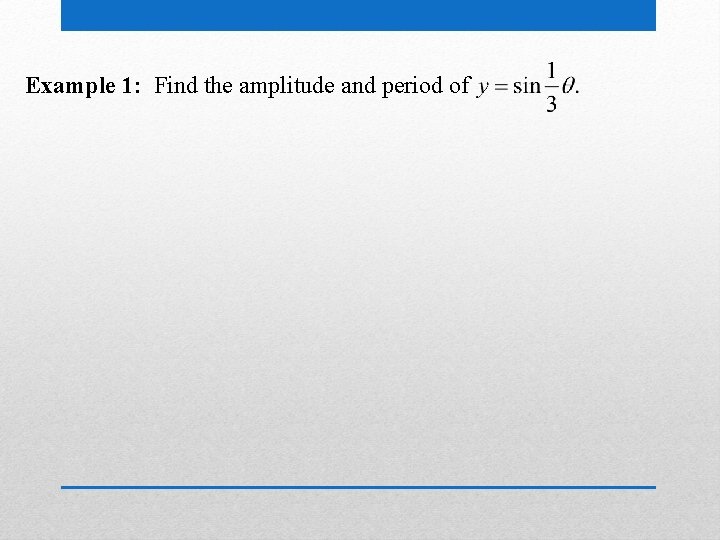
Example 1: Find the amplitude and period of
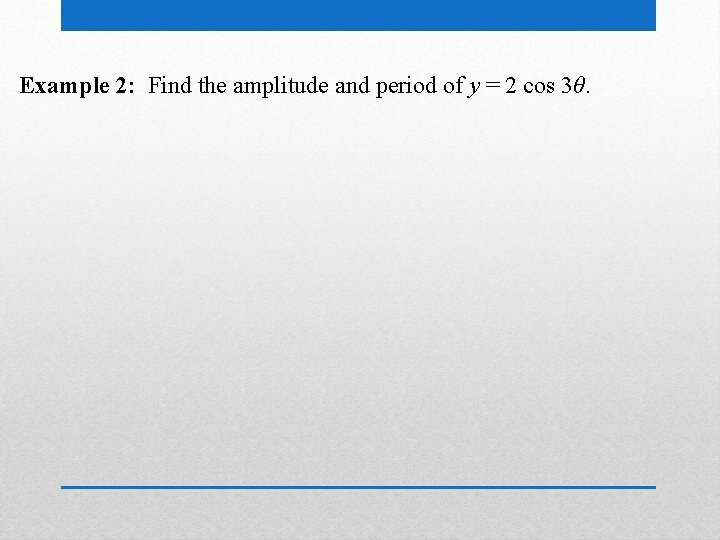
Example 2: Find the amplitude and period of y = 2 cos 3θ.
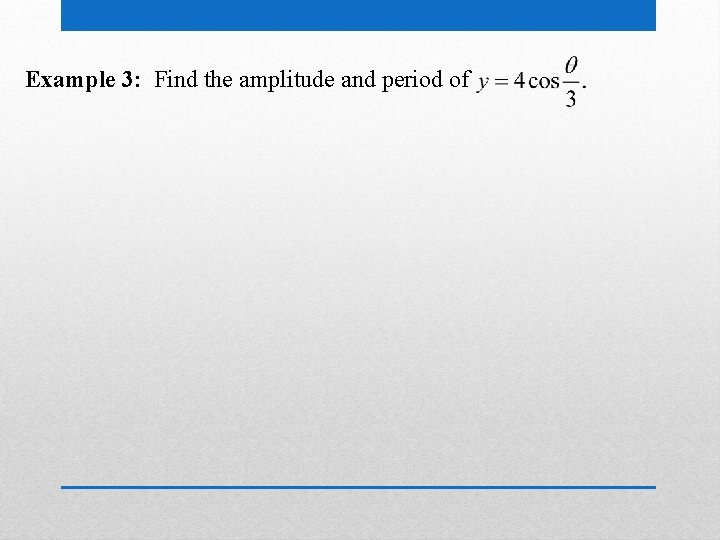
Example 3: Find the amplitude and period of
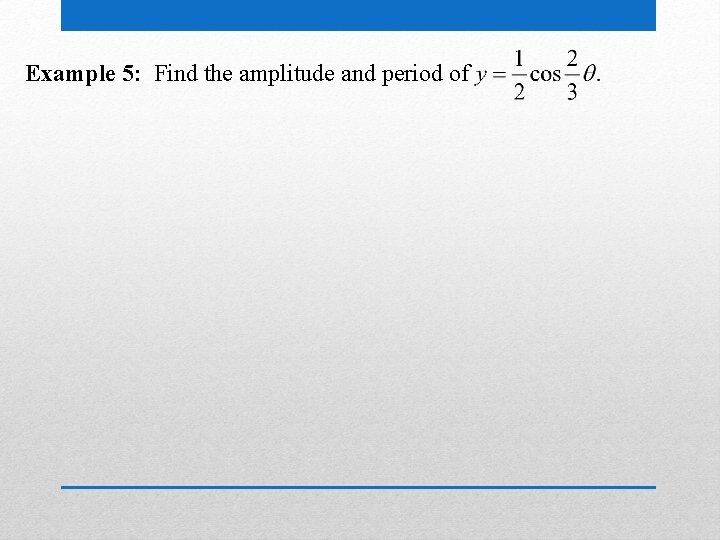
Example 5: Find the amplitude and period of
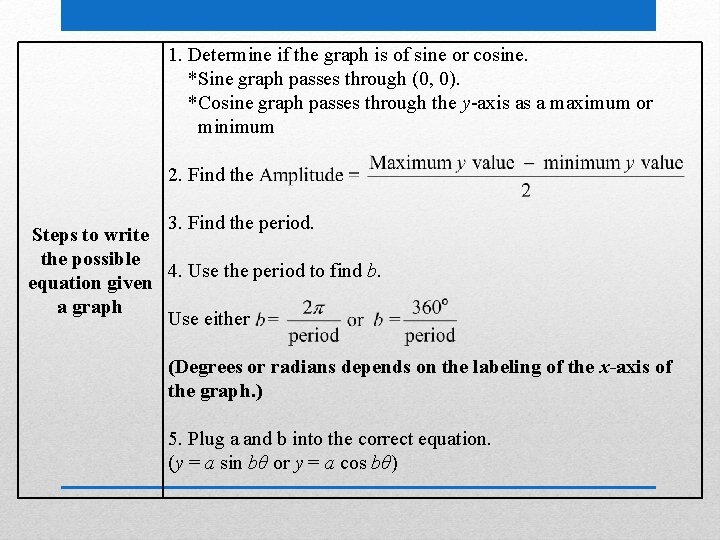
1. Determine if the graph is of sine or cosine. *Sine graph passes through (0, 0). *Cosine graph passes through the y-axis as a maximum or minimum 2. Find the 3. Find the period. Steps to write the possible 4. Use the period to find b. equation given a graph Use either (Degrees or radians depends on the labeling of the x-axis of the graph. ) 5. Plug a and b into the correct equation. (y = a sin bθ or y = a cos bθ)
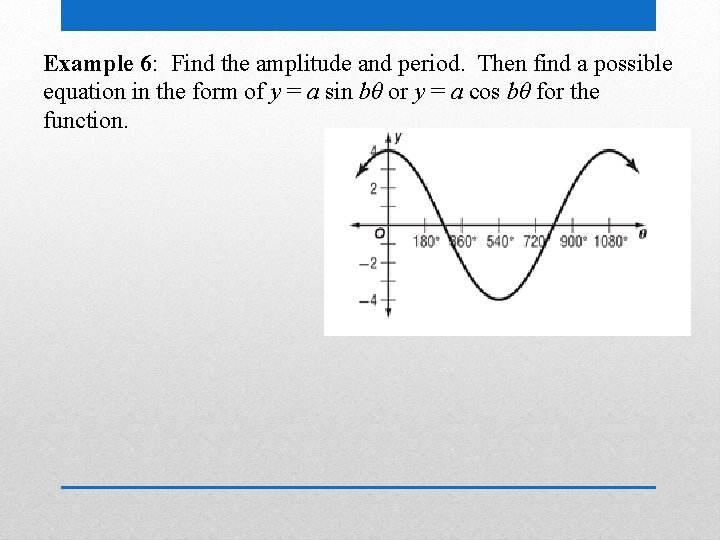
Example 6: Find the amplitude and period. Then find a possible equation in the form of y = a sin bθ or y = a cos bθ for the function.
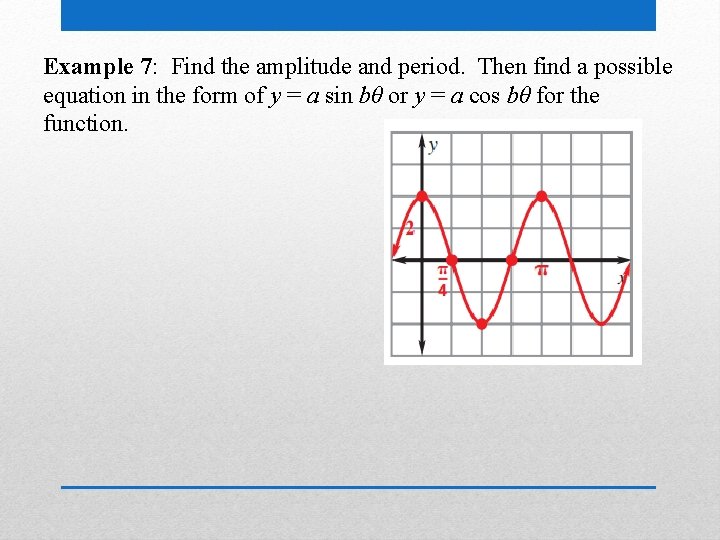
Example 7: Find the amplitude and period. Then find a possible equation in the form of y = a sin bθ or y = a cos bθ for the function.
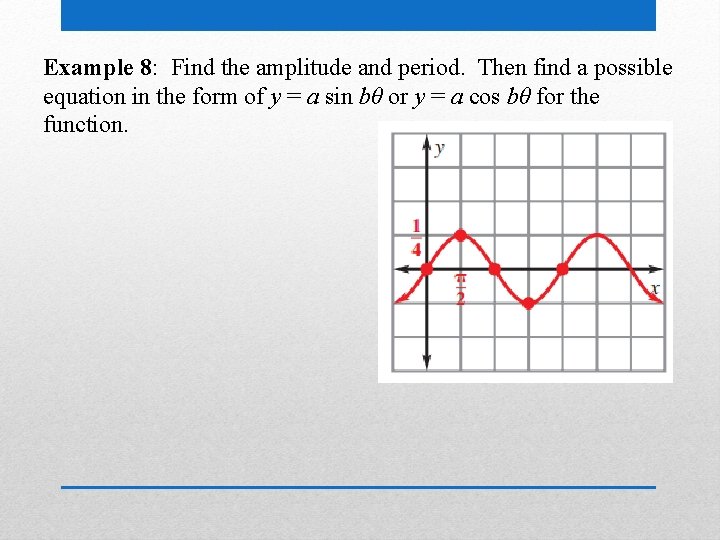
Example 8: Find the amplitude and period. Then find a possible equation in the form of y = a sin bθ or y = a cos bθ for the function.
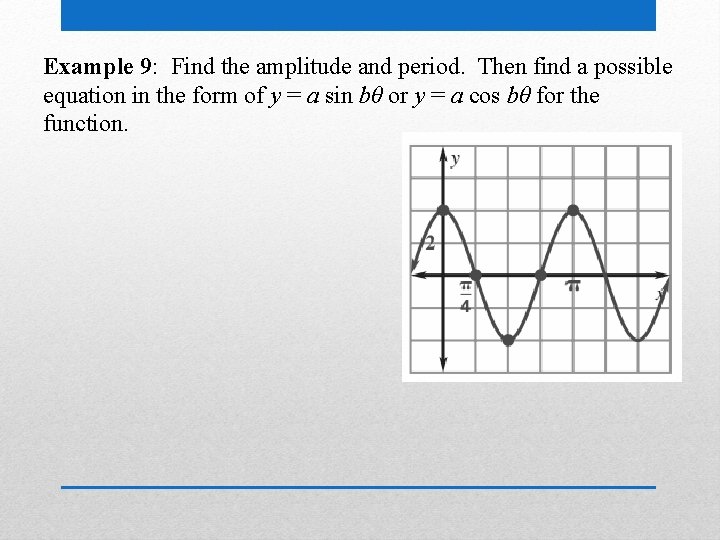
Example 9: Find the amplitude and period. Then find a possible equation in the form of y = a sin bθ or y = a cos bθ for the function.
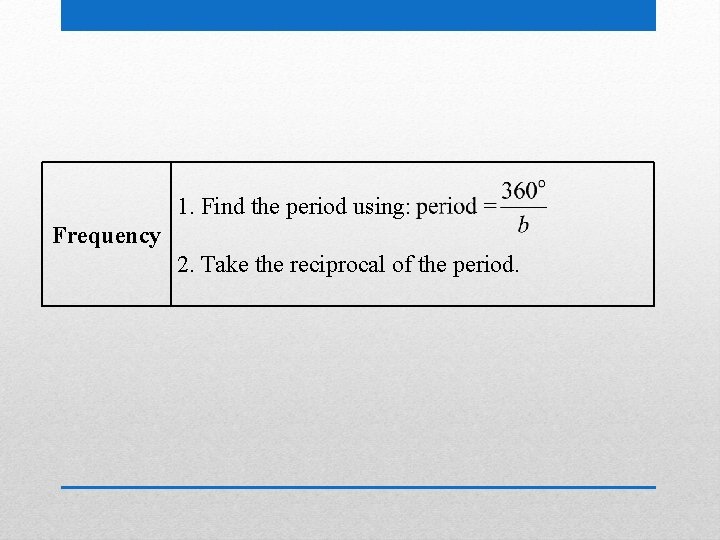
1. Find the period using: Frequency 2. Take the reciprocal of the period.
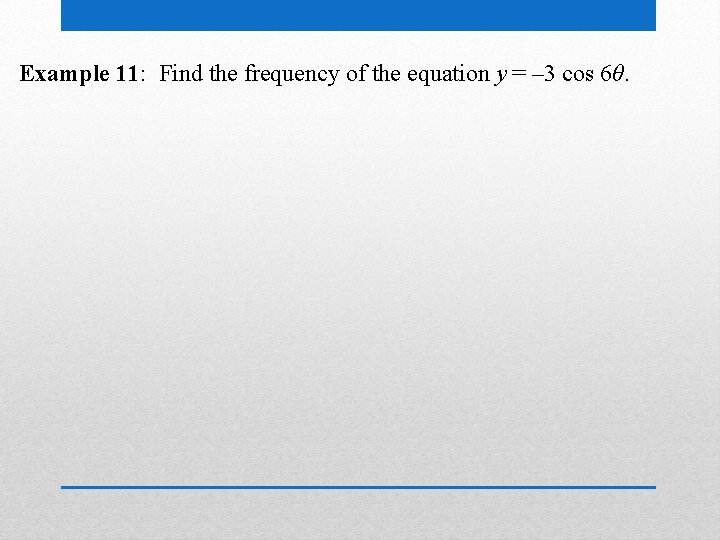
Example 11: Find the frequency of the equation y = – 3 cos 6θ.
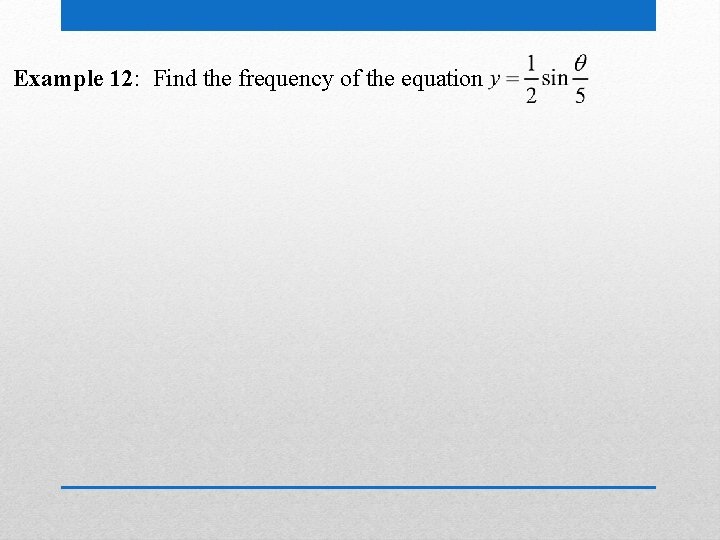
Example 12: Find the frequency of the equation