
Section 12 1 Exploring Solids Polyhedron Three dimensional

- Slides: 18
Section 12 -1 Exploring Solids
Polyhedron • Three dimensional closed figure formed by joining three or more polygons at their side. • Plural: polyhedra
Parts of a Polyhedron
• Face: Each polygon of the polyhedron • Edge: A line segment along which two faces meet • Vertex: A point where three or more edges meet
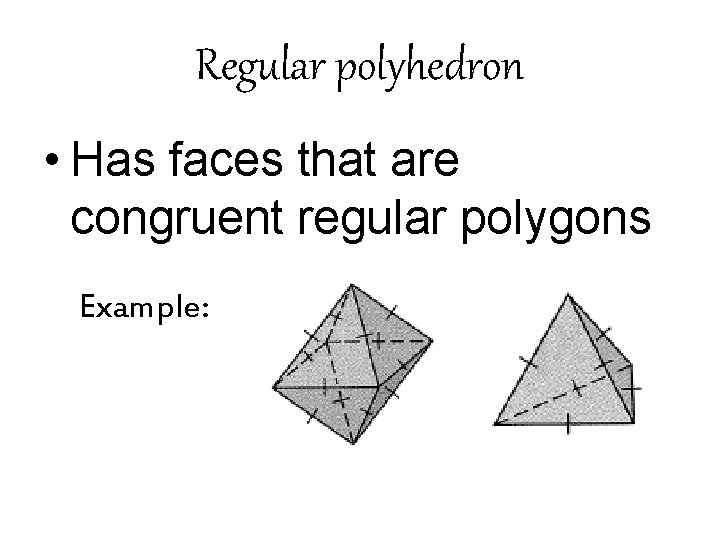
Regular polyhedron • Has faces that are congruent regular polygons Example:
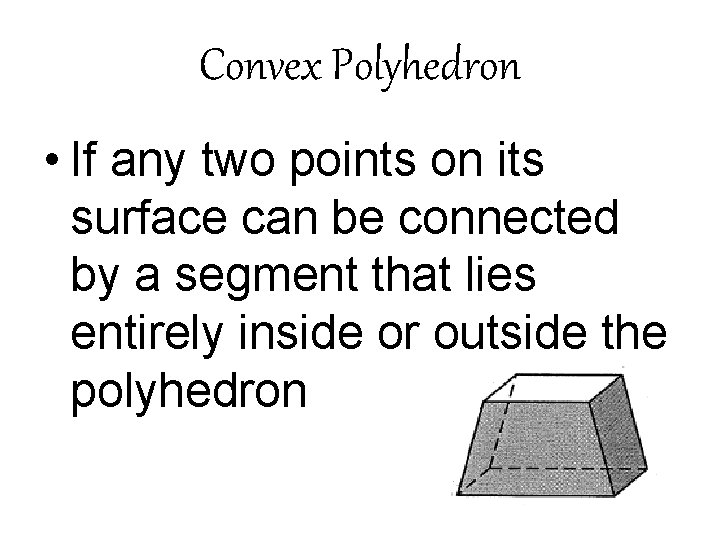
Convex Polyhedron • If any two points on its surface can be connected by a segment that lies entirely inside or outside the polyhedron
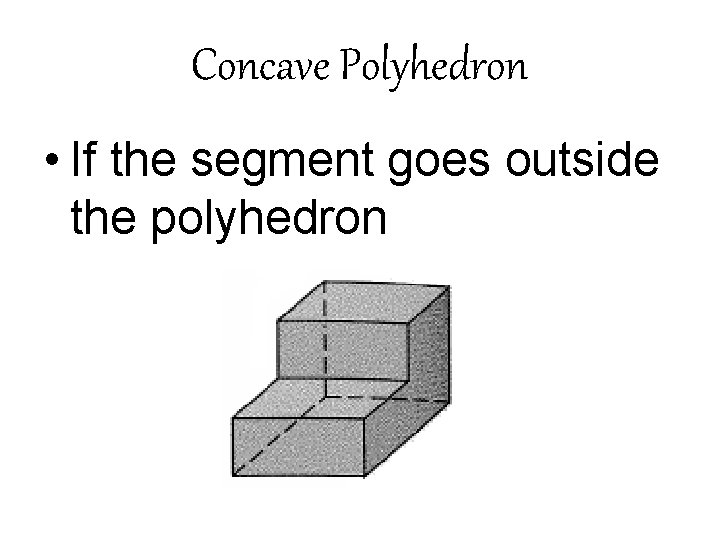
Concave Polyhedron • If the segment goes outside the polyhedron
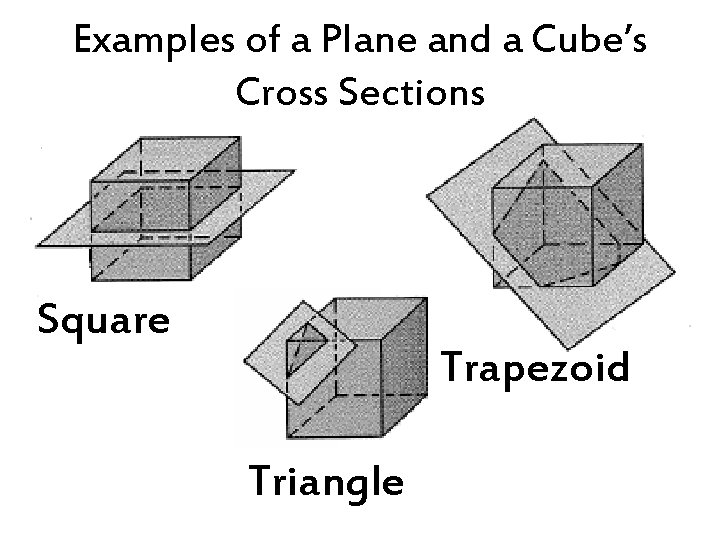
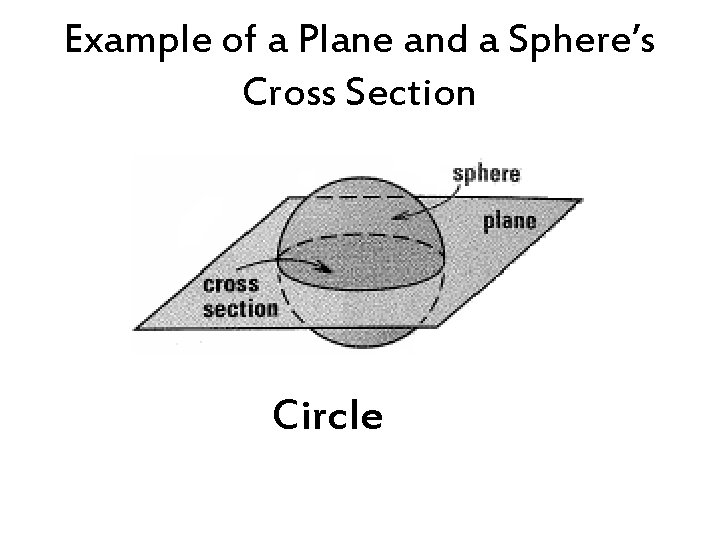
Cross Section • Intersection of a plane and a solid
A plane and a solid’s intersection forms different shapes.
Examples of a Plane and a Cube’s Cross Sections Square Trapezoid Triangle
Example of a Plane and a Sphere’s Cross Section Circle
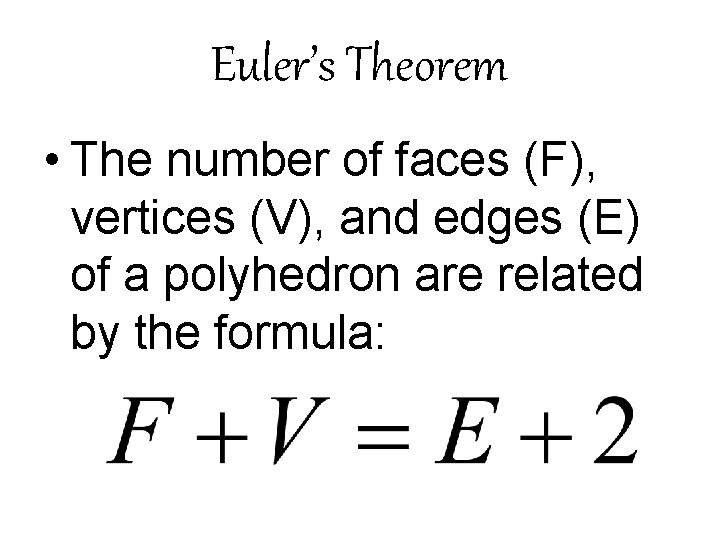
Euler’s Theorem • The number of faces (F), vertices (V), and edges (E) of a polyhedron are related by the formula:
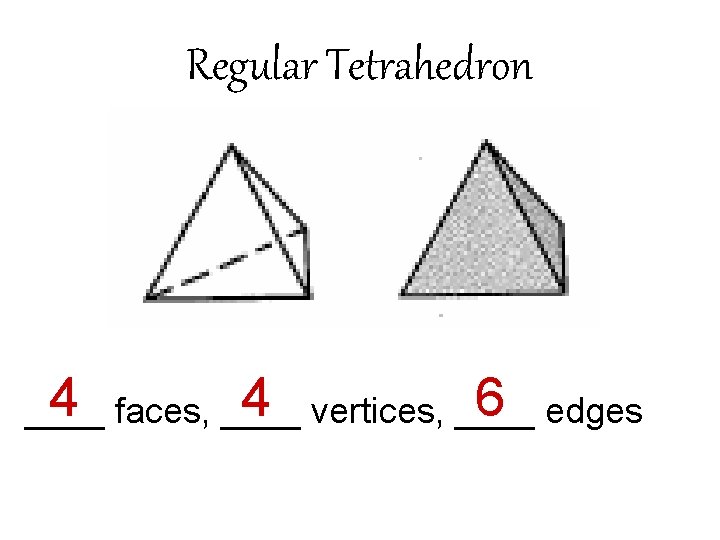
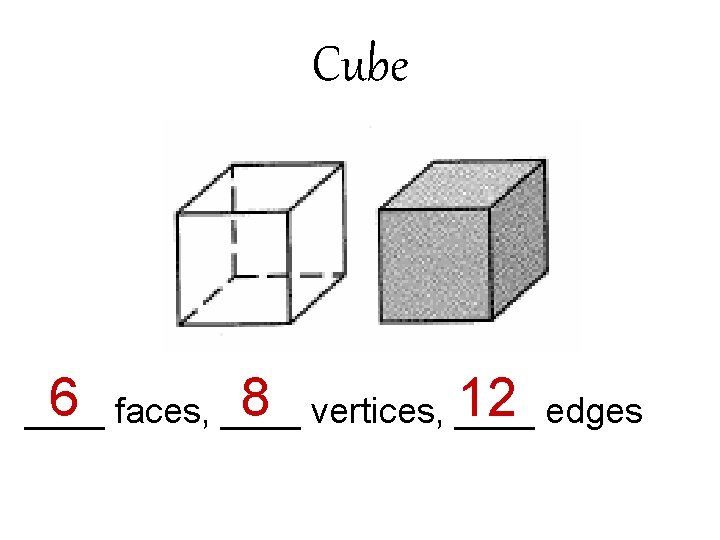
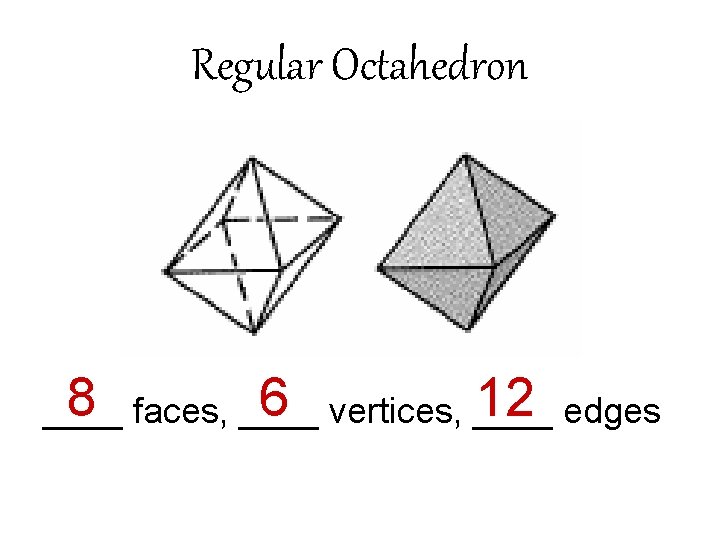
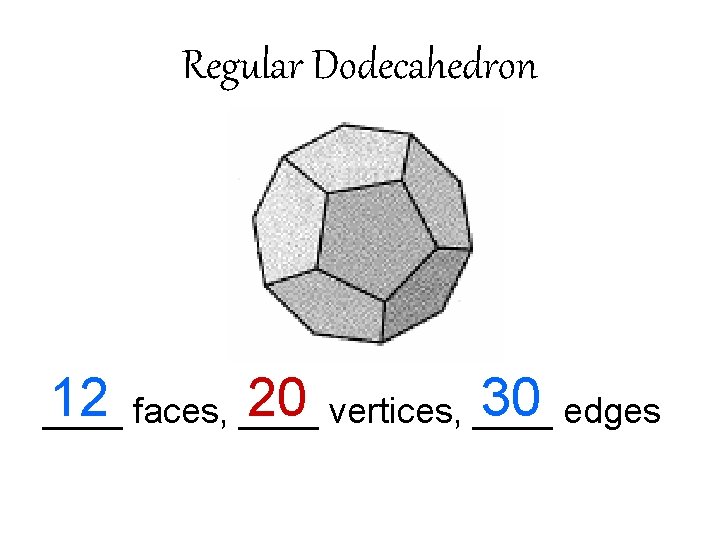
Platonic Solids Five regular polyhedra: 1. Tetrahedron: 4 faces 2. Cube: 6 faces 3. Octahedron: 8 faces 4. Dodecahedron: 12 faces 5. Icosahedron: 20 faces
Regular Tetrahedron 4 faces, ____ 4 vertices, ____ 6 edges ____
Cube 6 faces, ____ 8 vertices, ____ 12 edges ____
Regular Octahedron 8 faces, ____ 6 vertices, ____ 12 edges ____
Regular Dodecahedron 12 faces, ____ 20 vertices, ____ 30 edges ____
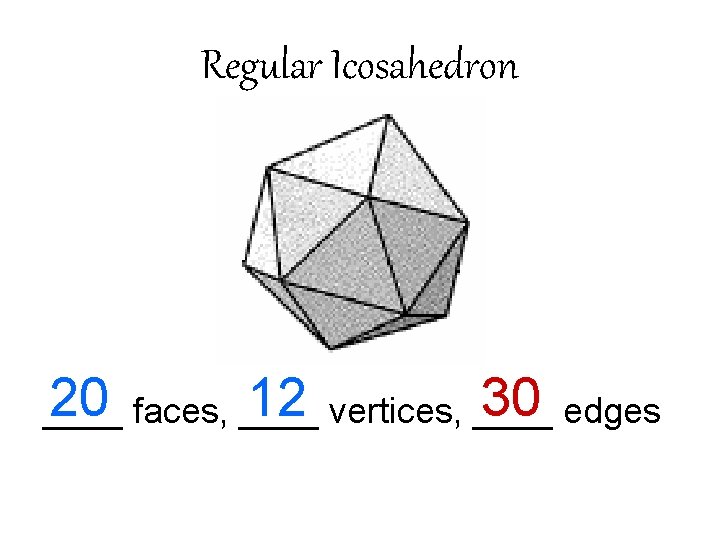
Regular Icosahedron 20 faces, ____ 12 vertices, ____ 30 edges ____