
Section 1 Sexual Reproduction and Genetics Meiosis Chromosomes

- Slides: 19
Section 1 Sexual Reproduction and Genetics Meiosis Chromosomes and Chromosome Number § Human body cells have 46 chromosomes § Each parent contributes 23 chromosomes § Homologous chromosomes—one of two paired chromosomes, one from each parent
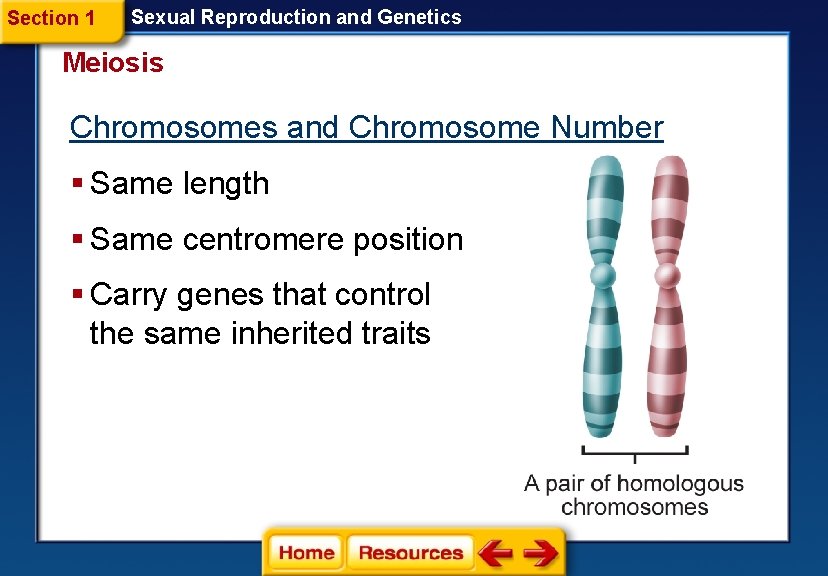
Section 1 Sexual Reproduction and Genetics Meiosis Chromosomes and Chromosome Number § Same length § Same centromere position § Carry genes that control the same inherited traits
Section 1 Sexual Reproduction and Genetics Meiosis Haploid and Diploid Cells § An organism produces gametes to maintain the same number of chromosomes from generation to generation. § Human gametes contain 23 chromosomes. § n = a haploid cell. § 2 n = a diploid cell.
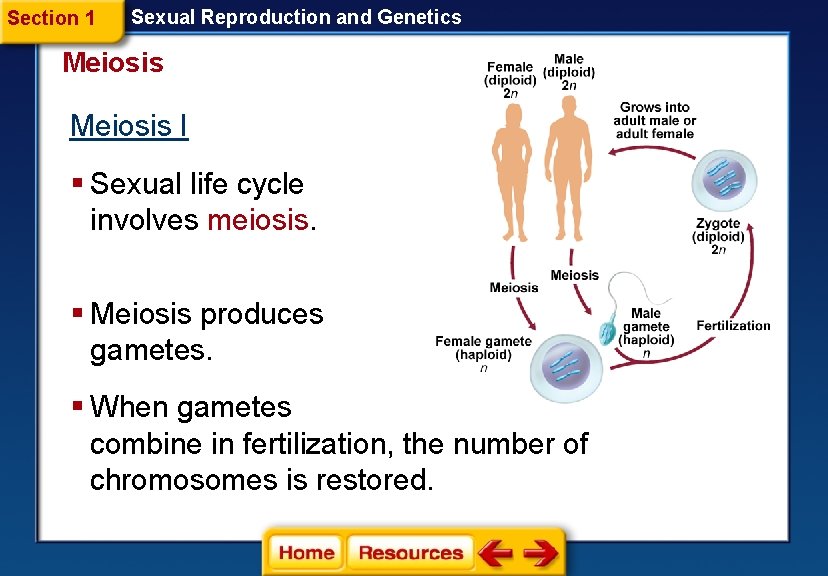
Section 1 Sexual Reproduction and Genetics Meiosis I § Sexual life cycle involves meiosis. § Meiosis produces gametes. § When gametes combine in fertilization, the number of chromosomes is restored.
Section 1 Sexual Reproduction and Genetics Meiosis Stages of Meiosis I § Reduces the chromosome number by half through the separation of homologous chromosomes § Involves two consecutive cell divisions called meiosis I and meiosis II
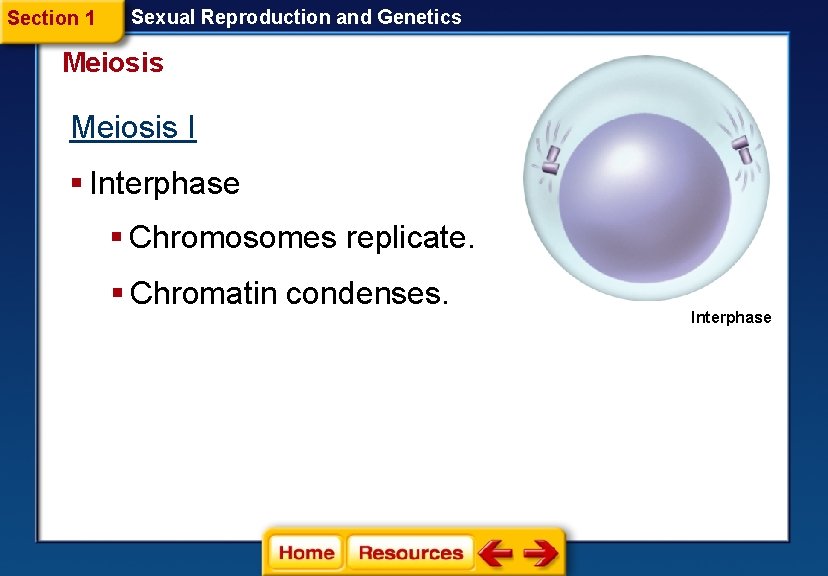
Section 1 Sexual Reproduction and Genetics Meiosis I § Interphase § Chromosomes replicate. § Chromatin condenses. Interphase
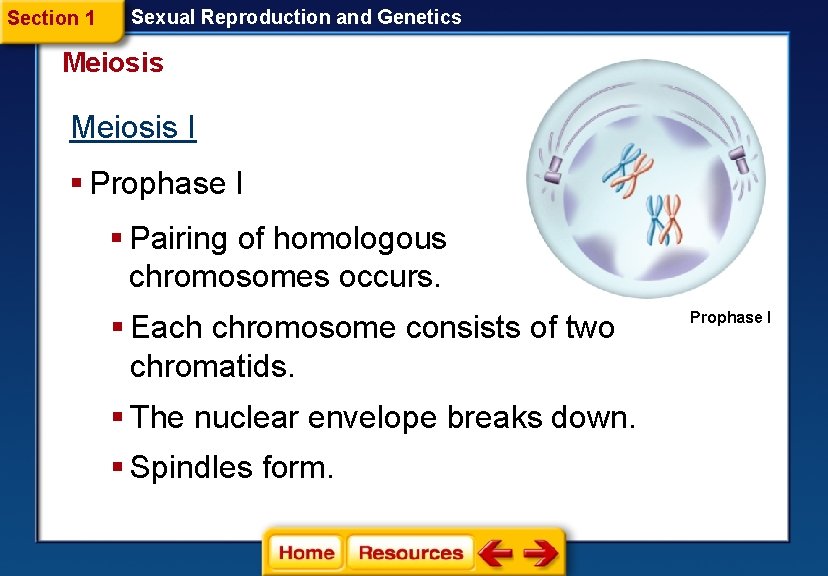
Section 1 Sexual Reproduction and Genetics Meiosis I § Prophase I § Pairing of homologous chromosomes occurs. § Each chromosome consists of two chromatids. § The nuclear envelope breaks down. § Spindles form. Prophase I
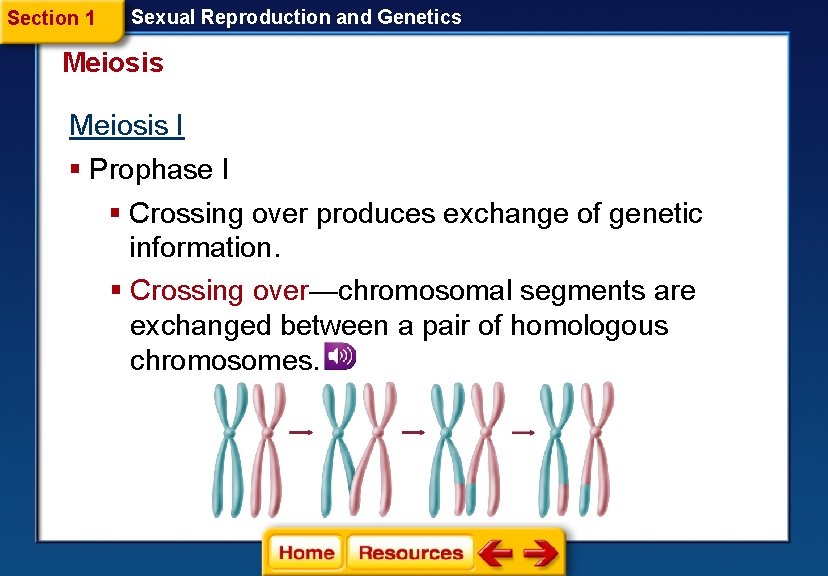
Section 1 Sexual Reproduction and Genetics Meiosis I § Prophase I § Crossing over produces exchange of genetic information. § Crossing over—chromosomal segments are exchanged between a pair of homologous chromosomes.
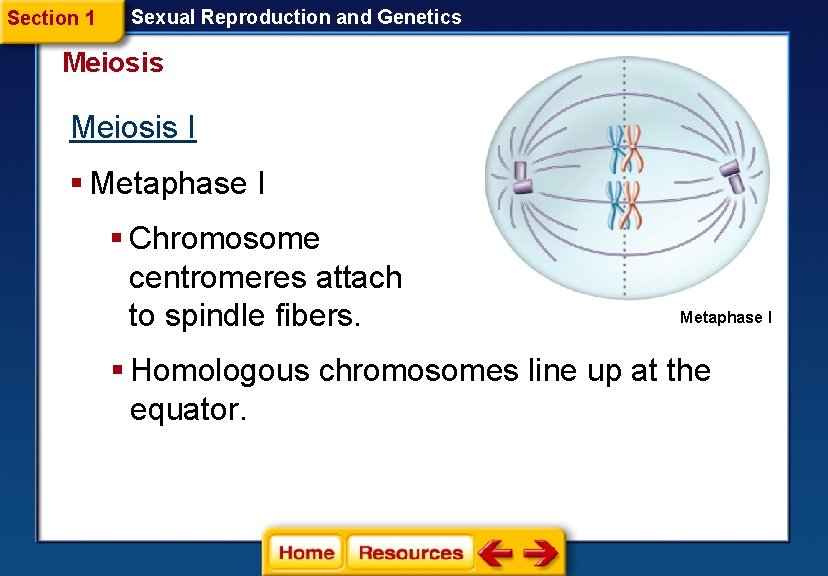
Section 1 Sexual Reproduction and Genetics Meiosis I § Metaphase I § Chromosome centromeres attach to spindle fibers. Metaphase I § Homologous chromosomes line up at the equator.
Section 1 Sexual Reproduction and Genetics Meiosis I § Anaphase I § Homologous chromosomes separate and move to opposite poles of the cell. Anaphase I
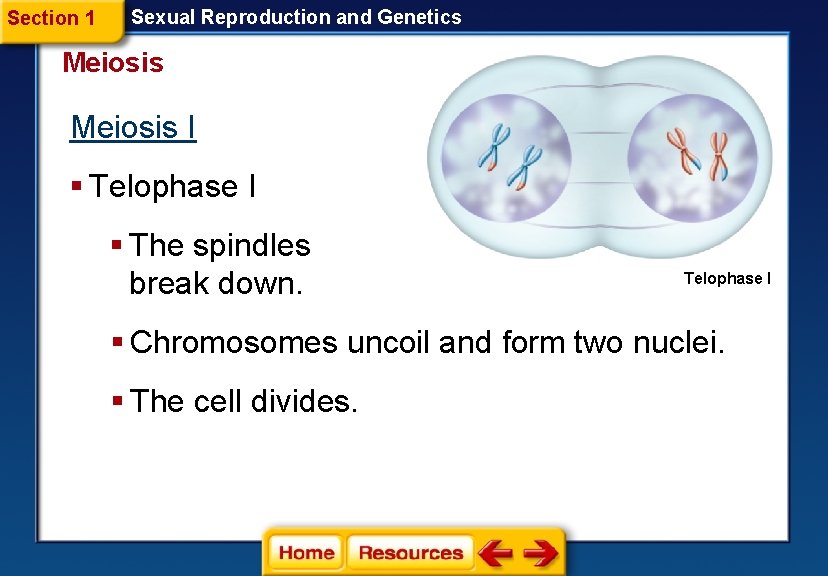
Section 1 Sexual Reproduction and Genetics Meiosis I § Telophase I § The spindles break down. Telophase I § Chromosomes uncoil and form two nuclei. § The cell divides.
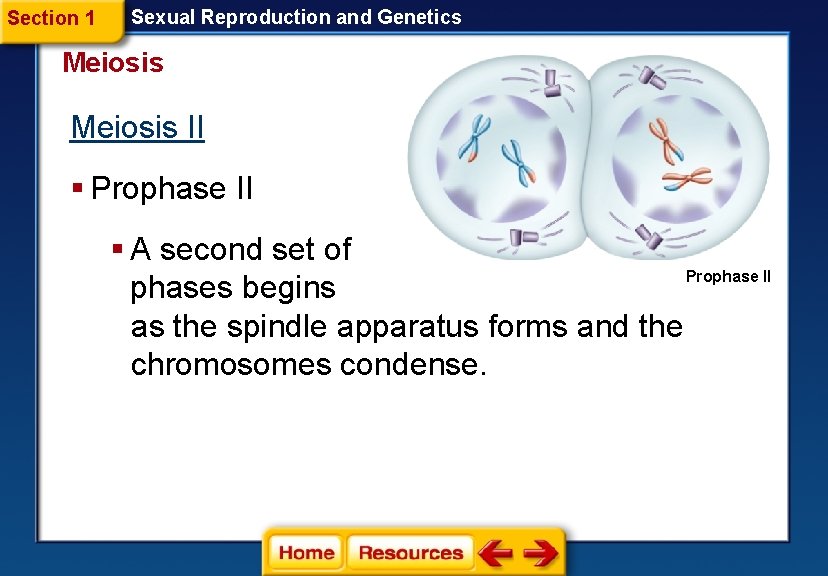
Section 1 Sexual Reproduction and Genetics Meiosis II § Prophase II § A second set of Prophase II phases begins as the spindle apparatus forms and the chromosomes condense.
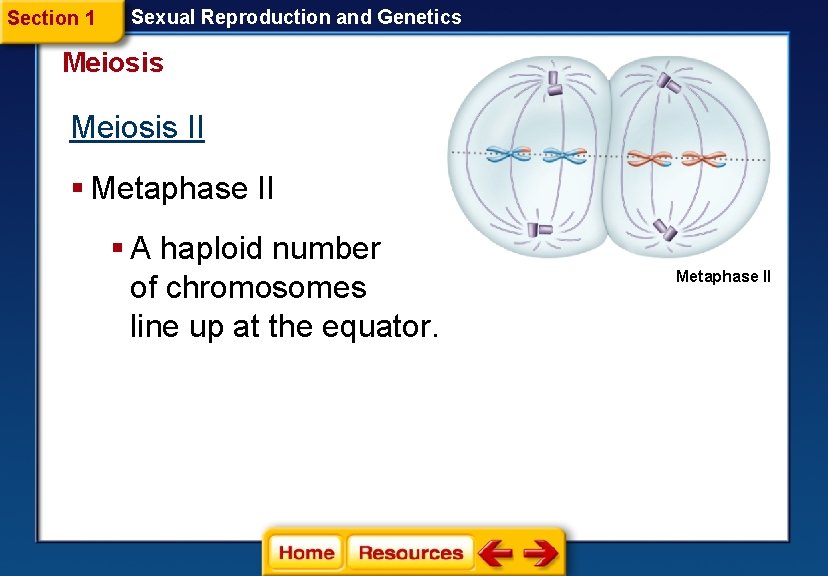
Section 1 Sexual Reproduction and Genetics Meiosis II § Metaphase II § A haploid number of chromosomes line up at the equator. Metaphase II
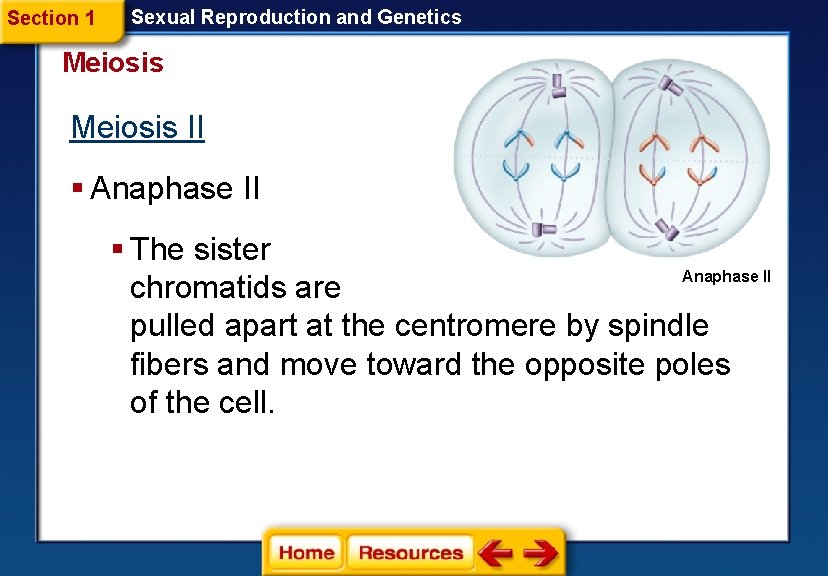
Section 1 Sexual Reproduction and Genetics Meiosis II § Anaphase II § The sister Anaphase II chromatids are pulled apart at the centromere by spindle fibers and move toward the opposite poles of the cell.
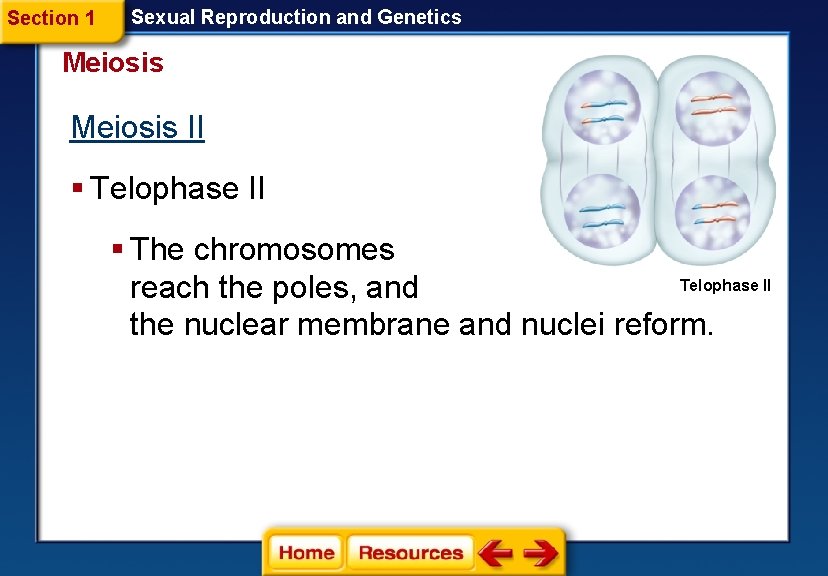
Section 1 Sexual Reproduction and Genetics Meiosis II § Telophase II § The chromosomes Telophase II reach the poles, and the nuclear membrane and nuclei reform.
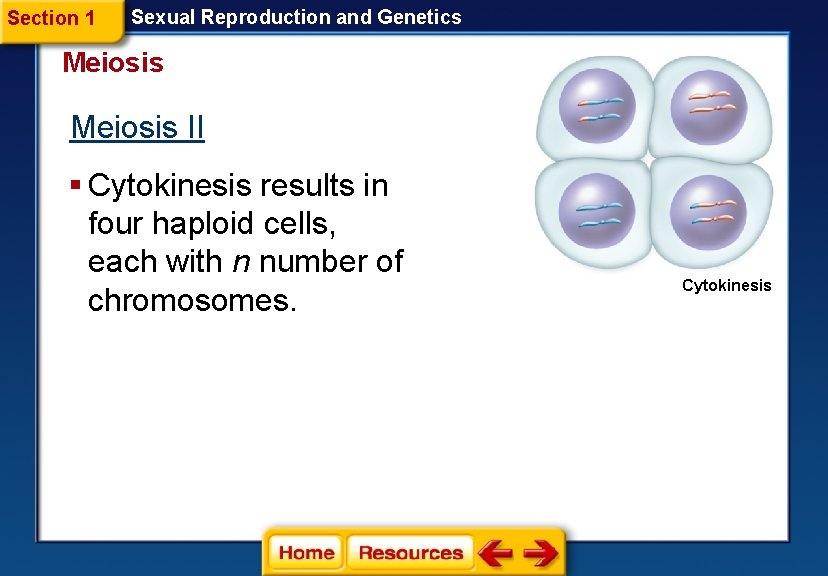
Section 1 Sexual Reproduction and Genetics Meiosis II § Cytokinesis results in four haploid cells, each with n number of chromosomes. Cytokinesis
Section 1 Sexual Reproduction and Genetics Meiosis The Importance of Meiosis § Meiosis consists of two sets of divisions § Produces four haploid daughter cells that are not identical § Results in genetic variation
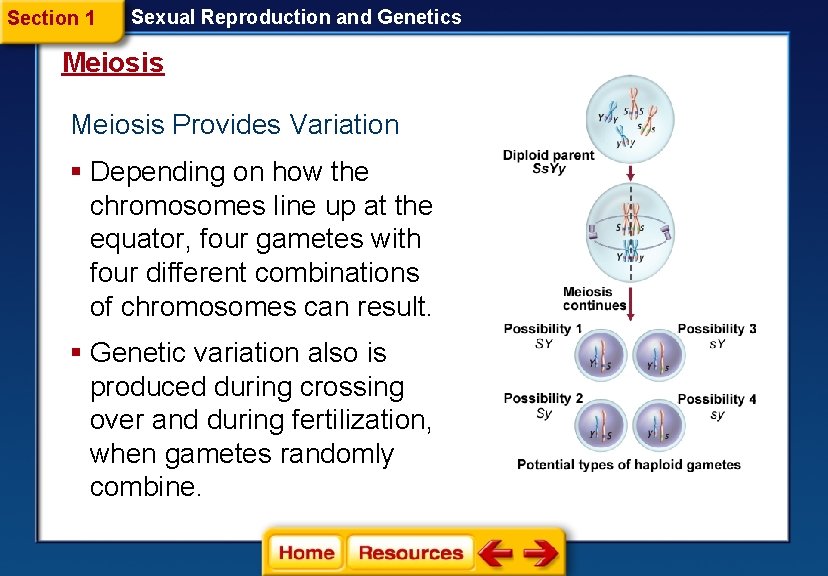
Section 1 Sexual Reproduction and Genetics Meiosis Provides Variation § Depending on how the chromosomes line up at the equator, four gametes with four different combinations of chromosomes can result. § Genetic variation also is produced during crossing over and during fertilization, when gametes randomly combine.
Section 1 Sexual Reproduction and Genetics Meiosis Sexual Reproduction v. Asexual Reproduction § Asexual reproduction § The organism inherits all of its chromosomes from a single parent. § The new individual is genetically identical to its parent. § Sexual reproduction § Beneficial genes multiply faster over time.