
Section 1 How Rock Deforms Mountain ranges are
- Slides: 18
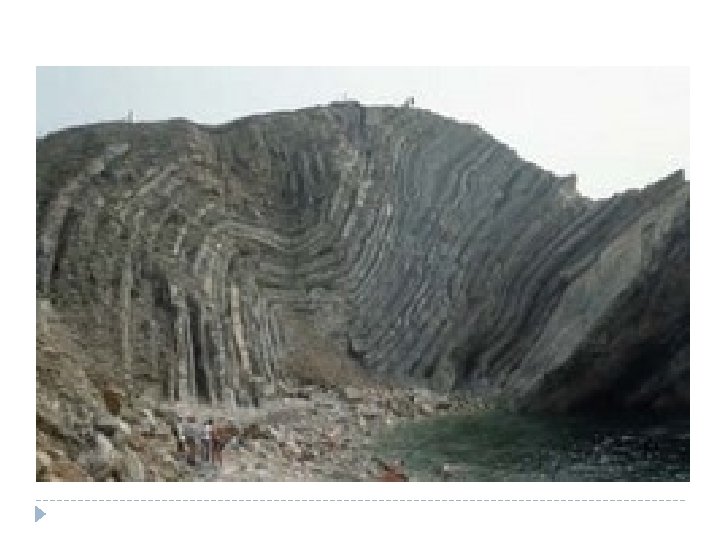
Section 1: How Rock Deforms �Mountain ranges are constantly changing in a process called deformation – the bending, tilting and breaking of Earth’s crust.
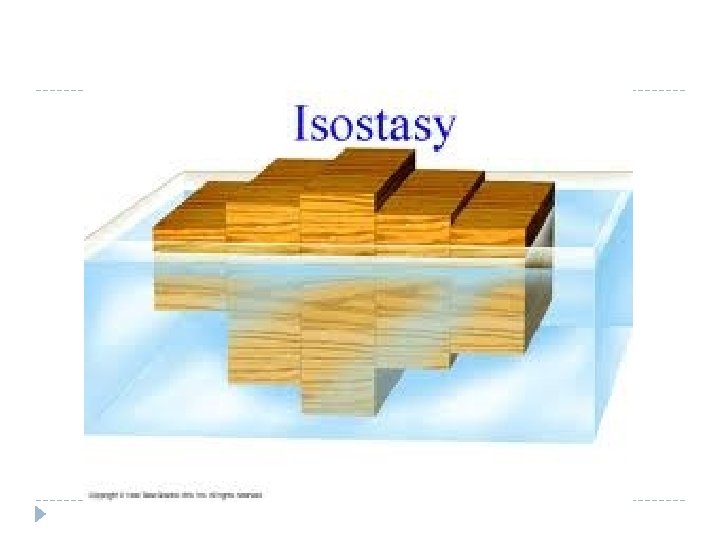
Isostasy �Deformation sometimes occurs because the weight of the Earth’s crust changes. �As the lithosphere becomes thicker it sinks into the athenosphere and when it thins it rises higher in the athenosphere. �When the two forces are balanced they are in a state of isostasy. �As the adjustments occur the crust bends up and down which causes it to break.
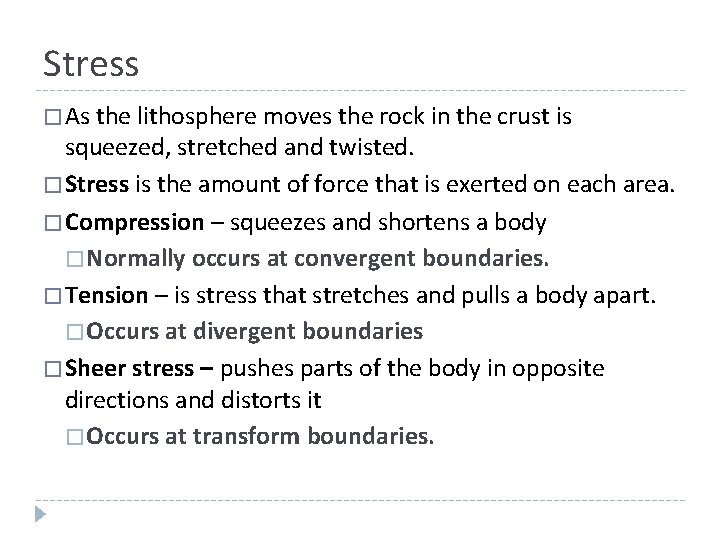
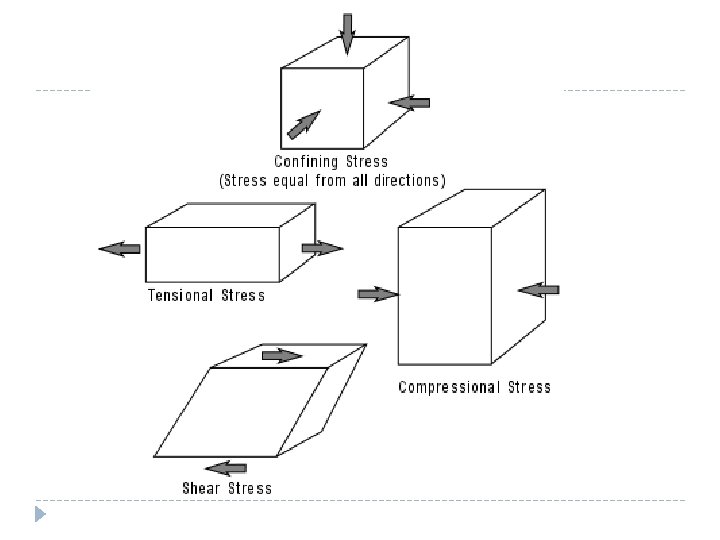
Stress � As the lithosphere moves the rock in the crust is squeezed, stretched and twisted. � Stress is the amount of force that is exerted on each area. � Compression – squeezes and shortens a body � Normally occurs at convergent boundaries. � Tension – is stress that stretches and pulls a body apart. � Occurs at divergent boundaries � Sheer stress – pushes parts of the body in opposite directions and distorts it � Occurs at transform boundaries.
Strain �When stress is applied to the rock, the rock will deform which is called strain. �Rocks will fracture, crack, bend or deform based on the type of rock present.
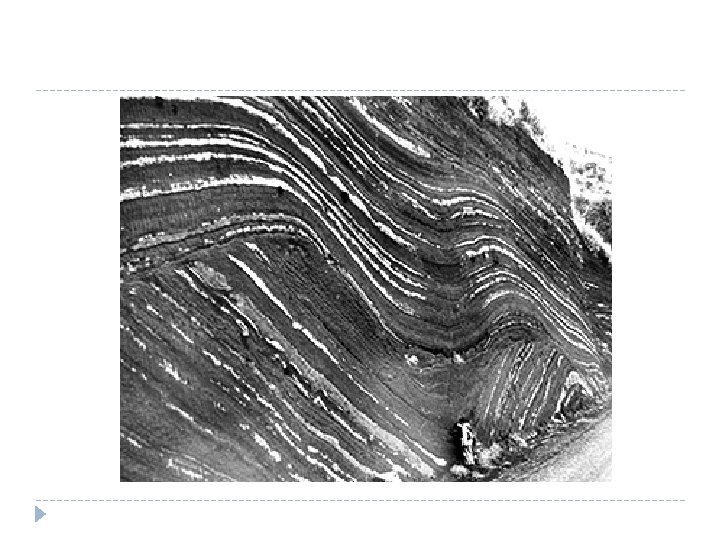
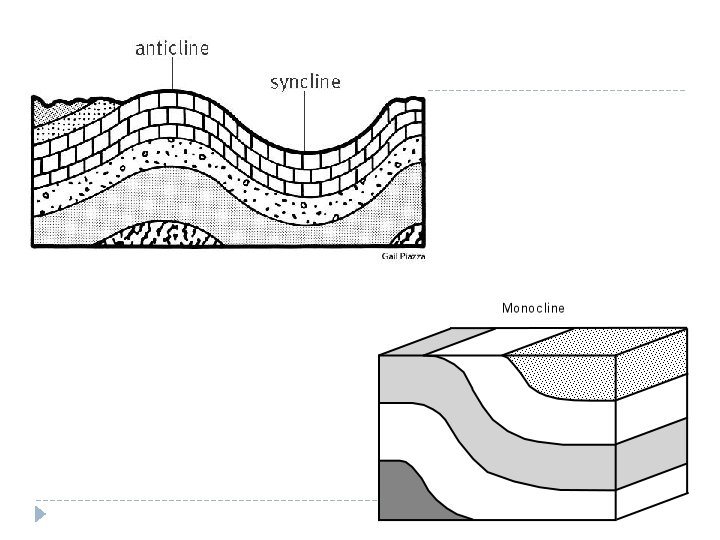
Folds �Is a bend in rock layers due to stress. �Sometimes cracks form but mainly they stay intact �Scientists study the ages of the relative rocks to determine the types of folds. �Anticline – fold in which the oldest layer is in the center of the fold. �Syncline – youngest layer in the center �Monocline – both limbs are almost horizontal.
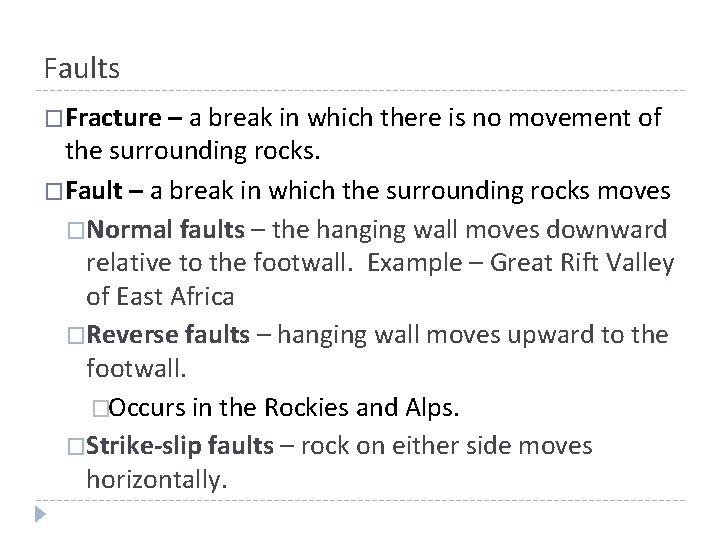
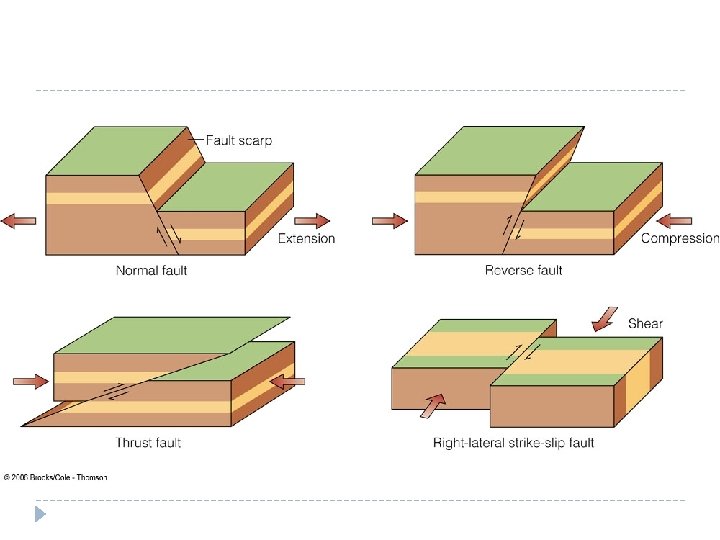
Faults �Fracture – a break in which there is no movement of the surrounding rocks. �Fault – a break in which the surrounding rocks moves �Normal faults – the hanging wall moves downward relative to the footwall. Example – Great Rift Valley of East Africa �Reverse faults – hanging wall moves upward to the footwall. �Occurs in the Rockies and Alps. �Strike-slip faults – rock on either side moves horizontally.
Section 2 – How Mountains Form �Mountain range- a group of adjacent mountains that are related to each other in shape and structure �Mountain system – a group of adjacent ranges �Mountain belt – bunch of mountain systems together
Types of Mountains �Scientists classify mountains according to the way in which the crust was deformed and shaped.
Folded Mountains �Form when tectonic movements squeezed rocks together in accordion – like folds.
Fault-Block Mountains �Faults cause blocks to tilt and drop relative to other blocks.
Dome Mountains �Magma rises through the crust and pushes up the rock layers above the magma �Also occur when tectonic forces gently uplift rock layers
Volcanic Mountains �Mountains form when magma erupts onto Earth’s surface �Form along convergent plate boundaries �Part of mid-ocean ridges along divergent plate boundaries �Form at hot spots which are volcanically active areas that lie far from tectonic plate boundaries.