
Section 1 Earths Interior Who Studies Earths Interior
- Slides: 23
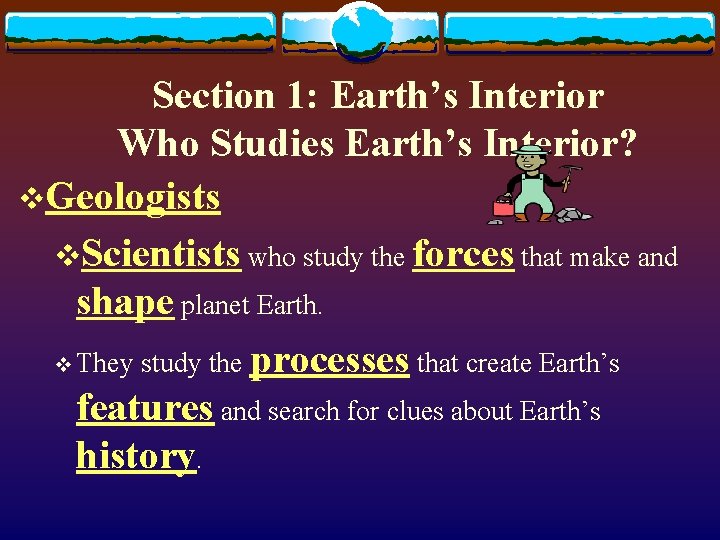
Section 1: Earth’s Interior Who Studies Earth’s Interior? v. Geologists v. Scientists who study the forces that make and shape planet Earth. v They study the processes that create Earth’s features and search for clues about Earth’s history.
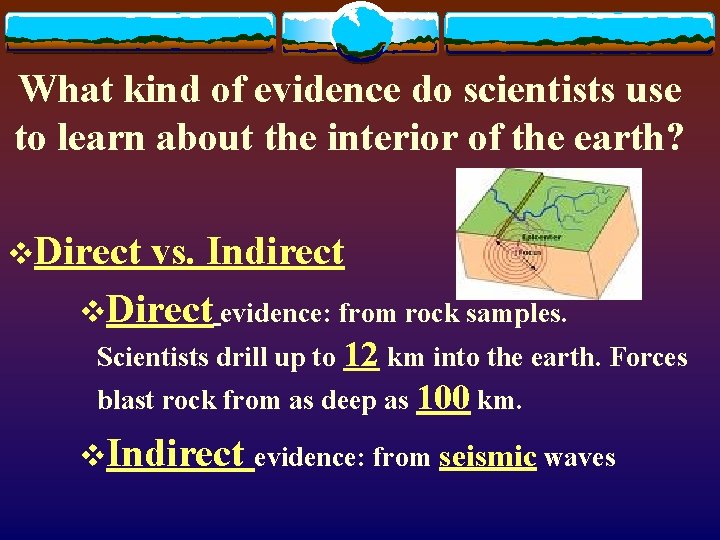
What kind of evidence do scientists use to learn about the interior of the earth? v. Direct vs. Indirect v. Direct evidence: from rock samples. Scientists drill up to 12 km into the earth. Forces blast rock from as deep as 100 km. v. Indirect evidence: from seismic waves
How do scientists study the Earth? v v To reach the Earth’s core you would have to travel over 6, 000 km (3, 728 miles)! Scientists record Seismic Waves – a vibration that travels through Earth carrying the energy released during an earthquake v Types of seismic waves – v. P waves – travel through crust (6 km/sec) and mantle (8 km/sec) v. S waves – will not travel through liquid http: //aspire. cosmic-ray. org/labs/seismic. swf
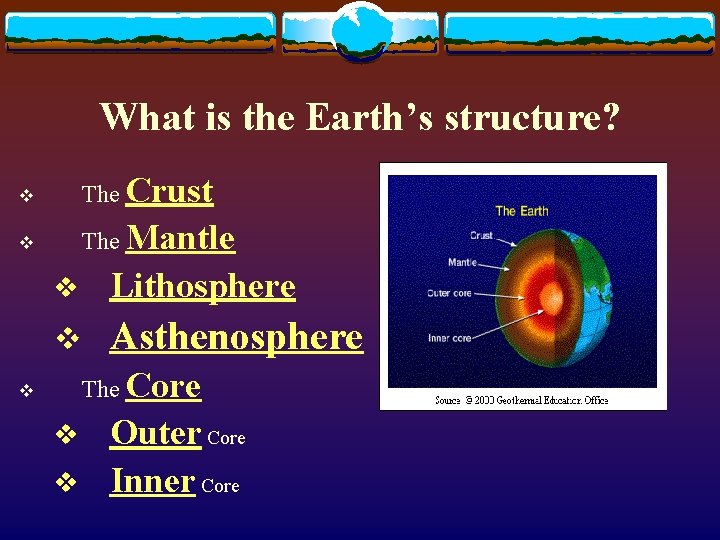
What is the Earth’s structure? v The Crust v The Mantle v Lithosphere v Asthenosphere The Core v v v Outer Core Inner Core
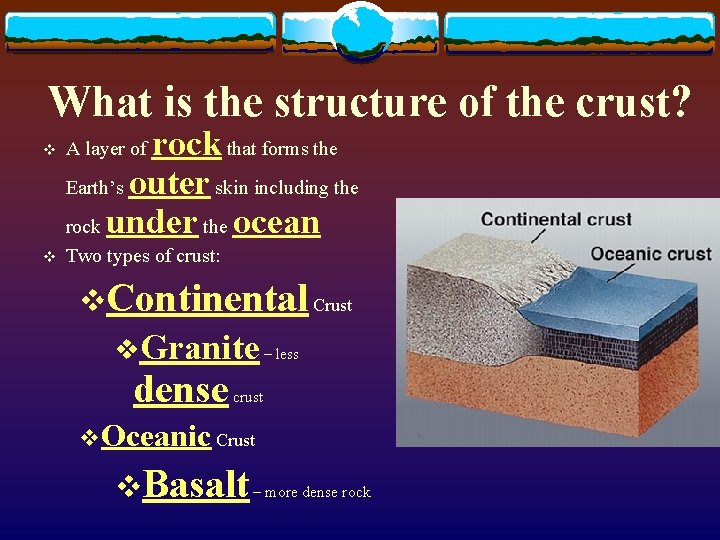
What is the structure of the crust? rock that forms the Earth’s outer skin including the rock under the ocean v A layer of v Two types of crust: v. Continental Crust v. Granite – less dense crust v. Oceanic Crust v. Basalt – more dense rock
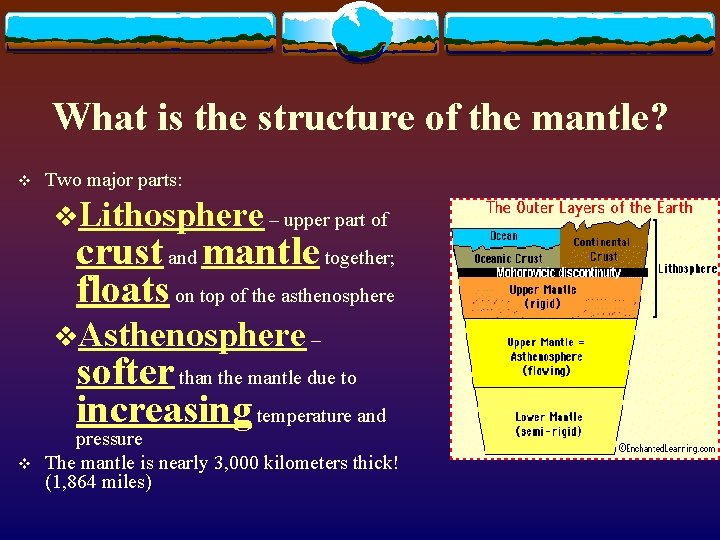
What is the structure of the mantle? v Two major parts: v. Lithosphere – upper part of crust and mantle together; floats on top of the asthenosphere v. Asthenosphere – softer than the mantle due to increasing temperature and v pressure The mantle is nearly 3, 000 kilometers thick! (1, 864 miles)
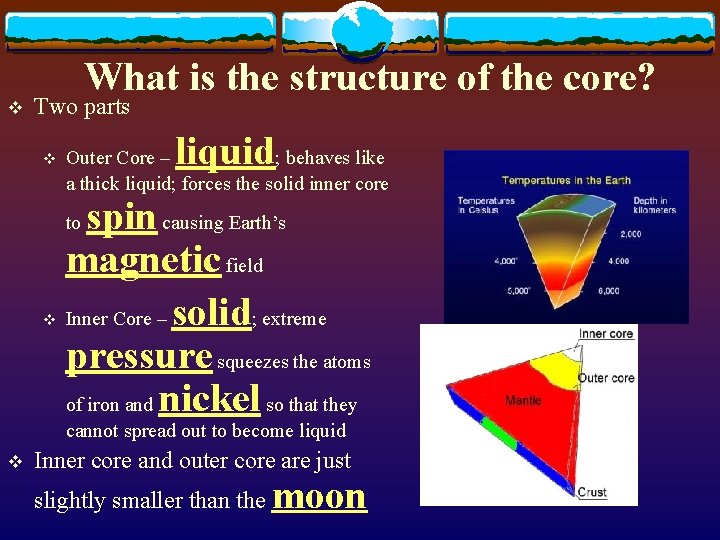
v What is the structure of the core? Two parts v liquid Outer Core – ; behaves like a thick liquid; forces the solid inner core spin causing Earth’s magnetic field Inner Core – solid; extreme pressure squeezes the atoms of iron and nickel so that they to v cannot spread out to become liquid v Inner core and outer core are just slightly smaller than the moon
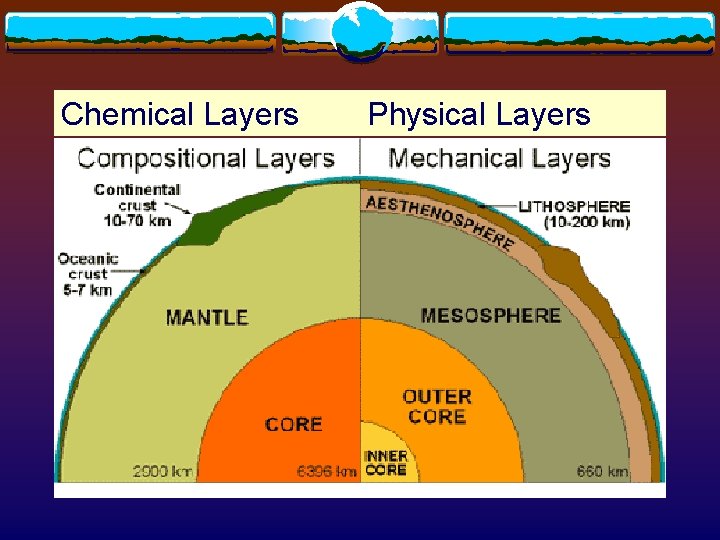
Chemical Layers Physical Layers
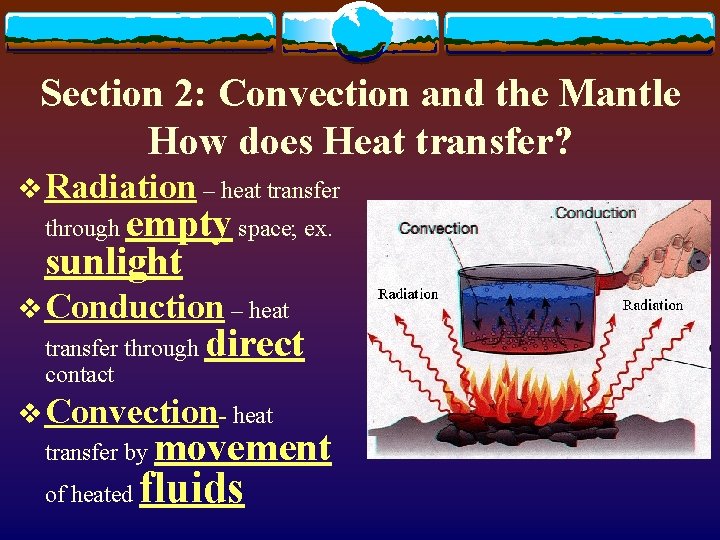
Section 2: Convection and the Mantle How does Heat transfer? v Radiation – heat transfer empty space; ex. sunlight through v Conduction – heat transfer through contact direct v Convection- heat transfer by of heated movement fluids
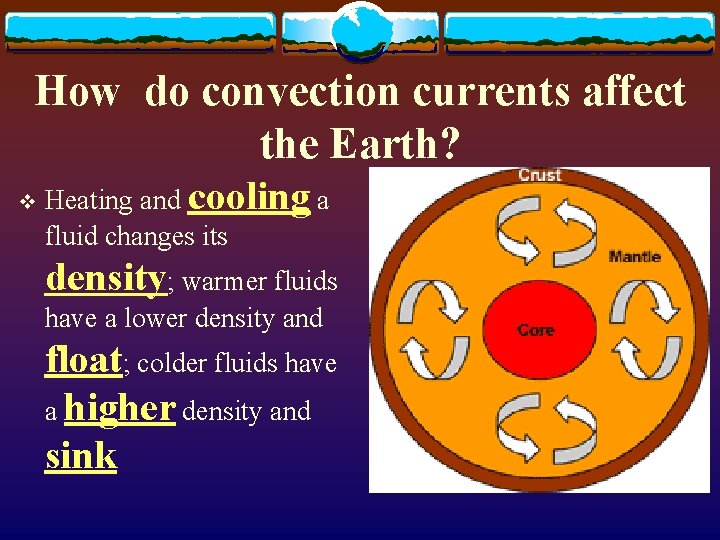
How do convection currents affect the Earth? v Heating and cooling a fluid changes its density; warmer fluids have a lower density and float; colder fluids have a higher density and sink
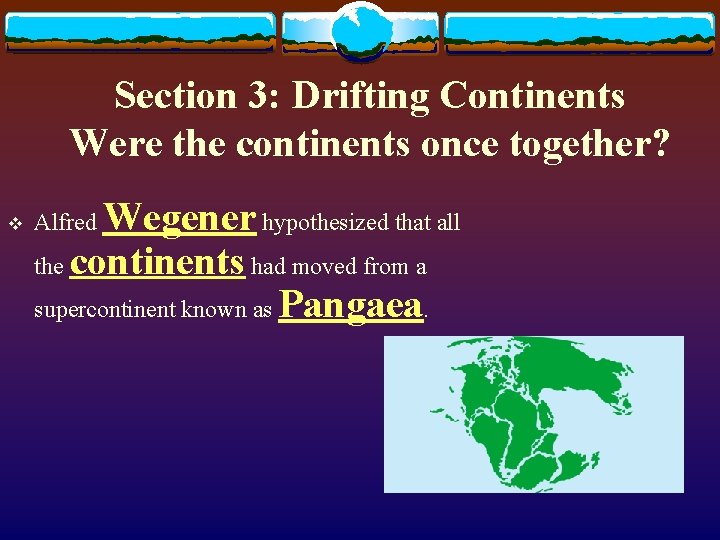
Section 3: Drifting Continents Were the continents once together? v Wegener hypothesized that all the continents had moved from a supercontinent known as Pangaea. Alfred
What is the evidence for Wegener’s idea? v Evidence of Continental Drift: v. Landforms – similar mountain ranges v. Fossils – similar fossils of a fernlike plant existed on both continents v. Climate – tropical pl ant fossils found in cold climates
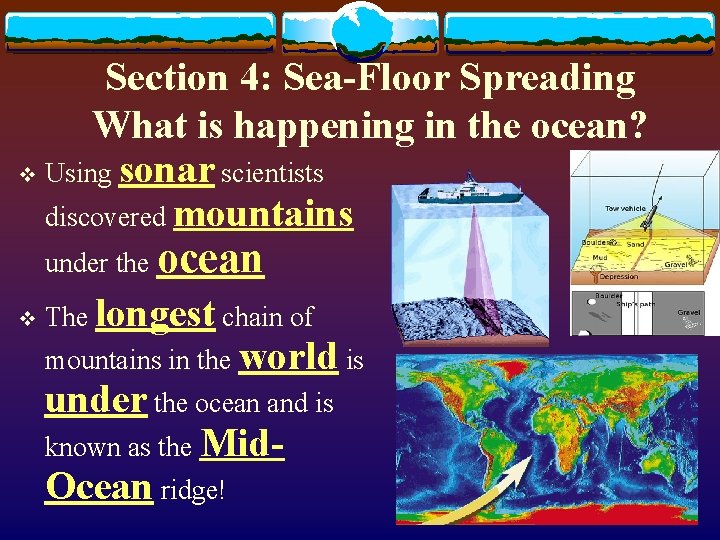
Section 4: Sea-Floor Spreading What is happening in the ocean? v Using sonar scientists discovered mountains under the ocean v The longest chain of mountains in the world is under the ocean and is known as the Mid. Ocean ridge!
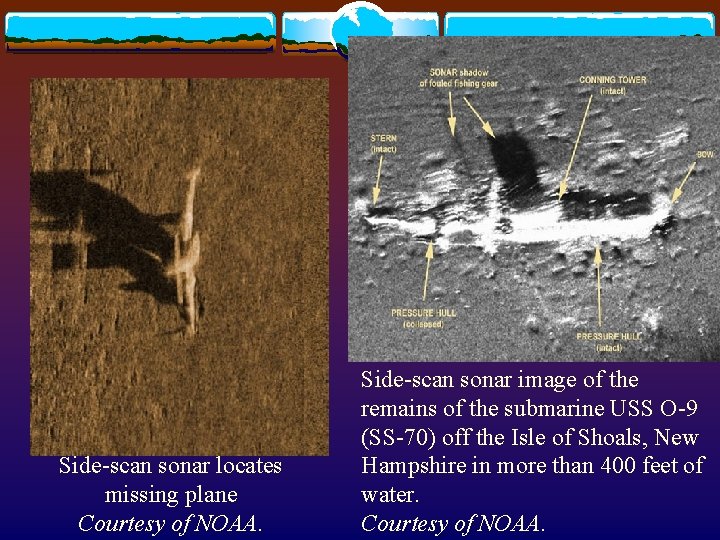
Side-scan sonar locates missing plane Courtesy of NOAA. Side-scan sonar image of the remains of the submarine USS O-9 (SS-70) off the Isle of Shoals, New Hampshire in more than 400 feet of water. Courtesy of NOAA.
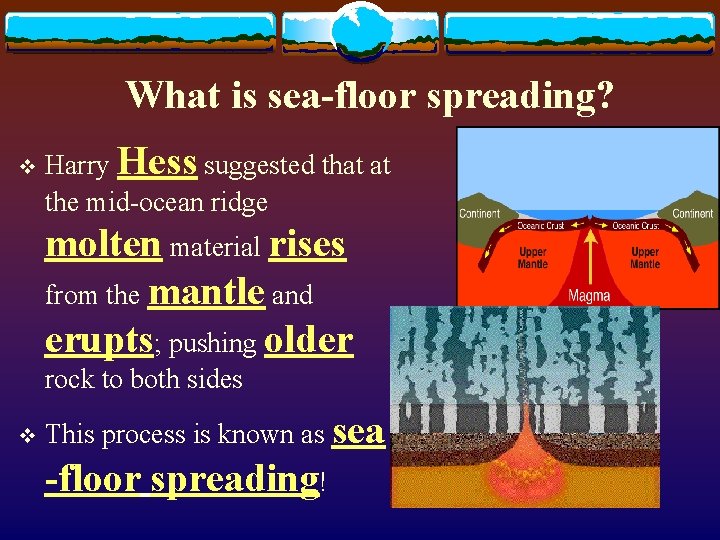
What is sea-floor spreading? v Harry Hess suggested that at the mid-ocean ridge molten material rises from the mantle and erupts; pushing older rock to both sides v This process is known as sea -floor spreading!
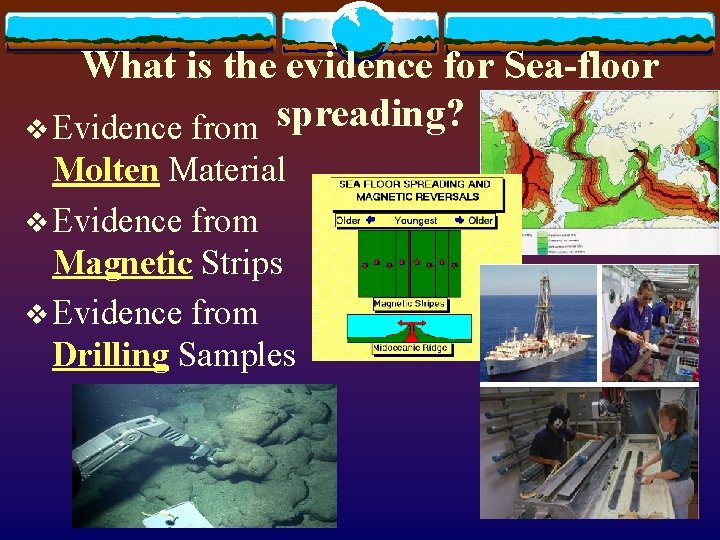
What is the evidence for Sea-floor v Evidence from spreading? Molten Material v Evidence from Magnetic Strips v Evidence from Drilling Samples
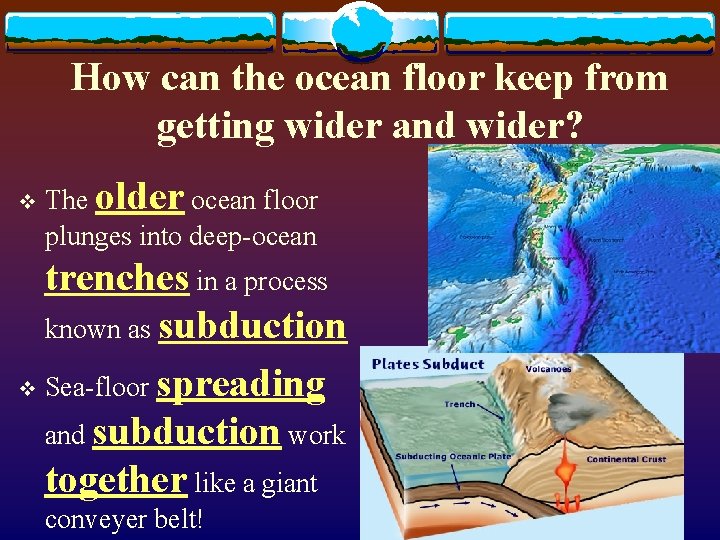
How can the ocean floor keep from getting wider and wider? v The older ocean floor plunges into deep-ocean trenches in a process known as subduction v Sea-floor spreading and subduction work together like a giant conveyer belt!
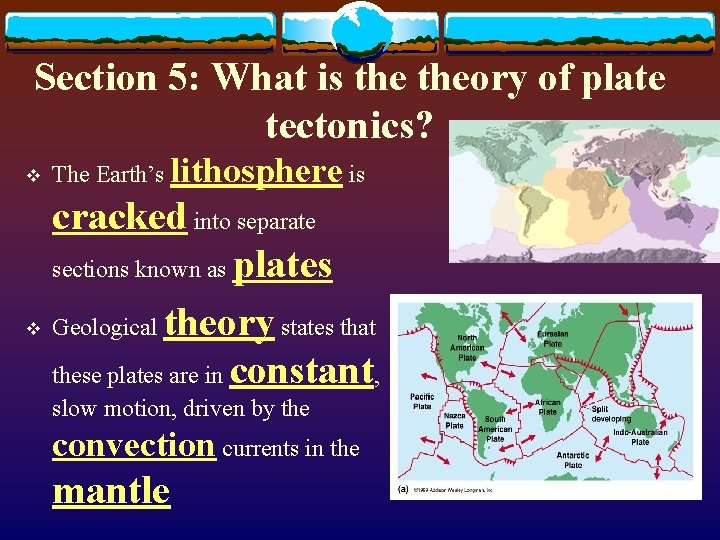
Section 5: What is theory of plate tectonics? v The Earth’s lithosphere is cracked into separate sections known as plates v Geological theory states that these plates are in constant, slow motion, driven by the convection currents in the mantle
How is theory of plate tectonics different from continental drift? drift is based on the movement of the continents DUE to plate tectonics v Continents are NOT the same as plates v Tectonic plates can be made up of both oceanic crust and continental crust v Continental
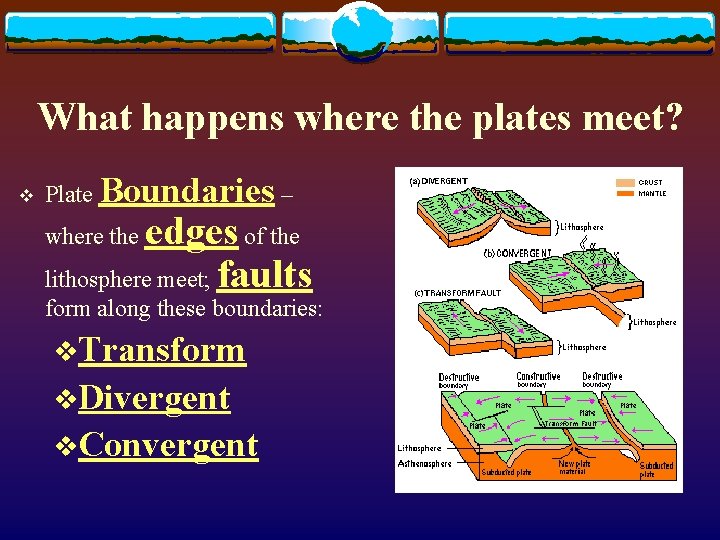
What happens where the plates meet? v Plate Boundaries – edges of the lithosphere meet; faults where the form along these boundaries: v. Transform v. Divergent v. Convergent
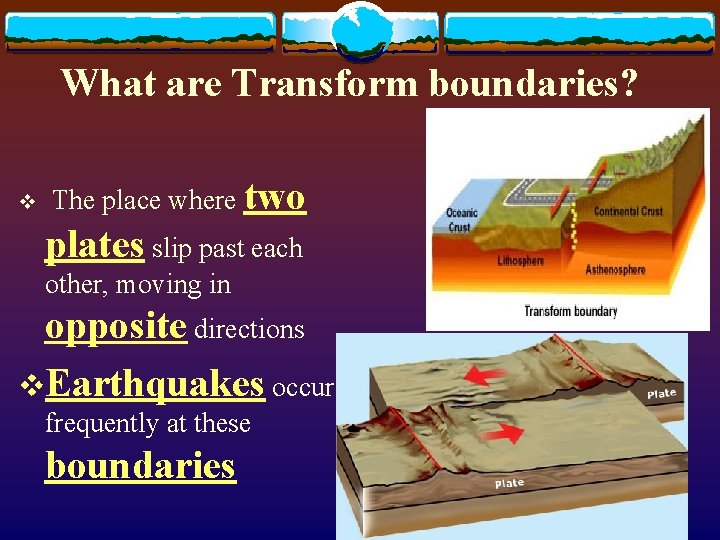
What are Transform boundaries? v The place where two plates slip past each other, moving in opposite directions v. Earthquakes occur frequently at these boundaries
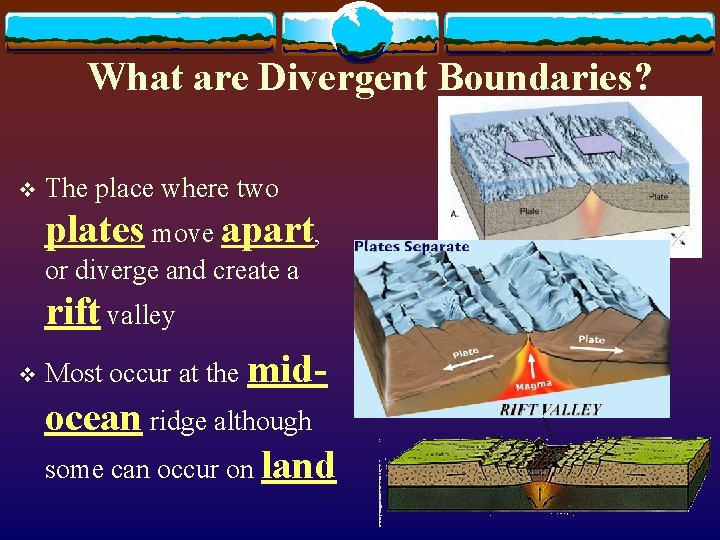
What are Divergent Boundaries? v The place where two plates move apart, or diverge and create a rift valley v Most occur at the mid- ocean ridge although some can occur on land
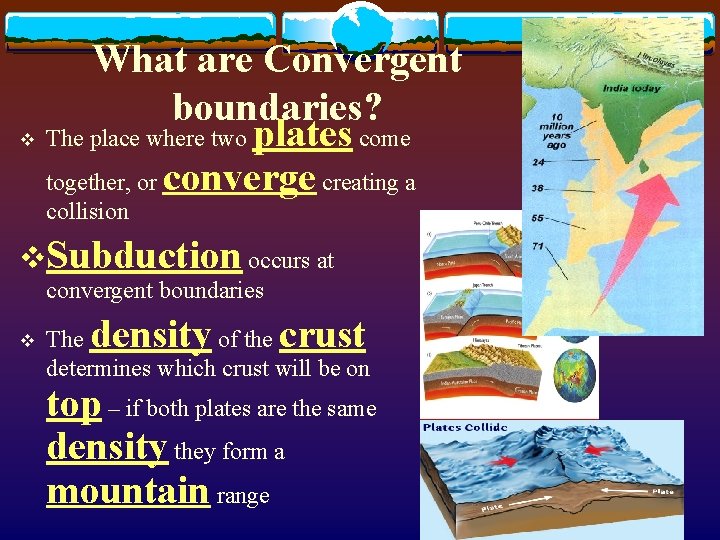
What are Convergent boundaries? v The place where two plates come together, or converge creating a collision v. Subduction occurs at convergent boundaries v density crust The of the determines which crust will be on top – if both plates are the same density they form a mountain range