
Section 1 Discovering Cells What are cells How

- Slides: 13
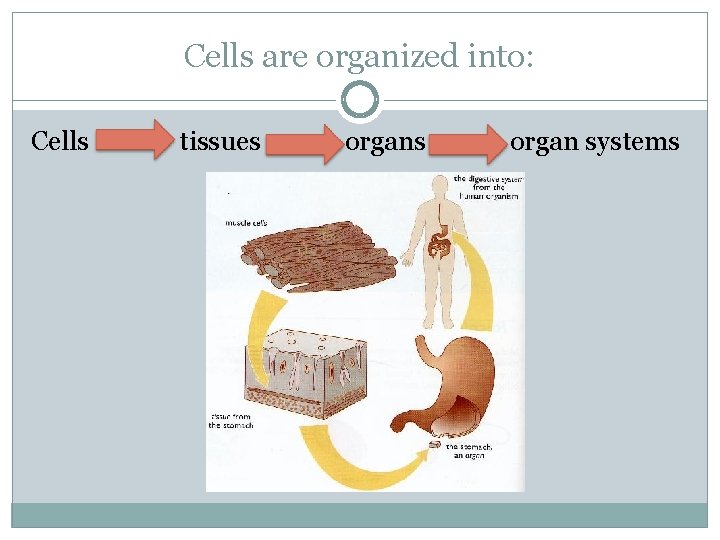
Section 1: Discovering Cells What are cells? How did the invention of the microscope contribute to knowledge about living things? What is the cell theory? How are the cells of multicellular organisms organized?
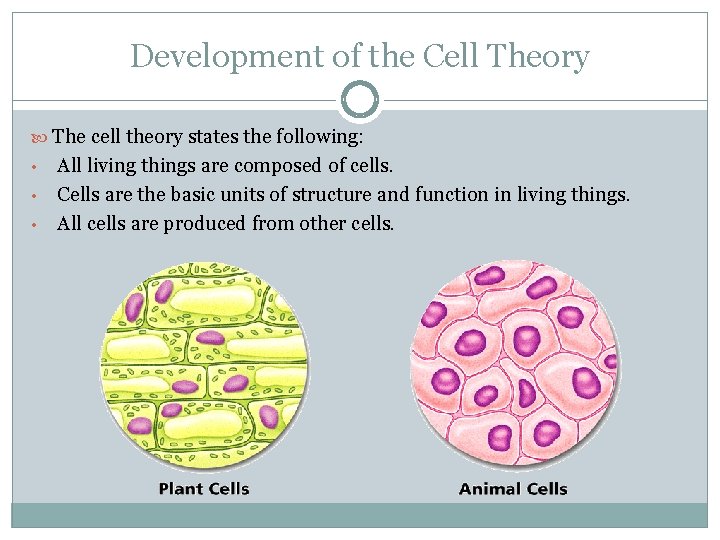
Development of the Cell Theory The cell theory states the following: All living things are composed of cells. • Cells are the basic units of structure and function in living things. • All cells are produced from other cells. •
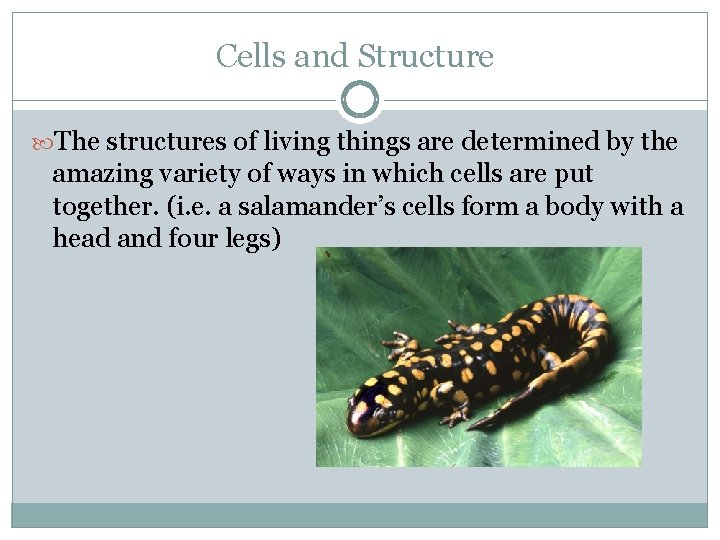
Cells and Structure The structures of living things are determined by the amazing variety of ways in which cells are put together. (i. e. a salamander’s cells form a body with a head and four legs)
Cells and Function Cells function similarly in all living organisms The functions of an organism include obtaining oxygen, getting rid of wastes, obtaining food and growing. Cells carry out these basic processes of life in similar ways
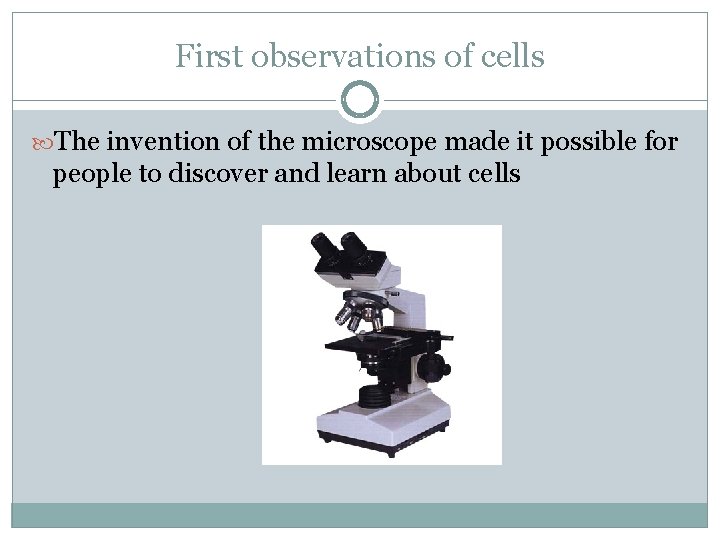
First observations of cells The invention of the microscope made it possible for people to discover and learn about cells
Robert Hooke First compound microscope built in 1663 Looked at cork and thought the spaces resembled little “cells”
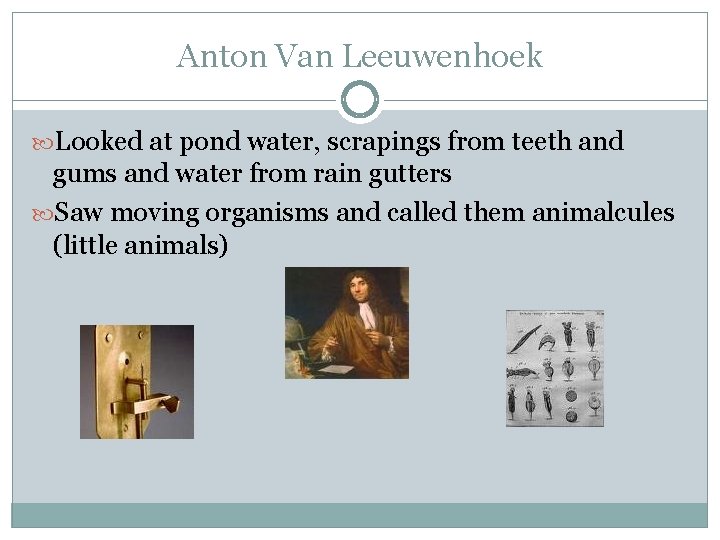
Anton Van Leeuwenhoek Looked at pond water, scrapings from teeth and gums and water from rain gutters Saw moving organisms and called them animalcules (little animals)
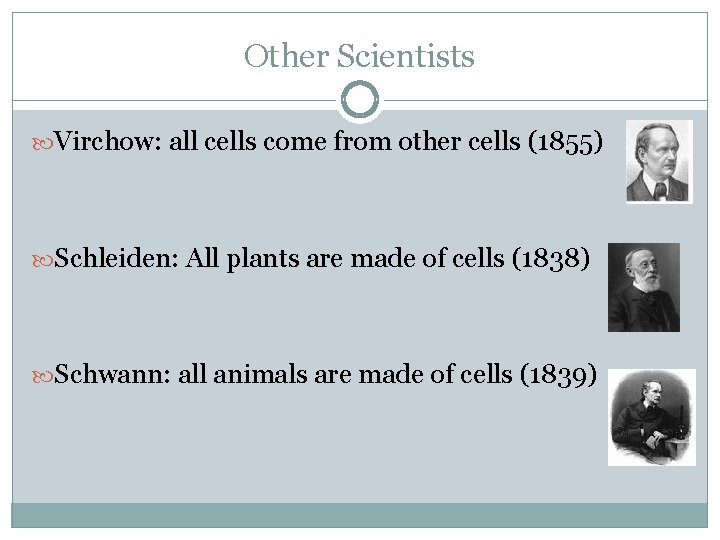
Other Scientists Virchow: all cells come from other cells (1855) Schleiden: All plants are made of cells (1838) Schwann: all animals are made of cells (1839)
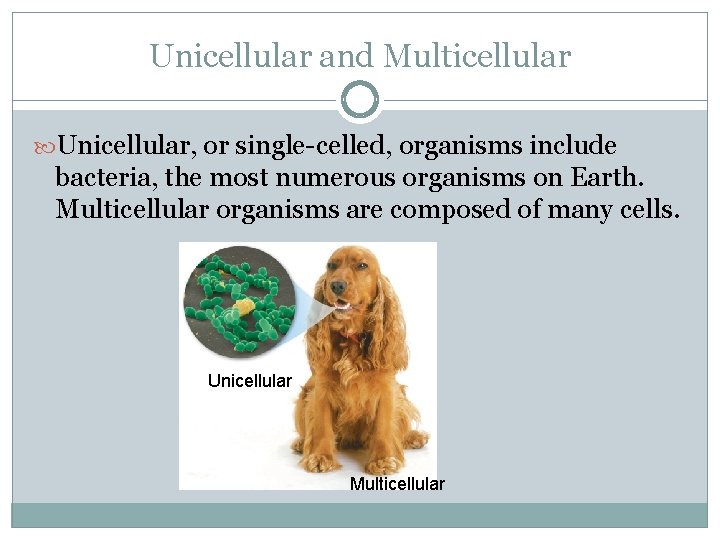
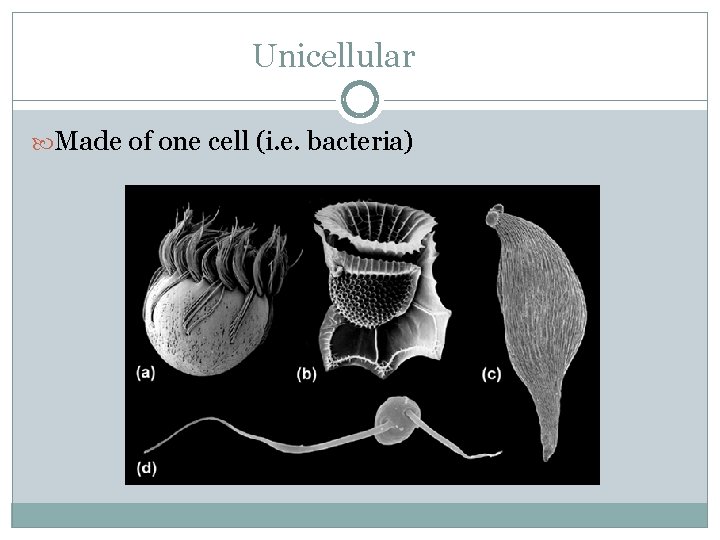
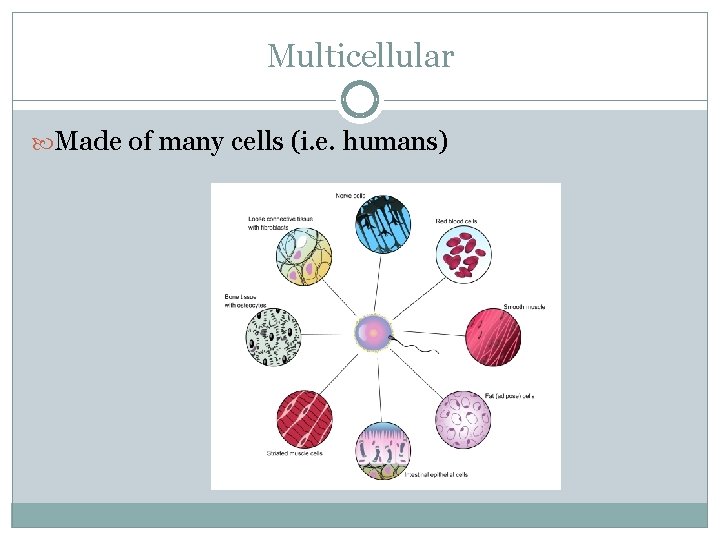
Unicellular and Multicellular Unicellular, or single-celled, organisms include bacteria, the most numerous organisms on Earth. Multicellular organisms are composed of many cells. Unicellular Multicellular
Unicellular Made of one cell (i. e. bacteria)
Multicellular Made of many cells (i. e. humans)
Cells are organized into: Cells tissues organ systems
End of Section: Discovering Cells