
SECTION 1 Chapter 2 Lesson 1 Planet Earth
- Slides: 44
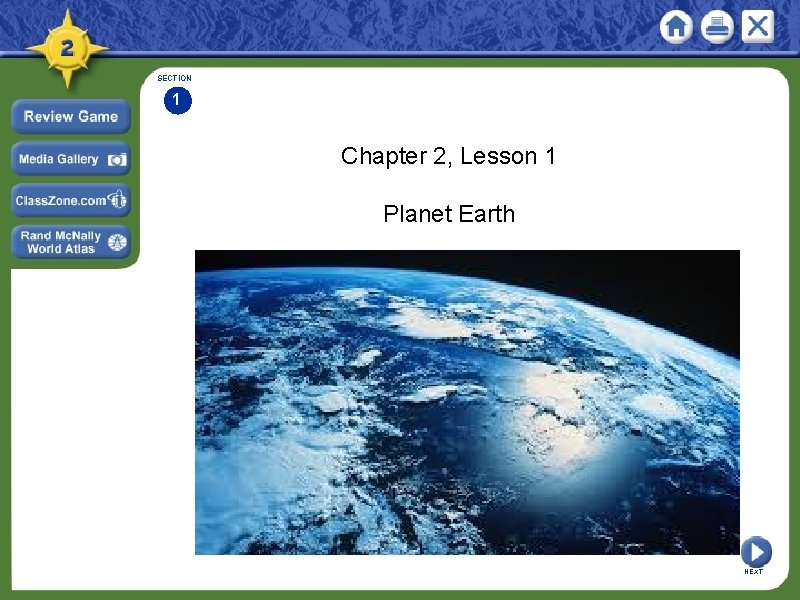
SECTION 1 Chapter 2, Lesson 1 Planet Earth NEXT
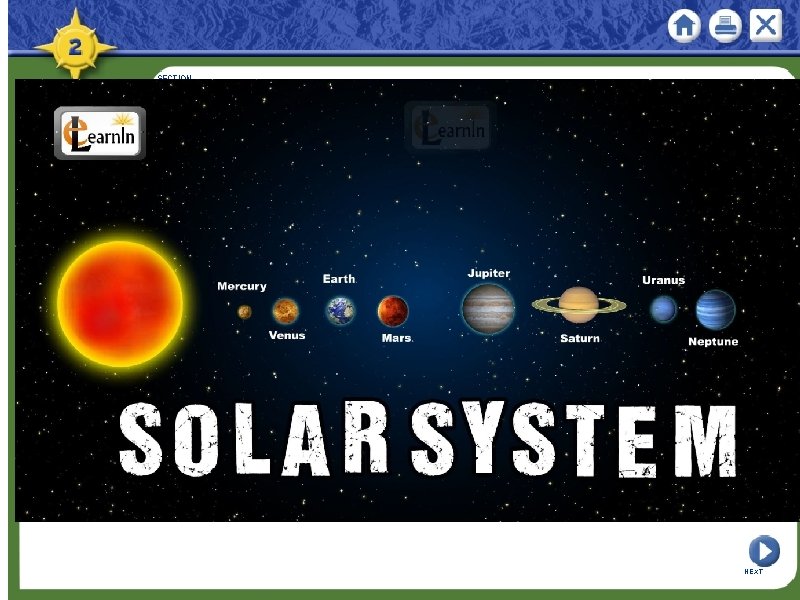
SECTION 1 Our Solar System • Earth is part of a large physical system containing countless objects, all of which revolve around the sun. • Eight spheres, called planets, are the largest objects in the solar system. NEXT
SECTION 1 NEXT
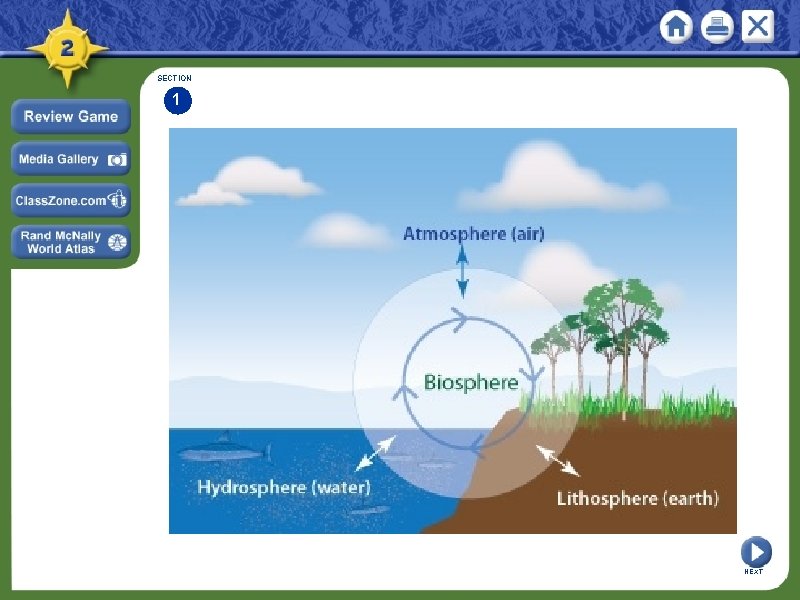
SECTION 1 Earth is made of four spheres: • atmosphere, • hydrosphere • lithosphere • biosphere NEXT
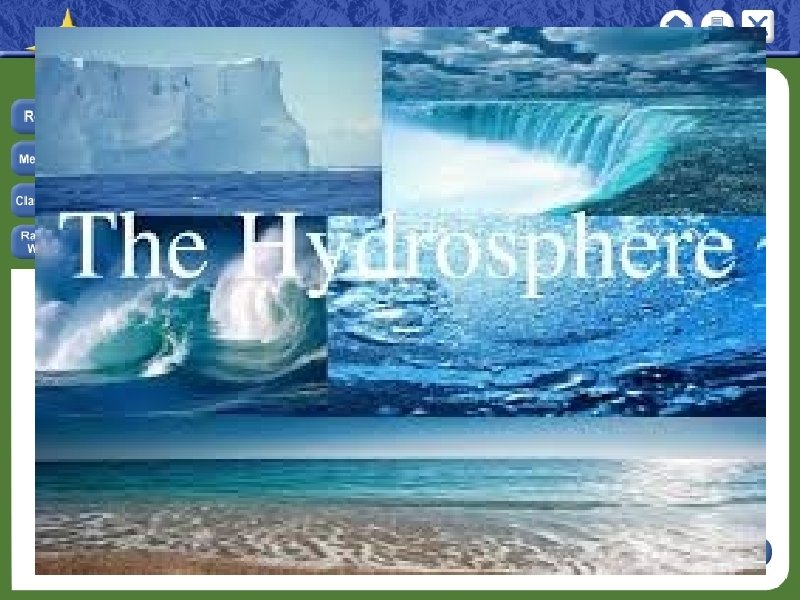
SECTION 1 Hydrosphere • includes the liquid and frozen surface water • Groundwater • water vapor in and around oceans, lakes, and rivers on Earth • 70% of earth’s surface NEXT
SECTION 1 NEXT
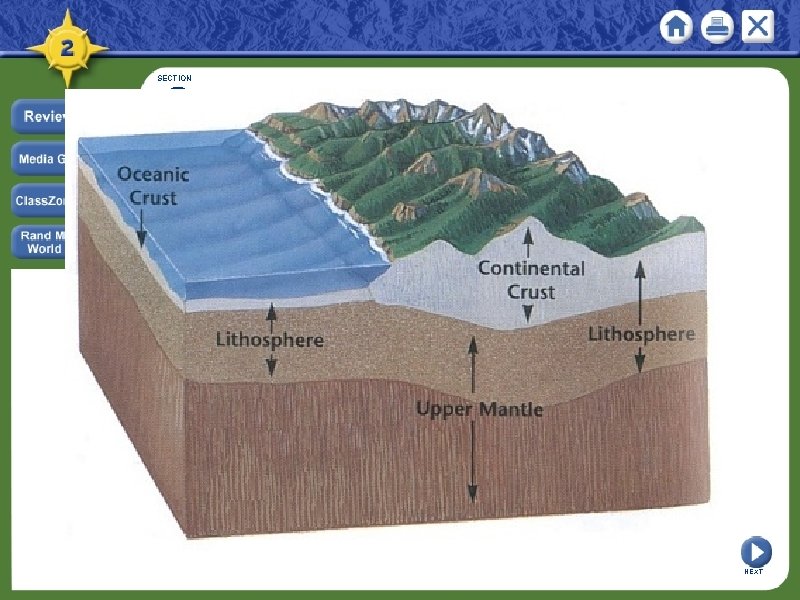
SECTION 1 Lithosphere • land or surface areas on Earth • including the continents, islands, and ocean basins • 30% of earth’s surface NEXT
SECTION 1 NEXT
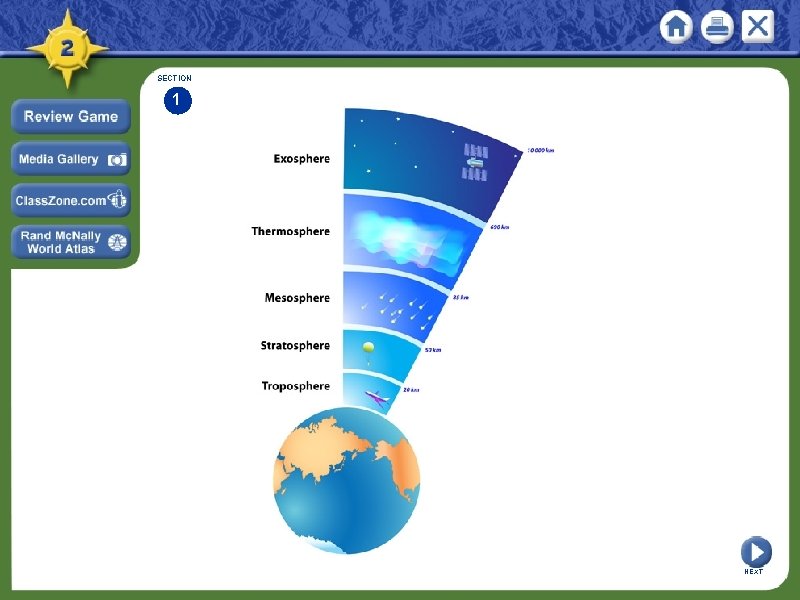
SECTION 1 Atmosphere is the layer of gasses surrounding the earth: -protects Earth from radiation, space debris - 78% nitrogen, 21% oxygen NEXT
SECTION 1 NEXT
SECTION 1 • Biosphere- the part of Earth that supports life for all: • People • Animals • Plants Contains atmosphere, lithosphere, and hydrosphere NEXT
SECTION 1 NEXT
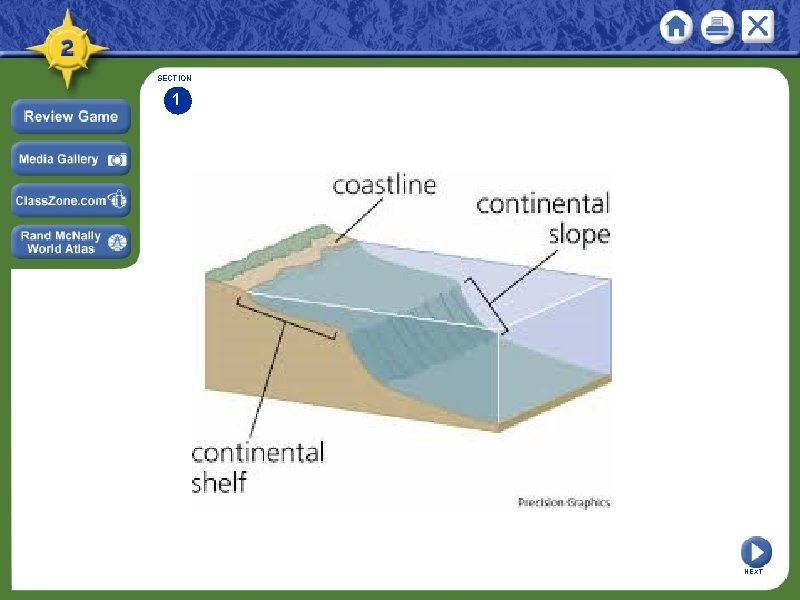
SECTION 1 Oceanic Landforms • Continental shelf—sea floor from continent’s edge to deep ocean • Sea floor has ridges, valleys, canyons, plains, mountain ranges NEXT
SECTION 1 NEXT
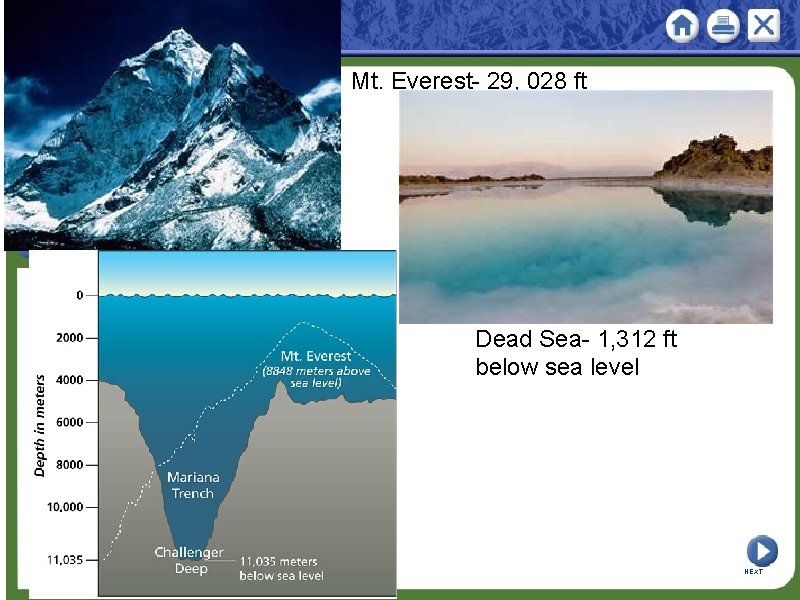
SECTION 1 Mt. Everest- 29, 028 ft Dead Sea- 1, 312 ft below sea level NEXT
Chapter 2, Lesson 2 Forces of Change World Geography
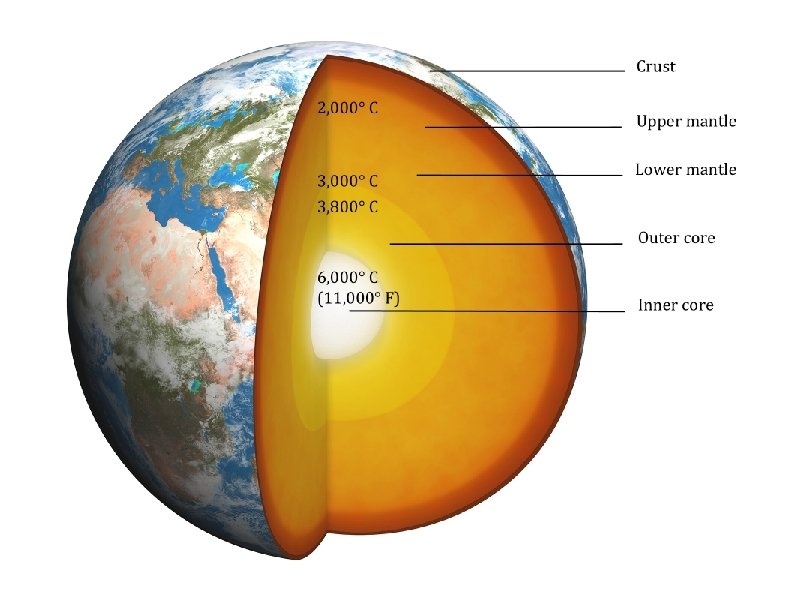
Forces of Change Earth’s Structure • For millions of years, the surface of the Earth has been moving. • The Earth is composed of three layers— • core at Earth’s center • mantle layer of dense rock on the outer core • crust forming Earth’s surface.
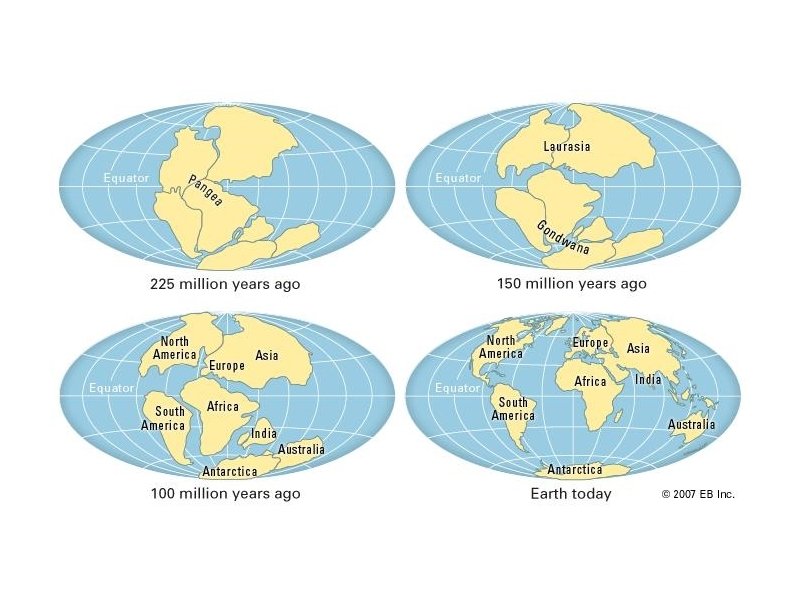
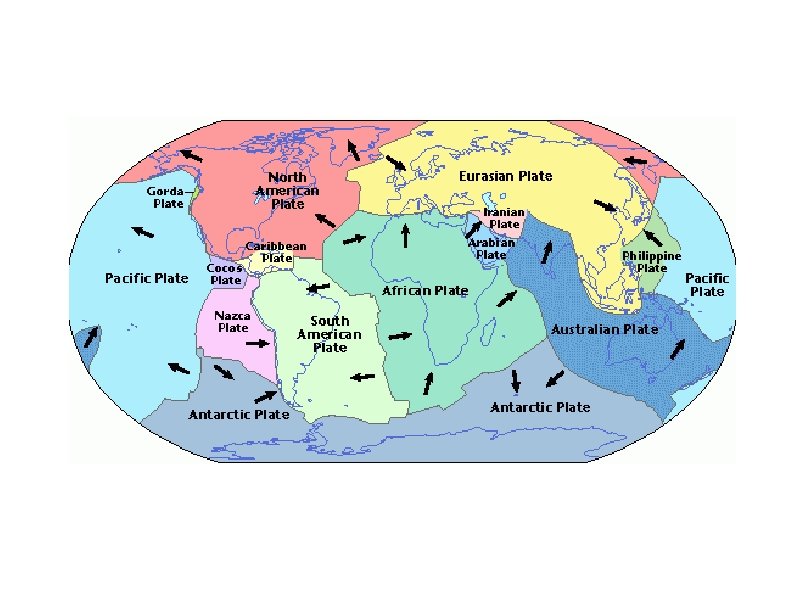
Earth’s Structure -Many scientists believe Earth was once a single land mass called Pangaea, but… -continental drift slowly spread the continents apart.
Earth’s Structure -Plate tectonics describes the activities of continental drift and magma flow -referring to the physical processes that create and shape: - continents -islands -oceans -mountain ranges.
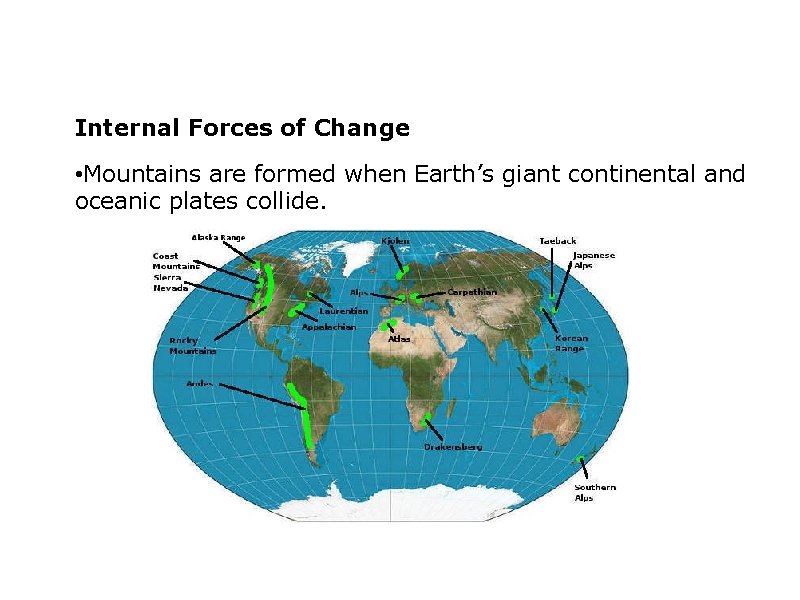
Internal Forces of Change • Mountains are formed when Earth’s giant continental and oceanic plates collide.
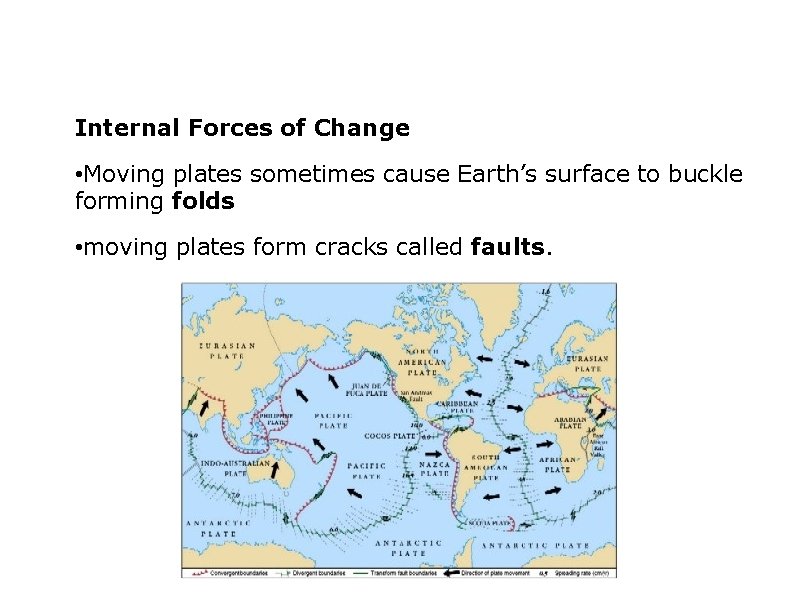
Internal Forces of Change • Moving plates sometimes cause Earth’s surface to buckle forming folds • moving plates form cracks called faults.
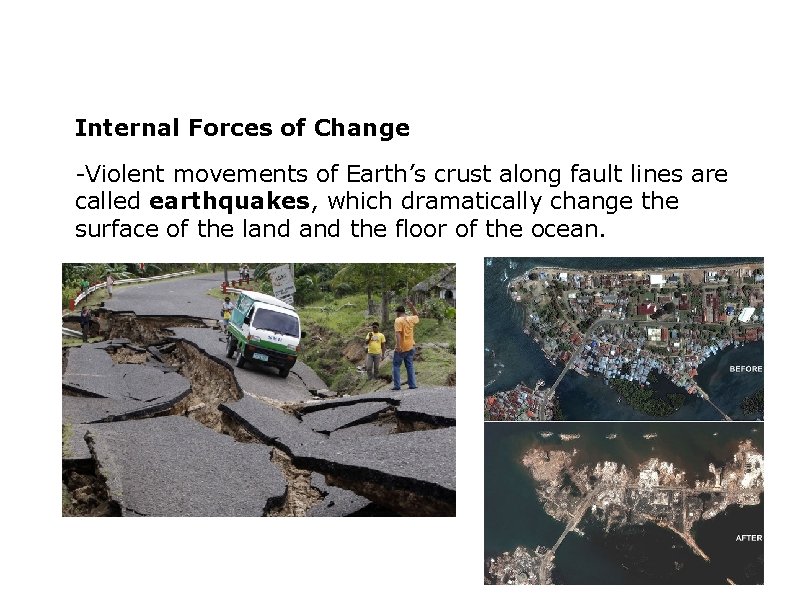
Internal Forces of Change -Violent movements of Earth’s crust along fault lines are called earthquakes, which dramatically change the surface of the land the floor of the ocean.
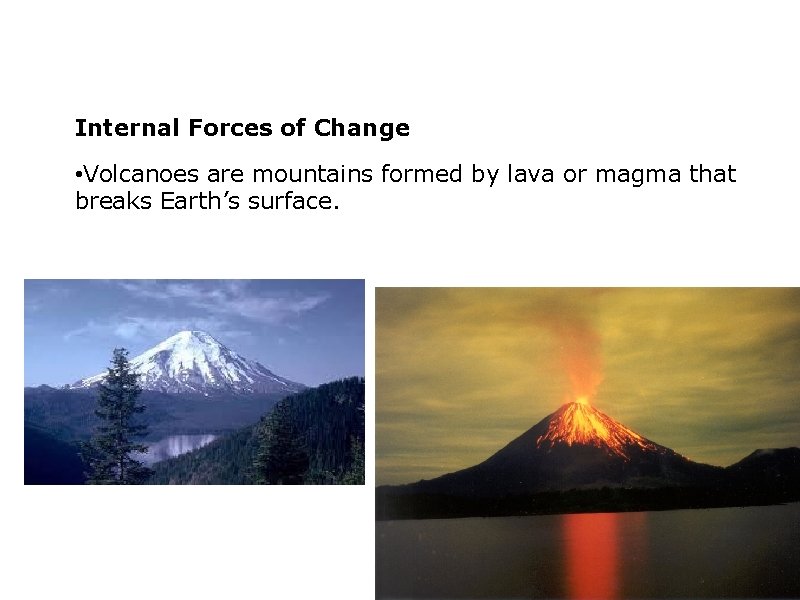
Internal Forces of Change • Volcanoes are mountains formed by lava or magma that breaks Earth’s surface.
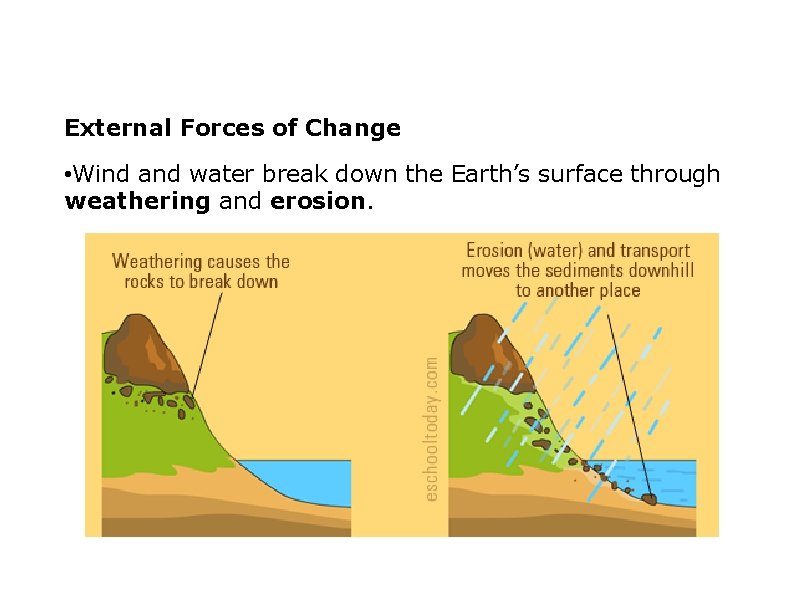
External Forces of Change • Wind and water break down the Earth’s surface through weathering and erosion.
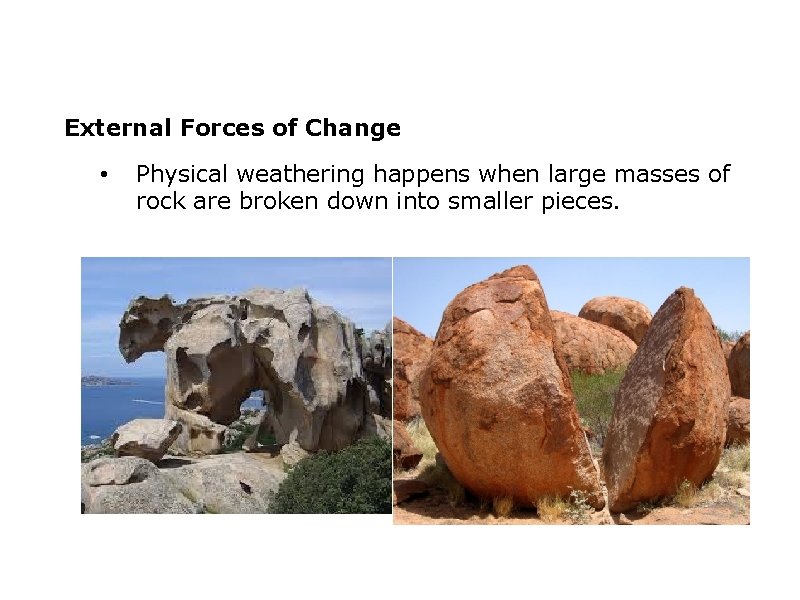
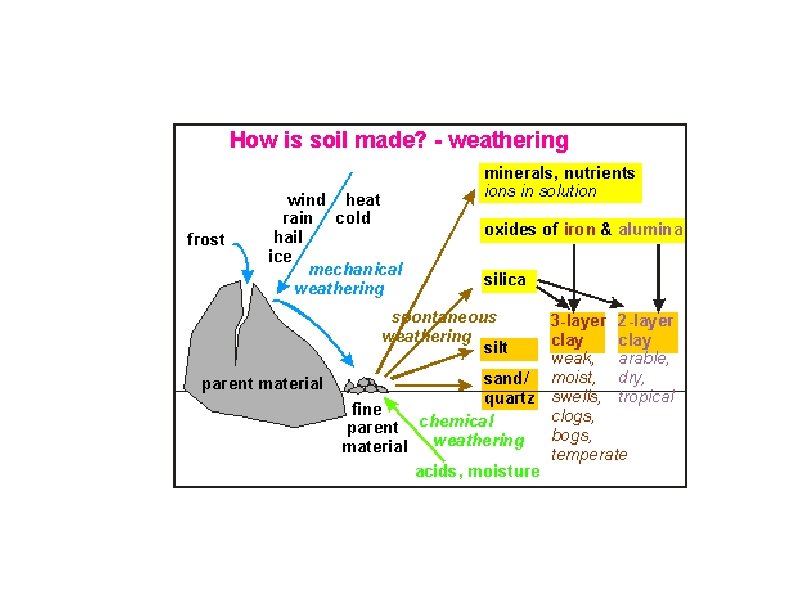
External Forces of Change • Physical weathering happens when large masses of rock are broken down into smaller pieces.
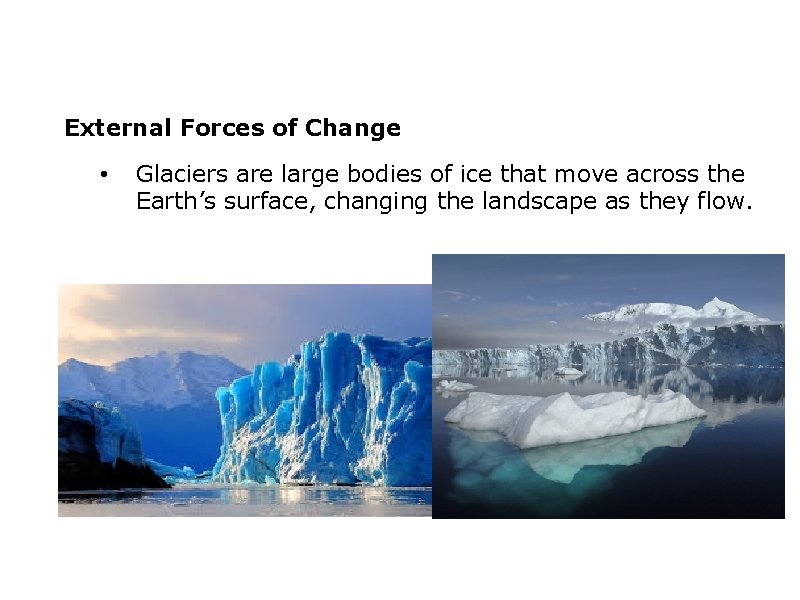
External Forces of Change • Glaciers are large bodies of ice that move across the Earth’s surface, changing the landscape as they flow.
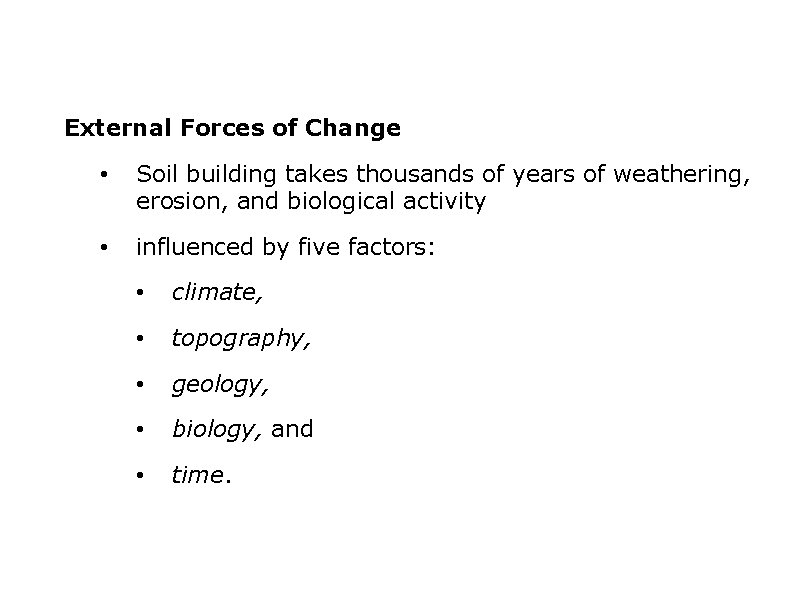
External Forces of Change • Soil building takes thousands of years of weathering, erosion, and biological activity • influenced by five factors: • climate, • topography, • geology, • biology, and • time.
Chapter 2, Lesson 3 Earth’s Water World Geography
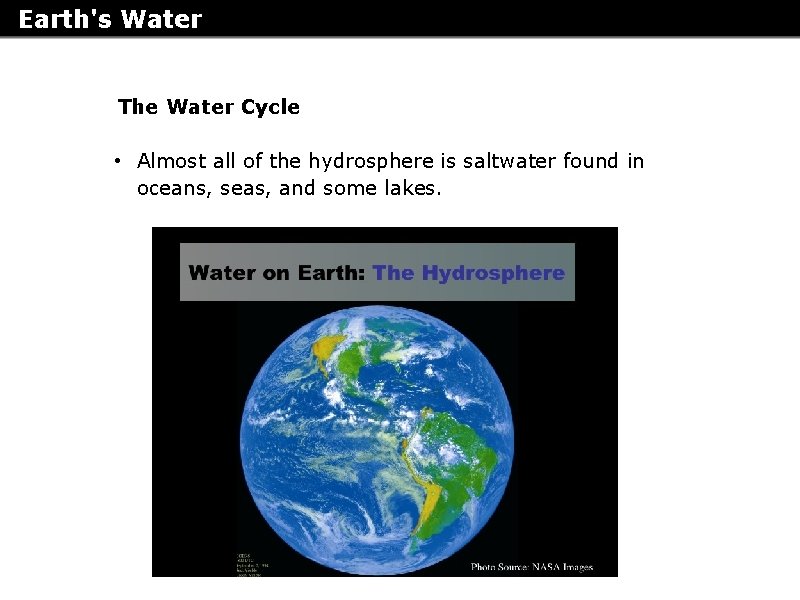
Earth's Water The Water Cycle • Almost all of the hydrosphere is saltwater found in oceans, seas, and some lakes.
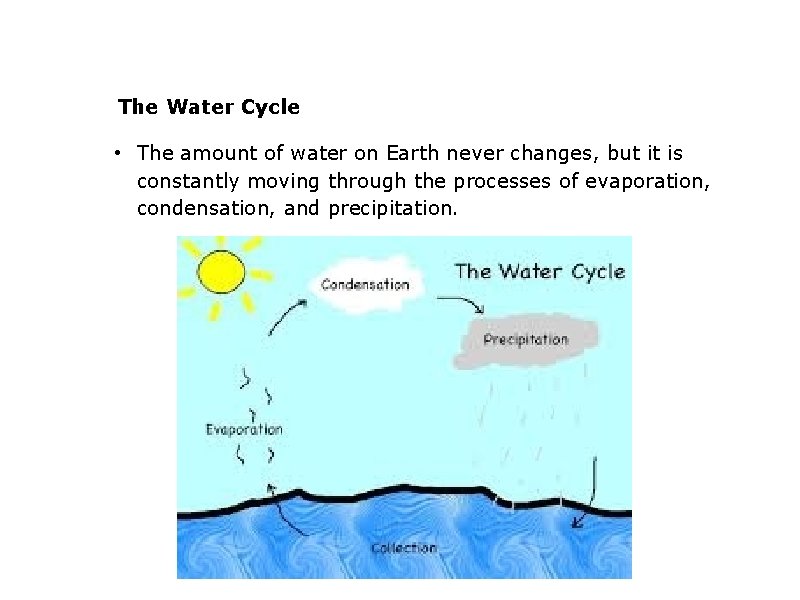
The Water Cycle • The amount of water on Earth never changes, but it is constantly moving through the processes of evaporation, condensation, and precipitation.
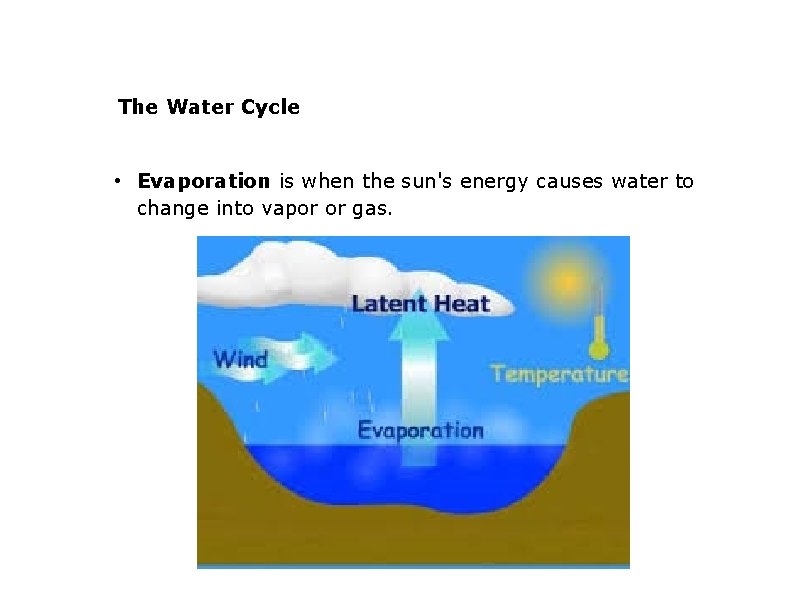
The Water Cycle • Evaporation is when the sun's energy causes water to change into vapor or gas.
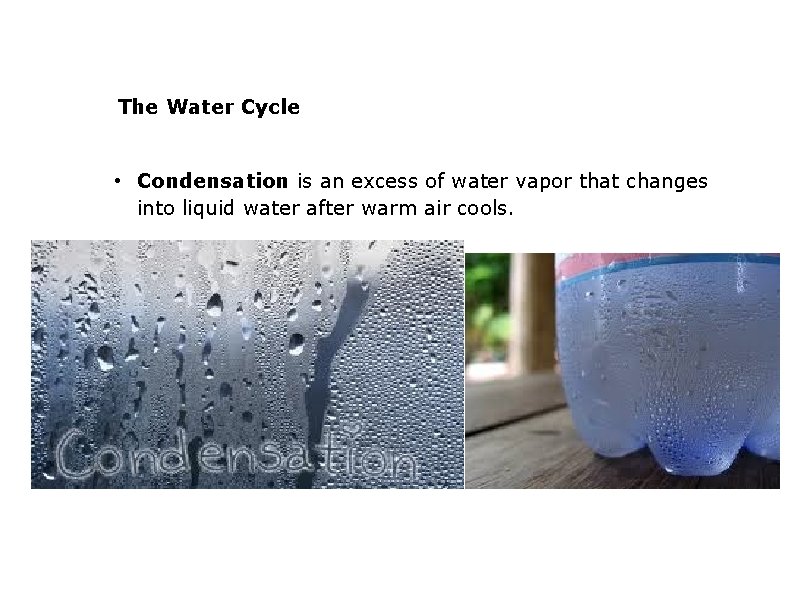
The Water Cycle • Condensation is an excess of water vapor that changes into liquid water after warm air cools.
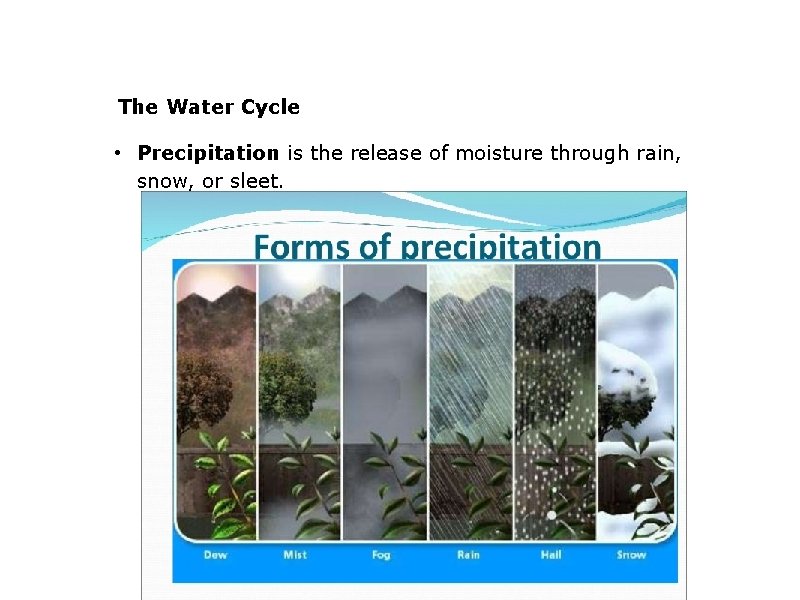
The Water Cycle • Precipitation is the release of moisture through rain, snow, or sleet.
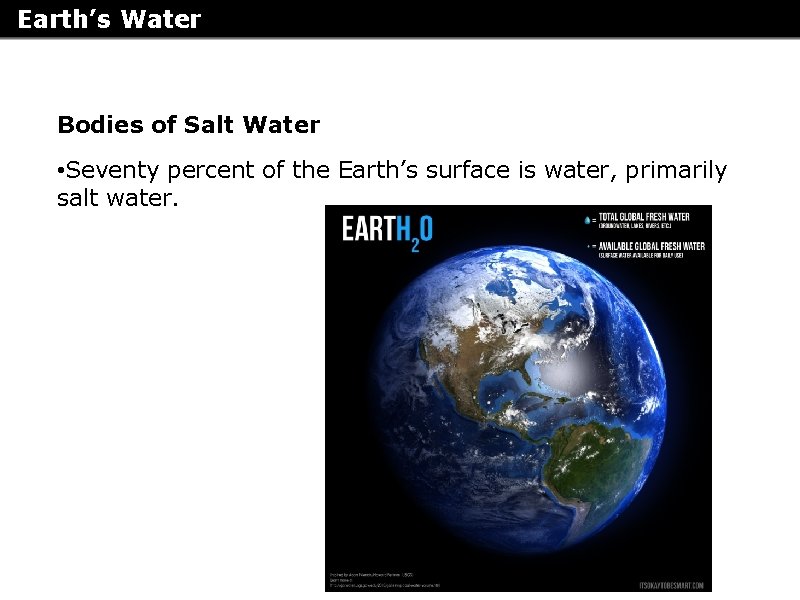
Earth’s Water Bodies of Salt Water • Seventy percent of the Earth’s surface is water, primarily salt water.
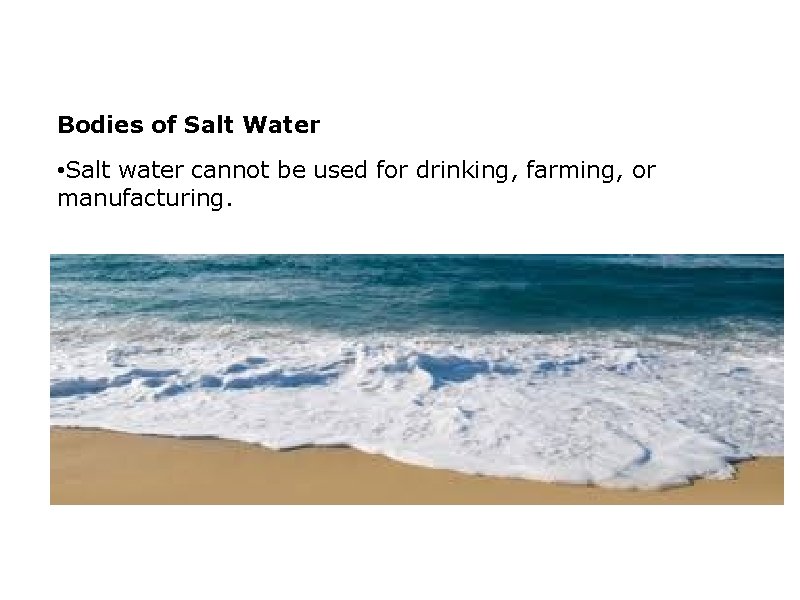
Bodies of Salt Water • Salt water cannot be used for drinking, farming, or manufacturing.
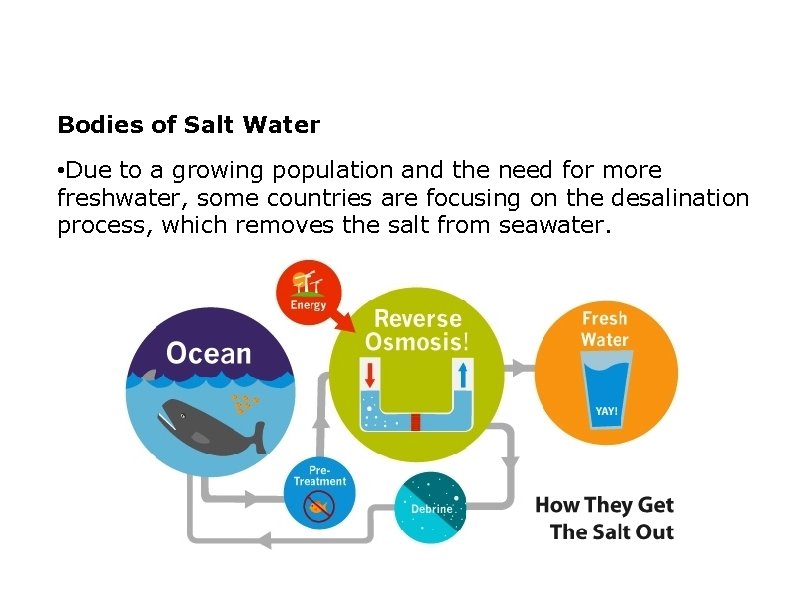
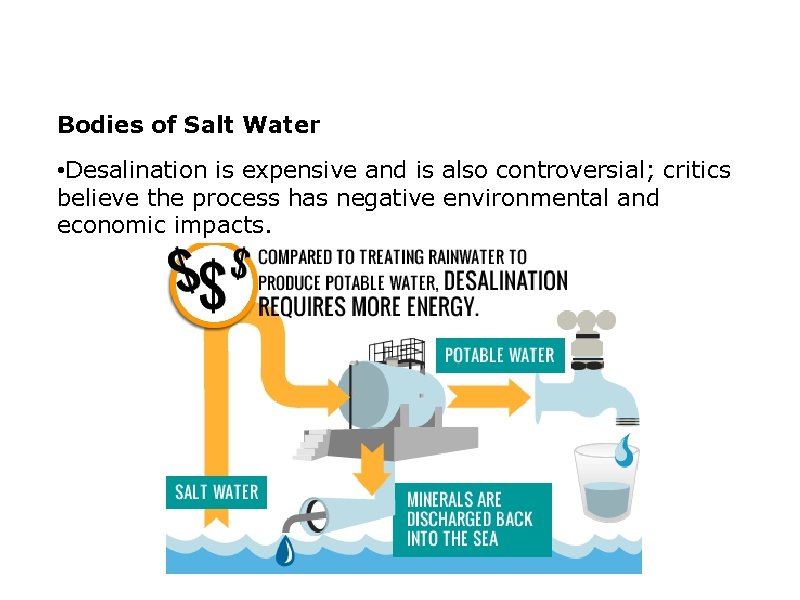
Bodies of Salt Water • Due to a growing population and the need for more freshwater, some countries are focusing on the desalination process, which removes the salt from seawater.
Bodies of Salt Water • Desalination is expensive and is also controversial; critics believe the process has negative environmental and economic impacts.
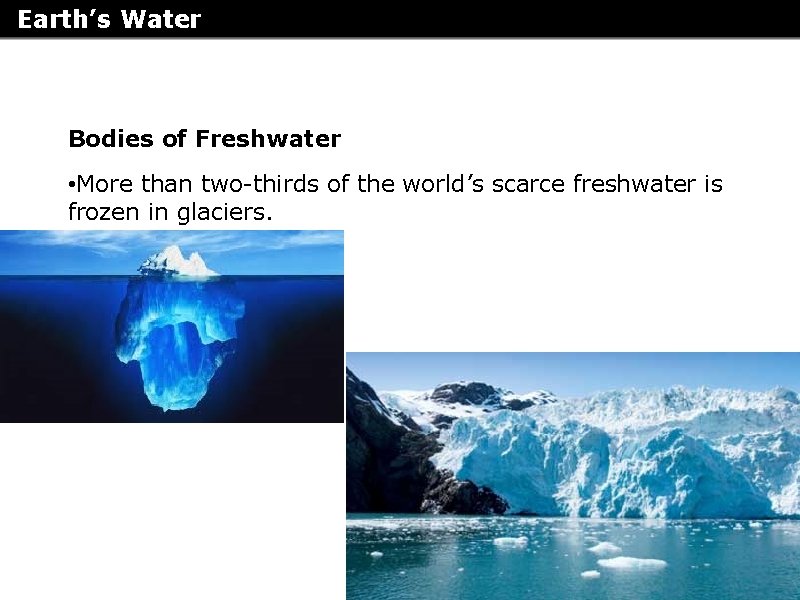
Earth’s Water Bodies of Freshwater • More than two-thirds of the world’s scarce freshwater is frozen in glaciers.
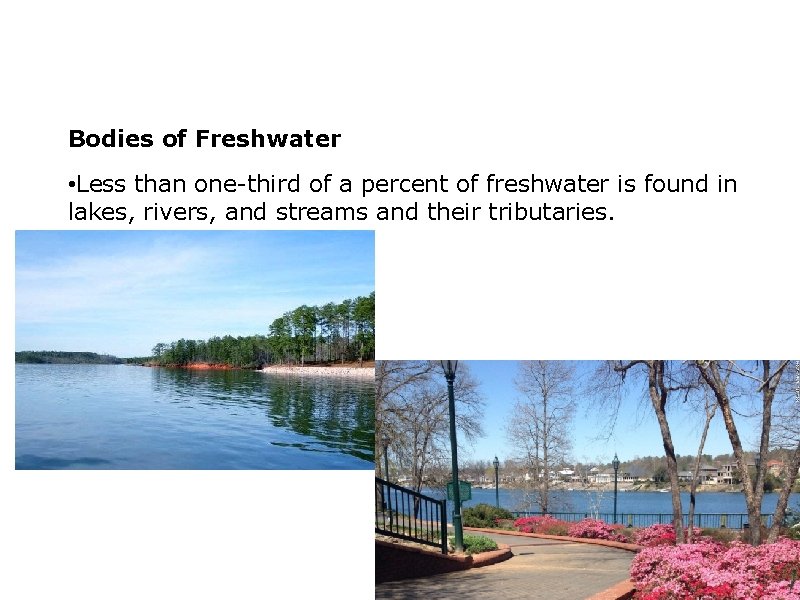
Bodies of Freshwater • Less than one-third of a percent of freshwater is found in lakes, rivers, and streams and their tributaries.
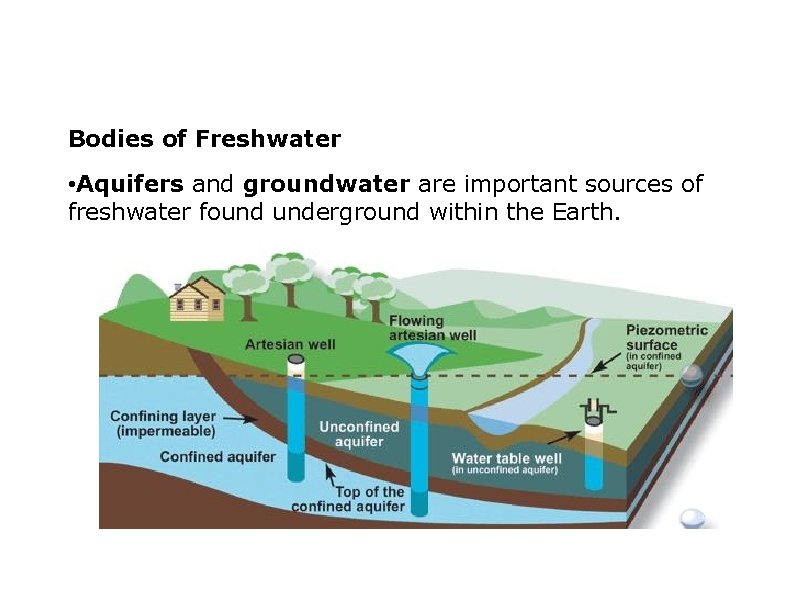
Bodies of Freshwater • Aquifers and groundwater are important sources of freshwater found underground within the Earth.