
Section 1 3 OBSERVING YOUNG CHILDREN WHAT IS
Section 1. 3 OBSERVING YOUNG CHILDREN
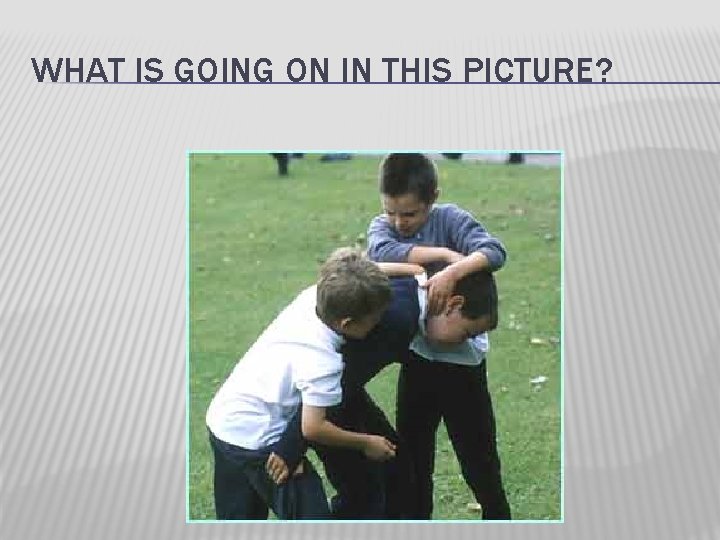
WHAT IS GOING ON IN THIS PICTURE?
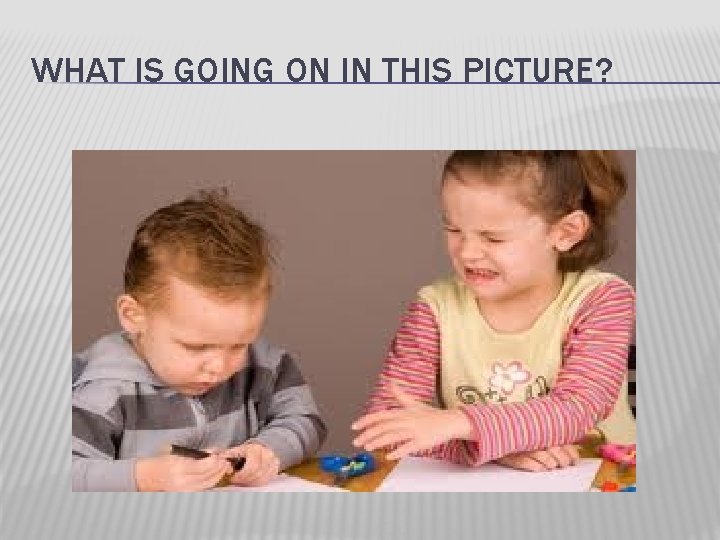
WHAT IS GOING ON IN THIS PICTURE?
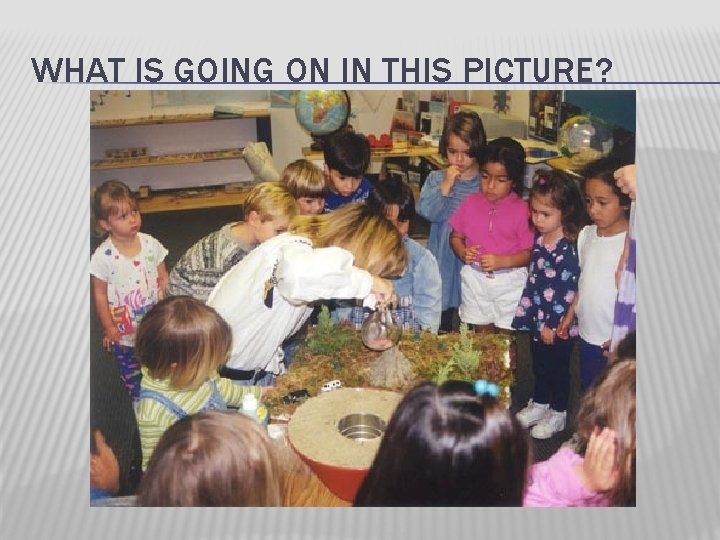
WHAT IS GOING ON IN THIS PICTURE?
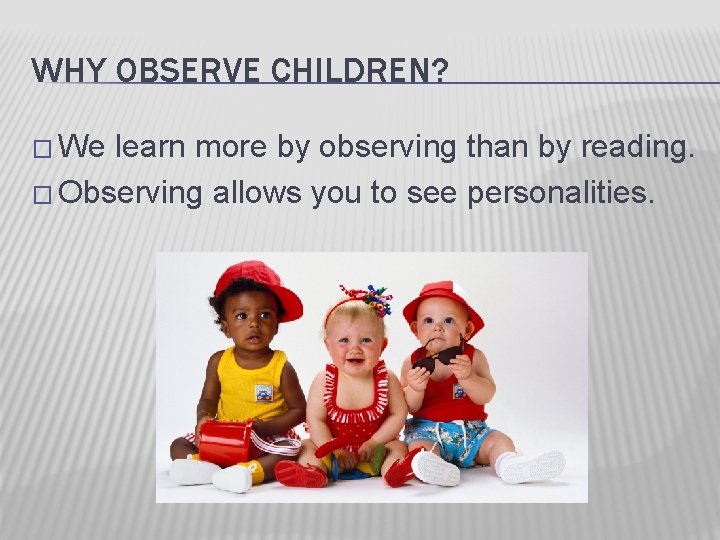
WHY OBSERVE CHILDREN? � We learn more by observing than by reading. � Observing allows you to see personalities.
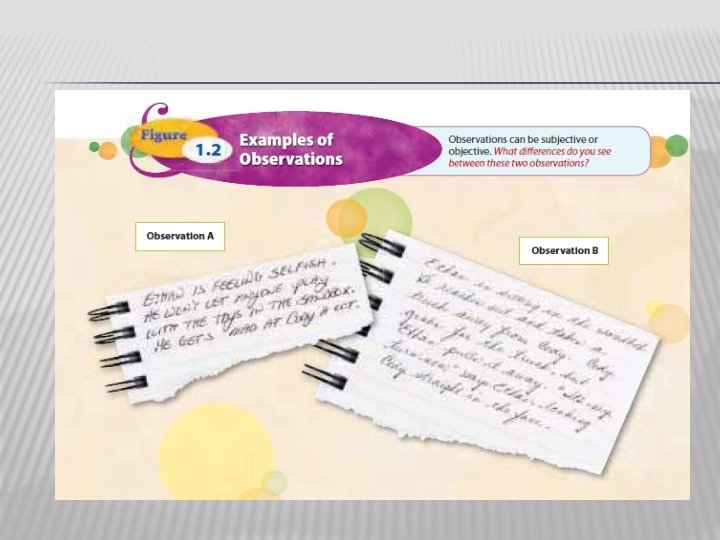
HOW TO OBSERVE YOUNG CHILDREN � Separate fact from opinion. � Observations can be subjective or objective. subjective objective To rely on personal opinions and feelings, rather than facts, to judge an event. Something is factual, and leaves aside personal feelings and prejudices.
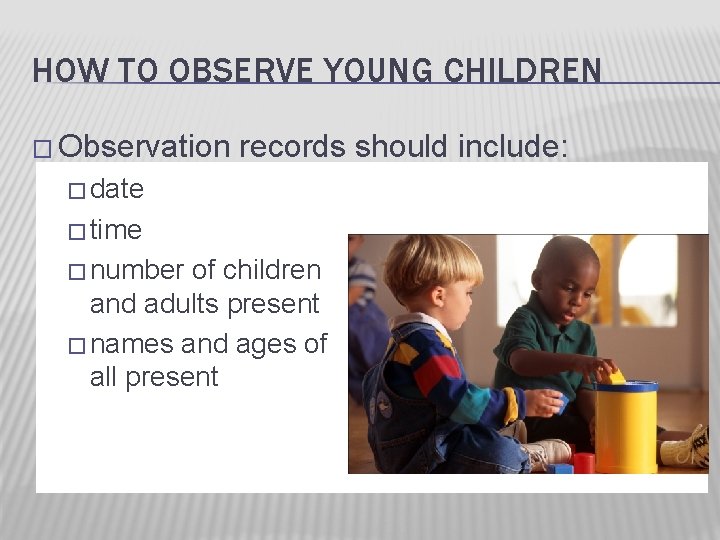
HOW TO OBSERVE YOUNG CHILDREN � Observation records should include: � date � time � number of children and adults present � names and ages of all present
HOW TO OBSERVE YOUNG CHILDREN � Choose the correct type of observation record. � Avoid interacting with the children unless necessary. � Keep observations and interpretations confidential.
TYPES OF OBSERVATION RECORDS � Running Record � Record of everything observed for a set period, such as 15 minutes � Useful when getting to know the child or children � Good when concentrating on certain area of development � Anecdotal � Report Record of a child’s actions that concentrates on a specific behavior or area of development � Time is not limited
TYPES OF OBSERVATION RECORDS � Frequency Count � Tally of how often a certain behavior occurs � Useful when trying to change an unwanted behavior � Baseline is a count made before any steps are taken to try and change behavior � Developmental � List Checklist of skills children should master or exhibit at a certain age � Observers can use checklist and simply check off the skills or behaviors they see
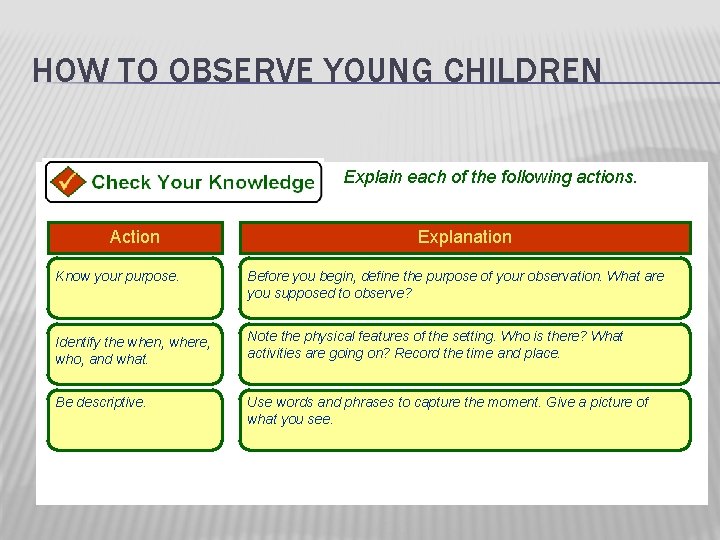
HOW TO OBSERVE YOUNG CHILDREN Explain each of the following actions. Action Explanation Know your purpose. Before you begin, define the purpose of your observation. What are you supposed to observe? Identify the when, where, who, and what. Note the physical features of the setting. Who is there? What activities are going on? Record the time and place. Be descriptive. Use words and phrases to capture the moment. Give a picture of what you see.

HOW TO OBSERVE YOUNG CHILDREN Explain each of the following actions. Action Explanation Make comparisons. Look for similarities and differences. Uncover the data. Record factual information, focus on the evidence at hand. Review and clarify. At the end, read through your comments, make clarifications or corrections, and add any additional notes.
HOW TO INTERPRET OBSERVATIONS The analysis an observer forms and expresses about what was observed is called an interpretation � When observing and recording information you must be objective � Interpretation is when you will form and express ideas about what you saw � Confidentiality is a must (protection of another person’s privacy by limiting access to personal information) � � You may share your information only with the child’s parents or your child development teacher
CAREERS WITH CHILDREN- PARENT EDUCATOR � What do you think a parent educator does? � Our society requires people to take courses or have training before they can perform many jobs � Should there by similar requirements to become a parent? � What kind of parents do you think would benefit most from the help of a parent educator

RESEARCH CHILDHOOD VACCINATIONS � One of the main reasons for the decline in childhood deaths from disease is the development of vaccines. � Select and research two vaccines � Find out at what ages they are given to children � Research what diseases they will protect against � How do the vaccines work? � Do the vaccines have any side effects? � Record findings in a chart
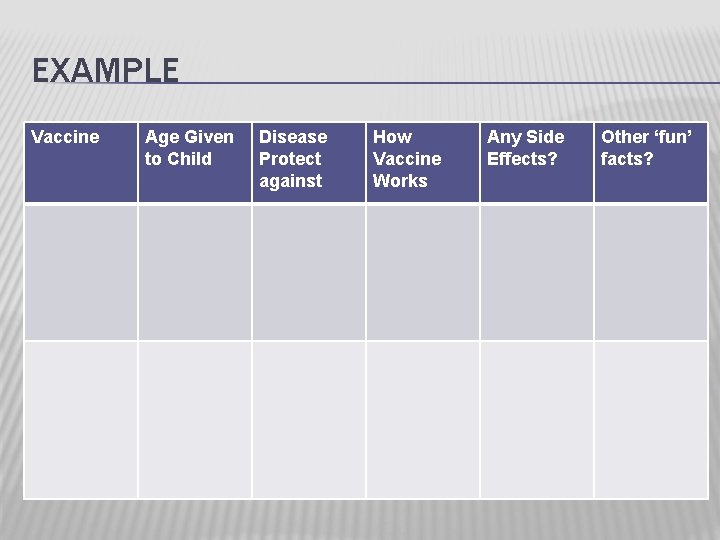
EXAMPLE Vaccine Age Given to Child Disease Protect against How Vaccine Works Any Side Effects? Other ‘fun’ facts?
- Slides: 18