
Section 1 2 Slopes and Intercepts Objective Students
Section 1. 2 Slopes and Intercepts
Objective: Students will be able to write an equation in slope-intercept form, given two points on the line or the slope and a point on the line.
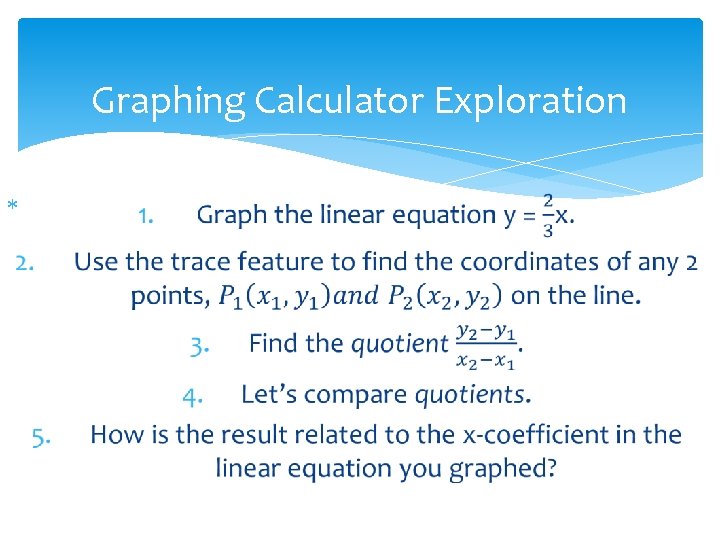
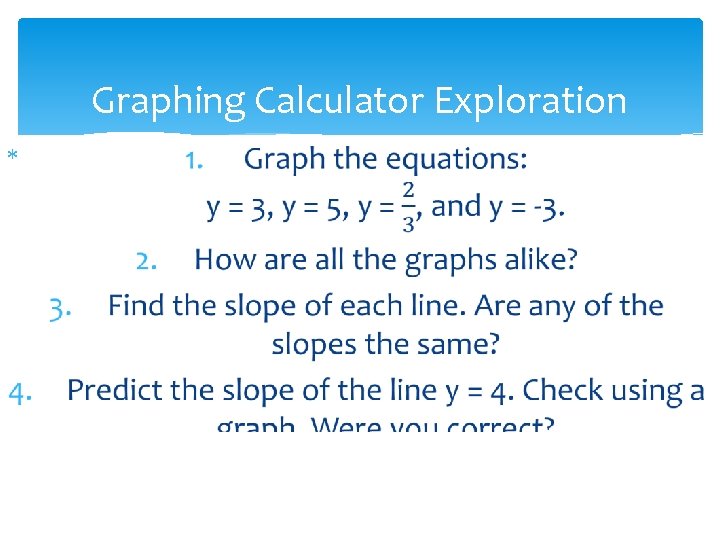
Graphing Calculator Exploration
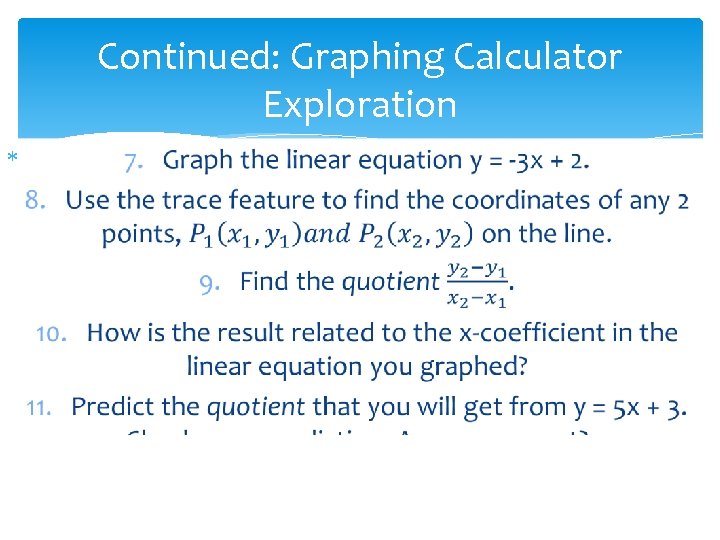
Continued: Graphing Calculator Exploration

Slope The slope (gradient, incline, pitch) is used to describe the steepness of a straight line. The slope is also known as the rate of change.
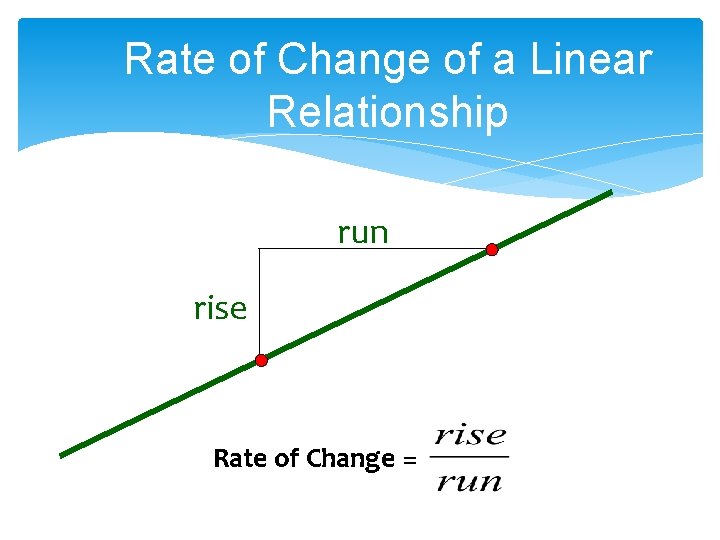
Rate of Change of a Linear Relationship run rise Rate of Change =
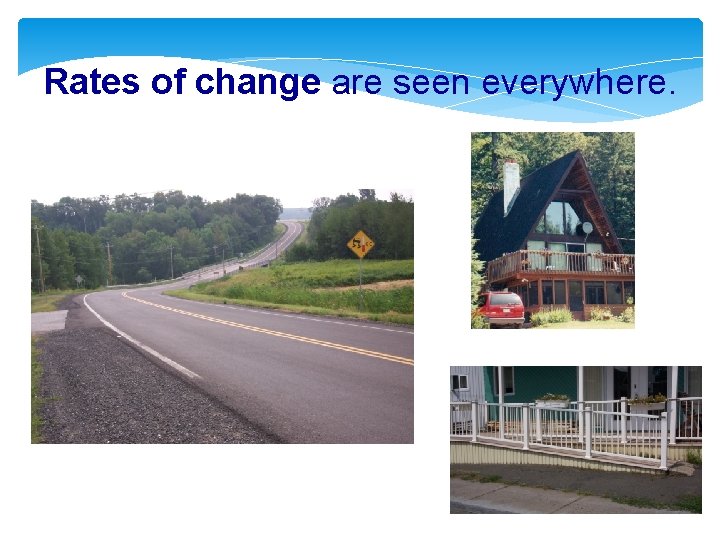
Rates of change are seen everywhere.

The steepness of the roof of a house.
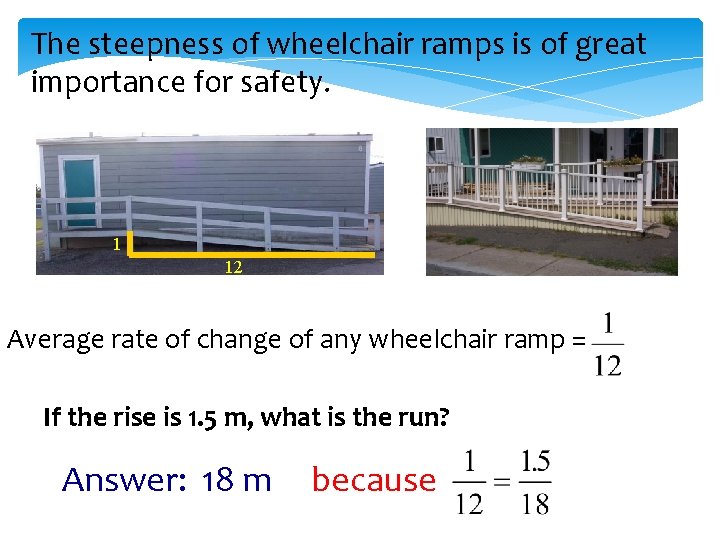
The steepness of wheelchair ramps is of great importance for safety. 1 12 Average rate of change of any wheelchair ramp = If the rise is 1. 5 m, what is the run? Answer: 18 m because
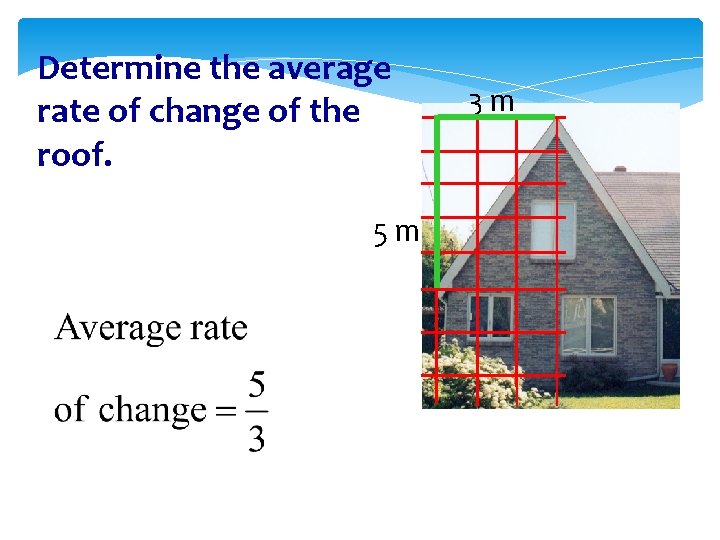
Determine the average rate of change of the roof. 5 m 3 m
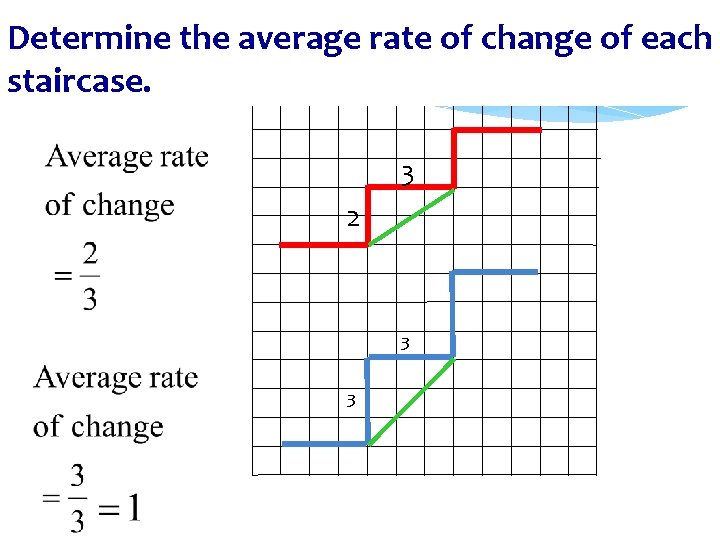
Determine the average rate of change of each staircase. 3 2 3 3
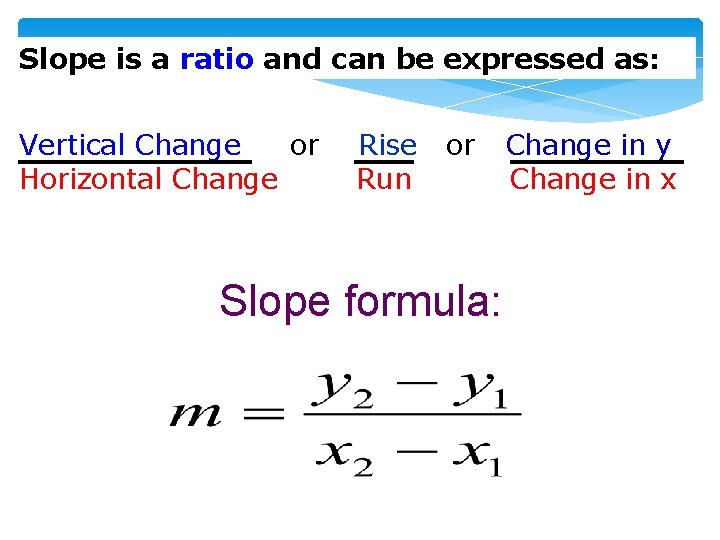
Slope is a ratio and can be expressed as: Vertical Change or Horizontal Change Rise Run or Slope formula: Change in y Change in x
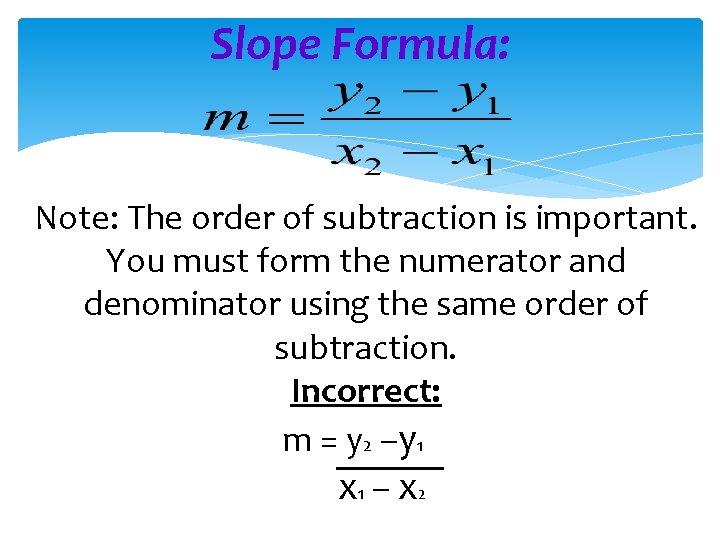
Slope Formula: Note: The order of subtraction is important. You must form the numerator and denominator using the same order of subtraction. Incorrect: m = y 2 –y 1 x 1 – x 2
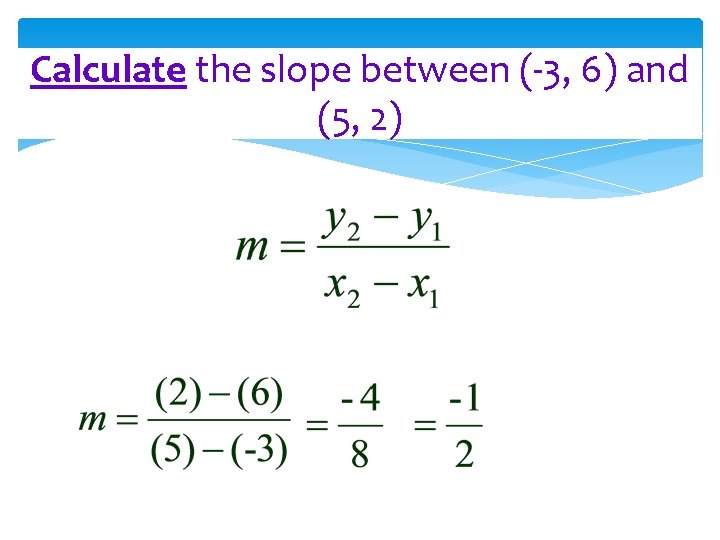
Calculate the slope between (-3, 6) and (5, 2)
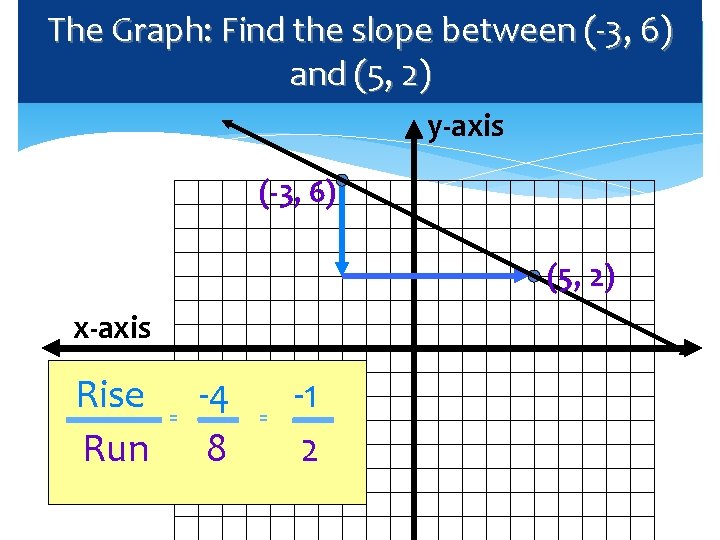
The Graph: Find the slope between (-3, 6) and (5, 2) y-axis (-3, 6) (5, 2) x-axis Rise Run = -4 8 = -1 2
Graphing Calculator Exploration
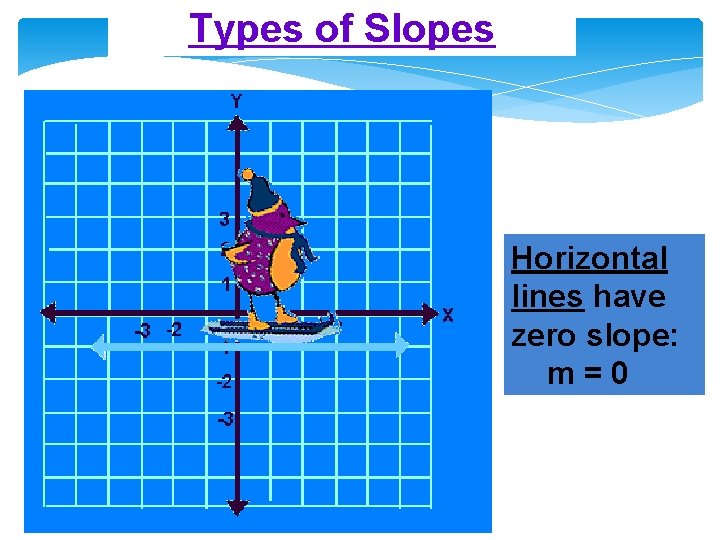
Types of Slopes Horizontal lines have zero slope: m=0
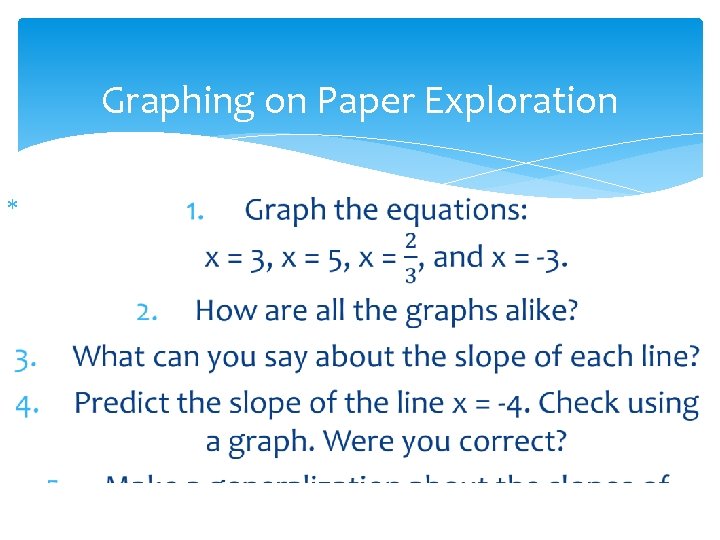
Graphing on Paper Exploration
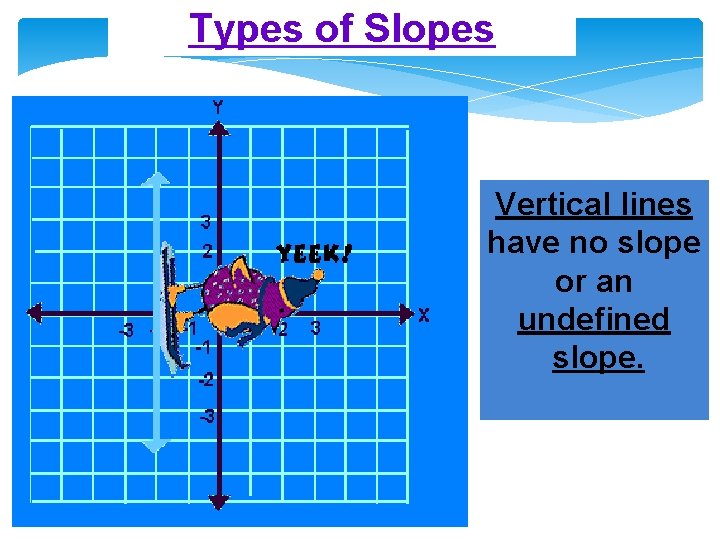
Types of Slopes Vertical lines have no slope or an undefined slope.
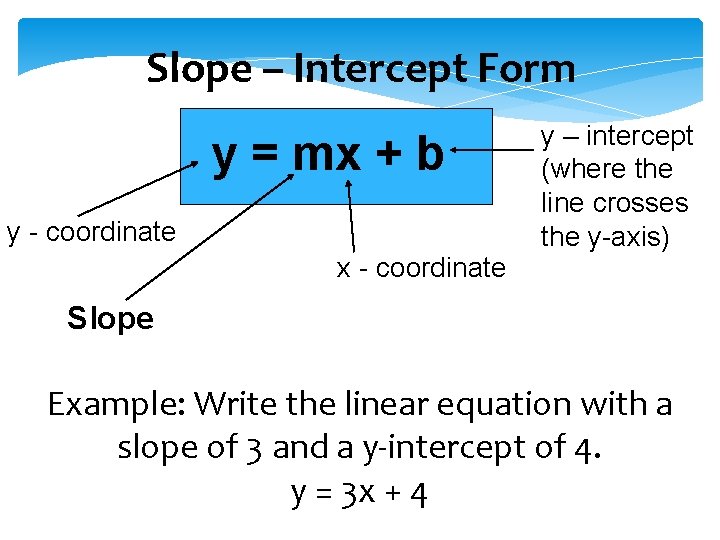
Slope – Intercept Form y = mx + b y - coordinate x - coordinate y – intercept (where the line crosses the y-axis) Slope Example: Write the linear equation with a slope of 3 and a y-intercept of 4. y = 3 x + 4
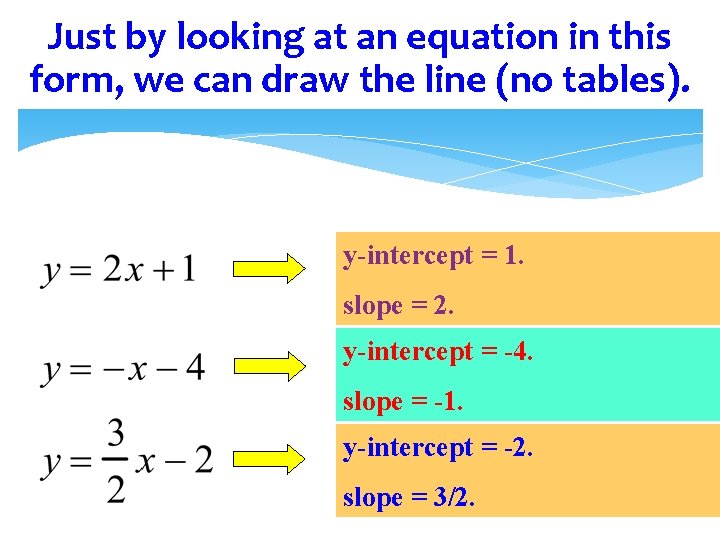
Just by looking at an equation in this form, we can draw the line (no tables). y-intercept = 1. slope = 2. y-intercept = -4. slope = -1. y-intercept = -2. slope = 3/2.
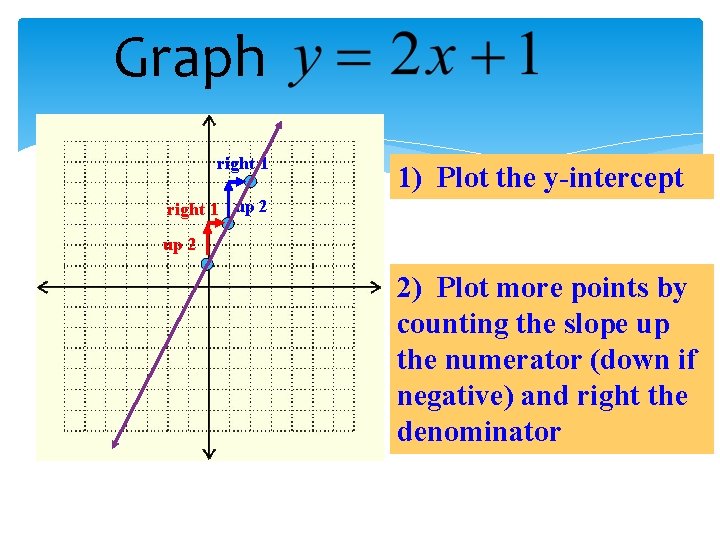
Graph right 1 1) Plot the y-intercept right 1 up 2 2) Plot more points by counting the slope up the numerator (down if negative) and right the denominator
Lines Used for Estimation The cash flow per share for Verizon was $2. 38 in 1998 and $2. 80 in 1999. Write a linear equation that gives the cash flow per share in terms of the year.
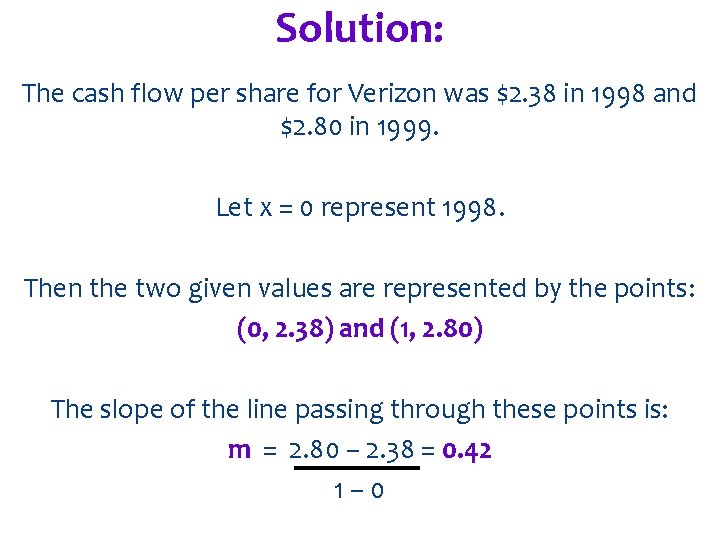
Solution: The cash flow per share for Verizon was $2. 38 in 1998 and $2. 80 in 1999. Let x = 0 represent 1998. Then the two given values are represented by the points: (0, 2. 38) and (1, 2. 80) The slope of the line passing through these points is: m = 2. 80 – 2. 38 = 0. 42 1– 0
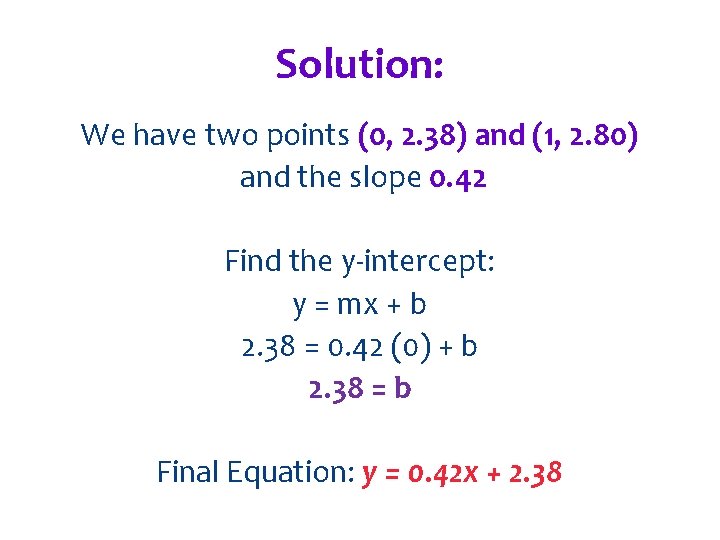
Solution: We have two points (0, 2. 38) and (1, 2. 80) and the slope 0. 42 Find the y-intercept: y = mx + b 2. 38 = 0. 42 (0) + b 2. 38 = b Final Equation: y = 0. 42 x + 2. 38
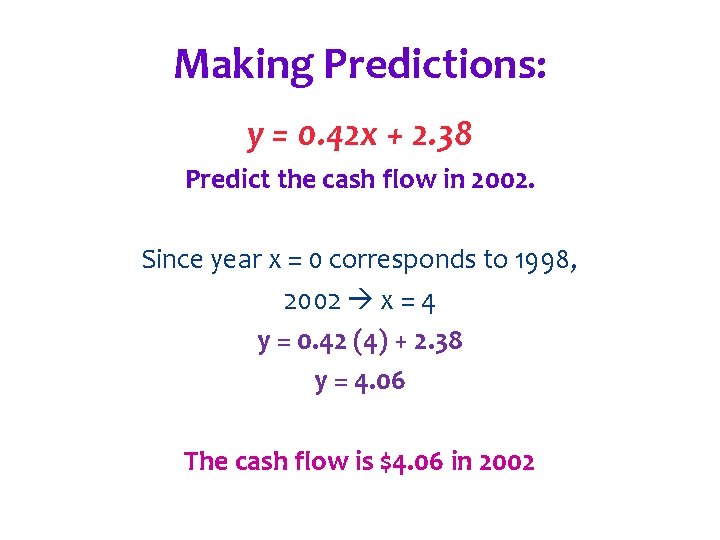
Making Predictions: y = 0. 42 x + 2. 38 Predict the cash flow in 2002. Since year x = 0 corresponds to 1998, 2002 x = 4 y = 0. 42 (4) + 2. 38 y = 4. 06 The cash flow is $4. 06 in 2002
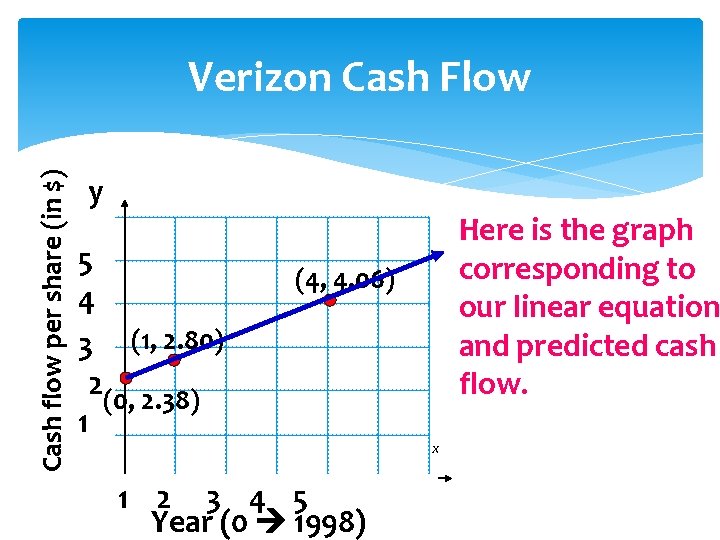
Cash flow per share (in $) Verizon Cash Flow yy 5 4 3 (1, 2. 80) 2(0, 2. 38) 1 Here is the graph corresponding to our linear equation and predicted cash flow. (4, 4. 06) 1 2 3 4 5 Year (0 1998) x
Collin’s Writing (Write for 5 minutes) Suppose (-1, 7), (0, 4), and (2, -2) are all points on one line. Is the slope of the line the same no matter which two points you use to find the slope? Why or why not?

Classwork/Homework: Practice and Apply Worksheet 1. 2
Collin’s Writing (Write for 5 minutes) What do you think 0 divided by 0 would equal? Write WHY you wrote what you did.
- Slides: 30