
Section 1 2 Linear Functions and Applications Function
- Slides: 14
Section 1. 2 Linear Functions and Applications
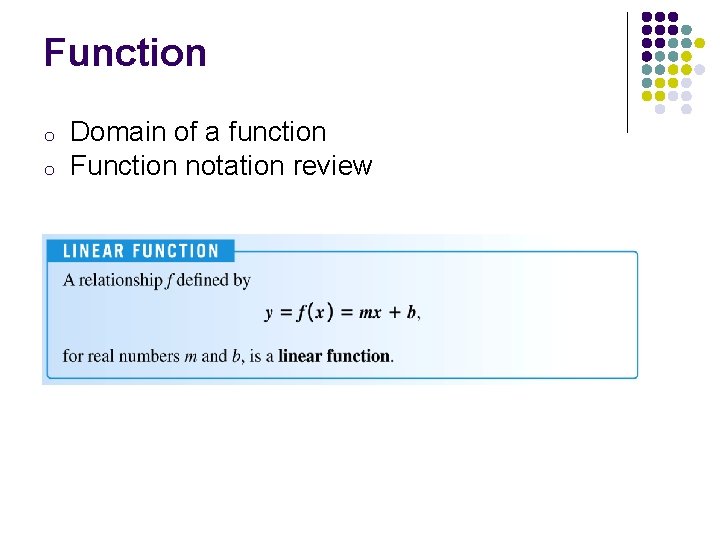
Function o o Domain of a function Function notation review
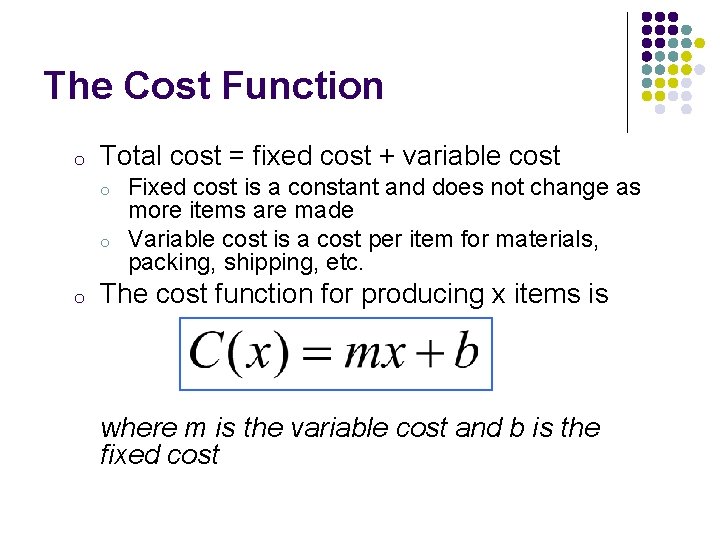
The Cost Function o Total cost = fixed cost + variable cost o o o Fixed cost is a constant and does not change as more items are made Variable cost is a cost per item for materials, packing, shipping, etc. The cost function for producing x items is where m is the variable cost and b is the fixed cost
The Marginal Cost The marginal cost is the rate of change of cost C(x) at a level of production x. It approximates the cost of producing additional item. With linear function, the marginal cost is the slope m, which is a constant. EX: C(x) = 40 x + 150 The marginal cost is 40
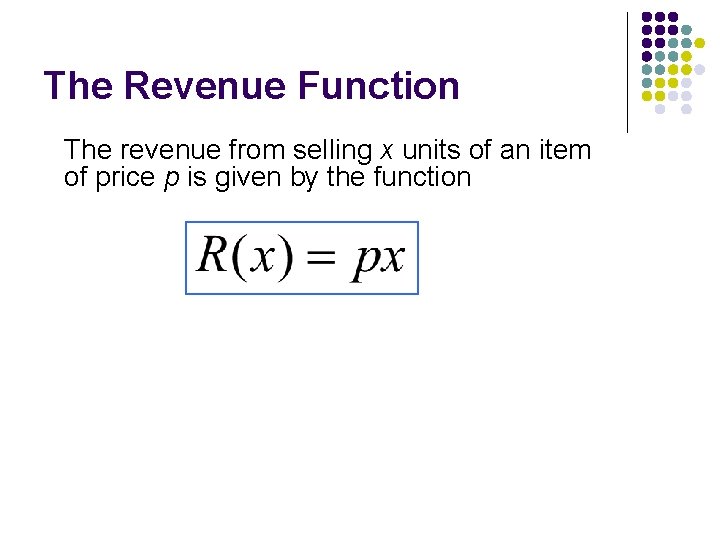
The Revenue Function The revenue from selling x units of an item of price p is given by the function
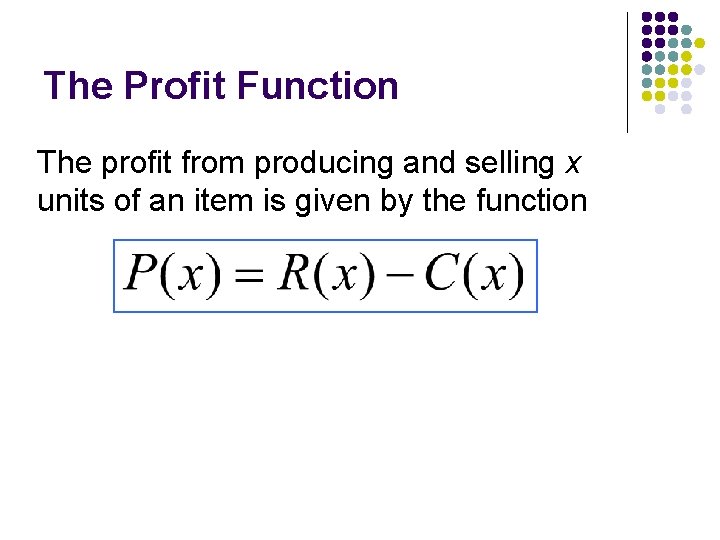
The Profit Function The profit from producing and selling x units of an item is given by the function
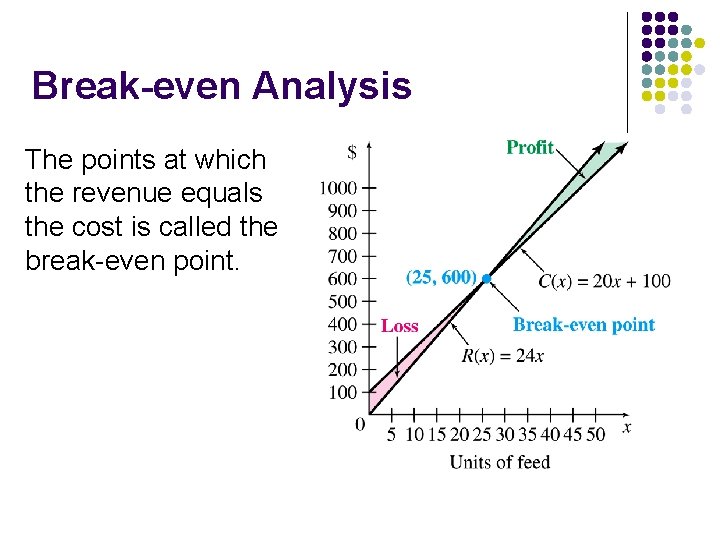
Break-even Analysis The points at which the revenue equals the cost is called the break-even point.
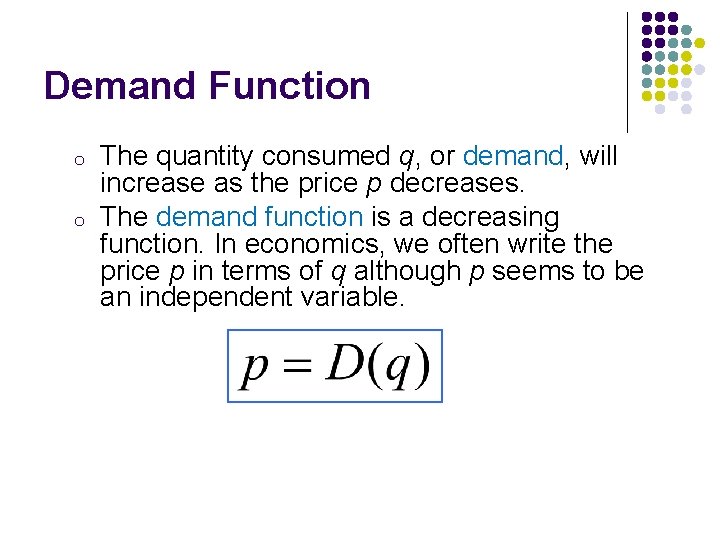
Demand Function o o The quantity consumed q, or demand, will increase as the price p decreases. The demand function is a decreasing function. In economics, we often write the price p in terms of q although p seems to be an independent variable.
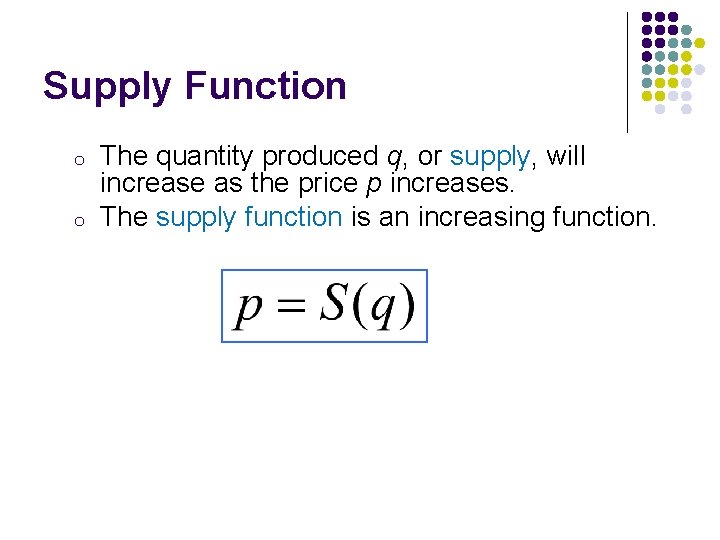
Supply Function o o The quantity produced q, or supply, will increase as the price p increases. The supply function is an increasing function.
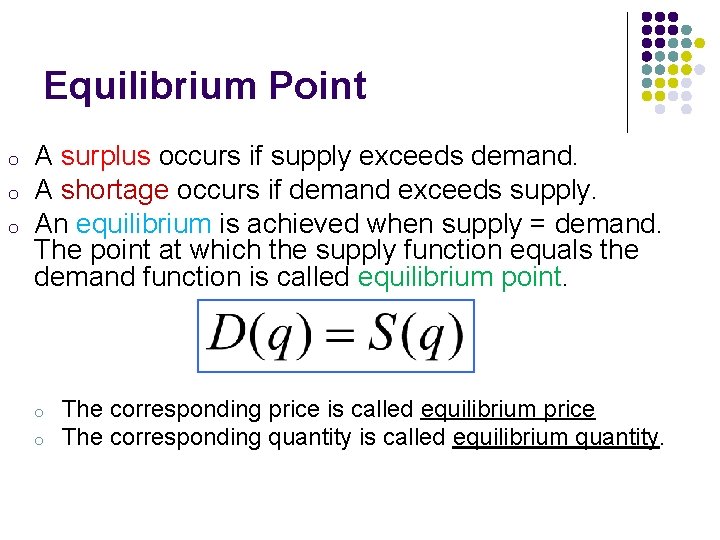
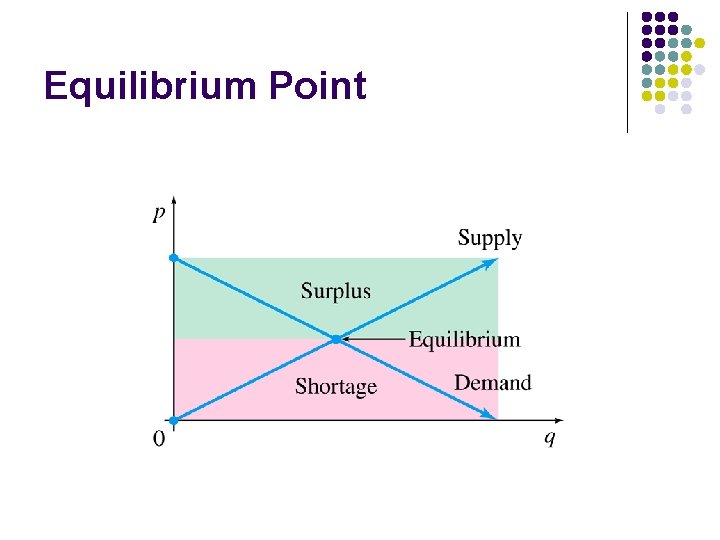
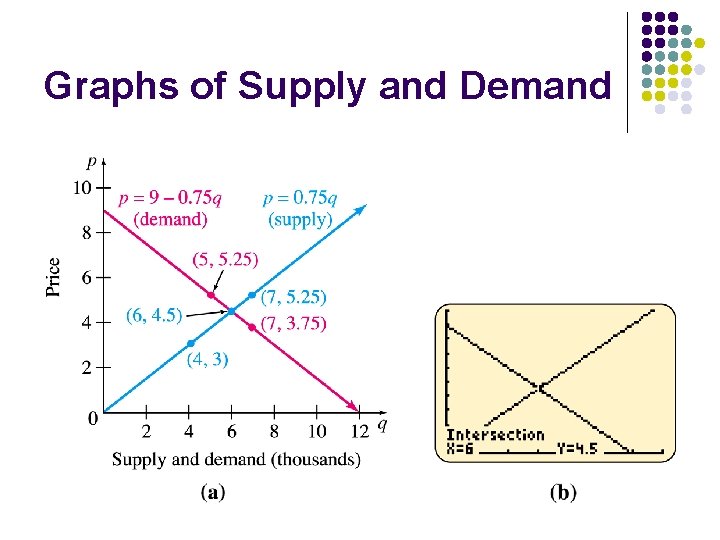
Equilibrium Point o o o A surplus occurs if supply exceeds demand. A shortage occurs if demand exceeds supply. An equilibrium is achieved when supply = demand. The point at which the supply function equals the demand function is called equilibrium point. o o The corresponding price is called equilibrium price The corresponding quantity is called equilibrium quantity.
Equilibrium Point
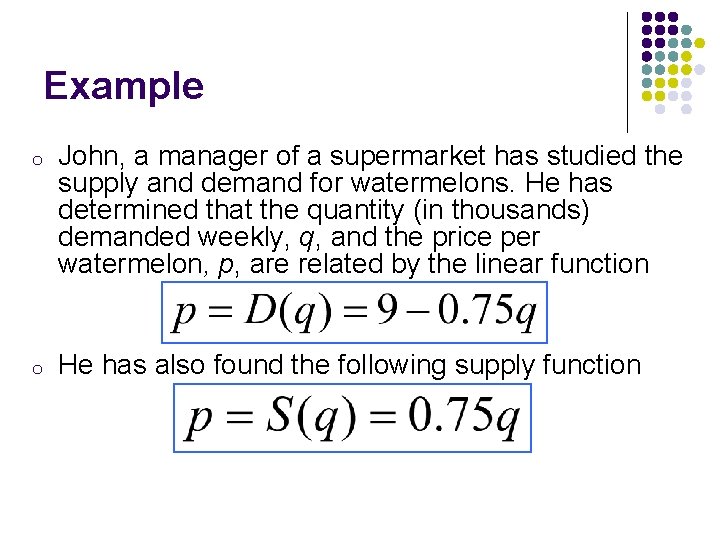
Example o John, a manager of a supermarket has studied the supply and demand for watermelons. He has determined that the quantity (in thousands) demanded weekly, q, and the price per watermelon, p, are related by the linear function o He has also found the following supply function
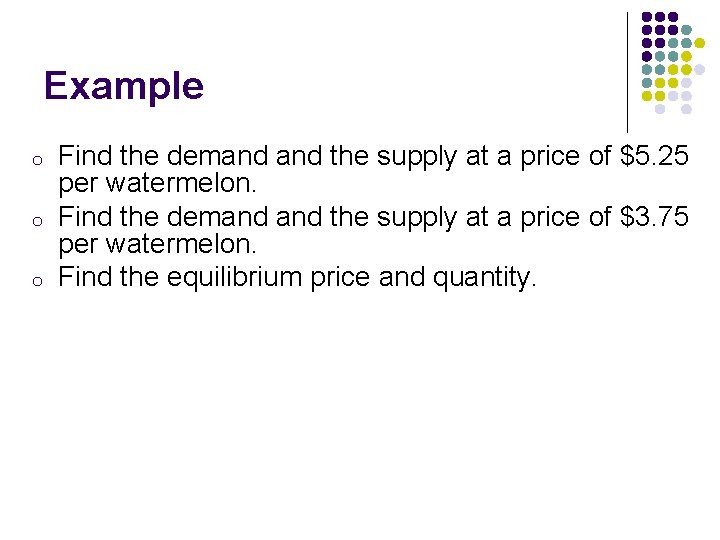
Example o o o Find the demand the supply at a price of $5. 25 per watermelon. Find the demand the supply at a price of $3. 75 per watermelon. Find the equilibrium price and quantity.
Graphs of Supply and Demand