
Section 03 Combinatorial Principles Permutations and Combinations Permutations

Section 03 Combinatorial Principles, Permutations, and Combinations
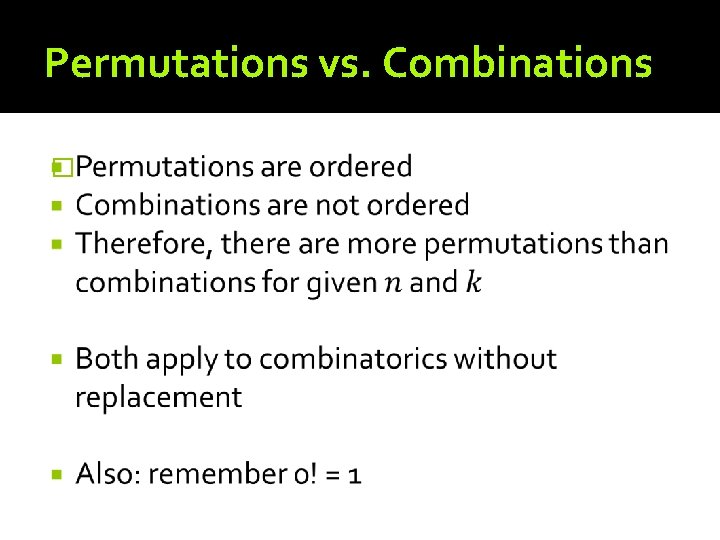
Permutations vs. Combinations �
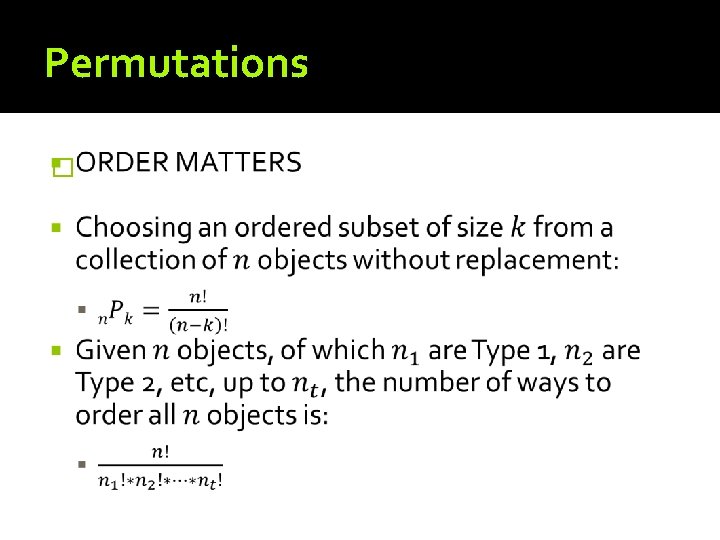
Permutations �
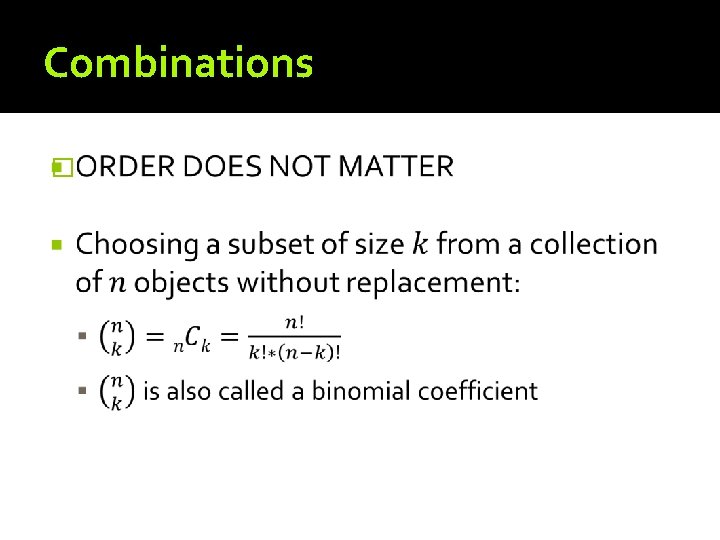
Combinations �
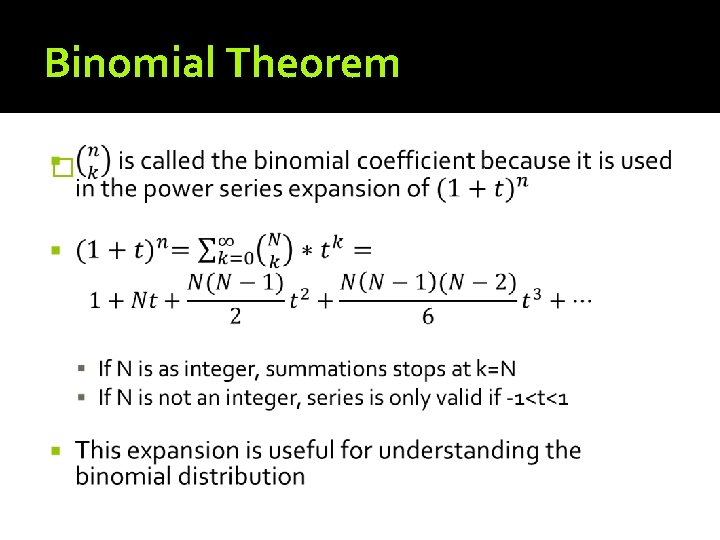
Binomial Theorem �
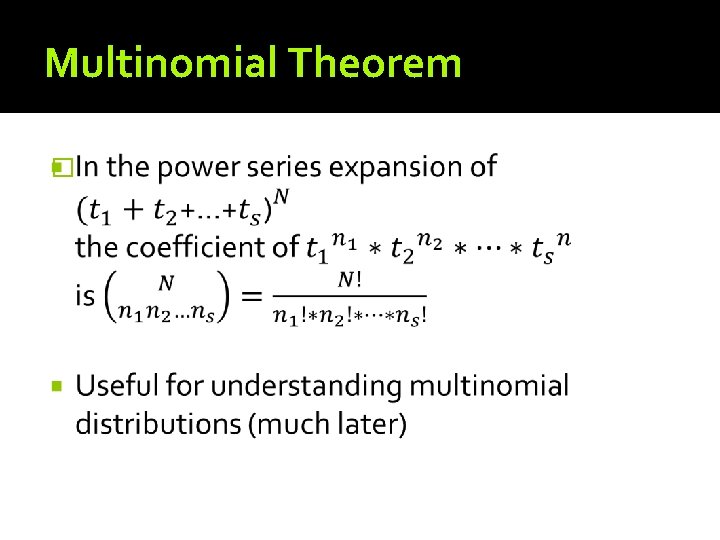
Multinomial Theorem �
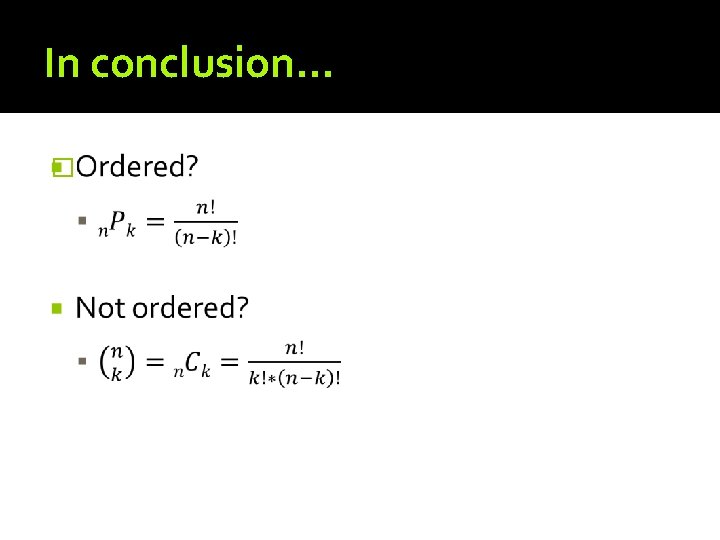
In conclusion… �
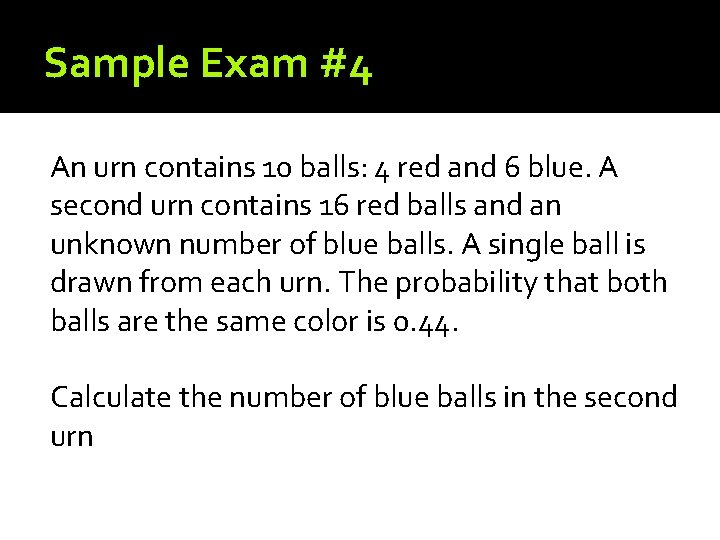
Sample Exam #4 An urn contains 10 balls: 4 red and 6 blue. A second urn contains 16 red balls and an unknown number of blue balls. A single ball is drawn from each urn. The probability that both balls are the same color is 0. 44. Calculate the number of blue balls in the second urn
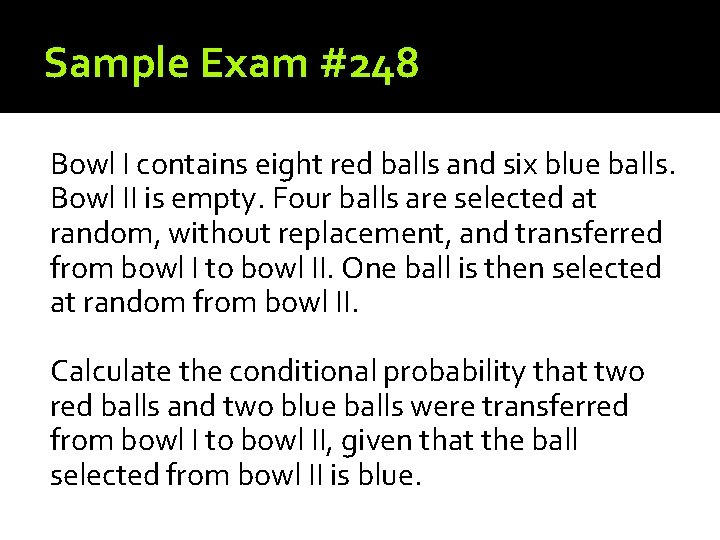
Sample Exam #248 Bowl I contains eight red balls and six blue balls. Bowl II is empty. Four balls are selected at random, without replacement, and transferred from bowl I to bowl II. One ball is then selected at random from bowl II. Calculate the conditional probability that two red balls and two blue balls were transferred from bowl I to bowl II, given that the ball selected from bowl II is blue.
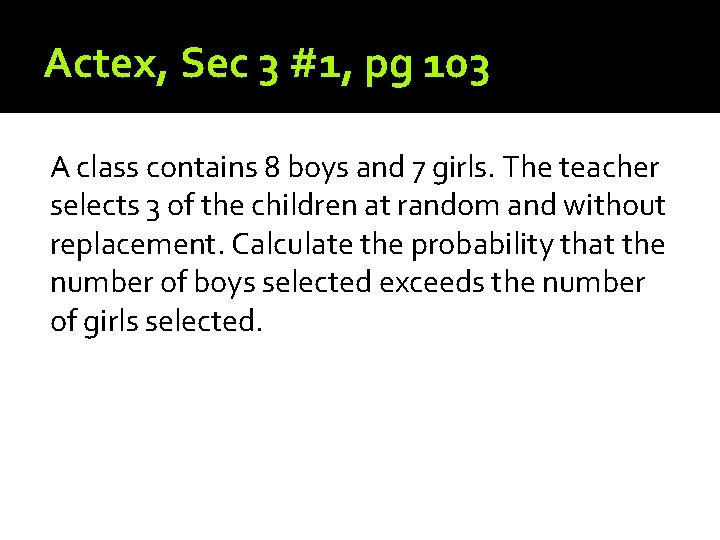
Actex, Sec 3 #1, pg 103 A class contains 8 boys and 7 girls. The teacher selects 3 of the children at random and without replacement. Calculate the probability that the number of boys selected exceeds the number of girls selected.
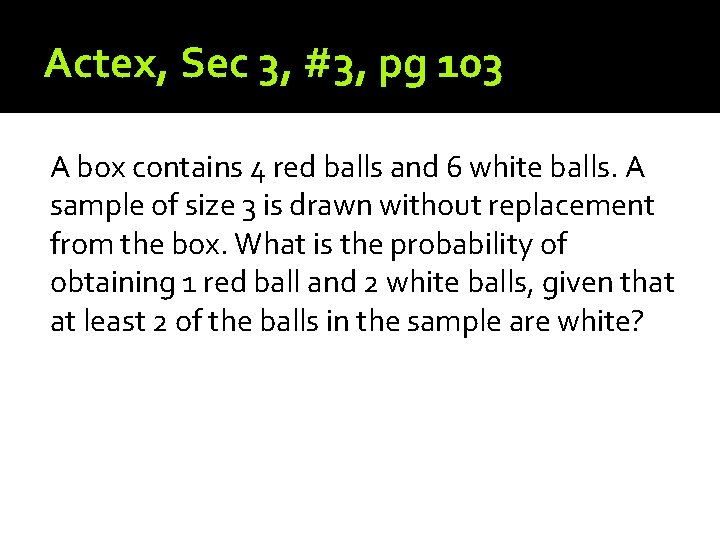
Actex, Sec 3, #3, pg 103 A box contains 4 red balls and 6 white balls. A sample of size 3 is drawn without replacement from the box. What is the probability of obtaining 1 red ball and 2 white balls, given that at least 2 of the balls in the sample are white?
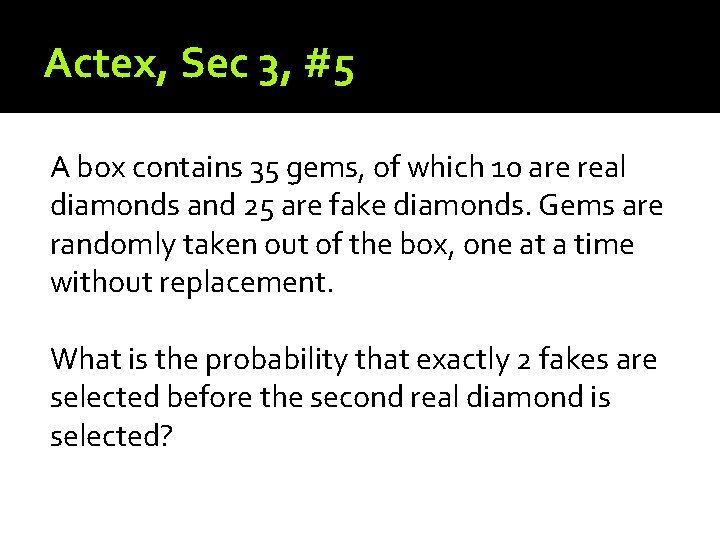
Actex, Sec 3, #5 A box contains 35 gems, of which 10 are real diamonds and 25 are fake diamonds. Gems are randomly taken out of the box, one at a time without replacement. What is the probability that exactly 2 fakes are selected before the second real diamond is selected?
- Slides: 12