
Secrets of the periodic table History of the
Secrets of the periodic table
History of the periodic table In the mid 1860’s, Russian Scientist Dmitri Mendeleev began thinking about how he could organize elements based on properties. He used a set of element cards that included the mass of an atom, as well as some of its atomic properties. When he arranged the element cards in order of increasing atomic mass, the properties of those cards appeared in a periodic, or regularly repeating pattern. Thus, the first version of the periodic table was born.
History of the periodic table In the early 1900’s, British scientist Henry Moseley was able to determine the number of protons in the atoms of elements. Using this newfound information, he was able to rearrange the elements on the table in order of increasing number of protons – aka atomic number. This new an improved periodic table is a very useful tool to scientists because it makes clear many patterns among the element’s properties. The periodic table is like a map, or calendar, of the elements.
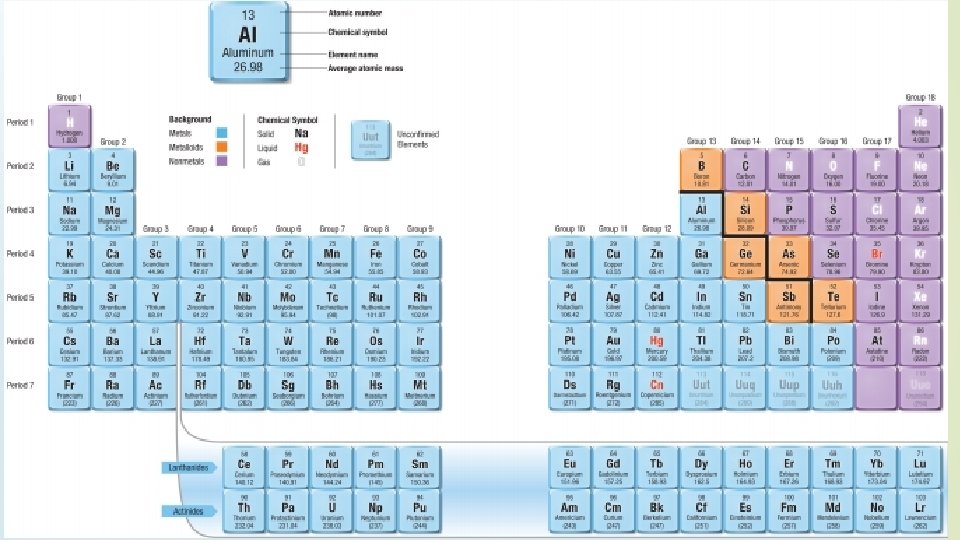
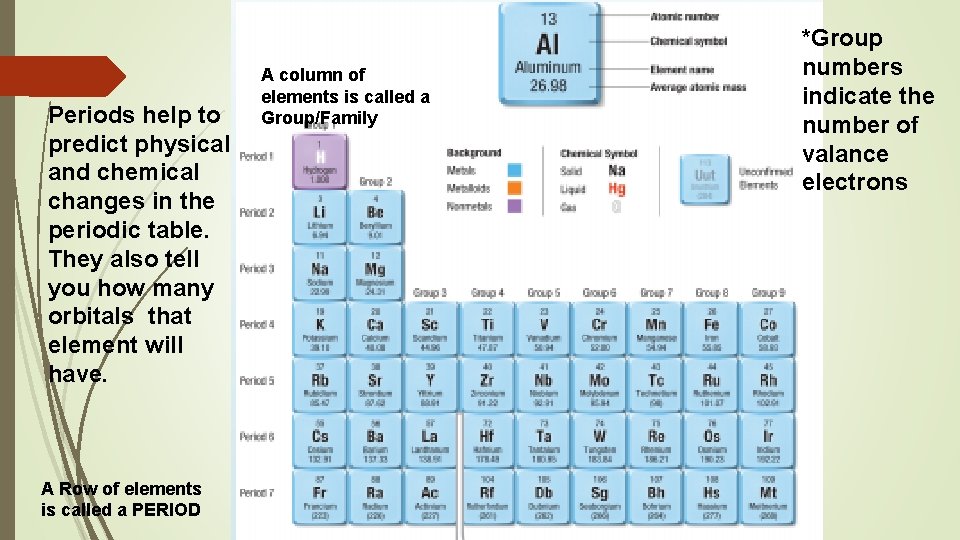
Periods help to predict physical and chemical changes in the periodic table. They also tell you how many orbitals that element will have. A Row of elements is called a PERIOD A column of elements is called a Group/Family *Group numbers indicate the number of valance electrons
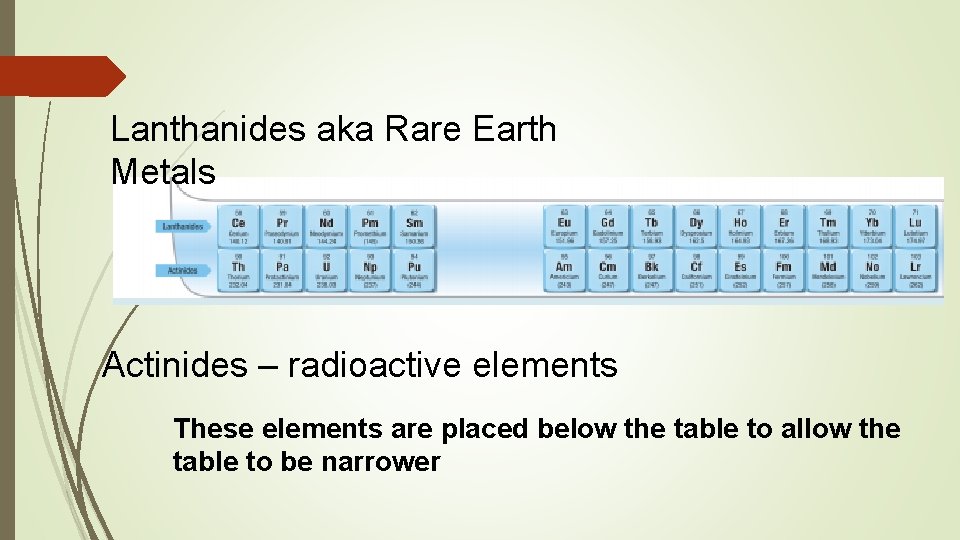
Lanthanides aka Rare Earth Metals Actinides – radioactive elements These elements are placed below the table to allow the table to be narrower

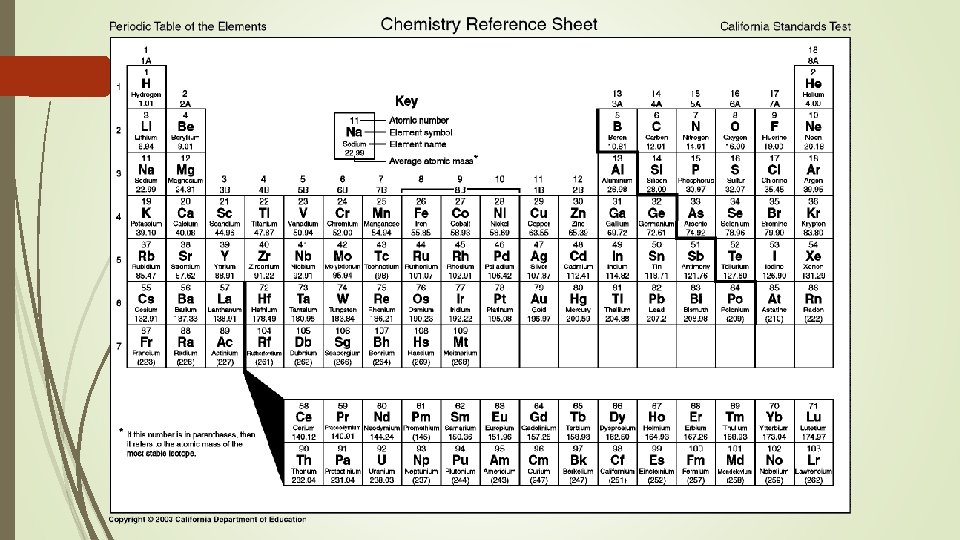
This zigzag line separates metals from nonmetals. Metals – elements that are shiny and conduct heat and electricity well Nonmetals – poor conductors of heat and electricity, often dull and brittle Metalloids – elements that have some properties of both metals and nonmetals.
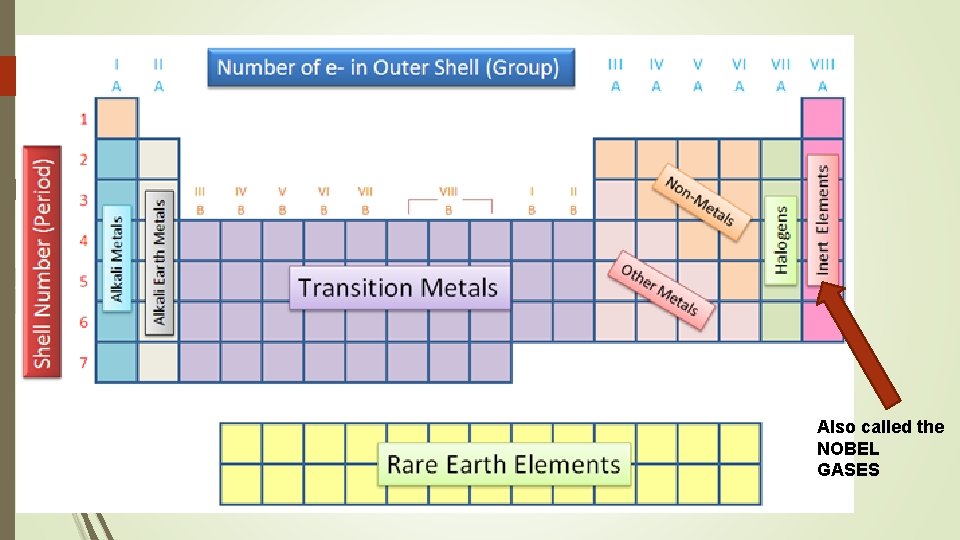
Also called the NOBEL GASES
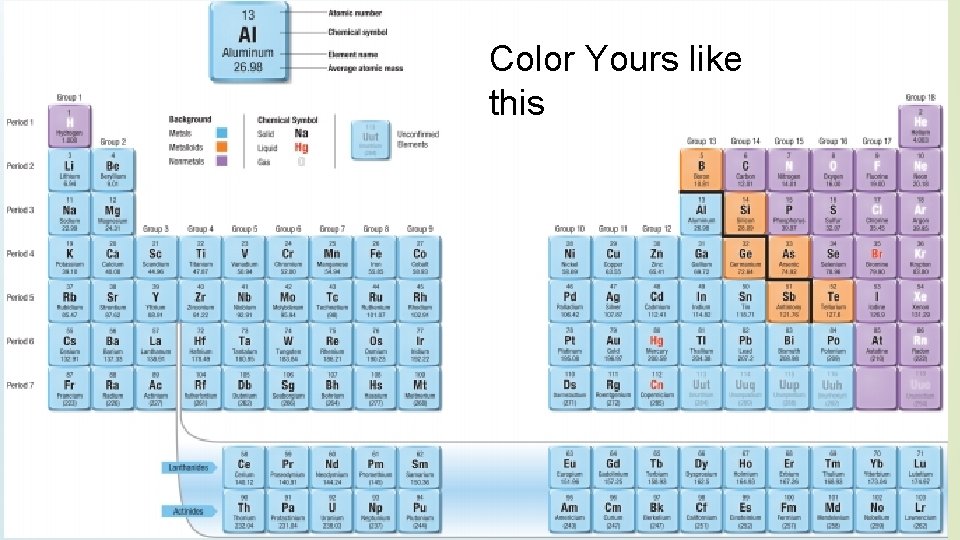
Color Yours like this
- Slides: 10