
Secrets of Great Communication GROWTH PLANNING EXEC COACHING


- Slides: 55
Secrets of Great Communication GROWTH PLANNING EXEC COACHING STAFF ENGAGEMENT MANAGING CHANGE PEOPLE ORGANISATION AND DEVELOPMENT INTERIM MANAGEMENT
Who are you?
Who is the best communicator in the world?
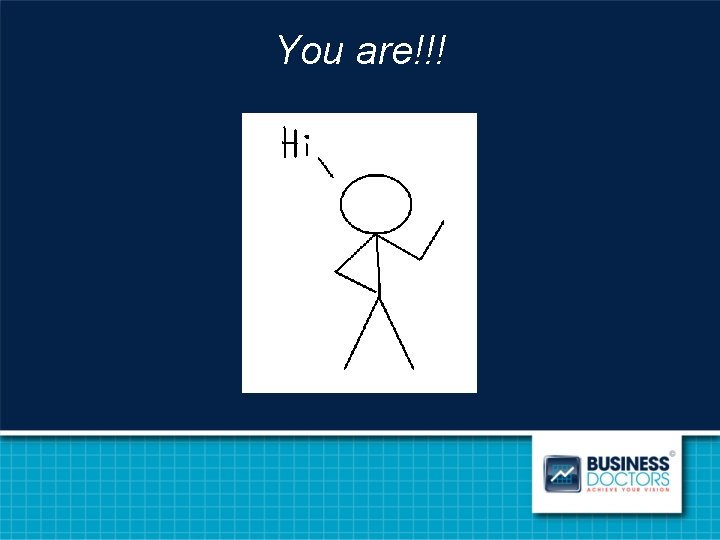
You are!!!
Benefits of Good Communication • If you communicate well: – – – Increased team work Clearly understood goals Early sight of problems & pitfalls Culture of openness, become a beacon Respect of others Enhanced relationships at work and home
Secrets of Great Communication • Secret No. 1 – We’re all born with the ability to be great communicators • Secret No. 2 – We can all be great sales people • Secret No. 3 – We are all be great in teams • Secret No. 4 – Meetings don’t have to be a waste of time!
Secret No. 1 We’re all great communicators
Our communications tool kit • Core communication skills – ‘What’ we do • Managing our communications – ‘How’ we do it • Awareness of others’ needs – ‘Whom’ we do it for
Core communications skills
What are our core communications skills?
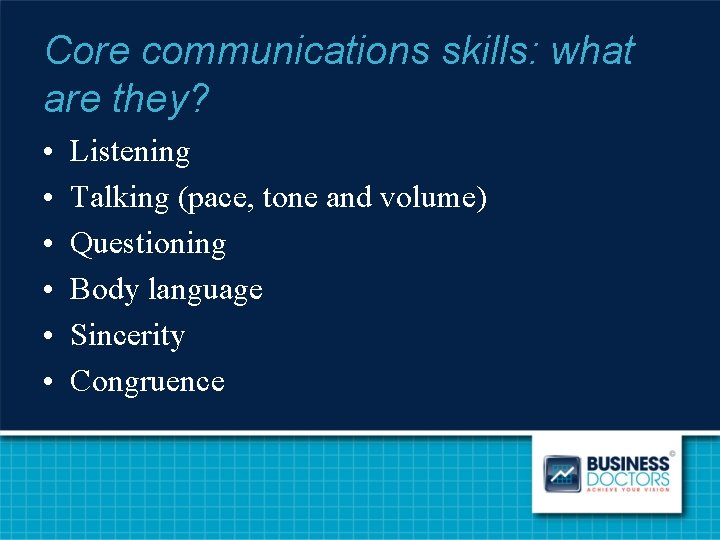
Core communications skills: what are they? • • • Listening Talking (pace, tone and volume) Questioning Body language Sincerity Congruence
But it takes practice
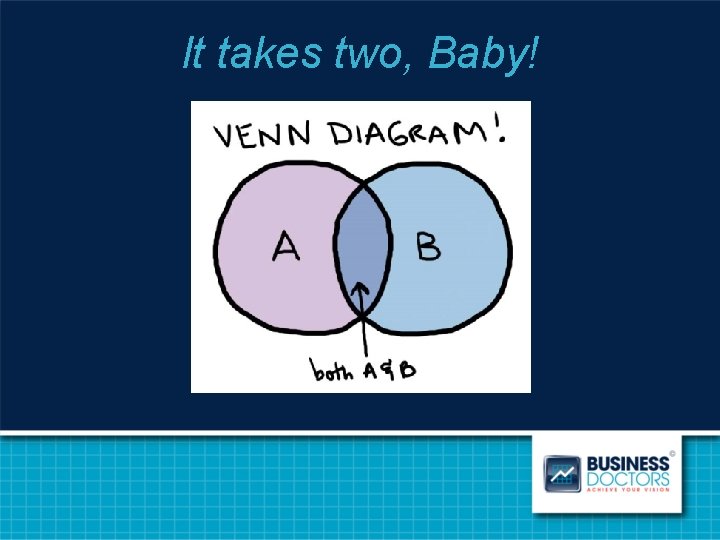
It takes two, Baby!
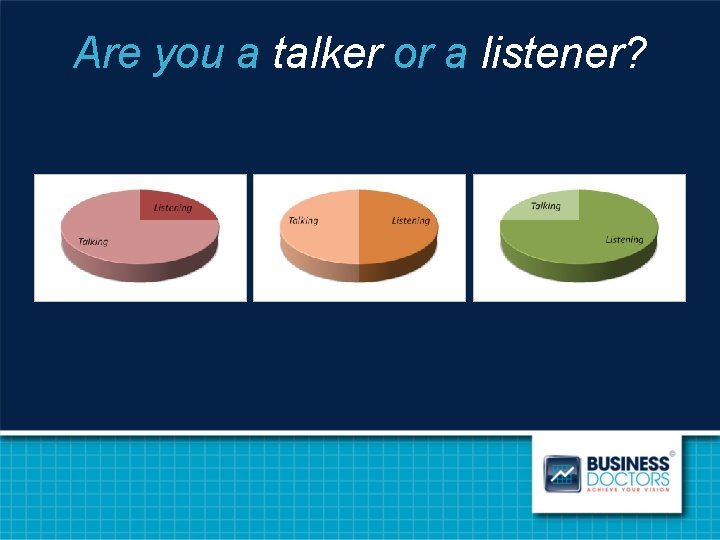
Are you a talker or a listener?
Talking & Listening • Talking – – Relax & breathe deeply Match pace, tone and volume Pause appropriately Chunk your words up • Active Listening – – Demonstrates understanding Nodding “I understand. ” “So what you’re really saying is…”
Some potentially destructive things to say / do… • • • “And your point is? ” “Whatever!” “Talk to the hand!” Interrupting Talking for the sake of it Do you have any personal bug bears?
The question is… • Open and closed questions • Types of question: – – – Seeking information Identifying a problem Clarifying what somebody wants Securing commitment to act Ensuring the right outcome
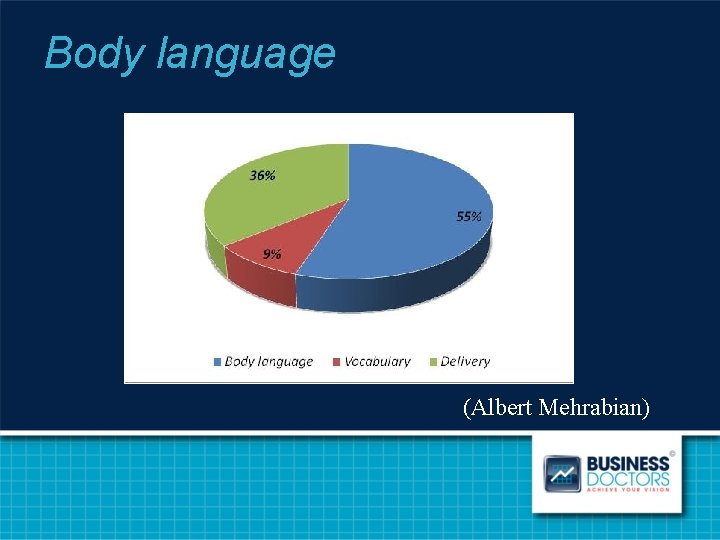
Body language (Albert Mehrabian)
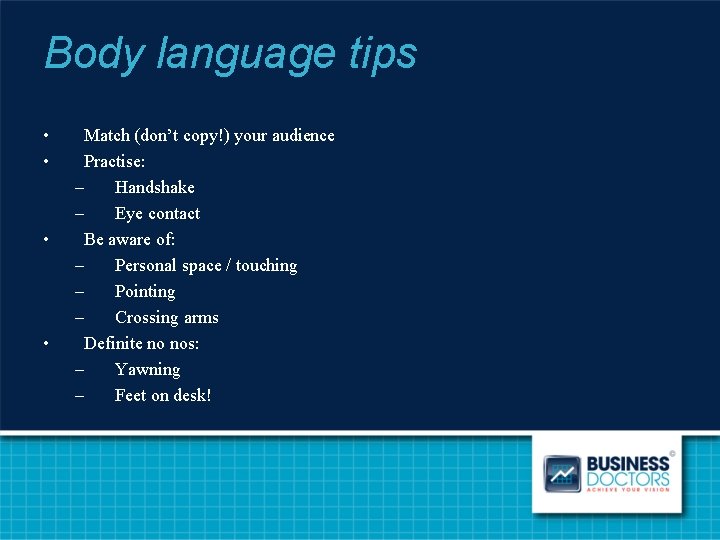
Body language tips • • Match (don’t copy!) your audience Practise: – Handshake – Eye contact Be aware of: – Personal space / touching – Pointing – Crossing arms Definite no nos: – Yawning – Feet on desk!
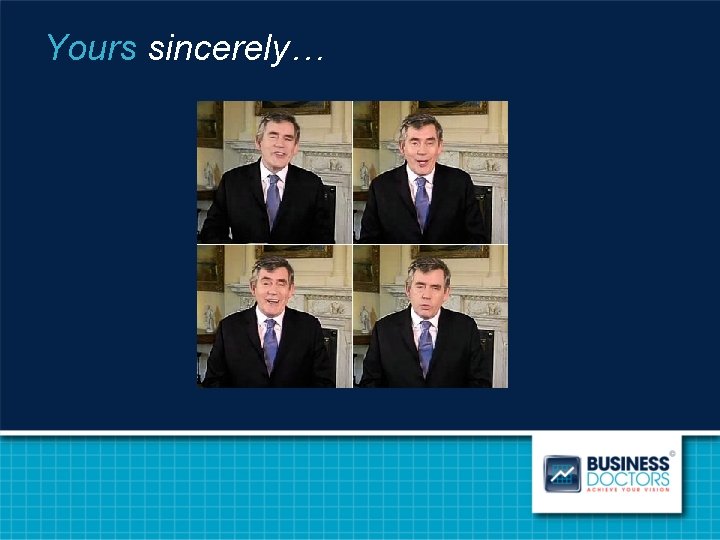
Yours sincerely…
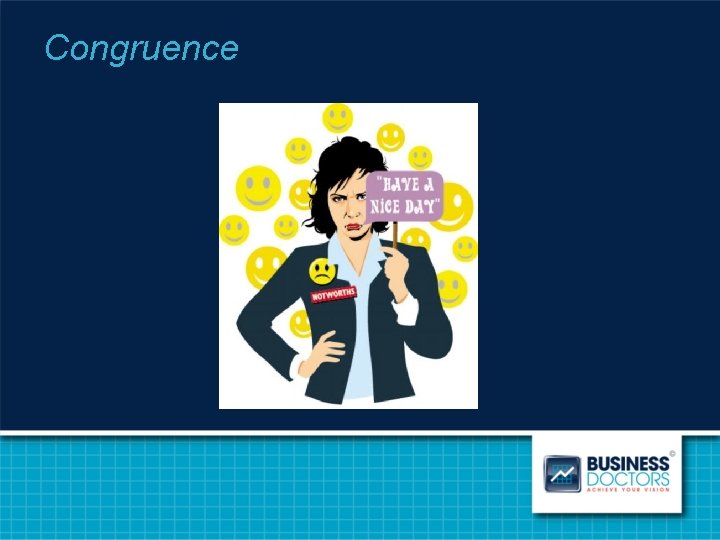
Congruence
Managing our communications
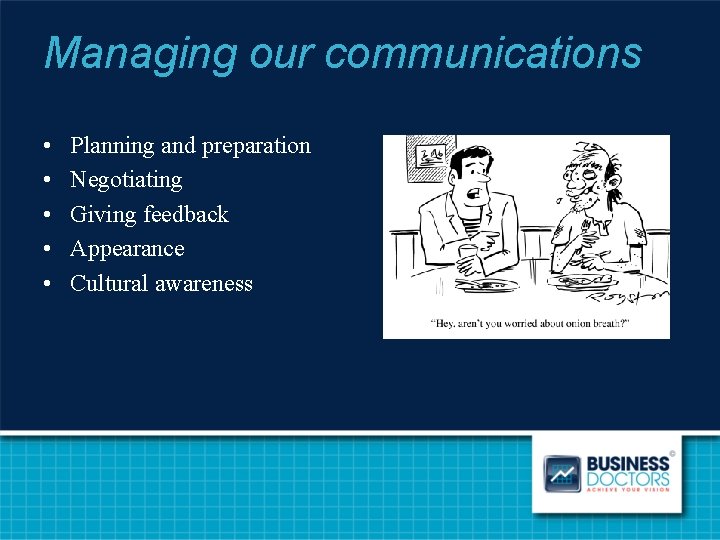
Managing our communications • • • Planning and preparation Negotiating Giving feedback Appearance Cultural awareness
Planning and preparation • Know your objective – What outcome are you seeking? • Consider your audience – What will they be looking for? – How will they be feeling? • Take time to prepare well – Appropriate not excessive • Contingency plans
Negotiating • Assertive not aggressive • Aim to build long-term relationships • Positive ending to the exchange
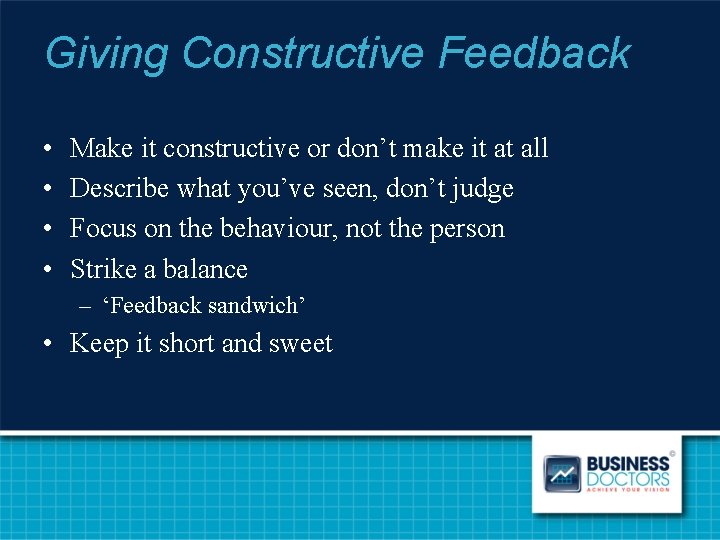
Giving Constructive Feedback • • Make it constructive or don’t make it at all Describe what you’ve seen, don’t judge Focus on the behaviour, not the person Strike a balance – ‘Feedback sandwich’ • Keep it short and sweet
Appearance • • What you wear How you stand / sit Cleanliness Culturally appropriate
Awareness of others’ needs
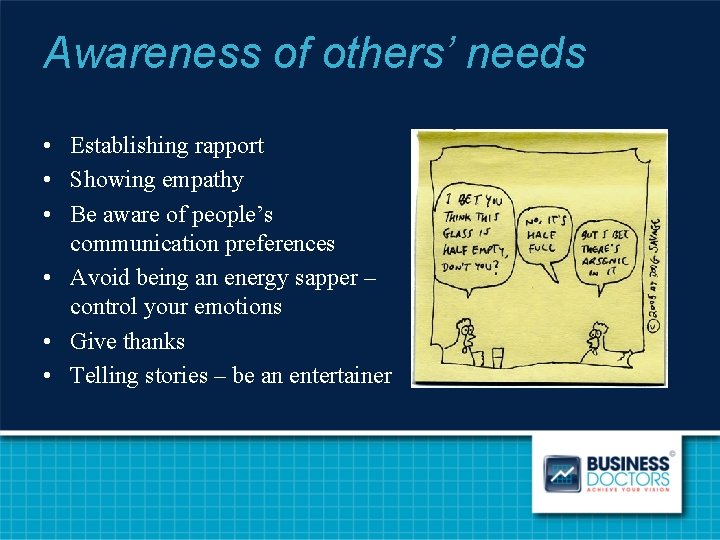
Awareness of others’ needs • Establishing rapport • Showing empathy • Be aware of people’s communication preferences • Avoid being an energy sapper – control your emotions • Give thanks • Telling stories – be an entertainer
Establishing rapport • • • Share confidences Say ‘thank you’ Mirror body language Match tone, pace, volume Encourage, coach & support Praise loudly, blame softly
Showing empathy • Put yourself in their shoes – what are their key issues? • How are they feeling about it? • Use suitable body language & words / phrases
Communication preferences • • F 2 F Telephone Email Facebook Twitter Linked. In Etc. , etc…
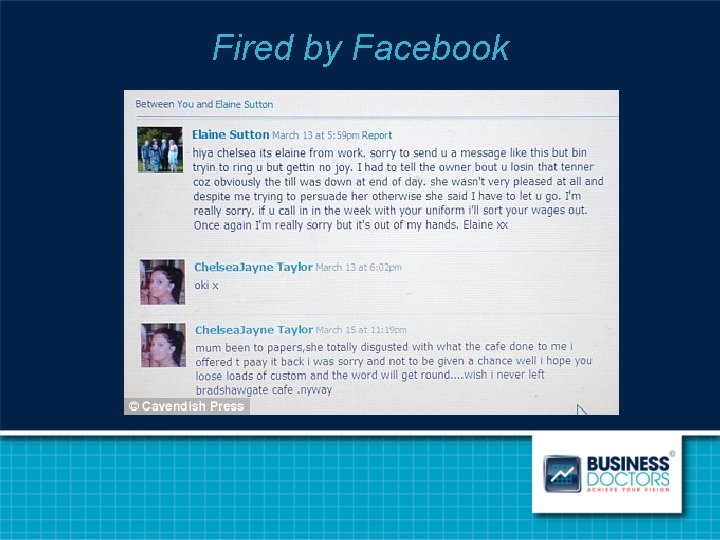
What happens when we don’t take account of people’s communication preferences?
Fired by Facebook
Secret No. 2 We can all be great sales people
How do customers buy? A customer: 1. Recognises the need 2. Searches for information 3. Evaluates alternatives 4. Purchases 5. Stresses about whether it was the right decision!
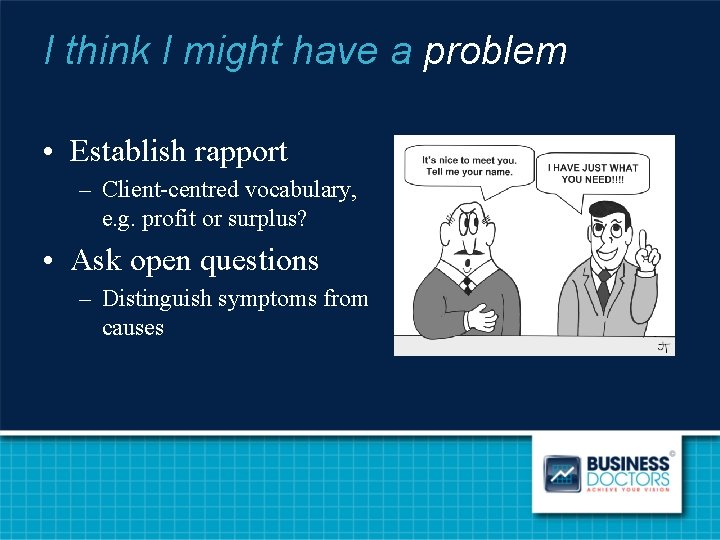
I think I might have a problem • Establish rapport – Client-centred vocabulary, e. g. profit or surplus? • Ask open questions – Distinguish symptoms from causes
How could I solve this problem? • • Brochure, web site Factual responses to questions Help line Follow-up ‘phone calls to answer queries or clarify what your product can do • Features and benefits
What’s the best way to solve my problem? • Evaluation of alternatives • Benefits, specific and detailed • Fire the imagination – Imagine what it would be like if… • Demonstrate credibility – Use examples, tell knowledgeable stories about how your product has solved their problem – Be realistic about your product
Let’s get on with solving this problem • People buy people – Build the relationship using your core skills – Meet their values • Have you answered all their questions? • Call to action – ask for the sale • Make it easy to purchase – Communication preferences
Did I make the right decision? • • • Post-purchase anxiety Follow-up Check whether any questions Provide information on post-sale support Keep in touch
Secret No. 3 We’re all great in teams
A simple process to build buy-in • Engagement workshop: – 2 – 4 hours – Share the challenge / objective – Where are we now? – Where do we want to get to? – Selected team of staff, suppliers, customers, partners
Where are we now? • Balanced view – good and bad • Agree on what’s going well – Use this to motivate • What are the critical issues and concerns? – Use this to explain why change is needed
Where do we want to get to? • How is our strategy affected by the changes needed? • How do our products, services, finances and markets need to change? • What do staff need to do differently to make the changes a success? • How will all of the above changes sort out the issues and concerns?
Tips on building buy-in • • Listen Show that you value all ideas Steal and build Refrain from judging people Encourage solutions, not just issues Encourage quiet members to participate See it from their point of view Recognise that everyone has something to contribute
Secret No. 4 Meetings don’t have to be a waste of time!
What are the ingredients of successful meetings?
The ingredients of marvellous meetings • • • Clear objectives and structure Right people Roles Ground rules & behaviours Format Notes / actions
The secret’s in the prep… • Plan and prepare – Objectives – Agenda • Circulate in advance – – Chair person Note-taker Start and end time Why A. O. B. ?
Get the format right • Suitable format – – Board room Standing Theatre Cabaret • Choose your seat and that of others tactically! • Fixed timings
Good meeting behaviours • Set the ground rules – ‘silence is agreement’ – One at once – Chair person is the referee • Stick to the point • Short and sweet – Fixed timings • Encourage participation • Be flexible in your style
Secrets… what secrets? 1. 2. 3. 4. We’re all great communicators We can all sell We can all be great at team work Meetings are a great way to get things done
Who are Business Doctors? • Planning your growth • Helping you develop as a leader / manager • Organising, motivating and developing your staff • Getting hands-on to help you make the changes happen
Q?