
Secondary Treatment of Sewage Objective To remove nonsettleable
Secondary Treatment of Sewage
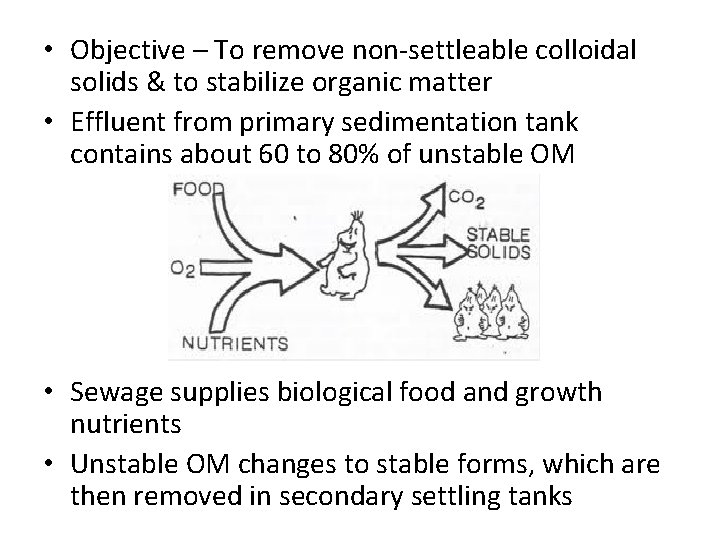
• Objective – To remove non-settleable colloidal solids & to stabilize organic matter • Effluent from primary sedimentation tank contains about 60 to 80% of unstable OM • Sewage supplies biological food and growth nutrients • Unstable OM changes to stable forms, which are then removed in secondary settling tanks
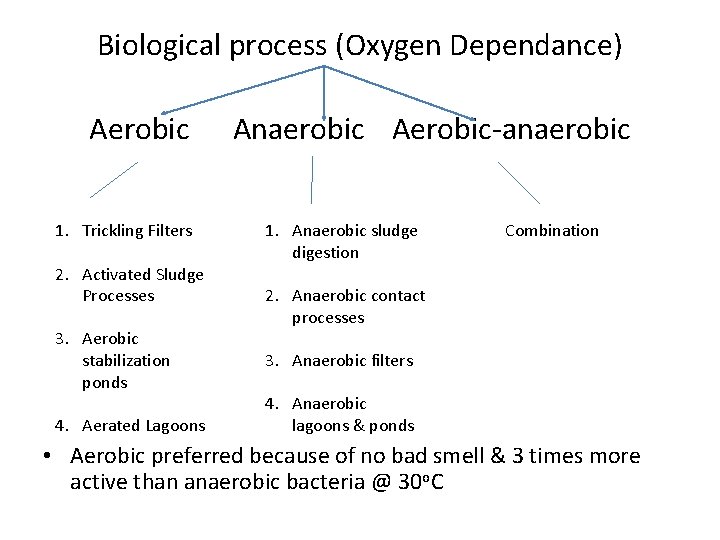
Biological process (Oxygen Dependance) Aerobic 1. Trickling Filters 2. Activated Sludge Processes 3. Aerobic stabilization ponds 4. Aerated Lagoons Anaerobic Aerobic-anaerobic 1. Anaerobic sludge digestion Combination 2. Anaerobic contact processes 3. Anaerobic filters 4. Anaerobic lagoons & ponds • Aerobic preferred because of no bad smell & 3 times more active than anaerobic bacteria @ 30 o. C
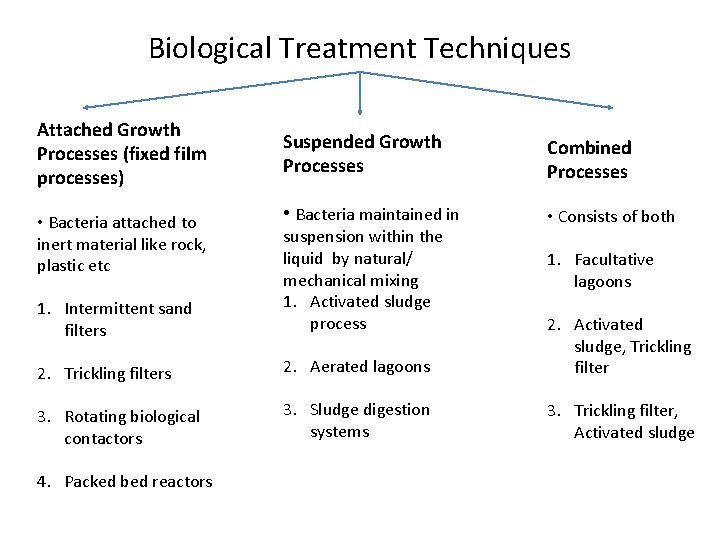
Biological Treatment Techniques Attached Growth Processes (fixed film processes) • Bacteria attached to inert material like rock, plastic etc Suspended Growth Processes Combined Processes • Bacteria maintained in • Consists of both 1. Intermittent sand filters suspension within the liquid by natural/ mechanical mixing 1. Activated sludge process 2. Trickling filters 2. Aerated lagoons 2. Activated sludge, Trickling filter 3. Rotating biological contactors 3. Sludge digestion systems 3. Trickling filter, Activated sludge 4. Packed bed reactors 1. Facultative lagoons
• Sewage Filtration • Activated Sludge Process • Miscellaneous Methods Oxidation ditches Stabilisation ponds (Oxidation ponds) Aerobic ponds (Algae ponds) Anaerobic ponds Aerated lagoons Rotating Biological Contactors

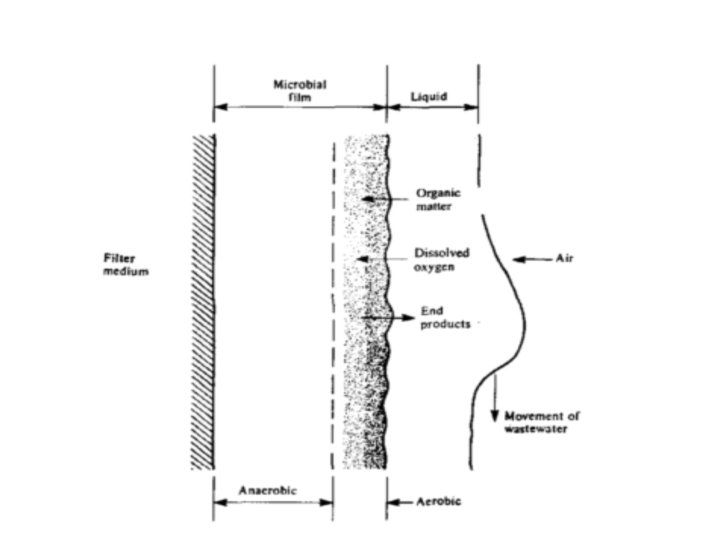
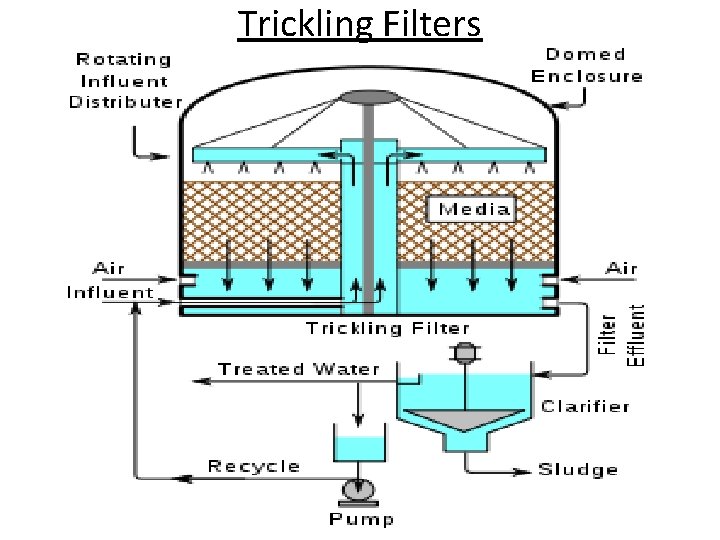
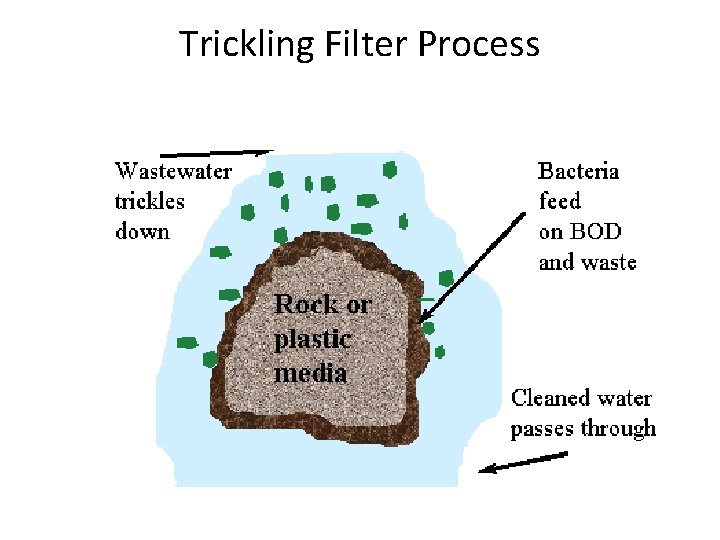
Sewage Filtration • Filter units consists of open beds of coarse aggregates • Organic film will form around each aggregate • Sewage will oxidise when it passes through organic film since it contains aerobic bacteria
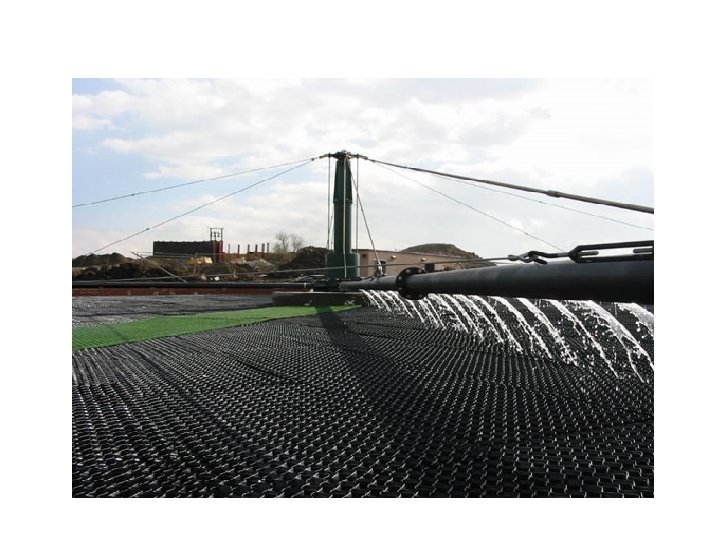
Trickling Filters
Trickling Filter Process
Merits • Lesser land area • Remove 75% BOD & 80% SS • Simple working • Self-cleaning • Less mechanical wear & tear Demerits • Head loss is high • Cost is high • Cannot treat raw WW, primary treatment is must • Fly & odour nuisance • Ponding trouble
Types of Trickling Filters i) Conventional/ Ordinary/ Standard rate/Low rate Trickling filters ii) High rate Trickling filters (Re-circulation) --- allows continuous dosing of the filters --- increases efficiency of the filter --- fly nuisance is less --- influent remains fresh, so less odour
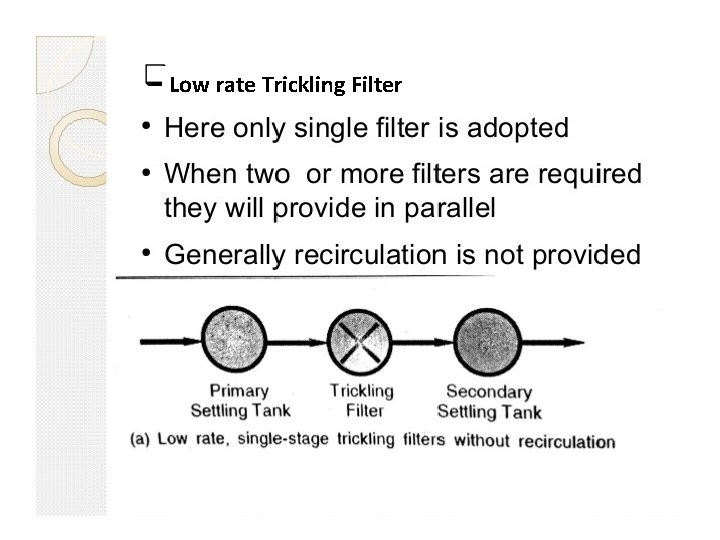
Low rate Trickling Filter
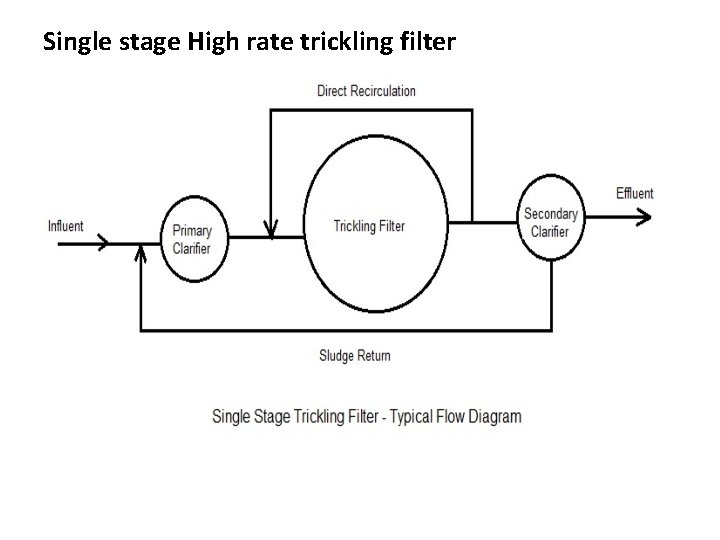
Single stage High rate trickling filter
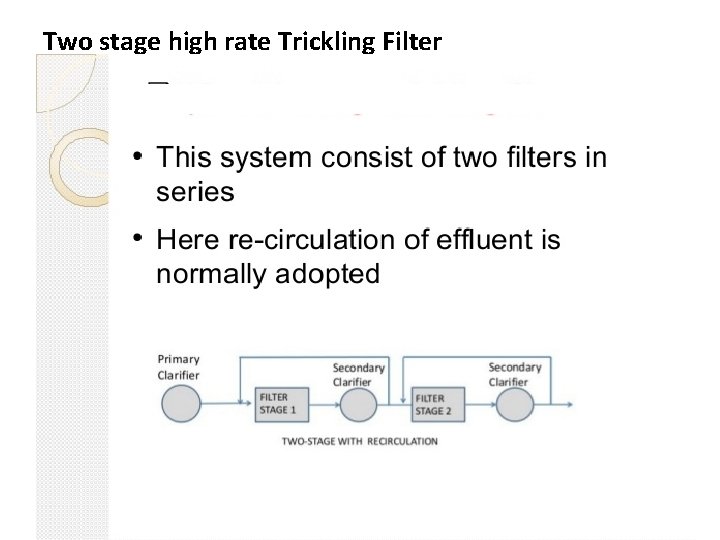
Two stage high rate Trickling Filter
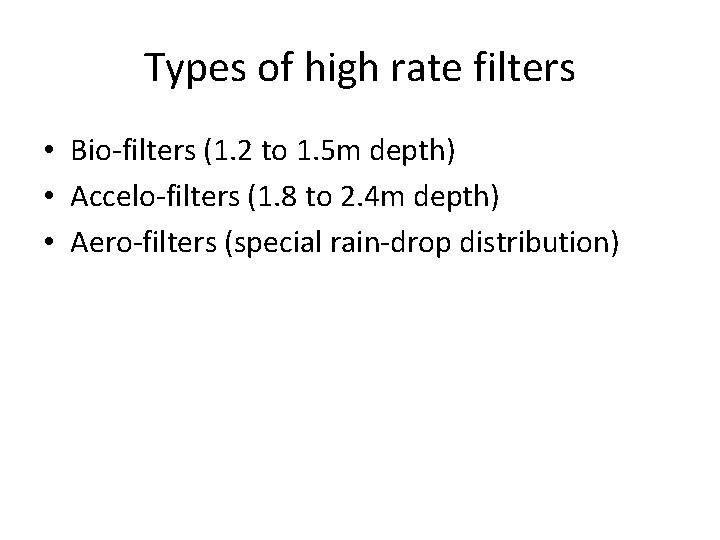
Types of high rate filters • Bio-filters (1. 2 to 1. 5 m depth) • Accelo-filters (1. 8 to 2. 4 m depth) • Aero-filters (special rain-drop distribution)
Secondary Settling Tanks / Humus Tanks • Detention period : 1. 5 to 2 hours • Circular tanks with dia & depth ranges between 7. 5 to 9 m • Overflow rate : 40, 000 to 70, 000 l/m 2/day
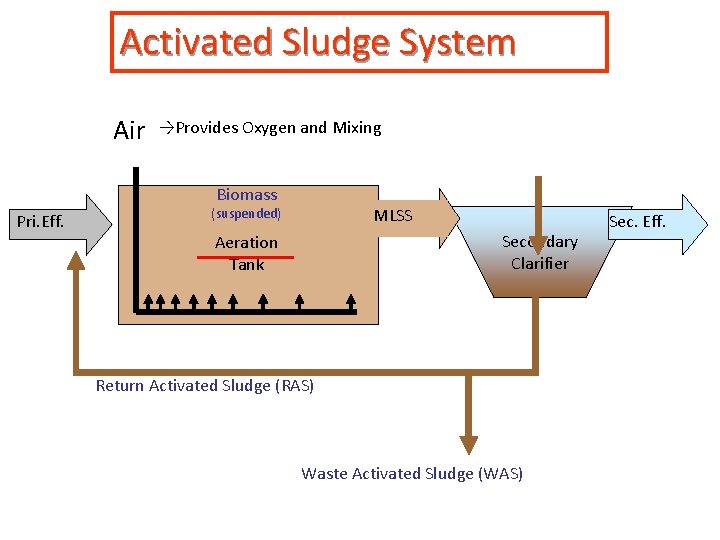
Activated Sludge System Air →Provides Oxygen and Mixing Biomass Pri. Eff. MLSS (suspended) Secondary Clarifier Aeration Tank Return Activated Sludge (RAS) Waste Activated Sludge (WAS) Sec. Eff.
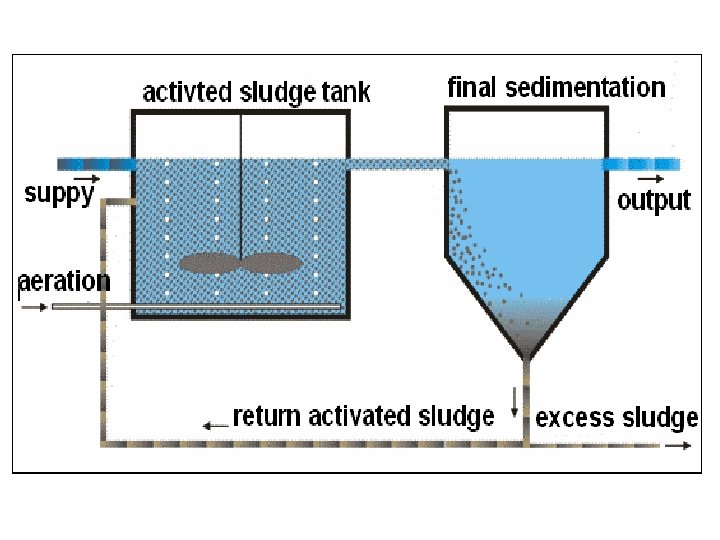
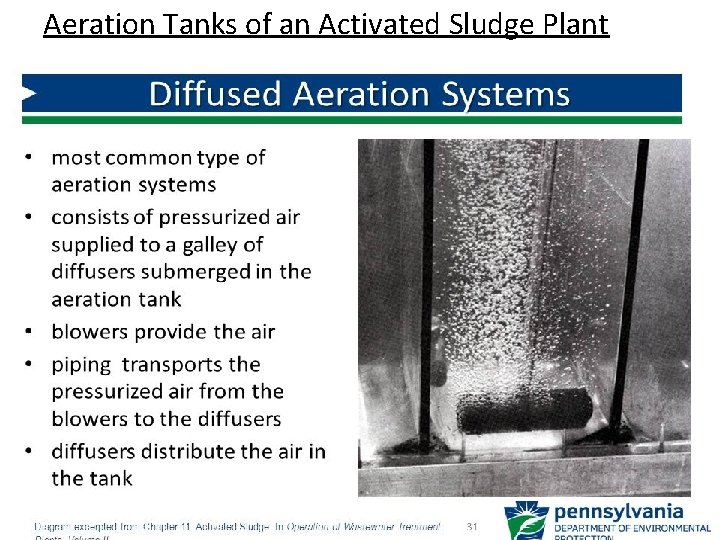
Aeration Tanks of an Activated Sludge Plant i) Diffused air aeration/ Air diffusion
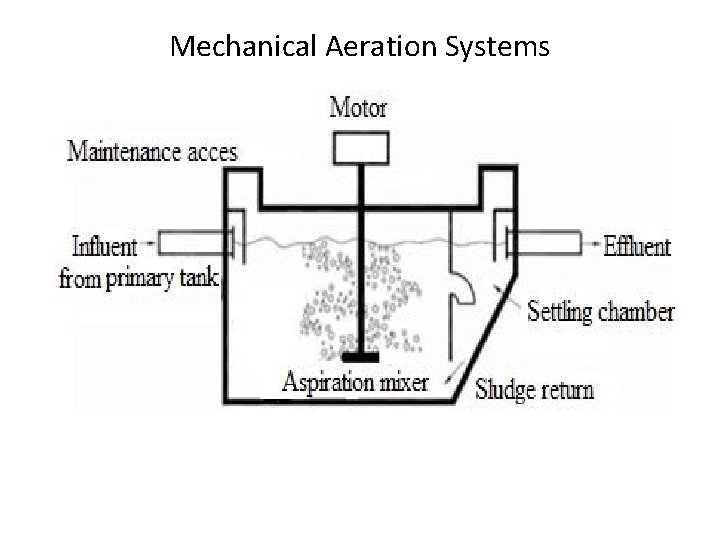
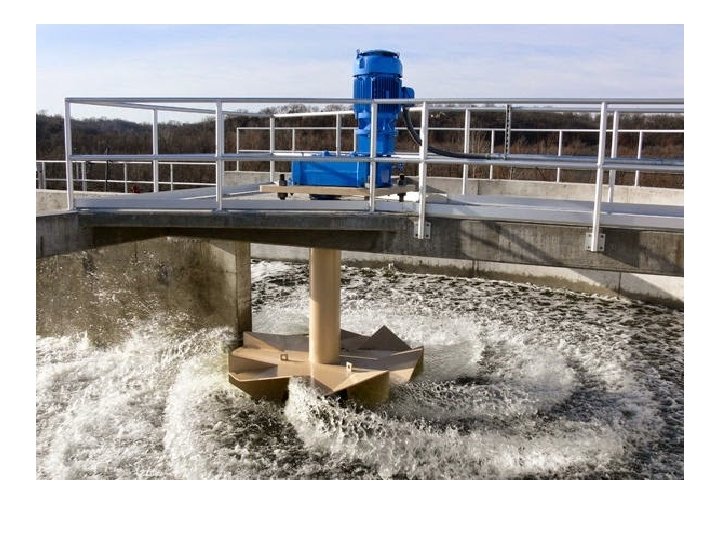
Mechanical Aeration Systems
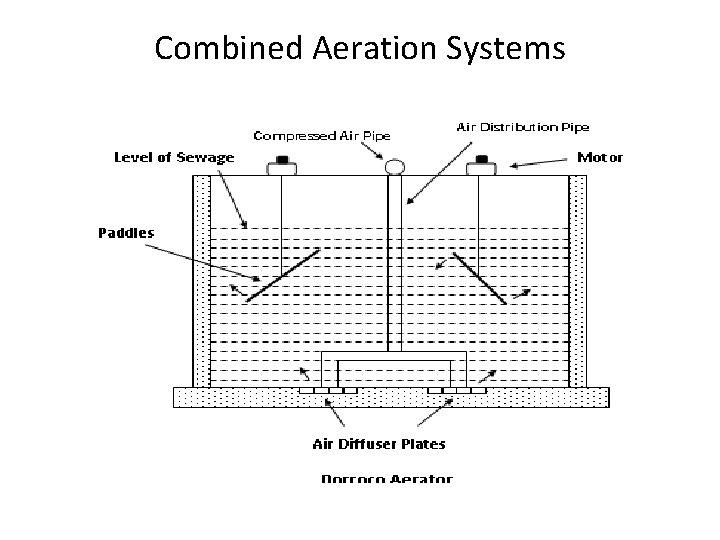
Combined Aeration Systems
Secondary Sedimentation Tank of an Activated Sludge Plant • • No provision for removal of scum Detention period : 1. 5 to 2 hours Depth : 3. 5 to 4. 5 m Length to depth ratio : 5 for circular; 7 for rectangular
Sludge Thickener & Sludge Digestion Tank of an Activated Sludge Plant • Gravity Thickeners • Floatation Thickeners • Centrifugal Thickeners
Problems encountered • Bulking of sludge: sludge that exhibits poor settling characteristics – filamentous microorganisms • Rising sludge: Denitrification in secondary clarifier – formation of nitrogen gas bubbles
• Merits --- lesser land area --- low head loss --- no fly or odour nuisance --- less capital cost • Demerits --- difficult handling --- high operating cost --- bulking of sludge Activated Sludge Process is more efficient than Trickling Filter
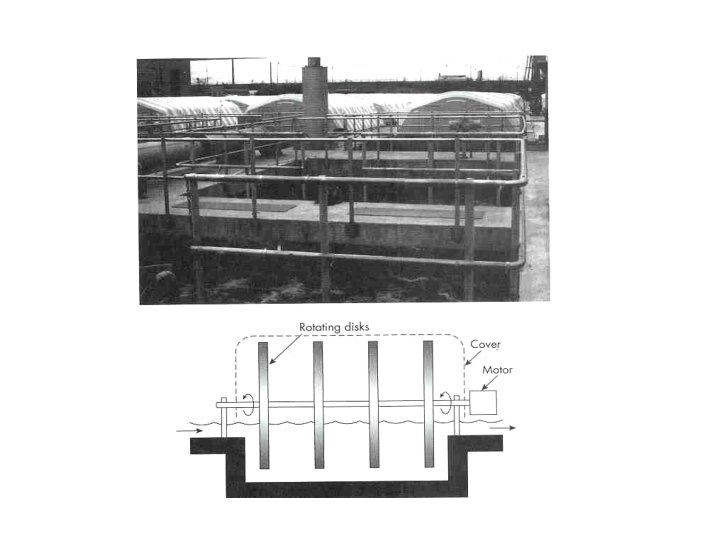
Rotating Biological Contactors • RBC – cylindrical media made of closely spaced plastic sheets of 3 to 3. 5 m in diameter, 10 mm thick & placed @ 30 to 40 mm spacings • They are immersed in WW by about 40% of their diameter • Rotated @ a speed of 1 -2 rpm • Microbes from WW adhere to the rotating surfaces & form 1 to 3 mm layer of biological slime
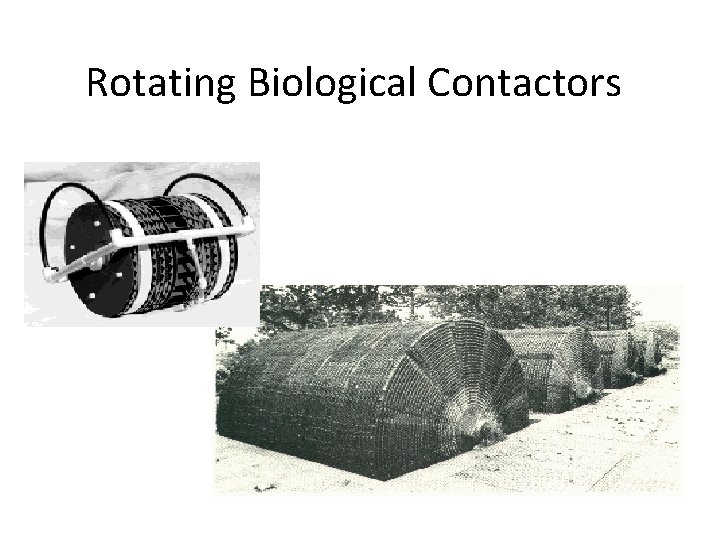
Rotating Biological Contactors
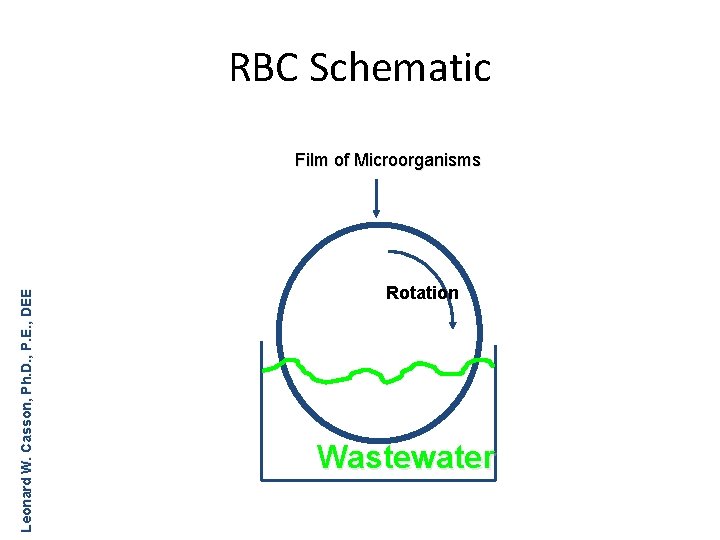
RBC Schematic Leonard W. Casson, Ph. D. , P. E. , DEE Film of Microorganisms Rotation Wastewater
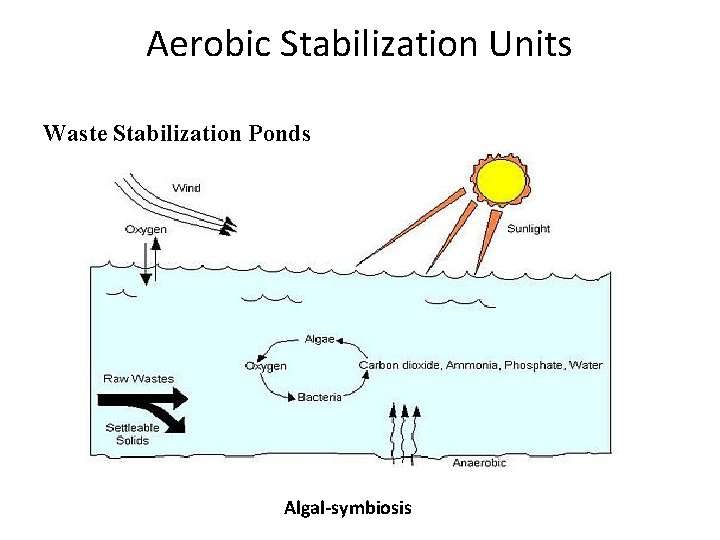
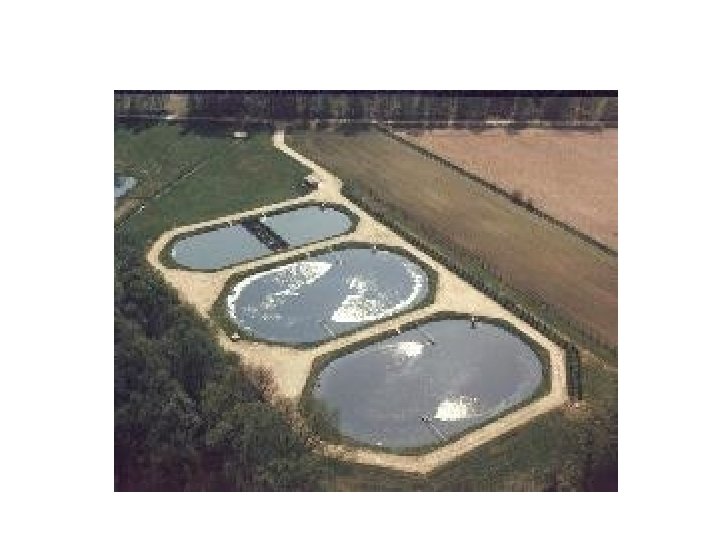
Aerobic Stabilization Units Waste Stabilization Ponds Algal-symbiosis
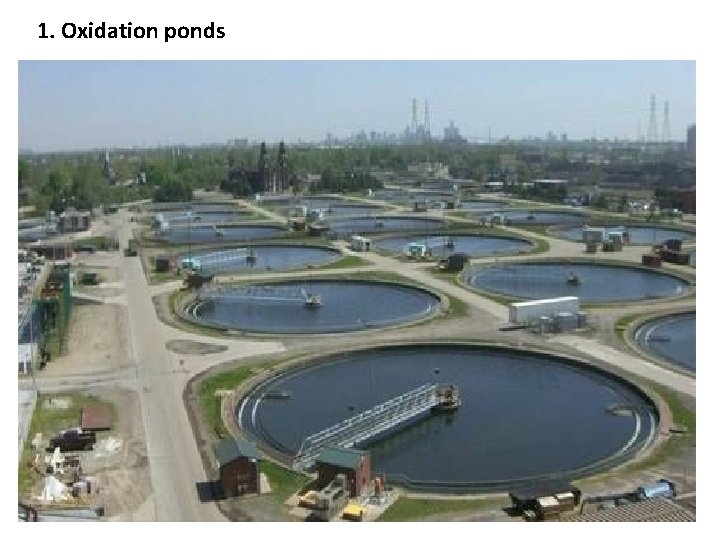
1. Oxidation ponds
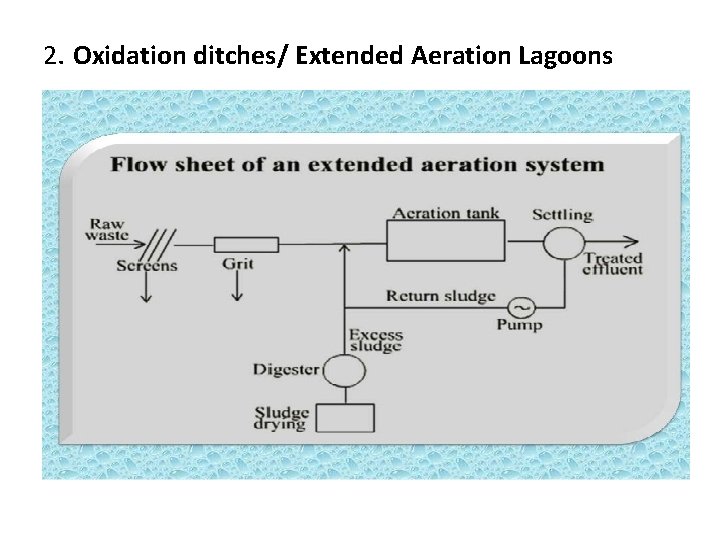
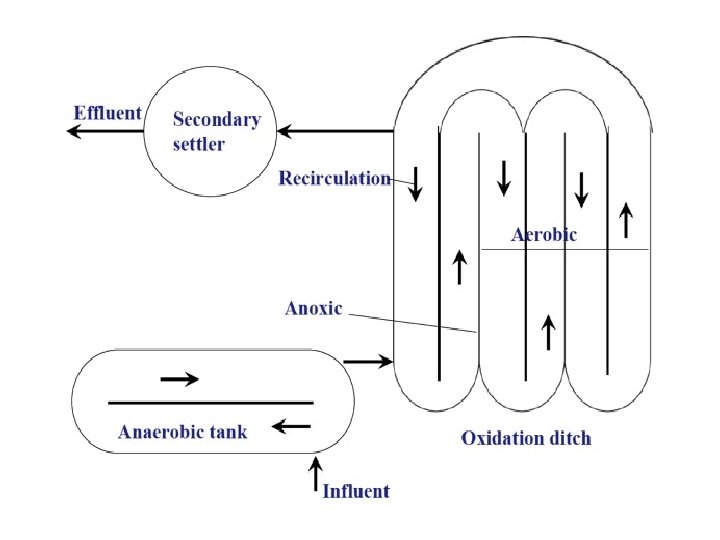
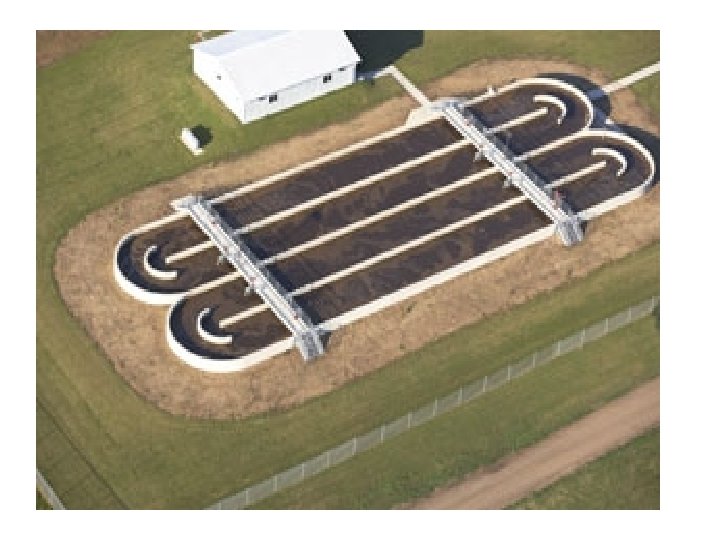
2. Oxidation ditches/ Extended Aeration Lagoons
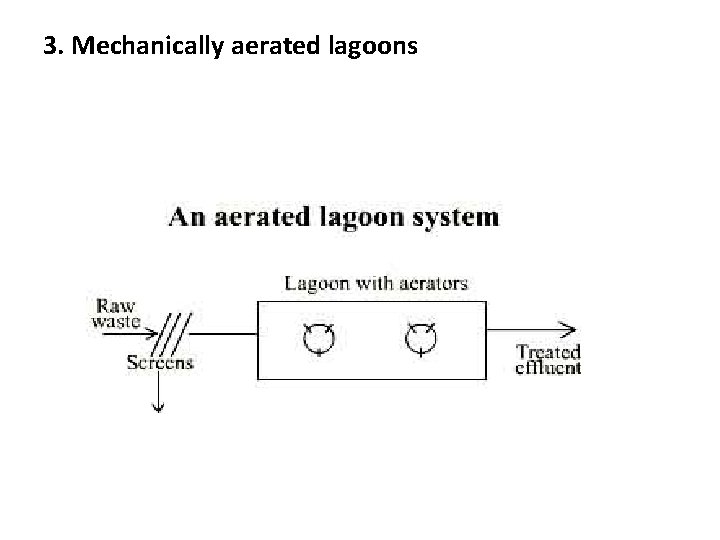
3. Mechanically aerated lagoons
Anaerobic stabilization units • Deeper stabilization ponds • Stages 1. Acid fermentation: complex OM are broken down to short chain acids & alcohols 2. Methane fermentation: these materials are converted to gases primarily, CH 4 & CO 2
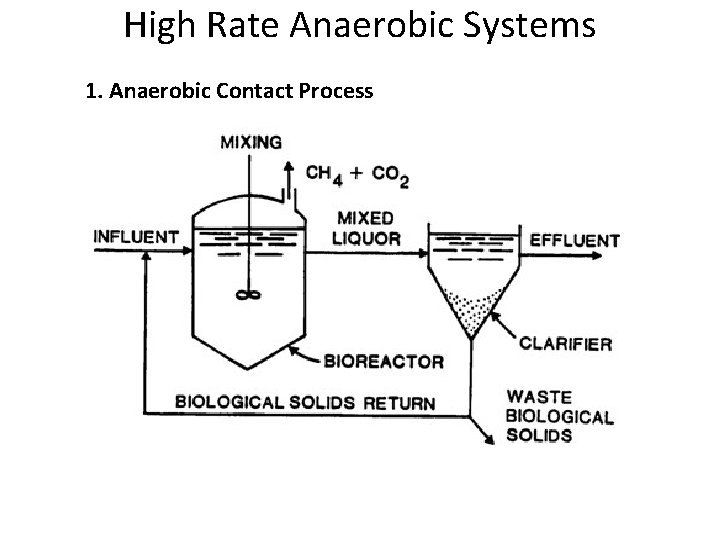
High Rate Anaerobic Systems 1. Anaerobic Contact Process
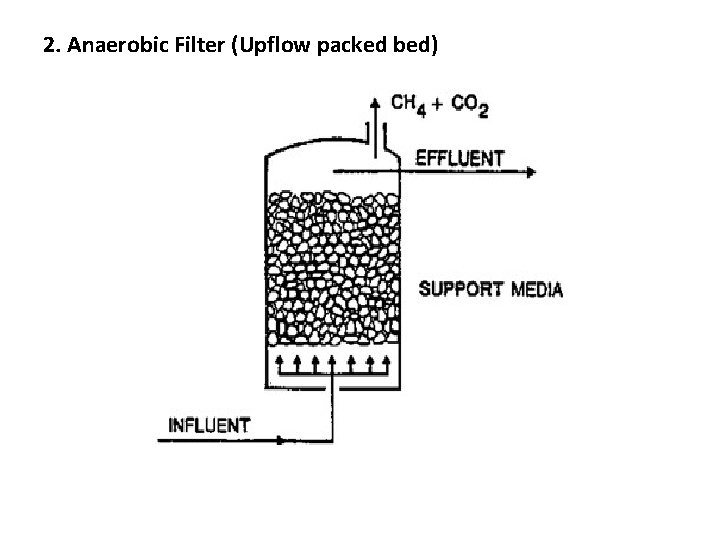
2. Anaerobic Filter (Upflow packed bed)
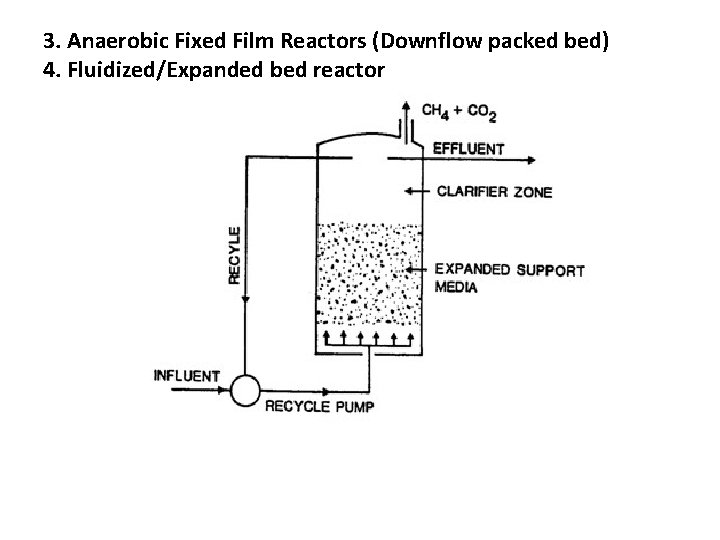
3. Anaerobic Fixed Film Reactors (Downflow packed bed) 4. Fluidized/Expanded bed reactor
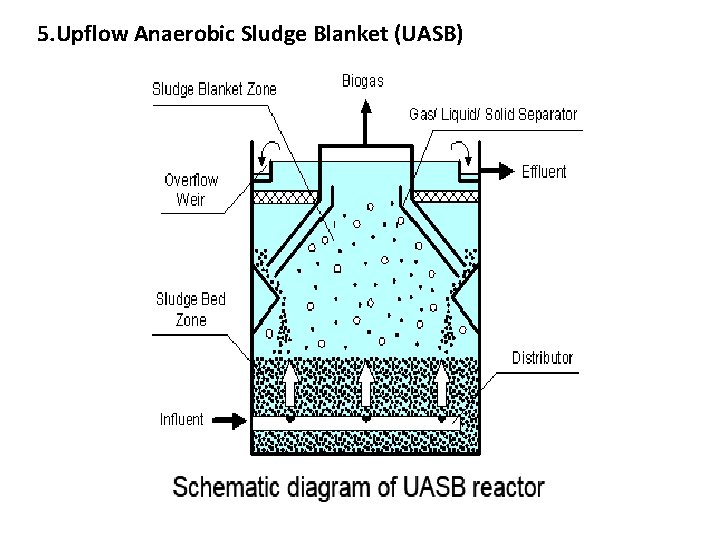
5. Upflow Anaerobic Sludge Blanket (UASB)
Reclamation & reuse of WW • • • Natural evaporation Ground water recharge Irrigation Recreational Municipal uses Industrial uses
Benefits of Agricultural Reuse • • • High concentrations of nutrients May eliminate need for fertilizer Long-term soil enrichment Decreases demand on potable water supply Additional treatment in soil Water not discharged to receiving waters
Disadvantages of Agricultural Reuse • Health risk from associated pathogens • Health risk from other contaminants (e. g. metals, chemicals, pharmaceuticals) • Decrease in soil quality from accumulation of metals and acidification • Infiltration of groundwater
Urban Wastewater Reuse • Recycled urban wastewater or reclaimed water – Urban wastewater that has undergone additional treatment following secondary treatment in order to be reused rather than discharged into the environment • Can reduce strain on potable water supply
Urban Wastewater Reuse • What can urban reclaimed water be used for? – Irrigation - public parks, schools, road medians, any landscaped areas, golf courses – Commercial - vehicle washing facilities, laundry facilities, window washing, mixing pesticides and herbicides – Construction - dust control, concrete production – Toilet and urinal flushing – Fire protection – Drinking water? ? in Australia, not yet in the U. S.
Urban Wastewater Reuse • Major considerations are public health and reliability of the system – Water must be of acceptable quality for intended uses – System must be maintained and operated properly – Reclaimed water pipes must be clearly marked
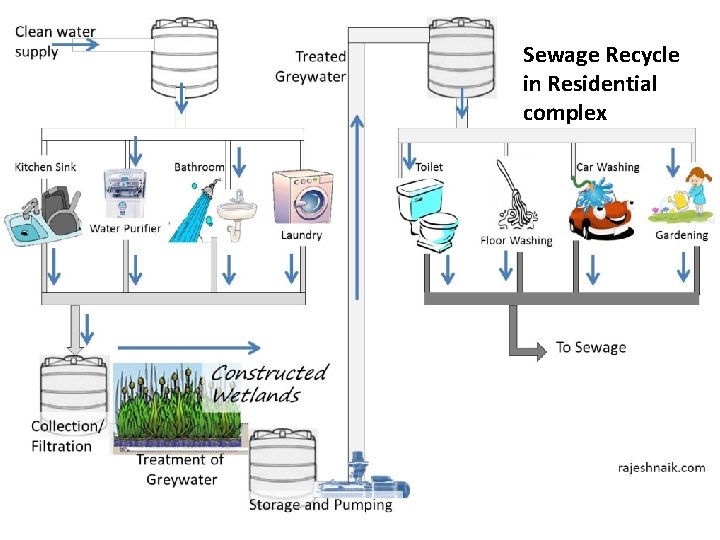
Sewage Recycle in Residential complex
Advanced Wastewater Treatment • • Diatomaceous-earth filters Ultrafiltration Granular media filtration Adsorption by Activated Carbon Phosphorus Removal Nitrogen Removal Ammonia Stripping Disinfection of sewage : Chemical oxidation
Chlorination of Sewage • Disinfection by using Chlorine • Post-chlorination: reduce bacterial count in effluent • Pre-chlorination: control odours, removal of greases • Breakdown of sulphur compounds and reduce H 2 S production • Split-chlorination: both at beginning & end of the treatment process
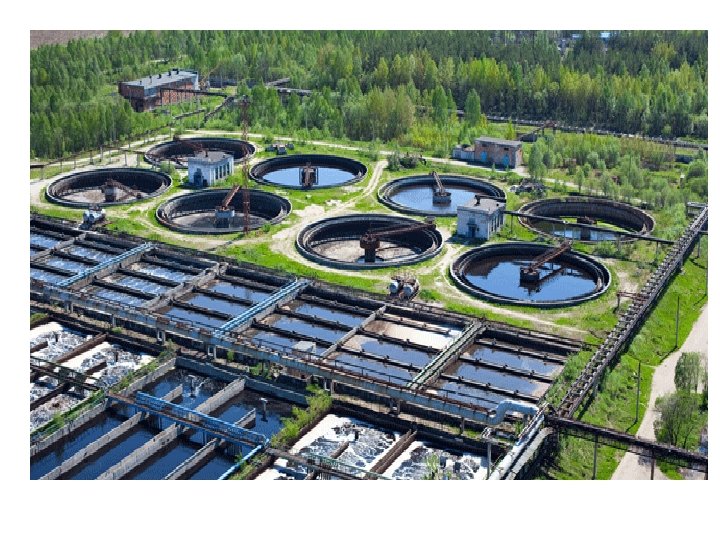
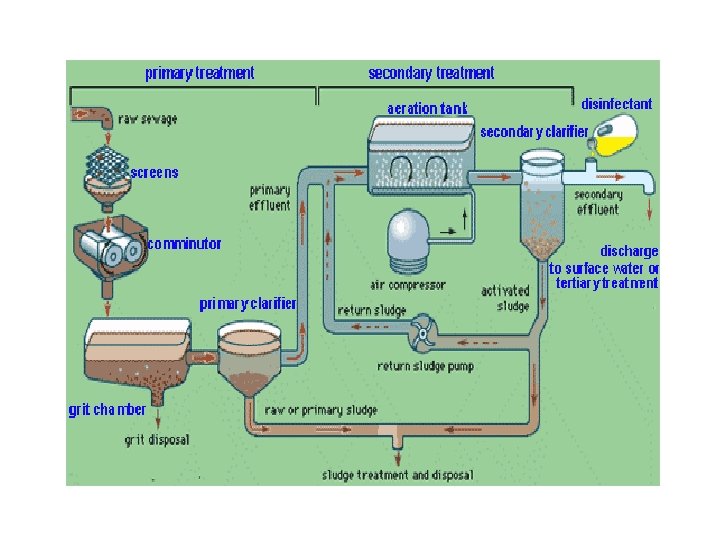
SEWAGE TREATMENT PLANTS
Construction Steps • Site clearing and levelling • Excavation and Foundation • Transportation of construction materials, equipments and machineries • Construction of STP units and related infrastructure
- Slides: 56