
Secondary Motion It is important to make a
- Slides: 15
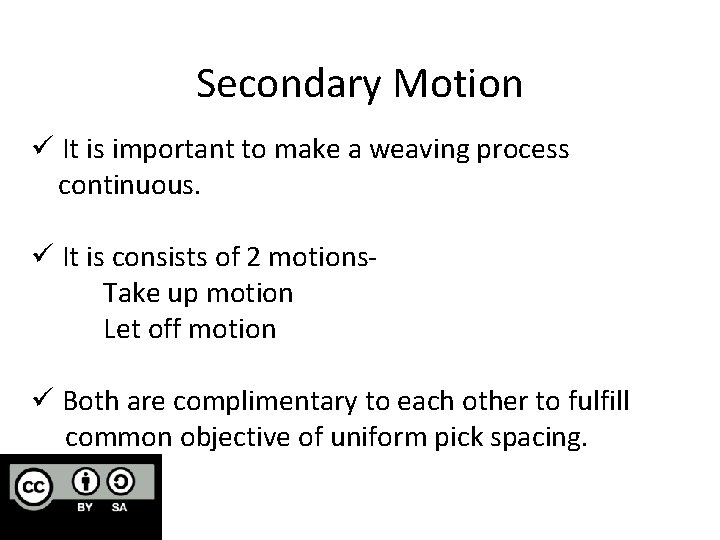
Secondary Motion ü It is important to make a weaving process continuous. ü It is consists of 2 motions. Take up motion Let off motion ü Both are complimentary to each other to fulfill common objective of uniform pick spacing.
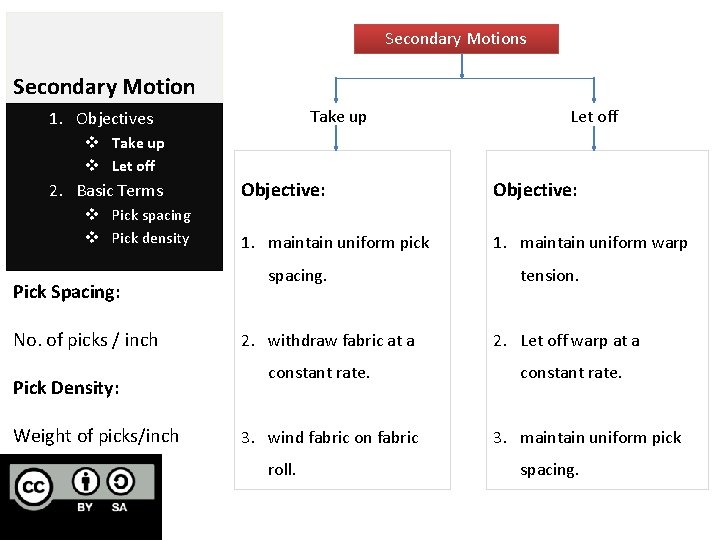
Secondary Motions Secondary Motion Take up 1. Objectives Let off v Take up v Let off 2. Basic Terms v Pick spacing v Pick density Pick Spacing: No. of picks / inch Pick Density: Weight of picks/inch Objective: 1. maintain uniform pick 1. maintain uniform warp spacing. 2. withdraw fabric at a constant rate. 3. wind fabric on fabric roll. tension. 2. Let off warp at a constant rate. 3. maintain uniform pick spacing.
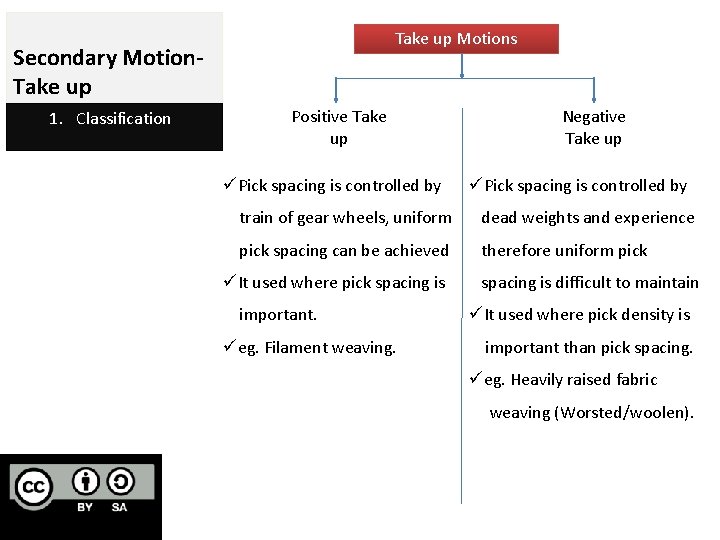
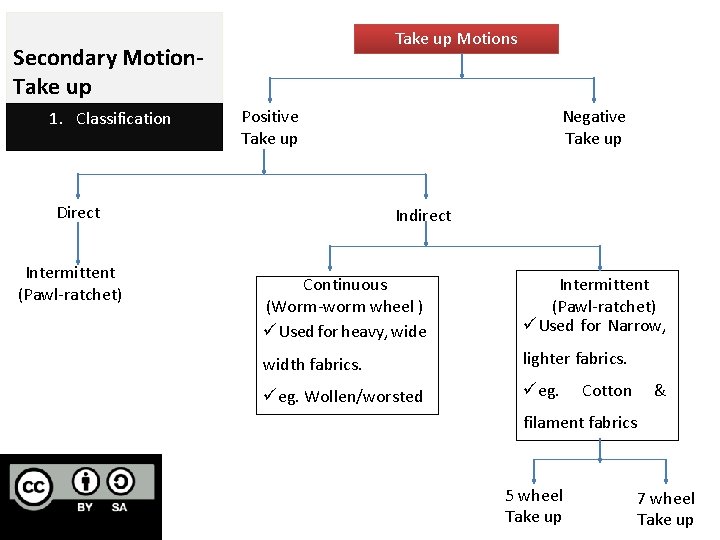
Take up Motions Secondary Motion. Take up 1. Classification Positive Take up üPick spacing is controlled by Negative Take up üPick spacing is controlled by train of gear wheels, uniform dead weights and experience pick spacing can be achieved therefore uniform pick üIt used where pick spacing is important. üeg. Filament weaving. spacing is difficult to maintain üIt used where pick density is important than pick spacing. üeg. Heavily raised fabric weaving (Worsted/woolen).
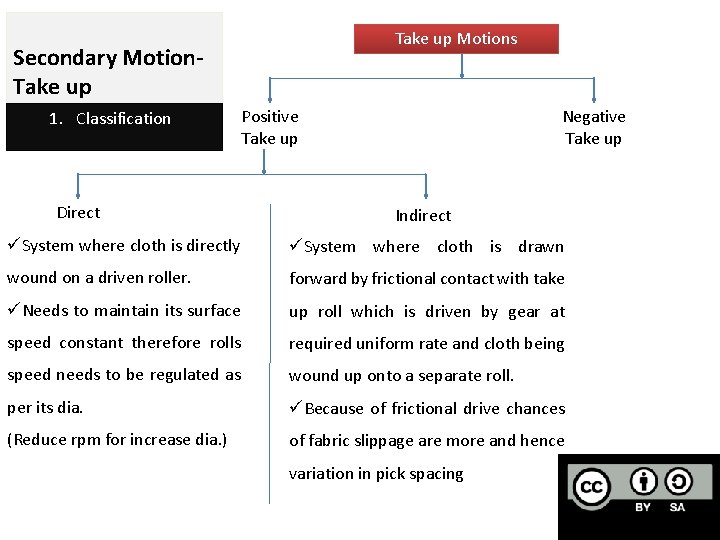
Take up Motions Secondary Motion. Take up 1. Classification Direct Positive Take up Negative Take up Indirect üSystem where cloth is directly üSystem where cloth is drawn wound on a driven roller. forward by frictional contact with take üNeeds to maintain its surface up roll which is driven by gear at speed constant therefore rolls required uniform rate and cloth being speed needs to be regulated as wound up onto a separate roll. per its dia. üBecause of frictional drive chances (Reduce rpm for increase dia. ) of fabric slippage are more and hence variation in pick spacing
Take up Motions Secondary Motion. Take up 1. Classification Positive Take up Direct Intermittent (Pawl-ratchet) Negative Take up Indirect Continuous (Worm-worm wheel ) üUsed for heavy, wide Intermittent (Pawl-ratchet) üUsed for Narrow, width fabrics. lighter fabrics. üeg. Wollen/worsted üeg. Cotton & filament fabrics 5 wheel Take up 7 wheel Take up
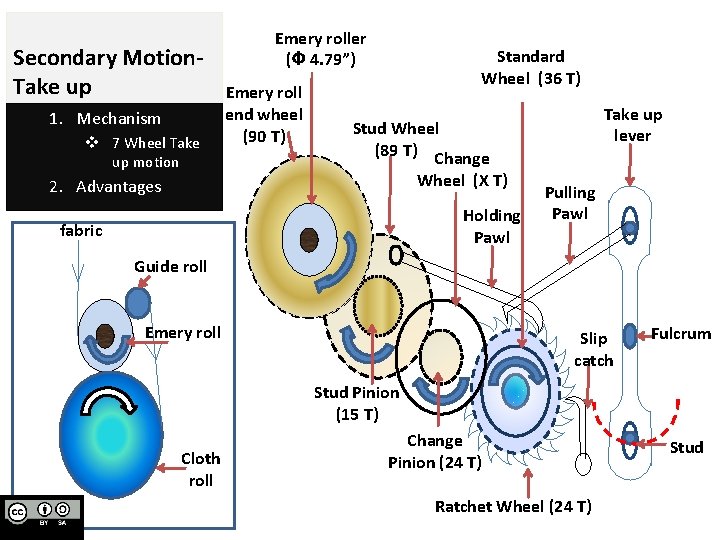
Secondary Motion. Take up 1. Mechanism v 7 Wheel Take up motion Emery roller (Φ 4. 79”) Emery roll end wheel (90 T) Standard Wheel (36 T) Take up lever Stud Wheel (89 T) Change Wheel (X T) 2. Advantages Holding Pawl fabric Pulling Pawl Guide roll Emery roll Slip catch Fulcrum Stud Pinion (15 T) Cloth roll Change Pinion (24 T) Ratchet Wheel (24 T) Stud
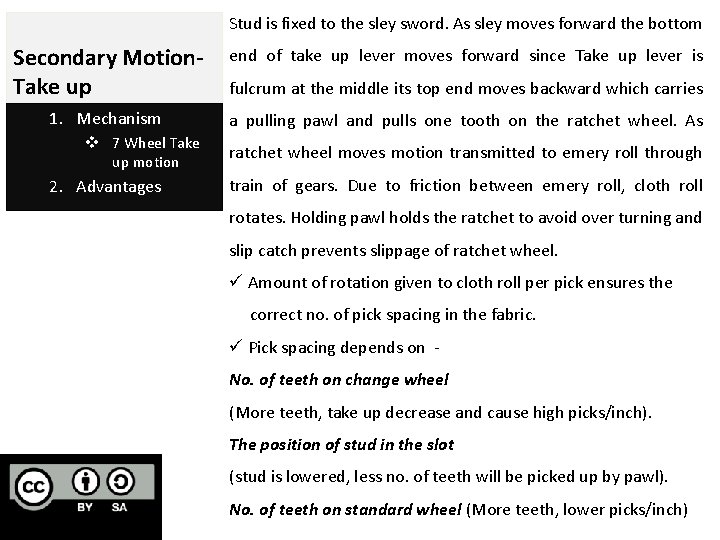
Stud is fixed to the sley sword. As sley moves forward the bottom Secondary Motion. Take up end of take up lever moves forward since Take up lever is 1. Mechanism a pulling pawl and pulls one tooth on the ratchet wheel. As v 7 Wheel Take up motion 2. Advantages fulcrum at the middle its top end moves backward which carries ratchet wheel moves motion transmitted to emery roll through train of gears. Due to friction between emery roll, cloth roll rotates. Holding pawl holds the ratchet to avoid over turning and slip catch prevents slippage of ratchet wheel. ü Amount of rotation given to cloth roll per pick ensures the correct no. of pick spacing in the fabric. ü Pick spacing depends on No. of teeth on change wheel (More teeth, take up decrease and cause high picks/inch). The position of stud in the slot (stud is lowered, less no. of teeth will be picked up by pawl). No. of teeth on standard wheel (More teeth, lower picks/inch)
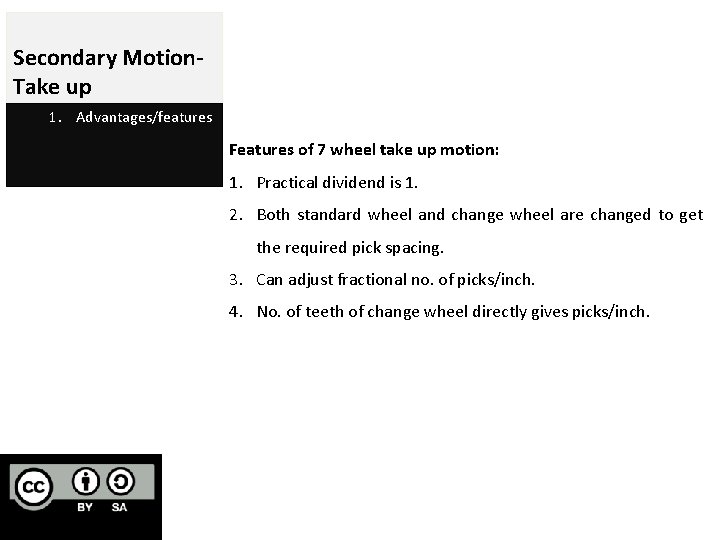
Secondary Motion. Take up 1. Advantages/features Features of 7 wheel take up motion: 1. Practical dividend is 1. 2. Both standard wheel and change wheel are changed to get the required pick spacing. 3. Can adjust fractional no. of picks/inch. 4. No. of teeth of change wheel directly gives picks/inch.
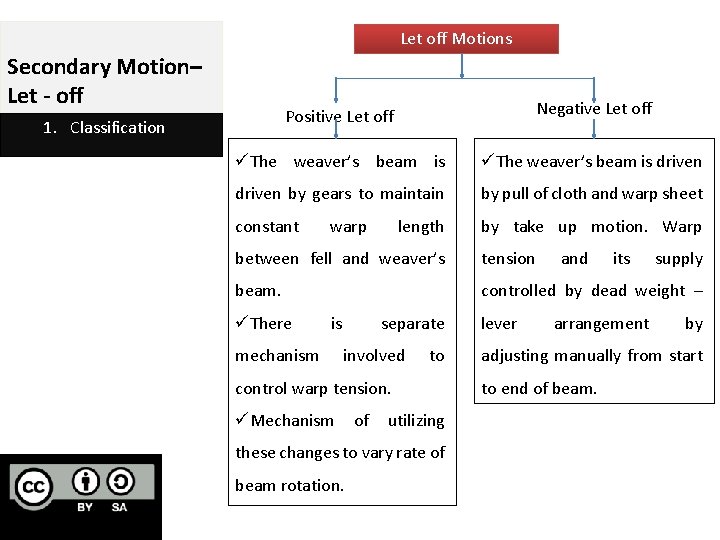
Let off Motions Secondary Motion– Let - off Positive Let off Negative Let off üThe weaver’s beam is driven by gears to maintain by pull of cloth and warp sheet constant by take up motion. Warp 1. Classification warp length between fell and weaver’s tension beam. controlled by dead weight – üThere is mechanism separate involved to control warp tension. üMechanism of utilizing these changes to vary rate of beam rotation. lever and its arrangement supply by adjusting manually from start to end of beam.
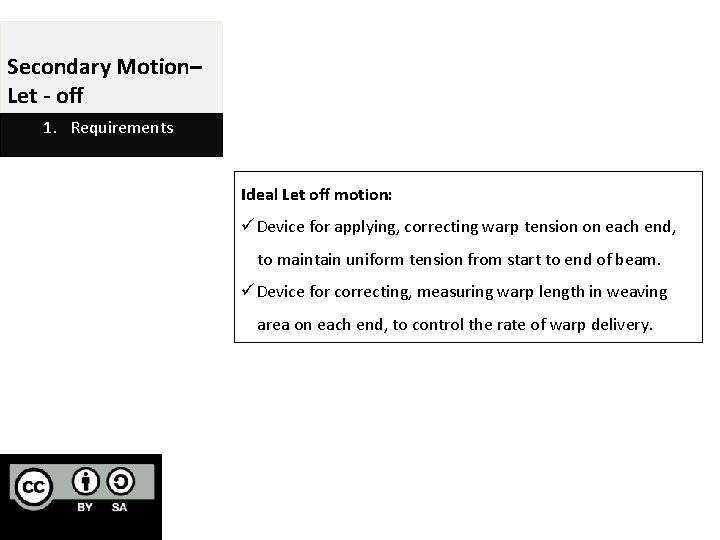
Secondary Motion– Let - off 1. Requirements Ideal Let off motion: üDevice for applying, correcting warp tension on each end, to maintain uniform tension from start to end of beam. üDevice for correcting, measuring warp length in weaving area on each end, to control the rate of warp delivery.
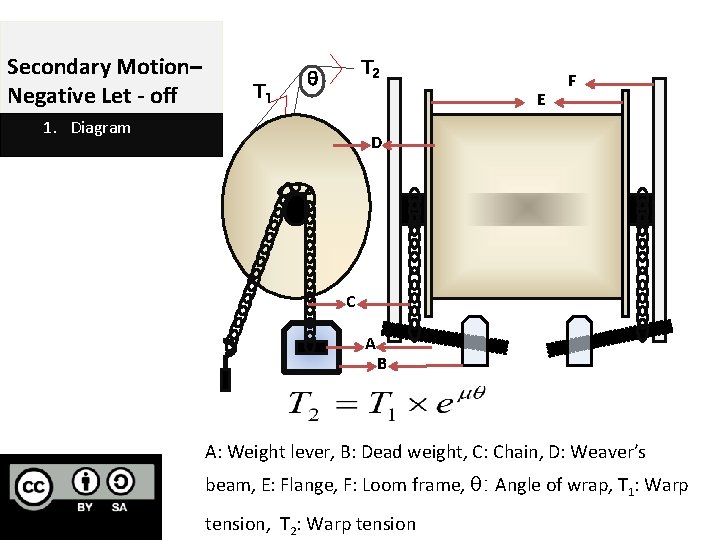
Secondary Motion– Negative Let - off T 1 T 2 θ E 1. Diagram F D C A B A: Weight lever, B: Dead weight, C: Chain, D: Weaver’s beam, E: Flange, F: Loom frame, θ: Angle of wrap, T 1: Warp tension, T 2: Warp tension
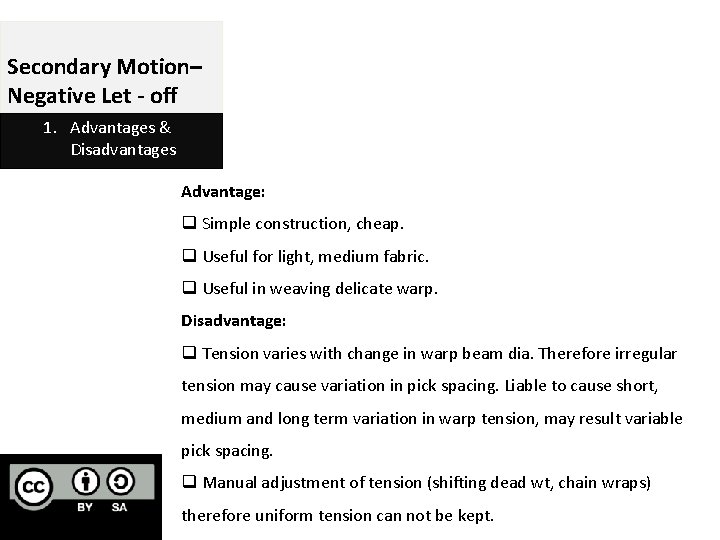
Secondary Motion– Negative Let - off 1. Advantages & Disadvantages Advantage: q Simple construction, cheap. q Useful for light, medium fabric. q Useful in weaving delicate warp. Disadvantage: q Tension varies with change in warp beam dia. Therefore irregular tension may cause variation in pick spacing. Liable to cause short, medium and long term variation in warp tension, may result variable pick spacing. q Manual adjustment of tension (shifting dead wt, chain wraps) therefore uniform tension can not be kept.
Extra
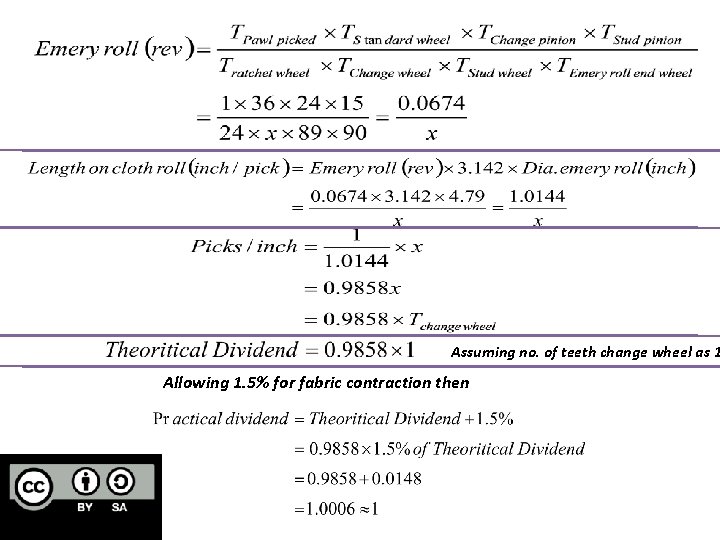
Secondary Motion. Take up 1. Dividend calculation of 7 wheel take up motion: 1. Calculate no. of rotations made by emery roll. 2. Length of fabric (inch) wound on cloth roll per pick. 3. Calculate no. of picks/inch. 4. Calculate theoritical dividend. 5. Practical dividend
Assuming no. of teeth change wheel as 1 Allowing 1. 5% for fabric contraction then